After a fall, stay calm and assess your condition before moving. Check for injuries, numbness, or pain, and make certain the area around you is clear of hazards. Use supportive devices if needed, and ask for help when getting up. Move slowly, engaging your core and maintaining balance. Keep safety a priority to prevent further injury. If you want to learn step-by-step techniques to recover safely, there’s more to explore below.
Open a free Amazon Business account
Business pricing, bulk buying and tax-exempt orders.
As an affiliate, we earn on qualifying purchases.
Key Takeaways
- Assess your condition for injuries, pain, dizziness, or numbness before attempting to stand.
- Clear the area of obstacles and ensure a safe environment with supportive devices if needed.
- Use proper techniques: roll onto your side, push up slowly with hands and knees, and keep your back straight.
- Stay calm, practice deep breathing, and seek help if you’re unable to stand or feel injured.
- Maintain balance by moving slowly, engaging ankle muscles, and supporting yourself with furniture or walls.
As an affiliate, we earn on qualifying purchases.
Assessing Your Condition Before Moving
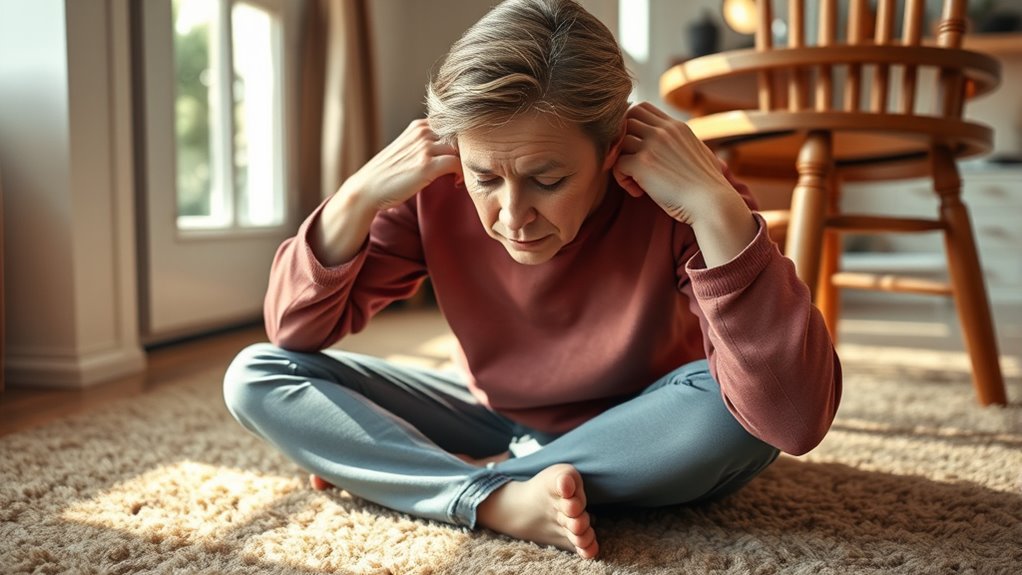
Before attempting to move after a fall, it’s essential to assess your condition carefully. Check yourself for pain, dizziness, or difficulty breathing—these are signs you need immediate medical help. Take a moment to evaluate if any limbs are injured or if you feel numb or tingling, which could indicate nerve damage. Seek post fall emotional support if you’re feeling overwhelmed or anxious; your mental state impacts your safety. Remember, fall prevention education emphasizes the importance of staying calm and knowing when to stay still. Moving too quickly without proper assessment can worsen injuries. If you’re unsure about your condition, call for help or wait for assistance. Prioritizing your safety reduces the risk of further injury and ensures a smoother recovery process. Additionally, being aware of AI safety measures can help in understanding how technology can support fall detection and prevention efforts.
Staying Calm and Composed After a Fall

Staying calm and composed after a fall is essential for making clear decisions and preventing further injury. Emotional resilience helps you manage fear and frustration, keeping you focused on safety. To maintain your composure, try these steps: 1. Take deep, slow breaths to activate mindfulness exercises that reduce panic. 2. Remind yourself that staying calm is key to recovery and avoiding additional harm. 3. Focus on present sensations without judgment, fostering clarity and emotional strength. Remaining centered allows you to assess your situation calmly and avoid rushing into unnecessary movements. Practicing mindfulness exercises regularly builds emotional resilience, making it easier to stay composed during stressful moments. Incorporating mindfulness techniques into your routine can further enhance your ability to stay calm in challenging situations. Remember, your ability to control your emotions directly impacts your safety and recovery process. Staying calm isn’t just a mental tactic—it’s a vital part of fall recovery.
Checking for Injuries and Pain

After ensuring you’re calm and focused, it’s important to quickly check your body for injuries or pain. Carefully examine your limbs, back, and neck for signs of injury, such as swelling, bruising, or tenderness. If you notice any pain or suspect an injury, avoid moving excessively until you can get professional help, as this aids injury prevention. Feel for sharp or persistent pain that might indicate a fracture or sprain. Address pain management by applying ice or resting the affected area if possible. Remember, rushing to get up too quickly can worsen injuries. Taking a moment to assess your condition helps prevent further harm and guarantees you’re safe to proceed with recovery. Prioritize your safety and seek assistance if needed. Additionally, understanding injury symptoms can help you recognize when to seek immediate medical attention.
Clearing the Area for Safe Movement

To move safely, you need to clear the area around the person on the ground. Carefully remove any obstacles that could cause further injury or trip someone else. Make sure there’s enough space for a smooth, safe recovery or assistance. Additionally, ensuring the area is free of hazards can prevent additional accidents during the recovery process.
Remove Obstructions Carefully
Carefully removing obstructions is essential for creating a safe path during fall recovery. By focusing on obstacle removal and hazard elimination, you reduce the risk of further injury. Here’s how to do it effectively:
- Assess the area quickly, identifying hazards like loose objects or sharp edges.
- Gently move or secure obstacles that could cause tripping or falling again.
- Ensure the space is clear of debris, cords, or furniture that might block your movement or cause additional hazards.
- Remember that electric dirt bikes and similar vehicles require a clear area to operate safely and avoid accidents.
Taking these steps helps you establish a safe environment to get back on your feet. Remember, hazard elimination isn’t just about clearing the way—it’s about preventing future accidents and ensuring your safety. Always proceed with caution and prioritize safety above all.
Ensure Adequate Space
Once you’ve removed obstacles and hazards, clearing enough space becomes the next vital step. Proper space management guarantees you have enough room to get up safely without feeling cramped or risking additional falls. Check the surrounding area for environmental hazards like loose rugs, clutter, or uneven flooring that could cause slips or trips. Move furniture or objects that may restrict your movement or block your path. Create a clear, open zone around you to facilitate smooth and controlled recovery. Adequate space not only helps you regain your balance more effectively but also reduces the risk of injury to yourself or others nearby. Incorporating space optimization principles can further enhance safety and accessibility. Taking the time to ensure a safe, obstacle-free environment is essential for a confident and secure fall recovery.
Creating a Supportive Environment for Standing
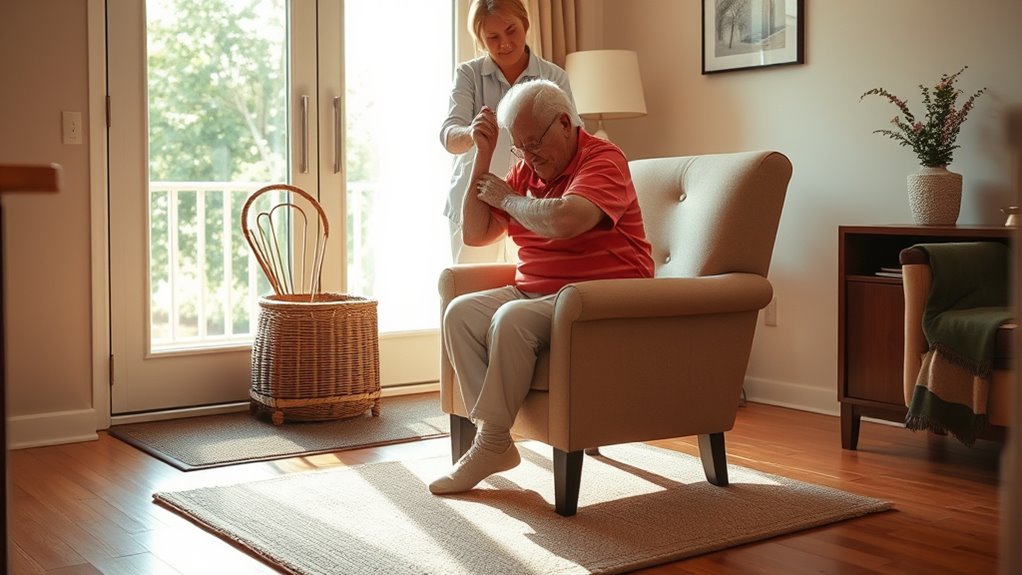
To create a supportive environment for standing, guarantee pathways are clear and free of obstacles. Use supportive devices like grab bars or walking aids to help maintain balance. Encourage others to offer assistance and guidance to help you stand safely and confidently.
Clear Pathways and Space
Creating a safe environment begins with ensuring there are clear pathways and enough space around you. This helps prevent falls caused by environmental hazards. Start by identifying potential hazards, such as clutter, loose rugs, or uneven flooring. Next, clear these obstructions to create a safe zone. Finally, regularly reassess your space for new hazards or changes in your environment. Incorporating ergonomic furniture can also support better posture and reduce the risk of injury while standing.
Use Supportive Devices
Using supportive devices can considerably improve your stability and confidence when standing, especially if you have balance challenges or weak muscles. Supportive devices like grab bars, handrails, walkers, or canes provide essential stability, helping you maintain proper posture and prevent falls. These tools create a safer environment by reducing the risk of slips and missteps, which are common causes of falls. Properly positioned supportive devices make it easier to rise from a seated position or recover your balance if you feel unsteady. Incorporating these aids into your daily routine is a key step toward fall prevention. Additionally, understanding the core personality traits associated with confidence and resilience can help you develop a mindset conducive to safe movement. Remember, the goal is to create a supportive environment that encourages safe movement and minimizes hazards, giving you peace of mind and greater independence.
Encourage Assistance and Guidance
Having supportive devices in place is a great start, but inviting assistance and guidance from others can further boost your confidence when standing. Peer encouragement creates a positive environment that helps you feel supported, while professional guidance ensures proper techniques are followed. To make the most of this support, consider these steps:
- Ask a trusted friend or caregiver for physical assistance as you stand.
- Seek encouragement from peers who understand your situation.
- Consult healthcare professionals for personalized advice on safe standing practices.
- Incorporate well-being tips to improve your overall safety and comfort during recovery.
Using Proper Techniques to Get Up

Getting up safely after a fall is essential to prevent further injury. To do this correctly, focus on proper lifting techniques and maintain a safe posture throughout the process. Begin by rolling onto your side, then push yourself up using your hands and knees, avoiding sudden movements. Keep your back straight and engage your core muscles as you rise, rather than bending at the waist. This proper lifting method reduces strain on your spine and minimizes the risk of injury. Take your time, and don’t rush the movement. Make certain your footing is secure before standing fully. Adopting a safe posture during this process helps maintain balance and stability, making it easier to get up without falling again or causing additional harm. Incorporating proper fall recovery techniques can further enhance safety and confidence during the process.
Employing Assistive Devices When Necessary

Using assistive devices can help you recover safely from a fall, but it’s important to choose the right type for your needs. You should also learn proper techniques for using these devices to prevent further injury. If you’re unsure or need extra support, don’t hesitate to ask for help from a healthcare professional.
Types of Assistive Devices
Ever wonder how assistive devices can make fall recovery safer and more effective? These mobility tools, such as walking aids, support your balance and stability. The main types include:
- Canes – Offer support for minor balance issues and are easy to maneuver.
- Walkers – Provide a sturdy frame to hold onto, ideal for more significant stability needs.
- Crutches – Help with weight distribution when leg strength is limited.
Choosing the right device depends on your mobility level and the severity of your balance challenges. Using the appropriate walking aids can boost confidence during recovery and reduce the risk of future falls. Always select devices suited to your needs and ensure they’re properly fitted for maximum safety.
Proper Device Usage Techniques
Properly employing assistive devices is vital for guaranteeing safety and effectiveness during fall recovery. You should always practice proper device handling by familiarizing yourself with how to use your device correctly before an emergency occurs. Keep your device well-maintained by inspecting it regularly for damage, loose parts, or wear and tear. Make certain that the device is clean and functioning properly, so it provides reliable support when needed. When using a walker, cane, or crutches, position yourself correctly—like placing the device firmly on the ground and adjusting height settings as recommended. Proper device handling minimizes the risk of further falls or injuries. Remember, maintaining your assistive device is just as important as knowing how to use it, ensuring safety during every recovery.
When to Seek Assistance
Knowing when to seek assistance with your assistive device can be a lifesaver during a fall recovery. If you experience any of these situations, it’s time to ask for help:
- You feel pain or suspect an injury, risking further harm if you try to move alone.
- Your fall has left you unable to stand or regain balance safely.
- You’re unsure if your fall was caused by a medical issue or device malfunction.
In these cases, contact your emergency contacts immediately. Seeking help is essential for fall prevention and ensuring your safety. Never hesitate to ask for assistance if you’re unsure—it’s better to be cautious than risk worsening an injury. Remember, prompt help can make all the difference in a safe recovery.
Maintaining Balance During the Rise
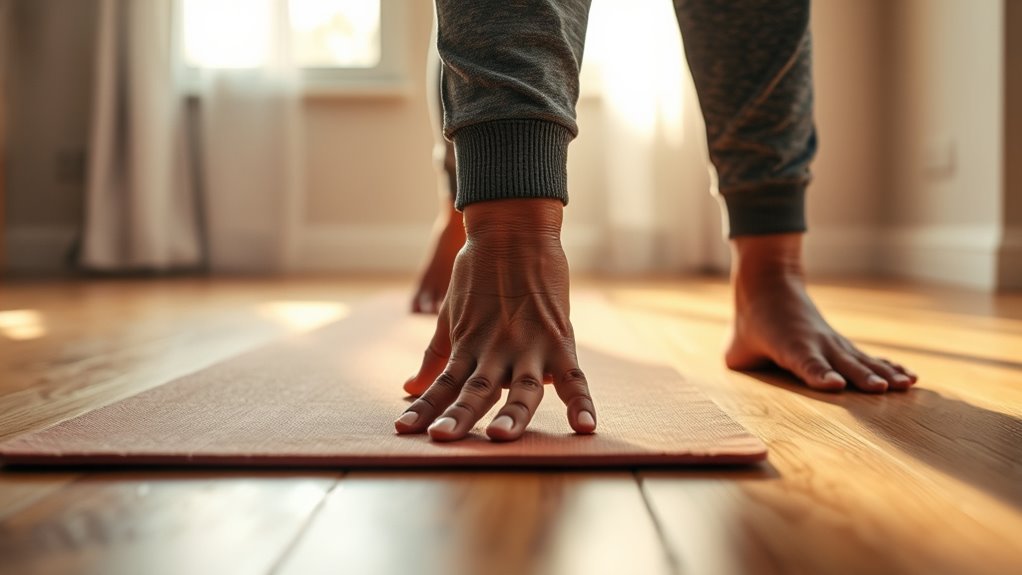
Maintaining balance during the rise is essential to prevent falls and guarantee a smooth recovery. To do this effectively, focus on ankle support by keeping your ankles stable and engaged. Strengthening your ankles through balance exercises, like standing on one foot or heel-to-toe walks, can improve stability. Before rising, confirm your feet are planted firmly on the ground, shoulder-width apart. As you push up, keep your weight centered over your feet, avoiding leaning too far forward or backward. Engage your core muscles to help stabilize your body. Practice slow, controlled movements, paying attention to how your ankles and legs respond. Consistent balance exercises build confidence and strength, making it easier to stay steady when shifting from sitting or lying to standing.
Moving Carefully to a Safe Resting Spot

When moving to a safe resting spot, it’s essential to do so slowly and deliberately to prevent loss of balance. This step is vital for fall prevention and reinforces fall education. To guarantee safety, follow these steps:
- Clear your path of obstacles to avoid tripping hazards.
- Keep your movements controlled, avoiding sudden or jerky motions.
- Use nearby furniture or walls for support if needed.
Taking your time allows you to stay aware of your surroundings and maintain control. Remember, rushing increases the risk of another fall. Moving carefully helps you settle into a safe resting position without injury. Prioritizing fall prevention through cautious movement protects your health and builds confidence after a fall. Stick to deliberate steps, and always stay mindful of your environment.
When to Seek Medical Attention After a Fall

After a fall, it’s essential to pay attention to your body’s signals and seek medical attention if you experience persistent pain, dizziness, or difficulty moving. Watch for fracture symptoms like swelling, bruising, or inability to bear weight. Head injuries may cause confusion, headache, or loss of consciousness. Prompt medical care is crucial if you suspect a fracture or head injury to prevent complications.
| Symptom | Action Needed | When to Seek Help |
|---|---|---|
| Persistent pain | Seek medical evaluation | Immediately if severe |
| Dizziness or confusion | Contact healthcare provider | Right away |
| Inability to move | Get urgent medical attention | Without delay |
| Swelling or bruising | Monitor closely; see a doctor if worsens | ASAP |
| Head injury signs | Seek emergency care if symptoms appear | Immediately if unconscious or worsening |
Frequently Asked Questions
How Can I Prevent Falls in the First Place?
To prevent falls, focus on home safety by removing tripping hazards like loose rugs and clutter. Choose footwear with good grip and support to reduce slipping risks. Keep walkways well-lit and install grab bars in key areas like the bathroom. Regularly exercise to strengthen muscles and improve balance. These steps help create a safer environment, making falls less likely and keeping you confident and secure at home.
What Are Common Signs of Internal Injuries After a Fall?
Think of your body like a complex machine; after a fall, internal injuries can be hidden like a leaking pipe. Common signs include severe pain, swelling, dizziness, or weakness, especially in the abdomen or chest. If you notice these, it’s essential to do a fall assessment and seek medical help promptly. Ignoring these signs could mean ignoring a serious internal problem that needs immediate attention.
How Long Should I Wait Before Attempting to Stand Again?
You should wait at least a few moments before attempting to stand again, making certain you’re stable and not experiencing dizziness or pain. Timing considerations are vital for safe recovery, so listen to your body and avoid rushing the process. If you feel unsteady, take your time, sit up slowly, and consider seeking assistance. Proper recovery timing helps prevent further injury and guarantees you’re ready to stand safely.
Are There Specific Exercises to Improve Fall Recovery Skills?
Boost your balance by practicing simple balance exercises like standing on one foot or heel-to-toe walking daily. Strength training, especially for your legs and core, enhances your ability to recover from falls. Incorporate gentle yoga or tai chi to improve coordination and stability. These targeted exercises build confidence, cultivate control, and create a safer, stronger you, making fall recovery easier and more effective in everyday life.
What Should I Do if Someone Else Falls and Can’t Get Up?
If someone falls and can’t get up, you should call emergency assistance immediately. Keep them still and avoid moving them unless necessary for safety. If possible, support their head and neck to guarantee safe immobilization. Reassure them to stay calm until professional help arrives. Don’t attempt to lift or move them yourself, as improper handling could cause injury. Your quick action can make a critical difference.
Conclusion
Remember, falling isn’t exactly a badge of honor, but getting up safely is. So, next time you take a tumble, don’t panic—just follow these steps. Assess, stay calm, and check for injuries before turning it into a scene. Use your assistive devices, keep your balance, and move carefully. After all, the goal is to rise like a champ, not a clumsy clown. Stay safe, and avoid becoming a fall statistic!
Evergreen bestsellers Picks
bestsellers
As an affiliate, we earn on qualifying purchases.