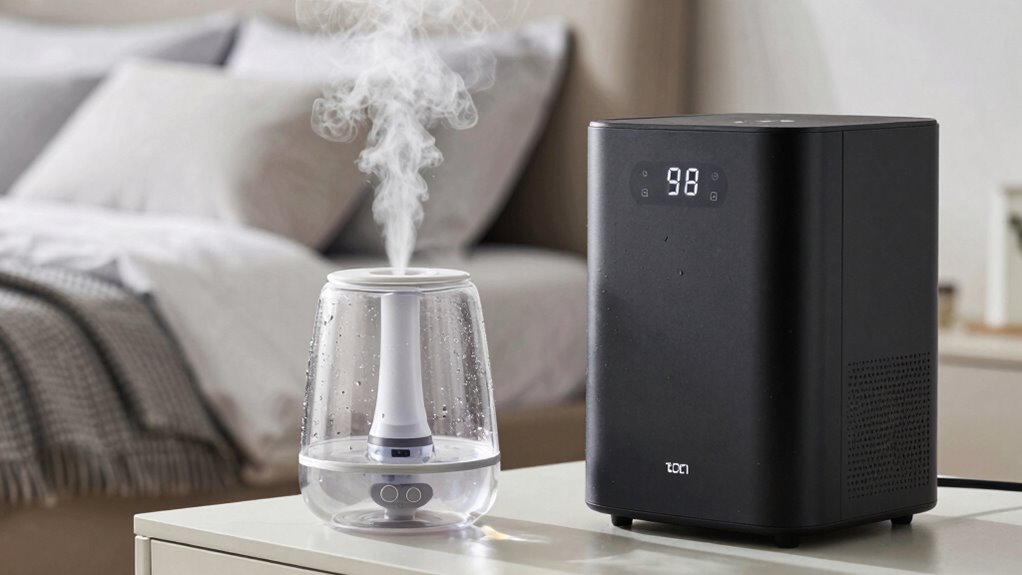

To choose between a humidifier and a dehumidifier, first assess your home’s moisture levels. If your air feels dry, with dry skin or cracked wood, a humidifier can add needed moisture. Conversely, if you notice mold, condensation, or damp walls, a dehumidifier helps remove excess humidity. Consider your room size, climate, and specific needs. Think about maintenance and energy use too. Want to make the best choice? There’s more to discover below.

Turn quiet afternoons into listening time
- Thousands of audiobooks, podcasts and originals
- Listen on your phone, tablet or Echo — also offline
- Cancel anytime
Key Takeaways
- Assess your indoor humidity levels to determine if they are too dry or too moist.
- Use humidity sensors or environmental cues like mold or dry skin to identify your needs.
- Choose a humidifier for dry air issues, especially in winter or heated spaces.
- Opt for a dehumidifier if you notice excess moisture, mold, or condensation.
- Consider room size, energy efficiency, and maintenance requirements when selecting the appropriate device.
As an affiliate, we earn on qualifying purchases.
How Do Humidifiers and Dehumidifiers Differ?
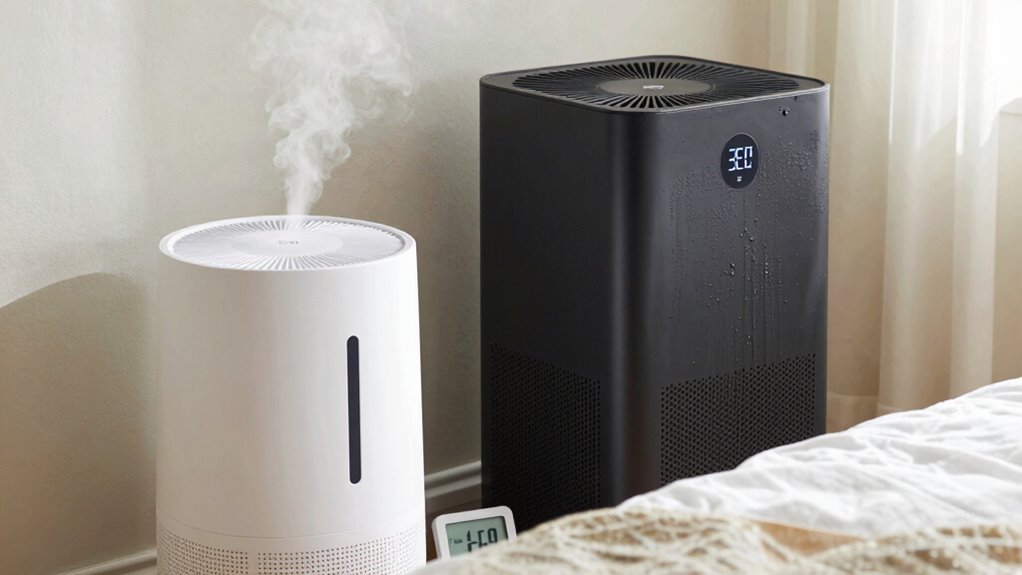
Have you ever wondered how humidifiers and dehumidifiers actually differ? They both influence air quality, but in opposite ways. A humidifier adds moisture to dry air, helping prevent issues like dry skin or respiratory discomfort. Meanwhile, a dehumidifier removes excess moisture, reducing mold and dust mites. Your choice depends on your needs. Device maintenance also varies; humidifiers require regular cleaning to prevent mold and bacteria buildup, while dehumidifiers need filter checks and emptying collected water. Understanding these differences helps you select the right device for ideal air quality. Proper maintenance ensures your device functions efficiently and keeps your indoor environment healthy. Knowing how each device impacts humidity levels guides you in making an informed decision for your home.
How to Identify Your Home’s Humidity Needs

Determining whether your home needs more or less humidity is essential for maintaining a healthy indoor environment. Start by evaluating your indoor plant care, as plants can be sensitive to humidity levels—wilting or yellowing may signal too little moisture, while mold or rot suggests excess. Using air quality sensors can help you monitor humidity in real-time, providing accurate data on your space’s conditions. These sensors alert you if humidity falls outside the ideal range of 30-50%, guiding your decision to use a humidifier or dehumidifier. Additionally, pay attention to your comfort levels and any musty or stale odors, which can also indicate humidity issues. Properly identifying your home’s needs ensures you create a balanced environment for both your health and your belongings. Understanding indoor humidity is crucial for making informed choices about climate control devices. Monitoring indoor air quality can further assist in maintaining optimal humidity levels tailored to your specific environment, especially since home environment factors can influence humidity fluctuations. Being aware of the contrast ratio and other technical specifications of your existing devices can also help you choose the right equipment to achieve ideal indoor conditions. Regularly assessing your environment with humidity sensors can help prevent issues before they become problematic.
Signs You Need a Humidifier or Dehumidifier
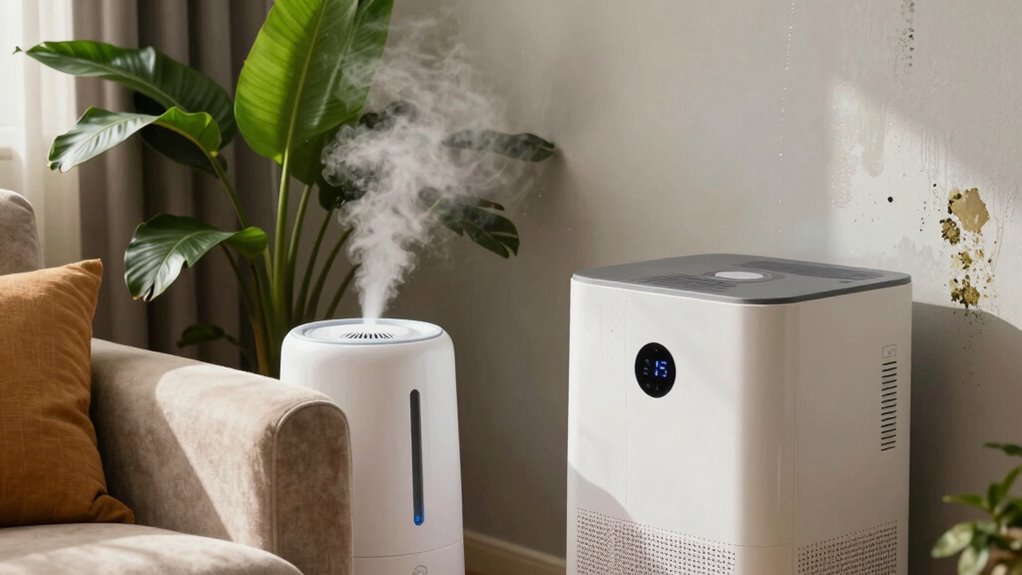
If you notice your skin feels consistently dry or you see damp spots and mold, it’s a sign your home’s humidity levels are off. Breathing issues or allergy flare-ups can also indicate that your air quality needs adjusting. Recognizing these signs helps you decide whether a humidifier or dehumidifier can improve your comfort. Using portable devices safely, such as ensuring proper safety tips for portable oil radiators, can prevent potential hazards associated with humidity control appliances. Additionally, understanding how natural pools and landscaping influence your home’s environment can contribute to a healthier indoor climate. Proper humidity regulation is essential for maintaining a balanced indoor atmosphere, and researching trusted market providers can help ensure you choose reliable and effective equipment for your needs. Being aware of the cultural significance of Italian gelato can also inspire you to create a more inviting and comfortable home environment that celebrates taste and tradition.
Persistent Dryness or Moisture
Are you noticing persistent dryness or moisture in your home? If your indoor plants seem droopy or struggle to thrive, it might be a sign your air isn’t balanced. Dry air can cause discomfort, dry skin, and respiratory issues, while excess moisture can lead to dampness and potential mold growth. Addressing these issues improves air quality and helps with indoor plant care. If your home feels consistently stuffy or you notice condensation on windows, a dehumidifier could be necessary. Conversely, if the air feels dry and your plants suffer, a humidifier can restore proper moisture levels. Recognizing these signs guarantees you choose the right device to create a healthier, more comfortable living environment. Understanding indoor air quality is essential for maintaining a balanced and healthy home environment. Additionally, being aware of air humidity levels can help you make informed decisions about managing your home’s atmosphere effectively. Proper knowledge of wood movement and how it relates to indoor humidity can also help prevent damage to wooden furniture and structures. Maintaining optimal humidity levels helps preserve the integrity of building materials, ensuring your home remains in good condition over time.
Unusual Mold or Mildew
Noticing unusual mold or mildew growing on walls, ceilings, or around windows is a clear sign your home’s humidity levels may be off-balance. Excess moisture promotes mold prevention and mildew control issues, making it essential to act. If mold appears, your space likely needs a dehumidifier to reduce humidity. Conversely, if walls feel dry or paint is cracking, a humidifier can help restore moisture. Here’s a quick guide:
| Condition | Action Needed |
|---|---|
| Visible mold or mildew | Use a dehumidifier for mildew control |
| Cracked or peeling paint | Add a humidifier for mold prevention |
| Musty odors | Reduce humidity with a dehumidifier |
| Excess condensation | Use a dehumidifier |
| Dry, itchy skin | Increase humidity with a humidifier |
Properly managing humidity levels prevents mold growth and maintains a healthy home environment. Monitoring indoor air quality can also help you stay ahead of humidity issues before they become visible, especially since humidity influences allergen levels and overall air health. Maintaining an appropriate humidity level is crucial for preventing mold growth, which directly affects indoor air quality and health. Being aware of humidity fluctuations can help you take proactive steps to keep your indoor environment comfortable and safe. Additionally, understanding the relationship between humidity and air quality can help you optimize your indoor environment for health and comfort.
Breathing or Allergy Issues
Breathing difficulties and allergy symptoms can signal that your home’s humidity levels are off-balance. If you notice increased coughing, congestion, or frequent sneezing, your indoor air may be lacking proper air purification. A dry environment can irritate your respiratory system, making breathing harder. Conversely, high humidity can trap allergens like mold spores and dust mites, worsening allergies. Pay attention to noise levels from your appliances—humidifiers and dehumidifiers can be noisy, which might affect your comfort. If your air feels stale or your allergies worsen without apparent cause, adjusting humidity levels with the right device can help. Proper humidity management improves air quality, reduces irritants, and alleviates breathing and allergy issues effectively. Maintaining proper humidity levels is essential for creating a healthier indoor environment. Additionally, choosing the right device involves understanding indoor air quality factors and how they impact your health. Understanding the benefits of humidity control can also guide you in selecting the most suitable appliance for your needs. For example, proper air quality management can significantly reduce airborne allergens and improve overall comfort.
What Factors Should You Consider Before Buying?
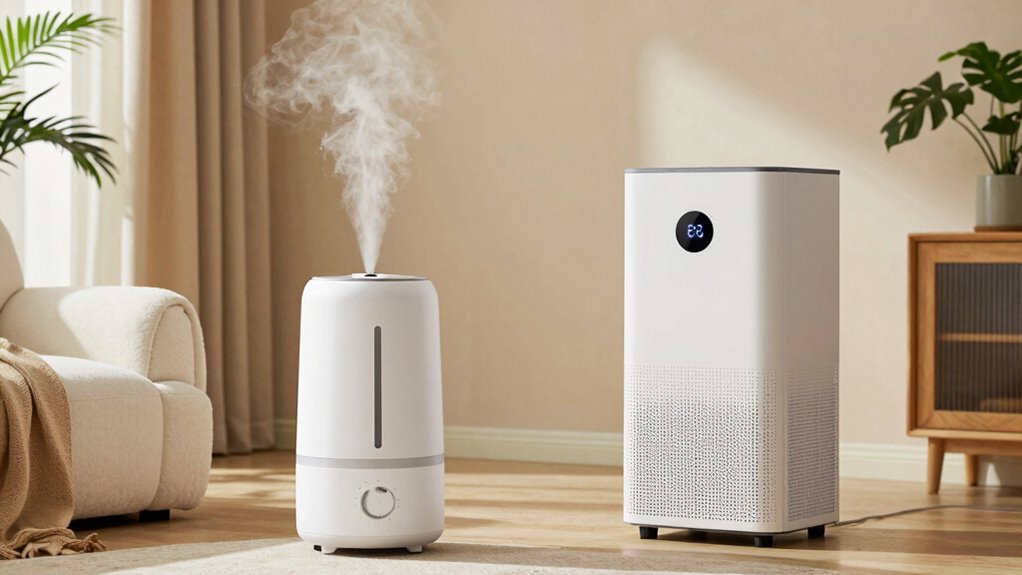
Before buying a humidifier or dehumidifier, you need to take into account your room size and available space to find a unit that fits comfortably. Think about the humidity levels you want to maintain and choose a device that can handle those needs effectively. Also, look for energy-efficient models to save on electricity costs over time. Ensuring proper home environment can improve comfort and health, making it an important factor in your decision. Additionally, consider potential sources of indoor pollutants like microplastics in dust, which can impact air quality and overall well-being.
Room Size and Space
Choosing the right size humidifier or dehumidifier starts with understanding your room’s dimensions. Accurate sizing guarantees effective humidity control without wasting energy. Measure the room’s square footage and ceiling height to determine the appropriate capacity. Consider furniture placement, as bulky furniture can limit airflow and influence unit placement. Also, think about aesthetic integration—select a device that fits seamlessly into your space without cluttering the room.
- Measure your room’s total square footage.
- Check the device’s recommended room size.
- Plan for clear space around the unit for airflow.
- Avoid blocking vents with furniture.
- Choose a style that complements your decor.
Humidity Level Needs
Determining the right humidity level for your space depends on several factors, including your comfort preferences and the specific needs of your environment. If you have indoor plants, maintaining proper humidity helps them thrive and prevents issues like wilting or mold. For better air quality, aim for a humidity level between 40-60%, which reduces dust, mold, and airborne allergens. Too dry air can cause dry skin, irritated eyes, and respiratory issues, while excessive moisture fosters mold growth and musty odors. Consider your local climate and whether you experience seasonal fluctuations. Balancing humidity not only improves comfort but also supports healthier indoor plants and cleaner air. Adjusting your humidifier or dehumidifier settings accordingly ensures your home environment stays ideal.
Energy Efficiency Considerations
When selecting a humidifier or dehumidifier, considering energy efficiency can save you money and reduce your environmental impact over time. Look for models with low energy consumption to minimize electricity bills. Energy-efficient devices often have features like adjustable settings, timers, or auto-shutoff, which help optimize usage. Keep in mind that higher energy use can shorten device longevity, leading to more frequent replacements. Consider the following factors:
- ENERGY STAR certification for proven efficiency
- Adjustable fan speed and humidity level controls
- Presence of energy-saving modes
- Size and capacity suited to your space
- Overall build quality and durability
Focusing on these aspects guarantees you choose a device that’s not only effective but also cost-effective and eco-friendly.
How to Choose the Right Device for Your Climate and Room Size
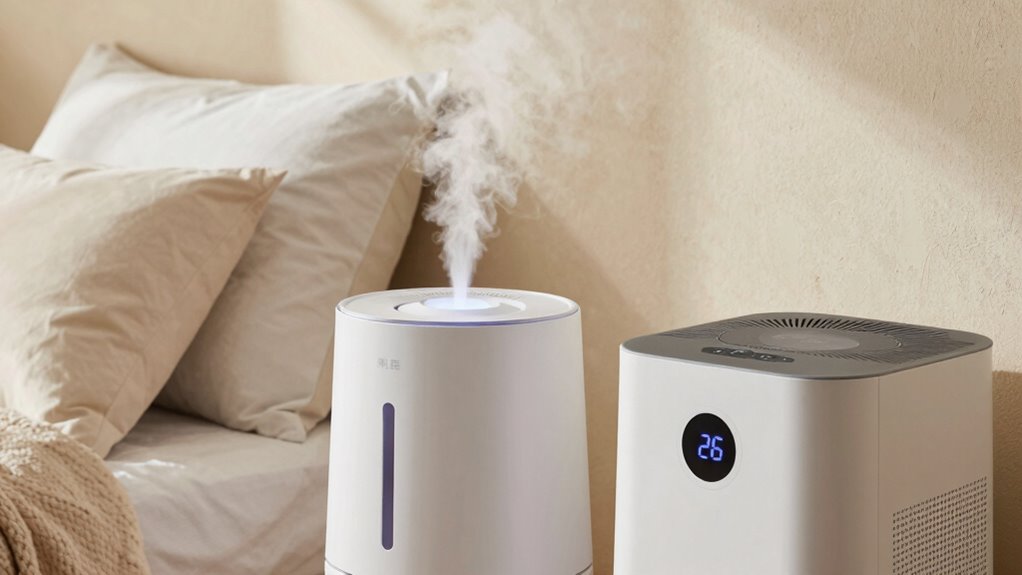
How do you find the perfect humidity level for your space? Start by considering your climate and room size. If you live in a dry area or have a large room, a humidifier with smart technology can automatically adjust humidity levels for comfort and efficiency. For smaller, more enclosed spaces, a compact dehumidifier with an aesthetic design blends seamlessly into your decor while maintaining ideal moisture levels. Assess your climate’s typical humidity fluctuations—warmer, humid environments may require a dehumidifier, while colder, dry regions benefit from a humidifier. Match the device’s capacity to your room size; oversized units waste energy, while undersized ones won’t work effectively. Choosing the right device guarantees comfort, saves energy, and complements your home’s style.
How to Properly Use and Maintain Your Humidifier or Dehumidifier
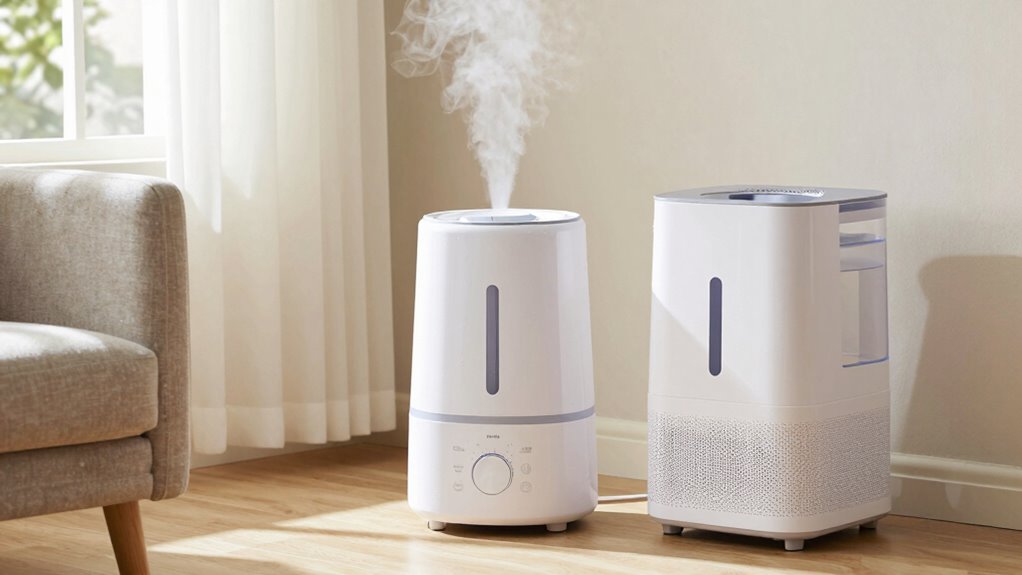
To keep your humidifier or dehumidifier functioning effectively, you need to use and maintain it properly. Regular maintenance schedules guarantee peak performance and longevity. Clean your device at least once a week to prevent mold and bacteria buildup. Replace filters as recommended by the manufacturer, usually every 1-3 months. Keep an eye out for troubleshooting tips, like unusual noises or poor operation, which may indicate issues. Always empty and refill water tanks daily if applicable. Check the air filters periodically and clean or replace them when dirty. Additionally, ensure the device’s vents are unobstructed for proper airflow. Proper use and routine maintenance will help your device run smoothly and maintain healthy indoor humidity levels.
Common Mistakes to Avoid When Regulating Indoor Humidity
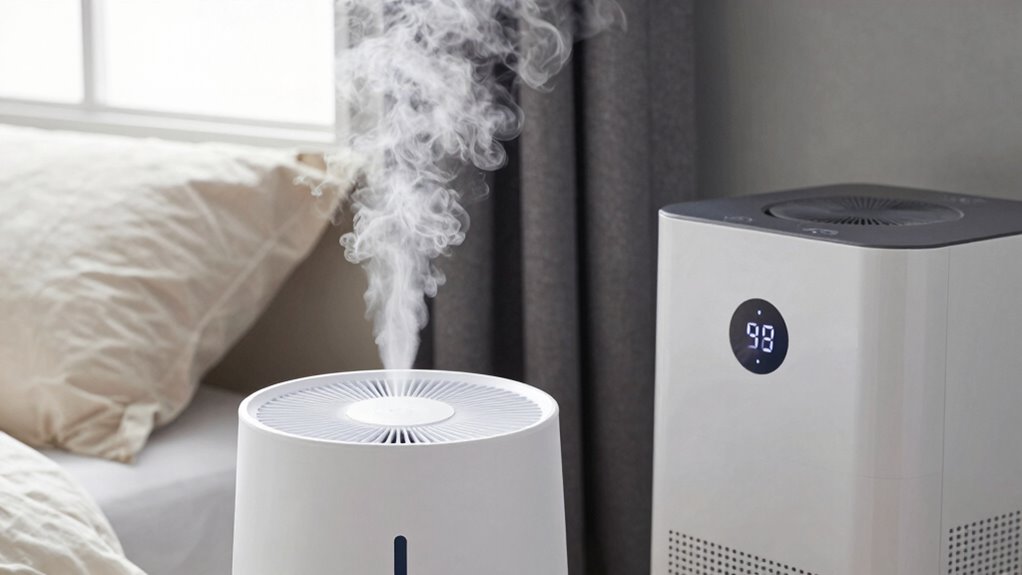
Even with proper maintenance, mistakes can still affect how well your humidifier or dehumidifier regulates indoor humidity. One common mistake is poor placement; placing the device in an area with poor airflow or near heat sources can reduce efficiency. Make sure to choose an ideal placement, such as central locations away from walls or furniture, to improve performance. Ignoring device noise levels is another mistake; a noisy unit can become disruptive and lead to unnecessary adjustments or turning it off. Regularly check and adjust settings based on your environment, avoiding over-humidifying or dehumidifying. By paying attention to placement and noise, you’ll guarantee your device works effectively, maintaining a comfortable and healthy indoor climate.
Frequently Asked Questions
Can a Humidifier or Dehumidifier Improve Indoor Air Quality?
Yes, a humidifier or dehumidifier can improve your indoor air quality. A humidifier adds moisture, easing respiratory issues and preventing dry skin, while a dehumidifier reduces excess humidity, preventing mold and dust mites. To keep your device effective, regular maintenance is crucial—clean filters and tanks prevent mold and bacteria growth. Proper use and upkeep ensure these devices enhance your home’s air quality safely and efficiently.
Are There Health Risks Associated With Improper Humidity Levels?
Did you know that improper humidity levels can cause health issues? If humidity drops below 30%, your allergies might worsen as dust mites and mold triggers thrive. Conversely, high humidity encourages mold growth, which can worsen respiratory problems. Both situations pose risks, including respiratory irritation and allergy flare-ups. Regularly monitoring indoor humidity helps prevent these risks, keeping your air healthier and safer for your lungs and overall well-being.
How Loud Are Typical Humidifiers and Dehumidifiers During Operation?
Typically, humidifiers and dehumidifiers operate quietly, with noise levels ranging from around 20 to 50 decibels, comparable to a whisper or soft conversation. Modern devices prioritize efficiency and often feature silent modes, so you won’t be disturbed during sleep or work. If noise levels are a concern, check product specifications for decibel ratings and choose models designed for quiet operation, ensuring your device remains efficient without disrupting your daily routine.
Do Energy Costs Vary Significantly Between the Two Devices?
You’ll find that energy costs can vary quite a bit between humidifiers and dehumidifiers. Generally, humidifiers tend to have lower power consumption, making them more energy-efficient for everyday use. Dehumidifiers often use more energy, especially if they run constantly in damp environments. To save on energy costs, choose a device with good energy efficiency ratings, and operate it only when necessary—don’t let it become a money pit.
Can These Devices Be Used Together for Optimal Humidity Control?
Yes, you can use a humidifier and dehumidifier together for ideal humidity control, especially in spaces with fluctuating humidity levels. The synergy benefits include maintaining a consistent comfort zone and protecting your home from excess moisture or dryness. Combined usage allows you to fine-tune indoor air quality, preventing issues like mold or static electricity. Just make certain you coordinate their operation to avoid counteracting each other and wasteful energy consumption.
Conclusion
Choosing between a humidifier and a dehumidifier depends on understanding your home’s needs and your comfort. By recognizing signs and considering factors like climate and room size, you can make an informed decision. Proper use and maintenance guarantee your device works efficiently for years to come. Are you ready to create a healthier, more comfortable indoor environment? Take the first step today and enjoy the benefits of balanced humidity in your home.
Fall Picks
fall essentials
As an affiliate, we earn on qualifying purchases.