
Robots are becoming more common as companions and helpers, taking on caregiving roles that once relied solely on humans. They respond to emotional cues, provide comfort, reminders, and even simulate empathy to reduce your feelings of loneliness or stress. While they can support you emotionally, they’re not a replacement for real human connection or healthcare professionals. If you want to understand how these robotic caregivers influence relationships and ethical concerns, keep exploring these emerging technologies.
Key Takeaways
- Robots are increasingly serving as emotional support companions and caregivers, especially for vulnerable populations like the elderly.
- They can recognize mood cues and respond empathetically to reduce loneliness and emotional distress.
- Ethical considerations include privacy, transparency, and ensuring robots support rather than replace human relationships.
- Robots are tools designed to assist, not replace, healthcare professionals and genuine human interaction.
- Responsible deployment requires ethical design, respecting user dignity, and avoiding dependency or manipulation.
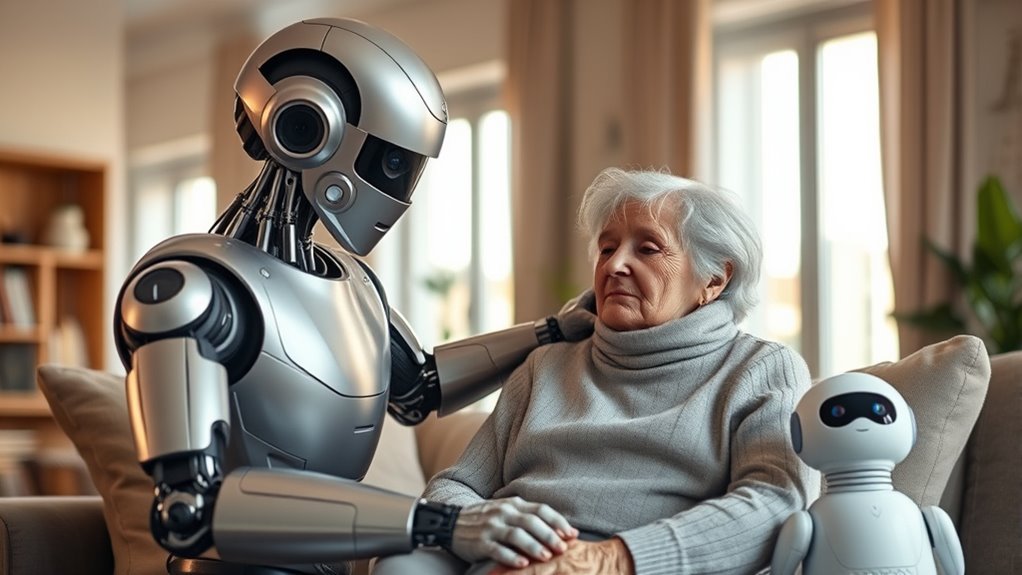
Robots are increasingly becoming our companions in daily life, transforming how we interact with technology and each other. As these machines step into roles traditionally held by humans, especially in caregiving, you might wonder how they provide emotional support and what ethical considerations come into play. Robots designed for companionship are not just programmed to perform tasks; they’re built to respond to your emotional cues, offering comfort, conversation, and a sense of connection. When you’re feeling lonely or anxious, these robots can be programmed to recognize your mood through voice tone, facial expressions, or gestures, providing soothing responses that help you feel understood and less isolated. They can remind you to take medication, engage you in conversation, or even simulate empathy, making your daily routine more manageable and less stressful.
However, deploying robots for emotional support raises important ethical considerations. You need to think about how much reliance on machines might impact genuine human relationships. While robots can offer temporary comfort, they lack true consciousness or empathy, which can lead to questions about whether they truly meet your emotional needs. As you interact more with these machines, you might start to substitute human interaction with robotic companionship, potentially increasing feelings of detachment from real relationships. Privacy is another concern—these robots often collect sensitive data about your moods, habits, and personal life to better serve you. Ensuring that this data remains secure and that your privacy isn’t compromised becomes a critical ethical issue.
Furthermore, you should consider the transparency of these robotic caregivers. It’s essential that you know the limits of what these machines can do and understand that they are tools, not replacements for human empathy or professional healthcare providers. Ethical considerations also extend to the design and deployment of these robots, making sure they’re programmed to respect your dignity and autonomy. For example, they should be designed to avoid manipulation or dependency, encouraging independence rather than fostering helplessness.

cupboo Interactive AI Plush Companion Pet– Privacy Safe Smart Adaptive Learning Emotional Support Robot Pets, Anxiety Relief Comfort| Ideal Toy Gift for All Occasion(Beige)
💖 Comfort & Companionship for Kids, Teenagers(Teens), Adults, Seniors(Elderly) –Lifelike furreal plush friend BooBoo grows with you! Ideal…
As an affiliate, we earn on qualifying purchases.
As an affiliate, we earn on qualifying purchases.
Frequently Asked Questions
How Do Robots Handle Emotional Support and Empathy?
When it comes to emotional support and empathy, robots rely on emotional intelligence and empathy simulation. You might think they truly understand feelings, but they analyze cues like tone and facial expressions to respond appropriately. While they can’t genuinely feel empathy, they’re programmed to recognize emotional states and deliver comforting responses, making you feel heard and supported. This technology helps bridge emotional gaps, offering companionship even without real emotional experiences.
What Are the Ethical Concerns of Replacing Human Caregivers?
You face ethical concerns about replacing human caregivers, including privacy concerns and autonomy risks. You worry that relying on machines might compromise personal privacy, exposing sensitive information. You also fear that automation could diminish individuals’ autonomy, reducing their ability to make choices and maintain dignity. Balancing technology’s benefits with these ethical issues requires careful consideration, ensuring that human values stay central in caregiving roles.
How Do Robots Adapt to Individual Care Needs?
You might wonder how robots adapt to individual care needs. They use personalization algorithms to assess your preferences and health data, allowing them to tailor their responses. Adaptive feedback enables robots to learn from your reactions, improving their support over time. By continuously adjusting their actions based on your unique requirements, robots can provide more effective, personalized care, helping you feel more comfortable and understood.
What Are the Costs Associated With Robotic Caregiving?
Think of robotic caregiving as building a sturdy bridge; it requires upfront investment and ongoing upkeep. The cost analysis includes high initial costs for hardware and software, while maintenance expenses cover repairs and updates. These costs can add up quickly, making it essential to evaluate the benefits against expenses. While robots can save money long-term, you’ll need to contemplate the financial commitment involved in maintaining their reliable performance.
How Do Users Feel About Robot Companionship Long-Term?
You might wonder how you’ll feel about robot companionship long-term. Many users report developing a sense of robot bonding, which can provide comfort and reduce loneliness. However, some worry about caregiver replacement, fearing over-reliance might diminish human interactions. While robots offer consistent support, it is crucial to balance technology with genuine human connections, ensuring that long-term emotional well-being isn’t compromised by dependence on robotic caregivers.

JOY FOR ALL Ageless Innovation Companion Pet for Seniors – Lifelike Animatronic Dog – Realistic Soft-Touch Coat & Heartbeat – Therapy Stuffed Animal – Toy for Alzheimer's & Dementia – Golden Pup
JOY FOR ALL PUP: Bring comfort, companionship, and playful fun to aging loved ones! The Joy For All…
As an affiliate, we earn on qualifying purchases.
As an affiliate, we earn on qualifying purchases.
Conclusion
As you consider the rise of robots and companions as caregivers, it’s clear they’re transforming the future of support in ways you’ve never imagined. These machines could become your most loyal allies, offering comfort and assistance around the clock—truly breaking the boundaries of what’s humanly possible. While they may never fully replace genuine human connection, their potential to revolutionize caregiving is nothing short of extraordinary. The question is, are you ready to embrace this brave new world?

GoolRC 939A Pocket Robot Talking Interactive Dialogue Voice Recognition Record Singing Dancing Telling Story Mini Robot
Function: Interactive communication, singing, dancing, LED light, telling story, decoration
As an affiliate, we earn on qualifying purchases.
As an affiliate, we earn on qualifying purchases.

The Sentient Code: What Happens When AI Develops Feelings
As an affiliate, we earn on qualifying purchases.
As an affiliate, we earn on qualifying purchases.