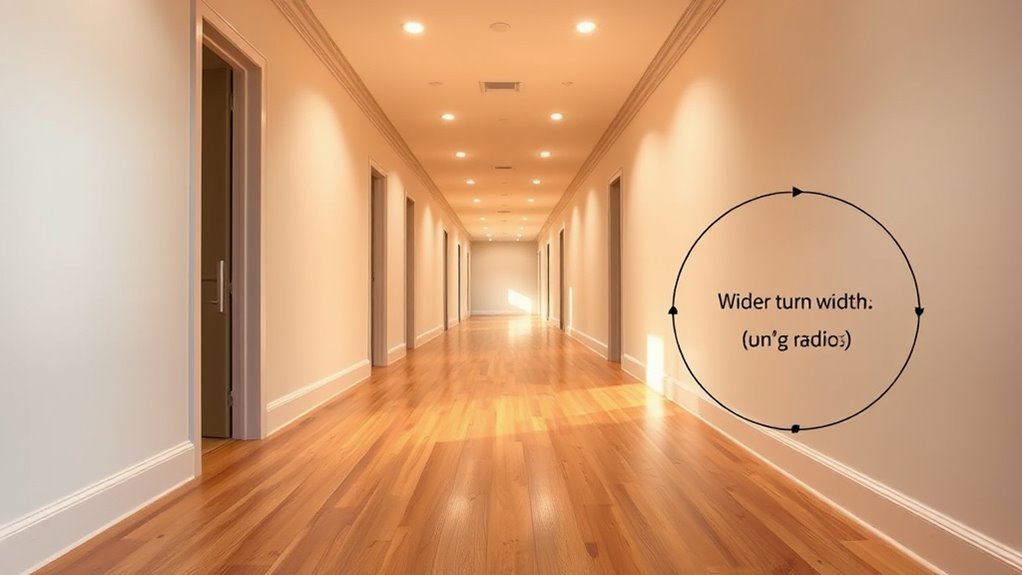

Hallway widths generally range from 36 to 42 inches for homes and up to 48 inches or more in commercial spaces, allowing comfortable passage and door clearance. Turn space is essential for safety and ease, with radii of 5-10 feet depending on usage. Factors like stairs clearance and fire safety influence these dimensions. Proper planning ensures accessibility and safety. Keep exploring to understand how to optimize your hallway design effectively.
Key Takeaways
- Residential hallways typically range from 36 to 42 inches wide, supporting comfortable passage and door clearance.
- Commercial hallways are often 48 inches or wider to accommodate higher foot traffic.
- Adequate turn space, with radii of 5-10 feet depending on setting, ensures safe and easy navigation.
- Minimum hallway widths of 36 inches are essential for wheelchair accessibility and compliance with standards.
- Proper planning includes considering door swings, lighting, and unobstructed exit routes for safety and efficiency.
As an affiliate, we earn on qualifying purchases.
Typical Hallway Widths for Residential and Commercial Spaces

When designing or evaluating hallways, understanding typical widths is essential because it affects comfort, safety, and functionality. For residential spaces, hallways generally range from 36 to 42 inches wide, allowing comfortable passage and easy door clearance. In commercial buildings, widths often extend to 48 inches or more to accommodate higher foot traffic and accessibility needs. Proper corridor lighting enhances visibility and safety, especially in narrower hallways. You should also consider door clearance, ensuring doors open fully without obstructing the walkway. Wider hallways improve movement, reduce congestion, and make it easier to navigate with mobility aids. Knowing these standards helps you create hallways that are both practical and compliant with accessibility guidelines, ensuring a smooth flow of people and safe passage. Additionally, understanding building accessibility standards can help in designing hallways that meet legal requirements and promote inclusivity.
The Importance of Turn Space in Hallways

Turn space in hallways is crucial because it directly impacts safety and ease of movement. Adequate turn space guarantees you can navigate comfortably without feeling cramped or risking accidents. When designing hallways, consider the appropriate turning radius needed for smooth maneuverability. Insufficient space can cause difficulties, especially for those with mobility aids or carrying large objects. The following table highlights key aspects of turn space requirements:
| Turning Radius | Maneuverability Considerations | Typical Use Cases |
|---|---|---|
| 5-6 feet | Easy turns for most users | Residential hallways |
| 6-8 feet | Enhanced comfort | Commercial or public spaces |
| 8-10 feet | Larger objects or wheelchairs | Hospitals, malls |
| 10+ feet | Wide, accessible turns | Special accessibility needs |
Proper turn space enhances safety, comfort, and accessibility, making hallways functional for everyone.
Factors Influencing Optimal Hallway Dimensions

Designing hallways that accommodate various users and purposes requires careful consideration of multiple factors. Stairs clearance is essential, as insufficient space can hinder safe movement and violate building codes. You need to make certain there is enough room for comfortable navigation, especially near staircases, to prevent congestion and accidents. Fire safety also plays a critical role; hallways must be wide enough to allow quick evacuation during emergencies. Narrow hallways can block escape routes or slow down movement, increasing risk. Additionally, building codes often specify minimum widths based on occupancy type and expected foot traffic. Ensuring proper sound insulation in hallways can significantly reduce noise disturbances between spaces, contributing to overall safety and comfort. By balancing stairs clearance and fire safety requirements, you create hallways that are both functional and compliant, ensuring safe, efficient passage for everyone.
Designing Accessible Hallways for All Users
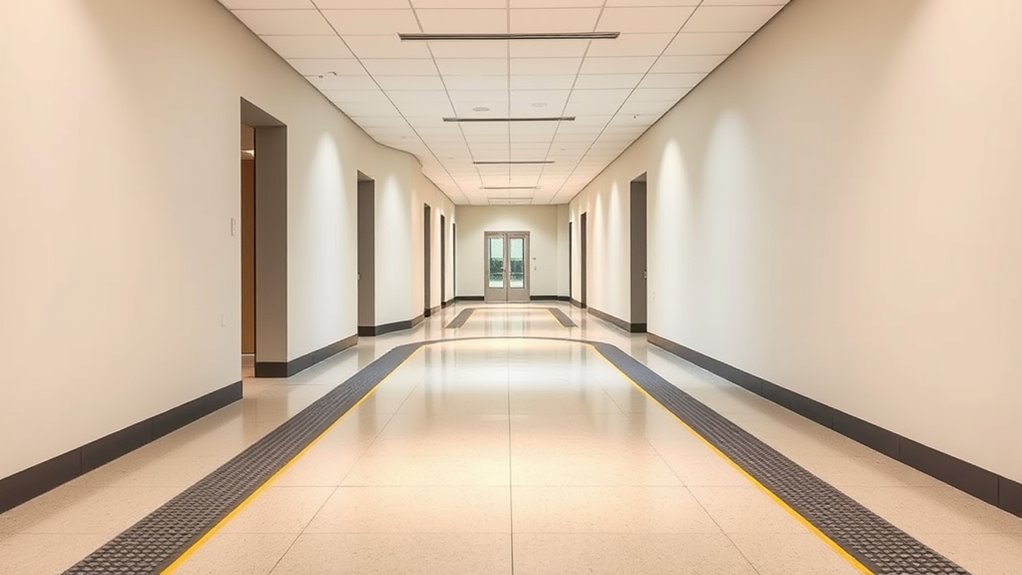
How can hallways be made truly accessible for everyone? Focus on designing spaces that support wheelchair maneuvering and emergency egress planning. Start by ensuring hallways are at least 36 inches wide to allow smooth wheelchair navigation. Incorporate clear, unobstructed pathways free of furniture or clutter. Use contrasting colors and good lighting for visibility. Install handrails where needed to aid stability. Finally, plan for emergency egress by including wide, unobstructed exit routes that accommodate wheelchairs and quick evacuation. Ensuring the use of proper materials can also help reduce slip hazards and enhance safety.
Tips for Planning and Measuring Effective Hallway Layouts

Effective hallway planning begins with accurate measurement and thoughtful layout to guarantee accessibility and safety. Start by measuring the total width, ensuring there’s enough furniture clearance so movement isn’t restricted. Consider the placement of lighting to avoid shadows and dark spots, which can hinder navigation. When measuring, account for door swings and any built-in features that may affect available space. Use a tape measure and sketch your layout to visualize flow and clearance zones clearly. Plan for wider sections at turns to allow smooth maneuvering, especially if you expect wheelchair or walker use. Remember, proper lighting placement enhances visibility and safety, making your hallway more functional. Additionally, sustainable materials can be incorporated into your design to promote eco-friendliness and durability. By paying attention to these details, you ensure your hallway design is both practical and welcoming.
Frequently Asked Questions
What Are the Safety Standards for Emergency Egress Hallway Widths?
You need to guarantee emergency egress hallways meet fire safety and accessibility standards, which typically require a minimum width of 36 inches for most buildings. For facilities with high occupancy or special needs, wider hallways—up to 48 inches or more—are often mandated. These standards are essential for safe evacuation during emergencies, allowing quick, unobstructed movement, and ensuring everyone, including those with disabilities, can exit safely and efficiently.
How Do Hallway Widths Affect Furniture Placement and Interior Design?
You’ll find that hallway widths directly influence furniture arrangement and interior aesthetics. Narrow hallways limit your options, making it harder to place large pieces without blocking passageways. Wider hallways offer more flexibility, allowing you to incorporate stylish furniture and decorative elements without sacrificing functionality. By choosing appropriate widths, you enhance your space’s flow and visual appeal, ensuring both comfort and a cohesive interior design that feels open and inviting.
Are There Specific Regulations for Hallway Widths in Historic Buildings?
Did you know that many historic buildings follow specific hallway width regulations? In fact, preservation guidelines often mandate a minimum width of 36 inches to guarantee accessibility and safety. These historic hallway regulations prioritize maintaining original architecture while complying with modern standards. When renovating, you’ll need to abide by these preservation guidelines, balancing historical integrity with current building codes to protect the character of the space.
How Do Hallway Dimensions Impact Indoor Air Quality and Ventilation?
You can improve indoor air quality and ventilation effectiveness by paying attention to hallway dimensions. Wider hallways promote better airflow efficiency, allowing fresh air to circulate more effectively and reduce stagnant air. When hallways are properly sized, ventilation systems work more efficiently, helping to remove pollutants and humidity. So, maintaining appropriate hallway widths is essential for ensuring a healthier indoor environment and ideal airflow throughout your space.
Can Narrow Hallways Be Suitable for High-Traffic Commercial Spaces?
Narrow corridor design can handle high traffic flow, but it’s like trying to fit a tornado through a straw — it’s a challenge. While it might work in low-density areas, high-traffic commercial spaces demand wider hallways for safety and comfort. If you want efficient movement and avoid bottlenecks, prioritize wider hallways, especially in busy environments. Narrow hallways simply can’t sustain the pace of high-traffic commercial spaces without causing chaos.
Conclusion
Now that you understand the essentials of hallway widths and turn space, you’re equipped to create safe, functional pathways that guide everyone smoothly through your space. Think of hallways as the veins of your home or building — crucial and flowing. With careful planning and attention to detail, you can design corridors that invite movement and accessibility, making your space not just functional but a seamless journey for all who pass through.