If you have seniors at home, air purifiers become especially important because older adults have weakened respiratory systems and immune responses, making them more vulnerable to indoor pollutants, allergens, and airborne viruses. Poor indoor air quality can worsen conditions like asthma and bronchitis, impacting their health and comfort. By choosing the right air purifier, you can create a safer environment that supports their breathing and overall well-being. Keep going to discover how to pick the best options for your home.

Turn quiet afternoons into listening time
- Thousands of audiobooks, podcasts and originals
- Listen on your phone, tablet or Echo — also offline
- Cancel anytime
Key Takeaways
- Seniors have weakened respiratory systems, making them more vulnerable to airborne pollutants and allergens.
- Indoor air quality directly impacts seniors’ health, affecting conditions like asthma, bronchitis, and respiratory infections.
- Aging reduces lung function and immune response, increasing the need for effective air purification.
- Air purifiers reduce bacteria, viruses, and irritants, lowering health risks for seniors with compromised immunity.
- Easy-to-use, efficient air purifiers create safer, healthier indoor environments, supporting senior well-being and reducing medical needs.
As an affiliate, we earn on qualifying purchases.
Why Seniors Are More Vulnerable to Respiratory Issues
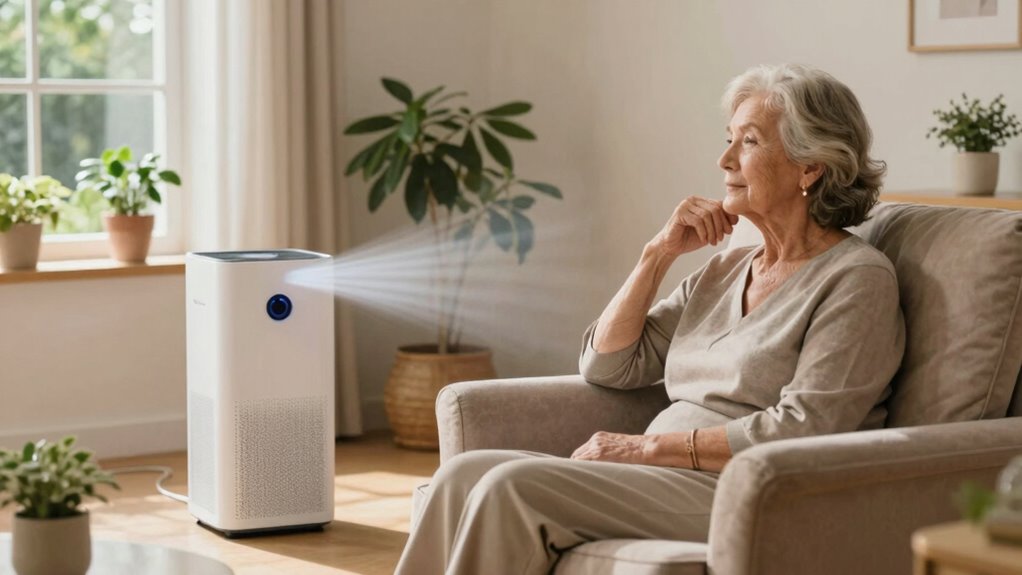
As you age, your respiratory system becomes less efficient, making seniors more vulnerable to breathing problems and infections. Many air quality myths suggest that outdoor pollution is the only concern, but indoor air quality also plays a essential role in senior respiratory health. Older adults have weaker lung function and immune responses, which means pollutants and allergens can easily trigger issues like asthma or bronchitis. Reduced ciliary action in the airways hampers your ability to clear irritants, increasing infection risk. Understanding these facts helps you recognize why maintaining clean indoor air is imperative. Dispelling misconceptions about air quality encourages proactive measures. Protecting your respiratory health involves addressing these vulnerabilities early, making air purifiers an indispensable tool to reduce airborne pollutants and support better breathing as you age. Additionally, incorporating indoor air quality strategies can significantly improve overall respiratory well-being. Recognizing the importance of pollutant removal can make a substantial difference in creating a safer environment for seniors. For example, understanding how microplastics in dust contribute to indoor pollution can help in choosing effective filtration options. Furthermore, selecting air purifiers with HEPA filters ensures the removal of most common airborne pollutants, including allergens and microplastics. Using proper ventilation techniques can also help reduce indoor pollutant buildup and improve air quality further.
How Indoor Air Quality Affects Senior Health
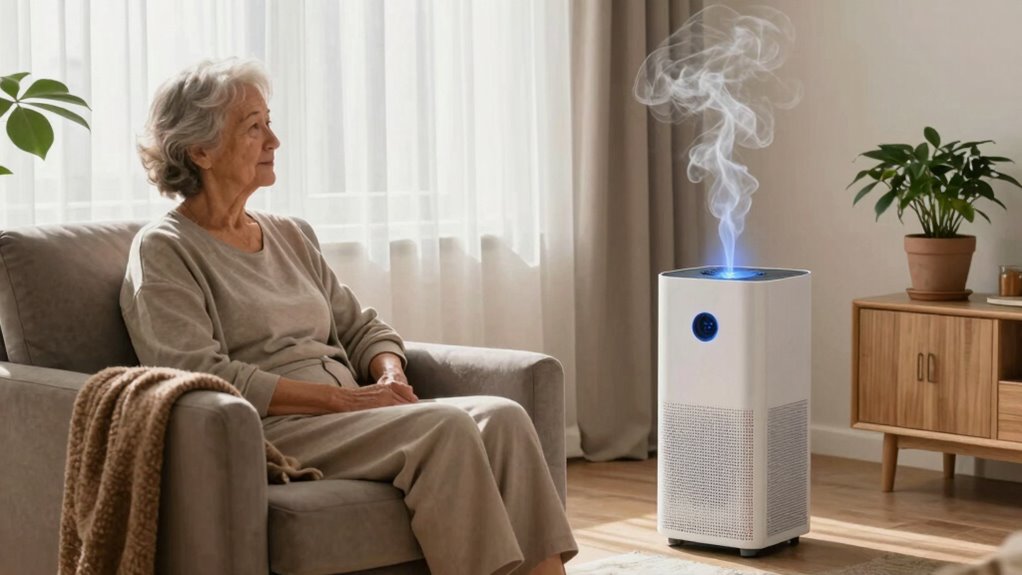
Indoor air quality directly impacts senior health because older adults spend most of their time indoors, where pollutants can accumulate unnoticed. Poor air can trigger allergies, worsen asthma, and increase respiratory infections. To improve air quality, consider:
Indoor air quality affects seniors’ health—keep it fresh with plants, proper ventilation, and humidity control.
- Using indoor plants that naturally filter toxins and boost oxygen levels.
- Managing humidity levels to prevent mold growth and dust mites.
- Ensuring proper ventilation to reduce airborne contaminants.
- Monitoring for indoor pollutants like VOCs from cleaning products.
- Incorporating smart yard care technologies like robot mowers to reduce outdoor pollutants entering the home. Additionally, understanding the role of flywheels in engine performance can inspire better home ventilation systems that minimize airborne emissions. Maintaining proper indoor air filtration with HEPA, carbon, and UV-C filters is also crucial for reducing airborne pollutants and protecting senior health, especially since air purifiers can significantly improve indoor air quality. Regularly assessing indoor pollutant levels helps ensure a healthier environment for seniors.
Why Air Purifiers Are Essential for Senior Living
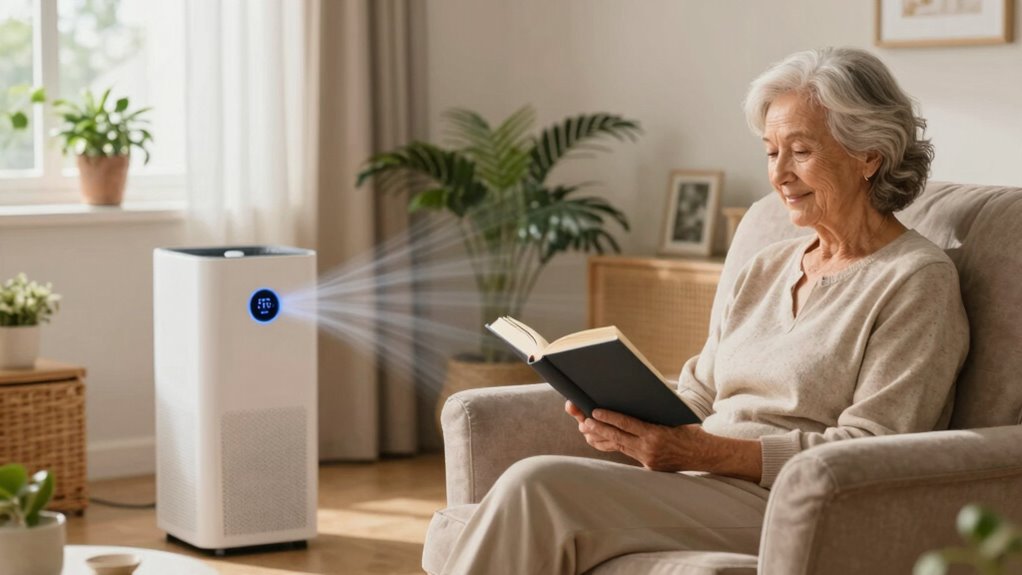
Air purifiers are essential for senior living because they actively remove harmful pollutants from the air, creating a safer environment. They help reduce airborne allergens, which can trigger allergies and respiratory issues. This is especially important for seniors, whose immune systems are more vulnerable. Improving air quality supports overall senior health by decreasing irritants that worsen asthma or allergies. Here’s how air purifiers make a difference:
| Benefit | Explanation | Impact on Seniors |
|---|---|---|
| Removes Allergens | Filters pollen, pet dander, dust | Eases allergy symptoms |
| Reduces Indoor Pollutants | Eliminates smoke, VOCs | Improves breathing |
| Fights Bacteria & Viruses | Sanitizes the air | Lowers infection risk |
| Enhances Air Quality | Cleans the air continuously | Promotes better sleep |
| Supports Overall Health | Maintains a healthier home | Boosts well-being |
Air purifiers are especially valuable in household products designed to improve indoor air quality. Incorporating air purification technology can further enhance their effectiveness in creating a healthier living space for seniors.
Features to Consider in Air Purifiers for Seniors
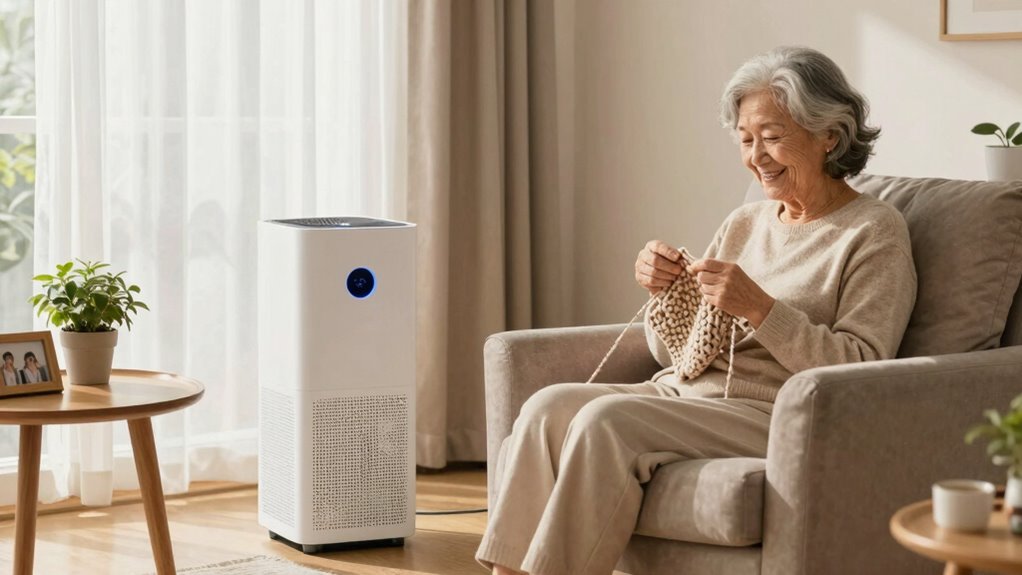
When choosing an air purifier for seniors, consider the filter types and efficiency to guarantee it captures common indoor pollutants effectively. You’ll also want features that are easy to operate and maintain, so it’s simple and safe for daily use. Regularly checking and cleaning filters is essential for maintaining optimal performance and ensuring air purifier longevity. Additionally, selecting models with user-friendly controls can make a significant difference in daily operation, especially for seniors who may have limited dexterity or familiarity with technology. It’s also beneficial to look for units with intuitive interfaces to further simplify usage. Pay attention to noise levels and sleep modes to keep the environment comfortable and quiet at night. Incorporating derating considerations such as suitable airflow capacity for the room size can further enhance effectiveness and energy efficiency. Being aware of the filter replacement schedules can help maintain consistent air quality and extend the lifespan of the device.
Filter Types and Efficiency
Choosing the right filter type is crucial because it directly impacts how effectively an air purifier cleans the air in a senior household. Different filters vary in efficiency and maintenance needs. Consider these options:
- HEPA filters: Capture 99.97% of particles, ideal for allergies and asthma.
- Activated carbon filters: Remove odors and chemical fumes.
- Pre-filters: Traps larger particles, extending the lifespan of main filters. Regularly inspecting landscaping around the home can also help reduce airborne debris, complementing the filtration system.
- UV filters: Kill bacteria and viruses, adding extra protection. Maintaining the integrity of filter components is essential for optimal performance and longevity. Additionally, understanding filter lifespan can help you plan for replacements and avoid reduced air quality over time. Being aware of filter efficiency can guide you toward models that deliver the best air quality with minimal maintenance.
Keep in mind the air filter lifespan, as longer-lasting filters reduce replacement frequency. Also, factor in cost considerations—more advanced filters may be pricier upfront but save money over time through durability and efficiency. Selecting the right combination ensures superior air quality with manageable maintenance. Additionally, understanding filter types can help you make more informed decisions tailored to your household’s needs.
Ease of Use Features
Ease of use is a critical factor when selecting an air purifier for a senior household, as complicated features can lead to frustration or neglect. Look for a simple, intuitive user interface with clear buttons or touchscreens that are easy to read and operate. Avoid models with confusing controls or multiple settings that might overwhelm someone unfamiliar with technology. Portability features are equally important, so choose an air purifier with lightweight design, ergonomic handles, or wheels that make moving it simple. These features allow seniors to reposition the unit effortlessly, ensuring ideal air quality in different areas. The easier it is to operate and move, the more likely the device will be used consistently, providing ongoing benefits to health and comfort. Additionally, considering a cleaning and maintenance friendly model can help keep the unit functioning optimally with minimal effort. Incorporating user-friendly features can further enhance the overall experience and encourage regular use. Understanding system monitoring capabilities can also help seniors easily track air quality levels and ensure the purifier is working effectively.
Noise Levels and Sleep
Since many seniors sleep during the night, it’s crucial to consider how quiet an air purifier operates. Noise levels directly impact sound quality and can cause sleep disturbances. Look for models with ultra-quiet settings or sleep modes that minimize sound. To help you choose, here are four key features:
- Decibel ratings below 30 dB for quiet operation
- Sleep-specific modes that reduce noise further
- Low-vibration fans for smoother sound quality
- Automatic shut-off during sleep hours to prevent disturbances
A quiet air purifier ensures clean air without disrupting restful sleep. Prioritizing low noise levels helps maintain sound quality and reduces sleep disturbances, so you wake up refreshed and comfortable.
How HEPA Filters Help Seniors Breath Easier
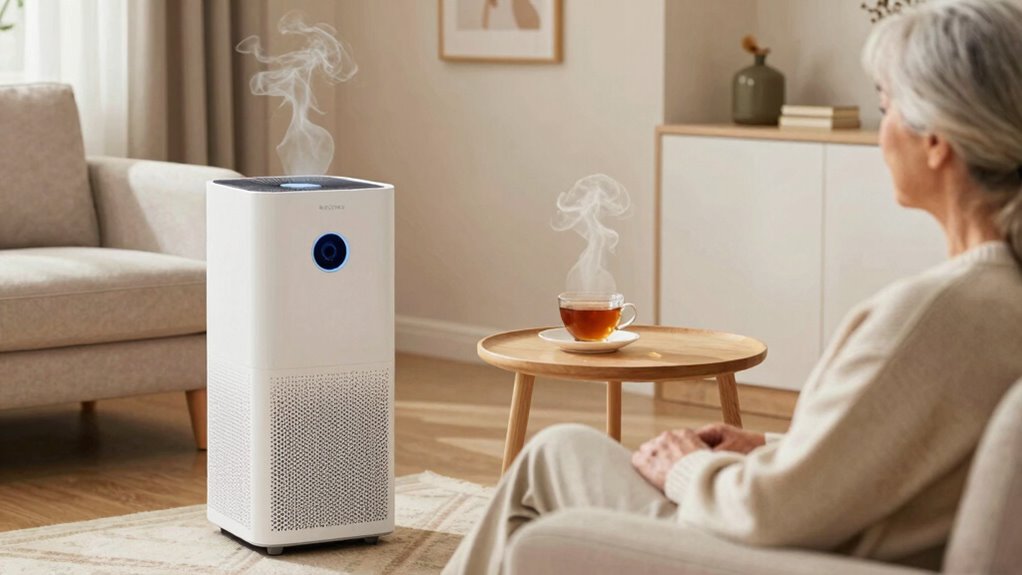
HEPA filters are highly effective at capturing tiny particles that can cause breathing issues. They help reduce allergens and irritants like dust, pollen, and pet dander in your home. This means you can breathe easier and enjoy cleaner air every day.
Effectiveness in Particle Removal
Have you ever wondered how some air purifiers can markedly reduce airborne particles? The secret lies in their design and efficiency. HEPA filters are highly effective at capturing particles like dust, pollen, smoke, and pet dander, which are common irritants for seniors. Here’s how they work:
- They trap particles as small as 0.3 microns, ensuring cleaner air.
- The filter’s design maximizes surface area, increasing particle capture without sacrificing airflow.
- Many models balance performance with energy consumption, helping you save on power bills.
- Advanced air purifier design minimizes noise, making it easier for seniors to breathe comfortably.
This combination guarantees that your air purifier not only cleans the air thoroughly but also operates efficiently, providing consistent relief.
Reducing Allergens and Irritants
If you want to make breathing easier for seniors, reducing allergens and irritants in the air is essential. HEPA filters in air purifiers effectively trap common allergens like dust mites, pet dander, and pollen, which can trigger allergic reactions or asthma. Incorporating indoor plants can also help, as some plants naturally filter toxins and improve air quality, but they shouldn’t replace purifiers. To optimize air quality, use air quality sensors to monitor levels of allergens and irritants constantly. These sensors provide real-time data, letting you adjust the purifier’s settings or ventilation as needed. By combining HEPA filtration, indoor plants, and air quality sensors, you create a healthier environment where seniors can breathe more freely and comfortably.
Which Air Purifiers Are Best for Senior Homes?
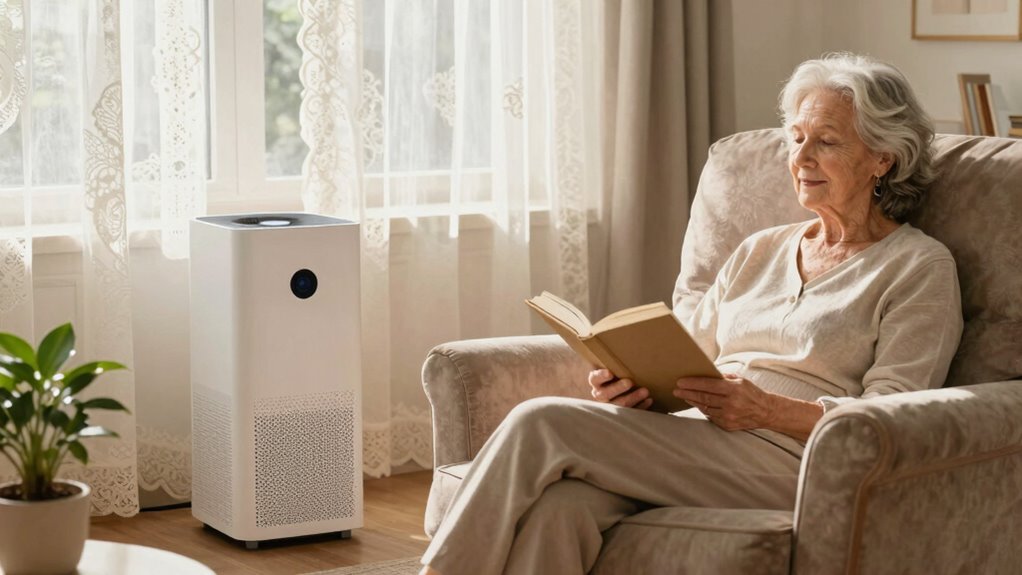
Wondering which air purifiers are best suited for senior households? Look for models that prioritize air quality monitoring and control of indoor humidity, essential for seniors’ health. The best purifiers typically feature:
- HEPA filters to trap allergens and irritants
- Activated carbon filters for odors and chemicals
- Built-in air quality sensors for real-time monitoring
- Humidification or dehumidification functions to maintain ideal indoor humidity levels
These features guarantee cleaner, healthier air and help prevent respiratory issues. A purifier with air quality monitoring adjusts automatically to changing conditions, providing consistent air quality. Maintaining proper indoor humidity reduces dryness and irritation. Choose a device that’s easy to operate and maintain for the safest environment in senior homes.
Common Questions About Air Purifiers for Seniors?
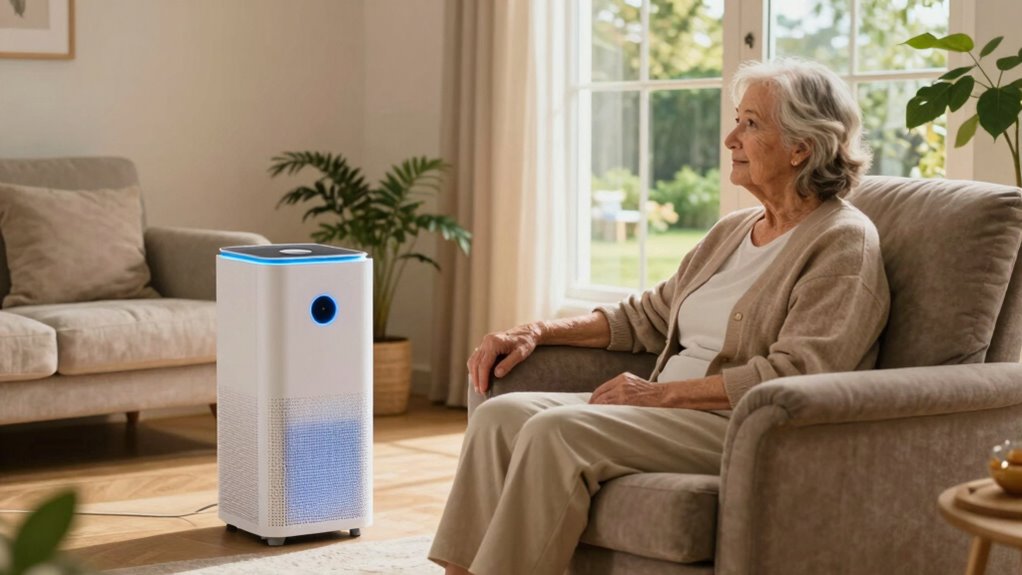
Many seniors and their caregivers have questions about choosing the right air purifier for their needs. You might wonder about air purifier myths that suggest all models are the same or that they’re unnecessary. The truth is, selecting the right one depends on your specific concerns, like allergies or pollutants. Cost considerations are also important—higher-priced units often offer better features, but affordable options can still improve air quality. Here’s a quick comparison:
| Question | Answer |
|---|---|
| Are air purifiers worth it? | Yes, they reduce allergens and pollutants. |
| Do all air purifiers work the same? | No, features and effectiveness vary widely. |
| Are they noisy? | Some models are quiet; check for decibel ratings. |
| Do I need to replace filters often? | It depends on usage; follow manufacturer advice. |
| Are they expensive? | Costs vary; weigh benefits against price. |
Tips for Maintaining and Properly Positioning Your Air Purifier

To get the most benefit from your air purifier, place it in a central location away from walls and furniture to guarantee proper airflow. Regularly clean or replace filters according to the manufacturer’s instructions to keep it working efficiently. Proper positioning and upkeep can make a big difference in improving your indoor air quality.
Optimal Placement Strategies
Proper placement is key to maximizing your air purifier’s effectiveness in a senior household. To improve air quality, consider these placement strategies:
- Position the purifier in common areas where seniors spend most of their time, like the living room or bedroom.
- Keep it at least a few feet away from walls or furniture to guarantee proper airflow.
- Place it near sources of pollutants, such as a kitchen or smoking area.
- Avoid placing it in corners or enclosed spaces, which can limit circulation.
Regular Maintenance Tips
Regular maintenance is essential to keep your air purifier working efficiently and providing clean air for your loved ones. Start by ensuring proper air purifier installation; place it on a flat, stable surface and avoid blocking vents or airflow paths. Regularly check and replace filters as recommended by the manufacturer—this is vital for peak performance and air quality. When replacing filters, turn off the device and follow the instructions for easy access. Keep the area around your air purifier clean and free of dust or obstructions. Additionally, clean the exterior surfaces with a damp cloth to prevent dust buildup. Scheduling routine maintenance guarantees your air purifier continues to operate effectively, safeguarding the health of seniors in your household.
Comparing Different Types of Air Purifiers for Senior Homes
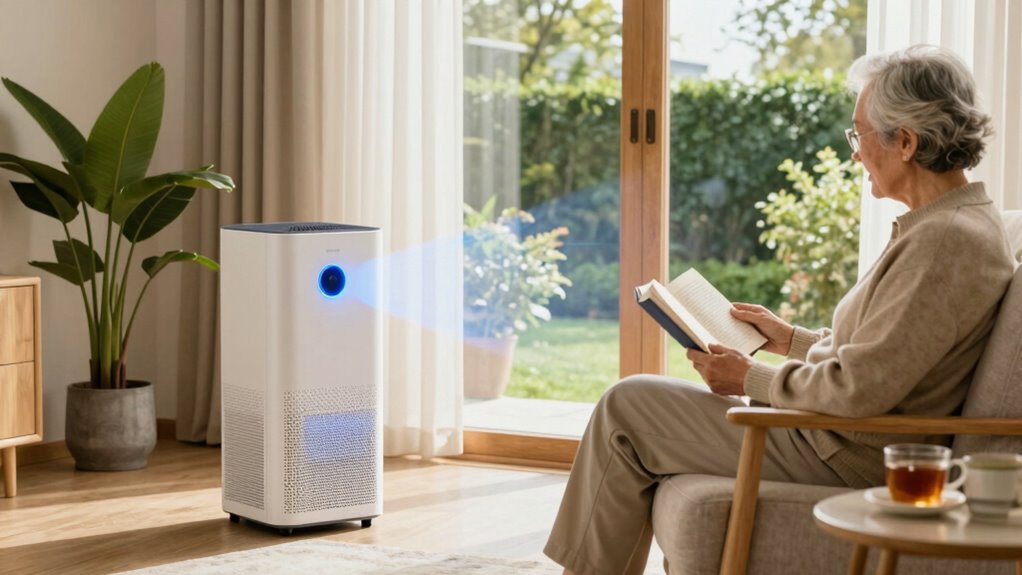
When choosing an air purifier for a senior household, understanding the different types available can make a significant difference in guaranteeing clean, healthy air. Here are key options to contemplate:
- HEPA filters: Capture tiny particles like dust and allergens, ideal for sensitive seniors.
- Activated carbon filters: Remove odors and volatile organic compounds, improving indoor air quality.
- Smart technology purifiers: Offer remote control, real-time air quality monitoring, and automation for convenience.
- Energy-efficient models: Save on electricity bills while providing continuous filtration.
Prioritize units with smart features and energy efficiency to assure ease of use and long-term savings, creating a safer environment for your loved ones.
Why Investing in an Air Purifier Benefits Senior Care
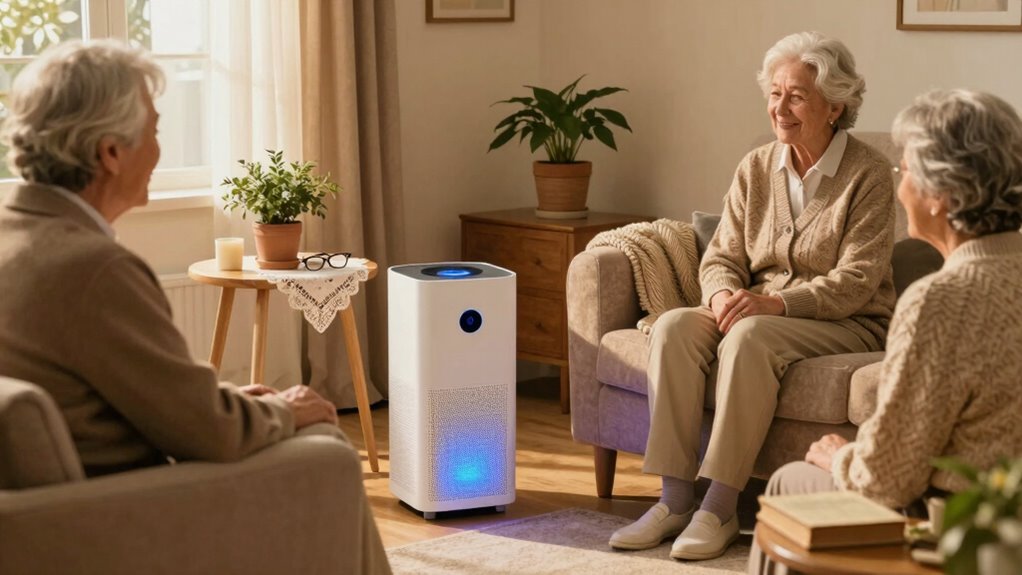
Investing in an air purifier for a senior household can considerably enhance the quality of life for your loved ones. Modern air purifier technology effectively filters pollutants, allergens, and airborne pathogens, creating a healthier environment. This is especially crucial for seniors who may have respiratory issues or weakened immune systems. While cost considerations are important, choosing an energy-efficient model can reduce long-term expenses without sacrificing performance. Better air quality can lead to fewer health complications, less medication, and an overall improved sense of well-being. By investing in a reliable air purifier, you’re prioritizing your loved ones’ health and comfort, making their daily life safer and more comfortable. It’s a proactive step toward thorough senior care.
Frequently Asked Questions
How Often Should Air Purifiers Be Replaced in Senior Households?
You should replace air purifier filters every 6 to 12 months, depending on usage and filter type. Regular filter maintenance guarantees peak performance and air quality, especially in senior households where residents may be more vulnerable. Keep an eye on your purifier’s indicator lights or check the manufacturer’s recommendations for replacement frequency. Doing this helps maintain clean air, reducing health risks and ensuring your air purifier works efficiently.
Are There Specific Noise Levels Suitable for Senior Living Spaces?
Think of noise levels like a vintage radio—too loud, and it disturbs senior comfort; just right, and it’s soothing. For senior living spaces, aim for air purifiers with noise levels below 50 decibels. This guarantees the device runs quietly, promoting relaxation and better sleep. Prioritizing lower noise levels helps create a peaceful environment, making it easier for seniors to breathe, rest, and feel at ease in their homes.
Can Air Purifiers Remove Allergens Like Pollen and Pet Dander?
Yes, air purifiers can effectively remove allergens like pollen and pet dander. They use HEPA filters that trap tiny particles, providing allergen elimination and substantially improving air quality. This is especially important in senior households, where allergens can worsen health issues. By continuously filtering the air, you create a healthier environment, reducing allergy symptoms and promoting better breathing for your loved ones.
Are There Any Safety Concerns With Using Air Purifiers Around Seniors?
Safety concerns with air purifiers around seniors are minimal if you prioritize proper air purifier maintenance and choose models with senior safety features. Regularly cleaning and replacing filters prevents harmful buildup, and safety features like automatic shut-off or child locks guarantee safe operation. Always select an air purifier designed with seniors in mind, and follow the manufacturer’s guidelines to maximize safety and air quality in your home.
How Do I Choose an Energy-Efficient Air Purifier for Seniors?
To choose an energy-efficient air purifier for seniors, look for models with low energy consumption labels, like Energy Star ratings. Consider purifiers with long-lasting filters, which reduce replacement frequency and waste. Check for adjustable fan speeds and timers to optimize energy use. Prioritize units with easy-to-maintain filters, ensuring they stay effective without frequent replacements, helping you save on electricity and maintenance costs while providing clean air for your loved ones.
Conclusion
So, next time you’re tempted to overlook an air purifier, remember—what you’re really investing in is your loved ones’ breath of fresh environment. Ironically, while we often focus on diet or medication, simple air quality improvements can make a world of difference. It’s a small step with big benefits, giving seniors a healthier, more comfortable life. After all, isn’t it worth breathing easier—especially when it’s so easy to do?
Cold & flu season Picks
humidifiers
As an affiliate, we earn on qualifying purchases.