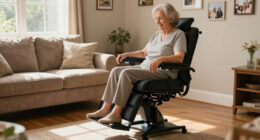

To quietly lower your fall risk at night, create a safe sleep environment with supportive bedding, clear clutter, and secure rugs. Stick to a consistent bedtime routine that includes relaxing activities and gentle stretches. Use good lighting and install grab bars for support. Manage health conditions and medications carefully. Practice calm relaxation techniques before bed, like deep breathing. Keep pathways clear and stay mindful of hazards—continue for more practical tips to keep your nights safer.

Turn quiet afternoons into listening time
- Thousands of audiobooks, podcasts and originals
- Listen on your phone, tablet or Echo — also offline
- Cancel anytime
Key Takeaways
- Create a safe sleep environment with proper lighting, secure rugs, and clutter-free pathways to reduce tripping hazards.
- Maintain consistent sleep and wake times, incorporating relaxing routines like reading or gentle stretches before bed.
- Use low-light settings and install nightlights to enhance visibility during nighttime movements.
- Practice balance and flexibility exercises to strengthen stability before sleep.
- Manage health conditions and medications carefully to prevent side effects that could impair balance during nighttime.
As an affiliate, we earn on qualifying purchases.
Enhance Your Sleep Environment for Safety
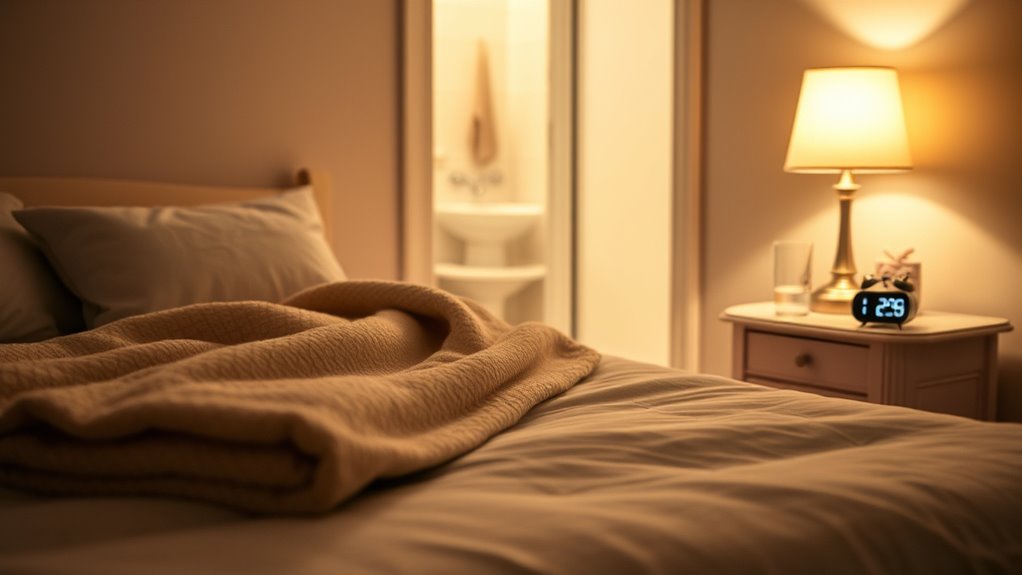
Creating a safe sleep environment is essential for reducing fall risk at night. You should start by evaluating your bedroom lighting—opt for soft, warm lights that won’t cause glare or sudden brightness, helping you see clearly without startling you awake. Proper bedroom lighting also helps prevent trips and falls when moving around in the dark. Next, prioritize mattress safety by choosing a supportive mattress that offers stability and comfort. Confirm your mattress is in good condition, free of sagging or unevenness, and fits your bed frame securely. Clear clutter from your sleeping area to prevent tripping hazards. Additionally, maintaining a digital-friendly environment at home can help you stay connected and safe, especially if emergencies arise during nighttime hours. By optimizing bedroom lighting and verifying mattress safety, you create a safer environment that promotes restful sleep and minimizes fall risks during nighttime movements.
Establish a Consistent Bedtime Routine
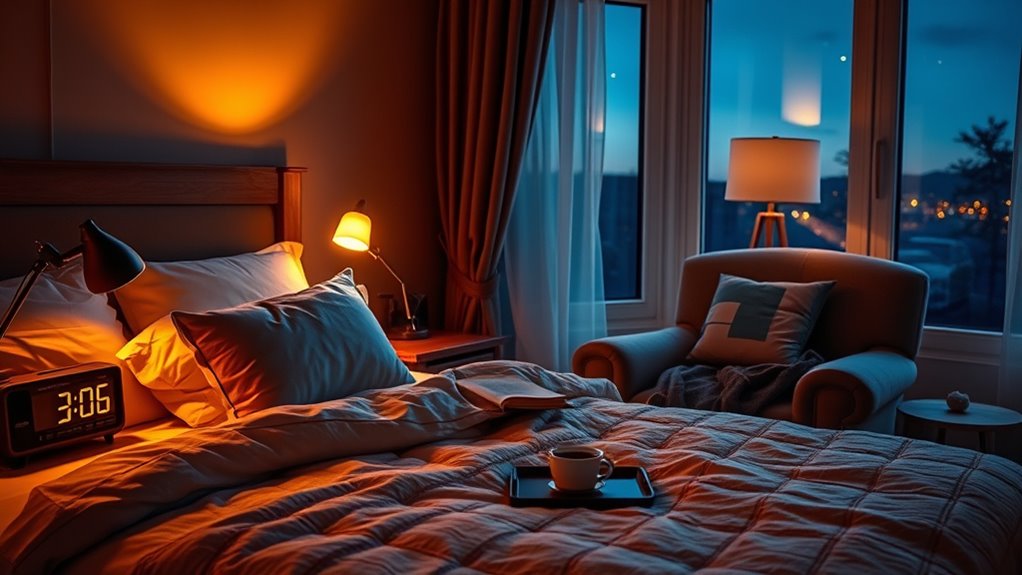
Establishing a consistent bedtime routine helps your body recognize when it’s time to wind down, making it easier to fall asleep and stay asleep throughout the night. To support sleep schedule consistency, go to bed and wake up at the same times each day, even on weekends. Incorporate relaxing activities like reading or gentle stretches to signal your body it’s time to rest. If you’re hungry before bed, choose a light bedtime snack idea, such as a small piece of fruit or a handful of nuts, to avoid waking in the night. Keeping a regular routine helps reduce nighttime awakenings and minimizes fall risks by ensuring you’re well-rested and alert during daytime activities. Consistency is key to long-term safety and better sleep quality. Sleep hygiene practices further enhance the quality of your rest, contributing to overall safety and health.
Incorporate Balance and Flexibility Exercises
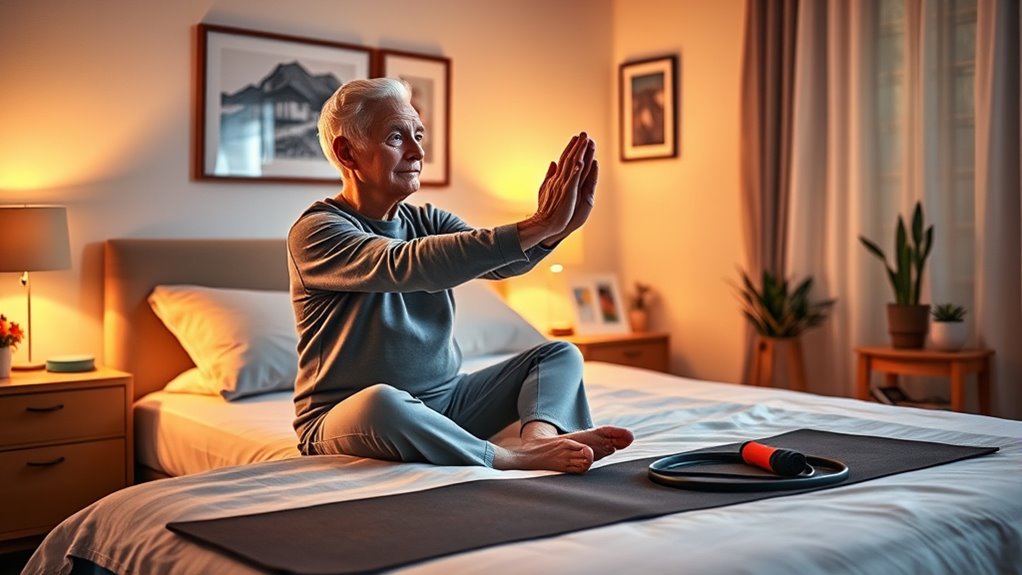
Adding balance and flexibility exercises to your routine can substantially reduce fall risk. Consistent practice helps enhance stability and prevents slips or missteps. Regularly improving your flexibility also supports safer movement, especially at night. Incorporating vetted safety measures such as proper lighting and secure rugs can further minimize hazards during nighttime activities.
Subheading 1: Enhance Stability With Practice
Practicing balance and flexibility exercises regularly can substantially improve your stability during nighttime movements. These exercises support fall prevention by strengthening muscles and enhancing proprioception. Consistent practice helps you develop muscle memory, making it easier to maintain stability when navigating in low light or unfamiliar environments. Incorporate exercises like standing on one foot, gentle stretches, and controlled movements to build resilience. Here’s a simple overview:
| Exercise Type | Benefits |
|---|---|
| Balance Drills | Improve proprioception and coordination |
| Flexibility Stretches | Increase joint range and reduce stiffness |
| Muscle Strengthening | Support stability and prevent falls |
Focusing on these practices can help you move more confidently and safely at night. Additionally, understanding the importance of contrast ratio can help you optimize your home environment for clearer visibility in low-light conditions.
Subheading 2: Improve Flexibility Regularly
To reduce your fall risk at night, regularly improving your flexibility is essential, especially when combined with balance exercises. Incorporate simple stretch routines and yoga stretches into your nightly routine to keep your muscles supple and joints mobile. Focus on stretches that target your hamstrings, calves, hips, and lower back, which are vital for maintaining stability. Consistent flexibility work helps prevent stiffness that can lead to falls, especially in low-light conditions. Yoga stretches like forward bends or gentle lunges improve your range of motion and enhance muscle coordination. Make this a calming part of your wind-down routine, encouraging relaxation while boosting your overall balance and flexibility. Incorporating vetted Halloween costumes can also make your routine more enjoyable and motivating. Over time, these practices will help you move more confidently and safely at night.
Limit Nighttime Hazards in Your Home

To reduce your fall risk at night, start by keeping pathways clear of clutter so you won’t trip. Make sure your home has enough night lighting to see where you’re going, and secure rugs and cords to prevent slipping. Taking these simple steps can make a big difference in keeping you safe during late hours. Additionally, consider using headphones with a 3.5mm jack or Bluetooth feature to listen to soothing sounds or alarms without disturbing others.
Clear Pathways Free of Clutter
Ensuring your pathways are free of clutter is essential to reducing nighttime hazards. Proper furniture arrangement allows for clear walking areas, minimizing the risk of trips and falls. Regularly obstacle removal keeps walkways safe and accessible, especially in low light. Take time to assess your home’s layout and reposition furniture if it blocks your path or creates narrow passages. Keep clutter, like shoes, cords, and loose items, out of main walkways to prevent accidental trips. Staying vigilant about obstacle removal helps you stay safe and independent. Automation technologies can also assist in monitoring and reminding you to keep walkways clear, further enhancing safety.
Install Adequate Night Lighting
Installing adequate night lighting is one of the most effective ways to reduce hazards when moving around in the dark. Consider using smart lighting systems that can be programmed to turn on automatically when you enter a room. Motion sensors are especially helpful, as they activate lights instantly when movement is detected, guiding you safely through hallways, stairs, and bathrooms. These sensors eliminate the need to fumble for switches in the dark, decreasing the risk of tripping or bumping into objects. Opt for low-wattage bulbs or dimmable options to create gentle illumination that won’t disrupt your sleep. Additionally, incorporating safety features such as night lights with automatic shutoff can further minimize risks and promote a secure sleeping environment. By upgrading your lighting setup with smart technology and motion sensors, you create a safer environment that supports your nighttime routine and minimizes fall risks.
Secure Rugs and Cords
Since loose rugs and cords can easily cause trips and falls in the dark, it’s important to guarantee them properly. Area rugs should be tacked down or taped at edges to prevent slipping. Electrical cords should be tucked away along baseboards or secured with cord clips to avoid creating tripping hazards. Avoid running cords across walkways, and consider using cord covers for added safety. Regularly inspect your cords for frays or damage, replacing any worn-out wiring. Keep cords away from high-traffic areas and ensure rugs are flat and secure. Additionally, sustainable home safety practices can include choosing eco-friendly, slip-resistant materials for rugs and cords. By taking these simple steps, you reduce the risk of nighttime falls and create a safer environment. Properly secured rugs and cords make your home safer and give you peace of mind during the night.
Manage Medications and Health Conditions

Managing your medications and health conditions carefully can substantially reduce your fall risk at night. Ensuring medication adherence means taking your medications exactly as prescribed, preventing sudden dizziness or disorientation. Keep a clear schedule to avoid missed doses or accidental overdoses. Proper chronic condition management, like controlling blood pressure or blood sugar levels, minimizes symptoms such as dizziness or weakness that increase fall risk. Regularly review your medications with your healthcare provider to identify side effects that could impair balance. Store medications in a consistent, accessible place to prevent confusion. Being proactive about your health helps you stay steady on your feet and reduces the chances of nighttime falls. Recognizing angel numbers can also serve as a reminder to stay mindful of your health and emotional well-being, further supporting fall prevention. Prioritize open communication with your healthcare team to keep your conditions well-managed.
Practice Gentle Pre-Sleep Relaxation Techniques
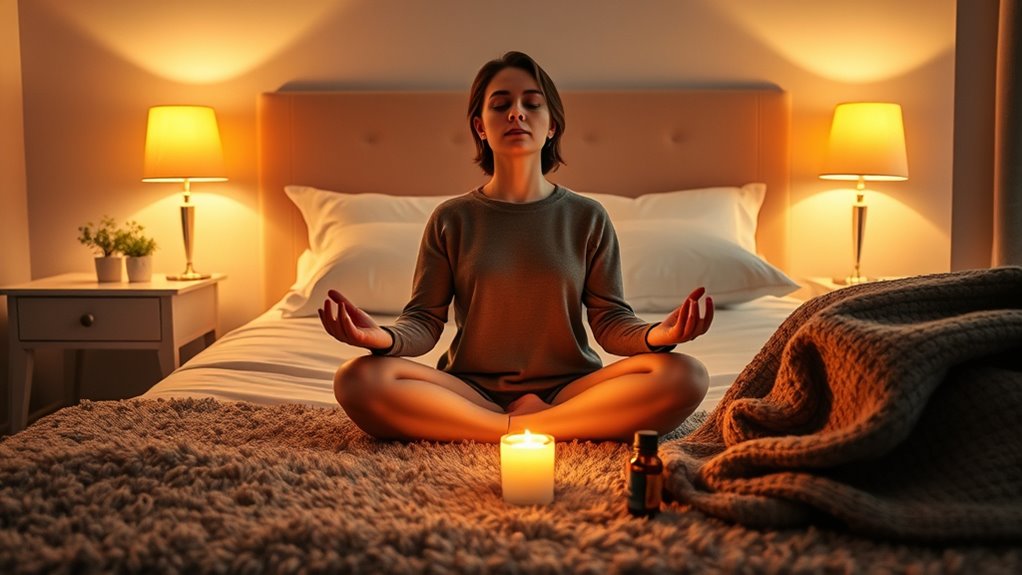
After ensuring your medications and health conditions are well-managed, winding down with gentle relaxation techniques can make a significant difference in preventing nighttime falls. Practicing mindfulness meditation or deep breathing exercises helps calm your mind and relax your muscles, making it easier to shift into restful sleep. These techniques reduce anxiety and physical tension, which can cause restlessness or balance issues during the night. To deepen your relaxation, consider:
- Focusing on your breath during deep breathing exercises
- Using guided mindfulness meditation apps or recordings
- Progressive muscle relaxation to release tension from head to toe
- Incorporating pressure relief strategies like massage or targeted stretches to further ease muscle tightness and promote better sleep.
Frequently Asked Questions
How Does Sleep Quality Influence Fall Risk During Nighttime Hours?
Good sleep quality reduces your fall risk by ensuring your sleep cycles are complete and restorative. When you get enough deep and REM sleep, your balance, coordination, and alertness improve, decreasing accidents. Poor sleep disrupts dream quality, leaving you groggy and less aware of your surroundings, which heightens fall risk during nighttime hours. Prioritizing restful sleep helps you maintain better stability and reduces the likelihood of falls.
Can Certain Lighting Choices in the Bedroom Improve Safety?
Think of your bedroom as a lighthouse guiding you safely through the night. Opt for soft, warm lighting to create clear pathways, reducing shadows that can hide obstacles. Use bedside lamps or motion-activated lights for easy access, ensuring lighting safety. Proper bedroom illumination helps you see potential hazards and navigate confidently, lowering your fall risk. Small changes in lighting choices can make a significant difference in keeping you safe while you rest.
Are There Specific Foods or Drinks That Promote Safer Sleep?
You can promote safer sleep by choosing nutrient-rich snacks like almonds, bananas, or yogurt before bed, which help stabilize blood sugar and improve sleep quality. Incorporate herbal sleep aids like chamomile or valerian tea to relax your mind and body. Avoid heavy meals or caffeine late at night, as they can disturb your sleep. Better sleep reduces fall risk by ensuring you’re alert and steady when you wake.
How Often Should Safety Checks in the Home Be Performed?
You should perform home safety daily inspections to catch hazards before they cause harm. Skipping these checks even once can lead to dangerous slips or falls. Focus on lighting, loose rugs, clutter, and electrical cords, especially in high-risk areas. Regular safety checks keep your home secure, giving you peace of mind and reducing fall risk. Don’t wait—make daily inspections a routine to protect yourself and loved ones.
What Signs Indicate a Need to Adjust Medication Timing for Safety?
You should adjust your medication timing if you notice side effects like dizziness, drowsiness, or confusion, especially at specific times. These signs suggest your current dosage timing isn’t ideal for safety. Talk to your healthcare provider about your symptoms; they may recommend changing when you take your medication to reduce side effects and improve safety, helping you stay steady and avoid falls during your nighttime routine.
Conclusion
By making simple changes, you’re building a safety net that catches you before a fall happens. Think of your nighttime routine as a lighthouse guiding you safely through the dark—brightening your path and preventing hazards. When I started paying attention to my sleep environment and gentle exercises, I felt more confident stepping out of bed each morning. Small steps today create a stronger, steadier tomorrow, helping you stay safe and secure every night.
Fall Picks
fall essentials
As an affiliate, we earn on qualifying purchases.