The best shoes for elderly people with dementia are easy to put on, stay secure, and feel comfortable without complicated fasteners. My best overall pick is the FitVille EasyTop Wings V2 Diabetic Shoes for Men, which stands out for an adjustable design suited to changing foot needs. For women, the W&LESVAGO adjustable edema shoes offer broad adjustability, while the AOE slip-on sneakers are a useful option for people who may struggle with laces. The main tradeoff is between a simple slip-on fit and the adjustability that can help accommodate swelling or foot shape. Read on for the full breakdown and guidance on matching a shoe to the wearer’s routine and support needs.

Turn quiet afternoons into listening time
- Thousands of audiobooks, podcasts and originals
- Listen on your phone, tablet or Echo — also offline
- Cancel anytime
Complete the kit


Key Takeaways
- Adjustable closures separate the strongest candidates: FitVille EasyTop Wings V2, W&LESVAGO, and several strap-closure options allow more fit adjustment than basic slip-on styles.
- Slip-on ease comes with a fit tradeoff: AOE’s no-tie toggle and Sisttke’s slip-on design reduce fastening steps, but caregivers should check that the heel stays secure during walking.
- Wide toe boxes appear across several styles: L-RUN and LeIsfIt emphasize toe room, while adjustable diabetic-shoe designs are a better fit-first choice when swelling changes during the day.
- Indoor slippers and walking shoes serve different routines: Cozy and L-RUN are slipper-style choices; models such as Spesoul, Besroad, and AOE are positioned for walking.
- The roundup offers both women’s, men’s, and unisex options: AOE and Cozy are listed for men and women, while several other picks are designed for a specific gender, so check sizing and fit before choosing.
| L-RUN Women’s Wide Toe Box Faux Suede Slippers |  | Best for Familiar Indoor Slipper Comfort | Sole material: Rubber | Outer material: Faux suede | Closure: Hook and loop | VIEW ON AMAZON | See Our Full Breakdown |
| Women’s Adjustable Wide Diabetic Shoes |  | Best for Swelling and Frequent Fit Changes | Sole material: Rubber | Outer material: Knitted fabric | Inner material: Foam | VIEW ON AMAZON | See Our Full Breakdown |
| Sisttke Women’s Wide Width Slip-On Diabetic Walking Shoes |  | Best for Breathable, Adjustable Walking | Sole material: Ethylene Vinyl Acetate | Outer material: Knit | Inner material: Knit | VIEW ON AMAZON | See Our Full Breakdown |
| Spesoul Women’s Wide Adjustable Walking Shoes |  | Best for a Zero-Drop Walking Feel | Sole material: Rubber | Outer material: Knit | Inner material: Skin-friendly material | VIEW ON AMAZON | See Our Full Breakdown |
| Cozy Wide Fit Slippers for Women and Men |  | Best for Warmth and Easy Washing | Upper material: Fleece | Lining material: Velvet | Inner material: Faux fur | VIEW ON AMAZON | See Our Full Breakdown |
| AOE Diabetic Shoes for Men and Women, Wide Slip-On Walking Sneakers with Adjustable No-Tie Toggle Closure |  | Best for Quick, Hands-Free Adjustments | Fabric: Flywoven fabric | Origin: Imported | Sole material: High-elastic material and TPR | VIEW ON AMAZON | See Our Full Breakdown |
| LeIsfIt Women’s Wide Toe Box Barefoot Walking Sneakers |  | Best for a Roomy Toe Box | Sole material: Rubber | Outer material: Soft material | Inner material: Mesh | VIEW ON AMAZON | See Our Full Breakdown |
| BARERUN Women’s Wide Barefoot Walking Shoes with Adjustable Strap |  | Best for Indoor and Outdoor Use | Sole material: Rubber | Outer material: Mesh | Inner material: Breathable fabric | VIEW ON AMAZON | See Our Full Breakdown |
| Men’s Wide Diabetic Walking Shoes Adjustable Swollen Feet Orthopedic Breathable Sneakers |  | Best Men’s Adjustable-Strap Pick | Sole material: Rubber | Outer material: Knitted fabric | Inner material: Knitted fabric | VIEW ON AMAZON | See Our Full Breakdown |
| W&LESVAGO Women’s Wide Width Diabetic Edema Shoes with Fully Adjustable Closures and Air Cushion Walking Sneakers |  | Best for Cushioning and Insole Options | Insole configuration: 5 mm and 3 mm thickness insoles | Sole material: Rubber | Outer material: Mesh | VIEW ON AMAZON | See Our Full Breakdown |
| FitVille EasyTop Wings V2 Diabetic Shoes for Men |  | Best for Swollen or Sensitive Feet | Sole material: Rubber | Outer material: Mesh | Inner material: Breathable knitted fabric | VIEW ON AMAZON | See Our Full Breakdown |
| Besroad Women’s Adjustable Wide Walking Shoes |  | Best for a Simple, Fully Opening Closure | Sole material: Rubber | Outer material: Knit | Inner material: Knit | VIEW ON AMAZON | See Our Full Breakdown |
| Women’s Adjustable Wide-Width Zero-Drop Walking Shoes |  | Best Lightweight Zero-Drop Option | Sole material: Rubber | Outer material: Knitted fabric | Inner material: Knitted fabric | VIEW ON AMAZON | See Our Full Breakdown |
| shoes for elderly with dementia | Sole material | Closure | Outer material | Inner material |
|---|---|---|---|---|
| L-RUN Women’s Wide Toe Box Fau | Rubber | Hook and loop | Faux suede | — |
| Women’s Adjustable Wide Diabet | Rubber | Hook and loop | Knitted fabric | Foam |
| Sisttke Women’s Wide Width Sli | Ethylene Vinyl Acetate | Hook and loop | Knit | Knit |
| Spesoul Women’s Wide Adjustabl | Rubber | Hook and loop | Knit | Skin-friendly material |
| Cozy Wide Fit Slippers for Wom | Rubber | Adjustable hook-and-loop | — | Faux fur |
| AOE Diabetic Shoes for Men and | High-elastic material and TPR | No-tie adjustable toggle | — | — |
| LeIsfIt Women’s Wide Toe Box B | Rubber | Hook and loop | Soft material | Mesh |
| BARERUN Women’s Wide Barefoot | Rubber | Hook and loop | Mesh | Breathable fabric |
| Men’s Wide Diabetic Walking Sh | Rubber | Hook and loop | Knitted fabric | Knitted fabric |
| W&LESVAGO Women’s Wide Width D | Rubber | Adjustable hook-and-loop straps | Mesh | Breathable material |
| FitVille EasyTop Wings V2 Diab | Rubber | Hook and loop | Mesh | Breathable knitted fabric |
| Besroad Women’s Adjustable Wid | Rubber | Hook and loop | Knit | Knit |
| Women’s Adjustable Wide-Width | Rubber | Hook and loop | Knitted fabric | Knitted fabric |
More Details on Our Top Picks
L-RUN Women’s Wide Toe Box Faux Suede Slippers
For someone who is more likely to keep familiar slippers on than accept a structured walking shoe, the L-RUN Faux Suede Slippers offer an approachable option. Their wide toe box leaves room for toes, while the hook-and-loop closure lets a caregiver adjust the fit without tying laces. Compared with the Cozy Wide Fit Slippers, this pair has a faux suede outer rather than fleece and faux-fur warmth, which may suit someone who prefers less plush bulk. The patterned rubber sole adds grip for short trips around the home, but it is not a guarantee against falls. These slippers are not water resistant, and their limited arch support may be a poor match for longer walks. I’d favor them for familiar, mostly indoor routines rather than errands or wet conditions.
Pros:- Wide toe box gives toes room without a narrow front.
- Hook-and-loop closure allows fit adjustment without laces.
- Plush lining and a soft insole add comfort for indoor wear.
- Patterned rubber sole provides tread for household steps.
Cons:- Not water resistant, limiting use outdoors in wet weather.
- Some arch support may not suit someone needing more structured support.
- A slipper format may be less secure than a closed walking shoe for some wearers.
Best for: Caregivers seeking lightweight, wide-toe slippers for an older woman who prefers a familiar indoor slipper and needs an adjustable fastening.
Not ideal for: People who need dependable rain protection, substantial arch support, or footwear for extended outdoor walking.
- Sole material:Rubber
- Outer material:Faux suede
- Closure:Hook and loop
- Water resistance:Not water resistant
- Toe box:Wide
- Lining:Plush
- Arch support:Some
Our verdict“Choose the L-RUN for a familiar, adjustable indoor slipper; skip it if the wearer needs structured support or wet-weather footwear.”
Women’s Adjustable Wide Diabetic Shoes
The main advantage here is a knitted upper that adjusts, giving caregivers room to respond when swelling changes through the day. The hook-and-loop closure also opens widely, which can make dressing simpler for someone who has trouble coordinating laces or pushing a foot into a narrow opening. Compared with the Sisttke Women’s Wide Width Slip-On Diabetic Walking Shoes, this option provides stated size and length ranges, though neither listing gives a specific width measurement. Its foam cushioning and rubber sole are aimed at comfort and traction, but the available details do not establish how stable the shoe will feel for a particular wearer. Sizing spans international systems, so checking the chart carefully matters. I’d choose it when adjustable volume is the priority, not when a precise, clearly documented fit is needed.
Pros:- Adjustable knitted upper can accommodate changes in foot volume.
- Hook-and-loop closure opens for easier putting on and removal.
- Foam insole and cushioned rubber sole are designed for comfort.
- Lightweight, breathable fabric may feel less bulky than a plush slipper.
Cons:- Sizing uses multiple international systems, making chart checks necessary.
- No specific width measurements are provided.
- Cushioning and traction descriptions do not establish suitability for every balance or support need.
Best for: Caregivers of a woman whose foot swelling varies and who needs a lightweight shoe that opens for easier fitting.
Not ideal for: Buyers who need stated width measurements, a simple sizing reference, or a proven fit for a specific foot shape.
- Sole material:Rubber
- Outer material:Knitted fabric
- Inner material:Foam
- Closure:Hook and loop
- Insole:Cushion foam
- Available US sizes:6–10
- Heel-to-toe length:9.0–10.4 inches
Our verdict“Pick these shoes when swelling and easy fastening matter more than precise published width guidance.”
Sisttke Women’s Wide Width Slip-On Diabetic Walking Shoes
The breathable knit upper and wide toe box make the Sisttke a practical candidate for sensitive or swollen feet, while its hook-and-loop strap offers a visible fastening caregivers can adjust. That makes it a more walking-oriented choice than the L-RUN Faux Suede Slippers, which are better suited to familiar indoor use. The outsole is described as EVA, with multidirectional tread intended to provide grip; that is useful detail, but it does not prove the shoe will prevent slips or fit a particular gait. The key limitation is the missing sizing and fit measurements, so choosing the right size may take extra checking. I’d shortlist it for someone who needs a breathable shoe for regular walks, but not where a caregiver cannot verify fit before relying on it.
Pros:- Wide toe box gives toes additional room.
- Breathable, moisture-wicking knit is suited to sensitive feet.
- Hook-and-loop strap allows adjustment and avoids laces.
- Multidirectional tread is designed to provide traction.
Cons:- No sizing or fit measurements are provided.
- No arch-support or cushioning details are specified.
- EVA outsole material differs from the rubber soles listed for the L-RUN and Spesoul models.
Best for: Caregivers seeking a breathable, wide-toe walking shoe with a fastening strap for a woman with sensitive or swollen feet.
Not ideal for: Buyers who need published size and width measurements to select footwear confidently or who want a clearly documented support level.
- Sole material:Ethylene Vinyl Acetate
- Outer material:Knit
- Inner material:Knit
- Closure:Hook and loop
- Fit:Wide toe box
- Outsole tread:Multidirectional
Our verdict“Choose the Sisttke for breathable, adjustable walking if you can confirm the fit; otherwise, favor a model with clearer sizing information.”
Spesoul Women’s Wide Adjustable Walking Shoes
Spesoul stands out for combining a wide toe box with adjustable straps and a rubber sole, making it more shoe-like for indoor and outdoor activity than the Cozy Wide Fit Slippers. Its zero-drop construction means the sole has no stated heel-to-toe rise; some wearers may prefer that level feel, while others may need a different profile. The breathable knit upper could be comfortable for routine wear, and the non-slip texture is intended to add grip. Still, the listing gives no sizing measurements, cushioning details, or arch-support information. That leaves important questions for a wearer with balance concerns or a need for a specific fit. I’d consider it when simple, adjustable fastening and a flat sole are priorities, but I would not assume that “non-slip” replaces a supervised fit and safety check.
Pros:- Wide toe box allows a more natural toe position.
- Adjustable hook-and-loop straps simplify fastening and fit changes.
- Breathable knit upper is suited to regular wear.
- Rubber sole has a non-slip texture and is described for indoor and outdoor use.
Cons:- No sizing or fit measurements are provided.
- Cushioning and arch support are not specified.
- Zero-drop design may not suit wearers who need a different sole profile.
Best for: Caregivers looking for a wide, adjustable walking shoe with a flat, zero-drop sole for a woman who tolerates that profile.
Not ideal for: Wearers who need documented cushioning, arch support, precise sizing, or a raised heel-to-toe profile.
- Sole material:Rubber
- Outer material:Knit
- Inner material:Skin-friendly material
- Closure:Hook and loop
- Fit:Wide width with wide toe box
- Sole design:Zero drop
- Sole texture:Non-slip texture
Our verdict“Choose Spesoul for adjustable, flat-profile walking footwear only if the wearer’s fit and support needs match the limited published details.”
Cozy Wide Fit Slippers for Women and Men
For a wearer who seeks soft, warm house footwear and may benefit from a caregiver-adjusted closure, these slippers pair a wide toe design with hook-and-loop fastening. Their rubber outsole and non-slip treads make them more suitable for brief steps outside than a soft-soled house slipper, though they are not a substitute for a walking shoe when stability is a concern. Compared with the L-RUN Faux Suede Slippers, this pair adds fleece, velvet, and faux-fur materials plus machine-washable care; that may help with routine cleaning, but creates a warmer, bulkier feel. The listing provides no sizing or durability details, so fit and long-term wear are hard to judge. I’d choose these for cool indoor settings and easy laundering, not hot weather or precise-fit needs.
Pros:- Warm fleece, velvet, and faux-fur materials create a soft feel.
- Wide toe design and adjustable closure allow room and fit adjustment.
- Rubber sole with non-slip treads supports short indoor and outdoor trips.
- Machine-washable construction makes cleaning simpler.
Cons:- Warm lining may be uncomfortable in hot weather.
- No sizing details are provided to guide fit selection.
- No durability information is given for frequent washing or outdoor use.
Best for: Caregivers seeking warm, washable slippers with an adjustable closure for an older adult who mainly wears them indoors.
Not ideal for: People who overheat easily, need detailed sizing guidance, or require a structured shoe for regular outdoor walking.
- Upper material:Fleece
- Lining material:Velvet
- Inner material:Faux fur
- Sole material:Rubber
- Closure:Adjustable hook-and-loop
- Fit:Wide toe design
- Sole profile:Zero-drop
- Care:Machine washable
Our verdict“Choose these for warm, washable lounging slippers, but look elsewhere for cool-weather versatility or a more structured walking shoe.”
AOE Diabetic Shoes for Men and Women, Wide Slip-On Walking Sneakers with Adjustable No-Tie Toggle Closure
For someone with dementia who may resist tying laces or struggle with small fasteners, the no-tie toggle closure offers a simpler routine: the caregiver can adjust the fit without making a knot. Its wide last is also a useful match for swollen or broad feet, while the lightweight flywoven upper avoids the feel of a heavy shoe. Compared with the W&LESVAGO Women’s Wide Width Diabetic Edema Shoes, AOE is a straightforward slip-on choice, whereas W&LESVAGO offers removable insoles and stated arch support for buyers prioritizing cushioning options. AOE’s high-elastic and TPR sole is described as shock-absorbing and non-slip, but the product details do not establish a dementia-specific closure lock or a secure heel fit. I would favor it for supervised everyday walks, not when a clinician has prescribed a particular support level.
Pros:- No-tie toggle makes fit adjustments simpler than conventional laces.
- Wide-last design accommodates broad or swollen feet.
- Breathable flywoven fabric is described as lightweight.
- High-elastic and TPR sole is described as non-slip and shock-absorbing.
Cons:- No specific arch-support or removable-insole details are provided.
- Casual sneaker styling may not suit dressier settings.
- The listed features do not confirm a dementia-specific fastening safeguard.
Best for: Caregivers seeking a lightweight, wide-fitting shoe that is quick to adjust for an older adult who has difficulty managing laces.
Not ideal for: People who need documented arch support, a formal-looking shoe, or a clinician-specified stability feature; those details are not established here.
- Fabric:Flywoven fabric
- Origin:Imported
- Sole material:High-elastic material and TPR
- Closure:No-tie adjustable toggle
- Fit design:Wide last for swollen or broad feet
- Sole features:Described as non-slip and shock-absorbing
Our verdict“Choose AOE when easy toggle adjustment and a wide fit matter more than documented arch support or dressier styling.”
LeIsfIt Women’s Wide Toe Box Barefoot Walking Sneakers
The standout here is the wide toe box, which gives toes room rather than squeezing them together. A hook-and-loop closure is less fiddly than laces and can be adjusted for different foot shapes, a practical point when a caregiver helps with dressing. Compared with BARERUN Women’s Wide Barefoot Walking Shoes with Adjustable Strap, LeIsfIt’s listed construction is similarly minimalist, but its description explicitly presents the shoe for walking, running, and hiking; that broader activity framing does not make it a better choice for an older adult who needs extra cushioning. The zero-drop sole keeps heel and forefoot at the same level, a feel that may be unfamiliar or uncomfortable for someone accustomed to a raised heel. I would choose it for roomy toe space and simple fastening, but not for buyers seeking stated arch support or a cushioned, elevated sole.
Pros:- Wide toe box allows more room for natural toe positioning.
- Hook-and-loop closure is adjustable without tying laces.
- Mesh inner material is described as breathable.
- Rubber sole has anti-slip traction.
Cons:- Zero-drop design may not suit someone accustomed to elevated soles.
- No arch-support or cushioning details are specified.
- The product description does not establish dementia-specific fit or closure safeguards.
Best for: Caregivers looking for a women’s shoe with generous toe room and an adjustable fastening for an older adult comfortable in minimalist footwear.
Not ideal for: People who prefer a raised heel, need stated arch support, or may find a zero-drop sole unfamiliar.
- Sole material:Rubber
- Outer material:Soft material
- Inner material:Mesh
- Closure:Hook and loop
- Toe box:Wide
- Sole design:Zero drop
- Traction:Anti-slip traction
Our verdict“Pick LeIsfIt for toe room and adjustable fastening if the wearer is comfortable with a minimalist, zero-drop sole.”
BARERUN Women’s Wide Barefoot Walking Shoes with Adjustable Strap
BARERUN pairs a wide toe box with a hook-and-loop strap, so a caregiver can adjust the fit without tying laces. Its mesh upper and breathable fabric are intended to keep the shoe light, and the rubber tread is described for both indoor and outdoor use. That makes this a flexible everyday option, but the details do not specify arch support, removable insoles, or cushioning. Compared with LeIsfIt Women’s Wide Toe Box Barefoot Walking Sneakers, BARERUN is framed more clearly for indoor and outdoor wear, while both share a zero-drop profile and adjustable closure. That shared minimalist construction is the main caveat: someone who relies on a raised heel or more structured support may prefer W&LESVAGO’s stated arch-support insoles instead. Fit feedback is not supplied, so I would check sizing and fit carefully before relying on it for regular wear.
Pros:- Wide toe box gives toes room to spread.
- Hook-and-loop strap allows caregiver-assisted fit adjustment.
- Mesh and breathable fabric are intended to keep the shoe lightweight.
- Rubber tread is described for indoor and outdoor use.
Cons:- Zero-drop sole may not suit people who prefer an elevated heel.
- No arch-support or removable-insole details are provided.
- Available fit feedback is not included in the product information.
Best for: Caregivers seeking a women’s adjustable-strap shoe for an older adult who needs a wide toe area and may wear the same pair indoors and outdoors.
Not ideal for: Wearers who need specified arch support, substantial cushioning, or a familiar raised-heel profile.
- Sole material:Rubber
- Outer material:Mesh
- Inner material:Breathable fabric
- Closure:Hook and loop
- Toe design:Wide toe box
- Sole design:Zero drop
- Tread:Non-slip; intended for indoor and outdoor use
Our verdict“Choose BARERUN for a wide, adjustable shoe intended for indoor and outdoor use, provided a minimalist sole suits the wearer.”
Men’s Wide Diabetic Walking Shoes Adjustable Swollen Feet Orthopedic Breathable Sneakers
This men’s option puts adjustable hook-and-loop straps and a wide toe box ahead of complicated fastening, which can make caregiver-assisted dressing more manageable. The knitted upper is described as breathable, and the rubber sole is intended to provide grip for indoor and outdoor activity. Compared with AOE Diabetic Shoes for Men and Women, this model uses straps rather than a toggle closure; that may suit someone who needs the opening adjusted across the top of the foot, while AOE may appeal to buyers who prefer its no-tie toggle. The tradeoff is the zero-drop sole and lack of specified arch support, so its orthopedic label should not be taken as proof that it fits every support need. I would consider it for a man with swollen feet who benefits from a roomy fit, after checking fit and stability with a caregiver or clinician.
Pros:- Wide toe box allows space for toes.
- Hook-and-loop straps permit fit adjustment without laces.
- Knitted fabric is described as breathable.
- Rubber sole is described as non-slip for indoor and outdoor activity.
Cons:- Arch support may be insufficient for some wearers.
- Zero-drop construction may not suit someone used to a raised heel.
- Casual sneaker styling is not suited to formal occasions.
Best for: Caregivers shopping for a man with swollen feet who needs a wide toe area and adjustable straps for easier assisted dressing.
Not ideal for: Wearers who need documented arch support, a raised heel, or a dress shoe; the product details do not establish those features.
- Sole material:Rubber
- Outer material:Knitted fabric
- Inner material:Knitted fabric
- Closure:Hook and loop
- Design features:Zero drop and wide toe box
- Fit adjustment:Adjustable straps
- Use:Indoor and outdoor activities
Our verdict“This is a practical men’s option when a wide toe area and adjustable straps matter more than specified arch support.”
W&LESVAGO Women’s Wide Width Diabetic Edema Shoes with Fully Adjustable Closures and Air Cushion Walking Sneakers
W&LESVAGO is the most support-focused choice in this group on paper: its extra depth and width, adjustable hook-and-loop straps, and removable foam insoles offer several ways to accommodate swelling or changes in fit. The air-cushion sole is presented as a way to reduce foot pressure, while the insoles include arch support—a useful distinction from the minimalist LeIsfIt and BARERUN shoes, whose zero-drop designs have no stated arch-support feature. The extra structure and adjustment options may suit someone who needs more than a basic wide sneaker, but the product data does not establish suitability for high-impact activity, and the description says support may fall short there. It is also a women’s casual walking shoe, not a dementia-specific product. I would prioritize it when fit flexibility and removable insoles matter, while checking the fit with the wearer or clinician.
Pros:- Extra depth and width provide more room for swollen feet.
- Adjustable hook-and-loop straps allow changes to the fit.
- Removable foam insoles offer fit flexibility and include arch support.
- Air-cushion sole is intended to reduce foot pressure.
Cons:- Product details say support may not meet high-impact activity needs.
- The listed features do not establish a dementia-specific fastening safeguard.
- Casual sneaker styling may not fit dressier settings.
Best for: Caregivers seeking a women’s wide, extra-depth shoe for swelling or edema, especially when removable insoles and stated arch support are useful.
Not ideal for: People seeking footwear for high-impact activities or a shoe designed specifically around dementia-related dressing and supervision needs.
- Insole configuration:5 mm and 3 mm thickness insoles
- Sole material:Rubber
- Outer material:Mesh
- Inner material:Breathable material
- Fit:Extra depth and width
- Closure:Adjustable hook-and-loop straps
- Cushioning:Air-cushion design
- Insoles:Removable foam insoles with arch support
Our verdict“Choose W&LESVAGO when a wide, adjustable fit and removable arch-support insoles take priority over high-impact use.”
FitVille EasyTop Wings V2 Diabetic Shoes for Men
For a man with swollen or pressure-sensitive feet, I’d put the FitVille EasyTop Wings V2 ahead of the simpler knit walking options because its seamless interior and soft foam padding are specifically described as ways to reduce rubbing. The wide and extra-wide toe box also gives more room than the wide-only fit listed for the Besroad Women’s Adjustable Wide Walking Shoes. Its hook-and-loop strap can be opened and adjusted, which may help a caregiver set the fit without tying laces. The tradeoff is that the product information does not give a weight, cushioning measurement, or sizing details, so fit may take careful checking. The slip-resistant EVA sole adds shock absorption, but buyers seeking a zero-drop design should compare it with the Besroad or the Women’s Adjustable Wide-Width Zero-Drop Walking Shoes.
Pros:- Seamless interior and foam padding are designed to reduce friction and pressure.
- Wide and extra-wide toe-box options accommodate broader or swollen feet.
- Hook-and-loop strap allows the fit to be adjusted without tying laces.
- High-rebound EVA sole combines shock absorption with a slip-resistant tread pattern.
Cons:- No specific sizing measurements are provided, making fit harder to judge before purchase.
- No stated shoe weight or cushioning measurements for comparing support needs.
- The design is described for men, so it may not suit buyers seeking a women’s fit.
Best for: Men with wide or swollen feet who need an adjustable closure and a smoother interior to limit rubbing during everyday walking.
Not ideal for: Buyers who need documented sizing or cushioning measurements, or who specifically want a zero-drop sole.
- Sole material:Rubber
- Outer material:Mesh
- Inner material:Breathable knitted fabric
- Closure:Hook and loop
- Toe-box fit:Wide and extra-wide
- Sole technology:High-rebound EVA
- Tread:Slip-resistant concave-convex pattern
Our verdict“Choose the FitVille if a man needs extra toe room, an adjustable strap, and a smoother interior more than a zero-drop design.”
Besroad Women’s Adjustable Wide Walking Shoes
The Besroad is the clearest pick here for someone who benefits from a shoe that opens wide before the foot goes in: its fully opening hook-and-loop closure lets a caregiver adjust the fit without managing laces. Compared with the FitVille EasyTop Wings V2, it is described as a women’s walking shoe with a zero-drop rubber sole, rather than a men’s diabetic shoe with extra-wide sizing and shock-absorbing EVA. The roomy toe box and breathable knit are practical for everyday wear, while the patterned rubber tread is intended to support outdoor traction. The compromise is limited fit detail: no specific width measurements or sizing guidance are supplied, and the zero-drop design may not suit someone accustomed to a more raised heel. I’d favor the FitVille instead when pressure-sensitive feet or extra-wide sizing are the primary concern.
Pros:- Fully opening hook-and-loop closure makes assisted putting-on and fit adjustment more straightforward.
- Wide toe box allows more room for toe movement.
- Knit upper and lining are described as breathable.
- Rubber sole has an anti-slip tread pattern for indoor and outdoor walking.
Cons:- No specific width measurements or sizing guidance are supplied.
- Zero-drop construction may feel unfamiliar to wearers used to a raised heel.
- No cushioning or shock-absorption details are provided.
Best for: Women who need a shoe that opens fully for easier assisted dressing and prefer a wide toe box with a zero-drop sole.
Not ideal for: Buyers who need documented width or sizing measurements, or older adults who are unaccustomed to zero-drop footwear and want a more cushioned heel-to-toe profile.
- Sole material:Rubber
- Outer material:Knit
- Inner material:Knit
- Closure:Hook and loop
- Design:Zero-drop
- Toe box:Wide
- Fit adjustment:Adjustable
Our verdict“Pick the Besroad for easy assisted dressing and a wide, zero-drop fit, but look elsewhere if you need measured sizing or specified cushioning.”
Women’s Adjustable Wide-Width Zero-Drop Walking Shoes
This model suits a woman who wants a lightweight, breathable shoe with adjustable straps and a zero-drop sole for indoor or outdoor activities. Like the Besroad Women’s Adjustable Wide Walking Shoes, it pairs a wide toe box with zero-drop construction; the Besroad description, however, specifically calls out a fully opening closure, while this listing only specifies adjustable hook-and-loop straps. Compared with the FitVille EasyTop Wings V2, it offers less detail about pressure relief and shock absorption, but its stated lightweight build may appeal to someone who prefers a less substantial shoe. I’d be cautious about choosing it for a wearer who needs a notably cushioned ride: no cushioning or sizing details are supplied, and the zero-drop sole may take adjustment. Its non-slip rubber tread is a useful feature, but it cannot replace supervision or fall-safety planning.
Pros:- Wide toe box provides room for toes.
- Adjustable hook-and-loop straps allow fit changes.
- Knitted fabric upper and lining are described as breathable.
- Lightweight rubber sole has non-slip treads.
Cons:- Zero-drop sole may take adjustment for someone used to a raised heel.
- No cushioning or shock-absorption details are provided.
- No sizing or specific width measurements are supplied.
Best for: Women who want a lightweight, breathable wide-fit shoe with adjustable straps and are already comfortable with zero-drop footwear.
Not ideal for: Wearers who need specified cushioning, detailed sizing guidance, or a gradual change from raised-heel shoes.
- Sole material:Rubber
- Outer material:Knitted fabric
- Inner material:Knitted fabric
- Closure:Hook and loop
- Toe design:Wide toe box
- Sole design:Zero-drop
- Stated features:Lightweight, breathable, non-slip
Our verdict“Choose this model for a lightweight, breathable zero-drop option, but favor the FitVille or a more cushioned shoe when impact comfort is the priority.”
How We Picked
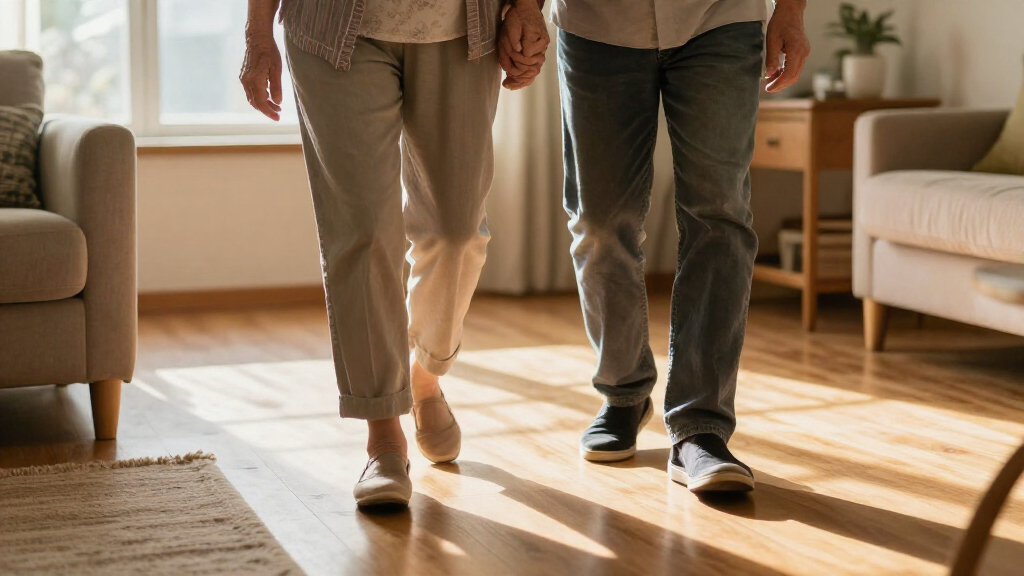
I ranked these 13 options around the needs that matter when an older adult has dementia: simple footwear routines, stable fit, comfort, and practical use. I gave more weight to adjustable closures and wide-fit designs because they can make dressing easier and accommodate foot shape or swelling. I also separated indoor slippers from walking shoes rather than treating them as interchangeable; the right choice depends on where the wearer walks and what support the setting calls for.
The order reflects the balance of ease of use and fit flexibility, not a claim that one shoe works for every person. Models with adjustment features rank ahead when the wearer’s feet need a more adaptable fit; simpler slip-ons and slippers have distinct roles but may offer less control over how securely the shoe sits. Product names and listed features guide this comparison, but individual fit, walking ability, and caregiver observation should decide the final choice.
| shoes for elderly with dementia | Sole material | Outer material | Closure |
|---|---|---|---|
| L-RUN Women’s Wide Toe Box Fau | Rubber | Faux suede | Hook and loop |
| Women’s Adjustable Wide Diabet | Rubber | Knitted fabric | Hook and loop |
| Sisttke Women’s Wide Width Sli | Ethylene Vinyl Acetate | Knit | Hook and loop |
| Spesoul Women’s Wide Adjustabl | Rubber | Knit | Hook and loop |
| Cozy Wide Fit Slippers for Wom | Rubber | — | Adjustable hook-and-loop |
| AOE Diabetic Shoes for Men and | High-elastic material and TPR | — | No-tie adjustable toggle |
| LeIsfIt Women’s Wide Toe Box B | Rubber | Soft material | Hook and loop |
| BARERUN Women’s Wide Barefoot | Rubber | Mesh | Hook and loop |
| Men’s Wide Diabetic Walking Sh | Rubber | Knitted fabric | Hook and loop |
| W&LESVAGO Women’s Wide Width D | Rubber | Mesh | Adjustable hook-and-loop straps |
| FitVille EasyTop Wings V2 Diab | Rubber | Mesh | Hook and loop |
| Besroad Women’s Adjustable Wid | Rubber | Knit | Hook and loop |
| Women’s Adjustable Wide-Width | Rubber | Knitted fabric | Hook and loop |
Factors to Consider When Choosing Shoes For Elderly With Dementia
For dementia-related footwear needs, the best choice is not always the easiest shoe to pull on. I would start with the wearer’s daily routine, ability to cooperate with dressing, foot condition, and walking stability, then check whether the shoe stays comfortably secure after it is on.
Choose a closure the wearer can manage
Think about the steps the person can follow consistently, not just how quickly a caregiver can put the shoe on. Laces may be familiar to some wearers but can be difficult to tie or may come undone; straps and toggles reduce tying, though they still require adjustment. A slip-on can simplify dressing, yet a loose heel may catch or lift while walking. Practice the fastening routine at a calm time and use the same sequence each day. If the wearer removes shoes repeatedly, avoid relying on a closure that is easy to open accidentally. Simplicity should not come at the cost of a secure fit.
Fit the foot at its largest or most swollen
Foot size and swelling can vary during the day, so a shoe that feels comfortable in the morning may feel tight later. Measure both feet while the wearer is seated, and use the larger foot when choosing a size. Adjustable uppers can help accommodate changes, but they do not make incorrect length or width harmless. Check for pressure at the toes, top of the foot, and heel after a short indoor walk. Avoid sizing up automatically to create room, since excess space can let the foot slide. If swelling is new, painful, or uneven, ask a clinician about it rather than using footwear as the only response.
Match the sole to walking ability and surroundings
A non-slip label alone does not establish that a shoe is safe for a particular person. The wearer’s gait, balance, and usual flooring matter: a sole that grips well indoors may feel different outside, and a thick or unusual sole can alter familiar footing. Look for a stable fit that does not twist or slide when the person turns. Check soles regularly for wear, dirt, or damage that could change traction. If the person uses a cane or walker, assess the shoes with that aid and on the surfaces they use most. A therapist or clinician can help evaluate footwear when falls or balance changes are a concern.
Decide whether slippers are enough
Slippers can be convenient for short trips around the home, but they should not automatically replace walking shoes. A soft indoor style may be easier to put on, while a more structured walking shoe may provide a steadier fit for longer walks or outings. Consider whether the wearer tends to walk outside in whatever footwear is closest to hand. If so, a dedicated outdoor pair that is easy to recognize and put on may reduce mix-ups. Keep indoor and outdoor shoes in consistent, visible locations, and choose colors or shapes the wearer can distinguish. Replace a slipper if it stretches, folds underfoot, or no longer holds the heel in place.
Make dressing predictable without sacrificing comfort
Repeated choices can make getting dressed more confusing, so keeping one dependable style in a familiar place may help. Use footwear that feels similar from day to day and avoid rotating between very different closures unless the routine calls for it. Check socks, seams, and the inside of each shoe for bunching or objects before putting it on. A person with dementia may not describe pressure or pain clearly, so watch for redness, reluctance to walk, or a sudden change in gait. Do not force a shoe that causes distress; reassess the fit and the timing of dressing. If discomfort persists or skin changes appear, seek professional advice.
Know when a specialist fit matters more than convenience
Wide or adjustable shoes can be useful, but persistent swelling, foot deformity, diabetes-related concerns, or recurring skin problems call for more than a product comparison. A clinician or podiatrist can advise on fit and identify issues that are easy to miss when a person has trouble describing symptoms. Bring the shoes and any usual inserts to an appointment so the fit can be checked as worn. Do not add thick insoles or extra padding without checking that they will not make the shoe too tight. Paying more makes sense only when the added design or professional fitting addresses a specific need. For routine indoor use without special foot concerns, a simpler, well-fitting option may be the more practical choice.
Frequently Asked Questions
Are slip-on shoes a good choice if the wearer forgets how to tie laces?
They can reduce the number of dressing steps, which may help when tying laces is confusing or frustrating. The main concern is whether the shoe stays on securely, especially at the heel and during turns. Check the fit while the person walks on their usual surfaces rather than relying on how easy the shoe is to put on. An adjustable strap or toggle may offer a middle ground between laces and a loose slip-on. If the person tends to remove footwear, choose a closure that is manageable for the caregiver and still holds the shoe in place.
Should I choose slippers or walking shoes for someone who spends most of the day at home?
Base the choice on how much and where the person walks, not only on whether they stay indoors. Slippers may suit brief trips around a familiar home, while a walking shoe may be a better match for longer periods on their feet or outings. Check whether the slipper has a stable fit and remains intact rather than assuming a soft style is safe. If the person often heads outside without changing shoes, a comfortable walking shoe kept in a predictable place may be easier to manage. A clinician can advise if balance problems or foot conditions make a particular type unsuitable.
How can I tell if a wide shoe is too loose?
Wide should mean enough room across the foot without allowing it to slide around. Watch for heel lift, toes shifting forward, or the foot moving sideways as the wearer walks and turns. Check that the shoe’s length is right as well; extra width cannot make a shoe that is too long safe. Try it with the socks the person normally wears and check the fit later in the day if swelling varies. If the wearer cannot explain discomfort, look for rubbing, redness, or reluctance to walk.
What should I do if the person keeps taking their shoes off?
First check for a fit problem, heat, a rough seam, or discomfort the person may not be able to explain. Some people may remove shoes because the fastening feels unfamiliar or the routine is confusing. Try a familiar, consistent dressing sequence and keep footwear in the same easy-to-find place. Avoid simply tightening the shoe, since pressure can make discomfort worse. If the behavior is new or comes with pain, skin marks, or changes in walking, ask a clinician to check the feet and footwear.
When should I ask a clinician or podiatrist to help choose shoes?
Get professional guidance when there is persistent or changing swelling, diabetes-related foot risk, a deformity, recurring sores, or pain that the person cannot describe clearly. A clinician can check whether the shoe and any insole leave enough room and whether the wearer’s walking pattern calls for added support. This is also sensible after a fall or a noticeable change in balance. Bring the shoes the person wears most often so their fit can be assessed directly. Product features are useful starting points, but they cannot replace care tailored to the person’s feet and mobility.
Conclusion
My best overall recommendation is the FitVille EasyTop Wings V2 for shoppers seeking a men’s diabetic shoe with an adjustable design. For best value, I would start with Besroad or Spesoul as straightforward adjustable walking-shoe options, then verify fit and sizing for the wearer. The best premium-style choice in this lineup is W&LESVAGO, whose fully adjustable closure and air-cushion design target people who need room for changing foot conditions. For beginners who want fewer fastening steps, AOE’s no-tie toggle sneakers offer a clear alternative to laces. For indoor use, Cozy or L-RUN may suit a slipper routine; for a wide toe box, compare L-RUN and LeIsfIt. I would make the final choice by checking secure fit, comfort, and the wearer’s actual walking routine rather than relying on the product label alone.