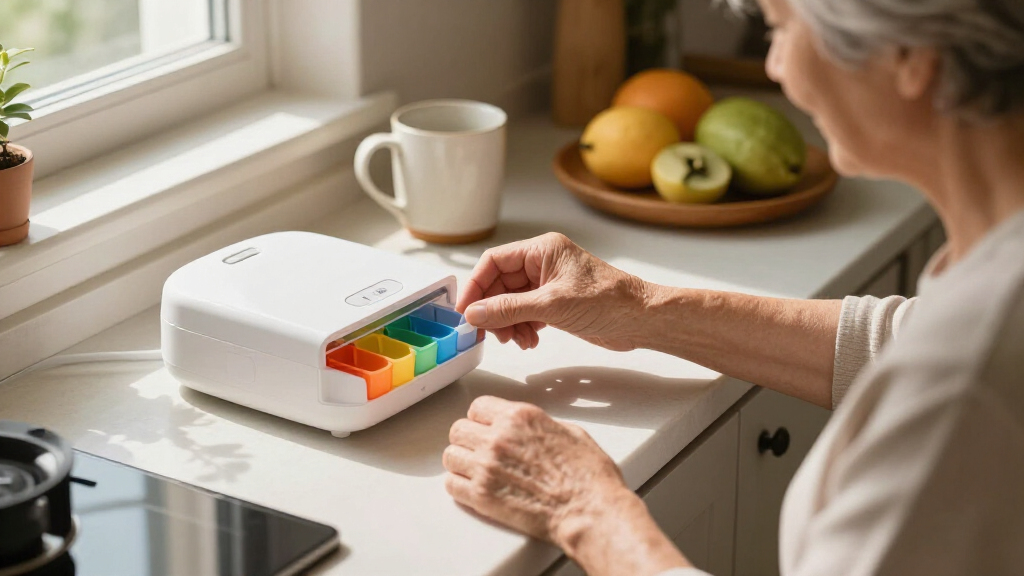

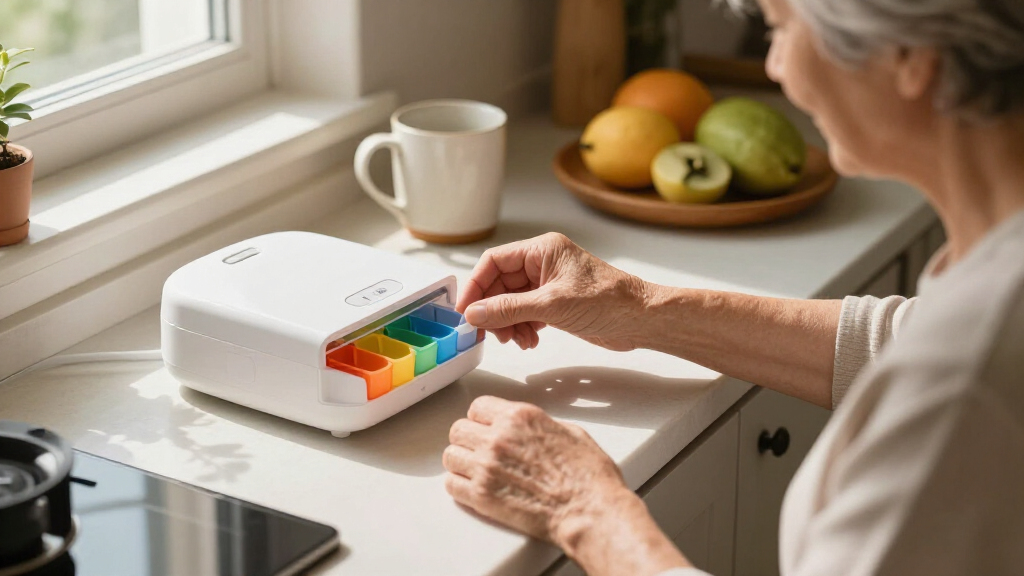
Automatic pill dispensers for seniors solve one specific problem: making sure the right dose lands in the right hands at the right time, without relying on memory or a caregiver’s schedule. My top overall pick is the LiveFine 28-Day Locking-Lid model, because it combines a full month of capacity, a secure lid, and loud alarms at a price most families can absorb. If you’re willing to pay more for app monitoring and alerts to family members, the Betife 28-Day Smart Bluetooth Pill Box is the stronger choice, while the Med-Q Electronic Pill Dispenser wins for seniors who find complex machines intimidating. The main tradeoff in this category is simplicity versus oversight: the easiest dispensers do the least to alert caregivers, and the smartest ones demand setup and charging that some seniors can’t manage alone. Keep reading for the full breakdown, including which models lock out confused hands and which ones quietly fail.

Turn quiet afternoons into listening time
- Thousands of audiobooks, podcasts and originals
- Listen on your phone, tablet or Echo — also offline
- Cancel anytime
Complete the kit


Key Takeaways
- The LiveFine locking-lid model took best overall because a locking lid is the single feature that separates a reminder device from a genuine safeguard — several cheaper models let seniors access every dose at once.
- Every app-connected dispenser in this lineup (Betife, Colorwing, the 42-day and 28-day app models) carries the same hidden cost: someone must set it up and keep it charged, so they only make sense when a tech-comfortable caregiver is involved.
- The Med-Q and Windtrace alarm-only models outperformed smart dispensers for early-stage memory loss, because flashing lights and repeating alarms work when a senior would ignore or be confused by a phone app.
- The 42-day and 31-slot dispensers (Colorwing) only justify their bulk for seniors on once-daily regimens — anyone taking medications multiple times per day gets far less capacity than the ‘day count’ suggests.
- Duplicate listings (Betife, Windtrace, and LiveFine each appear twice) revealed meaningful version differences: second-generation and clear-lid variants trade privacy and security for visibility and lower price, so check the exact variant before buying.
| Med-Q Electronic Pill Dispenser with Alarm for Dementia and Elderly |  | Best for Memory Loss | Alarm Volume: Loud, gradually increasing over 5 minutes | Number of Compartments: 14 | Layout: 7-day AM/PM | VIEW LATEST PRICE | See Our Full Breakdown |
| Betife Automatic Pill Dispenser, 28-Day Smart Bluetooth Pill Box |  | Best Security | Capacity: 28-day | Connectivity: Bluetooth | App: Pillcalendar | VIEW LATEST PRICE | See Our Full Breakdown |
| 42-Day Automatic Pill Dispenser with App & Digital Lock |  | Best for Complex Medication Schedules | Tray Capacity: 14 pills per tray | Number of Trays: 3 | Dosing Options: Once, twice, or thrice daily | VIEW LATEST PRICE | See Our Full Breakdown |
| 28-Day Automatic Pill Dispenser with App & LCD Display |  | Best for Independent Seniors | Tray Capacity: 2 trays with 14 slots each | Display: LCD | Connectivity: App & on-device setup | VIEW LATEST PRICE | See Our Full Breakdown |
| Colorwing 2025 Smart Pill Dispenser for Seniors – 31-Slot Automatic Medication Organizer |  | Best for Arthritis Sufferers | Slots: 31 | Battery: 1200mAh, lasts 30+ days | Bluetooth: 5.0 | VIEW LATEST PRICE | See Our Full Breakdown |
| EziMedPil 28-Day Locked Automatic Pill Dispenser with Frosted Privacy Lid |  | Best for Privacy-Minded Users | Capacity: 28 compartments | Total Capacity: Up to 672 pills (24 per slot) | Dosage Rings: 6 interchangeable rings | VIEW LATEST PRICE | See Our Full Breakdown |
| 28-Day Automatic Pill Dispenser with Alarm and Desiccant, No App |  | Best Low-Tech Simplicity | Capacity: 28 compartments | Compartment Size: Tablets up to 0.79″, vitamins 0.31″, capsules 0.75″ | Moisture Protection: Water-resistant lid with dual desiccant chambers | VIEW LATEST PRICE | See Our Full Breakdown |
| Automatic Pill Dispenser with Alarm and Flashing Light for Seniors |  | Best for Hearing and Vision Loss | Compartments: 28 | Alarm Volume: Adjustable, up to 85 decibels | Alarm Type: Sound and flashing light | VIEW LATEST PRICE | See Our Full Breakdown |
| LiveFine Automatic Pill Dispenser for Elderly, 28-Day Supply, Locking Lid |  | Best Overall | Capacity: 28-day supply | Pill Slots: Up to 18 pills per slot | Dosage Rings: 9 | VIEW LATEST PRICE | See Our Full Breakdown |
| Windtrace Automatic Pill Dispenser for Elderly with Alarm |  | Best Budget Pick | Compartments: 28 | Dosage Times: Up to 6 per day | Alarm Type: Loud alarm with flashing light | VIEW LATEST PRICE | See Our Full Breakdown |
| Betife Automatic Pill Dispenser, 28-Day Smart Bluetooth Pill Box |  | Best for Tech-Savvy Caregivers | Capacity: 28-day | Connectivity: Bluetooth | App: Pillcalendar | VIEW LATEST PRICE | See Our Full Breakdown |
| Bluetooth Automatic Pill Dispenser with Alarm and App Reminder |  | Best for Arthritic Hands | Compartments: 31 | Alarm Function: Yes | Voice Messages: Yes | VIEW LATEST PRICE | See Our Full Breakdown |
| Windtrace Automatic Pill Dispenser for Elderly with Alarm |  | Best No-App Simplicity | Compartments: 28 large compartments | Alarm: Loud alarm with flashing blue light | Display: LCD display | VIEW LATEST PRICE | See Our Full Breakdown |
| Betife 2nd Gen Automatic Pill Dispenser for Elderly with Alarm |  | Best for First-Time Users | Button Console: 6 buttons with oversized icons | Seal: <2 mm tray-to-cover seal | Cycle Durability: 5000+ rotations | VIEW LATEST PRICE | See Our Full Breakdown |
| LiveFine Automatic Pill Dispenser for Elderly, 28-Day Supply, Clear Lid | 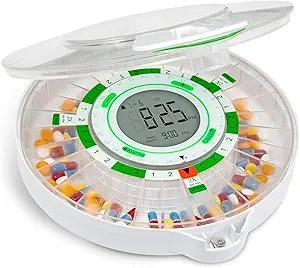 | Best Overall Value | Capacity: 28-day supply | Reminders: Audio and visual, 3 volume levels, 3 beeping patterns | Lock: Lockable cover with manual key | VIEW LATEST PRICE | See Our Full Breakdown |
| automatic pill dispensers for senior | Display |
|---|---|
| Med-Q Electronic Pill Dispense | — |
| Betife Automatic Pill Dispense | LCD screen |
| 42-Day Automatic Pill Dispense | LCD |
| 28-Day Automatic Pill Dispense | LCD |
| Colorwing 2025 Smart Pill Disp | — |
| EziMedPil 28-Day Locked Automa | High-brightness LCD |
| 28-Day Automatic Pill Dispense | — |
| Automatic Pill Dispenser with | — |
| LiveFine Automatic Pill Dispen | Jumbo LCD |
| Windtrace Automatic Pill Dispe | LCD screen |
| Betife Automatic Pill Dispense | LCD screen |
| Bluetooth Automatic Pill Dispe | — |
| Windtrace Automatic Pill Dispe | LCD display |
| Betife 2nd Gen Automatic Pill | XL LCD screen |
| LiveFine Automatic Pill Dispen | Jumbo LCD |
More Details on Our Top Picks
Med-Q Electronic Pill Dispenser with Alarm for Dementia and Elderly
Most smart dispensers in this roundup assume the user will respond to an app notification. The Med-Q takes a different approach: it attacks forgetfulness directly with a flashing light on the correct compartment plus an alarm that ramps up over five minutes, so even someone in another room eventually gets reached. Compared with the Betife 28-Day Bluetooth model, there’s no phone dependency at all — a real advantage for seniors with dementia who can’t manage a smartphone. The tradeoff is capacity: 14 compartments hold only one week of doses, versus a full month from the Colorwing or LiveFine-style designs. For a caregiver filling weekly, that’s a minor chore; for long-distance family, it’s a limitation worth weighing.
Pros:- Gradually escalating alarm is audible from another room
- Flashing lights and braille markings guide users to the right dose
- Removable compartments make filling and cleaning simple
- Roughly 14 months of battery life on 2 AA batteries
Cons:- No app connectivity or remote monitoring for caregivers
- Only holds one week of medication at a time
Best for: Seniors with dementia or memory loss who need multi-sensory reminders without any smartphone involvement
Not ideal for: Long-distance caregivers who can only refill monthly — the 7-day capacity demands weekly attention
- Alarm Volume:Loud, gradually increasing over 5 minutes
- Number of Compartments:14
- Layout:7-day AM/PM
- Capacity per compartment:Up to 23 aspirin (325 mg)
- Battery Life:Approximately 14 months (2 AA)
- Dimensions:8.75 x 4.5 x 1 inches
- Weight:11 ounces
- Water Resistance:Yes
Our verdict“This is the pick when memory loss, not convenience, is the core problem — the escalating alarm does the nagging that an app can’t.”
Betife Automatic Pill Dispenser, 28-Day Smart Bluetooth Pill Box
Where the Med-Q is deliberately simple, the Betife smart dispenser leans into control. Its standout feature is the dual fingerprint and mechanical lock, which matters when a senior shares a home with grandchildren or a spouse who shouldn’t access certain medications — a layer of security most alarm-only models skip entirely. The Bluetooth app adds up to six daily alarms and medication logging, so a caregiver can see whether doses were actually taken. That said, full functionality depends on a smartphone, which makes it a poor match for the same buyers who’d choose the Med-Q. Compared with the 42-Day dispenser later in this list, capacity is comparable, but the fingerprint lock gives the Betife a clear edge on safety rather than just schedule flexibility.
Pros:- App control with customizable alarms and medication tracking
- Fingerprint plus mechanical lock keeps medication secure
- Manual operation mode with a clear LCD display as a fallback
- 28-day capacity cuts refill trips down to monthly
Cons:- Full functionality requires a smartphone
- Setup complexity can frustrate non-technical users
Best for: Caregivers who need dose logging and tamper-proof storage in a household with kids or other adults
Not ideal for: Seniors without a smartphone or tech-comfortable helper, since the app is central to setup and tracking
- Capacity:28-day
- Connectivity:Bluetooth
- App:Pillcalendar
- Security:Fingerprint and mechanical lock
- Display:LCD screen
- Alarms:Up to 6 daily alarms
Our verdict“The strongest choice when preventing unauthorized access matters as much as reminding — just make sure someone nearby can handle the app.”
42-Day Automatic Pill Dispenser with App & Digital Lock
Three or more doses a day is where many dispensers buckle, and that’s exactly where this 42-day model earns its place. The expandable three-tray design supports once-, twice-, or three-times-daily schedules, giving it more dosing headroom than the Betife 28-day unit or the Med-Q’s basic AM/PM split. The digital lock with remote unlock is a thoughtful touch — a caregiver can release a dose from the app without handing over the whole tray. Voice prompts and sound, light, buzzer, and melody alerts cover different hearing and cognition levels. The tradeoff is scope: it’s built strictly for home use, not care facilities, and the app requirement means it’s overkill for someone who just needs a loud alarm like the Med-Q provides.
Pros:- Expandable 3-tray design supports up to thrice-daily dosing
- Remote monitoring and control via companion app
- Digital lock with remote unlock for caregiver oversight
- Moisture-safe storage with sealed lid and desiccant
Cons:- Setup and ongoing use lean heavily on the smartphone app
- Home use only, not rated for institutional care
Best for: Seniors on three-daily-dose regimens whose caregivers want remote lock control and monitoring
Not ideal for: Assisted-living or nursing-home residents — institutional settings exceed this dispenser’s intended use
- Tray Capacity:14 pills per tray
- Number of Trays:3
- Dosing Options:Once, twice, or thrice daily
- Connectivity:App & on-device control
- Display:LCD
- Alerts:Sound, light, buzzer, melody
- Lock:Digital lock with remote unlock
- Storage:Moisture-safe with sealed lid and desiccant
Our verdict“The most flexible scheduler here — worth it for complicated regimens, excessive for simple once-a-day pills.”
28-Day Automatic Pill Dispenser with App & LCD Display
Some seniors want to manage their own medications without a family member hovering, and this 28-day dispenser is designed around that independence. Its voice prompts and step-by-step instructions walk the user through setup and each dose, which the 42-day model doesn’t emphasize as strongly. The expandable twin-tray design handles flexible dosing, and on-device buttons mean a phone is optional for daily use — a meaningful difference from the Betife, where the app is close to mandatory. Moisture-safe storage with a desiccant protects medications in humid climates. The compromises mirror its siblings: it’s a home-only device, and remote caregiver monitoring only works when paired with a smartphone. Still, for a capable senior who wants a month of autonomy between refills, this strikes the best balance in the lineup.
Pros:- Voice prompts and step-by-step guidance reduce confusion
- Works with on-device setup, no phone needed day-to-day
- Expandable 2-tray design with flexible dosing options
- Remote monitoring available when paired with the app
Cons:- Remote features require a smartphone connection
- Limited to home use, not institutional settings
Best for: Self-sufficient seniors who want a month of doses plus voice guidance and only occasional caregiver check-ins
Not ideal for: Facility-based care settings or users who can’t interact with an LCD interface at all
- Tray Capacity:2 trays with 14 slots each
- Display:LCD
- Connectivity:App & on-device setup
- Alerts:Sound, light, buzzer, melody
- Storage:Moisture-safe with sealed lid and desiccant
- Guidance:Voice prompts and step-by-step instructions
Our verdict“The best middle ground for seniors managing their own meds — smart when needed, fully usable without an app.”
Colorwing 2025 Smart Pill Dispenser for Seniors – 31-Slot Automatic Medication Organizer
Most dispensers quietly assume nimble fingers. The Colorwing 2025 challenges that with one-touch dose access, making it the most arthritis-friendly option here — the Med-Q’s removable compartments, by comparison, still require pinching and lifting small plastic trays. Security is well handled too, pairing a fingerprint scanner with backup mechanical keys, so a dead battery doesn’t lock anyone out of their medication. The rechargeable 1200mAh battery runs 30+ days per two-hour charge, eliminating the AA-replacement chore the Med-Q imposes annually. Seven reversible dose rings add schedule flexibility. The honest downside: this is the most feature-dense device in the batch, and initial pairing plus setup can overwhelm the very users who benefit from the easy-access hardware. It makes the most sense when a family member handles configuration once and the senior just taps.
Pros:- One-touch access designed for arthritis and limited dexterity
- Fingerprint lock with backup keys prevents lockouts
- Rechargeable battery lasts 30+ days on a single charge
- Customizable voice reminders and Bluetooth app tracking
Cons:- Initial setup and Bluetooth pairing add complexity
- Battery life varies with alarm and usage frequency
Best for: Seniors with arthritis or limited dexterity who need effortless physical access and can have a relative handle setup
Not ideal for: Technophobes setting up alone — pairing and configuration demand smartphone comfort
- Slots:31
- Battery:1200mAh, lasts 30+ days
- Bluetooth:5.0
- Reversible Dose Rings:7
- Charging Time:2 hours
- Lock:Fingerprint and mechanical dual lock
Our verdict“If stiff hands are the barrier to medication adherence, this is the dispenser that removes it — provided someone tech-savvy does the setup.”
EziMedPil 28-Day Locked Automatic Pill Dispenser with Frosted Privacy Lid
What sets the EziMedPil apart from the pack is its frosted privacy lid — a small design choice that matters if a senior shares a home with roommates, aides, or visiting family and doesn’t want medications on display. Compared with the LiveFine below, which uses a clear locking lid, this model treats privacy as a feature, not an afterthought. The 28-compartment tray with 672-pill total capacity means a caregiver can load a full month of even a heavy regimen in one sitting, and the included magnifying glass and anti-slip grips show real attention to seniors with fading vision or weak grip strength.
The tradeoffs are familiar: 4 AA batteries need periodic replacement, and like most dispensers in this price band, the programming is too fiddly for someone with advanced dementia to manage alone. Pill size limits also apply.
Pros:- Frosted locking lid keeps medications private and secure
- Massive 672-pill total capacity suits complex regimens
- Thoughtful senior-friendly extras like magnifying glass and anti-slip grips
- Adjustable volume and ringtones let alerts match the user’s hearing
Cons:- Battery-powered with no rechargeable option
- Compartments won’t fit oversized pills or supplements
- Setup is too complicated for users with advanced dementia
Best for: Seniors in shared living situations who want medications hidden from view while still getting reliable audio and visual reminders
Not ideal for: Buyers with severe cognitive impairment — the programming sequence will frustrate them without caregiver help
- Capacity:28 compartments
- Total Capacity:Up to 672 pills (24 per slot)
- Dosage Rings:6 interchangeable rings
- Power Source:4 AA batteries
- Display:High-brightness LCD
- Alerts:Audible and visual
- Lockable Lid:Yes, frosted
- Extras:Magnifying glass, anti-slip grips
Our verdict“Pick this if privacy matters as much as punctuality — it’s the rare dispenser that hides what’s inside while still shouting when it’s time.”
28-Day Automatic Pill Dispenser with Alarm and Desiccant, No App
In a roundup crowded with app-connected models like the Betife Smart Bluetooth Pill Box, this dispenser’s no-app philosophy is its whole appeal. One-press dispensing and a hygienic slide-door tray mean there’s nothing to pair, sync, or troubleshoot — a genuine advantage for seniors who find phones baffling or for caregivers who don’t want another account to manage. The standout feature nobody else here offers: dual desiccant chambers that keep moisture-sensitive pills from degrading over a 28-day cycle, which matters for people in humid climates or gelatin capsules that clump.
Be aware of the fine print, though — the maker explicitly states it’s not suitable for assisted living facilities, and gummy capsules may stick. No connectivity also means no remote oversight for distant caregivers.
Pros:- One-press dispensing requires no smartphone or app
- Dual desiccant chambers keep pills fresh for the full 28 days
- Hygienic slide-door tray reduces contamination and spills
- Customizable sound and light cues reinforce dose timing
Cons:- Explicitly not approved for assisted living or regulated facilities
- Gummy capsules can stick in the tray
- No app connectivity or remote caregiver oversight
Best for: Independent seniors in humid climates who want set-and-forget simplicity with zero technology
Not ideal for: Long-distance caregivers who need remote monitoring or dose confirmation from another location
- Capacity:28 compartments
- Compartment Size:Tablets up to 0.79″, vitamins 0.31″, capsules 0.75″
- Moisture Protection:Water-resistant lid with dual desiccant chambers
- Dispensing:One-press with slide-door tray
- Alerts:Customizable sound and light
- Connectivity:None (manual operation)
Our verdict“The right choice when the goal is simplicity and pill freshness rather than smart features — just don’t expect it to satisfy facility requirements.”
Automatic Pill Dispenser with Alarm and Flashing Light for Seniors
This dispenser earns its place through alert intensity. The adjustable 85-decibel alarm paired with a flashing light is the strongest dual-signal setup in this batch, built specifically for seniors whose hearing or eyesight is failing. Compared with the Windtrace, whose alarm is loud but not adjustable, the volume control here lets you dial alerts to a tolerable level instead of choosing between inaudible and startling. The self-illuminating LED display is another nod to low-vision users, and the 48-hour rechargeable backup battery means a power outage or forgotten charge doesn’t interrupt a medication schedule — battery-operated rivals like the LiveFine just go dead.
The compromise: there’s no remote monitoring, so distant family can’t confirm doses were taken, and the tamper-resistant key lock means the key must be kept somewhere the user can’t reach — a small logistical chore for caregivers.
Pros:- Adjustable 85 dB alarm adapts to the user’s hearing level
- Flashing light and illuminated display aid low-vision users
- 48-hour rechargeable backup battery protects against outages
- Key-locked tamper-resistant lid secures medications
Cons:- No remote monitoring or caregiver notifications
- Alarm can still be too loud at maximum for sensitive users
- Backup battery requires regular charging
Best for: Seniors with significant hearing or vision impairment who need unmistakable, adjustable alerts
Not ideal for: Families who want app-based confirmation that doses were actually taken
- Compartments:28
- Alarm Volume:Adjustable, up to 85 decibels
- Alarm Type:Sound and flashing light
- Battery Backup:48 hours, rechargeable
- Lock:Tamper-resistant with key
- Material:Plastic
- Origin:USA
Our verdict“If missed doses trace back to alerts that go unheard or unseen, this model attacks that problem harder than anything else in this lineup.”
LiveFine Automatic Pill Dispenser for Elderly, 28-Day Supply, Locking Lid
The LiveFine hits the sweet spot most families are shopping for: a 28-day capacity, locking lid, and a 3-button interface simple enough that most seniors can run it after one walkthrough with a caregiver. Where the EziMedPil offers six dosage rings, LiveFine includes nine, making it the more flexible pick for regimens that change or spread across many times of day. The jumbo LCD is easier to read at a glance than standard displays, and the included medication timer cap is a practical bonus the other picks don’t bundle in. Portability also gives it an edge over bulkier options like the Windtrace.
It’s battery-operated, so replacements are an ongoing chore, and the locking key plus small buttons can challenge users with very limited dexterity — a caregiver should handle the initial setup.
Pros:- Simple 3-button setup most users can learn quickly
- Nine dosage rings offer the most flexible scheduling in this batch
- Locking lid with manual key secures a month of medication
- Jumbo LCD stays readable without squinting
Cons:- Requires ongoing battery replacements
- Small buttons and key operation are hard for users with poor dexterity
Best for: Most families balancing capacity, security, and ease of use for an independent senior living at home
Not ideal for: Seniors with severe arthritis or tremors — the small buttons and key lock demand fine motor control
- Capacity:28-day supply
- Pill Slots:Up to 18 pills per slot
- Dosage Rings:9
- Display:Jumbo LCD
- Alerts:Audio and visual
- Power:Battery-operated
- Locking:Locking lid with manual key
- Extras:Medication timer cap, portable design
Our verdict“The safest default choice in this roundup — flexible, secure, and approachable enough for the majority of seniors managing their own medications.”
Windtrace Automatic Pill Dispenser for Elderly with Alarm
The Windtrace wins on value and accessibility. It’s typically the cheapest option in this lineup, yet it covers the fundamentals: 28 compartments, up to six dosage times per day, and a loud alarm with a flashing light. Its removable large-capacity tray is easier to load and clean than fixed trays, and the food-grade plastic construction is a nice reassurance at this price. Compared with the no-app 28-Day Dispenser with Desiccant, the Windtrace supports more daily dose times (six versus typical four-alarm rivals) and feels friendlier to users with limited dexterity thanks to its straightforward programming.
The cost-saving shows: batteries are not included, the body is bulkier and less travel-friendly than the portable LiveFine, and there’s no lock — so it won’t stop a confused loved one from opening the lid early.
Pros:- Affordable while covering six daily dosage times
- Removable tray makes loading and cleaning simple
- Loud alarm plus flashing light reinforces reminders
- Easy programming suited to seniors with limited dexterity
Cons:- Batteries not included despite the low price
- Bulky build is awkward for travel or cramped spaces
- No locking lid to prevent tampering or early access
Best for: Budget-conscious families who need reliable multi-times-per-day reminders without paying for locks or connectivity
Not ideal for: Dementia care situations where a locking lid is needed to prevent early or double dosing
- Compartments:28
- Dosage Times:Up to 6 per day
- Alarm Type:Loud alarm with flashing light
- Battery:4 AA (not included)
- Material:Food-grade plastic
- Display:LCD screen
- Tray:Removable large-capacity
Our verdict“A solid, honest entry point for straightforward reminder needs — just add a lock to your requirements and you’ll need to step up to the LiveFine or EziMedPil.”
Betife Automatic Pill Dispenser, 28-Day Smart Bluetooth Pill Box
This option stands out for remote management, which is what separates it from offline models like the Windtrace Automatic Pill Dispenser. A caregiver can program schedules, confirm doses, and receive miss-a-dose alerts through the Pillcalendar app from anywhere — useful when the senior lives alone and the family wants oversight without daily phone calls. The fingerprint and mechanical lock combo is more secure than the manual-key lock on the LiveFine, preventing double-dosing after a confused episode. The tradeoff is real: full functionality depends on a paired smartphone, so a senior without a willing caregiver to handle setup will find this model harder to live with than a button-and-LCD dispenser. Power details are also thin on the ground, so plan for contingencies.
Pros:- Bluetooth app control enables remote scheduling and dose confirmation
- Fingerprint plus mechanical lock guards against accidental double-dosing
- Up to 6 daily alarms handles complex medication regimens
- LCD screen and physical buttons keep day-to-day operation simple
Cons:- Full feature set requires smartphone app pairing and setup
- Battery life and power source are not clearly documented
Best for: Long-distance caregivers who want app-based dose tracking and remote schedule changes for a parent living alone
Not ideal for: Seniors without a smartphone or a tech-comfortable family member, since the app unlocks most of the value
- Capacity:28-day
- Connectivity:Bluetooth
- App:Pillcalendar
- Alarm Settings:Up to 6 daily alarms
- Security:Fingerprint and mechanical lock
- Display:LCD screen
- Controls:Physical buttons
Our verdict“This pick makes the most sense for families managing an elderly parent’s medications remotely rather than seniors handling everything solo.”
Bluetooth Automatic Pill Dispenser with Alarm and App Reminder
What makes this model different from the Betife Bluetooth Pill Box is its focus on physical accessibility. The push-button dispensing mechanism is a genuine advantage for seniors whose grip strength makes twisting lids or sliding windows — like the one on the LiveFine — painful or impossible. The reminder system is also layered: alarm, voice alerts, and app notifications, so a senior with hearing loss still gets visual and remote cues. With 31 compartments and 7 dose rings, it offers slightly more scheduling flexibility than 28-day rivals. The fingerprint lock plus backup key covers both security and the forgotten-print scenario. The cost of all this capability is setup complexity and the need to keep the 1200mAh battery charged — a recharge failure means missed alarms.
Pros:- Arthritis-friendly push-button dispensing beats twist-and-slide designs
- Triple reminder system: alarm, voice message, and app notification
- Fingerprint lock with backup key covers both safety and lockouts
- 31 compartments with 7 dose rings support flexible schedules
Cons:- Bluetooth and app setup adds complexity for non-technical users
- Rechargeable battery requires monitoring to avoid missed alarms
Best for: Seniors with arthritis or limited hand dexterity who still need multi-channel reminders and secure locking
Not ideal for: Anyone unwilling to manage Bluetooth pairing and periodic recharging, since a dead battery silences all alerts
- Compartments:31
- Alarm Function:Yes
- Voice Messages:Yes
- App Connectivity:Bluetooth
- Battery Capacity:1200mAh
- Rechargeable:Yes
- Lock Type:Fingerprint and backup key
Our verdict“Compared with similar options, this one best serves buyers whose hands, not their memory, are the main obstacle to safe medication routines.”
Windtrace Automatic Pill Dispenser for Elderly with Alarm
Not every senior household wants a smartphone in the loop, and this model is the strongest argument for skipping one. Unlike the Bluetooth Automatic Pill Dispenser with App Reminder, the Windtrace runs entirely on physical buttons and AA batteries — no pairing, no app account, no recharging routine. The loud alarm paired with a flashing blue light handles the two most common failure points in elderly medication management: hearing loss and inattention. Its 28 large compartments and removable tray make refilling straightforward for a visiting caregiver. The obvious tradeoff is intelligence: there is no remote monitoring, so a caregiver has no way to know whether a dose was actually taken — a gap the Betife app models fill. Battery replacement is also a recurring chore someone must own.
Pros:- No smartphone, app, or Bluetooth required for any function
- Loud alarm plus flashing blue light covers hearing and vision deficits
- 28 large compartments and removable tray simplify caregiver refills
- Runs on included AA batteries with no charging routine
Cons:- No remote tracking or missed-dose notifications for caregivers
- AA batteries need periodic replacement by someone reliable
Best for: Seniors and caregivers who want a set-it-and-forget-it dispenser with zero apps, pairing, or charging
Not ideal for: Remote caregivers who need confirmation that doses were actually taken
- Compartments:28 large compartments
- Alarm:Loud alarm with flashing blue light
- Display:LCD display
- Batteries:4 AA batteries included
- Dosage Rings:6 different times dosage rings
- Tray Material:Food-grade materials
Our verdict“This model is better suited to households where simplicity itself is the safety feature and a caregiver checks in person.”
Betife 2nd Gen Automatic Pill Dispenser for Elderly with Alarm
This pick makes the most sense for seniors who feel intimidated by electronic dispensers in general. Where the Bluetooth Automatic Pill Dispenser assumes comfort with app pairing, the Betife 2nd Gen assumes nothing: oversized icons on six buttons, a spoken quick-start guide, and an XL LCD screen walk the user through setup audibly and visually. The sub-2mm tray-to-cover seal and kid-proof design address accidental access more thoroughly than a simple lid, and the 5,000+ rotation gearbox rating suggests it will survive years of daily cycling rather than months. Compared with the LiveFine, you give up the clear lid’s at-a-glance pill monitoring and app-free flexibility tops out at basic alarms. Vague battery documentation and a likely premium price over basic models are the weak points worth weighing.
Pros:- Spoken quick-start guide removes setup frustration for first-time users
- Oversized buttons and XL LCD accommodate low vision
- Mix-proof, kid-proof seal offers stronger access protection than standard lids
- Gearbox rated for 5,000+ rotations for long-term durability
Cons:- No smartphone connectivity or remote caregiver monitoring
- Power source and battery life details are not documented
- Likely priced above simpler no-frills dispensers
Best for: Seniors new to automatic dispensers who need guided, self-explanatory setup without caregiver hand-holding
Not ideal for: Budget-focused buyers, since simpler locked dispensers cover the basics for less money
- Button Console:6 buttons with oversized icons
- Seal:<2 mm tray-to-cover seal
- Cycle Durability:5000+ rotations
- Display:XL LCD screen
- Alarm:Built-in alarm for dose times
- Setup Guidance:Spoken quick-start guide
Our verdict“If the biggest barrier to safer medication is fear of confusing electronics, this model’s guided design is the gentlest entry point in the lineup.”
LiveFine Automatic Pill Dispenser for Elderly, 28-Day Supply, Clear Lid
This model earns the value spot by balancing capability against complexity better than anything else here. Unlike the Windtrace, it supports up to 9 doses per day against Windtrace’s 6, which matters for seniors juggling morning, midday, evening, and bedtime medications. The three volume levels and three beeping patterns give more reminder customization than the fixed alarm on most rivals, and the clear lid lets a caregiver visually confirm remaining doses without unlocking anything — a monitoring trick the sealed Betife 2nd Gen can’t match. Setup stays simple with a jumbo LCD and easy-fill carousel, no app required. The compromises are modest but real: the sliding retrieval window demands reasonable dexterity, the lock uses a manual key that can be misplaced, and the footprint is too bulky for travel.
Pros:- Supports up to 9 daily doses, more than most competitors
- Clear lid allows visual dose monitoring without unlocking
- Customizable audio and visual reminders with 3 volume levels
- Lockable cover with easy-fill carousel keeps setup caregiver-friendly
Cons:- Sliding retrieval window can challenge users with very limited dexterity
- Bulky size makes it impractical for travel
- Manual key lock can be lost with no backup access method
Best for: Budget-minded families who want flexible dosing up to 9 times daily and visual dose monitoring without app complexity
Not ideal for: Seniors with severe hand dexterity issues, since the sliding retrieval window requires a functional grip
- Capacity:28-day supply
- Reminders:Audio and visual, 3 volume levels, 3 beeping patterns
- Lock:Lockable cover with manual key
- Display:Jumbo LCD
- Number of Doses:Up to 9 doses per day
- Additional Features:Interchangeable dosage rings, easy-fill carousel, sliding retrieval window
Our verdict“For most families, this dispenser hits the sweet spot of scheduling flexibility, security, and simplicity at a price that undercuts the smart models.”
How We Picked
I evaluated each dispenser through the lens of its actual user: a senior with declining memory or dexterity, plus the family member who usually ends up managing refills. Four factors drove the ranking. Dose security came first — a dispenser that a confused senior can open and empty defeats its own purpose, so locking lids and dual locks ranked above open trays. Reminder effectiveness came second: I favored alarms that repeat, escalate, or pair with flashing lights over single soft chimes that are easy to miss with hearing loss.
From there, I weighed capacity versus regimen reality, discounting the headline day-count when a device only supports once-daily dosing, and caregiver overhead — how much setup, charging, and app management each model demands. Simple models with loud, persistent alarms ranked highly for independent seniors, while app-connected locked models earned their spots only when the monitoring features genuinely offset the complexity. Price was the final filter: two models at the same cost with the same capacity separated on alarm behavior and lock quality, and those differences decided placement.
| automatic pill dispensers for senior | Display |
|---|---|
| Med-Q Electronic Pill Dispense | — |
| Betife Automatic Pill Dispense | LCD screen |
| 42-Day Automatic Pill Dispense | LCD |
| 28-Day Automatic Pill Dispense | LCD |
| Colorwing 2025 Smart Pill Disp | — |
| EziMedPil 28-Day Locked Automa | High-brightness LCD |
| 28-Day Automatic Pill Dispense | — |
| Automatic Pill Dispenser with | — |
| LiveFine Automatic Pill Dispen | Jumbo LCD |
| Windtrace Automatic Pill Dispe | LCD screen |
| Betife Automatic Pill Dispense | LCD screen |
| Bluetooth Automatic Pill Dispe | — |
| Windtrace Automatic Pill Dispe | LCD display |
| Betife 2nd Gen Automatic Pill | XL LCD screen |
| LiveFine Automatic Pill Dispen | Jumbo LCD |
Factors to Consider When Choosing Automatic Pill Dispensers For Seniors
Before comparing specific models, it helps to understand what actually drives success or failure with automatic dispensers in real households. The wrong choice isn’t just inconvenient — it’s a device that ends up in a drawer within a month.Lock Type Matters More Than Alarm Volume
The single most common mistake families make is buying a dispenser for its alarm and ignoring access control. If a senior has any degree of confusion, an unlocked dispenser lets them take Tuesday’s dose on Sunday, or dump the entire tray looking for a favorite pill. Look for mechanical or key locks over simple latches, and understand the difference: a lock that only prevents opening the lid still fails if the whole unit can be lifted and shaken. Dual-lock and app-lock systems, like the Colorwing’s fingerprint option, add another layer but only work if the senior won’t become agitated by being locked out. Match the lock to the cognitive situation — over-securing a mildly forgetful senior can feel insulting and lead to abandonment of the device entirely.
Calculate Real Capacity, Not Marketing Capacity
A ’28-day’ dispenser holds 28 days only for once-daily regimens. If your senior takes morning and evening medications, that same device holds 14 days — meaning twice the refills and twice the chances for a loading error. Refill day is the riskiest moment in any dispensing system: most medication mistakes with these devices happen during loading, not dispensing. If the person doing refills is also aging or rushed, a larger drum like the 42-day model reduces error frequency even if it costs more. Also check pill size compatibility: oversized supplements and capsules sometimes won’t fit in standard slots, a detail product listings rarely mention prominently.
App Connectivity Is Only as Good as the Caregiver Behind It
Smart dispensers with Bluetooth and companion apps sound like an obvious upgrade, but they shift the burden rather than eliminate it. Someone must pair the device, maintain the schedule in the app, keep it charged, and respond to missed-dose notifications — which means these features only pay off when there’s a reliable, tech-comfortable family member in the loop. For long-distance caregivers, app notifications are genuinely transformative; for a senior living alone with no involved family, the app adds failure points (dead batteries, lost connection, forgotten passwords) without adding oversight. Also verify whether the app requires an ongoing subscription — some budget smart dispensers lock their best features behind monthly fees that aren’t obvious at purchase.
Alarm Design for Hearing and Vision Loss
Alarm effectiveness varies more than any other feature, and it maps directly to sensory decline. A single soft chime fails most seniors with age-related hearing loss; repeating alarms that escalate in volume, paired with flashing lights, catch attention far more reliably. The Med-Q’s light-flashing compartments are a good example of designing for the actual user rather than the spec sheet. Consider where the device sits, too — an alarm audible across the room is wasted if the senior is hard of hearing and the device lives in the kitchen while they watch TV elsewhere. Some families solve this by pairing a basic dispenser with a phone reminder, which costs nothing and covers the distance problem.
Power Failure Behavior and Battery Reality
Ask one question before buying any electronic dispenser: what happens when the power dies? The best models retain their programmed schedule through outages and run on backup batteries; the worst reset entirely, silently reverting to default times or stopping altogether. Battery-only models avoid outlet placement constraints but create a charging routine someone must own — and a dead battery on a locked dispenser means no one gets their medication until it’s recharged. Plug-in models with battery backup offer the best of both, though they limit placement to wall-adjacent spots. This is also where warranty terms matter: dispensers with moving parts and locks do break, and a one-year warranty on a device guarding someone’s medication is worth reading closely.
The Overdose-Proofing Question Nobody Asks
The hardest conversation in this category is what happens after a missed dose. Some dispensers hold the missed dose in an accessible tray for hours — a design meant to be helpful that becomes dangerous for a senior who takes it late along with the next scheduled dose. Models that lock or discard missed doses are safer for advanced memory loss but can waste expensive medication. Think about what the senior will do when confused, not just when compliant. If double-dosing is a documented risk, prioritize dispensers with locked missed-dose compartments and caregiver alerts, and accept the higher cost. If the senior is mostly independent and the dispenser is a convenience, this feature is money spent on a problem that doesn’t exist.
Frequently Asked Questions
Can a senior with dementia actually use an automatic pill dispenser, or is it pointless?
It depends heavily on the stage. For early-stage memory loss, a dispenser with a locking lid and repeating alarms genuinely works, because the senior retains the ability to respond to a cue — they just can’t reliably remember the schedule on their own. Past a certain point of cognitive decline, no dispenser solves the problem alone, because the senior may not connect the alarm to the action, may become frightened by the device, or may fight against being locked out of their own medication. In that middle zone, locked models with caregiver app alerts, like the Betife Bluetooth or the Colorwing dual-lock, buy families time before round-the-clock supervision becomes necessary. Watch for the warning sign of repeated tray-emptying or forced lids — that’s the signal the device has been outgrown.
Who is responsible for refilling these dispensers, and how much work is it?
Realistically, a family member or caregiver does the refilling — very few seniors load their own 28-day drum accurately, and loading errors are the most common failure point in these systems. Expect 20 to 40 minutes per refill for a multi-medication regimen, spent sorting pills into dated slots, and it needs to happen monthly or biweekly without fail. If refills will fall to someone who visits rarely, choose the largest capacity you can (the 42-day model) and set calendar reminders for the refill date. Some families split the job: one person loads the drum, another verifies it against the pharmacy list. If nobody can commit to that rhythm, a simpler weekly organizer with human oversight may honestly serve better than an automatic dispenser nobody refills.
Are app-connected dispensers worth the extra money over alarm-only models?
Only when distance is part of the equation. If a family member lives far away and lies awake wondering whether Mom took her morning pills, app notifications that confirm each dose are worth every dollar — that peace of mind is the actual product you’re buying. If the senior lives with or near family who see the pill routine daily, the app’s value collapses, and you’re paying extra for setup complexity, charging routines, and potential connectivity failures. Alarm-only models like the Med-Q or Windtrace are also more durable in a practical sense: fewer electronics means fewer things to break and nothing to pair or update. The honest dividing line is caregiver geography, not senior tech skill — the senior never needs to touch the app either way.
What happens if the senior misses a dose — where does the pill go?
Behavior varies meaningfully between models and it’s worth checking before you buy. Some dispensers rotate the missed dose into a holding tray where it remains accessible, which is convenient but risky — a confused senior can accumulate and double-dose from that tray. Others lock or seal missed doses until a caregiver clears them, which prevents overdose but means wasted medication and a locked compartment to manage on the next visit. Families handling opioid or blood-thinner regimens should treat locked missed-dose handling as non-negotiable, since a doubled dose carries real medical danger. For vitamins and low-risk medications, the accessible-tray design is fine and far less frustrating. This single design choice matters more than most buyers realize until the first missed dose happens.
Several of these products appear twice with slightly different names — are they the same device?
The duplicates in this category are mostly genuine variants, and the differences matter. The Betife appears in both its original and second-generation form, with the newer version refining alarm behavior and app stability; the LiveFine appears with both a locking lid and a clear lid, and that lock is the difference between a safeguard and a simple organizer — the clear-lid version costs less precisely because it secures nothing. Windtrace listings across retailers sometimes differ only in packaging while the hardware is identical, which is why I treated those as one device in spirit. Before buying, check the exact model number and lid type in the listing photos rather than trusting the product name. Generational differences are usually small but the lid and lock variations change what the product actually does.
Conclusion
For most families, the LiveFine 28-Day Locking-Lid dispenser is the best overall choice — it nails the three things that matter most (a real lock, a month of capacity, and a loud alarm) without app complexity or premium pricing. On a tight budget, the Windtrace alarm model delivers the core reminder function for less, provided overdose risk isn’t a concern. For buyers who want the most protection money can buy, the Colorwing with fingerprint and mechanical dual locks stands alone, pairing physical security with app oversight. Beginners and seniors intimidated by gadgets should start with the Med-Q, whose flashing compartments and dead-simple operation make it the easiest device here to actually adopt. Finally, for long-distance caregivers, the Betife Bluetooth model is the specific-needs pick — its missed-dose alerts turn worry into actionable information. Whichever route you take, match the device to the senior’s real cognitive state today, not the one you hope for, because the right dispenser is the one that’s still in use six months from now.
Fall Picks
fall essentials
As an affiliate, we earn on qualifying purchases.