

To create more everyday connections for older adults living alone, encourage routine social interactions like daily phone calls or chats, and help them stay active in local community events or hobby groups. Introduce easy-to-use technology, such as tablets or voice assistants, to facilitate regular virtual contact with family and friends. Supporting volunteer and neighborhood programs also strengthens bonds. Keep exploring different ways, as this guide offers more ideas to help seniors feel supported and connected every day.

Get comfort and care essentials delivered free — and shop member deals
- Fast, free delivery on millions of items
- Access to Prime Big Deal Days deals on October 6–7
- Prime Video, Amazon Music and more included
Key Takeaways
- Encourage daily social interactions through routine calls, visits, or virtual chats to reduce loneliness and foster a sense of belonging.
- Utilize simple, accessible technology like tablets or voice assistants for easy communication and emotional support.
- Promote participation in local community activities, clubs, or virtual meetups to build meaningful social bonds.
- Develop neighborhood outreach or volunteer programs for regular check-ins and practical assistance.
- Organize and schedule consistent activities that provide familiarity, comfort, and opportunities for lasting connections.
As an affiliate, we earn on qualifying purchases.
Why Daily Connections Matter for Older Adults

Daily connections are essential for older adults because they help combat feelings of loneliness and isolation. When you make an effort to connect regularly, you provide emotional support that reminds them they’re not alone. These interactions can boost mood, foster a sense of belonging, and improve overall mental health. A simple visit or call can also introduce opportunities for shared activities, such as outdoor gatherings, that promote social engagement. Consistent contact helps reduce loneliness by creating a routine of social engagement, which is critical as social networks shrink with age. Incorporating regular calibration of social routines can further enhance these connections and ensure they remain meaningful. Engaging in smart home technology can facilitate consistent contact by enabling easy communication options and reminders, making it easier to stay connected even when physical visits are less frequent. By prioritizing daily connections, you show that you care and help older adults maintain their emotional well-being. This ongoing support not only alleviates loneliness but also encourages a more active, connected, and fulfilled life.
How Connecting Regularly Benefits Seniors’ Well-Being

Connecting regularly with older adults directly enhances their overall well-being by providing stability, reassurance, and a sense of purpose. When you stay in touch, you strengthen their emotional resilience, helping them cope with stress and setbacks. Regular interactions also offer cognitive stimulation, keeping their minds active and engaged. This mental engagement can slow cognitive decline and improve their ability to focus and remember. Essential oils, for example, can be used to support their comfort and health, enhancing their sense of well-being. Incorporating emerging trends in digital communication can help find new ways to stay connected effectively. Additionally, understanding feedback loops can also help tailor these interactions to better meet their evolving needs and preferences. Recognizing the significance of symbolic meanings in dreams, such as clocks or time symbols, can sometimes offer additional insights into their subconscious thoughts and feelings. Establishing a consistent routine for contact can foster a sense of familiarity and trust, which is vital for their emotional security.
Simple Tech Tools to Help Seniors Stay Connected

Technology can be a powerful tool to help older adults stay in touch with loved ones, especially when in-person visits are difficult. Simple tech tools, like smartphones and tablets, make it easier to connect through calls, video chats, and messaging. To ensure seniors benefit fully, focus on improving digital literacy, so they feel confident steering through these devices. Prioritize tech accessibility by choosing user-friendly interfaces, large buttons, and clear instructions. Voice-activated assistants like Alexa or Google Home can also help seniors stay connected without complex setups. Additionally, incorporating herbal wellness practices can promote relaxation and emotional well-being during these interactions. By selecting straightforward tools and supporting their digital skills, you make staying in touch more natural and less intimidating, fostering regular connection and reducing feelings of loneliness.
How to Set Up and Use Technology for Seniors

Setting up devices for seniors can seem challenging, but with a clear, step-by-step approach, it becomes much more manageable. Start by choosing simple, user-friendly smart home devices like voice-activated assistants or smart speakers. Place them in accessible, central locations. Next, program emergency alerts to automatically notify designated contacts or services if needed. Keep the setup straightforward by labeling buttons or features clearly, and test everything thoroughly. Show your loved one how to operate the devices confidently, emphasizing voice commands or touchscreens they’re comfortable with. Regularly check that devices are functioning correctly and update software as needed. This approach *guarantees* they feel secure and connected, with technology working seamlessly to support their independence and safety. Additionally, understanding plant properties can inspire ways to promote overall health awareness among seniors, encouraging proper device maintenance and personal well-being. Recognizing the power of natural elements can also help in creating calming environments that enhance mental well-being for older adults.
Getting Involved: Community Activities and Local Events
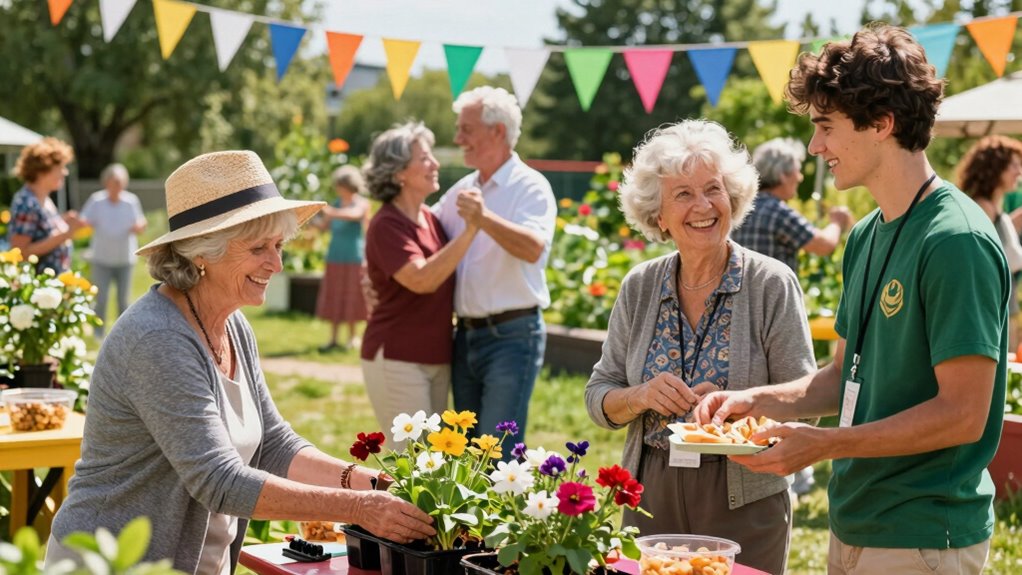
Getting involved in community activities can help you build meaningful connections. Joining local clubs or attending festivals gives you opportunities to meet new people and stay engaged. These events make it easier to enjoy your neighborhood and feel less isolated. Participating in arts and culture initiatives can also enrich your experience and foster a sense of belonging. Incorporating auditory processing strategies into community programs can enhance communication and inclusion for diverse populations. Paying attention to home design and architecture details, such as accessible door swings and stair proportions, can also support a safe and welcoming environment for older adults.
Join Local Clubs
Joining local clubs is a great way to build new connections and stay engaged with your community. Whether it’s a gardening group, book club, or hobby circle, these activities can help you explore your interests and meet like-minded people. Participating in senior hobbies not only keeps your mind and body active but also encourages social interaction. When choosing a club, consider neighborhood safety—opt for well-established groups in safe areas or community centers. Regular involvement can reduce feelings of loneliness and create a sense of belonging. Plus, many clubs offer flexible schedules, making it easier to fit socializing into your routine. Engaging in these community activities provides opportunities to learn new skills and enjoy shared experiences. By joining local clubs, you turn everyday activities into opportunities for friendship and community connection.
Attend Community Festivals
Attending community festivals offers a lively way to connect with neighbors and feel more engaged in your local area. Cultural festivals bring diverse traditions and activities right to your doorstep, giving you the chance to learn and participate. Food fairs are another great option, where you can sample new dishes and strike up conversations with vendors and fellow attendees. These events foster a sense of belonging and help you build relationships with others who share your interests. Whether you’re dancing at a local celebration or browsing stalls at a craft fair, you’re actively engaging with your community. Attending these festivals regularly can make your surroundings feel more familiar and welcoming, turning casual visits into meaningful connections.
Building Support With Volunteers and Local Groups
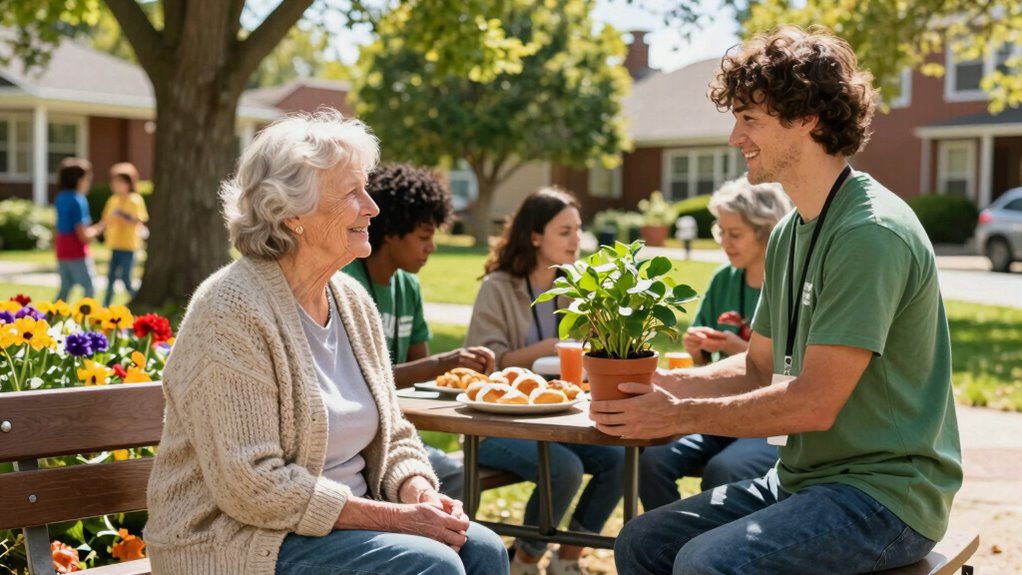
You can strengthen support by engaging local volunteer programs and building partnerships with community groups. Organizing social activities through these networks helps create meaningful connections for older adults living alone. These community-driven efforts foster a sense of belonging and safety, which is vital for mental and emotional wellbeing. These efforts make it easier for them to find companionship and assistance in their daily lives. Incorporating electric bikes into transportation options can also provide older adults with more independence and access to community events. Additionally, promoting awareness of tick-borne disease prevention can help protect older adults from health risks during outdoor activities. Embracing connected fitness technology can further support their overall wellbeing by encouraging safe, personalized exercise routines that they can perform at home.
Engaging Local Volunteer Programs
How can local volunteer programs foster meaningful connections for older adults living alone? One way is through volunteer mentorship, where volunteers build ongoing relationships, offering companionship and support. These relationships can reduce loneliness and create a sense of belonging, especially when volunteers are trained in self-awareness to better understand and respond to seniors’ needs. Neighborhood outreach programs also play a crucial role by mobilizing volunteers to check in regularly, deliver groceries, or simply have a friendly chat. By engaging in these efforts, you help older adults feel more connected to their community and less isolated. Encouraging participation in local events or activities led by volunteers can further deepen these bonds. Additionally, introducing seasonal events and promotions like gelato socials or outdoor gatherings can provide enjoyable opportunities for social interaction. Being aware of ear wax odor or other subtle cues can also help volunteers better understand seniors’ health and well-being, fostering more empathetic relationships. Overall, involving volunteers in consistent, personalized interactions not only benefits seniors but also strengthens the fabric of the neighborhood, fostering mutual understanding and support.
Fostering Community Partnerships
Building strong community partnerships amplifies efforts to support older adults living alone by creating a network of shared resources and mutual aid. You can collaborate with local organizations, volunteers, and neighborhood groups to develop programs like intergenerational activities and neighborhood outreach. These partnerships foster trust, expand social networks, and provide practical support, such as transportation or meal deliveries. Engaging schools, faith groups, and senior centers can deepen community ties and create opportunities for meaningful interaction. Incorporating indoor air quality considerations can also improve overall well-being for older adults in these programs.
Organizing Social Activities
What makes social activities effective in supporting older adults living alone is their ability to foster genuine connections through volunteer-led initiatives and partnerships with local groups. Organizing activities like hobby groups provides opportunities for seniors to share interests and build bonds. Incorporate virtual meetups to guarantee those with mobility challenges or transportation issues can participate easily. Volunteers can coordinate these events, making sure they’re accessible and engaging. Partnering with local organizations, such as libraries or community centers, helps expand resources and reach more seniors. Regularly scheduled activities create routines that promote consistency and comfort. By blending in-person and virtual options, you assure inclusivity, making it easier for older adults to stay connected, active, and supported in their daily lives.
How to Keep Connections Strong Over Time

Maintaining strong connections over time requires intentional effort and regular communication. You can foster lasting bonds by encouraging intergenerational bonding, which enriches relationships and provides fresh perspectives. Stay consistent with phone calls, video chats, or visits, making these interactions meaningful rather than routine. Sharing stories and experiences helps strengthen emotional resilience, allowing both you and your loved ones to navigate challenges together. Remember, small gestures—like sending a thoughtful message or remembering important dates—show ongoing care and commitment. Over time, these consistent efforts build trust and deepen your connection. By prioritizing intentional communication and nurturing relationships across generations, you guarantee your bonds remain resilient and supportive, no matter how much time passes.
Overcoming Barriers to Social Interaction

Many older adults face obstacles that make social interaction difficult, such as mobility issues, health concerns, or transportation challenges. These barriers can lead to feelings of isolation, but virtual companionship offers a valuable solution. Video calls, online groups, and messaging apps help maintain connections without leaving home. Building emotional resilience is also essential; it allows you to adapt to setbacks and stay open to new ways of socializing. By embracing technology and staying mentally flexible, you can overcome physical barriers and cultivate meaningful relationships. Remember, even small steps—like a quick chat or participating in an online hobby—can substantially improve your sense of connection. Overcoming these challenges keeps you engaged and emotionally supported, enriching your daily life.
Evaluating and Maintaining Social Connection Strategies

Once you’ve started exploring different ways to stay connected, it’s important to regularly evaluate which strategies work best for you. Reflect on how your social connections, such as intergenerational bonds, impact your emotional resilience. Are certain activities, like phone calls or community events, making you feel more engaged and supported? Pay attention to your feelings before and after these interactions. If some strategies fall short, don’t hesitate to adjust or substitute them. Maintaining a balance of meaningful connections helps strengthen your emotional resilience over time. Keep track of what fosters the most genuine interactions, and prioritize those. Regular evaluation ensures your social connection strategies remain effective, fulfilling, and aligned with your evolving needs.
Frequently Asked Questions
How Can Family Members Encourage Seniors to Accept New Social Opportunities?
You can encourage seniors to accept new social opportunities through family encouragement by showing genuine interest and understanding. Offer frequent social invitations, making the activities feel welcoming and low-pressure. Share positive stories about others who’ve benefited from social engagement, and emphasize how new connections can bring joy and purpose. Respect their pace, listen to their concerns, and remind them that trying something new can lead to enriching experiences.
What Are Cost-Effective Ways to Enhance Social Connections for Seniors on a Limited Budget?
You can enhance social connections for seniors on a budget by encouraging participation in free community events like local markets, library programs, or outdoor concerts. Volunteering is also cost-effective and fulfilling; suggest they join volunteer programs at community centers or food banks. These activities foster meaningful interactions, boost their sense of belonging, and require minimal financial investment, helping seniors stay engaged and connected without added expenses.
How Do Cultural Differences Influence Social Connection Strategies for Older Adults?
Think of culture as a bridge that shapes how you connect. Cultural norms and social expectations deeply influence older adults’ social strategies, guiding what’s considered respectful or appropriate. You adapt your approach based on these differences, recognizing that some cultures value frequent face-to-face visits, while others prioritize family involvement or community activities. Respecting these variations helps build meaningful connections, making seniors feel understood and valued in their unique cultural context.
What Signs Indicate an Older Adult Is Feeling Socially Isolated?
You might notice signs like withdrawal from community engagement, decreased participation in activities, or limited communication, which can signal social isolation. An older adult feeling socially isolated may also show changes in emotional well-being, such as increased sadness or anxiety. Recognizing these signs helps you support their emotional health by encouraging community involvement and meaningful connections, boosting their overall well-being and reducing feelings of loneliness.
How Can Technology Be Adapted for Seniors With Mobility or Sensory Impairments?
To adapt technology for seniors with mobility or sensory impairments, focus on assistive devices and accessible communication tools. You can customize devices with larger buttons, voice commands, or screen readers, making interactions easier. Implement user-friendly interfaces, offer training, and guarantee compatibility with their existing assistive technology. By prioritizing accessible communication, you help seniors stay connected, confident, and engaged, breaking down barriers created by mobility or sensory challenges.
Conclusion
Staying connected is more than just a habit — it’s a lifeline that can transform an older adult’s daily experience. But what if the next step could open even deeper bonds? Imagine the possibilities when you take action today. Are you ready to discover the secret to lasting, meaningful connections that could change everything? The answer might be closer than you think — and the impact, truly extraordinary. Don’t wait; your next move could make all the difference.
Cold & flu season Picks
humidifiers
As an affiliate, we earn on qualifying purchases.