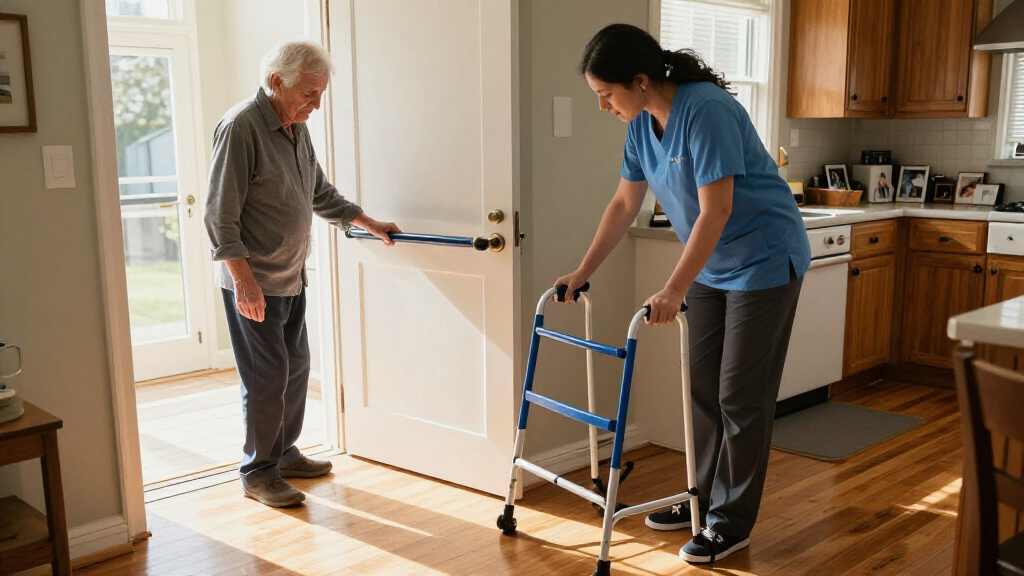

This checklist is for older adults who want to remain at home, family caregivers, and anyone helping make daily routines feel safer and more comfortable. The selected items address common home-care tasks, including bathroom transfers, getting in and out of bed, reaching household objects, medication routines, and indoor footwear.

Get comfort and care essentials delivered free — and shop member deals
- Fast, free delivery on millions of items
- Access to Prime Big Deal Days deals on October 6–7
- Prime Video, Amazon Music and more included
Each section covers one product category and its named pick. The guidance focuses on practical considerations—such as room layout, transfer needs, fit, and ease of use—rather than assuming that one item will suit every person or home. Product names identify the picks; individual needs and setup should guide the final choice.
Use this as a starting point: check measurements and product instructions, consider who will use the item and how, and involve a healthcare professional or occupational therapist when a change could affect mobility or fall safety. A checklist can help organize decisions, but it cannot replace personalized assessment or careful installation.
Raised Toilet Seat
A raised toilet seat can make sitting down and standing up more manageable for someone who finds a low toilet difficult to use. The pick here is the Bemis Assurance 3" Raised Toilet Seat with Handles, Elongated. Before choosing it, check whether the toilet is elongated and compare the seat’s stated dimensions with the bowl and surrounding space. The added height and handles may change how the user approaches and transfers, so consider their balance, leg strength, and ability to grip supports.
A common mistake is buying by the category name alone without verifying toilet shape, attachment method, or the user’s preferred transfer approach. Confirm how the seat is secured and follow the product instructions for installation and cleaning. Check that the handles are reachable and that they do not obstruct nearby fixtures or the user’s movement. If the user relies on a walker or caregiver assistance, consider how much clear space is available beside the toilet. Compatibility and a stable setup matter more than assuming a raised seat will work in every bathroom. Ask a clinician or occupational therapist for guidance if transfer safety is uncertain.
What to look for:
- Confirm the toilet is an elongated model and compare measurements.
- Review the stated seat height and how it changes the transfer.
- Check the attachment method and follow installation instructions.
- Make sure the handles are reachable and do not crowd the space.
- Consider the user’s balance, grip, and usual assistance needs.
Bemis Assurance 3" Raised Toilet Seat with Handles, Elongated

This elongated toilet seat features a 3-inch raised height and sturdy support handles to assist with sitting and standing for individuals with limited mobility. Constructed from heavy-duty plastic, it supports up to 1,000 lbs and includes a ‘clean shield’ design for easy maintenance and hygiene.
Pros:
- High weight capacity of 1,000 lbs ensures durability and safety
- Raised height and handles provide significant support for users with mobility issues
- Easy to clean due to smooth surface and ‘clean shield’ design
- Simple DIY installation process
Cons:
- Plastic material may feel less premium than wood or composite alternatives
- Specific width between arms may not fit all bathroom layouts
Best for: People seeking added height and handles at an elongated toilet
Not ideal for: Bathrooms where the toilet shape or available clearance does not fit
Bottom line: Verify toilet compatibility and transfer needs before choosing this raised seat.
Shower Transfer Bench
A transfer bench is intended to support a seated approach to bathing, which may be helpful for someone who has difficulty stepping into a shower or standing for the full routine. This pick is the 26" Teak Folding Shower Bench Seat, ADA Compliant, Oil Rubbed Bronze. Its folding design and stated length make fit checks especially important: measure the shower’s interior, doorway, and available space for moving from outside to inside. Consider the user’s transfer direction and whether a caregiver needs room to assist.
Do not assume that a bench will fit simply because it is described as a shower seat. Review its dimensions, intended placement, and product instructions, and make sure the setup is appropriate for the specific shower and the user’s weight and mobility needs. Check whether the surface and supports suit the user’s comfort and ability to remain seated. Folding furniture can still require adequate clearance and correct positioning, so rehearse the routine only as advised and never rely on appearance alone to judge stability. Measure the whole transfer path, not just the bench footprint. For uncertainty about bathing transfers, seek personalized guidance from a healthcare professional or occupational therapist.
What to look for:
- Measure the shower interior, doorway, and space for transfer.
- Check the bench’s stated dimensions against the intended location.
- Review setup and use instructions before bathing.
- Consider transfer direction and caregiver access.
- Assess whether the user can sit and move safely with the planned arrangement.
26" Teak Folding Shower Bench Seat, ADA Compliant, Oil Rubbed Bronze

This 26-inch teak folding shower seat is designed for safety and convenience, featuring a durable teak wood construction and a space-saving foldable design. It supports up to 500 lbs and is ADA compliant, making it suitable for elderly and disabled users.
Pros:
- Durable teak wood construction with stylish finishes
- Supports up to 500 lbs for safety and stability
- Space-saving folding design for easy storage
- Removable slats for thorough cleaning
Cons:
- Proper installation requires a qualified contractor
- Seat size may not fit all shower spaces
Best for: People whose shower layout and transfer routine suit a bench
Not ideal for: Showers without enough room for the bench and a clear transfer path
Bottom line: Measure the shower and plan the full transfer before selecting this bench.
Bedside Safety Rail
A bedside rail may give a user a handhold when repositioning or moving between bed and standing, but the right placement and fit depend on the bed and the person. The pick is the Healthcraft Assista-Rail Fixed Bed Rail with Organizer, ASTM Certified. Check the product’s compatibility details against the bed frame, mattress, and bedroom arrangement. Think through the user’s usual way of getting in and out of bed, including which side they use and whether a rail could interfere with that movement.
A frequent mistake is treating any bed rail as a universal fall-prevention solution. Read the manufacturer’s instructions carefully, confirm that the rail is installed as directed, and regularly check that it remains secure. Consider whether the user can grasp and release it comfortably, and whether the organizer affects access to the rail or nearby items. A rail may not suit every person or bed configuration; individual mobility, cognition, and risk of entrapment should be discussed with a qualified professional when relevant. Fit and safe positioning are essential considerations, not afterthoughts. Keep the route beside the bed clear and make sure the user can reach any needed mobility aid without twisting or stretching.
What to look for:
- Check compatibility with the bed frame and mattress.
- Choose placement based on the user’s usual entry and exit side.
- Follow installation instructions and confirm the rail is secure.
- Assess comfortable grip, release, and reach to nearby items.
- Ask a professional about suitability when mobility or entrapment risks are a concern.
Healthcraft Assista-Rail Fixed Bed Rail with Organizer, ASTM Certified
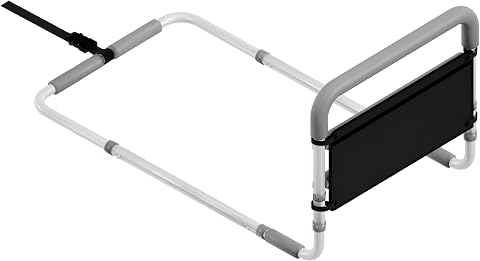
The Healthcraft Assista-Rail is a certified adult bed rail designed to prevent falls and provide support for individuals with reduced mobility. It features tool-free installation, adjustable height, a weight capacity of 300 lbs, and includes a bedside organizer for convenience.
Pros:
- Certified for safety and reliable support
- Easy to install without tools
- Adjustable height for various mattresses
- Includes convenient bedside organizer
Cons:
- May not fit non-standard bed frames
- Limited to standard bed sizes
- Requires mattress and box spring for installation
Best for: People whose bed setup and movement pattern suit a fixed rail
Not ideal for: Beds or users for whom the rail cannot be fitted and positioned safely
Bottom line: Confirm bed compatibility and personalized safety before installing a bedside rail.
Reacher Grabber Tool
A reacher can help someone pick up or retrieve objects without bending or stretching as far. The listed choice is the RMS 2-Pack 32-Inch Extra-Long Grabber Reachers with Rotating Jaw, Blue. Consider whether a 32-inch tool is manageable for the user in the rooms where it will be used. The rotating jaw may be useful for changing the grasp angle, but the user should be able to operate the trigger and control the tool without discomfort. A two-pack may also make it possible to keep a reacher in more than one location.
One common mistake is choosing the longest tool available without checking its weight, balance, storage needs, or the user’s hand strength. Review the product instructions and test the grip on light, easy-to-reach objects before relying on it for everyday tasks. A reacher is not a substitute for a stable step stool or hands-on help when an item is heavy, hot, sharp, or positioned awkwardly. Keep frequently used objects within comfortable reach and store the tool where it can be retrieved without bending. Control and task suitability matter as much as length. If hand pain, limited dexterity, or shoulder movement affects operation, consider another option with an occupational therapist or other qualified professional.
What to look for:
- Check whether 32 inches is comfortable to hold and maneuver.
- Assess trigger operation and grip comfort.
- Consider where each tool will be stored and used.
- Test with light objects before using it for routine tasks.
- Avoid using a reacher for heavy, hot, sharp, or unstable items.
RMS 2-Pack 32-Inch Extra-Long Grabber Reachers with Rotating Jaw, Blue

This two-pack of reacher grabbers has a 34-inch total length and a true reach of 32 inches. Each features a rotating rubberized jaw, a full-hand trigger, and a lightweight aluminum body designed to help retrieve everyday items with less bending and strain.
Pros:
- Rotating jaw helps reach items in different positions
- Full-hand trigger and non-slip jaw support easier gripping
- Lightweight aluminum design
Cons:
- 34-inch overall length may be awkward to store
- No load capacity or specific durability testing is provided
Best for: People who can comfortably operate a long-handled grabber
Not ideal for: Users who have difficulty gripping, triggering, or controlling the tool
Bottom line: Match the reacher’s length and operation to the user and intended tasks.
Automatic Pill Dispenser
An automatic pill dispenser may help organize a medication routine, particularly when remembering scheduled doses is challenging. The pick is the 42-Day Automatic Pill Dispenser with App & LCD Display, Digital Lock,. The product name identifies app and display features, but the fit depends on the user’s comfort with technology and the household’s preferred routine. Consider who will load and program the dispenser, how reminders will be noticed, and whether a caregiver needs access to check or support the process.
Do not assume an automatic dispenser can decide which medicines to take or replace a pharmacist’s instructions. Confirm that the device’s organization and reminder approach suit the person’s actual medication schedule, and follow its instructions for loading, programming, and checking doses. Ask a pharmacist or clinician whether the medicines can be handled in the intended way and what to do if a dose is missed or the device is not working. The digital lock and app may add steps for some users, so involve the person who will use and maintain them. Reliable setup and oversight are central to choosing medication aids. Keep the dispenser in a practical location and establish who will review its contents and operation.
What to look for:
- Compare the device’s capacity and setup with the actual medication routine.
- Decide who will load, program, and check the dispenser.
- Consider whether the user can see and use the LCD display and app.
- Review instructions for alerts, missed doses, and device problems.
- Confirm medication-handling questions with a pharmacist or clinician.
42-Day Automatic Pill Dispenser with App & LCD Display, Digital Lock, and Alerts

This 42-day automatic pill dispenser features expandable trays, app and on-device setup, and customizable alerts to help seniors manage medication safely. It includes a digital lock, moisture-safe storage, and remote monitoring for caregivers, making medication management simple and secure.
Pros:
- Easy remote care with app and on-device setup
- Flexible dosing options with clear alerts
- Secure digital lock and moisture-safe storage
Cons:
- Not suitable for institutional settings
- Requires smartphone for app control
- Limited to home use only
Best for: People whose schedule and support system suit an automatic dispenser
Not ideal for: Users without reliable help for setup, checking, or technology steps
Bottom line: Coordinate the dispenser’s setup with the person’s medication instructions and support plan.
Non-Slip House Slippers
Indoor footwear affects comfort and how a person feels while moving around the home. The listed pick is the Men’s Memory Foam Diabetic Slippers with Adjustable Closure, Extra Wid. Because the product name ends with “Extra Wid,” verify the complete width information and available sizing before deciding. Check the wearer’s foot length and width, how the closure adjusts, and whether the fit accommodates any foot changes or prescribed inserts. Try the slippers indoors while seated and check that they are easy to put on and remove.
A common mistake is prioritizing softness or a roomy label without checking whether the footwear stays securely on the foot. Confirm the sole description and product instructions rather than assuming that a slipper is suitable on every floor. Look for a fit that does not pinch, slip off, or require a difficult fastening motion. The wearer should be able to walk in them with their usual mobility aid if applicable; if balance is a concern, ask a healthcare professional about appropriate footwear. Secure fit and easy adjustment are especially important for someone with foot sensitivity or limited dexterity. Recheck the fit over time and replace footwear that becomes difficult to secure or no longer feels comfortable.
What to look for:
- Verify the full width designation and available sizes.
- Measure the wearer’s feet and account for inserts or foot changes.
- Check that the adjustable closure is manageable and secure.
- Review sole information and follow product guidance for indoor use.
- Try the slippers with the person’s usual mobility aid and assess comfort.
Men’s Memory Foam Diabetic Slippers with Adjustable Closure, Extra Wide, Warm Pl

These men’s diabetic slippers feature high-density memory foam for customized comfort and support, with adjustable hook & loop closures for easy wear. Made from durable, washable materials, they are designed to provide warmth, stability, and comfort for swollen or arthritic feet.
Pros:
- High-density memory foam provides excellent support and molds to the feet
- Adjustable hook & loop closures ensure a customized fit
- Machine washable for easy maintenance
- Designed for swollen and arthritic feet with full coverage and stability
Cons:
- May require ordering one size up for a comfortable fit
- Limited color options for some preferences
- Not suitable for those needing non-slip soles in very wet conditions
Best for: Men seeking adjustable indoor footwear with a comfort-focused design
Not ideal for: Wearers who need a specific fit that the available sizing cannot provide
Bottom line: Confirm sizing, width, and secure fit before relying on these slippers indoors.
Build the checklist around the most immediate daily challenge, rather than buying every category at once. Start by identifying where transfers, reaching, medication routines, or indoor walking need attention; then prioritize fit, compatibility, and safe setup for that task. Measure the space, review instructions, and involve the person who will use the item in the decision. For medication tools, include a pharmacist or clinician; for mobility and transfer concerns, consider an occupational therapist or other qualified professional.
Small, thoughtful changes can make home routines easier to assess and organize. Revisit each choice as needs, rooms, and routines change, and ask for help when the safest setup is unclear. The best checklist is one that supports the individual’s preferences while making everyday tasks more manageable—one well-matched step at a time.
Fall Picks
fall essentials
As an affiliate, we earn on qualifying purchases.