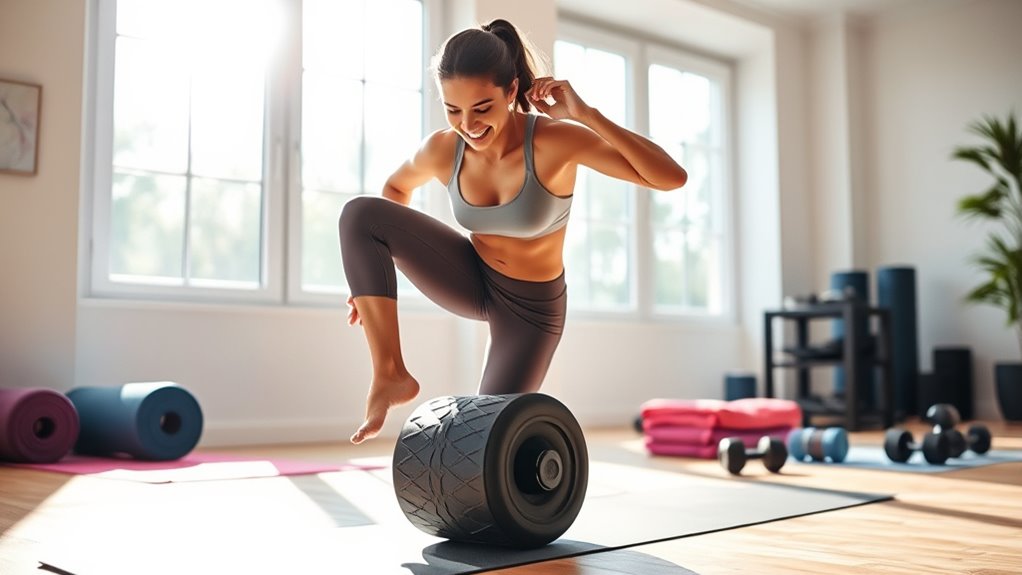

To maintain core stability for everyday activities, focus on strengthening all your core muscles—abs, obliques, back, and pelvic floor—through simple exercises like planks and bridges. Good posture and mindful breathing activate your muscles and support proper movement. Incorporate these routines into your daily life and stay consistent to prevent injuries and improve balance. If you keep working on your core, you’ll discover more effective ways to stay active and injury-free.
Key Takeaways
- Engaging all core muscles ensures stability during daily movements like lifting, bending, and standing.
- Proper posture and alignment support core activation, reducing strain and injury risk in everyday tasks.
- Incorporating balance exercises enhances coordination and stability for routines like walking and reaching.
- Deep breathing techniques activate core muscles, improving control and endurance in daily activities.
- Consistent core strengthening and flexibility exercises promote better support and reduce discomfort during regular movements.

Trideer Exercise Ball for Yoga, Pilates & Fitness – Stability Ball Equipment for Home Gym & Office Chair, Core & Balance Training Accessories, Physical Therapy Equipment, Quick Pump Included, 5 Sizes
Designed with anti-slip stripes and a fine frosted texture for enhanced grip and stability. The increased surface friction…
As an affiliate, we earn on qualifying purchases.
As an affiliate, we earn on qualifying purchases.
Understanding the Importance of Core Muscles

Your core muscles are the foundation of almost every movement you make, providing stability and support for your spine and pelvis. Understanding core muscle anatomy helps you see how muscles like your abdominals, obliques, back muscles, and pelvic floor work together to maintain balance and posture. Many core workout myths suggest that only abdominal exercises matter, but true core stability requires engaging all these muscles. Strengthening your core improves daily activities, reduces injury risk, and enhances athletic performance. Recognizing the importance of a balanced core prevents misconceptions that core workouts are only for visible abs. Instead, it’s about building a solid, functional foundation that supports your entire body through everyday movements. A well-rounded approach ensures you develop core strength effectively and safely. Core muscle anatomy is essential for designing balanced workouts that target all supporting muscles.

NYOrtho Abdominal Binder 9" 3-Panel – Unisex Post-Surgery Compression Support Belt for Men and Women – Abdominal Wrap for Hernia, Back Pain, Muscle Strain – Latex-Free – Made in USA (60"-75")
CUSTOM FIT abdominal binder fits waist comfortably & is flexible, conforming to any shape & size
As an affiliate, we earn on qualifying purchases.
As an affiliate, we earn on qualifying purchases.
Key Components of Core Stability

To improve your core stability, you need to focus on engaging your abdominal muscles effectively. Equally important is understanding how your spine is supported during movement to prevent injury. Together, these components form the foundation for maintaining balance and strength in everyday activities. Incorporating Kia Tuning techniques such as suspension and handling upgrades can also help optimize overall body control and stability.
Abdominal Muscle Engagement
Engaging your abdominal muscles is essential for maintaining core stability during daily activities. Proper activation supports your spine and improves posture. To do this effectively, focus on breathing techniques that promote controlled, deep breaths—this helps engage your core naturally. Incorporate nutrition strategies that fuel your muscles, ensuring they stay strong and responsive. Avoid holding your breath during activities, as this can cause unnecessary tension and reduce muscle engagement. Instead, breathe steadily, activating your abs with each inhale and exhale. Consistent practice of abdominal engagement enhances stability, making everyday movements safer and more efficient. Remember, muscles work best when they’re properly fueled and engaged through mindful breathing, supporting your overall core health. Additionally, detecting passive voice in your writing can improve clarity and effectiveness, helping you communicate more confidently.
Spinal Support Mechanics
Understanding spinal support mechanics is essential for maintaining core stability during daily activities. Your spine relies on a balance between lumbar flexibility and thoracic mobility to support movement and posture effectively. Lumbar flexibility allows your lower back to bend and twist without strain, while thoracic mobility ensures your upper back can rotate and extend comfortably. When these components work together, they enable smooth, coordinated movements and reduce the risk of injury. Incorporating technology-driven solutions like automation can also assist in tracking and improving mobility exercises. Strengthening and maintaining these areas help stabilize your spine, providing a solid foundation for all motions. Pay attention to your posture and incorporate exercises that enhance both lumbar flexibility and thoracic mobility. This dual focus keeps your spine supported, resilient, and capable of handling everyday tasks with ease.

Upgraded Posture Corrector Back Brace for Men and Women, New Version Lumbar Support for Posture Improving and Pain Relief, Full Back Support for Neck, Shoulder, Waist Pain
【Pain Relief】 Follow the scientific concepts of ergonomics, BraceTop posture corrector provides 3 in 1 support to straighten…
As an affiliate, we earn on qualifying purchases.
As an affiliate, we earn on qualifying purchases.
Simple Exercises to Strengthen Your Core

You can boost your core strength with simple exercises like plank variations that improve stability and build endurance. The bridge exercise targets your glutes and lower back, supporting overall balance. Additionally, seated core engagements are easy to incorporate into your daily routine to maintain core activation throughout the day. Incorporating regular investment strategies can further enhance your overall physical and financial stability over time.
Plank Variations for Stability
Have you ever wondered how a simple change in your plank routine can boost your core stability? Variations like side planks or forearm planks challenge your muscles differently, promoting better core activation and muscle endurance. These adjustments help you target stabilizer muscles that support daily movements. Incorporate these variations into your routine to keep your workouts engaging and effective. Using modern exercise techniques can further enhance your progress.
Bridge Exercise Benefits
Ever wondered how simple exercises like bridges can substantially strengthen your core? The bridge targets your glutes, lower back, and abdominals, improving stability for daily activities. Beyond physical benefits, it promotes meditation benefits by helping you focus on breath and body awareness during the movement. Incorporating proper nutrition essentials supports muscle recovery and growth, maximizing your efforts. Here are three key benefits:
- Enhances core stability, reducing injury risk.
- Improves posture and spinal alignment.
- Boosts overall functional strength.
Adding bridge exercises into your routine can make everyday tasks easier and reduce discomfort. Remember, consistency is key. When combined with mindful breathing and balanced nutrition, these simple movements become powerful tools for a healthier, more stable core. AI content creation tools can also assist in tracking your progress and providing personalized workout tips.
Seated Core Engagement
Seated core engagement exercises offer a convenient way to strengthen your abdominal and lower back muscles without the need for special equipment or a gym. To start, focus on maintaining a proper seated posture—sit upright with your feet flat on the floor and shoulders relaxed. Incorporate core breathing by inhaling deeply through your nose, expanding your belly, then exhaling slowly to activate your core muscles. As you do this, gently draw your belly button toward your spine, engaging your deep abdominal muscles. Practice this breathing technique regularly, keeping your seated posture aligned, to build core strength over time. These simple exercises help improve stability for daily activities, reduce back pain, and promote better posture—all from your chair. Additionally, mindful core activation during these exercises can enhance their effectiveness and help establish better muscle control.

VEVOR 23-inch Half Exercise Ball Trainer, 660 lbs Capacity Balance Ball, Includes Resistance Bands and Pump, Ideal for Full Body Workouts, Yoga, and Strength Training at Home Gym, Blue2
Multi-functional Exercise: The half exercise ball trainer, unlike any other fitness equipment, offers various strength training methods targeting…
As an affiliate, we earn on qualifying purchases.
As an affiliate, we earn on qualifying purchases.
Incorporating Core Work Into Daily Routines
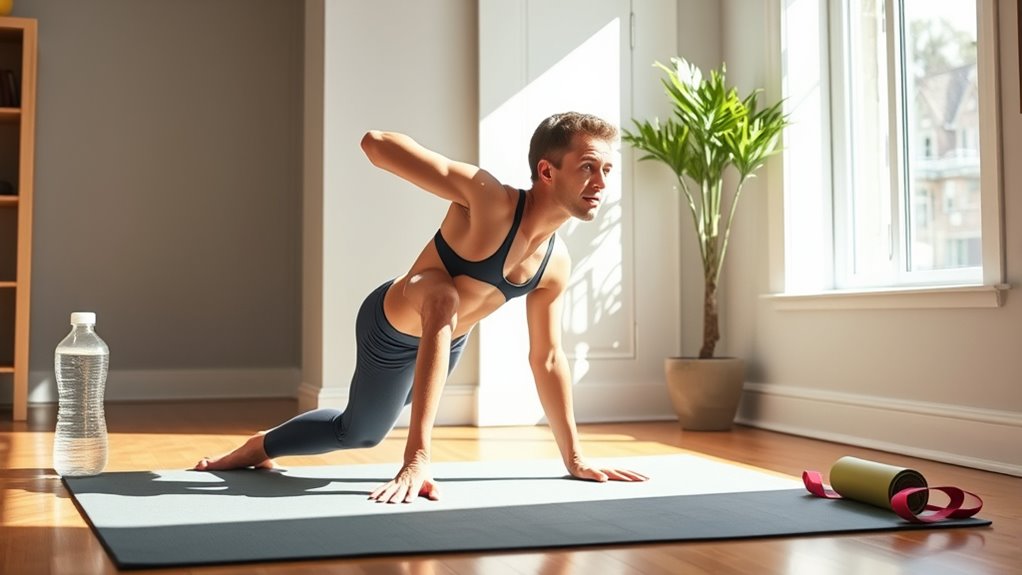
Incorporating core work into your daily routines can be simple and highly effective when you find small opportunities throughout the day. By integrating quick exercises, you enhance core activation and build muscle endurance without extra time. You might:
- During morning stretches, add plank holds to engage your core.
- While waiting in line or at a stoplight, perform seated pelvic tilts to activate deep muscles.
- Incorporate standing balance exercises, like leg lifts, to strengthen your core muscles and improve stability.
Additionally, focusing on sleep hygiene can support your overall recovery and muscle function, making your core training more effective. These small actions help you maintain consistent core engagement, supporting overall stability. Over time, these routines boost muscle endurance and make daily activities easier and safer, fostering a stronger, more resilient core without disrupting your schedule.
Proper Posture and Its Impact on Core Engagement

Maintaining proper posture throughout the day is a powerful way to enhance your core engagement and support overall stability. When you stand or sit with aligned hips, you promote better hip flexibility, which reduces strain and encourages your core muscles to activate naturally. Good posture keeps your spine neutral, allowing your breathing techniques to become more effective, since deep, diaphragmatic breaths require an open chest and relaxed shoulders. As you breathe deeply, your core muscles work in sync, providing essential stability for everyday activities. Consistently practicing proper posture trains your muscles to engage correctly, preventing fatigue and imbalance. proper posture also influences your overall body alignment, helping to prevent long-term strain and discomfort. Remember, small adjustments—like tucking your chin or aligning your hips—can make a significant difference in how effectively your core supports your movements throughout the day.
Techniques to Improve Balance and Coordination

To enhance your balance and coordination, try incorporating specific exercises into your routine. Balance exercises can help stabilize your core, while coordination drills improve your movement control. Additionally, focusing on posture techniques guarantees your body stays aligned during these activities, maximizing their effectiveness.
Balance Exercises for Stability
Improving your balance and coordination is essential for performing everyday activities safely and confidently. Balance exercises help strengthen core muscles and enhance proprioception. To boost stability, consider incorporating simple techniques like standing on one leg, heel-to-toe walks, and yoga poses such as tree pose. These exercises challenge your stability and improve coordination over time. Additionally, practicing meditation techniques can enhance your focus and body awareness, supporting better balance. Nutrition advice also plays a role; eating nutrient-rich foods fuels your muscles and maintains nerve function. Consistency is key—regular practice will make these exercises more effective. Remember, small daily efforts lead to significant improvements in stability, making everyday tasks easier and reducing fall risk.
Coordination Drills for Movement
Wondering how to enhance your coordination during daily movements? Incorporate simple coordination drills that focus on dynamic stretching and proper nutrition timing. These exercises boost your neuromuscular control, helping you move smoothly and safely. For example, practice balancing on one leg while reaching for objects or performing quick footwork drills. To visualize, consider this table:
| Movement Type | Imagery |
|---|---|
| Dynamic stretching | Swinging arms and legs in fluid motion |
| Balance drills | Standing on one foot, eyes closed |
| Reaction exercises | Catching and throwing balls rapidly |
These drills increase your body awareness and reaction time. Consistently practicing enhances your ability to coordinate movements, making daily activities easier and reducing injury risk. Remember, good timing with nutrition fuels your training for ideal results.
Posture Enhancement Techniques
Building on your coordination efforts, enhancing your posture plays a vital role in improving balance and overall coordination. Proper posture ensures your body is aligned, reducing strain and promoting efficient movement. To achieve this, focus on core breathing, which helps stabilize your pelvis and strengthen your core muscles. Maintaining correct pelvic alignment is essential for posture, as it influences your entire spinal position. Incorporate these techniques:
- Practice deep, diaphragmatic breathing to engage your core and support proper posture.
- Regularly check and correct your pelvic alignment throughout the day.
- Perform posture exercises that promote awareness of your body’s position, like standing tall with shoulders relaxed.
Consistently applying these techniques will enhance your balance, coordination, and overall functional movement.
Tips for Maintaining Consistency in Core Training

Staying consistent with your core training can be challenging, but establishing a clear routine makes it much easier. To stay on track, set specific days and times for your exercises, making them a non-negotiable part of your schedule. Focus on improving core flexibility through gentle stretching, which helps prevent injuries and keeps your muscles responsive. Additionally, pay attention to your core nutrition by fueling your body with balanced meals that support muscle recovery and strength. Keep a workout journal to monitor progress and celebrate small wins, maintaining motivation. Remember, consistency builds habits, so stay patient and persistent. Over time, these practices will become second nature, ensuring your core remains strong and stable for everyday activities.
Common Mistakes to Avoid During Core Exercises
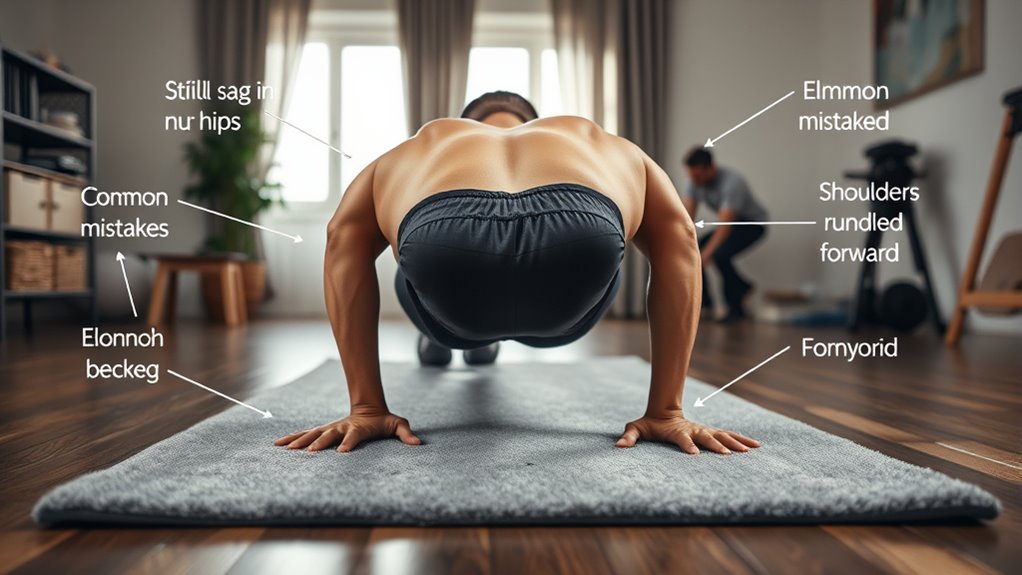
One common mistake during core exercises is sacrificing proper form for the sake of completing reps. This can hinder progress and increase injury risk. First, neglecting core breathing leads to shallow breaths, reducing oxygen flow and stability. Focus on deep, controlled breaths to engage your core fully. Second, ignoring core flexibility limits your movement range, making exercises less effective and potentially causing strain. Always prioritize smooth, controlled movements over speed. Third, many people overlook engaging their entire core, including the transverse abdominis. To avoid these mistakes, maintain proper breathing, work on flexibility, and ensure full core activation. Staying mindful of form and technique helps maximize benefits and keeps your core stable during daily activities.
Adapting Core Exercises for Different Fitness Levels

Adapting core exercises to suit different fitness levels guarantees you can progress safely and effectively. If you’re a beginner, start with simple moves like plank holds or gentle core dance routines that emphasize stability without overwhelming you. As you advance, incorporate more challenging exercises, such as side planks or dynamic movements that mimic athletic training drills. For those at an intermediate level, adding resistance or longer hold times can boost strength and endurance. Athletes often modify exercises to match their training needs, which you can do too. Remember, the goal is consistent improvement without risking injury. Tailoring core workouts ensures you stay motivated, build core stability, and support everyday activities effectively. Adjust your routine as you grow stronger, and enjoy steady progress.
Tracking Progress and Staying Motivated

How can you tell if your core exercises are making a real difference? Tracking progress is key. Focus on your nutrition habits, as they support muscle recovery and energy levels. Keep a journal to note improvements in balance, posture, or daily activities. Celebrating small wins builds mental resilience, helping you stay motivated. Consider these steps:
Track your progress and celebrate small wins to stay motivated and see real core exercise results.
- Record workout consistency and how you feel during activities.
- Monitor changes in posture or endurance over time.
- Reflect on how your nutrition habits impact your energy and recovery.
Frequently Asked Questions
How Long Should I Hold Each Core Exercise for Optimal Results?
For ideal results, hold each core exercise for about 10 to 30 seconds. Focus on maintaining proper form and engaging your muscles throughout the exercise, rather than just the duration. As you build strength, gradually increase the holding time to challenge yourself. Remember, consistency matters more than long holds, so aim for 2-3 sets per session, and you’ll notice improvements in your core stability over time.
Can Core Exercises Help Prevent Lower Back Pain?
Imagine your core muscles as the sturdy trunk of a tree, holding everything upright. Regular core exercises boost core muscle engagement, which helps keep your spine aligned and improves posture correction. This support reduces strain on your lower back, lowering the risk of pain. By strengthening these muscles, you create a resilient foundation that prevents lower back issues and promotes better movement during daily activities.
Are There Any Contraindications for Specific Core Workouts?
Certain core workouts might not be suitable if you have a core injury or are pregnant. You should avoid high-impact or strenuous exercises that strain your abdominal or lower back muscles. Instead, opt for pregnancy-safe exercises and gentle stretches that strengthen your core without risking injury. Always consult your healthcare provider before starting new routines, especially if you’re pregnant or recovering from a core injury, to guarantee safety and effectiveness.
How Does Core Stability Influence Athletic Performance?
Core stability boosts your athletic performance by enhancing core endurance, allowing you to maintain proper form longer and perform better. It also plays a crucial role in injury prevention, as a strong core supports your spine and reduces strain on other muscles during activity. When you focus on core stability, you’ll notice increased power, balance, and resilience, giving you the edge in sports and physical challenges.
What Are Quick Daily Stretches to Activate My Core?
To activate your core daily, try quick stretches like the plank pose, which promotes core engagement and abdominal activation. Include side planks to target obliques and gentle torso twists to loosen tight muscles. These stretches help wake up your core muscles, improving stability and posture. Keep your movements controlled and focus on engaging your abdominals throughout each stretch for maximum benefit and better core strength over time.
Conclusion
Think of your core as the foundation of a sturdy house—when it’s strong, everything else stands tall. By understanding, practicing, and staying consistent with core exercises, you’re building a resilient base that supports daily activities and prevents injuries. Keep nurturing your core, just like tending a garden, and watch your strength and stability grow. With dedication, you’ll create a solid center that keeps you balanced and confident every day.