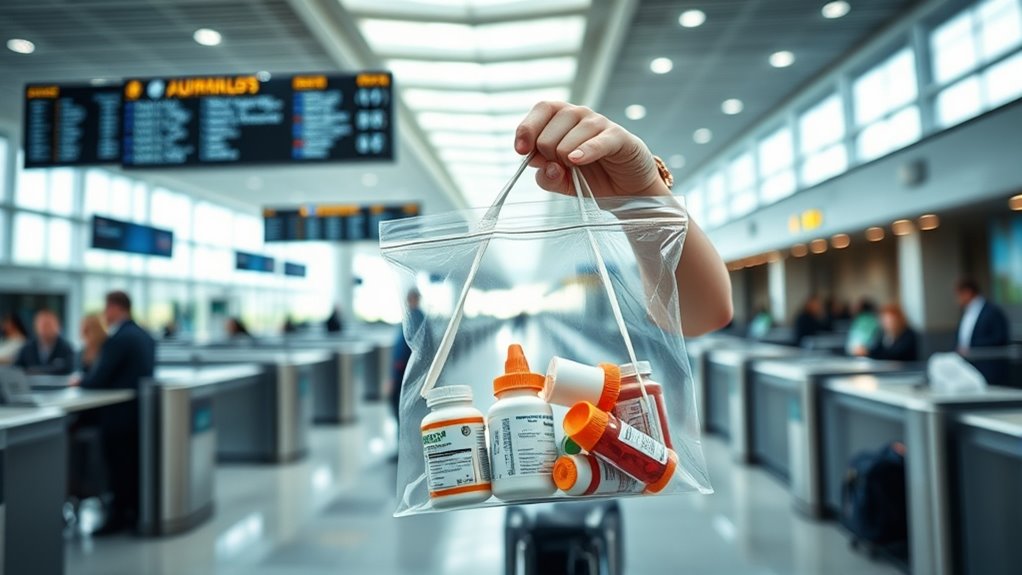

To save time at the airport, make sure your medications are properly packaged and organized. Keep all meds in their original, labeled containers and carry them in your carry-on to avoid delays. Use clear, waterproof labels and have documentation from your doctor ready. Organize supplies for quick access, and be familiar with TSA rules for liquids and medical devices. Following these tips will help your security process go smoothly—keep going to discover more helpful advice.
Listen free for 30 days with Audible
Thousands of audiobooks and originals — cancel anytime.
As an affiliate, we earn on qualifying purchases.
Key Takeaways
- Keep medications in their original, labeled containers for quick verification during security checks.
- Carry medications in carry-on luggage to prevent loss and facilitate easy inspection.
- Prepare and organize all medical documentation, prescriptions, and doctor’s notes beforehand.
- Declare liquids over 3.4 ounces and follow TSA guidelines to streamline screening.
- Have medications and related documents readily accessible to reduce delays and avoid additional questioning.
medication travel organizer case
As an affiliate, we earn on qualifying purchases.
As an affiliate, we earn on qualifying purchases.
Why Proper Medication Packaging Matters
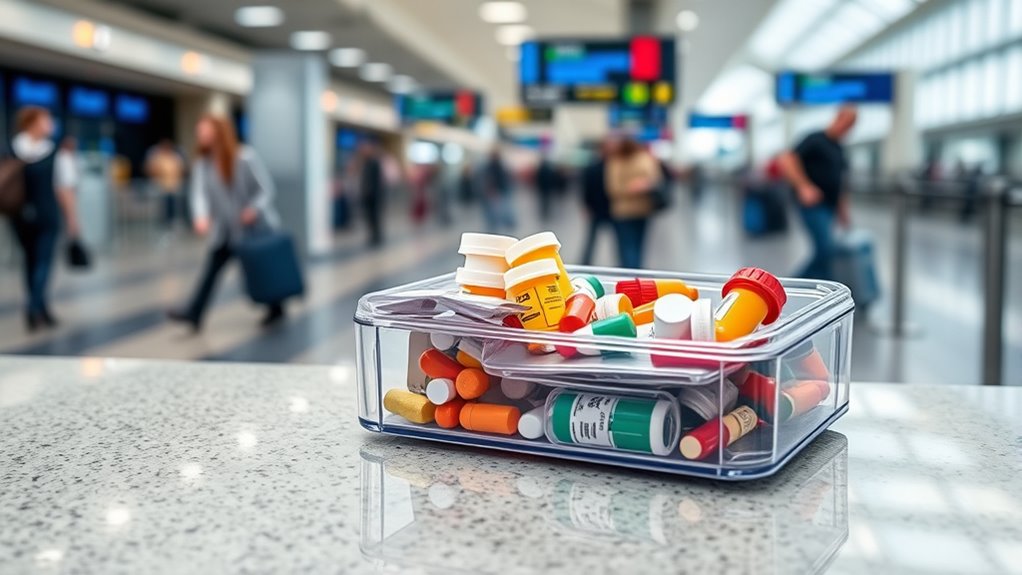
Proper medication packaging is crucial when traveling because it helps prevent mix-ups and guarantees you take the right doses at the right times. Good medication storage ensures your pills stay safe and effective, especially during transit. Using appropriate packaging materials, like child-proof containers or airtight bottles, protects your medications from moisture, light, and damage. Clear labels with your name, dosage instructions, and pharmacy details reduce confusion and make it easier to identify your meds quickly. Proper packaging also keeps your medications organized, preventing accidental spills or loss. When you prioritize secure and suitable packaging, you minimize risks and ensure your health remains protected throughout your journey. Well-thought-out medication storage is essential for hassle-free travel and maintaining your treatment schedule. Incorporating proper packaging techniques can further enhance medication safety during travel.
How to Prepare Your Medications for Airport Security

When preparing your medications for airport security, it’s important to organize and present them correctly to avoid delays or issues. Make sure you have your travel documentation, such as prescriptions and doctor’s notes, ready to verify your medications if asked. Familiarize yourself with airline policies, as some airlines have specific rules for carrying meds. To streamline security checks, consider these steps:
Organize medications, carry documentation, and check airline policies for smooth airport security clearance.
- Keep medications in their original containers with clear labels
- Carry a list of your medications and dosages
- Pack extra supplies in case of travel delays
- Place all medications in easily accessible carry-on compartments
- Have your travel documentation ready for inspection
- Monitoring security procedures and being prepared can significantly reduce wait times and prevent potential confiscations.
Following these tips helps prevent unnecessary delays and ensures smooth passage through airport security. Proper preparation is key when traveling with medications.
The Best Way to Organize Your Medications in Your Carry-On
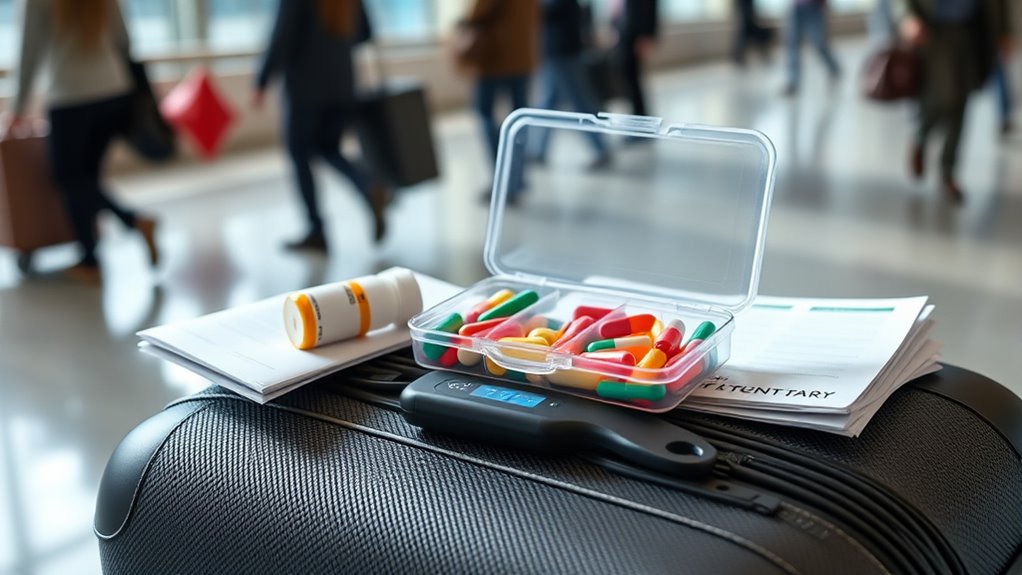
To keep your medications easily accessible and protected during your trip, organizing them efficiently in your carry-on is essential. Use a dedicated medication storage container or a small pouch to keep all your meds together, preventing them from getting lost or damaged. Label your containers clearly with medication names and dosages, so you can quickly identify them if needed. Consider grouping daily doses and necessary medical devices in separate compartments for quicker access. Keep your prescriptions, any required documentation, and emergency supplies within reach. Proper organization supports your travel health by reducing stress and ensuring you have everything on hand. This simple system helps you stay prepared, minimizes delays, and makes managing your medications smoother throughout your journey. Using appropriate containers and labels enhances organization and safety during travel.
Understanding TSA Rules for Medications and Medical Devices

When traveling with medications and medical devices, knowing TSA rules helps you avoid surprises at security. You can bring medications in reasonable quantities and should follow proper packaging guidelines to stay compliant. Understanding the screening process guarantees a smooth experience, even if you need to show additional documentation. Incorporating wall organization systems can help you keep your medications and devices well-organized and accessible during travel.
TSA Medication Exceptions
Traveling with medications can be straightforward if you comprehend TSA rules. TSA permits you to carry medications in your carry-on, even if they’re liquids, gels, or aerosols. You don’t need to declare them unless they exceed 3.4 ounces, but you should separate them for screening. Remember, medication storage is flexible, so keep medications easily accessible. To support your travel health, carry prescriptions or doctor’s notes in case of questions. TSA’s medication exceptions include:
- Liquid medications over 3.4 ounces
- Insulin and diabetic supplies
- Liquid nutritional supplements
- Medications in pill or solid form
- Medical devices like nebulizers or CPAP machines
Understanding medication storage can help you better organize your supplies and avoid delays during security checks. Knowing these exceptions helps streamline security checks and ensures your medications arrive safely.
Proper Packaging Guidelines
Proper packaging of your medications and medical devices guarantees they stay safe and accessible throughout your journey. Use clear, sealable bags or containers for medication storage, making it easy to identify and access essential items. Packaging essentials include keeping medications in their original containers with labels intact and storing them in a way that prevents damage or leaks. Additionally, fragile medical devices should be cushioned with padding. Organize your supplies to meet TSA regulations and reduce hassle during security screening. Consider this quick guide:
| Item Type | Packaging Essentials | TSA Tips |
|---|---|---|
| Prescription meds | Original bottles, labeled, secure | Easy to remove and present |
| Over-the-counter meds | Clear bags, easy access | Keep separate for quick review |
| Medical devices | Cushioned, protected, labeled | Avoid damage during transport |
| Emergency meds | Accessibly stored, clearly visible | Keep on hand for quick reach |
Additionally, ensuring your medications are stored away from heat and moisture can help maintain their effectiveness during travel, which is supported by air quality guidelines.
Security Screening Procedures
Are you aware of the TSA rules that govern the security screening of medications and medical devices? Knowing these rules can save you time and stress at security. When going through, carry your travel documentation, like prescriptions or doctor’s notes, to verify your medications. TSA allows liquids, gels, and aerosols in reasonable quantities for medical needs. Be prepared to declare your medications and medical devices for separate screening. Additionally, understanding the importance of projector specifications can help you better prepare for your home cinema setup. Keep medications in their original containers with labels. Inform TSA officers about any medical devices, like insulin pumps or CPAP machines. Be ready to remove devices for inspection if asked. Carry enough medication for the duration of your trip, including medication refills. Follow TSA instructions carefully to expedite the process. Staying informed helps assure a smooth security screening experience.
Tips for Labeling Your Medications Clearly

Clear labeling is essential to guarantee you can easily identify and take the right medications while on the go. To improve labeling clarity, use large, legible fonts and include essential details such as your name, medication name, and dosage. Incorporate color coding by assigning specific colors to different medication types, making identification faster. Consider using waterproof labels to prevent smudging or peeling during travel. Organize your medications with clear labels on each container, so you avoid confusion at security or while managing your pills. Ensuring your labels are accurate and well-organized can also help prevent medication errors, especially when traveling across time zones or through busy airports.
What to Do If You Need to Show Prescriptions
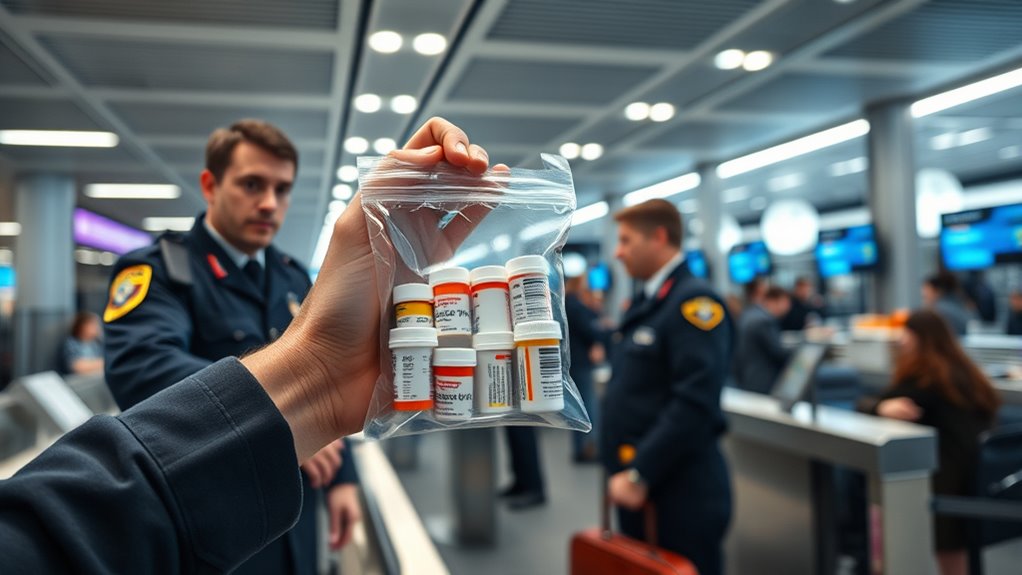
When security asks to see your prescriptions, make sure to carry the original documents and keep your meds in their original packaging. This helps verify that everything matches your prescription and avoids delays. Having these ready can make the process smoother and stress-free. Additionally, being aware of digital literacy programs can help seniors communicate more playfully and confidently about their medications.
Carry Original Prescriptions
Carrying original prescriptions is essential if you need to show proof of medication during security checks or at customs. This helps with prescription verification and prevents delays. Keep your prescriptions easily accessible in your carry-on to avoid fumbling through bags. When preparing, verify your medication storage includes the original prescription label, clearly displaying your name, medication, and dosage. Always carry multiple copies if traveling internationally. Be ready to present these documents if asked by security personnel. Having your prescriptions ready streamlines the process and avoids unnecessary questioning. Remember, authentic prescription verification can prevent confiscation or delays, especially for controlled substances. Staying organized and prepared ensures a smooth security experience and peace of mind throughout your journey. Recognizing the importance of verification of identity through proper documentation is a key aspect of traveling with medications.
Keep Meds in Original Packaging
Keeping your medications in their original packaging guarantees that you can quickly verify your prescriptions if security or customs officers ask to see them. This guarantees medication safety and maintains packaging compliance, reducing delays. When presenting your prescriptions, having labels that clearly display your name, medication name, and dosage helps avoid confusion. Use this table to understand what’s important:
| Item to Keep | Why It Matters |
|---|---|
| Original Packaging | Confirms medication safety and authenticity |
| Prescription Label | Provides necessary verification details |
| Sealed Containers | Prevents tampering and complies with security rules |
| Clear Labeling | Ensures quick identification if questioned |
Storing meds in their original packaging streamlines security checks, keeps your trip smooth, and avoids unnecessary hassle. Additionally, ensuring your medications are in properly sealed containers helps maintain their integrity during travel.
Handling Liquid Medications and Special Cases
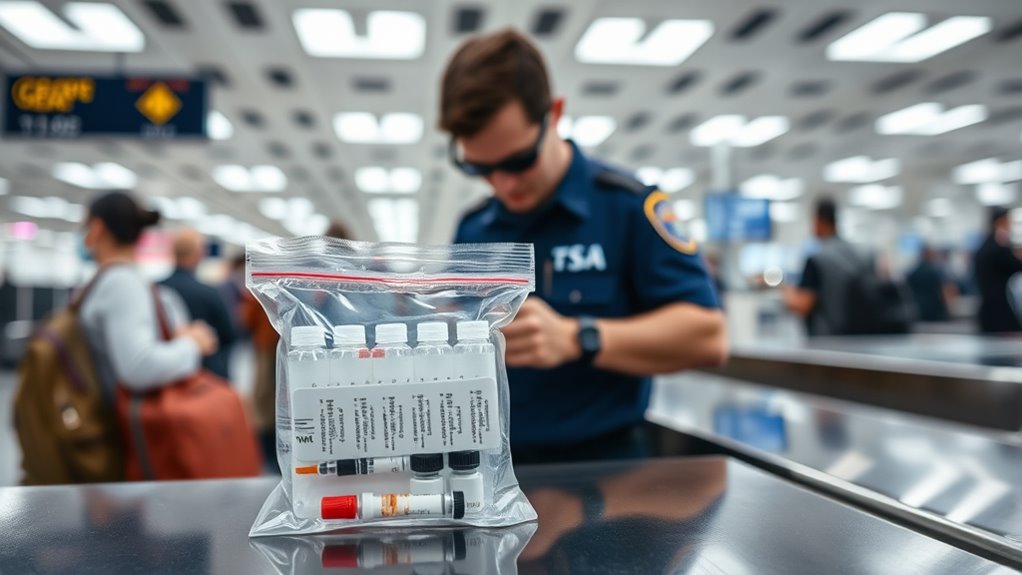
Handling liquid medications while traveling requires careful planning to guarantee safety and compliance with transportation regulations. To maintain proper medication storage and support your travel health, consider these tips:
- Keep liquids in their original containers with clear labels.
- Pack extra supplies, like syringes or droppers, if needed for accurate dosing.
- Use leak-proof bags to prevent spills and protect other belongings.
- Carry a doctor’s note or prescription for special medications, especially if they exceed limits.
- Be prepared for security checks by knowing the allowed quantities and declaring liquids if required.
- For added peace of mind, verify brand authenticity to ensure your medications are genuine and safe.
Communicating With Security Personnel About Your Meds
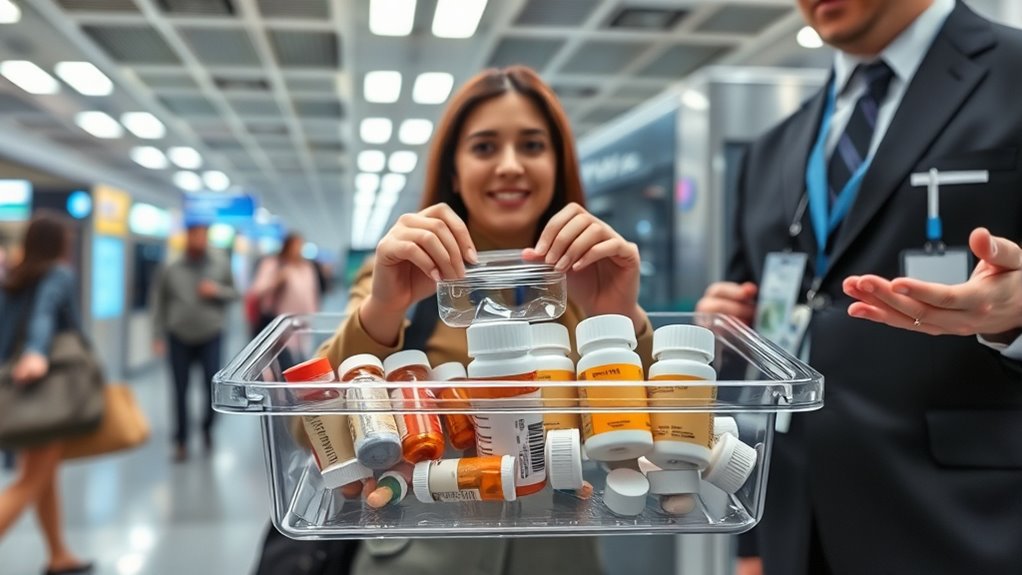
When going through security, it’s essential to proactively communicate with TSA agents about your medications. Clear medication communication helps prevent delays and ensures a smooth security interaction. Be prepared to briefly explain what your medications are, especially if they’re in unusual containers or require special handling. Keep your prescriptions or doctor’s notes handy, as they can quickly verify your medication if asked. If you’re carrying liquid meds, inform officers upfront, so they know to handle them accordingly. Staying calm and respectful during security checks fosters a positive interaction and reduces unnecessary questioning. Remember, TSA agents are there to assist, so straightforward communication about your meds helps you move through security efficiently. Proper medication communication makes your travel experience less stressful.
Common Mistakes to Avoid When Traveling With Medications
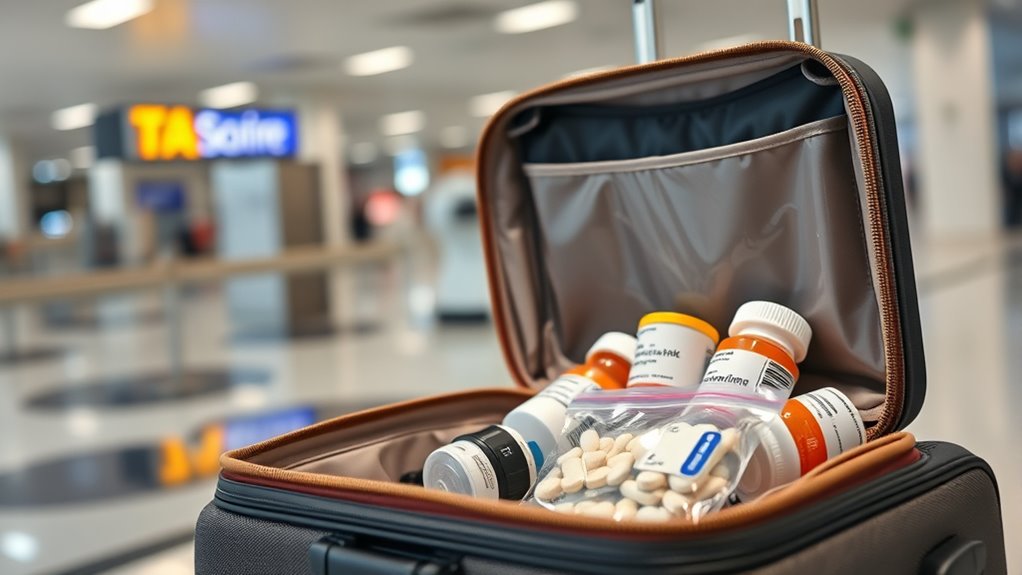
Traveling with medications can be smooth, but many travelers make avoidable mistakes that cause delays or safety issues. One common error is improper medication storage, which can compromise your meds’ effectiveness or lead to spoilage. Additionally, neglecting to carry enough medication for the entire trip can jeopardize your travel health. Forgetting to keep medications in their original containers may cause security delays and confusion. Failing to have a list of your medications or their dosages can create problems during emergencies. Lastly, not informing security officers about your meds or packing them improperly can result in confiscation or delays. To avoid these issues, make certain proper medication storage, pack extra supplies, keep all meds accessible, carry a list of your medications, and communicate clearly with security. Incorporating technology, such as AI in Education, can help travelers stay organized and informed about their medication needs during travel.
Additional Items to Carry for a Smooth Security Process
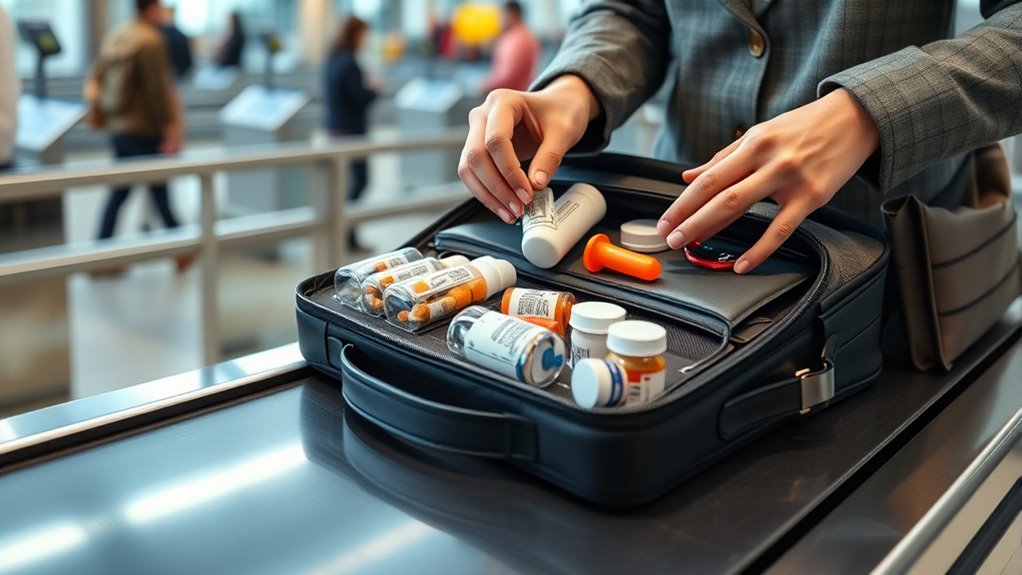
To make security checks easier, pack your medications separately from other belongings. Keep all necessary documentation handy in case you need to verify your meds quickly. Remember to follow TSA regulations to avoid delays and guarantee a smooth process through security. Using a dedicated medication storage container can further streamline the screening process.
Pack Meds Separately
Carrying your medications separately from your main luggage can make security checks much smoother. When you keep your medication storage organized and accessible, it reduces delays and helps maintain your travel health. Pack your meds in a clear, resealable bag or container for easy inspection. Consider these essentials:
- Original prescription bottles with labels
- A list of your medications and dosages
- Any necessary medical devices or accessories
- A small cooler or insulated bag for temperature-sensitive meds
- Copies of prescriptions or doctor’s notes
- Using proper packing techniques can further streamline your security process and protect your medications during travel.
Keep Documentation Ready
Having your documentation ready can make security screenings much faster and less stressful. Carry your medication documentation and travel health records easily accessible. These documents verify your medications, especially if they contain liquids or require special handling. Keep printed copies of prescriptions, doctor’s notes, or medical certificates in your carry-on bag. This preparation helps avoid delays if security officers need to verify your medications. Ascertain your travel health records are current and detail your medical conditions and prescribed treatments. Having everything organized and within reach minimizes the need for additional questioning or searches. Additionally, being familiar with bedroom organizational tips can help you keep your documents neatly stored and easy to find. By proactively preparing your documentation, you streamline the security process, reduce the risk of confiscation or delays, and ensure a smoother journey through airport security checkpoints.
Follow TSA Regulations
Are you aware of the TSA regulations that can make your security screening smoother? Following security protocols is essential, especially when traveling with medications. Proper medication storage helps prevent delays and keeps your meds accessible. To ensure a hassle-free process, carry medications in their original containers with clear labels. Remember to declare any liquids or gels exceeding 3.4 ounces. Additionally, keep a list of your medications handy in case you need to explain their purpose. Consider packing extras in your carry-on in case of delays. Be prepared to remove electronics and liquids from your bag during screening. Staying informed about TSA updates and mindful of mindfulness practices can help maintain calm and focus amid busy airport environments. Finally, stay informed about TSA updates to avoid surprises at security checkpoints. Staying compliant with these regulations guarantees a quicker, stress-free journey through TSA security.
Frequently Asked Questions
Can I Carry Expired Medications Through Airport Security?
You shouldn’t carry expired medications through airport security, as security procedures typically require valid, unexpired prescriptions or medications. Expired medication can raise questions and delay your process. Always check your medication expiration date before traveling, and carry your prescriptions or doctor’s note. This helps streamline security and guarantees you’re compliant with regulations, avoiding unnecessary stress or confiscation. Keep your medications current to save time and ensure safe travel.
Are There Restrictions on Carrying Herbal or Natural Remedies?
Herbal restrictions can feel like maneuvering a dense forest; some natural remedies are welcome, while others face strict bans. You should check airline and TSA guidelines before packing herbal or natural remedies, as restrictions vary. Solid herbal supplements are usually allowed, but liquids or gels may require extra screening or be prohibited. To avoid delays, carry clear labels and documentation, ensuring your herbal treasures don’t get lost in the security jungle.
How Should I Handle Medications That Require Refrigeration During Travel?
If you have medications that require refrigeration, plan for proper medication storage during travel by bringing a portable, insulated travel refrigeration container. Keep your meds cold by using ice packs or gel packs approved for travel refrigeration. Make sure to keep the container sealed and stored in your carry-on to comply with airline rules. Always carry a doctor’s note and extra doses in case of delays or emergencies.
Do I Need a Doctor’s Note for Over-The-Counter Meds?
You don’t usually need a doctor’s note for over-the-counter meds, but it’s wise to carry medication documentation. Imagine a scenario where airport security questions your meds; having a doctor’s note can facilitate the process. Some medications, like certain supplements or high-dose products, might benefit from documentation to avoid delays. Always check specific airline or TSA guidelines to ensure you’re prepared, making your travel smoother and stress-free.
What Should I Do if My Medication Is Lost or Stolen at the Airport?
If your medication gets lost or stolen at the airport, act quickly by reporting the issue to airport security and your airline immediately. Keep a copy of your prescription and any emergency replacements handy to prove your need. Contact local pharmacies or your healthcare provider for urgent replacements. Staying calm and organized helps you navigate lost luggage and ensures you get the necessary medications without delay.
Conclusion
So, next time you’re racing through airport security, remember: your meds are basically VIPs. Proper packaging, clear labels, and a heads-up to security will keep your journey smooth—and maybe even earn you a gold star. After all, who knew that a little organization could save you hours—and your sanity? Travel like a pro, and let your meds do the heavy lifting. Safe travels, and don’t forget to thank your perfectly packed pills!
NFL season / tailgating Picks
team gear
As an affiliate, we earn on qualifying purchases.