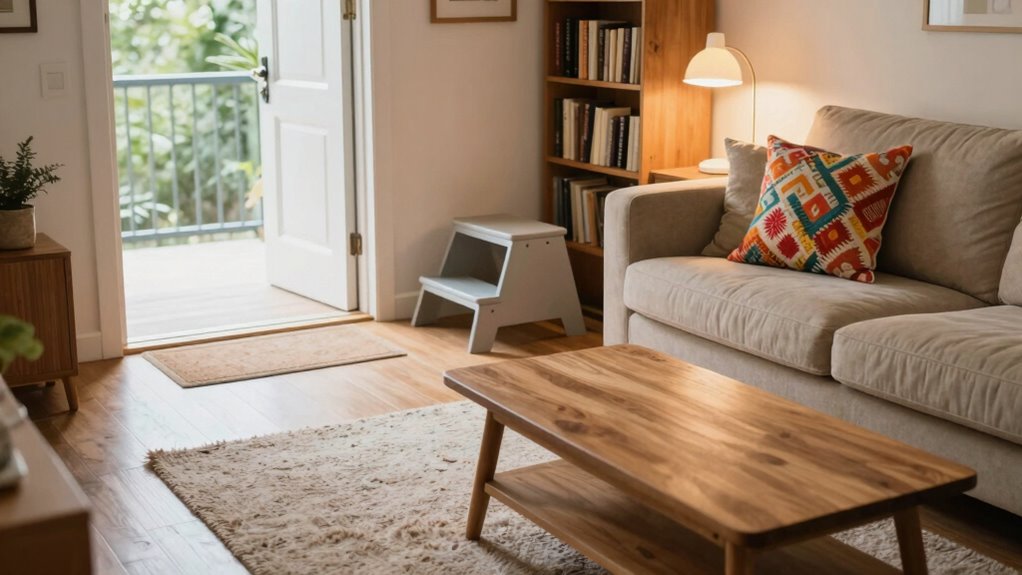
To prevent small household issues from becoming fall risks, regularly check and fix clutter, loose rugs, or wobbly furniture. Improve lighting in hallways, stairways, and entryways with bright bulbs and nightlights to boost visibility. Install safety devices like grab bars and non-slip mats in key areas. Keep walkways clear of cords and toys, and conduct routine safety inspections. Small adjustments make a big difference—continue exploring ways to keep your home safer.

Turn quiet afternoons into listening time
- Thousands of audiobooks, podcasts and originals
- Listen on your phone, tablet or Echo — also offline
- Cancel anytime
Key Takeaways
- Regularly inspect and repair loose fixtures, wobbly furniture, and damaged flooring to prevent accidents.
- Keep walkways clear of clutter, cords, and obstacles to reduce tripping hazards.
- Ensure proper lighting in all areas, especially stairways and entry points, with bright bulbs and nightlights.
- Install safety devices like grab bars and non-slip mats in high-risk zones such as bathrooms and kitchens.
- Conduct routine home safety checks to identify and address potential hazards proactively.
As an affiliate, we earn on qualifying purchases.
What Household Hazards Increase Fall Risks?

Many common household hazards can considerably increase the risk of falls, especially for older adults or anyone with mobility challenges. Unstable furniture, like wobbly chairs or beds, can tip over unexpectedly, causing a fall. Confirm furniture is sturdy and well-supported, tightening screws or replacing wobbly pieces. Slippery surfaces also pose significant dangers; spilled liquids, wet floors, or smooth tiles can easily cause slips. Always clean up spills immediately, use non-slip mats on slick surfaces, and add grip tape to areas prone to becoming slippery. Regularly check for loose rugs or mats that can slide and cause trips. By addressing furniture stability and slippery surfaces, you greatly reduce your fall risk at home. Small adjustments can make a big difference in creating a safer environment.
How Can Proper Lighting Prevent Falls at Home?

Have you ever stumbled in a dimly lit hallway or tripped over an obstacle because you couldn’t see clearly? Proper lighting design is essential to prevent such hazards. Well-placed lights illuminate walkways, stairs, and dark corners, reducing the risk of falls. Choosing the right bulb types, like LED bulbs, provides bright, consistent light without flickering. Use higher wattage bulbs in main areas and consider motion-activated lights in hallways and bathrooms for extra safety. Avoid harsh, glaring lights that can cause discomfort; instead, opt for soft, even illumination. Adequate lighting helps you see potential hazards clearly and navigate your home confidently, especially at night or in low-light conditions. Implementing lighting techniques and outdoor lighting strategies can further enhance safety around your property. Good lighting design and suitable bulb types are simple yet effective ways to keep your home safe. Additionally, understanding how lighting affects visibility can guide you in creating a safer environment. Properly considering ambient lighting can also help minimize shadows and blind spots, making your space even safer. Being aware of lighting placement ensures that light is distributed evenly, reducing dangerous shadows and enhancing overall safety.
Which Safety Devices Help Reduce Fall Incidents?

Installing the right safety devices can considerably lower your risk of falls at home. Smart sensors and emergency alarms play a crucial role in fall prevention. They can detect movement or unusual activity, alerting you or caregivers immediately. Here are key devices to contemplate:
- Smart sensors that monitor movement and send alerts if someone falls or remains immobile.
- Emergency alarms that can be easily activated if you need immediate help.
- Grab bars installed in bathrooms and stairways for added stability.
- Non-slip mats in high-risk areas like the shower or kitchen.
- Incorporating regional flavors and insights can also help create a more comfortable, familiar environment that encourages safer routines and reduces confusion or disorientation. Understanding home safety measures can further support effective fall prevention strategies. Additionally, choosing reliable safety devices that are easy to operate ensures prompt assistance during emergencies. Regularly reviewing home safety protocols can help identify potential hazards before they lead to falls. Implementing proper lighting throughout your home can also significantly reduce the risk of trips and falls, especially during nighttime. These devices work together to create a safer environment, giving you peace of mind and quick access to help if needed. Combining technology with physical safety measures maximizes fall prevention efforts.
What Simple Fixes Can Make Your Home Safer?

Simple fixes can substantially improve your home’s safety and reduce fall hazards without a lot of effort or expense. Start by organizing clutter to keep walkways clear and prevent trips. Proper home organization makes it easier to navigate and reduces hidden hazards. Check the stability of your furniture; secure wobbly chairs, tables, and shelves to prevent tipping. Use furniture straps or anti-slip pads to enhance stability. Replace or repair loose rugs and mats that can cause slips. Make sure lighting is bright enough in all areas, especially stairways and entryways. Keep cords and wires out of walkways to avoid tripping. Incorporating proportions in furniture and decor can also help create a balanced space that minimizes hazards. Paying attention to wall art placement can also improve visual cues and reduce accidental bumps or trips. Additionally, adding non-slip flooring options can greatly increase safety on commonly used surfaces. Incorporating home safety assessments can help identify hidden hazards and prioritize fixes. These simple fixes make your environment safer, especially for older adults or those with mobility challenges, helping prevent falls before they happen.
How to Maintain Your Home to Prevent Falls?
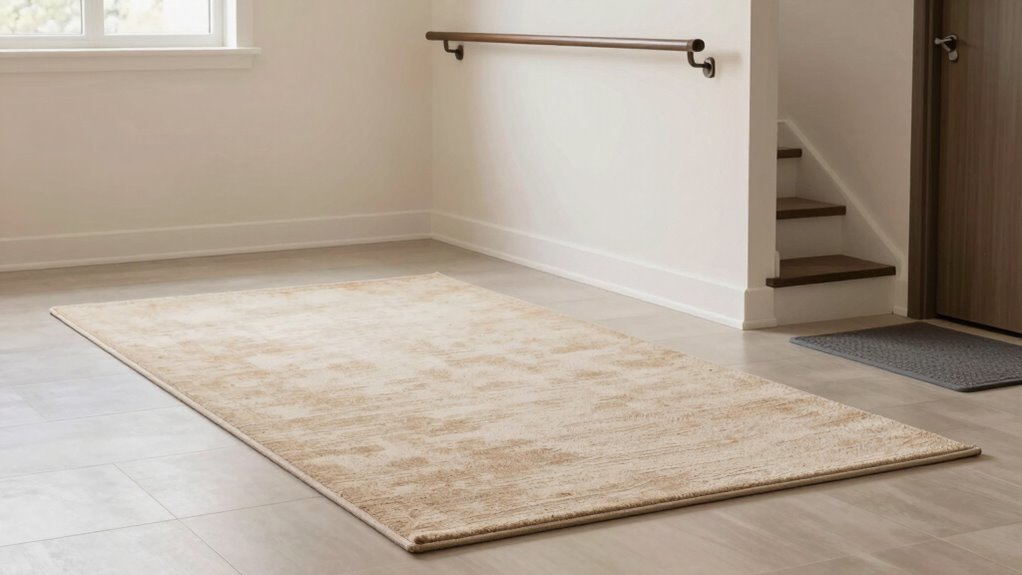
To keep your home safe, regularly clear walkways of clutter and obstacles. Install non-slip surfaces in areas prone to moisture, like the bathroom or kitchen. Also, make sure your lighting is bright enough to see potential hazards clearly. Additionally, consider checking for potential fall risks within your home and addressing them promptly to ensure safety. Incorporating home safety tips can further enhance your overall safety measures. Regularly inspecting and maintaining home fixtures such as handrails and stairways can also help prevent accidents. Being aware of bioluminescent fungi and their natural glow may inspire creative ways to improve nighttime visibility in outdoor areas, reducing the risk of falls.
Clear Walkways Regularly
Keeping walkways clear is essential for preventing falls in your home. Regularly check your space and verify furniture is arranged to keep pathways open. Use effective storage solutions to keep clutter off the floor, especially in high-traffic areas. To maintain clear walkways, consider these tips:
- Move furniture away from main paths to avoid tripping hazards
- Store loose items in bins or cabinets instead of leaving them on the floor
- Keep cords and cables tucked away to prevent trips
- Regularly sweep or vacuum to remove debris and spills that could cause slips
- Explore emerging trends in digital organizing tools to help manage household clutter more efficiently
- Incorporate luxury storage solutions that combine functionality with elegant design to keep your home stylish and safe
Install Non-Slip Surfaces
Adding non-slip surfaces to key areas of your home can considerably reduce the risk of falls. Installing non-slip flooring in places like the bathroom, kitchen, and entryways helps provide better grip, especially when surfaces are wet. Consider textured surfaces that increase traction, making it safer to walk across potentially slippery areas. You can choose materials like rubber, vinyl, or textured tiles designed specifically for slip resistance. These surfaces are easy to maintain and can be integrated seamlessly into your existing flooring. By focusing on non-slip flooring options in high-risk zones, you create a safer environment for everyone, especially seniors or those with mobility concerns. Incorporating DIY beauty secrets and stylish designs can also enhance your home’s aesthetic while maintaining safety. Prioritizing textured surfaces ensures stability and peace of mind, reducing fall risks in your home.
Check Lighting Levels
Have you ever stumbled in a dimly lit hallway or struggled to find a switch in the dark? Proper lighting design is essential for safety. To prevent falls, regularly check your lighting levels and guarantee each area is well-lit. Focus on bulb brightness and placement. Consider these tips:
- Use bright, energy-efficient bulbs in frequently used areas.
- Install motion sensors or night lights in hallways and bathrooms.
- Replace dim or flickering bulbs promptly.
- Aim for even lighting to eliminate shadows and dark corners.
- Ensure your lighting system is compatible with your home automation protocols for easier control. Additionally, integrating smart lighting systems can help automate and optimize your lighting for safety and convenience. Regularly updating your lighting setup can also prevent dark spots that pose fall risks.
Tips for Regular Home Checks to Avoid Fall Hazards

Regularly checking your home for clutter and ensuring proper lighting can substantially reduce fall hazards. Keep walkways clear and fix any dim or burnt-out bulbs promptly. Staying proactive in these simple steps helps create a safer environment for everyone.
Inspect Clutter Regularly
To prevent small household issues from turning into fall hazards, make it a habit to inspect clutter around your home frequently. Regular checks help you identify potential risks before they cause accidents. Focus on:
- Organizing storage so items are easy to find and don’t pile up on floors.
- Decluttering pathways by removing obstacles like shoes, cords, or toys.
- Checking corners and under furniture for hidden clutter that could trip you.
- Maintaining clear hallways and stairways to guarantee safe passage at all times.
Check Lighting Levels
Are you aware that poor lighting can hide hazards and increase the risk of falls? Regularly check your ambient illumination to guarantee all areas are well-lit, especially stairways, hallways, and entryways. Proper lighting placement is essential; place bulbs where shadows might form and consider using brighter bulbs or adjustable fixtures. Test your lights at different times of day to identify dim areas. Keep switches and cords accessible so you can easily turn on lights when needed. Use nightlights in bedrooms and bathrooms to prevent accidents during nighttime visits. Adequate lighting not only reveals potential hazards but also boosts your confidence when moving around your home. Make these checks a routine to maintain a safe, well-illuminated environment and reduce fall risks.
Frequently Asked Questions
How Can I Identify Hidden Fall Hazards in My Home?
You can identify hidden fall hazards by regularly inspecting your home for clutter management issues and poor lighting. Clear walkways of unnecessary items, cords, and loose rugs to prevent tripping. Improve lighting in dim areas, especially staircases and hallways, to enhance visibility. Use nightlights in bedrooms and bathrooms. These steps help uncover hidden dangers, making your home safer and reducing fall risks effectively.
Are There Specific Flooring Types That Reduce Fall Risks?
Think of your floors as the foundation of a sturdy bridge—strong and reliable. To reduce fall risks, opt for non-slip flooring and cushioned surfaces, which act like safety nets. These materials grip better and absorb shocks, making slips and falls less likely. Vinyl, rubber, and textured laminate are excellent choices. By choosing these safer flooring types, you create a more stable environment that keeps you steady and confident.
What Clothing or Footwear Helps Prevent Household Falls?
Wearing slip-resistant shoes or non-slip socks can ensure your risk of household falls is greatly reduced. Opt for shoes with good tread and non-slip soles to maintain traction on slippery surfaces. Non-slip socks are also a great option, especially on tile or polished floors. Always ensure your footwear fits well and is in good condition. By choosing the right shoes or socks, you help keep your footing secure and prevent unexpected slips.
How Often Should Safety Devices Be Inspected or Replaced?
You should inspect safety devices regularly, ideally once a month, to guarantee proper function. Follow recommended replacement schedules, which vary by device—smoke alarms need batteries replaced annually, while grab bars and handrails should be checked for stability annually or after any incident. Regular safety device maintenance helps prevent fall risks by catching potential issues early, ensuring your home remains safe and secure for everyone.
Can Household Plants Contribute to Fall Hazards?
Imagine tripping over a misplaced plant pot in a dim hallway. Household plants can contribute to fall hazards if placed improperly or if they’re toxic plants that cause dizziness or confusion if ingested. To minimize risks, make sure plant placement is secure and avoid toxic plants in high-traffic areas. Regularly check for overgrown or unstable plants, and keep walkways clear to prevent accidents.
Conclusion
By staying vigilant and making small adjustments, you can keep your home safe and prevent falls before they happen. Regularly checking for hazards, ensuring proper lighting, and using safety devices can go a long way. Remember, an ounce of prevention is worth a pound of cure—it’s better to tidy up now than deal with a fall later. Keep safety in mind, and you’ll create a secure environment for everyone living in your home.
Cold & flu season Picks
humidifiers
As an affiliate, we earn on qualifying purchases.