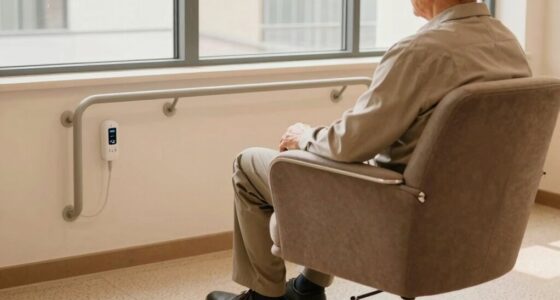

To make your bedroom safer for midnight bathroom trips, start by organizing clutter and removing obstacles along your usual path. Add soft night lights and use contrasting markers to guide your way clearly. Keep essentials like glasses, phone, and flashlight within easy reach, and choose furniture that’s stable and accessible. Regular safety checks and smart technology, like automated lights, can reduce risks. Keep exploring ways to enhance your nighttime safety for a more secure environment.

Turn quiet afternoons into listening time
- Thousands of audiobooks, podcasts and originals
- Listen on your phone, tablet or Echo — also offline
- Cancel anytime
Key Takeaways
- Install soft, automatic night lights along pathways to ensure safe visibility without glare.
- Keep essential items like glasses, phone, and water within easy reach near the bed.
- Clear pathways of clutter, loose rugs, and cords to prevent tripping hazards.
- Arrange furniture to create unobstructed routes and avoid sharp edges near the bed.
- Use contrasting tapes or tactile markers to highlight walkways and important hazards in low light.
automatic night lights for bedroom
As an affiliate, we earn on qualifying purchases.
As an affiliate, we earn on qualifying purchases.
Understanding the Risks of Nighttime Bathroom Trips

Nighttime bathroom trips can seem simple, but they pose real safety risks if you’re not careful. One concern is medication side effects that can cause dizziness, confusion, or balance issues, increasing the risk of falls. Some drugs, especially those taken at night, might also disrupt your sleep cycle, leading to grogginess or disorientation upon waking. Sleep cycle disruptions make it harder to stay alert and steady during late-night trips. Additionally, rushing or feeling sleepy can cause accidents in the dark. Recognizing that air quality can influence overall health and alertness highlights the importance of maintaining a safe environment. Poor air circulation can exacerbate sleep issues and impact your awareness, making safety precautions even more crucial. Understanding these risks helps you recognize why caution matters. Being aware of how medications and disrupted sleep patterns impact your safety can motivate you to prepare your environment and habits to prevent accidents. Proper lighting control and awareness of contrast ratios can significantly improve your visibility and safety during nighttime trips. Creating a safe environment by minimizing trip hazards like loose rugs or clutter can further reduce the risk of falls. Regularly reviewing your home environment and understanding Gold IRA markets and other financial safety tips can also help in planning for a secure future. Staying informed is the first step toward safer midnight bathroom visits.
Design Your Bedroom Layout for Safe Midnight Visits
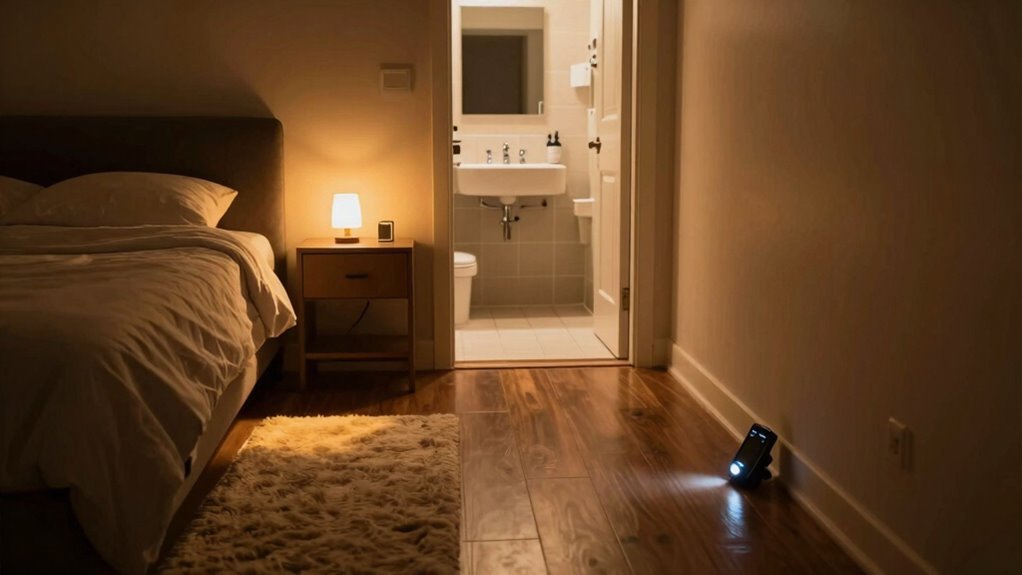
To minimize the risk of falls during midnight bathroom trips, carefully designing your bedroom layout is essential. Choose soothing color schemes like soft blues or neutral tones to create a calming environment and reduce disorientation at night. Select bedding materials that are slip-resistant and smooth, like cotton or silk, to prevent entanglement or slipping when getting in and out of bed. Arrange furniture to leave clear pathways, avoiding clutter or obstacles near your bed. Keep essentials like glasses, phones, or bedside lamps within easy reach to avoid unnecessary movement. Position your bed away from windows or sharp corners to minimize injury risk. Incorporating safety features like small, portable lighting or nightlights can enhance visibility and safety during late-night trips. Implementing security scanning tools can also help identify potential hazards in your bedroom layout and improve overall safety. Utilizing landscaping elements like natural barriers or thoughtfully placed plants can further create a safe environment by guiding movement and reducing hazards. Conducting a hazard assessment of your bedroom can help identify unseen risks and improve safety measures. A thoughtful layout promotes safety, comfort, and peace of mind during those late-night trips.
Install Night Lights to Improve Visibility at Night
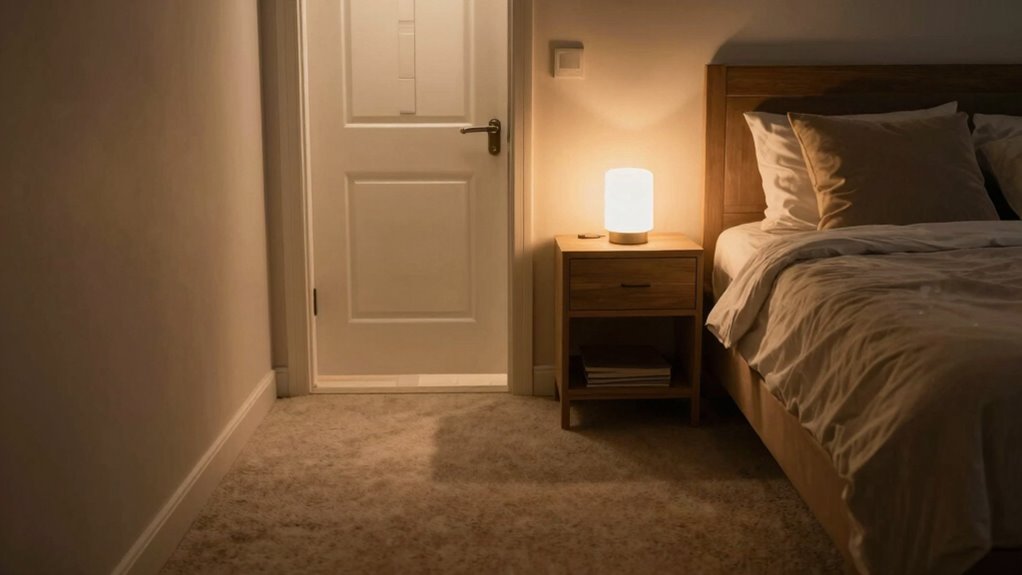
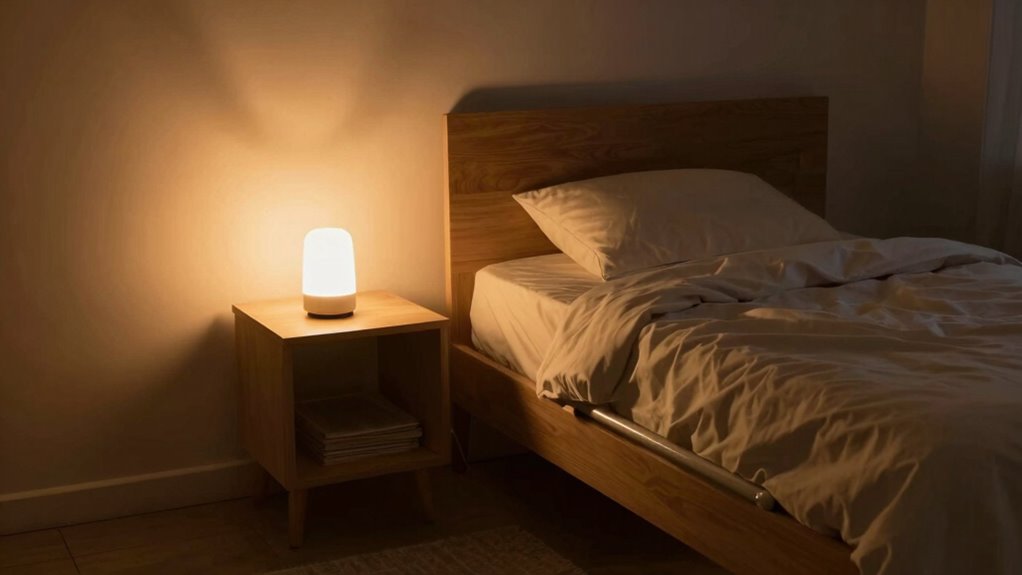
Installing night lights is one of the simplest and most effective ways to improve visibility during late-night trips to the bathroom. These lights provide gentle ambient illumination, preventing harsh glare while helping you see clearly. Position night lights along your pathway to create consistent pathway lighting, which guides you safely without the need to turn on bright overhead lights. Choose plug-in or battery-operated options that turn on automatically when it’s dark, ensuring seamless safety. By illuminating key areas, you reduce the risk of tripping or bumping into furniture. Night lights also help you navigate the room confidently, especially if you wake up groggy. Incorporating LED skincare masks and eye safety tips into your routine can also promote overall eye health, making nighttime navigation even safer. Utilizing energy-efficient night lighting solutions can also help reduce electricity consumption and environmental impact. When selecting your lights, consider lighting placement to maximize safety and effectiveness. Properly positioning lights can also minimize glare and shadows, further enhancing visibility during nighttime trips. Overall, they’re a simple upgrade that markedly enhances safety during those midnight bathroom visits.
Clear Pathways by Removing Clutter and Hazards
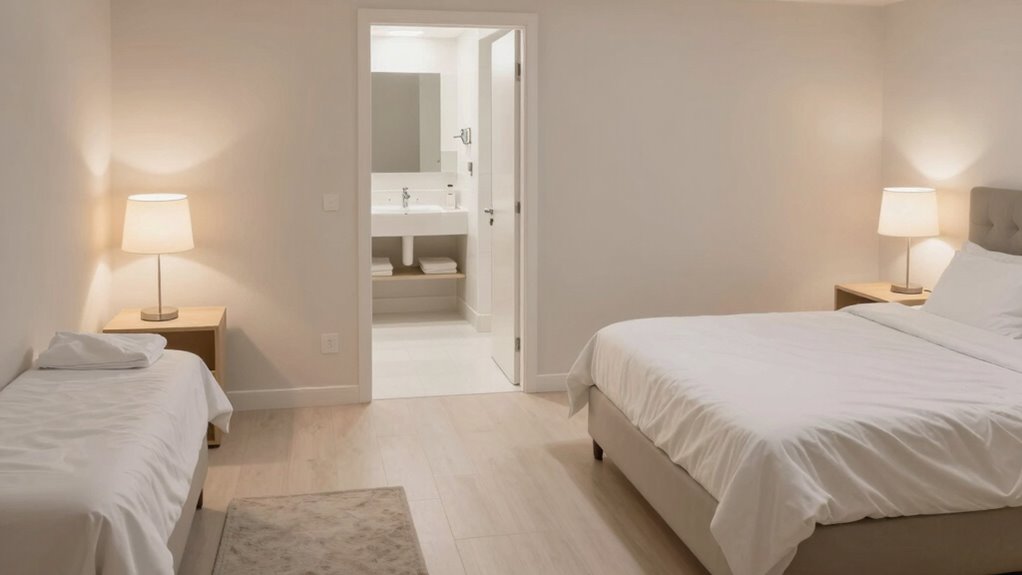
Ensuring a clear pathway to the bathroom is key to avoiding accidents during late-night trips. You should focus on clutter removal and hazard elimination to create a safe walking route. Keep walkways free of loose rugs, cords, and shoes that could cause trips or falls. Move furniture or objects that obstruct your path, and ensure any cords are secured along walls. Regularly check for spills or wet spots that could cause slipping. Good lighting combined with a decluttered space helps your eyes adjust quickly at night. Additionally, proper lighting and a clutter-free environment can significantly improve safety. Incorporating visual cues like contrasting tape or markers can help in distinguishing pathways in low light. Using nighttime safety strategies can further reduce risks during late-night trips. By actively removing clutter and hazards, you reduce the risk of accidents during those late-night bathroom visits. Additionally, neural interfaces can enhance night vision or alertness, contributing to safer navigation in the dark. Ensuring your pathways are well-maintained and smart safety features are in place can provide additional support during nighttime navigation.
Choose Safe, Accessible Furniture for Your Bedroom

Choosing furniture that’s safe and easy to access can considerably reduce the risk of falls during late-night trips to the bathroom. Start by considering furniture placement; position your bed close to the door to minimize walking distance in the dark. Guarantee your bed has an appropriate height—neither too high nor too low—so you can get in and out easily without losing balance. Avoid bulky or unstable furniture that could topple or cause tripping hazards. Use nightstands with sturdy, non-slip bases to keep essentials within reach without cluttering walkways. When selecting furniture, prioritize simple and stable options that promote safety. Proper placement and suitable bed height create a safer environment, helping you navigate your bedroom confidently during those late-night bathroom visits. Incorporating plant-based remedies for relaxation can also improve sleep quality, reducing nighttime awakenings and the need for trips to the bathroom. Ensuring your space is well-lit can further improve visibility and safety during these trips. Additionally, choosing safe furniture materials can prevent furniture from deteriorating or becoming unstable over time. Considering environmentally friendly craft ideas for your bedroom decor can also promote a healthier sleeping environment.
Keep Bedside Essentials Handy for Quick, Safe Access

Keep your essential items like a flashlight, water, and medication close by so you can access them quickly and safely during the night. Organizing these items in a designated spot prevents fumbling in the dark and reduces the risk of falls. Regularly check that everything remains within reach and easy to find.
Nighttime Necessities Within Reach
Having your nighttime essentials within arm’s reach can make midnight trips safer and more convenient. When you keep items like a glass of water, a flashlight, or your phone nearby, you reduce the risk of accidents and maintain good sleep hygiene. This setup also supports better dream analysis by minimizing disruptions, helping you wake gently if needed. Ensuring quick access to essentials helps you stay calm and relaxed during those late-night moments.
- Glass of water
- Small flashlight or nightlight
- Phone with a charging cable
- Bedside notepad and pen
- Lip balm or moisturizer
Having these within easy reach allows you to stay safe, comfortable, and prepared, making those midnight bathroom trips less disruptive and more aligned with your sleep routines.
Organize for Easy Access
Organizing your bedside area guarantees that your essentials are always within easy reach, making midnight trips smoother and safer. When items are well-placed, you reduce the risk of tripping or fumbling in the dark, boosting your personal safety and emergency preparedness. Keep items like a flashlight, phone, and glasses nearby so you can respond quickly if needed. Use a simple table to categorize your essentials:
| Item | Purpose |
|---|---|
| Flashlight | Navigate safely in the dark |
| Phone | Call for help if needed |
| Glasses | See clearly to prevent falls |
Staying organized guarantees you don’t waste time searching, minimizes hazards, and keeps you prepared for any unexpected situations during your midnight bathroom trip.
Use Labels and Markings to Navigate Your Bedroom at Night
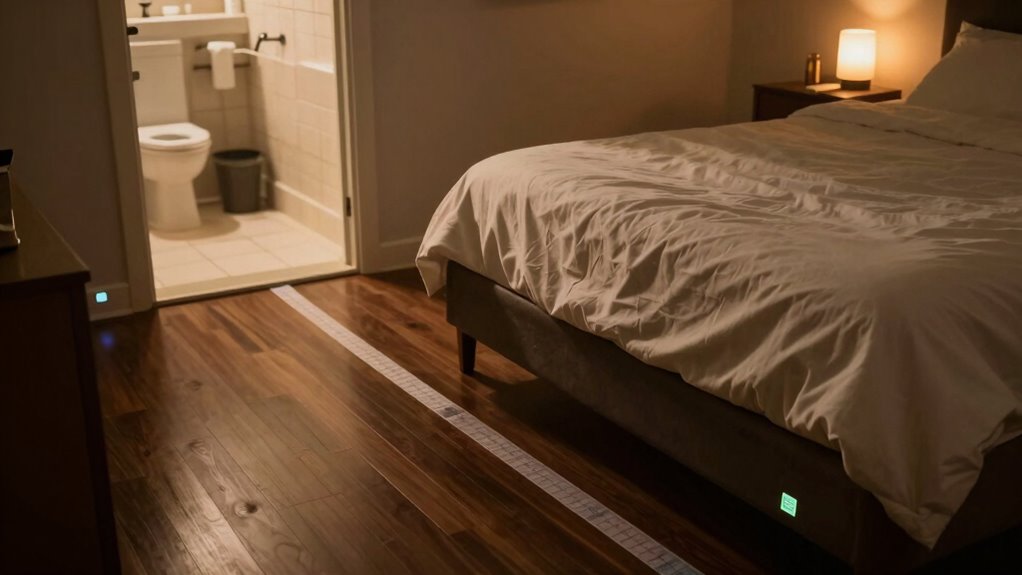
Labels and markings can make steering your bedroom in the dark much easier and safer. Using color-coded labels helps you quickly identify furniture and pathways, reducing the risk of trips. Tactile markings, like textured strips or raised symbols, let you feel your way around without needing to see. Place color-coded labels on bedside tables, drawers, and light switches for easy recognition. Use tactile markings on the floor near hazards or steps to alert you of changes in terrain. Consistency in these labels and markings guarantees you develop a mental map of your space, making nighttime navigation safer.
- Color-coded labels on furniture and switches
- Tactile markings on flooring and hazards
- Raised symbols for key items
- Differently textured strips for pathways
- Clear, visible placement of labels
Leverage Smart Technology for Nighttime Safety
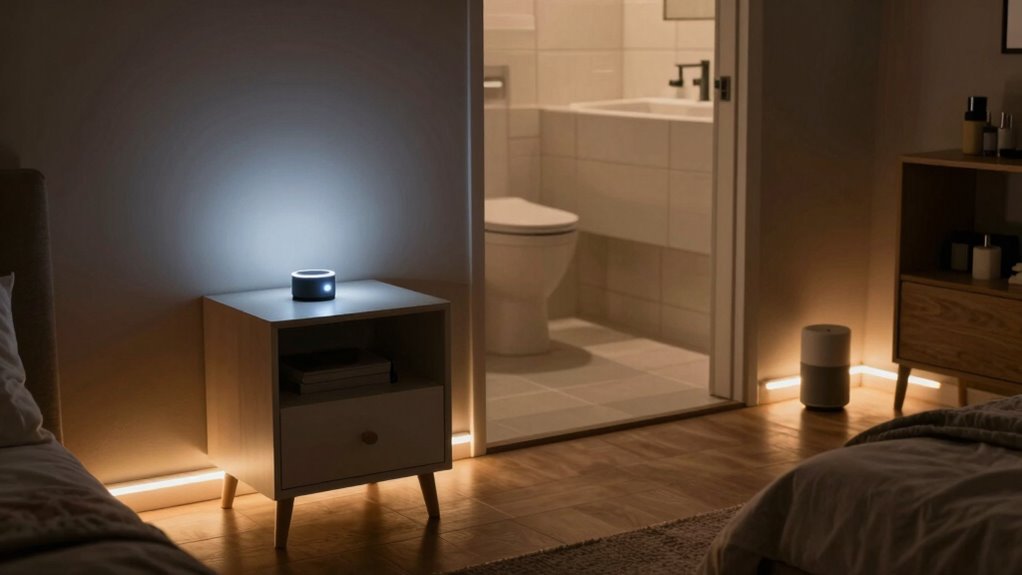
Smart technology offers an efficient way to enhance safety during nighttime bathroom trips. With voice command devices, you can easily control lights, locks, or alarms without fumbling in the dark, reducing fall risks. Smart lighting systems can automatically turn on when you enter the room, guiding your path safely. Automated alerts alert you if someone enters the room unexpectedly or if a door is left accessible (or open), giving you peace of mind. These features help you stay aware of your environment without having to navigate manually or search for switches. By integrating smart technology, you minimize hazards and create a safer, more responsive bedroom environment for those late-night trips, making your space more secure and reducing the chance of accidents.
Regularly Check Your Bedroom Safety to Prevent Accidents

You should regularly inspect your bedroom to spot potential hazards before they cause accidents. Make sure the lighting is sufficient, pathways are clear, and loose rugs are secured. These small checks can make a big difference in preventing nighttime falls.
Assess Lighting Conditions
Ensuring your bedroom has adequate lighting is essential for safe nighttime trips to the bathroom. Good lighting helps you avoid moonlit illusions and shadowy hazards that can cause falls or injuries. Regularly assess your lighting conditions to guarantee switches are functional and bulbs are bright enough. Consider installing motion-activated lights or nightlights for easy navigation. Check that light switches are within reach from your bed, so you don’t have to fumble in the dark. Remove any dim or flickering bulbs that might create confusing shadows. Keep lighting consistent across the room to prevent sudden dark spots. By proactively monitoring your lighting setup, you reduce the risk of accidents during midnight trips. Simple adjustments can make your bedroom much safer and more comfortable at night.
- Use nightlights or motion sensors for consistent illumination
- Replace dim or flickering bulbs promptly
- Guarantee switches are accessible from your bed
- Avoid shadows that create illusions of obstacles
- Regularly test all lighting to confirm proper function
Clear Pathways Regularly
Keep pathways clear to prevent accidents during nighttime trips. Regularly check your bedroom for clutter, especially around areas with decorative accents that might pose obstacles. Remove any unnecessary items that could trip you up in the dark. Pay attention to your color schemes; choose contrasting shades for furniture and flooring to make obstacles easy to spot even with limited lighting. Rearrange or tidy up to guarantee a direct, unobstructed route from your bed to the door and bathroom. Keeping pathways tidy not only reduces the risk of falls but also makes navigation easier during midnight trips. Incorporate simple lighting solutions or glow-in-the-dark tape along pathways for added visibility. Consistent upkeep ensures your bedroom remains a safe, accessible space at all hours.
Secure Loose Rugs
Loose rugs can quickly become hidden hazards in the dark, increasing the risk of slips and trips during midnight bathroom trips. Ensuring rug security is essential for slip prevention. Regularly check your rugs for looseness or edges that may curl up, and secure them with double-sided tape, non-slip pads, or rug grippers. Keep rugs flat and centered to avoid tripping. Replace worn or damaged rugs immediately. Consider removing rugs altogether in high-risk areas if they can’t be secured properly. Maintaining rug security creates a safer environment, especially at night.
- Use non-slip rug pads for better grip
- Regularly inspect for wear or looseness
- Secure edges with double-sided tape
- Remove or replace damaged rugs
- Keep rugs flat and centered
Frequently Asked Questions
How Can I Prevent Falls During Nighttime Bathroom Trips?
To prevent falls during nighttime bathroom trips, make sure your path is well-lit with strategically placed nightlights, especially near the bathroom and along hallways. Keep your bedroom accessible by arranging furniture so you can move easily without obstacles. Consider using a nightlight with a soft glow, and keep essentials within reach to avoid unnecessary movement. These steps help you navigate safely and reduce the risk of falls during late-night trips.
What Are the Best Materials for Slip-Resistant Bedroom Flooring?
You should consider textured flooring options like cork, vinyl, or rubber, which naturally offer slip resistance. Non-slip rugs are also essential; choose ones with rubberized or non-slip backing to prevent sliding. Combining textured flooring with non-slip rugs creates a safer environment, especially during nighttime trips. These materials help reduce falls and provide stability underfoot, making your bedroom safer and more comfortable for midnight bathroom visits.
How Often Should I Update My Bedroom Safety Measures?
They say, “A stitch in time saves nine,” so you should review your bedroom safety measures every six to twelve months. Regular updates guarantee alarm systems stay functional, lighting improvements are adequate, and hazards are minimized. Keep an eye on potential risks, like loose rugs or dim lighting, and address them promptly. Staying proactive helps prevent accidents and keeps your space safe, especially during those late-night trips.
Can Specific Colors Improve Night Visibility in Bedrooms?
Yes, specific colors can improve night visibility in bedrooms. Bright and light shades, like soft yellows or pale blues, enhance visibility by reflecting more light. Using color psychology, these hues also promote calmness and mood enhancement, making your space more comfortable for nighttime trips. Incorporate nightlights with warm-colored covers or paint accent walls in these shades to help you see better and feel more relaxed during midnight bathroom visits.
Are There Recommended Safety Products for Elderly or Disabled Individuals?
Yes, there are safety products recommended for elderly or disabled individuals. You should consider assistive devices like grab bars, non-slip rugs, and raised bed rails to prevent falls. Additionally, installing emergency alert systems allows quick access to help if needed. These tools create a safer environment, giving you peace of mind and ensuring assistance is readily available during emergencies or when moving around the bedroom at night.
Conclusion
Making your bedroom safer for those midnight bathroom trips doesn’t mean sacrificing comfort or style. With a few simple changes—like adding night lights, keeping clutter at bay, and using smart tech—you can navigate your space confidently. Some might think safety measures limit your bedroom’s coziness, but they actually enhance peace of mind. So, go ahead and create a safer space—you deserve restful, worry-free nights every time you get up.
Halloween Picks
halloween
As an affiliate, we earn on qualifying purchases.