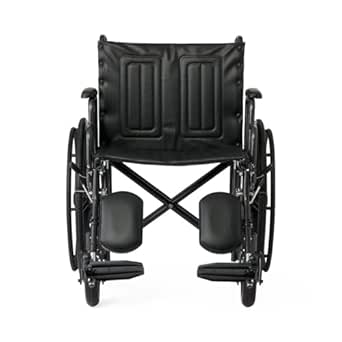
The right wheelchair for a heavy person comes down to three things: a weight capacity with a real safety margin, a seat wide enough for all-day comfort, and a frame that won’t flex or fail under daily use. The Medline Excel Extra-Wide Bariatric Wheelchair with its 24-inch seat and 500 lb capacity takes the top spot because it handles the heaviest users with the most headroom of anything in this lineup. The DynaRide Bariatric Transport Plus stands out for reinforced steel construction at a mid-range weight class, while the Medline Bariatric Transport Chair is the lightest-push option for caregivers who mainly need a chair for outings rather than self-propulsion. The biggest tradeoff you’ll face is between full wheelchairs (heavier, self-propelled, more supportive) and transport chairs (lighter, caregiver-pushed, easier to load into a car). Keep reading for the full breakdown, including who each model is actually for and which ones I’d skip.

Turn quiet afternoons into listening time
- Thousands of audiobooks, podcasts and originals
- Listen on your phone, tablet or Echo — also offline
- Cancel anytime
Complete the kit

Key Takeaways
- Weight capacity ratings separated the lineup into two clear tiers: 500 lb models (Medline Excel 24-inch) offer a genuine safety buffer, while 400 lb chairs should only be chosen if the user weighs comfortably under that limit.
- Seat width mattered more than any other spec — 20-inch seats (Vive, Medline swing-back arm models) only suit users up to roughly 350 lbs, while 22- and 24-inch seats fit the bariatric users this category exists for.
- Transport chairs like the Medline Bariatric Transport Chair and Vive Mobility consistently weighed less and folded smaller than full wheelchairs, but they demand a caregiver and small wheels handle poorly on anything but smooth floors.
- Swing-back and swing-away arms appeared across half the lineup because they make transfers in and out of the chair dramatically easier — a feature heavy users shouldn’t compromise on.
- Several Medline models looked nearly identical on paper; the real differences came down to seat depth (16 vs 18 inches) and footrest style, which changed fit and pressure distribution enough to justify different rankings.



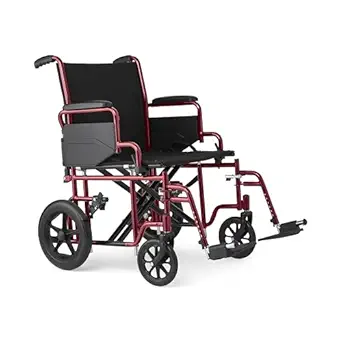


| wheelchairs for heavy people | Weight capacity | Armrests | Footrests | Seat width |
|---|---|---|---|---|
| Medline Bariatric Wheelchair w | 500 lbs | Removable, desk-length | Swing-away | 22 inches |
| Medline Extra-Wide Bariatric W | 500 lbs | Removable desk-length | — | — |
| Medline Folding Wheelchair wit | 300 lbs | Swing-back desk-length | Elevating | 20 inches |
| Medline Folding Wheelchair wit | 300 lbs | Swing-back, padded | Swing-away | 20 inches |
| DynaRide Bariatric Transport P | 450 lbs | — | — | — |
| Medline Heavy Duty Bariatric T | 450 lbs | Removable, desk-length | Detachable, swing-away | — |
| Medline Bariatric Transport Ch | 450 lbs | Swing-away, desk-length | Swing-away | 22 inches |
| Vive Bariatric Wheelchair for | 400 lbs | Padded | Adjustable, swing-away | 20 inches |
| Vive Mobility Bariatric Transp | 450 lbs | — | — | — |
| Medline Excel Extra-Wide Baria | 500 lbs | — | Adjustable, swing-away | 24 in |
More Details on Our Top Picks
Medline Bariatric Wheelchair with 22-Inch Seat
This model earns the top spot because it balances 500 lb capacity with a thoughtful design for daily life. The removable desk-length armrests let users pull up to tables and make lateral transfers to a bed or toilet far easier than fixed arms allow, while swing-away footrests clear the path for standing pivots. Compared with the Medline Extra-Wide Bariatric Wheelchair, this chair trades elevating leg rests for a simpler, more predictable package — no confusing spec discrepancies and fewer moving parts to break. The solid tires mean no flats, which matters for heavier users who put real load on the wheels. The tradeoff is comfort: there’s no leg elevation for swelling or circulation issues, and the hammertone frame is built for durability rather than lightness.
Pros:- True 500 lb weight capacity for heavy users
- Removable desk-length arms make transfers and desk access easier
- Solid tires eliminate flat-tire maintenance
- Easy-to-clean vinyl upholstery handles spills and incontinence
Cons:- No elevating leg rests for users with edema or circulation needs
- Heavier and bulkier than standard chairs, making car transport a chore
Best for: Heavier users who need a dependable everyday self-propelled chair with transfer-friendly arms and low-maintenance solid tires
Not ideal for: Users with leg swelling or circulation problems who need elevating leg rests, since the footrests are fixed swing-away units
- Seat width:22 inches
- Weight capacity:500 lbs
- Frame finish:Hammertone
- Armrests:Removable, desk-length
- Footrests:Swing-away
- Upholstery:Easy-to-clean vinyl
- Tires:Solid
Our verdict“The safest all-around choice for heavy users who want a durable, transfer-friendly daily wheelchair without gimmicks.”
Medline Extra-Wide Bariatric Wheelchair with 22-Inch Seat
Where the Medline Bariatric Wheelchair with 22-Inch Seat keeps things simple, this model adds the feature many bariatric users actually need: elevating leg rests. For anyone dealing with edema, swelling, or poor circulation, being able to raise the legs is not a luxury — it’s daily medical comfort, and it’s the main reason to pick this over its hammertone sibling. The chrome frame still carries a 500 lb rating, and the removable arms assist with side transfers just like the top pick. The honest drawback is weight and clarity: the listing gives conflicting chair weights (58 vs 65 pounds), and either figure makes this a chair you plan around rather than toss in a trunk. The 34-inch turning radius also demands wider doorways and hallways than lighter chairs.
Pros:- Elevating leg rests support users with edema and circulation concerns
- 500 lb weight capacity on a chrome frame
- Removable desk-length arms assist side transfers
- Folds to 13 inches wide for storage despite the bariatric size
Cons:- Inconsistent listed weight (58 vs 65 lbs) makes transport planning uncertain
- 34-inch turn radius requires wide hallways and doorways
- Heavy even at the lower listed weight
Best for: Heavier users with leg swelling or circulation issues who need to elevate their legs throughout the day
Not ideal for: Caregivers who frequently lift the chair into a vehicle — at 58-65 pounds, loading it solo is genuinely difficult
- Seat dimensions:22″W x 18″D
- Seat height:22 inches
- Weight capacity:500 lbs
- Chair weight:58-65 lbs (listed inconsistently)
- Frame:Chrome
- Armrests:Removable desk-length
- Leg rests:Elevating
- Folded dimensions:32.5 x 13 x 36.5 inches
- Turn radius:34 inches
Our verdict“The pick for heavy users whose legs need to be elevated — just be realistic about lifting a 60-plus-pound chair.”
Medline Folding Wheelchair with Swing-Back Arms and Elevating Footrests
This model occupies the middle ground: at 38 pounds, it’s dramatically lighter than the Medline Extra-Wide Bariatric options above, yet it still offers both swing-back arms and elevating leg rests — a combination usually reserved for heavier chairs. The catch is capacity: the 300 lb limit sits well below the 450-500 lb ratings elsewhere in this roundup, so it only fits the lighter end of the heavy-user spectrum. Compared with the DynaRide Bariatric Transport Plus, this chair gives the user large self-propulsion wheels and independence, whereas the DynaRide relies entirely on a companion. The 20-inch seat is roomier than standard but tighter than the 22-inch bariatric seats, so buyers should measure hip width honestly before committing.
Pros:- At 38 lbs, far easier to lift and transport than true bariatric frames
- Elevating leg rests rarely found at this weight class
- Swing-back desk arms make transfers and table access simple
- Folds to just 11.5 inches wide for compact storage
Cons:- 300 lb capacity excludes many heavier bariatric users
- 20-inch seat is too snug for broader hips
- Fixed 16-inch seat depth may not fit taller users
Best for: Users between roughly 250-300 lbs who want elevating leg rests and easy transfers without hauling a 60-pound bariatric frame
Not ideal for: Users over 300 lbs or those needing 22+ inches of seat width — the capacity and dimensions simply don’t stretch that far
- Seat width:20 inches
- Seat depth:16 inches
- Weight:38 lbs
- Weight capacity:300 lbs
- Frame:Hammertone metal
- Armrests:Swing-back desk-length
- Footrests:Elevating
- Folded dimensions:32.5″L x 11.5″W x 36.5″H
Our verdict“The sweet spot for lighter heavy users who refuse to give up leg elevation or transfer-friendly arms to save weight.”
Medline Folding Wheelchair with Swing-Back Arms and Footrests, 20″W x 16″D Seat
Think of this as the stripped-down sibling of the Medline Folding Wheelchair with Elevating Footrests: same 20-inch seat, same 300 lb capacity, but standard swing-away footrests instead of elevating ones, which keeps the price down and the chair simpler. What it does keep is the core usability — swing-away footrests for easy standing transfers, padded armrests, and a nylon seat that survives daily wear. It’s also the better pick for occasional outings, since the simpler hardware means fewer parts to adjust or break. The honest tradeoffs: there’s no leg elevation for swelling, the seat padding is basic for long sitting sessions, and like the other Medline 20-inch models, the capacity ceiling rules out heavier bariatric users who should look at the 22-inch options instead.
Pros:- Straightforward folding design is easy for caregivers to manage
- Padded armrests and durable nylon seat hold up to daily use
- Swing-away footrests simplify transfers
- Smooth handling on varied indoor and outdoor terrain
Cons:- No elevating leg rests or adjustable positioning features
- 300 lb capacity excludes most true bariatric users
- Seat cushioning is minimal for all-day sitting
Best for: Budget-minded users under 300 lbs who need a straightforward, transportable chair for daily or occasional use
Not ideal for: Users who sit for long hours — the basic seat padding and lack of leg elevation make it less comfortable for extended periods
- Seat width:20 inches
- Seat depth:16 inches
- Weight capacity:300 lbs
- Armrests:Swing-back, padded
- Footrests:Swing-away
- Seat material:Nylon
Our verdict“A sensible, no-frills value pick for lighter users — just don’t expect comfort features it deliberately omits.”
DynaRide Bariatric Transport Plus Wheelchair, 22″ x 18″ Seat, Reinforced Steel Frame, 450 lb Capacity
This is the one chair in this batch the user cannot push themselves — and that’s the whole point. With small 8-inch front and 12-inch rear wheels, the DynaRide is built to be pushed by a companion, which makes it lighter, narrower, and far easier to steer through crowded venues than the self-propelled Medline Bariatric Wheelchair. For doctor’s appointments, family events, or travel, that agility matters more than independence. The reinforced carbon-steel frame carries 450 lbs, and the companion-activated brakes with locking rear wheels add safety during transfers. The real tradeoff: no large rear wheels means no self-propulsion, so this cannot be an only chair for someone who lives independently. It also sits slightly below the 500 lb ceiling of the Medline bariatric picks, which matters for users near that limit.
Pros:- 450 lb capacity in a lighter, more maneuverable package than self-propelled bariatric chairs
- Companion-activated brakes and locking rear wheels for safe transfers
- Reinforced carbon-steel frame built for durability
- Folds easily for car trunks and storage
Cons:- No self-propulsion wheels — entirely dependent on a caregiver
- 450 lb capacity trails the 500 lb Medline bariatric options
- Small wheels handle rough outdoor terrain poorly
Best for: Heavier users who mainly need a companion-pushed chair for appointments, travel, and special occasions rather than daily independent mobility
Not ideal for: Independent users who want to self-propel — the small wheels make that physically impossible
- Seat dimensions:22″ x 18″
- Weight capacity:450 lbs
- Frame material:Carbon reinforced steel
- Front wheels:8 inches
- Rear wheels:12 inches
- Brakes:Companion-activated with locking rear wheels
- Color:Silver
Our verdict“The right second chair for outings — but never a substitute for a self-propelled wheelchair if independence matters.”
Medline Heavy Duty Bariatric Transport Chair, 22 x 18 in Seat, Blue Frame
This transport chair earns its place through transfer-friendly design rather than raw capacity. The combination of removable desk-length arms and swing-away footrests means a caregiver can clear the entire side of the chair for lateral transfers from a bed or toilet — something the Vive Bariatric Wheelchair, with its fixed padded arms, cannot match. The breathable nylon upholstery also keeps longer sits cooler than standard vinyl. Compared with the Vive Mobility transport chair, this Medline model skips the dual handbrakes but compensates with a lower lift weight and a seat belt for added security on uneven pavement. The tradeoff is that 12-inch rear wheels limit it to smooth surfaces; this is a chair someone pushes, not one built for independent mobility or rough outdoor terrain.
Pros:- Removable arms and swing-away footrests open the full side of the chair for transfers
- Breathable nylon upholstery stays cooler during extended sitting
- Seat belt and wheel locks add security for users at risk of sliding
- Folds for car transport despite the heavy-duty frame
Cons:- 12-inch rear wheels struggle on anything smoother than pavement
- Transport-only design offers no self-propulsion option
Best for: Caregivers who regularly assist with side transfers from beds, chairs, or toilets
Not ideal for: Users who want any self-propulsion or need to traverse grass, gravel, or uneven sidewalks
- Weight capacity:450 lbs
- Seat dimensions:22 in W x 18 in D
- Frame material:Steel
- Upholstery:Breathable nylon
- Rear wheel size:12 in
- Armrests:Removable, desk-length
- Footrests:Detachable, swing-away
- Safety features:Seat belt and wheel locks
Our verdict“The right pick when safe, caregiver-assisted transfers matter more than independent mobility.”
Medline Bariatric Transport Chair for Adults and Seniors, Supports up to 450 lbs, Extra-Wide 22″ Seat, Swing-Away Desk Length Arms and Footrests, Red
Think of this as the workhorse version of the blue Medline Heavy Duty transport chair — same 450 lb capacity, same 22-inch seat, same swing-away hardware, but packaged as a straightforward daily-use chair without extras you may not need. It folds flat enough for a trunk and the desk-length arms let users pull up to a table for meals, which the bulkier Medline Excel 24-inch model handles less gracefully in tight dining spaces. The honest tradeoff is weight: at 45 pounds, lifting it into a vehicle is a two-handed, back-conscious job, and unlike the Vive Mobility chair it lacks handbrakes for the caregiver. Still, for seniors who need dependable transport a few times a week rather than all day, this simpler package does the job without paying for features that go unused.
Pros:- Extra-wide 22-inch seat accommodates broader frames comfortably
- Swing-away arms and footrests simplify transfers in and out
- Folds easily for trunk storage between outings
- Full 450 lb capacity in a familiar, no-frills design
Cons:- 45 lb weight makes solo lifting into a vehicle difficult
- No caregiver handbrakes, relying solely on wheel locks when parked
Best for: Seniors and their families who need a reliable chair for regular appointments and outings
Not ideal for: Buyers who frequently load the chair solo — 45 lbs makes repeated lifting a real strain
- Seat width:22 inches
- Seat depth:18 inches
- Weight capacity:450 lbs
- Item weight:45 lbs
- Frame material:Steel
- Armrests:Swing-away, desk-length
- Footrests:Swing-away
Our verdict“A dependable, uncomplicated transport chair for households where a caregiver handles most of the pushing.”
Vive Bariatric Wheelchair for Adults, 400 lb Capacity, 20-Inch Seat
Not every bariatric user needs a 22- or 24-inch seat, and this chair is the proof. The 20-inch seat trims the overall width to 27 inches, which can be the difference between fitting through a standard bathroom door and not — a real problem for the Medline Excel at 32.5 inches wide. Capacity drops to 400 lbs from the 450 lb class of the Medline red transport chair, so heavier users should look elsewhere, but buyers in the 300–400 lb range get a lighter-footprint chair that still folds for travel. The padded armrests are more comfortable than bare metal for long days, and the one-year guarantee plus FSA/HSA eligibility make the purchase easier to justify. The fixed arms are the catch: unlike the removable arms on both Medline transport chairs, side transfers require more effort.
Pros:- 27-inch overall width fits doorways that block wider bariatric chairs
- Padded armrests and easy-to-clean material suit all-day use
- Adjustable swing-away footrests accommodate different leg lengths
- FSA/HSA eligible with a one-year guarantee
Cons:- 400 lb capacity is the lowest in this lineup
- Fixed arms make side transfers harder than removable-arm designs
Best for: Users in the 300–400 lb range living in older homes with narrow doorways
Not ideal for: Users over 400 lbs or those who need arm-free side transfers from a bed
- Weight capacity:400 lbs
- Item weight:45 lbs
- Seat width:20 inches
- Overall width:27 inches
- Frame:Steel
- Footrests:Adjustable, swing-away
- Armrests:Padded
- Guarantee:1 year
Our verdict“The smart choice when doorway width, not maximum capacity, is the deciding factor.”
Vive Mobility Bariatric Transport Wheelchair for Adults
This is the transport chair for buyers who want cargiver control and comfort details without stepping up to a full 500 lb wheelchair. The dual handbrakes are the standout — the Medline Heavy Duty blue chair only offers wheel locks when parked, while handbrakes let a caregiver moderate speed on ramps and hills in real time. The moisture-wicking upholstery is also a step above standard nylon for users who sit for long stretches, and height-adjustable leg rests fine-tune positioning in a way the fixed-footrest Medline red chair doesn’t allow. Arriving pre-assembled saves the frustration that flat-pack chairs often bring. The costs are weight and width: 48 pounds makes it the heaviest transport chair here, and the 27-inch frame shares the Vive 20-inch model’s doorway limitations. It is a chair you set up once and use daily, not one you toss in and out of a car.
Pros:- Dual handbrakes give caregivers active speed control on ramps and inclines
- Moisture-wicking upholstery manages perspiration during long sits
- Height-adjustable swing-away leg rests allow precise positioning
- Ships pre-assembled aside from attaching the footrests
Cons:- 48 lb weight is heavy even by bariatric transport chair standards
- 27-inch width may not clear narrow bathroom or bedroom doorways
Best for: Daily-use households where a caregiver manages slopes, ramps, and long outings
Not ideal for: Buyers who frequently lift the chair into a car — at 48 lbs it’s the heaviest transport option here
- Weight capacity:450 lbs
- Item weight:48 lbs
- Frame dimensions:27 × 42 × 36 in
- Seat dimensions:22 × 18 in
- Wheel size:12 in
- Frame material:Steel
- Leg rests:Height-adjustable, swing-away
- Brakes:Dual handbrakes
Our verdict“Worth the extra weight if handbrake control and long-sit comfort matter more than portability.”
Medline Excel Extra-Wide Bariatric Wheelchair, 24-Inch Seat, 500 lb Capacity
When the other chairs in this roundup top out at 400–450 lbs, the Medline Excel’s 500 lb capacity and 24-inch seat put it in a different class entirely. This is the pick for users who find even the 22-inch Medline transport chairs confining — that extra two inches of seat width changes comfort over a full day, not just an hour. The removable desk-length arms support the same side transfers as the smaller Medline models, and the adjustable swing-away footrests handle varied leg positions. The price of that capacity is portability: at 60 pounds, this chair is for stationary daily living, not car outings, and its 32.5-inch width demands measuring every doorway in the home first. Buyers who only occasionally need the extra room may be better served by the Vive 20-inch model, but for users near the 450 lb line of every other chair here, this is the one that removes the ceiling.
Pros:- 500 lb capacity exceeds every other chair in this lineup
- 24-inch seat offers meaningful room for broader frames
- Removable desk-length arms support safe side transfers
- Adjustable swing-away footrests ease entry and positioning
Cons:- 60 lb weight makes loading into a vehicle a two-person task
- 32.5-inch width requires verifying doorways and hallways before buying
Best for: Users over 450 lbs or those who find 22-inch seats too restrictive for all-day sitting
Not ideal for: Anyone needing frequent car transport — 60 lbs and a 32.5-inch width make travel impractical
- Seat width:24 in
- Seat depth:18 in
- Weight capacity:500 lbs
- Product weight:60 lbs
- Frame material:Chrome
- Arms:Removable, desk-length
- Footrests:Adjustable, swing-away
- Folded dimensions:32.5 x 13 x 36.5 in
Our verdict“The capacity leader for users who have outgrown every 450 lb option on this list.”

How We Picked
I ranked these wheelchairs for heavy people by five criteria, weighted in this order: weight capacity with safety margin, seat dimensions and fit range, frame construction, transfer-friendly features, and real-world portability. A chair rated 400 lbs carrying a 390 lb user has no buffer for posture shifts or bumps, so I favored models where the rated capacity leaves at least 50-75 lbs of headroom over the intended user’s weight. Seat width got similar scrutiny, because a bariatric-rated frame with a too-narrow seat still causes pressure sores and doesn’t solve the actual problem.
From there, I separated true self-propelled wheelchairs from transport chairs, since they serve different buyers — mixing them into one ranking without context would be misleading. Within each type, reinforced steel frames, cross-brace design, swing-away or removable arms, and elevating versus fixed footrests became the differentiators. Finally, I factored in weight when folded and ease of loading into a vehicle, because a 500 lb-capacity chair that no caregiver can lift into a trunk gets used less, no matter how strong it is.
| wheelchairs for heavy people | Armrests | Footrests | Frame material |
|---|---|---|---|
| Medline Bariatric Wheelchair w | Removable, desk-length | Swing-away | — |
| Medline Extra-Wide Bariatric W | Removable desk-length | — | — |
| Medline Folding Wheelchair wit | Swing-back desk-length | Elevating | — |
| Medline Folding Wheelchair wit | Swing-back, padded | Swing-away | — |
| DynaRide Bariatric Transport P | — | — | Carbon reinforced steel |
| Medline Heavy Duty Bariatric T | Removable, desk-length | Detachable, swing-away | Steel |
| Medline Bariatric Transport Ch | Swing-away, desk-length | Swing-away | Steel |
| Vive Bariatric Wheelchair for | Padded | Adjustable, swing-away | — |
| Vive Mobility Bariatric Transp | — | — | Steel |
| Medline Excel Extra-Wide Baria | — | Adjustable, swing-away | Chrome |
Factors to Consider When Choosing Wheelchairs For Heavy People
Choosing a wheelchair for a heavy person involves more than matching a number on a spec sheet to a number on a scale. These are the factors that actually determine whether a chair works out day to day — and the mistakes I see buyers make most often.Weight Capacity: Always Buy a Buffer
The single most common mistake in this category is buying a chair rated exactly at or barely above the user’s weight. A 400 lb rating is not a comfort rating — it’s a structural limit. Real-world loads spike when a user shifts weight, hits a curb, or drops into the seat during a transfer, and those momentary forces can exceed static weight. I recommend at least 50-75 lbs of headroom between the user’s weight and the rated capacity, and more if the user is actively gaining weight or has unpredictable transfer habits. Also be aware that capacity ratings assume even weight distribution; users who lean heavily to one side stress the frame asymmetrically. This is why the 500 lb Medline Excel ranks above otherwise similar 400 lb models — the buffer is the value, not just the number on the box.
Seat Width vs. Seat Depth: Two Different Problems
Buyers fixate on seat width and forget depth, yet both dimensions decide whether a chair is comfortable for more than an hour. Width affects hip clearance and pressure on the thighs; a quick rule of thumb is to measure hip width while seated and add two inches. Depth affects posture and circulation — too deep and the user slides forward or the seat edge cuts behind the knees, too shallow and thighs lose support. This lineup shows the difference clearly: the DynaRide and Medline heavy duty transport chairs both have 22-inch wide seats, but 18-inch depths fit taller users better, while the 16-inch depth on the Medline 20×16 model suits shorter frames. Measure both before ordering, and remember an oversized seat isn’t automatically safer — a too-wide seat forces awkward reaching for the wheels and armrests.
Wheelchair or Transport Chair: Match It to Who Pushes
This is the decision that shapes everything else. A full wheelchair has large rear wheels the user can self-propel, which supports independence and upper-body engagement, but these chairs typically weigh 40-50 lbs and are harder to lift into a car. A transport chair has small wheels and requires a caregiver to push, but weighs far less, folds more compactly, and glides through doorways and airport terminals with less effort. Buyers who choose a transport chair for a user with no available caregiver end up with furniture nobody can move — the most expensive mistake in this category. Conversely, a heavy user with good arm strength may be frustrated in a transport chair they can’t propel themselves. Be honest about who will be pushing, and how often the chair needs to go in a vehicle, before comparing anything else.
Transfer Features Are Not Optional Extras
For heavier users, getting in and out of the chair is often harder than using it, and arm design is where that battle is won or lost. Swing-back, swing-away, or fully removable arms allow lateral transfers from a bed or toilet — a fixed arm forces the user to lower themselves over it, which is unsafe at higher weights and hard on caregivers’ backs. Elevating leg rests serve a different but related purpose: they manage swelling in the lower legs, a common issue for heavier users who sit for long stretches. Half the chairs in this roundup include one of these features, and I weighted them heavily in the rankings. If the user already struggles with transfers today, treat fixed arms and fixed footrests as dealbreakers regardless of how strong the frame is.
Frame Weight, Foldability, and the Caregiver Reality
Bariatric capacity and easy portability pull in opposite directions — more capacity means more steel, which means more weight to lift and store. Before buying, check the chair’s own weight and think through who will fold it, lift it into a trunk, and store it at home. A transport chair in the 30-40 lb range is usually one-person manageable; a heavy duty full wheelchair may need a ramp, a lift, or two people. Also measure your doorways, bathroom clearance, and hallway turns — a 24-inch seat plus wheels and arms can exceed 32 inches in overall width, which stops at many residential bathrooms. The best chair on paper becomes a burden if it doesn’t physically fit the spaces it needs to serve.
Skin Protection and Long-Sitting Comfort
Heavier users face elevated pressure-injury risk, especially over the tailbone and hips, and the stock sling upholstery on most standard chairs isn’t designed for all-day sitting. Plan for a pressure-relief cushion as a separate purchase — but verify it fits the seat width, because a cushion that overhangs the frame undermines its own support. Check that the seat upholstery is reinforced and doesn’t sag within months, since a sagging sling changes posture and creates pressure points. Footrest and armrest height adjustability also matter for pressure distribution: feet that dangle without support increase pressure under the thighs. If the user will spend more than four hours a day in the chair, comfort accessories aren’t luxuries — they’re part of the real cost of the purchase.
Frequently Asked Questions
How much weight capacity do I actually need for a heavy person?
Treat the rated capacity as a structural ceiling, not a target. I recommend at least 50-75 lbs of headroom above the user’s actual weight, because transfers, curb bumps, and posture shifts create momentary loads well above the number on the scale. A 400 lb-rated chair like the Vive is a solid choice for a user in the 320-350 lb range, but it’s the wrong tool for someone at 395 lbs. If the user’s weight fluctuates or trends upward, buy for where they’ll be in six months, not where they are today. The 500 lb-rated Medline Excel earns its top ranking partly because it gives the widest range of users a genuine safety buffer rather than a technicality.
Is a transport chair enough, or do I need a full wheelchair?
It depends entirely on whether the user can push themselves and whether a caregiver is consistently available. A transport chair — like the Medline Bariatric Transport Chair or Vive Mobility — is lighter, folds smaller, and is easier to load into a car, making it ideal for outings, appointments, and travel with a companion who pushes. A full wheelchair with large rear wheels allows self-propulsion and suits users who want independence indoors or have good arm strength. If no caregiver is available on a daily basis, a transport chair becomes stationary furniture — that’s the worst outcome in this category. When in doubt and budget allows, some families keep a transport chair for travel and a full wheelchair for home, since each solves a different problem.
What seat width should a heavy person get?
Measure the user’s hip width while seated on a firm surface, then add two inches — that’s your target seat width. In this lineup, 20-inch seats suit smaller-framed users up to roughly 350 lbs, while 22-inch and 24-inch seats fit genuinely bariatric body types. Don’t over-buy width, though: a seat that’s too wide makes self-propulsion harder because the user has to reach past their hips to grab the wheels, and fixed arms sit too far apart for comfortable resting. The jump from 22 to 24 inches also adds to overall chair width, which can stop a chair from clearing residential doorways and bathrooms. Match the measurement, then verify the chair’s total width fits your home.
Why do swing-away or removable arms matter so much for heavier users?
Because transfers are where injuries happen — both to the user and to caregivers. A fixed arm forces the user to lower themselves over an obstacle while supporting their full weight, which is exactly the movement that strains shoulders, hips, and backs at higher body weights. Swing-back or removable arms let the user slide laterally from bed to chair or chair to toilet with far less lifting, which is why half the chairs in this roundup feature them. The same logic applies to footrests: swing-away footrests clear the space in front of the user during a standing pivot transfer. If the user already needs assistance moving between surfaces today, treat these features as requirements, not upgrades, regardless of which chair you choose.
Will a bariatric wheelchair fit through my doorways at home?
Check this before you buy, because it’s a frequent and expensive surprise. Seat width is not overall width — add the frame, wheels, and armrests, and a 22-inch seat chair can run 30-34 inches wide overall, while a 24-inch seat model can exceed that. Standard interior doorways in many homes are 28-32 inches, and bathroom doors are often the narrowest in the house. Measure every doorway, hallway turn, and the bathroom itself, then compare against the chair’s stated overall width rather than its seat width. If clearances are tight, a transport chair with a slightly narrower frame or a model with quick-release wheels may be the difference between a chair that works and one that can’t reach half the house.
Conclusion
After comparing all ten, my recommendations split cleanly by buyer type. Best overall goes to the Medline Excel Extra-Wwide Bariatric Wheelchair — the 24-inch seat and 500 lb capacity give it the widest fit range and the biggest safety margin in the lineup, which matters more here than any convenience feature. Best value is the DynaRide Bariatric Transport Plus, whose reinforced steel frame and 450 lb capacity deliver bariatric-grade strength without the price of the premium picks. Best for beginners — families buying their first chair after a hospitalization — is the Medline Bariatric Transport Chair, because it’s the simplest to push, fold, and load while still supporting 450 lbs.
For specific needs: choose the Medline Heavy Duty Bariatric Transport Chair if you need a deeper 18-inch seat for a taller user, the Vive Bariatric Wheelchair for a lighter-weight user under 350 lbs who wants a narrower, easier-to-maneuver chair, and the Medline models with swing-back arms and elevating footrests if transfers and leg swelling are daily concerns. Whatever you pick, size for headroom, measure your doorways, and be honest about who will be doing the pushing — those three decisions matter more than any brand name on the frame.
Halloween Picks
halloween
As an affiliate, we earn on qualifying purchases.