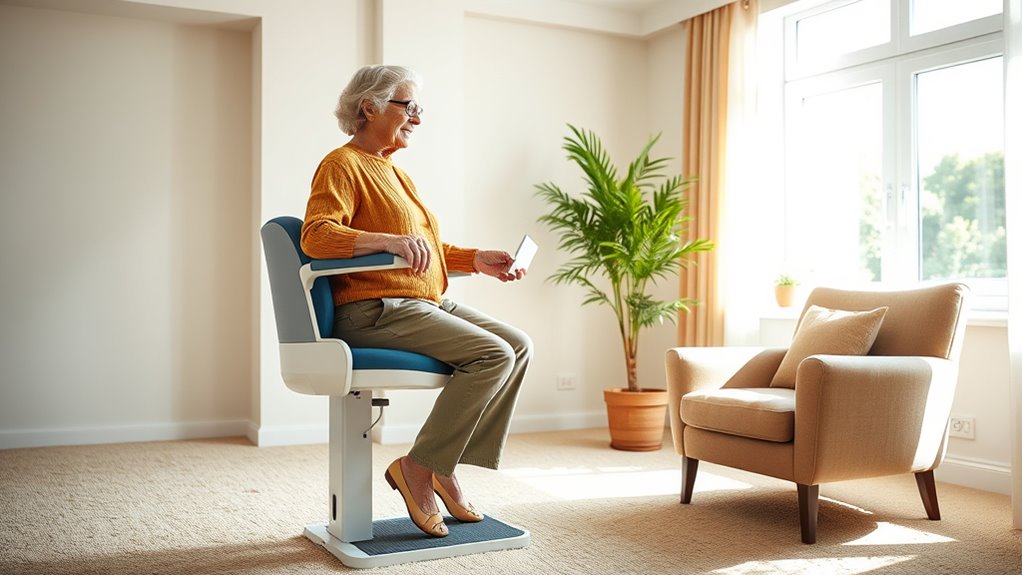

For seniors who can bear some weight and follow transfer instructions, a sit-to-stand lift can support movement between a bed, chair, or toilet while reducing caregiver strain. I’d put the Lumex LF1600 first for its straightforward stand-assist focus, with the Molift Transfer Pro as a manual option for buyers prioritizing a purpose-built transfer device and the AireMed full-electric lift for those seeking powered assistance. The main tradeoffs are how much the user can participate, how much effort the caregiver can safely manage, and whether the lift fits the rooms and transfer points at home. Sling support, base width, capacity, and caregiver training also shape which model is suitable. Read on for the full comparison, buying advice, and picks for different care needs.

Turn quiet afternoons into listening time
- Thousands of audiobooks, podcasts and originals
- Listen on your phone, tablet or Echo — also offline
- Cancel anytime
Complete the kit


Key Takeaways
- The Lumex LF1600 is my best overall pick because its stand-assist design centers on the transfer task rather than adding features that may not matter to every household.
- Manual and powered lifts serve different needs. The Molift Transfer Pro relies on caregiver operation, while the AireMed full-electric model can reduce the physical work of raising a user.
- Capacity alone does not determine fit. ProHeal’s 500 lb models offer higher stated capacities, but buyers still need to check sling fit, user dimensions, room clearance, and caregiver training.
- Several options bundle transport features or support accessories, including the ELENKER model with transport sling and the VOCIC chair-style lift; those extras may help some transfer routines but can add bulk.
- The right lift depends on the user’s abilities. Stand-assist devices require some weight-bearing and cooperation, so a full-body transfer solution may be more appropriate when those abilities are limited.
| Lumex LF1600 Stand Assist Sit-to-Stand Lift |  | Best for High-Capacity Manual Support | Model: LF1600 | Manufacturer: Graham-Field | Frame material: Heavy-duty steel | VIEW ON AMAZON | See Our Full Breakdown |
| ELENKER Sit-to-Stand Patient Lift with Transport Sling |  | Best for Adjustable Fit | Bed clearance: 4.7 in | Adjustable leg support height: 20.8–25.1 in | Adjustable base width: 23.2–38.1 in | VIEW ON AMAZON | See Our Full Breakdown |
| Vive Sit to Stand Lift & Transfer Sling – Elderly Stand Assist Transport |  | Best for Stable, Guided Transfers | Maximum load capacity: 400 lb | User weight-bearing requirement: Approximately 60–70% | Base width: 26 in | VIEW ON AMAZON | See Our Full Breakdown |
| Molift Transfer Pro Manual Sit to Stand Lift for Elderly, Stand Assist |  | Best Premium Manual Lift | Weight capacity: 440 lb | Material: Medical-grade aluminum | Operation: Manual; no batteries or motors | VIEW ON AMAZON | See Our Full Breakdown |
| AireMed Full Electric Sit-to-Stand Lift with Large Torso Sling and Buttock Strap |  | Best Electric Assistance | Weight capacity: 450 lb | Patient weight range: 250–375 lb | Battery: Rechargeable 24V | VIEW ON AMAZON | See Our Full Breakdown |
| ELENKER Sit-to-Stand Patient Lift for Home Care |  | Best for Adjustable Fit | Maximum weight capacity: 400 pounds | Widest point: 28 inches | Lifting range: 42.5–46 inches | VIEW ON AMAZON | See Our Full Breakdown |
| VOCIC Sit to Stand Lift Patient Transport Chair with Wheels |  | Best for Heavier Users | Maximum weight capacity: 400 pounds | Dimensions: 31 × 17 × 43 inches | Item weight: 58 pounds | VIEW ON AMAZON | See Our Full Breakdown |
| Perlecare Sit-to-Stand Lift for Elderly with Safety Belt and Casters |  | Best for Added User Security | Width: 26.5 inches | Seat height: Adjustable; range not provided | Knee pad height: Adjustable; range not provided | VIEW ON AMAZON | See Our Full Breakdown |
| ArjoHuntleigh Sara Stedy Manual Sit-to-Stand Patient Lift |  | Best for Independent Participation | Type: Manual sit-to-stand patient lift | Weight capacity: 400 pounds | User height range: 4 feet 11 inches–6 feet 6 inches | VIEW ON AMAZON | See Our Full Breakdown |
| Vive Mobility Sit-to-Stand Patient Lift for Handicapped – Stand Assist |  | Best for Narrower Doorways | Maximum load capacity: 400 pounds | Base width: 26 inches | Supported body weight transfer: 60–70% of body weight | VIEW ON AMAZON | See Our Full Breakdown |
| Sit to Stand Lift for Elderly, Patient Transfer Stand Device (Blue) |  | Best for Height Range | Maximum Load Capacity: 400 lbs | Adjustable Height Levels: 5 | User Height Range: 5’1″–6’3″ | VIEW ON AMAZON | See Our Full Breakdown |
| Sit to Stand Lift for Elderly & Disabled, Adjustable Base Width & Height, Patient Transfer Chair, 400 lb Capacity, Blue |  | Best for Adjustable Base Width | Capacity: 400 lbs | Weight: 68.8 lbs | Dimensions: 31.5 × 30.75 × 10.75 inches | VIEW ON AMAZON | See Our Full Breakdown |
| ProHeal Stand Assist Lift – Sit to Stand Patient Transfer Lift with 500 lb Capacity |  | Best for Higher Weight Capacity | Weight Capacity: 500 lbs | Base Width: 25.4 inches | Overall Height: 43 inches | VIEW ON AMAZON | See Our Full Breakdown |
| ProHeal Sit-to-Stand Lift – Full Body Patient Transfer Lifter for Home and Facilities – 500 lb Capacity, 4 Sling Hooks |  | Best for Sling Positioning | Weight Capacity: 500 pounds | Number of Sling Hooks: 4 | Intended Settings: Home and healthcare facilities | VIEW ON AMAZON | See Our Full Breakdown |
| Sit-to-Stand Lift with Wheels for Elderly – Standing Trainer and Transfer Chair |  | Best for Quiet Home Maneuvering | Maximum Capacity: 400 lbs | Height Adjustment Levels: 5 | Leg Pad Adjustments: 2 | VIEW ON AMAZON | See Our Full Breakdown |
More Details on Our Top Picks
Lumex LF1600 Stand Assist Sit-to-Stand Lift
The Lumex LF1600 is a straightforward choice for seniors who can take an active part in standing and need a sturdy frame for supported transfers. Its 400 lb capacity, padded seat, cushioned knee pads, and ergonomic handbars give the user several points of support as a caregiver helps guide the movement. Compared with the Vive Sit to Stand Lift, the Lumex specifies a broad user height range and a hard-floor focus, while Vive lists swivel casters and dual locking brakes. The tradeoff is that the LF1600 weighs 61 lb and is limited to hard floors, so it is less convenient to relocate and unsuitable for carpeted transfer routes. I would skip it for anyone who cannot bear weight or follow standing instructions.
Pros:- 400 lb capacity with a heavy-duty steel frame
- Cushioned knee pads, padded seat, and ergonomic handbars provide several contact points
- Designed to fit through most standard doorways
- No battery or motor is listed as required
Cons:- Specified for hard floors such as wood and tile
- Requires active user participation during transfers
- At 61 lb, it may be difficult for one person to relocate
Best for: Seniors between 5’1″ and 6’6″ who can participate in standing and need a sturdy manual aid on hard floors.
Not ideal for: Users unable to bear weight or follow transfer cues, and households where the lift must cross carpet or be moved frequently by one caregiver.
- Model:LF1600
- Manufacturer:Graham-Field
- Frame material:Heavy-duty steel
- Maximum capacity:400 lb
- User height range:5’1″ to 6’6″
- Dimensions:33.5 x 25 x 42.5 in
- Item weight:61 lb
- Floor compatibility:Hard floors, including wood and tile
Our verdict“Choose the Lumex LF1600 for a sturdy, hard-floor manual transfer aid when the user can actively help stand.”
ELENKER Sit-to-Stand Patient Lift with Transport Sling
For households that need to adapt a lift to different transfer spaces, the ELENKER Sit-to-Stand Patient Lift offers an unusually broad adjustment range: its base changes from 23.2 to 38.1 inches, and its height from 38.9 to 70.4 inches. That flexibility can help caregivers position the frame around beds or chairs, and the included transport sling adds support for users who can bear partial weight. Compared with the fixed 26-inch base of the Vive Sit to Stand Lift, ELENKER can narrow for tighter approaches or widen for a broader stance. The cost of that range is space: the base can expand substantially, so narrow rooms may still be challenging. It also depends on the user bearing some weight, making it a poor match for fully dependent transfers.
Pros:- Adjustable base width accommodates different transfer approaches
- Height adjusts from 38.9 to 70.4 inches
- Includes a transport sling with multiple attachment points
- Folding non-slip footplate and locking casters support indoor positioning
Cons:- Requires the user to bear partial weight
- Expanded base width may be difficult to accommodate in tight rooms
- Product data does not provide a maximum load capacity
Best for: Caregivers transferring a partial-weight-bearing user between different beds, chairs, or rooms who need adjustable base and lift height.
Not ideal for: Users who cannot bear partial weight, or households with narrow transfer areas that cannot accommodate a widened base.
- Bed clearance:4.7 in
- Adjustable leg support height:20.8–25.1 in
- Adjustable base width:23.2–38.1 in
- Adjustable height:38.9–70.4 in
- Footplate:Folding, non-slip
- Casters:Low-friction with locks
- Included accessory:Transport sling
Our verdict“Pick the ELENKER when adjustable fit and an included sling matter more than a consistently narrow footprint.”
Vive Sit to Stand Lift & Transfer Sling – Elderly Stand Assist Transport
The Vive Sit to Stand Lift is a good fit for seniors who can support roughly 60–70% of their weight and benefit from several padded contact points during a transfer. Cushioned handrails and shin rests help make the standing movement more supported, while dual locking brakes and side support strap hooks add control once the lift is positioned. Compared with the Lumex LF1600, Vive spells out its brake and strap features, while Lumex provides a stated user height range and hard-floor guidance. Vive’s 26-inch base gives it a defined footprint, but that width can be a barrier at narrow doorways. Its four swivel casters aid maneuvering, though buyers should confirm that the unit fits the actual route between bed, toilet, and chair.
Pros:- 400 lb maximum load capacity
- Cushioned handrails and seat pads support comfort during transfers
- Dual locking brakes and side support strap hooks
- Four swivel casters support maneuvering
Cons:- Requires the user to support 60–70% of their weight
- 26-inch base may not pass through narrow doorways
- Product data does not specify a user height range
Best for: Seniors who can support most of their weight and caregivers seeking padded supports, strap hooks, and dual locking brakes.
Not ideal for: Users who cannot bear most of their weight, or homes with doorways narrower than the 26-inch base can pass through.
- Maximum load capacity:400 lb
- User weight-bearing requirement:Approximately 60–70%
- Base width:26 in
- Frame material:Steel
- Casters:Four swivel casters
- Safety features:Dual locking brakes and side support strap hooks
- Warranty:2-year guarantee
Our verdict“Choose Vive for a guided, padded transfer setup if the user can bear most of their weight and the 26-inch base fits.”
Molift Transfer Pro Manual Sit to Stand Lift for Elderly, Stand Assist
The Molift Transfer Pro takes the premium manual route for homes or care settings that want a high-capacity lift without batteries or motors. Its 440 lb capacity exceeds the 400 lb limits listed for both the Lumex LF1600 and Vive Sit to Stand Lift, while the low-profile base and adjustable leg width are intended to help caregivers position it in tighter spaces. A central brake and high-traction wheels add control during movement. The tradeoff is that manual operation asks the caregiver to provide the lifting effort; buyers seeking powered assistance should look at the AireMed Full Electric Sit-to-Stand Lift instead. Product data does not state the user’s required weight-bearing ability or a height range, so those fit details need confirmation before selection.
Pros:- 440 lb weight capacity
- Manual operation does not depend on batteries or motors
- Low-profile base with adjustable leg width
- High-traction wheels and central brake
Cons:- Manual lifting can require more caregiver effort than the electric AireMed
- No motorized lift assistance
- Product data does not specify user height range or required weight-bearing ability
Best for: Care facilities and households needing a high-capacity manual lift with adjustable leg width and no battery dependence.
Not ideal for: Caregivers who need powered lifting assistance, or buyers who need confirmed user height and weight-bearing guidance before choosing.
- Weight capacity:440 lb
- Material:Medical-grade aluminum
- Operation:Manual; no batteries or motors
- Base type:Low-profile with adjustable leg width
- Wheels:High-traction
- Brake:Central brake
Our verdict“Select the Molift Transfer Pro for premium manual handling and higher stated capacity when caregivers can provide the physical effort.”
AireMed Full Electric Sit-to-Stand Lift with Large Torso Sling and Buttock Strap
For caregivers who want powered lifting support, the AireMed Full Electric Sit-to-Stand Lift is the clear contrast to the manual Lumex and Molift models. Its rechargeable 24V battery is rated for 100–150 lifts per charge, and the included large torso sling with buttock strap option gives caregivers a supported setup for standing, transport, or toileting. The stated 450 lb capacity is the highest among these five products, though the listed patient weight range is 250–375 lb; buyers should clarify that difference with the supplier for their specific use. AireMed also needs room to maneuver and calls for some upper-body strength, so powered lifting does not make every part of the transfer effortless. Its height range reaches users up to 6’4″.
Pros:- Electric operation with rechargeable 24V battery
- Rated for 100–150 lifts per charge
- Includes a large padded torso sling and offers a buttock strap
- Steel frame and lockable casters
Cons:- Bulky for smaller rooms
- Some upper-body strength is still required for safe operation
- Patient weight range is listed as 250–375 lb despite a 450 lb maximum capacity
Best for: Caregivers seeking rechargeable powered assistance for users in the listed 250–375 lb patient range who need sling-supported transfers.
Not ideal for: Households with tight maneuvering space, users outside the stated patient weight or height range, or situations where the caregiver cannot safely manage the lift.
- Weight capacity:450 lb
- Patient weight range:250–375 lb
- Battery:Rechargeable 24V
- Battery life:100–150 lifts per charge
- Frame material:Steel
- Height range:Users up to 6’4″
- Caster size:Front 3 in; rear 4 in
- Warranty:Frame: 3 years; electronics: 1 year
Our verdict“Choose AireMed for rechargeable powered lifting and sling support when the user’s fit falls within the listed patient range.”
ELENKER Sit-to-Stand Patient Lift for Home Care
The ELENKER earns its place for households that need one lift to serve several transfer points, including beds, sofas, wheelchairs, and commodes. Its adjustable base and knee pad height range let caregivers adapt the setup to different furniture and users, while the cushioned contact points and foam-covered handrails add comfort during a supported stand. Compared with the Vive Mobility Stand-Assist, which has a narrower 26-inch base, this model offers more stated base-width adjustment but reaches a 28-inch widest point. That can make doorway access the deciding factor, so measure the route before choosing it. The 400-pound capacity and dual locking brakes suit routine home care, though caregivers should skip it if the lift cannot clear the home’s tightest passage.
Pros:- Adjustable base width helps position the lift around different chairs and commodes.
- Knee pad height adjusts from 4.3 to 10.2 inches for a more tailored fit.
- Cushioned seat, knee pads, and foam-covered handrails add padded support.
- Dual locking brakes help hold the lift in place during transfers.
Cons:- Its 28-inch widest point may block access through narrow doorways.
- Caregivers need to measure the entire route, including tight turns, before purchase.
Best for: Caregivers transferring a partially weight-bearing senior among several seating surfaces who can accommodate a 28-inch-wide lift.
Not ideal for: Households with narrow doorways or tight turns that cannot accommodate the lift’s 28-inch widest point.
- Maximum weight capacity:400 pounds
- Widest point:28 inches
- Lifting range:42.5–46 inches
- Adjustable base width:31.4–36.4 inches
- Knee pad height range:4.3–10.2 inches
- Brakes:Dual locking
Our verdict“Choose the ELENKER if adjustable positioning for varied home transfers matters more than fitting through a narrow doorway.”
VOCIC Sit to Stand Lift Patient Transport Chair with Wheels
The VOCIC is aimed at households that want a sturdy-feeling transport aid with padded contact points and a 400-pound capacity. Its adjustable knee pad accommodates different leg positions, while split-seat cushions and padded grips add comfort during a supported transfer. Compared with the ArjoHuntleigh Sara Stedy, which arrives fully assembled and has a pivoting seat, the VOCIC provides listed wheel and frame details but does not state that it arrives ready to use. Its description mentions reinforced steel, while the specs list an aluminum frame, so buyers should confirm the frame material before relying on that distinction. The main limitation is the lack of a safety belt; this is a poor match for someone who needs restraint or substantial trunk support.
Pros:- Listed 400-pound capacity suits users needing a higher-capacity transfer aid.
- Adjustable knee pad can accommodate different user leg positions.
- Padded hand grips, shin pads, and split-seat cushions provide contact padding.
- Dual-lock caster brakes help steady the unit during transfers.
Cons:- No safety belt is included for users who need restraint.
- The description says reinforced steel while the specifications list an aluminum frame, so the material is unclear.
- At 58 pounds, it may take effort for caregivers to move or reposition.
Best for: Caregivers seeking a 400-pound-capacity wheeled stand-assist with padded grips and an adjustable knee pad for a user who can participate in transfers.
Not ideal for: Users who need a safety belt or restraint to remain secure during movement.
- Maximum weight capacity:400 pounds
- Dimensions:31 × 17 × 43 inches
- Item weight:58 pounds
- Frame material:Aluminum listed in specifications; description also mentions reinforced steel
- Seat material:Foam
- Adjustable knee pad range:51–56 cm
- Casters:3-inch rear; 4-inch front
- Brakes:Dual-lock
Our verdict“Pick the VOCIC for padded support and a 400-pound capacity when the user does not require a safety belt.”
Perlecare Sit-to-Stand Lift for Elderly with Safety Belt and Casters
Perlecare stands out in this group for including a safety strap alongside lockable casters, a useful combination for caregivers who want added security while positioning a user. Adjustable seat and knee-pad heights help tailor the support, and the quick-install seat is described as avoiding pull rings, which may simplify setup. The listed 26.5-inch width is slightly greater than the Vive Mobility model’s 26-inch base, so neither should be assumed to fit a tight doorway without measurement. Perlecare’s product data gives little detail on capacity, lifting range, or materials, making it harder to compare on those points with the ELENKER’s stated 400-pound limit. Manual height adjustments can also slow changes between users; this is best for a household that can set it up for regular use.
Pros:- Safety strap adds a restraint feature not listed for the VOCIC.
- Adjustable seat and knee-pad heights help fit different users.
- Lockable casters support movement and steadiness during transfers.
- Quick-install seat is described as avoiding pull rings.
Cons:- At 26.5 inches wide, it may not pass through very narrow doorways.
- Manual height adjustments can take time when changing the setup.
- The provided specifications do not state weight capacity or frame material.
Best for: Caregivers who prioritize a safety strap and adjustable support for one regular user in a home with doorways wider than 26.5 inches.
Not ideal for: Buyers who need clearly stated weight capacity or frequent rapid height changes between multiple users.
- Width:26.5 inches
- Seat height:Adjustable; range not provided
- Knee pad height:Adjustable; range not provided
- Safety strap:Included
- Casters:Lockable
- Seat installation:Quick-install
Our verdict“Choose Perlecare when a safety strap and adjustable fit matter more than a fully detailed specification sheet.”
ArjoHuntleigh Sara Stedy Manual Sit-to-Stand Patient Lift
The Sara Stedy is for seniors who can hold the support bar and bear some weight, with a caregiver guiding the transfer. Its pivoting seat, soft knee supports, and pedal-operated adjustable chassis legs are designed to help position the user and bring the aid closer to furniture. Arriving fully assembled makes it more straightforward to put into service than options whose setup details are less clear, such as the VOCIC. The tradeoff is its specific user requirement: this is not a full-body lift, and it depends on the person being able to pull up while holding the bar. Its 400-pound capacity and broad stated height range make it a flexible manual aid, but users who cannot reliably participate should look toward a lift designed for more complete support.
Pros:- Arrives fully assembled for immediate use.
- Pivoting seat and soft knee supports assist with positioning during transfers.
- Pedal-operated adjustable chassis legs can open access around furniture.
- Total-lock castors help secure the aid in place.
Cons:- Requires the user to grip the bar and pull themselves up.
- Not suited to users who cannot bear weight or actively participate.
- Manual operation requires caregiver involvement throughout the transfer.
Best for: Partially weight-bearing seniors who can grip the support bar and actively help stand while a caregiver assists.
Not ideal for: Users unable to pull themselves up or bear weight through their legs, since this is a manual stand-assist aid.
- Type:Manual sit-to-stand patient lift
- Weight capacity:400 pounds
- User height range:4 feet 11 inches–6 feet 6 inches
- Assembly:Fully assembled
- Seat:Pivoting
- Knee supports:Soft
- Chassis legs:Pedal-operated and adjustable
- Castors:Total-lock
Our verdict“The Sara Stedy suits users who can actively help stand and want a manual aid that arrives assembled.”
Vive Mobility Sit-to-Stand Patient Lift for Handicapped – Stand Assist
Vive Mobility is a practical pick for caregivers who need a wheeled stand-assist with a 26-inch base and a clear participation requirement: the user should be able to support 60–70% of their body weight. That narrower stated width compares favorably with the ELENKER’s 28-inch widest point, though actual doorway clearance still depends on the route and turning space. The steel frame is rated for 400 pounds, and cushioned seating and handrails provide contact support as the user stands. Four swivel casters aid movement, while dual locking brakes help hold position. Compared with Perlecare, Vive provides a more specific weight capacity and transfer threshold, but Perlecare includes a safety strap; Vive’s side-support strap hooks are not the same as an included restraint.
Pros:- 26-inch base is narrower than the ELENKER’s 28-inch widest point.
- Steel frame supports up to 400 pounds.
- Cushioned seat and handrails provide padded contact during transfers.
- Four swivel casters and dual locking brakes support movement and positioning.
Cons:- The user must support 60–70% of their body weight.
- A 26-inch base may still be too wide for narrow doorways.
- Side-support strap hooks are provided, but an included safety belt is not specified.
Best for: Caregivers moving a partially weight-bearing senior between rooms where a 26-inch base is easier to accommodate.
Not ideal for: Users who cannot support 60–70% of their body weight or need an included safety belt.
- Maximum load capacity:400 pounds
- Base width:26 inches
- Supported body weight transfer:60–70% of body weight
- Frame material:Steel
- Casters:Four swivel casters
- Safety features:Dual locking brakes and side-support strap hooks
Our verdict“Choose the Vive Mobility lift for a clearly specified stand-assist capacity and a relatively narrow base, provided the user can bear most of their weight.”
Sit to Stand Lift for Elderly, Patient Transfer Stand Device (Blue)
This model suits households that need one lift to fit users across a broad range of heights. Its five height levels cover people from 5’1″ to 6’3″, while the 400 lb capacity and steel frame give it more stated load headroom than the ProHeal Stand Assist Lift’s 500 lb model? Actually, the ProHeal has greater capacity, so this pick’s case rests on adjustability and maneuvering: the listed slim profile and swivel casters are aimed at tight home spaces. Foam-wrapped handrails and padded shin rests add contact points for a user who can bear 60–70% of their weight. The tradeoff is that heavy-duty construction may make it awkward to move between rooms or transport. I’d skip it for someone unable to help with standing, since it is a stand-assist device rather than a full-body lift.
Pros:- Five height levels accommodate users from 5’1″ to 6’3″.
- 400 lb capacity with a high-tensile steel frame.
- Swivel casters and a slim profile are intended for tight spaces.
- Foam-wrapped handrails and padded shin rests add padded support.
Cons:- Heavy-duty build may be bulky and difficult to transport.
- Requires the user to bear 60–70% of their own weight.
- Optional side support straps are not described in detail.
Best for: Caregivers supporting a user who can bear most of their weight and need several height settings for a person between 5’1″ and 6’3″.
Not ideal for: Families needing a compact, lightweight lift for frequent transport, or a full-body lift for someone unable to participate in standing.
- Maximum Load Capacity:400 lbs
- Adjustable Height Levels:5
- User Height Range:5’1″–6’3″
- Frame Material:High-tensile steel
- Handrails:Foam-wrapped
- Shin Rests:Padded
- Casters:Swivel casters with dual locking brakes
Our verdict“Choose this lift when height adjustment and home maneuverability matter more than easy transport or full-body support.”
Sit to Stand Lift for Elderly & Disabled, Adjustable Base Width & Height, Patient Transfer Chair, 400 lb Capacity, Blue
The standout here is a foot-pedal base adjustment: caregivers can widen or narrow the base without bending down to change it by hand. That can help when moving between a tighter doorway and a more stable stance for a transfer. The seat has five height settings and the knee pads offer two positions, giving caregivers more ways to fit the lift than the ProHeal Stand Assist Lift, whose supplied details do not specify comparable adjustments. This model carries up to 400 lb and rolls on 360° swivel casters, with locks on the rear wheels. The main limitation is user capability: the person must be able to sit up independently and assist with the transfer. At 68.8 pounds, it may also take effort to lift into a vehicle or reposition without help.
Pros:- Foot pedal adjusts the base width from 25.5 to 32 inches.
- Five seat height settings and two knee-pad positions support fit adjustment.
- 360° swivel casters help with repositioning.
- Rear wheel locks add stability during transfers.
Cons:- Not suitable for users unable to sit up independently.
- The 68.8 lb unit may be cumbersome to lift or transport.
- The supplied description does not state an applicable user height range.
Best for: Caregivers who move a person between rooms with different clearance needs and can use foot-pedal width adjustment.
Not ideal for: People who cannot sit upright independently, or caregivers who need to lift the device into a vehicle often.
- Capacity:400 lbs
- Weight:68.8 lbs
- Dimensions:31.5 × 30.75 × 10.75 inches
- Base Width Range:25.5–32 inches
- Seat Height Settings:5
- Knee-Pad Positions:2
- Manufacturer:ProTraverce
- Model Number:SAL02
- Warranty:3 years
Our verdict“Pick this model if doorway clearance varies at home and the user can sit upright and participate in standing.”
ProHeal Stand Assist Lift – Sit to Stand Patient Transfer Lift with 500 lb Capacity
Among the manually operated stand-assist options here, the ProHeal’s 500 lb capacity is its clearest distinction. That gives it more stated load capacity than the 400 lb models from ProTraverce and the wheeled standing trainer, while its modular design is intended to make maintenance and part replacement simpler for home or facility care. Dual shin pads and support straps provide contact and stability for transfers, and dual rear locking casters help keep the lift positioned. The tradeoff is that this is not an assisted-powered lift: caregivers provide the effort, and the user must support 60–70% of their weight. Its supplied details also give less information about size adjustments than the ProTraverce model, which lists seat and knee-pad settings. I’d choose it for capacity and serviceability, not for fine-tuning fit.
Pros:- 500 lb capacity exceeds the stated limits of the 400 lb models in this batch.
- Dual shin pads and support straps aid positioning during transfers.
- Dual rear locking casters help secure the lift.
- Modular design can simplify maintenance and replacements.
Cons:- Requires the user to support 60–70% of their weight.
- No electric or hydraulic assistance is described.
- Few adjustment details are provided for different body sizes.
Best for: Home or facility caregivers who need a manual stand-assist lift with a 500 lb capacity and modular parts.
Not ideal for: Users who cannot bear 60–70% of their weight, or caregivers who need powered lifting or clearly specified fit adjustments.
- Weight Capacity:500 lbs
- Base Width:25.4 inches
- Overall Height:43 inches
- Minimum Seat Height:25 inches
- Seat Width:20 inches
- Overall Length:34 inches
- Casters:Dual rear locking casters
Our verdict“Choose the ProHeal when higher stated capacity and modular maintenance matter and both user and caregiver can manage a manual stand assist.”
ProHeal Sit-to-Stand Lift – Full Body Patient Transfer Lifter for Home and Facilities – 500 lb Capacity, 4 Sling Hooks
The four sling hooks are the only detailed positioning feature supplied for this ProHeal, so I’d place it with buyers who already know they need a sling-based setup and can confirm compatibility before choosing. Its 500 lb capacity matches the ProHeal Stand Assist Lift, but the latter provides more concrete information about shin pads, support straps, casters, and modular maintenance. That makes the Stand Assist easier to evaluate for routine transfers; this listing leaves key practical questions open, including dimensions, adjustment range, and whether the sling is included. Although the title calls it a full-body transfer lifter, the available specifications do not explain its operating method or user requirements. It may suit a care setting with established equipment standards, but I would not select it for a home based on the capacity figure alone.
Pros:- 500 lb stated weight capacity.
- Four sling hooks offer multiple attachment points.
- Listed for home and healthcare facility use.
Cons:- Supplied product details do not state dimensions or adjustment options.
- Sling inclusion and compatibility are not specified.
- Operating method and user participation requirements are unclear.
Best for: Care teams who need a 500 lb lift with four sling hooks and can verify sling fit and operating details before purchase.
Not ideal for: Families seeking a well-documented home stand-assist option or needing clear dimensions and user-fit guidance.
- Weight Capacity:500 pounds
- Number of Sling Hooks:4
- Intended Settings:Home and healthcare facilities
- Lift Type:Full-body patient transfer lifter
- Sling Included:Not specified
- Dimensions:Not provided
Our verdict“Consider this lift only if four sling hooks meet a known care requirement and the missing setup details can be confirmed.”
Sit-to-Stand Lift with Wheels for Elderly – Standing Trainer and Transfer Chair
This standing trainer focuses on smooth movement through shared home spaces. Its single-action swivel system and quiet PE wheels are intended to make repositioning less disruptive, while the listed 24-inch doorway clearance gives buyers a concrete fit check before choosing it. Five height levels and two leg-pad adjustments also offer more sizing detail than the ProHeal 500 lb stand assist listing. Against the adjustable-base ProTraverce model, this one emphasizes quiet rolling and a stated user height range up to 6’6″, while ProTraverce specifies a foot-pedal base width adjustment. The 400 lb capacity is lower than the ProHeal models’ 500 lb limit, and the doorway requirement may rule it out in older or narrow homes. I’d prioritize it for maneuverability only after measuring the route it needs to travel.
Pros:- Single-action swivel and silent PE wheels support quiet repositioning.
- Five height levels and two leg-pad settings allow fit adjustment.
- Stated user height range extends to 6’6″.
- High-tensile steel frame and 400 lb capacity.
Cons:- Requires at least 24 inches of doorway clearance.
- 400 lb capacity is below the 500 lb ProHeal models.
- The supplied details do not state the lift’s weight or overall dimensions.
Best for: Households with at least 24-inch doorways seeking quiet rolling and height adjustments for users up to 6’6″.
Not ideal for: Homes with narrower doorways, or caregivers whose users need a capacity above 400 lb.
- Maximum Capacity:400 lbs
- Height Adjustment Levels:5
- Leg Pad Adjustments:2
- Suitable User Height Range:5’1″–6’6″
- Doorway Clearance Minimum:24 inches
- Frame Material:High-tensile steel
- Wheel Type:PE silent wheels
Our verdict“Choose this trainer for quiet movement and a broad stated height range if every doorway on the route clears 24 inches.”

How We Picked
I compared the 15 listed products around the needs that shape senior transfers: the type of support offered, whether operation is manual or electric, included sling or belt components, stated capacity, adjustability, and likely fit in a home care routine. I gave more weight to clear stand-assist purpose and practical transfer support than to feature count alone. A higher capacity or added transport accessory can be useful, but it does not make a lift a better fit if the user cannot safely participate or the device cannot maneuver through the home.
The ranking favors options with a clear role and useful distinction for a specific buyer. The Lumex LF1600 leads as a focused stand-assist choice; the Molift Transfer Pro represents manual operation, while AireMed stands out for powered assistance. Other models rank lower when their listing emphasizes broad transport or chair features without enough detail to compare fit and handling confidently. I treat product names and listed capacities as starting points: buyers should confirm current specifications, compatibility, and suitability with a clinician or equipment supplier.
Factors to Consider When Choosing Sit To Stand Lifts For Seniors
Choosing a sit-to-stand lift starts with the person being moved and the transfers they need to make each day. I’d use the following questions to narrow the field before comparing accessories or convenience features.
Match the lift to the user’s ability to stand
Stand-assist lifts generally depend on the user being able to bear some weight and take part in the movement. A person who cannot reliably support their legs, follow directions, or hold the required position may need a different transfer method. Families sometimes focus on the lift’s capacity and overlook this basic eligibility question. Ask a physical or occupational therapist to assess the transfer itself, including balance, pain, fatigue, and ability to grip or lean forward. Needs can vary from one day to another, so plan around the user’s less capable days rather than their best ones. If a transfer requires the caregiver to lift or catch the person, the setup may not be appropriate.
Map the full transfer route at home
A lift that works beside a bed may not fit around a toilet, recliner, or narrow doorway. Measure the tightest turns and the clear space under furniture, then check the product’s base dimensions and leg spread against those measurements. Include where the caregiver will stand and operate the controls; squeezing the device into a room can leave too little space for safe assistance. Consider floor thresholds, rugs, and transitions between rooms, since wheels that roll easily on one surface may be harder to manage on another. A compact footprint can help in a small home, while an adjustable base can offer more access around furniture if it still fits through doorways. Ask the supplier for a demonstration in the rooms where transfers will happen.
Choose manual or powered operation by caregiver capacity
Manual models can be simpler in setup and may suit care routines where the operator is comfortable controlling the lift. Powered lifts can reduce the effort required to raise the user, but they bring charging, battery care, and control familiarity into the routine. Buyers sometimes select a powered model assuming it removes the need for training or hands-on support; it does not. Think about who will use the lift, how often transfers happen, and whether more than one caregiver needs to operate it. If the caregiver has pain, limited strength, or unpredictable availability, get a professional to assess the entire movement rather than comparing lift mechanisms in isolation. The best choice is the one the actual caregiver can operate consistently and safely.
Check sling and body support compatibility
A sling, torso support, belt, and foot platform work together to keep the user positioned during a transfer. Do not assume an included sling fits every body shape or can be used with every lift; confirm compatibility and available sizes with the seller or manufacturer. The user’s height, weight distribution, trunk control, skin sensitivity, and clothing all affect comfort and support. A belt may help with positioning, but it is not a substitute for a sling or for appropriate clinical guidance. Families should practice fitting and removing the support before relying on it during a rushed transfer. If a sling is difficult to place without discomfort, ask a clinician about a different design or transfer plan.
Treat capacity and adjustability as separate checks
Rated capacity is a limit, not a complete measure of suitability. Verify the user’s weight against the current manufacturer specification, then check seat, sling, and torso dimensions so the person is supported without crowding or slipping. Adjustable height or base width can make positioning easier, though more adjustment points may also require extra setup and familiarization. A common mistake is to assume a higher capacity automatically means a roomier or more comfortable device. Confirm the weight limits for the lift and every compatible accessory, since components may have different ratings. Leave room for clothing, footwear, and any support equipment used during transfers.
Plan for upkeep, storage, and training
Before choosing a model, ask how often its moving parts, wheels, straps, and batteries need inspection or care. Find out whether replacement slings and other compatible parts are available and who provides service if the lift develops a fault. A foldable or chair-style design may help with storage, but it still needs a safe place where it can be reached and checked. Caregivers should learn the controls, emergency procedures, and correct positioning from a qualified trainer or supplier. Keep the manufacturer’s instructions accessible and make a simple routine for checking straps, fasteners, and wheels before use. A device that is hard to maintain or awkward to retrieve can become less useful even when its core features match the care plan.
Frequently Asked Questions
Can a sit-to-stand lift be used for someone who cannot bear weight?
Usually, a stand-assist lift is intended for a person who can bear at least some weight and participate in the movement. Someone who cannot support their legs or stay positioned may need a full-body lift or another transfer method. The product label alone cannot determine whether the person is a safe candidate. Ask a physical or occupational therapist to evaluate the user’s current abilities and the specific transfer. Reassess if strength, balance, or alertness changes.
Is a powered sit-to-stand lift always easier for a family caregiver?
Powered operation can reduce the effort of raising a person, which may matter when transfers happen often or the caregiver has physical limitations. It still takes training to position the user, manage the sling, steer the device, and respond if something does not go as planned. The lift also needs charging and routine checks. A manual model may work well for a confident caregiver and a suitable user, but caregiver strength should never be used to make up for poor positioning or a mismatch. Ask for a hands-on demonstration with the actual caregiver before deciding.
Will one lift work for transfers between a bed, toilet, and car?
Not necessarily. Room layout, seat height, doorway width, and the shape of the destination all affect whether a device can reach and position the user. A lift suited to bed-to-chair transfers may not fit around a toilet or provide the support needed for a vehicle transfer. Measure each route and destination, then confirm the model’s intended uses with its manufacturer or a clinician. If one device cannot handle every transfer, a separate transfer aid or revised care plan may be safer than forcing the lift into a poor fit.
What should I measure before ordering a sit-to-stand lift?
Measure the narrowest doorway, the tightest turning space, the clearance under beds and chairs, and the available room around the user’s usual transfer locations. Compare those figures with the lift’s overall width, base width, height, and turning requirements. Also record the user’s height and weight and check sling or support dimensions. Include the caregiver’s working space, since the device needs room for both positioning and operation. A supplier can help interpret the measurements, but provide the actual room dimensions rather than relying on a general product description.
Should I choose a model with a higher weight capacity for extra flexibility?
A higher stated capacity can accommodate a wider range of users, but it does not automatically provide a better fit, more comfortable support, or easier handling. Check the capacity of the lift and of each sling or accessory used with it. Then confirm that the support dimensions suit the intended user and that the device can maneuver in the home. If the user may gain or lose weight, ask a clinician or supplier how that affects the care plan and equipment choice. Choose based on the user’s measured needs and the manufacturer’s current specifications.
Conclusion
For most buyers seeking a focused stand-assist option, I’d start with the Lumex LF1600 as best overall. The ELENKER sit-to-stand lift with transport sling is my best value direction for shoppers who want a transfer accessory included, while the AireMed full-electric lift is the best premium-style pick for households prioritizing powered raising support. For beginners, the Lumex is a sensible first model to discuss with a clinician because its purpose is clear; that does not replace training or a suitability check. Buyers with a specific need should compare the Molift Transfer Pro for manual operation, the VOCIC chair-style option for its transport-oriented format, or the ProHeal 500 lb models when a higher listed capacity is relevant. I’d make the final choice only after confirming weight-bearing ability, fit in each transfer space, and compatibility of the required support equipment.