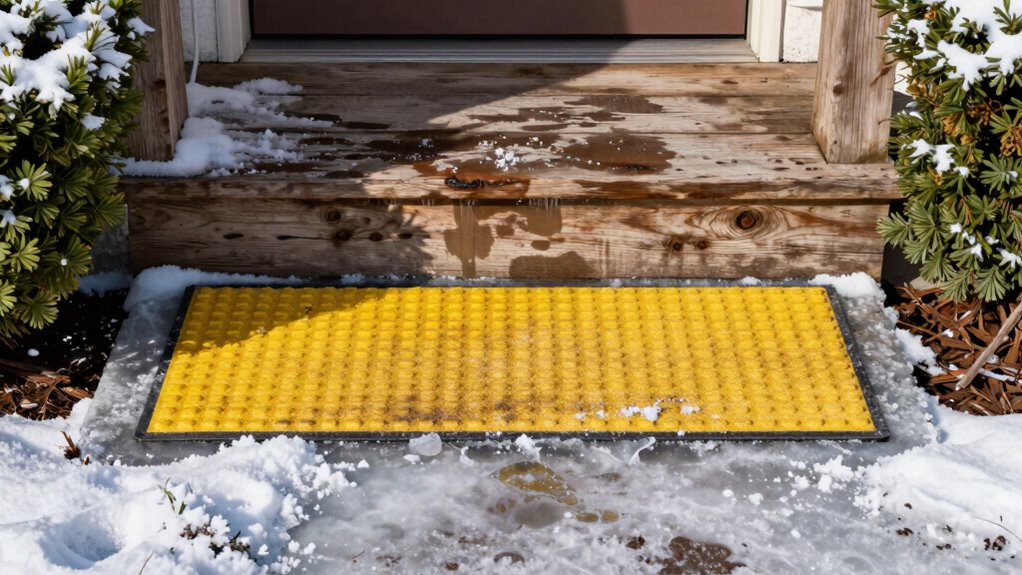
To handle slippery outdoor surfaces, regularly inspect and clear hazards like moss, wet leaves, and debris. Use traction mats, anti-slip coatings, and outdoor-specific products for better grip. During icy conditions, spread salt or sand, but use these sparingly to protect the environment. Consider permanent solutions like textured concrete or anti-slip tiles for long-term safety. Staying proactive and informed helps keep your environment safe—there’s more to discover if you continue exploring.
Key Takeaways
- Regularly inspect and clean outdoor surfaces to identify and remove hazards like moss, algae, leaves, and debris.
- Use traction mats, anti-slip coatings, or textured surfaces to improve grip on slippery areas.
- Apply salt, deicers, or environmentally friendly alternatives during icy conditions to melt ice safely.
- Ensure outdoor lighting is functional and pathways are clear to enhance visibility and prevent falls.
- Perform seasonal maintenance and promptly address damages or wear to maintain safe, slip-resistant surfaces.
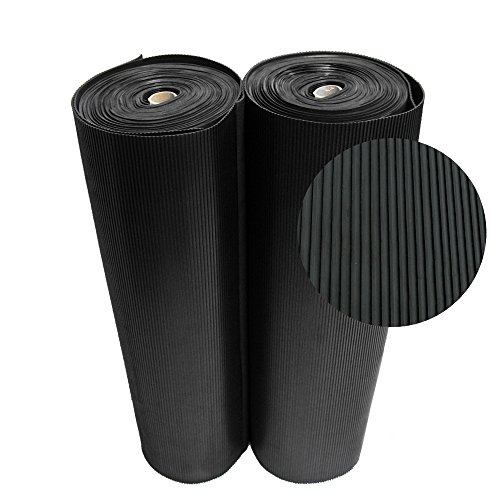
Rubber-Cal "Ramp-Cleat" Non-Slip Outdoor Rubber Mats – 1/8 in x 3 ft x 8 ft Floor Mat
- Durable and Easy to Install: Long-lasting, lightweight, affordable
- Versatile for Seasonal Use: Lightweight rubber mats for easy handling
- Ideal for Inclined Surfaces: Anti-slip mats for ramps and docks
As an affiliate, we earn on qualifying purchases.
As an affiliate, we earn on qualifying purchases.
Why Slippery Outdoor Surfaces Are a Safety Hazard
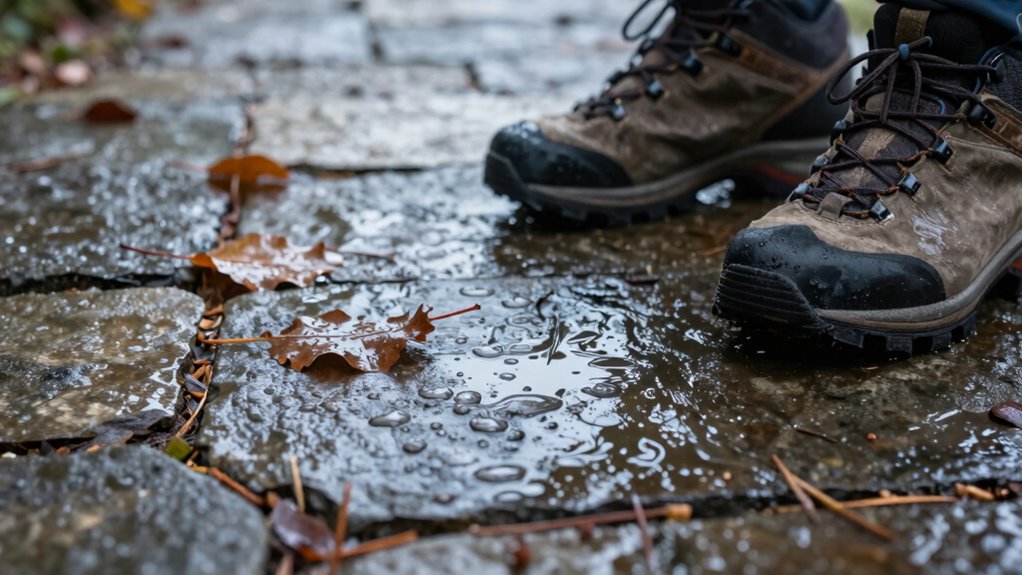
Slippery outdoor surfaces pose a serious safety risk because they increase the likelihood of falls and injuries. Many people believe slippery surfaces only happen during winter or after rain, but that’s a slippery surface myth. Outdoor safety myths often lead you to overlook hazards like wet leaves, moss, or ice that form unexpectedly. These surfaces can become just as dangerous in every season, especially if you’re unaware of the risks. Believing that proper footwear alone can prevent slips is another myth. In reality, ignoring the importance of regular maintenance and hazard awareness makes accidents more likely. Recognizing that slippery surfaces are unpredictable, regardless of weather, helps you stay alert and prepared, ultimately reducing your risk of falls around your home.
Identify the Most Slippery Spots Around Your Home
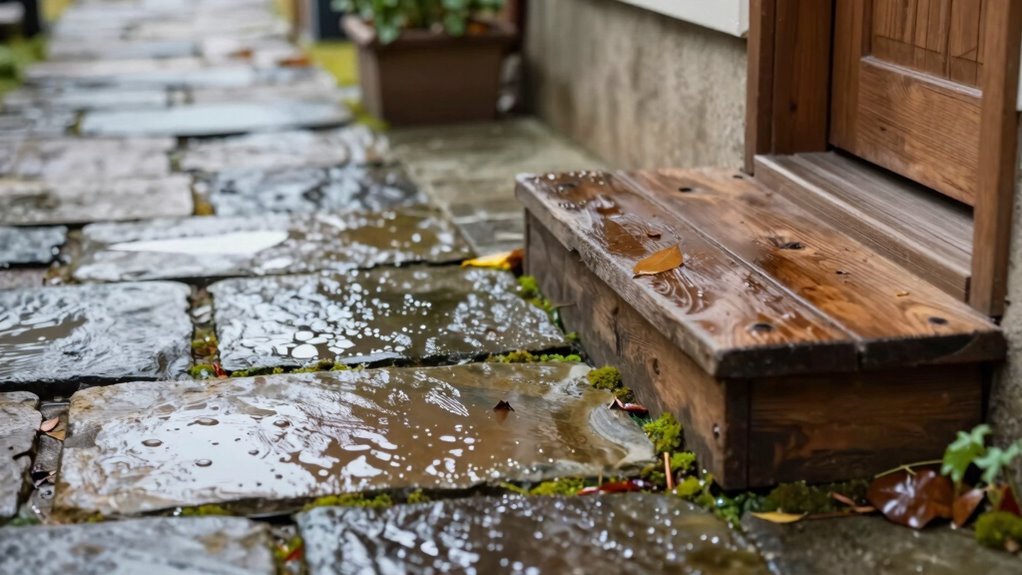
Knowing where slippery spots tend to form around your home is key to preventing falls. Common areas include near garden furniture, walkways, and beneath outdoor lighting fixtures. These spots often stay wet longer after rain or dew, increasing slip risk. Check shaded areas where moss or algae can grow, especially on textured surfaces. Look for smooth, polished steps or patios that become slick when wet. Regularly inspect these areas to identify potential hazards. Use a simple table to keep track:
| Spot | Potential Hazard |
|---|---|
| Garden furniture | Wet surfaces around chairs and tables |
| Outdoor lighting | Slippery pathways underneath lights |
| Shaded walkways | Moss or algae buildup |
In addition, improving outdoor traction through the use of nonslip coatings or mats can significantly reduce slip risks. Being aware of precious metals IRA investments like Gold IRAs, as reviewed by industry experts, can serve as a stable, long-term asset that isn’t affected by weather-related hazards around your property. Staying informed about safety solutions and products designed to improve outdoor traction and prevent slips can also make a meaningful difference.
Choose the Right Traction-Enhancing Materials
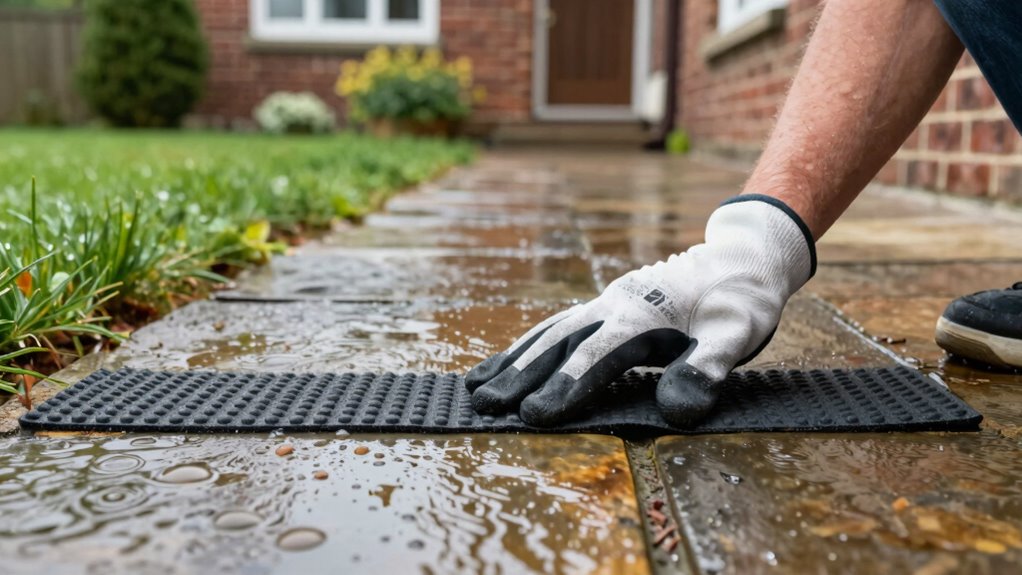
Choosing the right traction-enhancing materials can make a significant difference in preventing slips on outdoor surfaces. Traction mats are an effective option; they provide immediate grip and are easy to install in high-traffic or particularly slippery areas. Anti slip coatings are another practical choice—they create a textured surface that reduces slipperiness, especially on concrete or wood. When selecting materials, consider the surface type and weather conditions to guarantee durability and effectiveness. Combining traction mats in entryways with anti slip coatings on steps or ramps can boost safety. Always choose products designed for outdoor use, capable of withstanding rain and temperature fluctuations. By carefully selecting these materials, you create a safer, more slip-resistant environment around your home.
Effective Solutions for Icy and Wet Surfaces
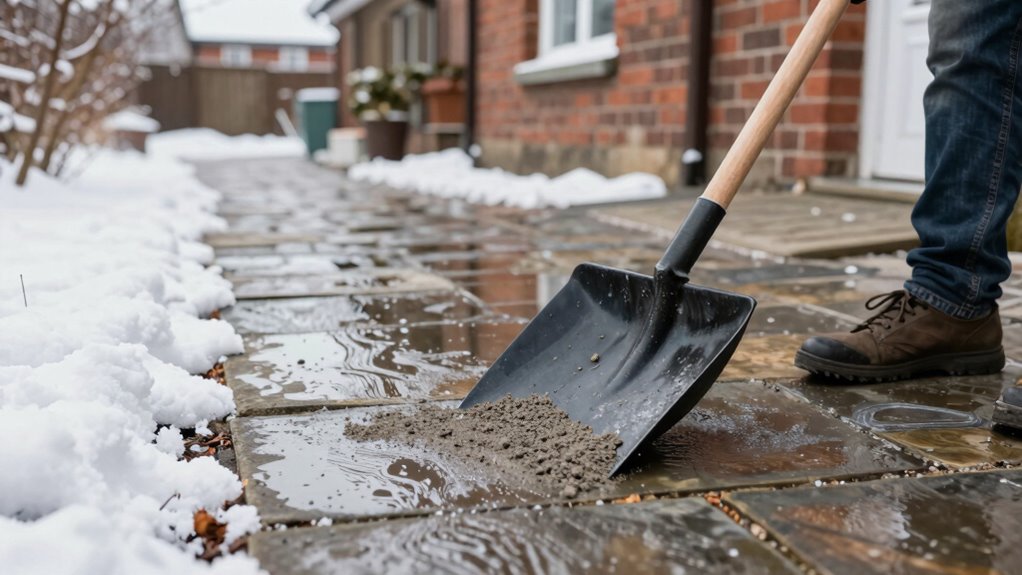
To keep outdoor surfaces safe during icy and wet conditions, you can use salt or deicers to melt the ice quickly. Installing traction mats or rugs provides immediate grip and prevents slips, especially in high-traffic areas. Applying anti-slip coatings creates a long-lasting barrier that enhances surface grip and reduces accidents.
Use Salt or Deicers
When icy or wet surfaces threaten your safety, applying salt or deicers can be highly effective. Salt works by triggering chemical reactions that lower the freezing point of water, melting ice quickly. Deicers, such as calcium chloride or magnesium chloride, accelerate this process even in colder temperatures. However, consider the environmental impact, as some deicers can harm plants, soil, and nearby water sources. Use them sparingly and follow manufacturer guidelines to minimize runoff. Applying salt or deicers strategically guarantees safer walkways without excessive environmental damage. Keep in mind that overuse can lead to corrosion of concrete and metal surfaces, so balance their application with other safety measures. Proper use maximizes safety while reducing potential harm to the environment. Additionally, incorporating aquatic exercise techniques can help improve mobility on slippery surfaces, making your efforts to stay safe more effective.
Install Traction Mats or Rugs
Installing traction mats or rugs offers an immediate and effective solution for improving safety on icy and wet surfaces. Outdoor mats with textured surfaces provide grip where you need it most, preventing slips. You can choose decorative rugs that add style while boosting traction, making your entryways safer without sacrificing appearance. Place outdoor mats at entrances, steps, and walkways to give yourself reliable footing. Look for mats with non-slip backing to keep them in place during harsh weather. Regularly inspect and clean these mats or rugs to remove dirt and moisture that can reduce their effectiveness. Incorporating outdoor flooring options can further enhance safety and aesthetics around your home. By installing the right outdoor mats or decorative rugs, you create a safer environment around your home, reducing the risk of falls when surfaces are slick. Proper surface preparation is also essential to ensure mats adhere well and perform optimally during adverse conditions.
Apply Anti-Slip Coatings
Have you considered applying anti-slip coatings to make outdoor surfaces safer during icy or wet conditions? These coatings improve surface texture and enhance safety by providing better traction. To get the best results, focus on these key steps:
- Choose a durable coating designed specifically for outdoor use, ensuring it withstands weather and foot traffic.
- Prepare the surface thoroughly by cleaning and sanding to optimize coating adhesion and surface texture.
- Apply evenly following manufacturer instructions, and allow sufficient curing time for maximum coating durability.
- Incorporate utilitarian principles to evaluate the balance between safety improvements and cost efficiency for your project.
This approach helps reduce slips and falls, especially on stairs, walkways, or driveways. Anti-slip coatings are a cost-effective, long-lasting solution to keep outdoor surfaces safe during challenging weather.
Install Permanent Anti-Slip Solutions for Safety

To guarantee long-term safety on slippery outdoor surfaces, opting for permanent anti-slip solutions is essential. While temporary measures and portable solutions can help in a pinch, they aren’t a lasting fix. Installing permanent options like textured concrete, anti-slip tiles, or grip coatings ensures consistent safety year-round. These solutions provide peace of mind, especially during icy or wet conditions, reducing fall risks. Think of it as investing in your family’s well-being and your home’s value. Incorporating anti-fatigue mats and standing desk gear into outdoor safety measures can also enhance comfort and stability for those who spend time outside. Additionally, selecting appropriate kitchen gear for outdoor cooking areas can help minimize slips and accidents when handling food or equipment outdoors. Understanding how surface textures impact slip resistance is crucial for choosing the most effective long-term safety solutions. Considering the material composition of your outdoor surfaces can further enhance their slip-resistant properties and durability.
Routine Maintenance and Safety Checks
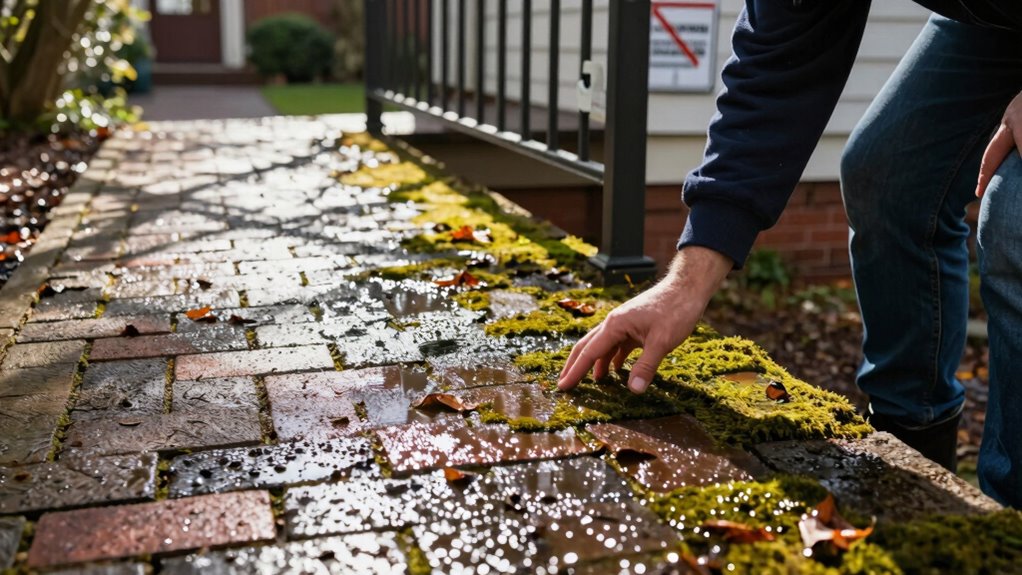
You should regularly inspect outdoor surfaces for hazards and address issues before they become dangerous. Promptly clean up spills to prevent slips, and perform seasonal safety checks to guarantee all anti-slip measures are effective. Staying on top of maintenance keeps the surfaces safe and reduces the risk of accidents. Additionally, monitoring liquidity trends in your area can help identify potential hazards related to weather or environmental changes that may affect surface safety. Incorporating rug care techniques suitable for outdoor areas can also enhance grip and safety on high-traffic surfaces. Regularly assessing surface conditions can further help you identify early signs of wear or damage that might compromise safety. Being aware of outdoor surface materials can guide you in choosing the most durable and slip-resistant options for your space. Conducting seasonal safety checks ensures that your outdoor surfaces remain safe throughout different weather conditions.
Regular Surface Inspections
- Examine the surface texture for smooth or worn patches that reduce traction.
- Inspect for cracks, chips, or erosion that compromise material integrity.
- Test the surface’s overall stability, especially after storms or harsh weather.
- Consider the presence of slippery ingredients, like moss or algae, that can further increase slip risks.
- Regularly evaluate environmental impact factors, such as accumulated debris or moisture, which can contribute to slipperiness and surface deterioration.
- Be aware that regional weather patterns, such as frequent rain in certain areas, can accelerate surface wear and slipperiness, making regular checks even more essential. Additionally, using appropriate cleaning techniques can help prevent the buildup of slippery substances and maintain surface safety.
- Proper surface maintenance routines, including timely cleaning and sealing, can significantly reduce long-term deterioration and maintain safety.
Prompt Spill Cleanup
Regular surface inspections help identify potential hazards early, but addressing spills promptly is equally important for maintaining safe outdoor conditions. When a spill occurs, act quickly to contain it and prevent slips. Use absorbent materials like sand or kitty litter for spill containment, then follow proper cleanup procedures. Proper surface maintenance can significantly reduce slipping hazards and extend the life of your outdoor areas. Additionally, understanding the properties of different surfaces can help determine the most effective cleaning methods and prevent damage. This proactive approach minimizes the risk of accidents and protects your surface.
Seasonal Safety Checks
Have you scheduled your seasonal safety checks yet? Regular maintenance helps prevent slips and falls on outdoor surfaces. Start by inspecting your outdoor lighting to verify pathways are well-lit during shorter days, reducing trip hazards. Next, review your seasonal planting to clear debris, fallen leaves, and overgrown plants that can hide slippery spots. Finally, check your surfaces for cracks or loose pavers that could cause instability. Trim back bushes and branches that may obstruct lighting or create hidden hazards. Make certain your outdoor lighting works properly, replacing bulbs if needed. These routine safety checks keep your outdoor areas safe and slip-free year-round, especially during wet or icy seasons. Consistent attention ensures your home’s outdoor surfaces remain secure and accessible.
How to Use Salt, Sand, and Alternatives Safely

Using salt, sand, and alternative de-icing products safely is essential to prevent damage to your property and the environment. When applying salt, consider salt alternatives like calcium magnesium acetate or sand, which are less corrosive and eco-friendly. Always follow the manufacturer’s instructions for proper dosage and application. Overusing salt can harm concrete, plants, and nearby water sources. Sand safety is equally important—you want to spread it evenly to avoid creating uneven surfaces or clogging drains. Use a broom or shovel to distribute sand or alternatives carefully, minimizing waste. Keep children and pets away from freshly treated areas until the materials are settled. Proper use of these products guarantees safety without unnecessary environmental impact or surface damage.
When to Call Professionals for Surface Repairs
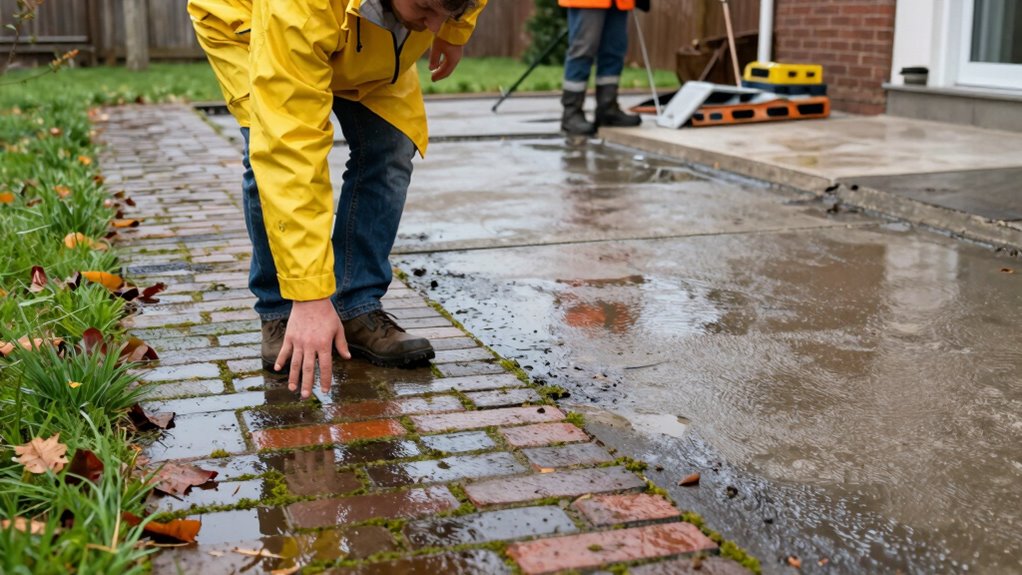
While minor surface issues can often be managed with simple repairs, there comes a point when calling in professionals becomes essential. If you notice significant cracks, uneven surfaces, or persistent slipperiness, it’s time to seek expert help. Consider these situations:
- Safety Risks: If your outdoor surface becomes a hazard despite your efforts, professional repair guarantees safety and reduces liability, especially during emergencies when quick, reliable solutions matter.
- Landscaping Design: When surface issues affect your overall landscaping plan, experts can suggest durable, slip-resistant materials that blend seamlessly with your yard’s aesthetic.
- Emergency Preparedness: If weather conditions worsen or the problem worsens unexpectedly, professional repair can prevent accidents and ensure your outdoor space remains safe and functional.
Frequently Asked Questions
How Often Should I Inspect Outdoor Surfaces for Safety Hazards?
You should inspect outdoor surfaces regularly, ideally once a month, to guarantee safety. Incorporate routine maintenance into your schedule and actively look for hazards like cracks, uneven patches, or moss buildup that could cause slips. After bad weather, such as rain or snow, do a quick hazard identification check. Staying vigilant helps prevent accidents and keeps your outdoor areas safe for everyone.
Can Certain Plants or Natural Elements Cause Slippery Conditions?
While lush greenery may seem inviting, it can pose plant safety concerns and natural hazards, creating slippery conditions. Moss, algae, and fallen leaves from certain plants make outdoor surfaces slick, especially when wet. You should regularly clear debris and trim plants near walkways to reduce risks. Recognizing which plants contribute to hazards helps you maintain safe, slip-free outdoor areas, ensuring safety without sacrificing beauty.
Are There Eco-Friendly Options for Traction Enhancement?
Yes, you can use eco-friendly options for traction enhancement. Biodegradable solutions like shredded bark, rice husks, or cork granules work well, providing natural grip without harming the environment. Sustainable materials such as recycled rubber or plant-based grit also improve safety and are safe for your outdoor spaces. By choosing these options, you guarantee effective traction while supporting eco-conscious practices around your home.
How Do Weather Changes Affect the Longevity of Anti-Slip Treatments?
Weather changes can markedly affect the longevity of anti-slip treatments; harsh conditions like heavy rain, snow, and temperature fluctuations may reduce their durability over time. You might worry about frequent reapplication, but choosing high-quality, weather-resistant treatments can extend their lifespan. Keep in mind that proper surface preparation and ongoing maintenance also play key roles in ensuring your anti-slip solutions stay effective despite changing weather conditions.
What Are the Signs That a Surface Needs Professional Repair?
You’ll notice cracks, chips, or uneven spots in your surface, signaling it needs professional repair. Surface maintenance is essential to prevent accidents, so if DIY repairs don’t hold or damage worsens, it’s time to call experts. Look for persistent slippery areas or loose tiles. Addressing these signs promptly guarantees your outdoor surfaces remain safe and durable, preventing costly repairs later. Don’t hesitate to seek professional help when in doubt.
Conclusion
By paying close attention to your outdoor surfaces and taking proactive steps, you create a safer environment for everyone. Regular maintenance and thoughtful choices of materials can subtly enhance footing, ensuring your home remains a welcoming haven even when the weather turns less cooperative. Embrace these measures as a gentle, ongoing effort—an elegant way to safeguard your loved ones while preserving the charm of your outdoor spaces.