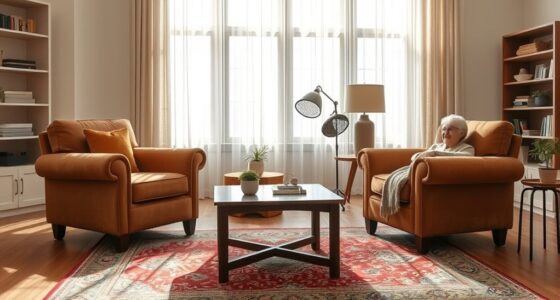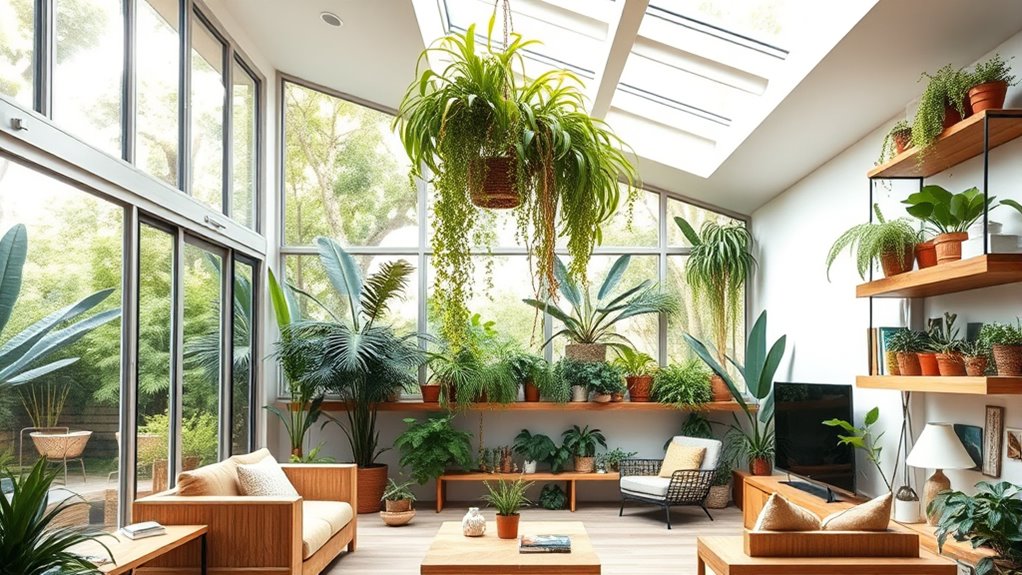

Biophilic design helps you reconnect with nature indoors to boost well-being, productivity, and relaxation. By incorporating natural elements like sunlight, plants, water features, and organic textures, you can create a healthier, more inviting space. Using natural materials and maximizing views of greenery strengthen the connection to the outdoors. If you keep exploring, you’ll discover how to seamlessly bring these elements into your own environment for a more vibrant life.
Key Takeaways
- Biophilic design reconnects indoor spaces with nature through natural materials, textures, and organic forms to enhance well-being.
- Incorporates natural elements like daylight, water features, and greenery to create calming, outdoor-inspired environments indoors.
- Utilizes indoor plants, living walls, and views of outdoor landscapes to strengthen the connection to nature.
- Emphasizes natural light, ventilation, and soundscapes to promote health, comfort, and sensory engagement.
- Supports sustainability by integrating eco-friendly materials and design practices that mimic natural processes.
The Principles Behind Biophilic Design
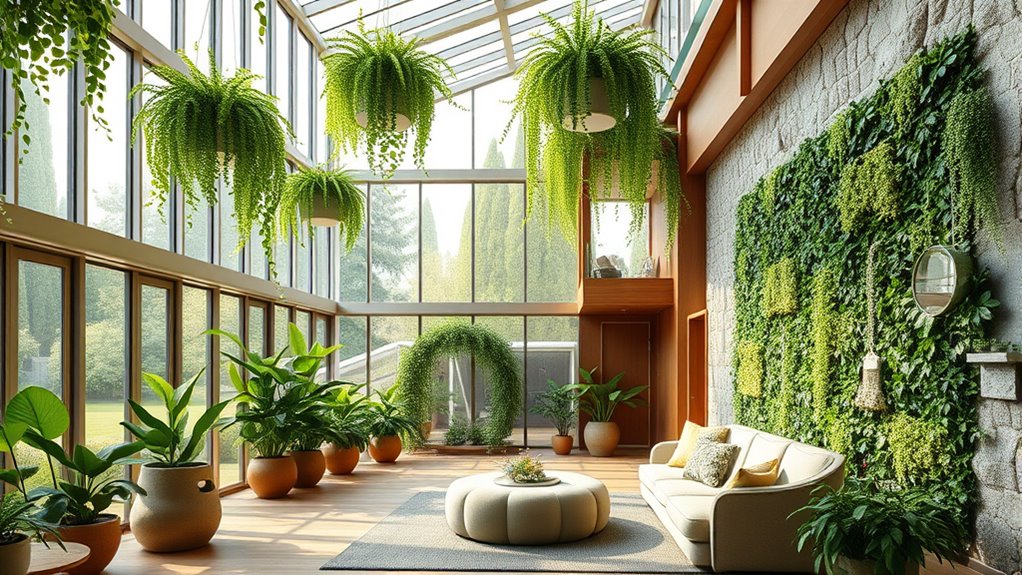
Understanding the principles behind biophilic design begins with recognizing its core goal: reconnecting people with nature to improve well-being and productivity. At its foundation are biophilic patterns, which replicate natural forms, textures, and processes within indoor environments. These patterns create a seamless link between built spaces and the natural world, fostering comfort and calmness. Nature-inspired architecture emphasizes integrating natural elements like daylight, water features, and organic shapes into design. It encourages you to incorporate natural materials and patterns that evoke the outdoors, making indoor spaces feel alive and vibrant. Additionally, incorporating leadership skills in design processes ensures collaborative and innovative approaches to creating sustainable environments. By focusing on these principles, you enhance sensory engagement and create environments that nurture mental and physical health, aligning architecture closely with nature’s inherent beauty and resilience.
Benefits of Incorporating Nature Into Indoor Spaces
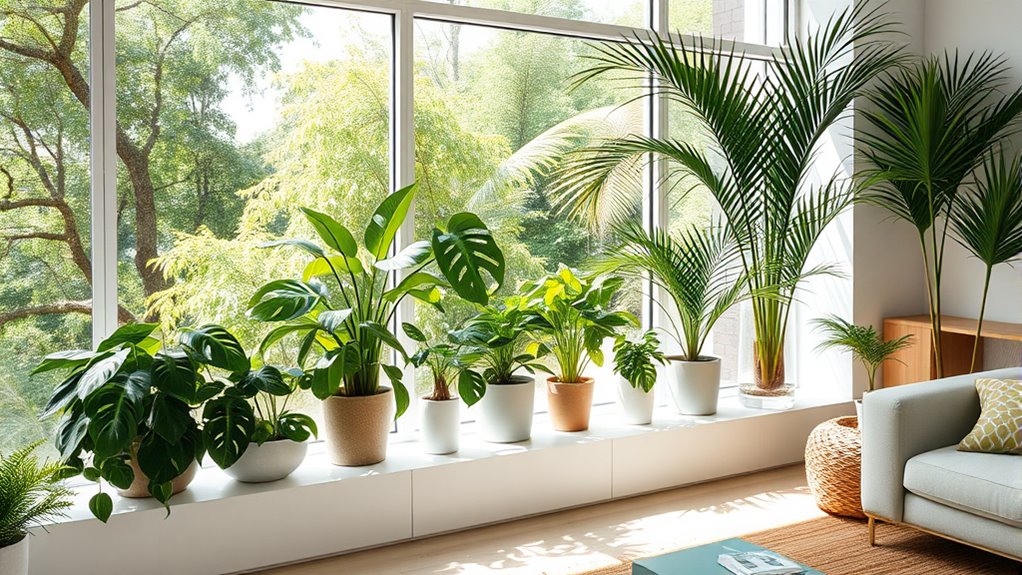
Bringing nature indoors can substantially boost your mental well-being and reduce stress. It also helps improve air quality, creating a healthier environment for everyone. Plus, incorporating natural elements can increase your productivity and focus throughout the day. Engaging in creative practice inspired by nature can further enhance your connection to the environment and support your overall well-being.
Enhances Mental Well-being
Incorporating natural elements into indoor spaces can considerably boost your mental well-being. When you include features like indoor gardens or urban farming, you create a calming environment that reduces stress and promotes mindfulness. Connecting with nature indoors can help lower anxiety and improve your mood. Wildlife corridors integrated into your space encourage a sense of harmony with the environment, fostering feelings of tranquility. These natural elements also stimulate your senses, making everyday spaces more engaging and uplifting. As you engage with greenery or observe small wildlife, your brain releases feel-good chemicals, enhancing overall mental health. Integrating natural lighting and ventilation can further optimize your indoor environment, supporting your emotional resilience and helping you feel more centered in your daily life.
Improves Air Quality
Natural elements inside your space can markedly improve indoor air quality by filtering pollutants and increasing oxygen levels. Plants act as natural air purifiers, absorbing toxins like formaldehyde and benzene, which helps reduce airborne pollutants. This process supports better air purification, making the environment healthier to breathe. As a result, your respiratory health benefits, especially if you suffer from allergies or asthma. Incorporating greenery indoors can also increase humidity levels, preventing dry air that irritates your respiratory system. By choosing plants known for their air-cleaning abilities, such as snake plants or pothos, you create a cleaner, fresher atmosphere. Additionally, certifications and endorsements from trusted sources can ensure you select high-quality plants for optimal air purification. Improved air quality not only enhances comfort but also promotes overall well-being, allowing you to breathe easier and experience a more invigorating indoor environment.
Boosts Productivity
When you introduce plants and natural elements into your workspace, you can experience a noticeable boost in productivity. Natural surroundings help reduce stress and increase focus, making your workday more efficient. Imagine:
- Watching urban wildlife, like birds or butterflies, flutter outside your window, inspiring a sense of calm.
- Enhancing your walls with biophilic art that mimics natural landscapes, sparking creativity.
- Feeling energized by the presence of greenery, which improves concentration and reduces mental fatigue.
Additionally, incorporating auditory cues such as natural sounds can further enhance concentration and create a more immersive environment. These elements create a connection to nature that fosters a more engaging environment. Incorporating natural features not only elevates aesthetic appeal but also promotes a healthier, more productive workspace, keeping you motivated and focused throughout the day.
Key Elements of Biophilic Environments
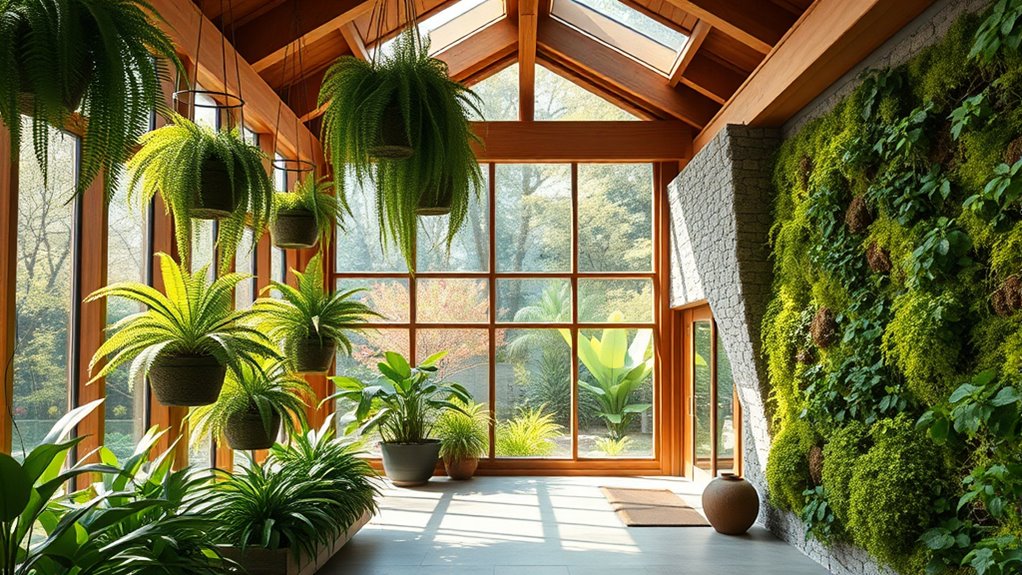
To create effective biophilic environments, understanding their key elements is essential. These elements include integrating urban biodiversity, which brings vibrant plant life and wildlife into indoor spaces, fostering a connection with nature. You can achieve this by incorporating living walls, indoor gardens, or water features that support local ecosystems. Additionally, biophilic art plays a vital role by visually connecting occupants to nature through artworks inspired by natural forms and landscapes. Natural light, views of greenery, and ventilation are also crucial, enhancing well-being and comfort. Incorporating natural materials such as wood, stone, and bamboo further deepens the sensory experience and strengthens the connection to nature. Combining these elements creates a seamless indoor-outdoor experience, promoting relaxation and productivity. Remember, the goal is to evoke the sense of being in nature, even within urban settings. This harmony is at the heart of biophilic design.
Natural Materials and Textures in Interior Design
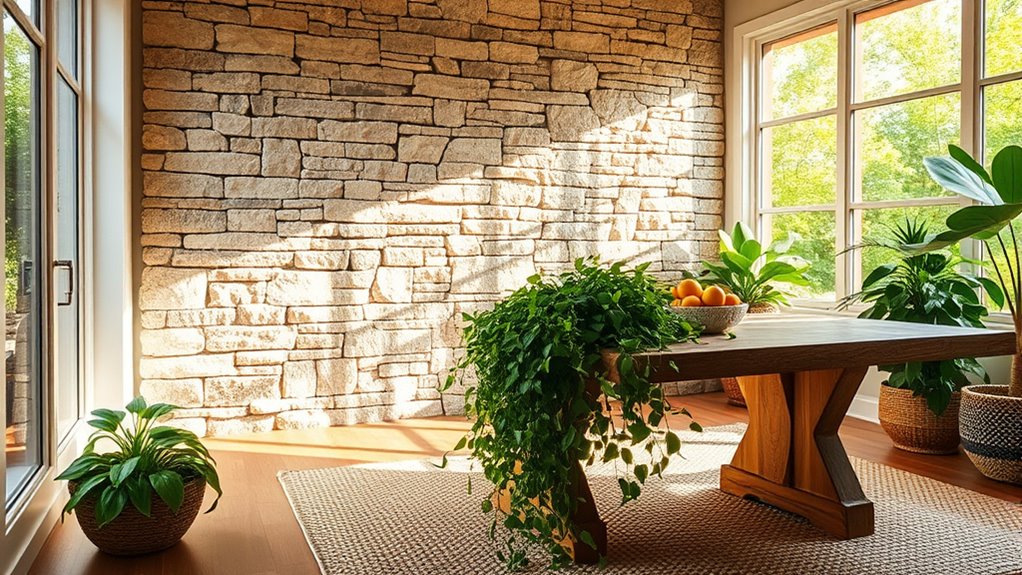
You can create a warm, inviting space by selecting organic materials like wood, stone, or cork that bring a natural feel indoors. Using textural contrast techniques, such as combining smooth surfaces with rough textures, adds visual interest and depth. Incorporating sustainable design elements guarantees your choices support environmental health while enhancing the overall natural aesthetic. For a personalized touch, consider choosing dog names that reflect the natural and stylish theme of your space.
Organic Material Choices
Choosing natural materials for interior spaces brings a sense of warmth and authenticity that artificial surfaces often lack. When selecting organic materials, you create a genuine connection to nature. Imagine walking barefoot on smooth natural stone surfaces that feel cool underfoot. Visualize cozy spaces draped in organic textiles like linen or hemp, adding softness and texture. Consider the tactile appeal of rough-hewn wood furniture or handcrafted clay pottery that highlights craftsmanship. These choices not only enhance the aesthetic but also promote sustainability. By incorporating natural stone surfaces, you add durability and an earthy tone. Organic textiles soften spaces visually and physically, making your home feel inviting and rooted in nature. Focusing on these materials elevates your environment with authenticity and eco-consciousness. Additionally, choosing natural materials that are free from synthetic chemicals can improve indoor air quality and support healthier living spaces.
Textural Contrast Techniques
Incorporating textural contrast with natural materials creates visual interest and tactile depth within a space. By combining different textures, you enhance tactile diversity, making environments more engaging. Use rough stone alongside smooth wood, or woven textiles with sleek metals, to highlight natural variations. These contrasts emphasize the organic essence of biophilic design, connecting you to nature’s diversity. Consider the table below for inspiration:
| Material | Texture Type | Tactile Effect |
|---|---|---|
| Limestone | Rough | Earthy, grounding |
| Bamboo | Smooth, grooved | Invigorating, lively |
| Wool | Soft, nubby | Cozy, inviting |
| Copper | Polished, textured | Warm, reflective |
| Jute | Coarse | Rustic, natural |
Mixing these textures boosts visual interest and invites tactile exploration. Additionally, understanding natural materials and their properties can help you make more intentional design choices that foster a stronger connection to nature.
Sustainable Design Elements
Have you ever noticed how natural materials can transform a space into a sustainable sanctuary? Using sustainable design elements like reclaimed wood, bamboo, and stone creates a warm, eco-friendly atmosphere. Imagine an urban rooftop garden featuring lush greenery, where you can relax surrounded by natural textures. Incorporate water feature integration, such as a small pond or cascading fountain, to add serenity and humidity. These elements not only enhance aesthetic appeal but also promote sustainability by reducing environmental impact. Visualize a space where textured stone walls complement wooden furniture, and a water feature reflects natural light, bringing the outdoors inside. Additionally, incorporating water parks’ family-friendly attractions can inspire designs that prioritize relaxation and enjoyment for all ages. Combining these natural materials with thoughtful design choices helps you craft a harmonious, environmentally conscious interior that celebrates nature.
The Role of Light and Views in Connecting to Nature
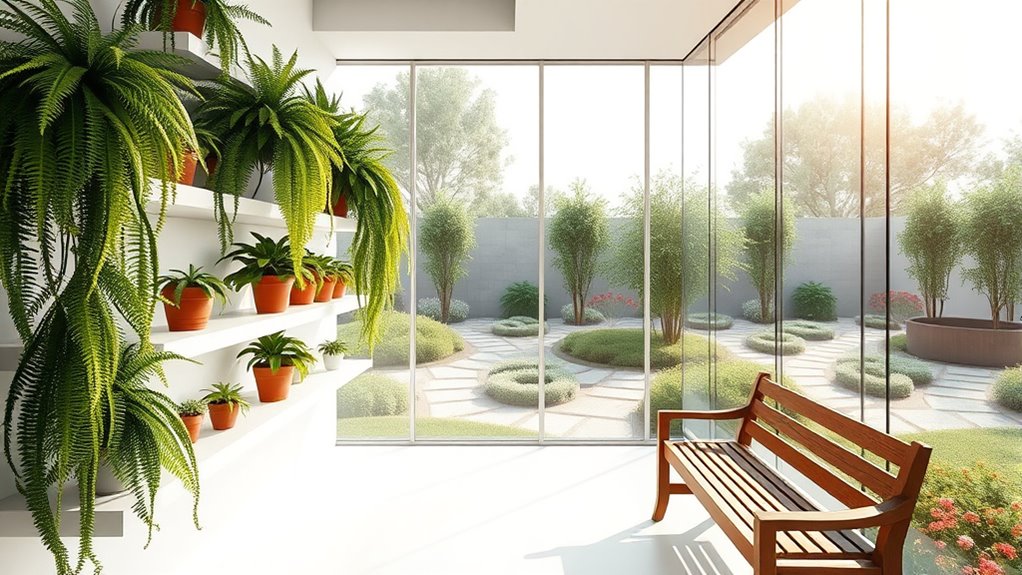
Natural light and expansive views are essential elements of biophilic design because they foster a direct, sensory connection to the outdoors. When you maximize natural light, your space feels brighter, more inviting, and healthier, boosting your well-being. Scenic views provide a visual link to nature, reducing stress and enhancing focus. Large windows, skylights, and open layouts allow sunlight to flood your environment, creating a dynamic interplay of shadows and brightness. By integrating views of trees, gardens, or distant landscapes, you bring the outdoors inside, making your space feel more alive and connected. This connection encourages a sense of calm and harmony, helping you feel more grounded and rejuvenated throughout the day. Ultimately, light and views serve as crucial pathways to experiencing nature indoors.
Incorporating Indoor Plants for a Fresh Atmosphere
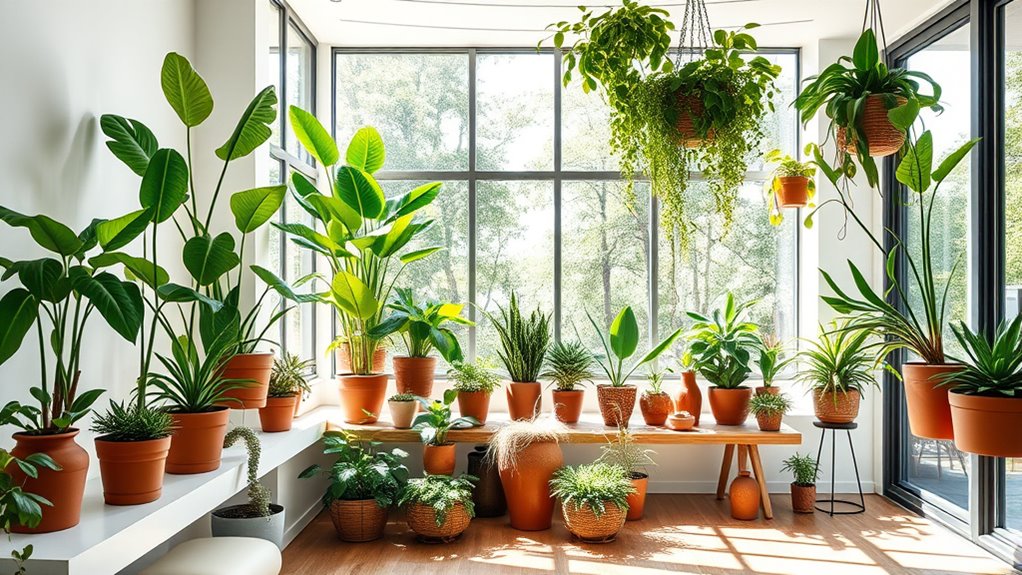
Bringing indoor plants into your space enhances the feeling of being connected to nature, even when you’re inside. You can transform your environment with a variety of greenery that mimics outdoor vibrancy. Imagine a small urban rooftop garden with lush foliage, vibrant leaves, and cascading vines. Or consider a collection of potted succulents arranged on a windowsill, adding a touch of botanical art. You might also hang planters filled with ferns or air plants, creating a layered, lively atmosphere. These plants breathe life into your home, improve air quality, and serve as living art pieces. Incorporating indoor plants makes your space feel fresh, dynamic, and more aligned with nature’s beauty, no matter how confined your area may be.
Designing for Soundscapes and Natural Auditory Elements
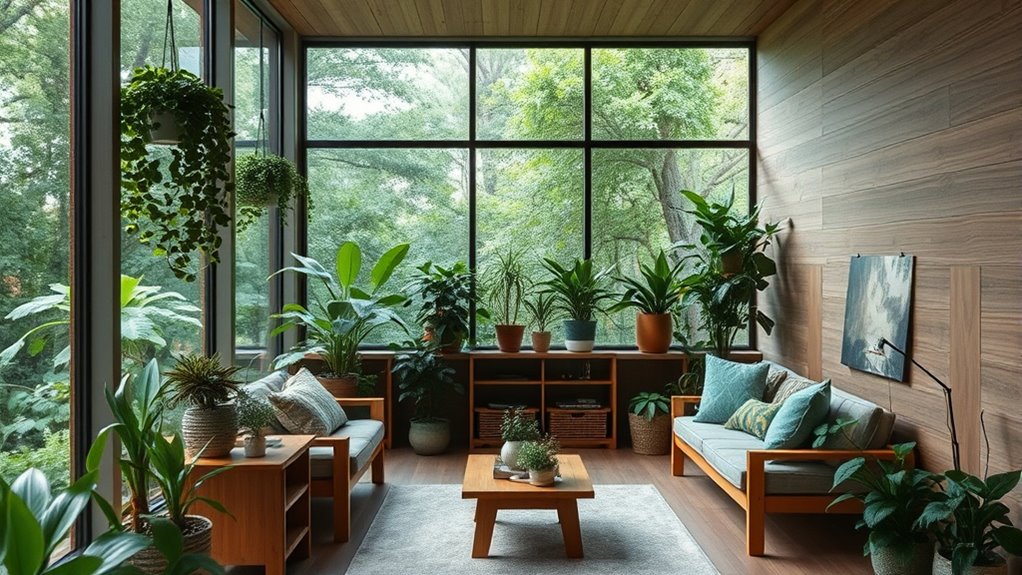
You can create a more relaxing environment by incorporating natural sounds like water or bird calls. Managing indoor acoustics helps reduce noise pollution and enhances comfort. By carefully designing soundscapes, you guarantee a peaceful space that nurtures your well-being.
Incorporating Natural Sounds
Integrating natural sounds into built environments enhances well-being and fosters a sense of tranquility. You can achieve this with carefully chosen sound therapy techniques and nature recordings. Imagine:
- Soft melodies of birdsong filling your space, creating a calming backdrop.
- Gentle flowing water sounds that evoke a peaceful stream.
- Subtle rustling leaves, bringing the outdoors inside.
These auditory elements help to reduce stress and improve focus. Using sound therapy, you can tailor soundscapes to promote relaxation or alertness, depending on your needs. Incorporating natural sounds isn’t just about background noise; it’s about crafting immersive environments that reconnect you with nature’s rhythms. This approach supports mental clarity, emotional stability, and overall comfort within your space.
Managing Indoor Acoustics
Effective management of indoor acoustics is essential for creating a balanced soundscape that enhances comfort and well-being. You can achieve this by implementing soundproofing techniques to reduce unwanted noise and control reverberation. Proper acoustic panel placement is vital; position panels strategically on walls and ceilings to absorb excess sound and prevent echoes. Consider the source of noise and its path to optimize panel locations effectively. Using natural materials, like wood or cork, can also improve acoustic comfort while aligning with biophilic principles. Remember, the goal is to create a tranquil environment where natural sounds are highlighted, and intrusive noise is minimized. By thoughtfully managing acoustics, you foster a peaceful space that promotes relaxation and connection with nature.
Enhancing Auditory Comfort
Managing indoor acoustics sets the stage for a more harmonious sound environment, but to truly enhance auditory comfort, attention must shift to designing for natural soundscapes and auditory elements. You can achieve this by integrating:
- Sound masking systems that introduce gentle, natural ambient sounds, reducing distractions.
- Acoustic panels that absorb unwanted noise while echoing the soothing sounds of nature.
- Incorporating natural elements like water features or plant-based sound barriers to create calming auditory landscapes.
These strategies help mask intrusive sounds, emphasize gentle natural noises, and foster a peaceful atmosphere. By thoughtfully designing soundscapes, you bring a sense of tranquility indoors, making your space more inviting and aligned with biophilic principles.
Color Schemes Inspired by the Natural World
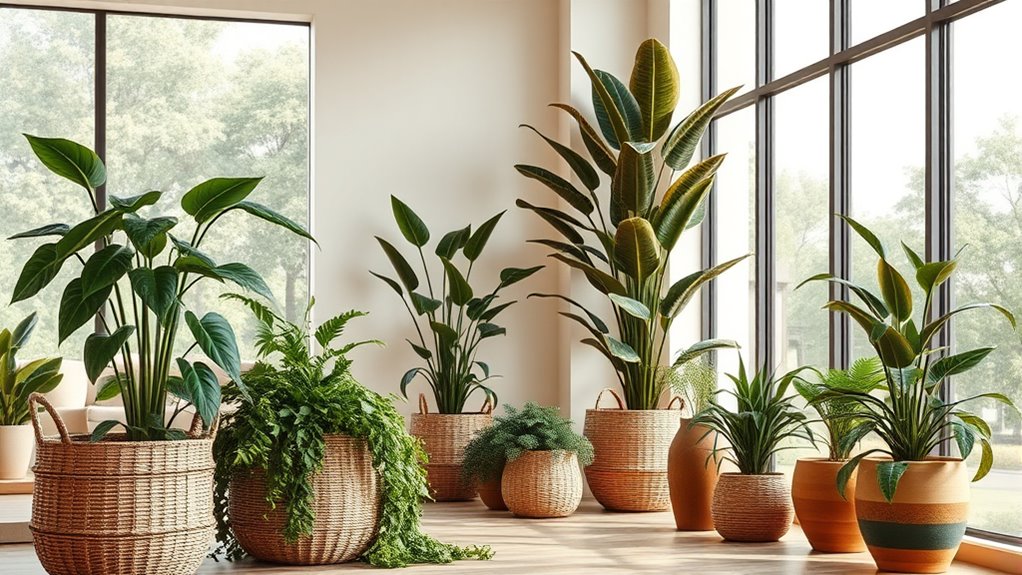
Color schemes inspired by the natural world draw from the hues found in landscapes, flora, and fauna to create calming and restorative environments. Using carefully selected color palettes, you can evoke the tranquility of forests, oceans, or meadows. These palettes draw shade inspiration from nature’s diverse tones, such as soft greens, earthy browns, and soothing blues. Incorporating these natural hues helps you foster a sense of balance and well-being in your space. When choosing your colors, think about the mood you want to establish—whether it’s the freshness of spring or the depth of a mountain lake. By aligning your color schemes with nature’s own palette, you create interiors that promote relaxation and harmony, seamlessly connecting indoor environments with the natural world outside.
Creating Biophilic Workspaces for Enhanced Productivity
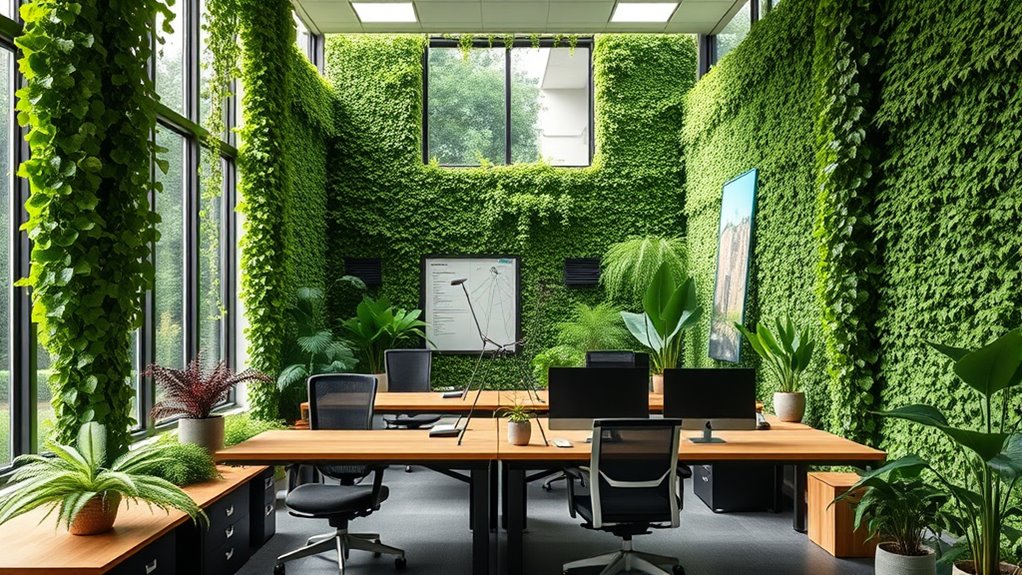
Incorporating biophilic elements into your workspace can substantially boost productivity and well-being. Imagine a space where urban wildlife subtly interacts with your environment, inspiring creativity. To create such a workspace, consider these key features:
Bringing natural elements indoors enhances focus, reduces stress, and sparks creativity through urban wildlife-inspired design.
- Indoor Gardens or Green Walls: Bring nature inside with lush plants and living walls that support urban wildlife and improve air quality.
- Natural Light & Views: Maximize windows or skylights to connect your workspace with the outdoors, fostering a sense of openness.
- Biophilic Architecture: Use organic shapes, natural materials, and open layouts that mimic nature, reducing stress and enhancing focus.
These elements cultivate a calming environment, making your workspace more inviting and productive.
Practical Tips for Implementing Biophilic Design at Home
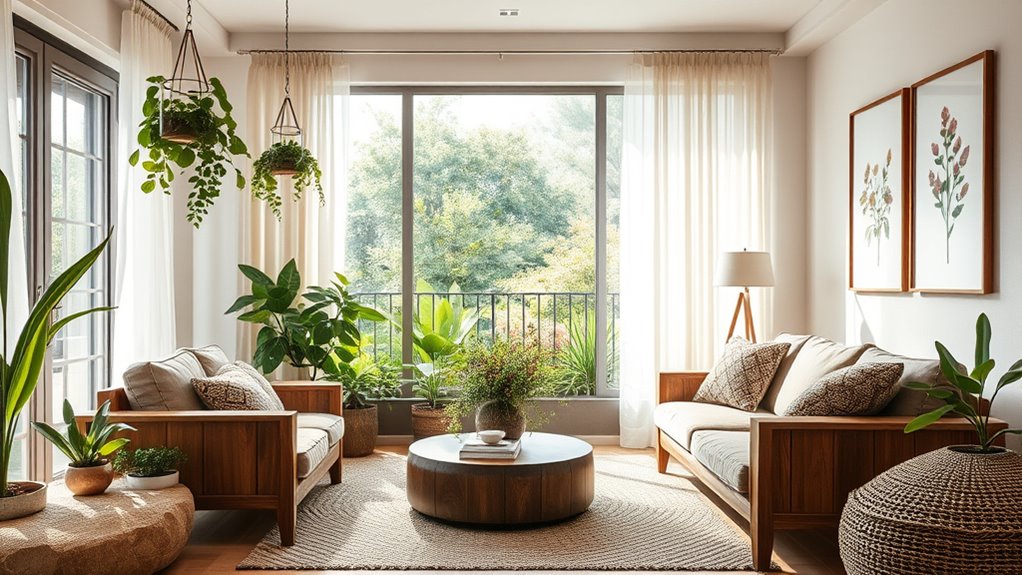
Bringing biophilic elements into your home can create a calming, healthful environment that boosts your well-being and productivity. To do this, incorporate natural materials like wood, stone, and plants to mimic biophilic architecture’s principles. Add windows or skylights to maximize natural light, fostering a connection with outdoor environments. Encourage urban wildlife by installing bird feeders or small water features outside windows, inviting nature into your space. Use nature-inspired artwork or patterns indoors to reinforce your connection to the outdoors. Keep greenery accessible, such as potted plants or vertical gardens, to improve air quality and mood. These simple steps make your home feel more alive and aligned with natural elements, supporting your mental health and creating a seamless integration of urban wildlife and biophilic design.
Frequently Asked Questions
How Does Biophilic Design Influence Mental Health?
Biophilic design boosts your mental health by reducing stress and enhancing cognitive benefits. When you incorporate natural elements like plants, sunlight, and natural materials, you’ll likely feel calmer and more focused. This connection to nature helps lower anxiety and improves your overall mood. By creating a space that mimics the outdoors, you actively support your mental well-being, making it easier to relax and stay sharp throughout your day.
Can Biophilic Principles Be Applied in Small Urban Apartments?
Yes, you can apply biophilic principles in small urban apartments. Think of your space as a tiny Eden—use urban balcony gardening to add greenery and create a lush escape. Incorporate indoor water features like small fountains to evoke tranquility. These elements boost your mood, reduce stress, and make your apartment feel more alive, proving that even in limited space, nature can thrive and profoundly enhance your well-being.
What Are Cost-Effective Ways to Incorporate Nature Indoors?
You can incorporate nature indoors cost-effectively by adding DIY greenery like homemade moss art or upcycled plant holders. Opt for budget-friendly plants such as pothos, snake plants, or succulents, which thrive with minimal care. You might also hang plants or place small pots on shelves to maximize space. These simple, inexpensive ideas bring natural beauty into your apartment without breaking the bank.
How Does Biophilic Design Affect Energy Efficiency?
Biophilic design boosts energy efficiency by promoting energy-saving strategies like natural lighting optimization, which reduces the need for artificial lighting during the day. Incorporating plants and natural elements also helps regulate indoor temperatures, decreasing reliance on HVAC systems. By embracing these approaches, you can lower energy costs and enhance comfort while creating a healthier, more sustainable indoor environment.
Are There Specific Plants Best Suited for Indoor Environments?
You should choose indoor plants like snake plants, pothos, and ZZ plants for your space because they’re ideal for indoor environments. These plants are perfect for indoor plant selection due to their adaptability and low maintenance greenery. They thrive in low light and require minimal watering, making them easy to care for. Incorporating these plants enhances your space’s natural feel while needing little effort to keep healthy.
Conclusion
Think of your space as a garden awaiting cultivation. By weaving nature into your environment, you’re planting seeds of calm, inspiration, and energy. As you nurture these elements—light, textures, sounds—you craft a sanctuary that breathes life into every corner. Embrace biophilic design as your personal oasis, where the harmony between indoors and outdoors flourishes like a well-tended garden, revealing the transformative power of nature’s touch in your everyday life.