
TL;DR

Turn quiet afternoons into listening time
- Thousands of audiobooks, podcasts and originals
- Listen on your phone, tablet or Echo — also offline
- Cancel anytime
A study published in the Journal of the National Cancer Institute found that about 6 in 10 highly frail older breast cancer survivors had no Medicare home health care in a given year. The researchers measured service use, not whether individuals qualified for coverage, and the study excluded Medicare Advantage.
A study published in the Journal of the National Cancer Institute found that about 6 in 10 highly frail breast cancer survivors aged 66 and older had no Medicare home health care in a given year. The finding highlights a possible gap in support for survivors living with significant health and functional difficulties years after diagnosis, although the study measured care use, not eligibility for coverage.
Researchers examined 347,953 survivor-years involving 134,410 women aged 66 or older with invasive breast cancer, from two to 10 years after diagnosis. The records covered 2017 to 2020 and linked cancer registry information from the Surveillance, Epidemiology, and End Results program to Medicare enrollment and claims, along with home-care assessments. Medicare Advantage enrollees were not included.
The team estimated frailty using a score built from Medicare claims, including diagnoses and medical equipment, and calibrated it against assessments completed when home health care began. The study defined frailty through accumulated health problems and functional limitations, such as difficulty walking, bathing or dressing, falls, memory problems, incontinence and exhaustion. In a given year, around 7% of survivors were classified as highly frail; about 40% of that group used Medicare home health care. Across all survivors, 11% used the service.
Lead author Dr. Xuanzi Shirley Qin, an assistant professor at the University of Maryland School of Public Health, said the findings point to unmet needs among frail survivors. The study did not establish why individuals did not receive home health care, whether they sought it, or whether they met Medicare’s eligibility rules.
A Potential Gap in Home Support
The figures matter because frailty can make everyday tasks difficult, while Medicare’s traditional home health benefit is limited. According to the study’s account of coverage rules, Medicare generally covers home health services when a person is homebound and has a need connected to skilled care. People who mainly need help with personal care, such as bathing or dressing, may not fit those conditions.
That distinction means a person can have substantial difficulty managing at home without necessarily qualifying for the services counted in this study. Qin said people with primarily personal-care needs may fall through a coverage gap and face a heightened risk of falls or hospital stays without support. Those are concerns raised by the researchers, not outcomes the study itself established for the women who lacked home health care.
The researchers also found that survivors six to 10 years after diagnosis were as frail as those two to five years after diagnosis. Qin said this pattern suggests that needs may reflect aging as well as cancer-related experiences. The result adds to questions about whether survivorship care and home-care policy are keeping pace with the needs of older adults living longer after breast cancer.
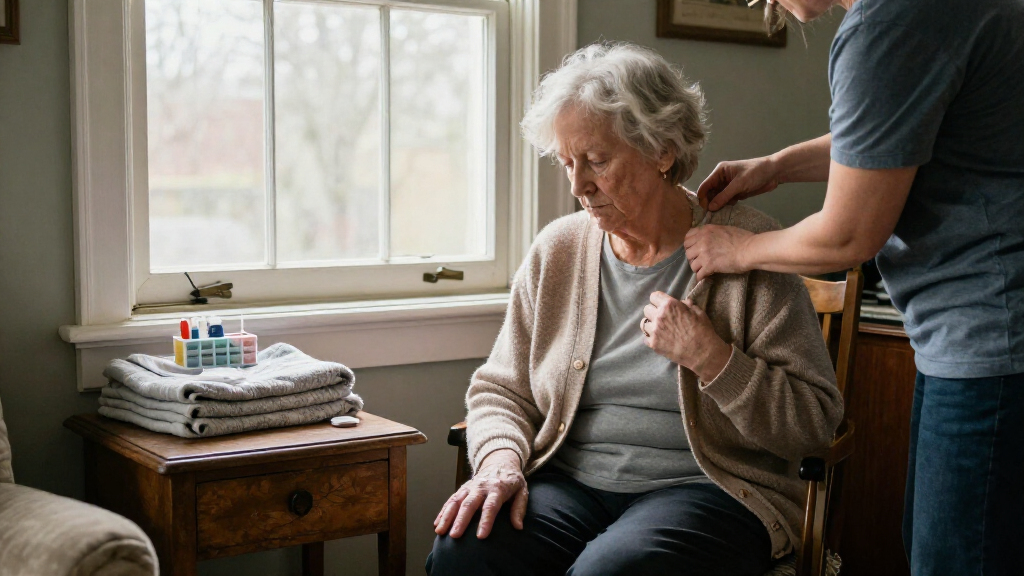
home health care assistance for elderly women
As an affiliate, we earn on qualifying purchases.
As an affiliate, we earn on qualifying purchases.
How Medicare Home Health Works
The study concerns Medicare home health care, not every form of help a survivor might receive at home. Traditional Medicare’s coverage is tied to specific conditions, including being homebound and needing skilled services. The researchers note that personal care alone may not meet those criteria. The report does not provide a breakdown of other support, such as unpaid help from relatives or services paid for outside Medicare.
To identify frailty across the full study population, the researchers applied their claims-based score to survivors even if they had never received a home health assessment. They then checked whether people classified as highly frail used Medicare home health services in each observed year. This approach allowed the team to compare estimated frailty and service use, but it does not show that every person without recorded care was eligible for, or in need of, a covered service.
The findings come as the number of breast cancer survivors grows. The source report cites an estimated 4 million survivors in the United States and says longer survival and earlier detection have contributed to that population. Qin argued that home-care needs could grow with it, while the study itself focused on older women with invasive cancer and data ending in 2020.
“In a given year, about 6 in 10 highly frail survivors had none.”
— Dr. Xuanzi Shirley Qin, lead author and assistant professor at the University of Maryland School of Public Health
Coverage and Care Needs Unmeasured
The study measured whether participants used Medicare home health care; it did not determine whether they qualified for it or establish why care was absent. It also cannot show how many women needed personal care but were unable to obtain it. The reported data do not capture Medicare Advantage, so the results should not be taken as a complete picture of care among all Medicare beneficiaries.
The study covers 2017–2020, and the source material does not describe whether service use has changed since then. It also does not establish that lack of home health care caused falls, hospital stays or other harms. The researchers’ warnings about those risks are concerns about possible consequences, not measured effects in this analysis.
Screening and Policy Questions
Qin called for routine frailty screening during survivorship care and for Medicare to cover personal care at home for frail survivors. The report says some clinics are beginning to screen for frailty, but survivorship guidelines do not yet require it. It does not announce a guideline revision, Medicare rule change or implementation schedule.
The study’s publication adds evidence for discussions among clinicians, policymakers and patient advocates about identifying support needs after cancer treatment. Any broader assessment would need to clarify who qualifies for existing services, what help people receive outside Medicare, and whether the pattern persists in newer data and among Medicare Advantage members. No next policy action or follow-up study was specified in the source material.
Key Questions
What did the study find?
About 6 in 10 highly frail older breast cancer survivors in the study had no Medicare home health care in a given year. Around 7% of survivors were classified as highly frail.
Did the study show that all women without home care were eligible?
No. Researchers measured use of home health care, not whether each woman qualified for coverage or sought services.
Why might some frail survivors not receive Medicare home health care?
The report says traditional Medicare generally ties home health coverage to a skilled-care need and homebound status. People who mainly need help with personal care may not meet those conditions.
Who was included in the research?
The analysis covered 134,410 women aged 66 or older with invasive breast cancer, followed from two to 10 years after diagnosis. Medicare Advantage enrollees were excluded.
What changes did the study recommend?
Lead author Xuanzi Shirley Qin recommended routine frailty screening during survivorship care and said Medicare should cover personal care at home for frail survivors. The study did not announce any coverage or guideline changes.
Source: rss
Halloween Picks
halloween
As an affiliate, we earn on qualifying purchases.