TL;DR

Get comfort and care essentials delivered free — and shop member deals
- Fast, free delivery on millions of items
- Access to Prime Big Deal Days deals on October 6–7
- Prime Video, Amazon Music and more included
Sixty and Me published a first-person article offering practical habits for avoiding weight regain after 60, including limiting food cues at home, eating with awareness and keeping healthy snacks available. The report is personal advice, not a clinical study or a medically validated plan, and its promise of never being hungry is not established by the material.
Sixty and Me has published a first-person article offering weight-maintenance suggestions for adults over 60, including keeping tempting foods out of the home and pausing before taking a second serving. The piece presents the recommendations as habits that worked for its author; it does not report a new study or establish that the approach prevents weight regain or allows people to lose weight without hunger.
The article’s central point is that quick weight-loss diets can be difficult to sustain if people return to their previous eating patterns afterward. Its author describes choosing long-term routines over repeated restrictive diets and recounts a personal history of losing weight after college and trying to avoid regaining it. These are personal experiences, not evidence from a controlled trial or a survey of older adults.
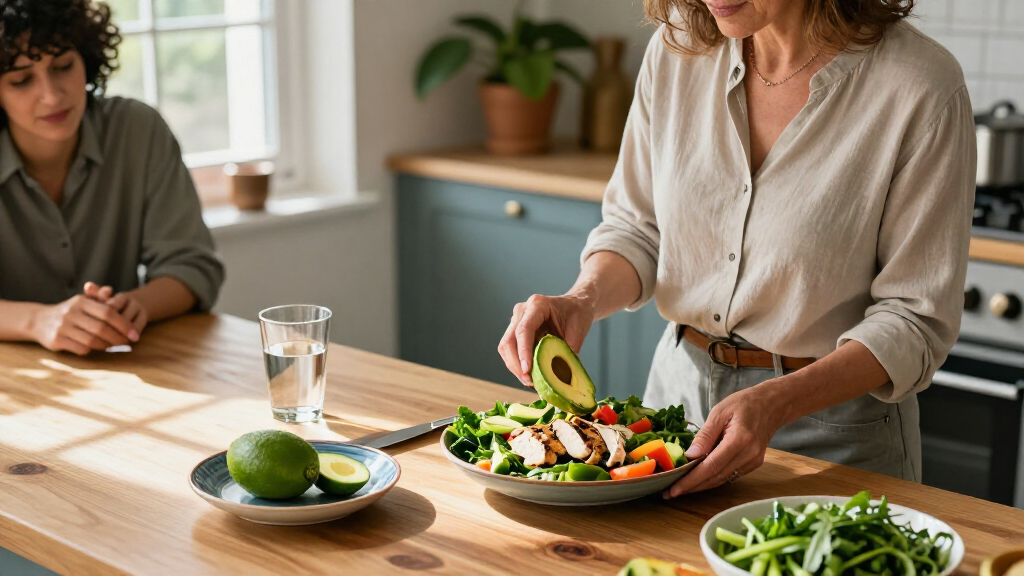
Among the suggestions are eating when hungry rather than snacking randomly, stopping before feeling full, and waiting about 15 minutes before deciding whether to have more. The author also recommends keeping healthier snacks available, drinking water, making meals without relying on bread, cream or starchy vegetables, and setting aside an occasional treat. The article does not provide portion sizes, a calorie target, or a structured meal plan.
The writer also warns readers not to assume that foods labeled low-fat or whole wheat automatically support weight management. That statement is offered as practical advice, without nutritional analysis or supporting research in the report. The article’s headline promises that readers can “never be hungry,” but the text does not demonstrate that outcome; its recommendations focus on managing food choices and habits.
Practical Habits, Not a Tested Program
Weight management can be a personal concern for older adults, and advice that favors repeatable routines over short-term restriction may prompt readers to reflect on how they eat at home. The article’s emphasis on food availability, mindful portions and planning snacks is accessible, but its suggestions should be understood as one writer’s approach, not a proven method for everyone over 60.
The distinction matters because appetite, health conditions, medications, mobility and nutritional needs vary. Advice to avoid particular foods or change eating habits may not suit every reader. The source offers no clinical assessment, measured outcomes or comparison with other approaches. Its headline’s claim about avoiding hunger goes beyond what the article documents.
healthy snack containers for seniors
As an affiliate, we earn on qualifying purchases.
As an affiliate, we earn on qualifying purchases.
The Article’s Personal Basis
The report opens by describing weight loss as a balance between energy consumed and expended, then argues that maintaining weight can feel more difficult with age. It points to possible changes in metabolism and activity, as well as lifestyle factors such as more opportunities to cook, eat out or snack during retirement. These are the source author’s framing points; the article does not cite research or quantify how much any factor affects an individual.
The author recounts being put on a restrictive diet after gaining weight in college and says that experience shaped a long-term commitment to avoiding weight gain. Later advice is drawn from that personal history, including avoiding food-related temptation at home and finding alternatives to sweets. The piece ends by inviting readers to share their own habits, reinforcing its format as a personal advice article rather than a formal health report.
““Nothing stimulates the appetite like eating.””
— The author, quoting her mother-in-law
Evidence and Individual Fit
No study or expert review is supplied in the source material to test whether the suggested habits lead to weight loss or prevent regain. The article also does not establish that readers can follow them without feeling hungry, despite the headline’s wording. It gives no information about the author’s age, health status or the results of applying each suggestion over a defined period.
It is also unclear how the recommendations should be adapted for people with medical conditions, dietary restrictions or different nutritional needs. The report does not address those circumstances or compare its suggestions with professional guidance. Readers should not treat the article as individualized medical or nutrition advice; decisions about diet and weight management can be discussed with a qualified health professional.
No Follow-Up Study Announced
The source material identifies no planned research, expert assessment or follow-up measuring the results of the recommendations. The article’s stated next step is an invitation for readers to share the habits they use to manage weight. Any further evidence about effectiveness would require information not included in the report, such as tracked outcomes over time or research comparing different approaches.
For now, the development is the publication of a personal list of suggestions, not a change in clinical guidance. Readers can assess the ideas as general lifestyle suggestions while seeking qualified advice about whether particular food or activity changes fit their own health needs.
Key Questions
What did Sixty and Me publish?
It published a first-person article listing habits its author says have helped with weight management, including limiting tempting foods at home and pausing before taking another serving.
Does the article show that these tips prevent weight regain?
No. The source does not report a study, measured results or a comparison group. The suggestions are personal advice, not demonstrated outcomes.
Does the report prove readers can lose weight without hunger?
No. Although the headline promises avoiding hunger, the article provides no evidence establishing that result. Hunger and dietary needs can differ among people.
Should older adults follow every suggestion in the article?
Not necessarily. The piece does not assess individual health conditions or nutritional needs. People considering significant dietary changes can discuss them with a qualified health professional.
Source: rss
Cold & flu season Picks
humidifiers
As an affiliate, we earn on qualifying purchases.