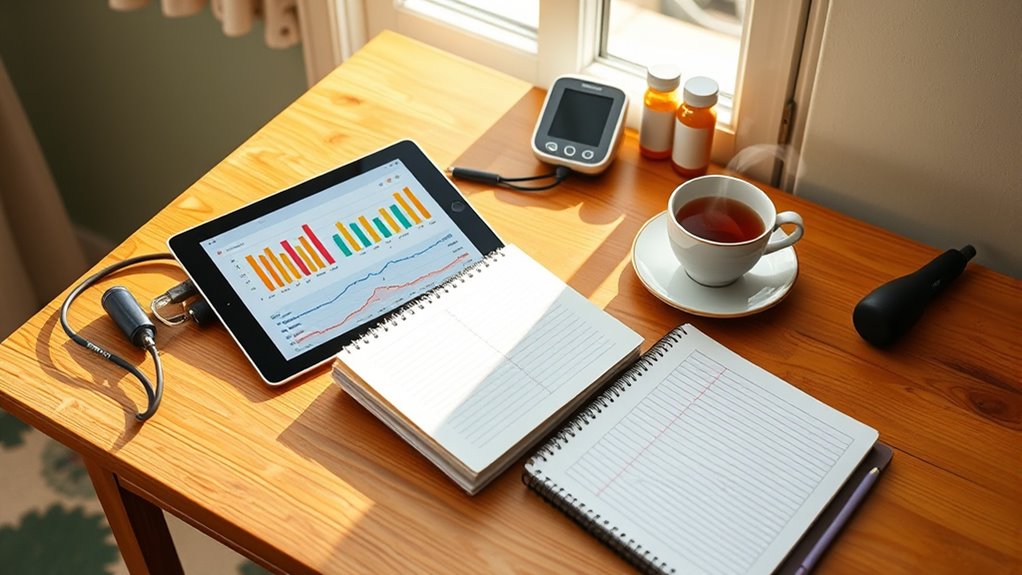

Managing chronic conditions with home logs helps you gain control by tracking symptoms, medication, and triggers regularly. Using digital apps or journals, you can monitor trends over time, enabling better communication with healthcare providers and informing treatment adjustments. Staying consistent with your logs boosts confidence and motivates you to stay proactive. Tips like reminders and secure sharing make the process easier. Continue exploring how effective logging can empower your health journey.
Key Takeaways
- Regularly recording symptoms, medication, and lifestyle factors helps identify triggers and patterns affecting chronic conditions.
- Using digital tools with reminders ensures consistent logging and accurate health tracking over time.
- Analyzing logs with charts and trend analysis enables better treatment adjustments and proactive management.
- Sharing secure, detailed reports with healthcare providers enhances communication and personalized care.
- Establishing routines and motivation techniques supports sustained engagement in home health logging.
Understanding the Benefits of Home Logging

Home logging can considerably improve how you manage chronic conditions by giving you a clear, real-time picture of your health. One major benefit is clarity—you can identify patterns and triggers more easily, helping you make informed decisions about your care. When you track your symptoms, medications, and lifestyle habits consistently, you gain a better understanding of what works and what doesn’t. This clarity not only helps you communicate more effectively with your healthcare providers but also boosts your confidence in managing your condition. Additionally, home logging supports motivation strategies. Seeing your progress over time keeps you engaged and encourages you to stick with your treatment plan. Regular logging can also familiarize you with notable titles and storytelling techniques that enhance your understanding of health narratives. Ultimately, regular logging empowers you to stay proactive and take control of your health journey.
Choosing the Right Tools for Your Logs

Choosing the right tools for your logs can make tracking your health more efficient and tailored to your needs. If you prefer digital tools, explore apps designed for health monitoring; they often include reminders, easy data entry, and visual charts. Digital apps are convenient for quick updates and can synchronize across devices, making it easy to review your progress. On the other hand, paper journals offer a tangible way to record daily details without technology distractions. They allow flexibility in format and can be customized with notes, doodles, or color coding. Consider your lifestyle, comfort with technology, and how you prefer to engage with your health data. The key is selecting tools that you’ll consistently use, making your home logs a reliable part of managing your chronic condition. Trustworthy tools ensure your logs remain accurate and dependable over time.
What to Record in Your Daily Log

Knowing what to record in your daily log is essential for accurately tracking your health and identifying patterns. Focus on medication tracking by noting the times you take your meds, dosages, and any missed doses. This helps guarantee consistency and reveals how your medication affects your condition. Symptom documentation is equally important; record any discomfort, pain levels, fatigue, or other symptoms you experience, including their severity and duration. Include related factors like diet, exercise, stress, or sleep changes that might influence your condition. Being detailed and consistent in what you log allows you and your healthcare provider to spot trends and make informed decisions. Keep your entries clear and organized to maximize the usefulness of your daily log. Additionally, paying attention to paint sprayer technology can inspire you to find new ways to improve your daily routine and productivity.
Tips for Staying Consistent and Motivated
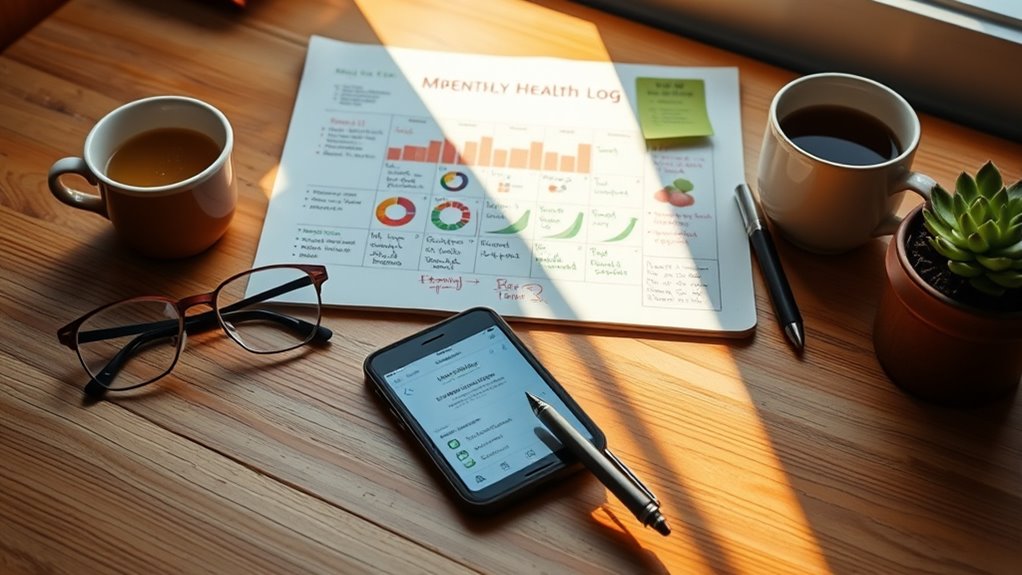
To stay consistent and motivated, set up routine reminders that keep you on track without extra effort. Celebrating small wins along the way helps you recognize progress and stay encouraged. By combining these strategies, you’ll find it easier to maintain your health habits consistently. Incorporating persistent effort into your routine can also help build resilience and ensure long-term success.
Establish Routine Reminders
Have you ever struggled to remember your medication schedule or daily health tasks? Establishing routine reminders can help you stay consistent and motivated. Use alarms or smartphone notifications to support medication adherence and emotional tracking. Create a simple chart to keep track of your reminders:
| Time of Day | Task | Reminder Method |
|---|---|---|
| Morning | Take medication | Phone alarm |
| Afternoon | Check emotional state | App notification |
| Evening | Log daily progress | Calendar alert |
These reminders help reinforce habits, reduce missed doses, and keep you aware of emotional shifts. Consistency is key—by setting clear, repeatable cues, you turn health management into a routine rather than a chore. Proper management of your health data ensures better tracking and adherence.
Celebrate Small Wins
Ever feel like celebrating small victories is unnecessary when managing a chronic condition? Think again. Recognizing these wins keeps you motivated and builds confidence. Use motivational quotes to remind yourself of progress, no matter how small. Sharing your achievements with community support groups can boost your morale and provide encouragement. Celebrating small wins reinforces positive habits and makes the journey less overwhelming. It’s easy to overlook progress when you’re focused on long-term goals, but acknowledging each step keeps you moving forward. Remember, every effort counts, and even minor improvements deserve recognition. By celebrating these moments, you create a positive mindset that helps you stay consistent and resilient in managing your condition. One way to maintain motivation is by tracking your progress with home logs, which provide tangible evidence of your efforts. Small wins are the building blocks of lasting success.
Analyzing Your Data to Detect Patterns

How can you identify meaningful changes in your health data? Start by using data visualization tools like charts and graphs to spot fluctuations over time. Visuals make it easier to see patterns or irregularities that might go unnoticed in raw numbers. Next, perform trend analysis to determine if certain behaviors or symptoms repeatedly occur in specific contexts, such as after meals or during stressful periods. Look for consistent rises or drops in key metrics like blood sugar, blood pressure, or pain levels. By regularly analyzing your data, you can gain insights into what influences your condition. Recognizing these patterns helps you make informed decisions about your health management, ultimately supporting better control and improved quality of life. Additionally, understanding how AI-powered analysis can assist in detecting subtle health trends can further enhance your ability to manage chronic conditions effectively.
Sharing Your Logs With Healthcare Providers

Sharing your logs with healthcare providers guarantees they have a complete picture of your health patterns. It helps them make better-informed decisions and adjust treatments effectively. However, privacy concerns and data security are important considerations. To share your logs safely, consider these tips:
- Use secure platforms that encrypt your data to protect your privacy.
- Verify that your healthcare provider has proper data security measures in place.
- Limit shared information to only what’s necessary for your care.
- Be aware of angel number meanings that could offer additional insights into your health and relationships.
Incorporating Technology for Easy Tracking
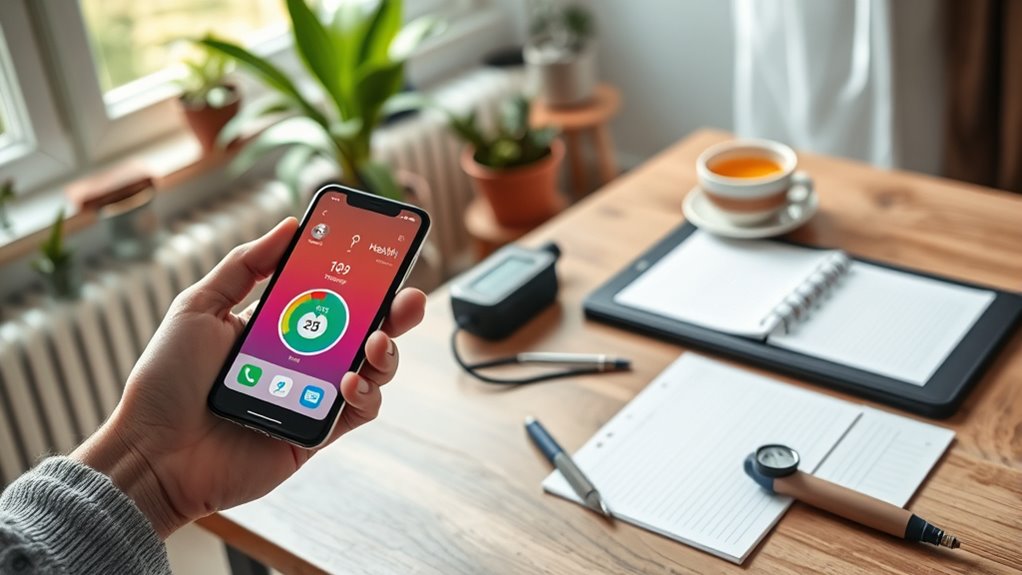
Incorporating technology makes tracking your chronic condition easier and more accurate. Digital integration allows you to connect your logs seamlessly with health apps, wearable devices, and online portals, streamlining data collection. Many tools feature user-friendly interfaces, so you won’t struggle to input or access your information. These platforms often include alerts and reminders that help you stay consistent without feeling overwhelmed. By using digital tools, you can monitor trends over time and share detailed reports with your healthcare provider effortlessly. This integration reduces manual effort and minimizes errors, giving you confidence in your tracking. Understanding store hours can help you plan your health-related shopping or appointments more effectively. Embracing technology helps you stay organized and informed about your health, empowering you to manage your condition proactively.
Overcoming Common Challenges in Maintaining Logs

Maintaining consistent logs for your chronic condition can be challenging, especially when daily routines are busy or unpredictable. To stay on track, try using motivation techniques like setting small, achievable goals or rewarding yourself for consistency. Address privacy concerns by choosing secure methods, like encrypted apps or written logs stored safely. Here are some ideas to help you overcome common challenges:
Keep your logs consistent with small goals, rewards, and secure methods to stay on track with your health.
- Establish a routine to log at the same time each day.
- Use reminders or alarms to prompt logging.
- Keep your logs private by using secure tools or physical notebooks.
- Understanding data security can help you choose the best methods to protect your health information.
Using Logs to Adjust Your Treatment Plan

Using your logs to adjust your treatment plan allows you to identify patterns and make informed decisions about managing your condition. By reviewing your medication management records, you can see if certain dosages or timing need modification for better effectiveness. Stress tracking helps you recognize triggers that may worsen symptoms or impact your health. If you notice increased stress levels correlating with symptom flare-ups, you can discuss stress reduction strategies with your healthcare provider. Regularly analyzing these logs enables you to fine-tune your treatment plan proactively, improving your overall well-being. Staying consistent with your entries ensures you gather accurate data, empowering you to make smarter choices about medications, lifestyle changes, and stress management techniques for better control of your condition.
Frequently Asked Questions
How Often Should I Review My Home Logs?
You should review your home logs daily or at least weekly. Regular reviews help verify medication adherence and catch any changes in symptoms early. By consistently tracking your symptoms, you can spot patterns or worsening signs that need medical attention. Make it a habit to check your logs often, so you stay proactive in managing your condition and communicate accurate information to your healthcare provider.
Can I Use Logs for Mental Health Management?
Using logs for mental health management is like having a mirror for your mind. You can track your moods, thoughts, and triggers with self-monitoring techniques, helping you gain insight. Journaling benefits include reducing stress and recognizing patterns. By consistently recording your feelings and behaviors, you empower yourself to identify what impacts your mental health positively or negatively, making it easier to communicate with professionals and develop effective coping strategies.
What Privacy Concerns Exist With Digital Logs?
You should be aware that digital logs raise privacy concerns, especially regarding data security and user confidentiality. When you store sensitive health information online, there’s a risk of unauthorized access or data breaches. To protect yourself, choose secure platforms with strong encryption and clear privacy policies. Always review how your data is handled and who has access, so you can confidently manage your chronic condition without compromising your privacy.
How Do I Handle Missing or Incomplete Entries?
Ever wondered what to do with missing or incomplete entries in your logs? You should prioritize data security by keeping your logs in a secure place and aim for log consistency. Fill in gaps as soon as possible, using notes or reminders to jog your memory. If you can’t, mark those entries clearly, so you and your healthcare team understand where data may be incomplete, ensuring accurate tracking and effective management.
Are There Professional Guidelines for Home Logging?
Yes, there are professional guidelines for home logging, especially concerning digital privacy and maintaining professional standards. Healthcare providers recommend using secure platforms that protect your data and adhere to privacy regulations like HIPAA. They also advise clear documentation practices to ensure accuracy and consistency. Following these guidelines helps you preserve confidentiality, supports your health management, and ensures your logs meet professional standards for quality and privacy.
Conclusion
By keeping detailed home logs, you take control of your health journey. But what if those quiet patterns you’ve been tracking hold the key to better treatment? The next step might surprise you—uncovering insights that could change everything. Stay consistent, stay curious, and keep recording. Your logs could reveal the missing piece your healthcare provider needs to open new possibilities. Are you ready to see what your data can truly do?