

To create an effective bedtime routine, start by optimizing your sleep environment with soft lighting, aromatherapy, and cozy bedding to signal relaxation. Stick to a consistent schedule to regulate your internal clock, and engage in calming activities like gentle stretches or journaling to unwind. Limit screen time and noise, and incorporate soothing scents to enhance relaxation. If you keep these tips in mind, you’ll discover more ways to make your nights truly restful.
Key Takeaways
- Create a calming sleep environment with dim lighting, soothing scents, and noise management to signal your body it’s time to unwind.
- Maintain a consistent bedtime schedule, including weekends, to regulate your internal clock and improve sleep quality.
- Limit screen time before bed and replace it with relaxing activities like reading, meditation, or gentle stretching.
- Use comfortable bedding, blackout curtains, and temperature control to enhance physical comfort and promote restful sleep.
- Incorporate aromatherapy, mindfulness, and relaxing routines to reinforce bedtime cues and foster mental calmness.

Fenmzee Bedside Table Lamp for Bedroom – Dimmable Touch, USB A+C, AC Outlet
- Touch Dimmable Control: Adjust brightness with a simple touch
- Multiple Charging Ports: USB-C, USB-A, and AC outlet included
- Easy Plug-and-Play Setup: Includes LED bulb, fabric shade, and stable base
As an affiliate, we earn on qualifying purchases.
As an affiliate, we earn on qualifying purchases.
Setting the Perfect Sleep Environment

Creating the ideal sleep environment is essential for a restful night. Start by controlling your lighting—use soft, decorative lighting like dimmable lamps or fairy lights to create a calming atmosphere. Bright lights can interfere with melatonin production, so keep lighting subdued as bedtime approaches. Incorporate bedroom aromatherapy with calming scents like lavender or chamomile to promote relaxation. Diffusers or scented pillow sprays can help set a peaceful mood. Keep your room cool, dark, and quiet to enhance sleep quality. Avoid screens and bright electronic devices near bedtime, as they disrupt your natural sleep cycle. By carefully choosing decorative lighting and adding soothing aromatherapy, you create a sanctuary that signals to your brain it’s time to unwind and prepare for restful sleep.
Establishing a Consistent Bedtime Schedule

Having a consistent bedtime schedule helps regulate your body’s internal clock, making it easier to fall asleep and wake up feeling refreshed. By sticking to the same sleep schedule, your body learns when it’s time to wind down and when to wake up, enhancing bedtime consistency. Set a regular bedtime that fits your routine and stick to it, even on weekends. This consistency helps improve sleep quality and reduces nighttime awakenings. Avoid staying up late or sleeping in excessively, as irregular sleep patterns can disrupt your circadian rhythm. Prioritize establishing a routine that you can maintain daily, ensuring your body becomes accustomed to a predictable sleep-wake cycle. Over time, this consistency will make falling asleep easier and morning wake-ups more natural.
Incorporating Relaxing Activities Before Bed

Incorporating relaxing activities into your bedtime routine can signal to your body that it’s time to wind down, making it easier to fall asleep. Try practicing meditation techniques to calm your mind and relax your muscles. Using aromatherapy blends with soothing scents like lavender or chamomile can enhance this calming effect. Creating a cozy environment helps reinforce your routine. To visualize, consider this setup:
| Activity | Recommended Products | Benefits |
|---|---|---|
| Meditation | Guided meditation apps | Reduces stress, quiets racing thoughts |
| Aromatherapy | Lavender essential oil diffuser | Promotes relaxation |
| Gentle stretching | Bedtime yoga routines | Eases muscle tension |
| Reading a book | Calm, light fiction | Shifts focus away from worries |
| Listening to calming music | Sleep playlists or nature sounds | Lowers anxiety, prepares mind for sleep |
Managing Light and Noise for Better Rest
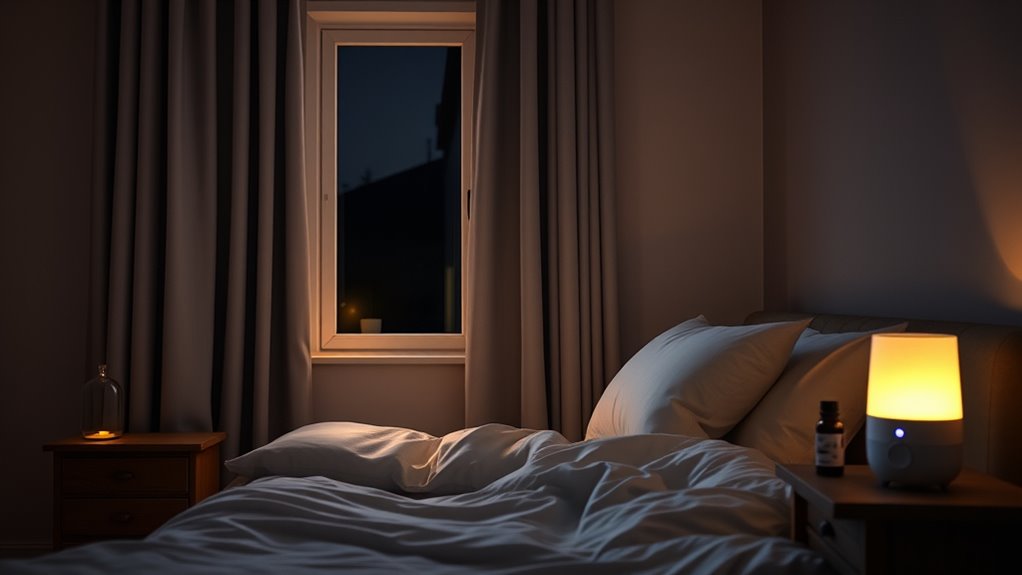
Controlling light and noise in your bedroom can make a big difference in your sleep quality. Using blackout curtains or a sleep mask helps block out unwanted light, while earplugs or white noise machines reduce disruptive sounds. Small adjustments like these can create a more peaceful environment for restful sleep.
Light Control Strategies
Managing light and noise in your bedroom is essential for a restful sleep. Dimming solutions, like bedside lamps or smart bulbs, help create a calming environment as you wind down. Blackout curtains are a game-changer, blocking out streetlights and early morning sun that can disrupt your sleep cycle. Keep electronics with bright screens out of the bedroom, or use dimming features if necessary. Consider installing a dimmer switch to easily adjust lighting levels in the evening. Establishing a consistent lighting routine signals to your body that it’s time to relax. Combining these strategies helps you control the brightness and minimizes external disturbances, setting the stage for uninterrupted, restorative sleep.
Noise Reduction Tips
Reducing noise in your bedroom is essential for achieving restful sleep, especially when external sounds can easily disturb your rest. Soundproofing techniques, like sealing gaps around windows and doors, add an extra layer of protection against noise. Consider adding heavy curtains or acoustic panels to absorb sound and minimize disruptions. White noise solutions, such as a fan, white noise machine, or calming nature sounds, can mask intrusive noises and create a consistent auditory environment. Keep electronic devices away from your sleep area to prevent unexpected sounds or notifications. Combining these strategies helps create a quieter, more peaceful space, making it easier to fall asleep and stay asleep throughout the night. With proper noise management, you’ll enjoy deeper, more restorative rest.
Choosing the Right Bedding and Sleep Accessories

Choosing the right bedding and sleep accessories can substantially improve your sleep quality. Start with luxury linens that feel soft against your skin and regulate temperature, making it easier to fall asleep and stay comfortable throughout the night. Opt for breathable sheets and pillowcases to prevent overheating. Incorporate sleep accessories like supportive pillows, eye masks, and white noise machines to create an ideal sleep environment. These items can block out light and noise, helping you relax faster. Consider investing in plush, cozy blankets that add comfort without overheating. The right combination of bedding and accessories not only enhances your sleep experience but also signals to your mind that it’s time to unwind. Prioritize quality and comfort to transform your nightly routine into a restful, rejuvenating ritual.
Limiting Screen Time and Stimulants

Creating a screen-free zone in your child’s bedroom helps them wind down without distractions. Limiting caffeine and sugar intake in the evening supports better sleep, while encouraging relaxing activities like reading or gentle stretching can ease their mind. Together, these steps set the stage for a peaceful, restful night.
Screen-Free Bedroom Zones
To help your child wind down effectively, establishing screen-free zones in the bedroom is essential. A tech detox before bed reduces stimulation and helps the mind relax. Keep electronic devices out of reach, and avoid placing them on bedside tables to prevent temptation. This not only limits screen time but also minimizes bedroom clutter, creating a calm environment. A clutter-free space promotes better sleep by reducing distractions and stress. Encourage your child to engage in calming activities like reading or journaling instead of scrolling through devices. Setting clear boundaries around screens fosters healthier habits and supports restful sleep. Remember, a dedicated screen-free zone helps establish a peaceful bedtime routine and signals it’s time to unwind.
Caffeine and Sugar Limits
Limiting caffeine and sugar intake in the hours before bedtime is essential for helping your child settle down and sleep soundly. Caffeine moderation is key—avoid giving them coffee, tea, or sodas late in the day, as these stimulants can disrupt sleep patterns. Similarly, reducing sugar intake in the evening helps prevent hyperactivity and keeps their energy levels steady. Opt for healthier snacks like fruit or whole grains instead of sugary treats. Keep an eye on hidden sources of caffeine and sugar, such as chocolate or certain medications. Establishing clear boundaries around these stimulants not only promotes better sleep but also supports overall wellness. By controlling caffeine and sugar consumption before bed, you’re helping your child wind down naturally and wake up refreshed.
Evening Relaxation Activities
Since screens and stimulants can interfere with your child’s ability to wind down, establishing evening relaxation activities is essential. Encourage mindful breathing exercises to help them relax and focus on calming sensations. This practice reduces stress and prepares their mind for sleep. Incorporate aromatherapy blends with soothing scents like lavender or chamomile to create a calming environment. Diffusing these aromas can enhance the atmosphere and signal that bedtime is approaching. Limiting screen time at least an hour before bed minimizes stimulation and prevents blue light from disrupting melatonin production. Instead, opt for quiet activities such as reading, gentle stretching, or listening to calming music. These mindful routines help your child transition smoothly into restful sleep, fostering a peaceful and relaxing bedtime environment.
Creating a Nighttime Wellness Routine

Creating a nighttime wellness routine can considerably improve your sleep quality and overall well-being. Start by incorporating calming activities like dream journaling, which helps process your thoughts and promotes restful sleep. Keep a journal nearby and jot down your dreams or any thoughts that come to mind, clearing your mind for the night ahead. Additionally, aromatherapy practices, such as diffusing lavender or chamomile essential oils, can create a soothing atmosphere that signals your body it’s time to wind down. Combine these with gentle stretching or deep breathing exercises to relax your muscles. Consistency is key—making these habits part of your nightly routine helps your mind and body associate them with sleep, leading to more restful nights and energized mornings.
Frequently Asked Questions
How Can I Improve Sleep Quality if I Have Insomnia?
To improve sleep quality with insomnia, start by creating a calm sleep environment—dark, cool, and quiet. Incorporate bedtime meditation into your routine to relax your mind and body. Avoid screens before bed, and stick to a consistent sleep schedule. These steps help signal your body it’s time to wind down, making it easier to fall asleep and stay asleep throughout the night.
What Are Natural Remedies for Nighttime Anxiety?
When anxiety clouds your mind like a storm, try soothing herbal teas or aromatherapy blends that gently calm your nerves. These natural remedies act as a lullaby for your senses, helping you drift into tranquility. Sipping chamomile or lavender tea and inhaling calming scents can reduce stress and promote relaxation, transforming your bedtime into a peaceful retreat. Embrace these simple, holistic solutions to ease nighttime anxiety naturally.
How Do I Adjust My Routine for Shift Workers?
To adjust your routine for shift work challenges, prioritize consistent sleep times even on days off. Use blackout curtains and white noise machines to mimic night, helping your body adapt. Incorporate flexible scheduling tips like brief naps before shifts and light exposure during work to boost alertness. Stay hydrated and avoid caffeine late in your shift. These steps help your body adjust and improve sleep quality despite irregular hours.
Can Certain Scents Enhance Sleep Comfort?
Certain scents can totally transform your sleep experience, making it feel like a serene paradise. Aromatherapy benefits are real, and calming scents like lavender, chamomile, or vanilla can considerably improve your sleep quality. These fragrances help reduce stress and create a peaceful atmosphere, so you drift off faster and wake up refreshed. Incorporate these scents into your bedtime routine for a natural, soothing way to enhance your sleep comfort effortlessly.
How Long Should a Bedtime Routine Ideally Last?
Your ideal bedtime duration is about 30 to 60 minutes, allowing enough time to wind down without overstaying. Maintaining routine consistency helps signal your body it’s time to sleep, making falling asleep easier. Stick to a similar schedule each night, including relaxing activities like reading or gentle stretching. This steady routine enhances sleep quality, so prioritize a calm, predictable bedtime to support your overall wellness and restful nights.
Conclusion
Follow this bedtime routine checklist, and you’ll transform your nights into a sanctuary of peace so serene, you’ll feel like you’re floating on a cloud of pure bliss. Say goodbye to restless tossing and turning, and hello to dreams so sweet they’ll make fairy tales jealous. With these simple steps, you’ll create a sleep environment so perfect, even the Sandman himself will be jealous of your nightly ritual. Sleep tight—your dreamland awaits!