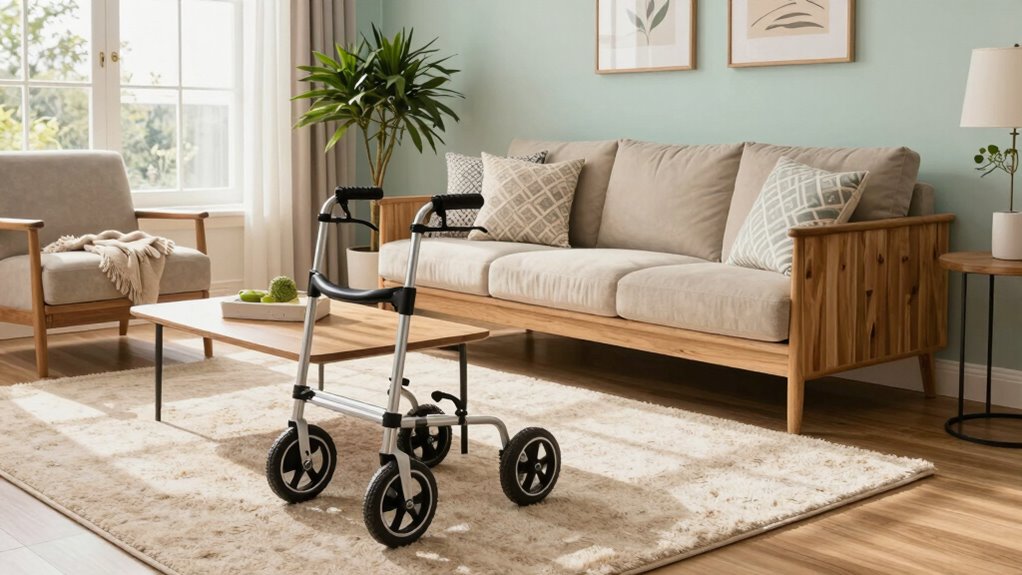
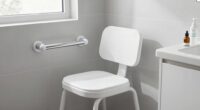
To arrange furniture around walkers and rollators, guarantee you create clear, wide pathways of at least 36 inches that are free of obstructions. Position larger pieces against walls to maximize open space and keep essential items within easy reach. Use visual cues like contrasting colors, patterns, or landmarks to help with navigation. Regularly assess your layout and reorganize if needed. Continuing will help you learn more tips for a safe, accessible, and comfortable living space.

Turn quiet afternoons into listening time
- Thousands of audiobooks, podcasts and originals
- Listen on your phone, tablet or Echo — also offline
- Cancel anytime
Key Takeaways
- Maintain at least 36 inches of clearance for smooth walker and rollator movement.
- Position large furniture against walls to create open, accessible pathways.
- Use contrasting colors and visual landmarks to guide navigation and improve visibility.
- Minimize clutter and bulky items that can block walkways or cause tripping hazards.
- Ensure furniture has stable bases, rounded edges, and is within easy reach for safety and comfort.
Products Worth Considering

Bowflex PR1000 Home Gym

Oral-B iO Series 5 Rechargeable Electric Toothbrush with Travel Case and 3 Brush Heads, Black

Bowflex SelectTech 840 Adjustable Kettlebell
As an affiliate, we earn on qualifying purchases.
How to Assess Your Space for Better Accessibility

Before rearranging your furniture, it’s vital to evaluate your space to guarantee it’s safe and accessible. Start by checking the layout for clear paths, ideally at least 36 inches wide, so you can move comfortably with a walker or rollator. Consider how decorative accents, like artwork or rugs, might block walkways or create tripping hazards. Lighting enhancements play a key role; make sure your space is well-lit, with adjustable or bright lighting to reduce shadows and improve visibility. Assess if furniture placement allows easy access to essential areas like the kitchen or bathroom. Remove or reposition bulky or unnecessary items that hinder movement. A thorough evaluation helps you create a safe, inviting environment while ensuring your decor and lighting choices support better accessibility. Additionally, paying attention to space planning principles can optimize your layout for both safety and comfort. Incorporating ergonomic arrangements can further enhance ease of movement and reduce strain. To improve overall functionality, consider adding mobility aids like grab bars or ramps where needed. You might also explore vacuum solutions to ensure your space remains clean and allergen-free without adding clutter.
Key Factors in Selecting Safe and Accessible Furniture Layouts
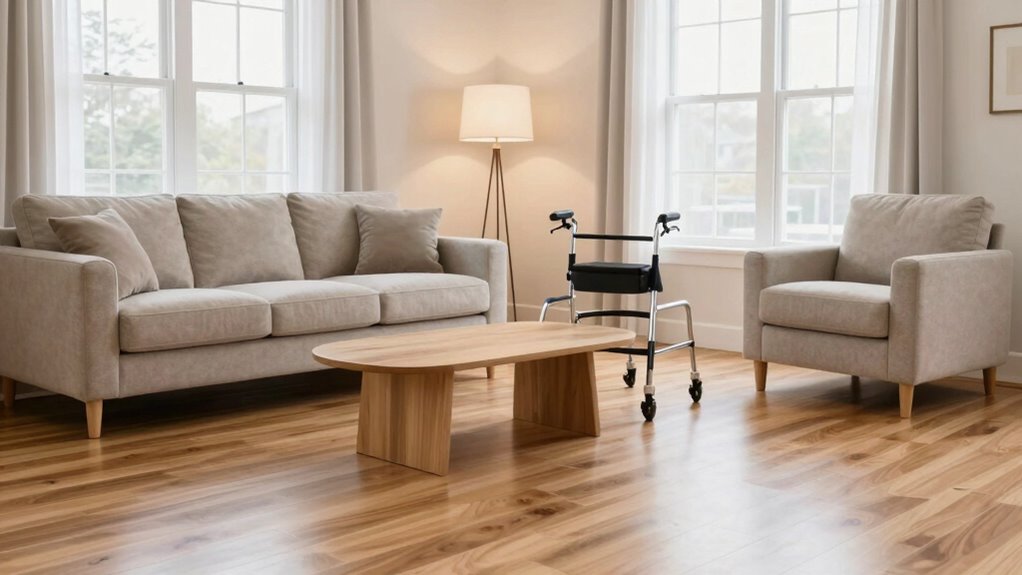
Choosing the right furniture layout is essential for *guaranteeing* safety and ease of movement around walkers and rollators. Focus on creating open, unobstructed pathways that allow smooth navigation. Select furniture pieces that are proportional to the space and avoid overcrowding. Incorporate decorative accessories and wall art thoughtfully; keep them lightweight and wall-mounted to prevent tripping hazards. Use these accessories to add personality without cluttering the area. Prioritize furniture with rounded edges and stable bases to minimize injury risks. Maintain clear sightlines and *assure* lighting highlights pathways and key areas. Incorporating environmentally conscious design choices, such as sustainable materials, can also contribute to a healthier living environment. Considering battery inverter generators and other energy-efficient devices can help reduce overall household risks and promote safety. Being mindful of spatial arrangement helps in creating a more functional and accessible environment. Proper space planning ensures that furniture placement supports independence and reduces hazards. By balancing aesthetics with functionality, you make your space both welcoming and safe, empowering you to move confidently and independently. Incorporating smart home safety features like motion-activated lighting can further enhance visibility and safety.
How to Arrange Furniture to Create Clear Pathways for Walkers and Rollators

Creating clear pathways for walkers and rollators requires intentional furniture arrangement that prioritizes unobstructed movement. Start by mapping out a main route that avoids tight corners or narrow spaces. Use decorative accents and wall art to draw attention away from cluttered areas and create visual flow. Consider these steps:
Create unobstructed pathways with strategic furniture placement and decorative accents for smooth navigation.
- Position larger furniture pieces against walls to keep walkways open.
- Make sure there’s at least 36 inches of clearance for easy navigation.
- Use wall art and decorative accents to fill empty wall space without adding obstructions.
Tips for Positioning Furniture to Minimize Clutter and Reduce Hazards
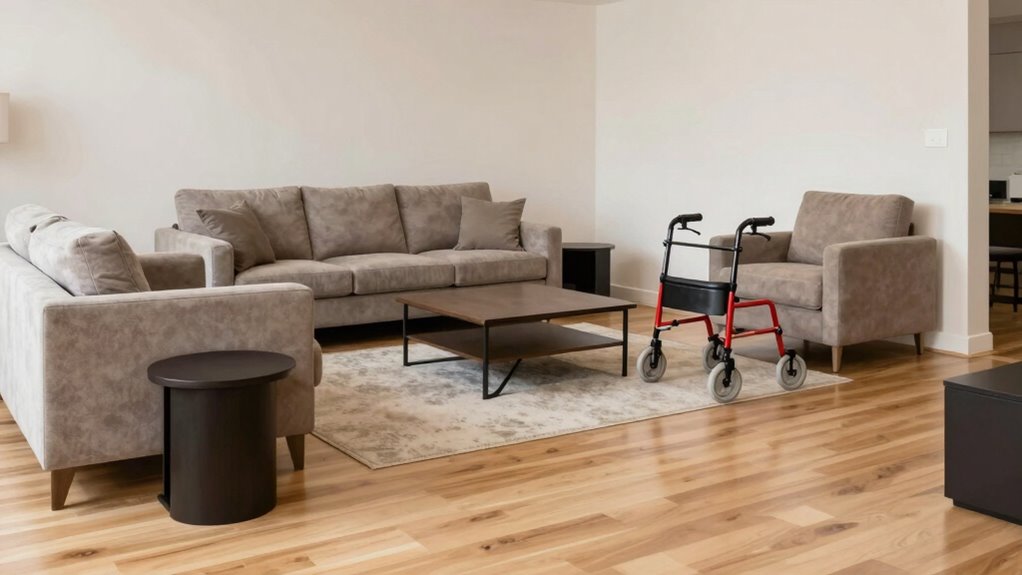
To minimize clutter and reduce hazards, you should carefully position your furniture to maintain clear, unobstructed pathways. Choose furniture styles that are low-profile and streamlined, making it easier to navigate around them. Keep decor accessories minimal and avoid bulky items that can block movement or cause tripping hazards. Place larger pieces against walls, ensuring they don’t intrude into walkways. Opt for multifunctional furniture to reduce the number of items in each space, and regularly reassess your layout to prevent clutter buildup. Incorporating emerging trends in digital publishing can help you discover innovative ways to visualize and plan your space more effectively. Additionally, selecting furniture with simple, clean lines can contribute to a safer environment by reducing visual clutter and making pathways more visible. Considering door swing directions during furniture placement can also prevent obstructions and facilitate easier access. Regularly updating your space based on sound healing principles may also promote a calming atmosphere that enhances safety and comfort. Paying attention to indoor air quality and humidity tips can further improve your environment by reducing allergens and maintaining comfort levels, making your space safer and more pleasant. By thoughtfully arranging your furniture and selecting functional decor accessories, you create a safer, more accessible environment. This approach helps prevent accidents and makes it easier to move around comfortably with your walker or rollator.
How to Use Visual Cues and Color Codes for Better Navigation

Using color codes and visual landmarks can help you navigate your space more easily. By assigning specific colors to different areas or objects, you create clear cues that guide your movement. Incorporating visual landmarks makes it simpler to recognize key spots and stay oriented. For example, you might use neutral color palettes to create a calming environment that aids in spatial awareness. Additionally, integrating visual cues can enhance overall safety and independence by providing intuitive signals for users. Incorporating landscape design elements that stand out can further improve navigation and help users distinguish various zones effortlessly. Using contrasting colors or patterns in flooring and furniture placement can also serve as effective visual landmarks to aid orientation. Employing recycled materials in gardening can add eco-friendly visual markers to outdoor spaces, making navigation more intuitive while supporting sustainability.
Color Coding for Clarity
Color coding is a simple yet effective way to improve navigation around walkers and rollators. By applying distinct colors to furniture and pathways, you create clear visual cues that guide movement and reduce confusion. Using strong color contrast helps differentiate areas, making it easier for you to identify safe routes quickly. To implement this effectively:
- Assign specific colors to different zones or furniture pieces to create a visual map.
- Use high-contrast colors for pathways and obstacles to enhance visibility.
- Keep color schemes consistent throughout the space for quick recognition.
This approach streamlines navigation, increases safety, and minimizes the risk of accidents. Effective color coding leverages visual cues that stand out, making your environment more intuitive and accessible.
Using Visual Landmarks
Visual landmarks serve as helpful reference points that make navigation safer and easier around walkers and rollators. You can use visual cues like decorative accents or distinct furniture arrangements to create clear pathways. Lighting enhancements, such as brighter bulbs or strategically placed lamps, also improve visibility. To further aid navigation, consider color coding specific areas with bold hues or contrasting tones. Here’s a suggested setup:
| Visual Landmark | Purpose |
|---|---|
| Decorative accents | Signal boundaries or hazards |
| Bright lighting | Enhance visibility |
| Color-coded rugs | Mark walking zones |
| Contrasting furniture | Define pathways |
| Unique wall art | Provide orientation clues |
Implementing visual landmarks can significantly improve safety and independence for users by providing consistent cues. These visual cues help you stay oriented, reduce confusion, and promote independence in your space.
Choosing Furniture That Supports Safety and Comfort
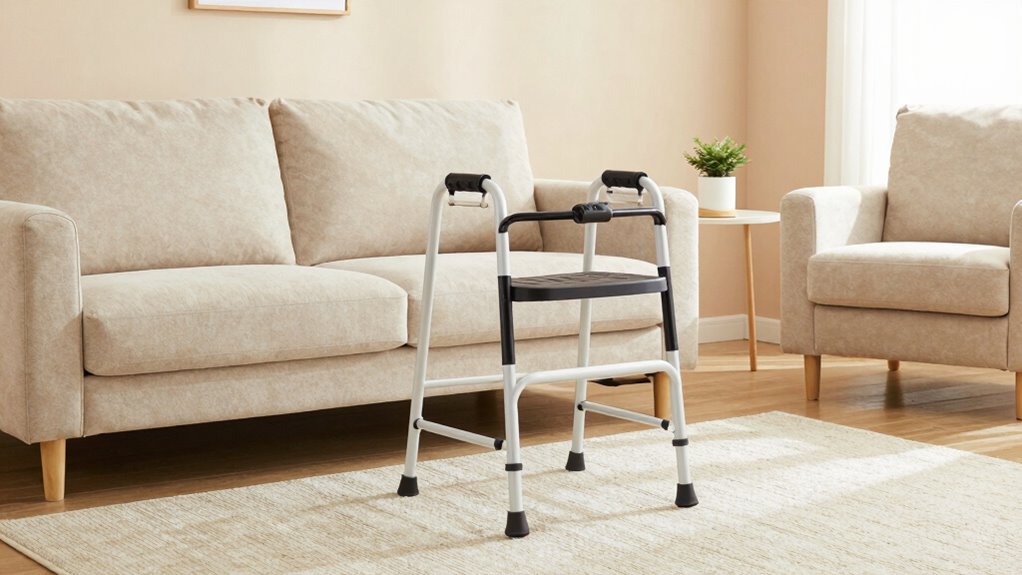
When selecting furniture, prioritize pieces with stable, non-slip surfaces to prevent accidents. Make sure tables and chairs are at an appropriate height and easy to reach without strain. This way, your space stays both safe and comfortable for easy navigation. Additionally, consider fireproof storage options for important documents and valuables to enhance overall safety. Incorporating appropriate wall finishes can also improve grip and reduce slips on certain surfaces. Using durable kitchen gear materials can further support safety in areas prone to spills or moisture. Regularly checking the battery safety features of your equipment can also help prevent hazards related to electrical malfunctions. Incorporating anti-fatigue mats into your workspace can provide additional comfort and reduce fatigue during prolonged standing.
Stable and Non-Slip Surfaces
Choosing furniture with stable, non-slip surfaces is essential for creating a safe and comfortable environment when using walkers or rollators. Ensuring your flooring is secure helps prevent slips and falls. Here are three tips to improve safety:
- Use non-slip mats under furniture legs or rugs to prevent shifting and sliding.
- Opt for secure flooring, such as vinyl or sealed hardwood, that provides traction.
- Avoid smooth, glossy surfaces that can be hazardous when wet or polished.
Appropriate Height and Reach
Ensuring your furniture is at the right height and reach is essential for safety and comfort when using walkers or rollators. Choose furniture with ergonomic design, which promotes proper posture and reduces strain. For example, tables and countertops should be at a height that allows you to work comfortably without bending or reaching excessively. Consider aesthetic considerations, but prioritize functionality—sleek furniture that’s too high or low can cause discomfort or accidents. Keep essential items within easy reach, such as remote controls, phones, or glasses. Adjust seating height if possible, ensuring your feet rest flat on the floor. Properly positioned furniture minimizes the risk of falls and makes movement more natural, boosting both safety and confidence in your space.
Adapting Your Layout for Different Rooms and Changing Needs
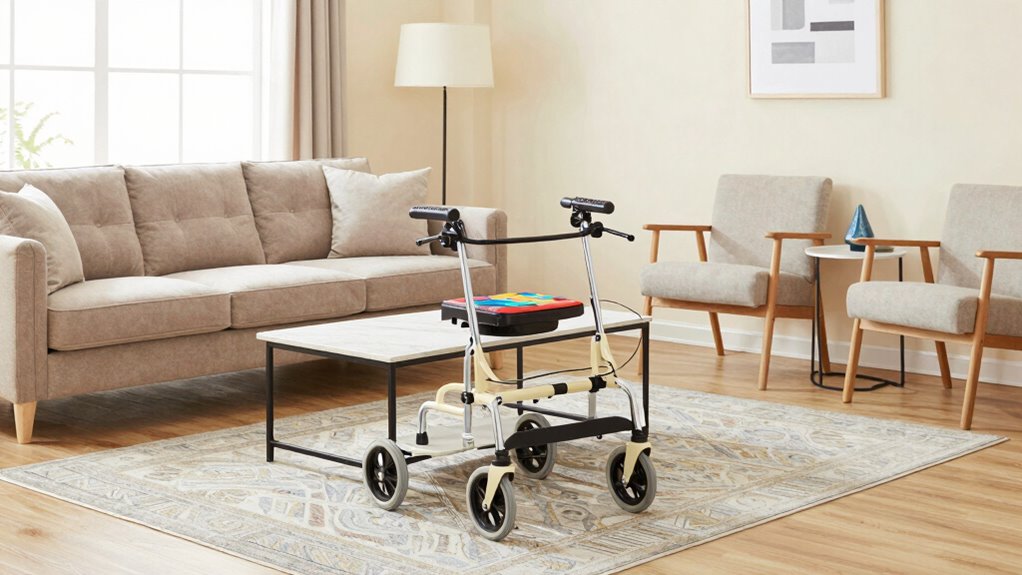
Adapting your furniture layout to suit different rooms and evolving needs can substantially improve safety and accessibility. When changing rooms or accommodating new mobility needs, consider how furniture aesthetics and decorative accents can enhance the space while ensuring clear pathways. To do this effectively:
- Rearrange furniture to create wide, unobstructed routes that suit your current mobility device and comfort.
- Use versatile furniture pieces that can serve multiple functions, reducing clutter and maintaining a cohesive look.
- Incorporate decorative accents that keep the room inviting without sacrificing safety, ensuring visual harmony while highlighting key areas.
Common Mistakes to Avoid When Arranging Furniture for Mobility Aids
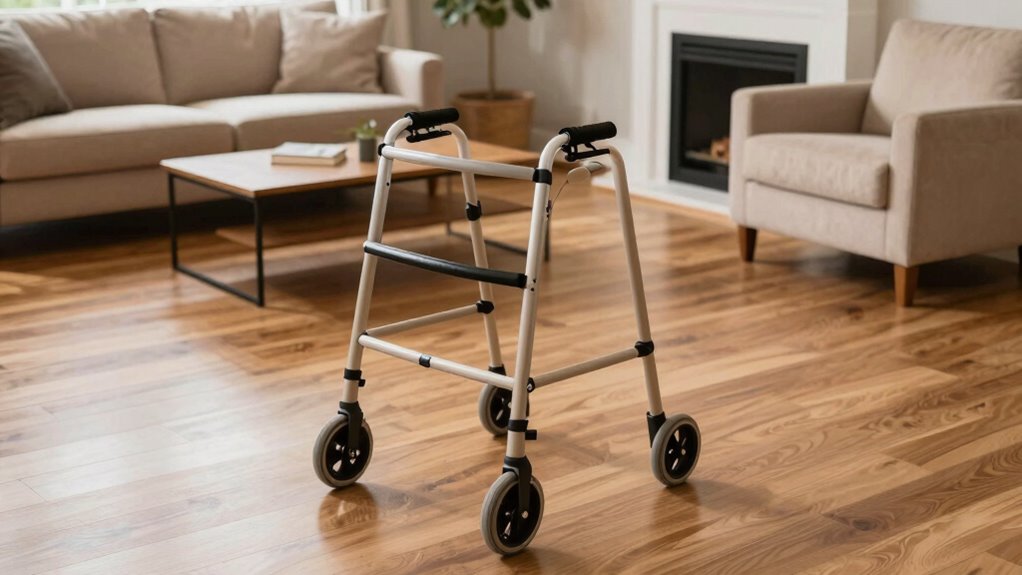
When arranging furniture around mobility aids like walkers and rollators, it’s easy to overlook common pitfalls that can compromise safety and ease of movement. One mistake is choosing furniture that doesn’t match your decorating style, which can lead to cluttered, awkward spaces. Avoid bulky or heavy furniture materials that are difficult to move or reposition if needed. Placing furniture too close together creates narrow pathways, increasing the risk of tripping or falling. Also, ignoring the flow of traffic can make navigation frustrating. Keep pathways clear and wide enough for your mobility aids. Don’t forget to factor in the durability and stability of furniture materials—fragile pieces can pose hazards. Staying mindful of these mistakes helps you create a safer, more functional space tailored to your needs.
Maintaining and Reorganizing Your Space as Your Needs Evolve

As your mobility needs change, regularly maintaining and reorganizing your space becomes essential to keep it safe and functional. As you adapt, consider how your personal preferences influence your environment. Incorporate decorative accents that reflect your style, making the space inviting without sacrificing accessibility. Reassess your furniture layout to guarantee clear pathways and easy access to essentials.
Here are three steps to help you stay organized:
- Regularly evaluate your space for obstructions and adjust furniture placement accordingly.
- Update decorative accents to suit your evolving tastes while maintaining safety.
- Reconfigure furniture as needed to accommodate changes in your mobility, ensuring your space remains comfortable and accessible.
Staying proactive helps you create a safe, personalized environment that adapts to your needs.
Frequently Asked Questions
How Do I Measure Doorways for Walker and Rollator Clearance?
To measure doorways for walker and rollator clearance, start by measuring the doorway width with a tape measure, making sure it’s wide enough for the device plus some extra space for easy passage. Check the clearance height from the floor to the top of the door frame, confirming it accommodates the tallest walker or rollator you plan to use. These measurements help ensure smooth access without getting stuck or causing damage.
What Furniture Materials Are Safest for Mobility Aid Users?
You should choose furniture with non-slip surfaces and rounded edges, as these features considerably reduce fall risks—studies show that 80% of falls happen due to sharp corners or slippery surfaces. Opt for materials like softwood, padded fabric, or textured surfaces, which provide better grip and safety. Avoid glass, polished metal, or sharp-edged furniture, ensuring your space remains secure and comfortable for mobility aid users.
How Can I Prevent Furniture From Tipping Over?
To prevent furniture from tipping over, focus on enhancing furniture stability with anti-tip devices like straps or brackets. Secure taller or heavier pieces to the wall, especially in high-traffic areas. Keep furniture with a low center of gravity and avoid placing heavy items on top of unstable furniture. Regularly check and tighten anti-tip devices, ensuring safety for mobility aid users. This proactive approach minimizes tipping risks and creates a safer environment.
Are There Specific Colors That Improve Navigation for Mobility Aids?
Bright, high-contrast colors improve navigation for mobility aids by providing clear visual cues. You should use color contrast—like dark furniture against light walls or vice versa—to help distinguish obstacles. Incorporate noticeable colors, such as red or yellow, on key furniture edges or pathways. These visual cues help you better perceive obstacles, making navigation safer and easier around your home.
How Often Should I Reassess My Furniture Layout for Safety?
You should reassess your furniture layout every few months—because who doesn’t love a fresh maze? Regularly updating your space guarantees your decorating tips and accessibility considerations stay up-to-date. If you notice difficulty maneuvering or new mobility needs, it’s time for another round of rearranging. Staying proactive helps prevent accidents, keeps your home stylish, and guarantees your walker’s adventure remains a smooth, obstacle-free journey.
Conclusion
By thoughtfully arranging your furniture, you’ll create a safer, more comfortable space that adapts to your needs—much like a well-tended garden that flourishes with care. Remember, it’s an ongoing journey, not a one-time task. Keep evaluating and adjusting, and don’t be afraid to seek advice or use visual cues. With patience and attention, your home can become a haven of independence, where you feel supported, just like a trusted friend guiding you through life’s twists and turns.