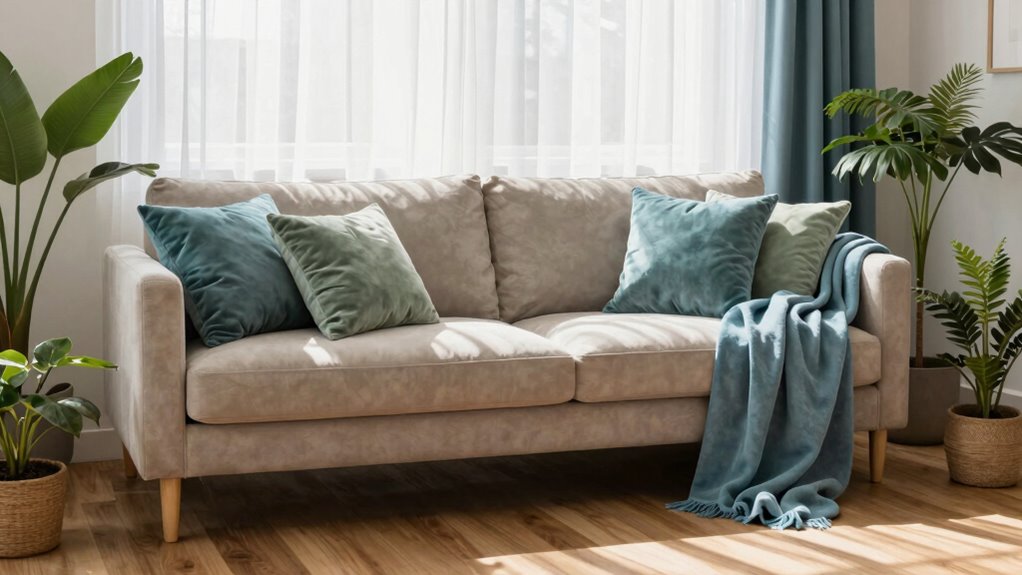

To use gentle blues and greens without making your room feel cold, balance these hues with warm neutrals like beige, taupe, or terracotta. Incorporate textured fabrics such as plush cushions, throws, and layered textiles to add visual warmth and comfort. Use warm lighting and metallic accents to soften the cool tones. Adding vibrant, warm-colored accessories can bring energy and coziness. Keep exploring ways to create a welcoming space that feels both calm and inviting.
Open a free Amazon Business account
Business pricing, bulk buying and tax-exempt orders.
As an affiliate, we earn on qualifying purchases.
Key Takeaways
- Incorporate warm neutrals like beige or taupe to balance cool blue and green tones.
- Use layered lighting with warm-toned bulbs and dimmable options to add warmth and depth.
- Add textured fabrics and cozy accents in warm colors to create visual warmth and comfort.
- Include natural elements, such as wood or plants, to soften the cool hues and enhance a welcoming feel.
- Opt for muted, softer shades of blue and green with warm undertones to maintain serenity without coldness.
As an affiliate, we earn on qualifying purchases.
How to Warm Up Blue and Green Decor
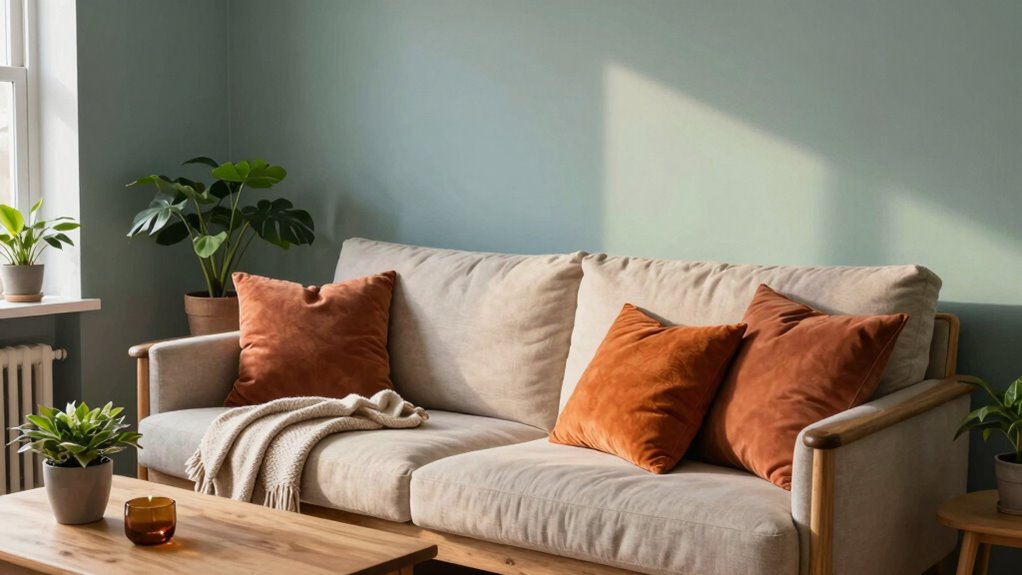
To make blue and green decor feel warmer and more inviting, start by incorporating earthy tones and natural textures. These elements create a strong foundation for achieving visual harmony, balancing the cool hues with warm accents. Use color contrast strategically, pairing deep blues with warm browns or terracotta to add depth. Incorporate natural materials like wood, rattan, or linen to soften the overall look and introduce tactile warmth. These textures and tones help prevent the space from feeling cold while enhancing the calming effect of blue and green. Additionally, choosing colorful accents such as warm-colored cushions or artwork can further elevate the cozy atmosphere. Incorporating essential oils with warming properties, like cinnamon or cardamom, subtly enhances the inviting ambiance through scent. Using sound therapy or calming music can also reinforce a relaxing environment and make the space feel even more welcoming. Paying attention to lighting choices can also significantly influence the warmth of the space by creating a soft, welcoming glow. This approach guarantees your decor exudes warmth without overpowering the soothing qualities of the gentle hues. For an extra layer of comfort, consider integrating ambient lighting options like dimmable lamps or warm-toned bulbs to enhance the cozy feel.
Understanding the Mood of Blue and Green Hues
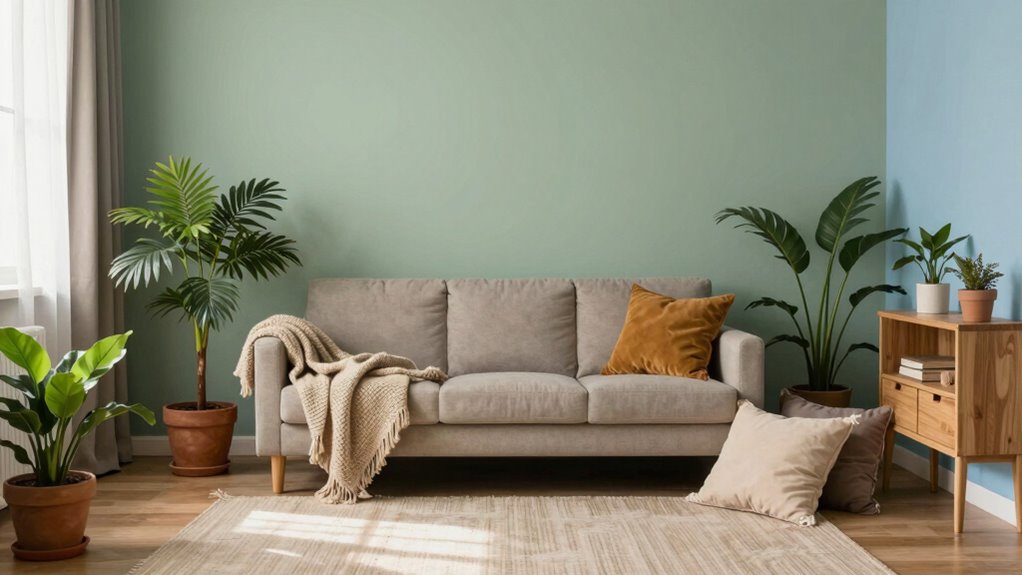
Blue can evoke feelings of tranquility or sadness, depending on how you use it, so consider the mood you want to create. Green has a calming influence that promotes relaxation and balance in your space. Together, these hues can shape a peaceful, soothing environment when chosen thoughtfully, especially when incorporating landscaping to soften their appearance and add natural warmth. Including color psychology in your design choices can help you achieve the desired atmosphere. A well-balanced use of these colors can also be enhanced by understanding their emotional impact, allowing you to craft a space that feels both inviting and harmonious. Incorporating smart home devices can also enhance the ambiance by allowing you to adjust lighting and colors easily to suit your mood.
Emotional Impact of Blues
Have you ever noticed how certain shades of blue and green can instantly influence your mood? That’s the power of color psychology—these hues evoke specific emotional resonance. Soft blues often create feelings of calm and trust, making you feel secure and relaxed. Meanwhile, deeper greens can evoke growth and renewal, fostering a sense of balance. To visualize this, consider the following:
| Shade | Emotional Impact |
|---|---|
| Pale Blue | Serenity, clarity |
| Navy Blue | Confidence, stability |
| Mint Green | Freshness, renewal |
| Forest Green | Nature, grounding |
| Sky Blue | Freedom, openness |
Understanding this emotional impact helps you craft spaces that nurture the mood you want to foster without feeling cold. Recognizing the importance of inclusive casting in decorating choices can further enhance the welcoming atmosphere of a space. Incorporating color psychology principles allows you to intentionally select hues that support the desired emotional environment, especially by balancing color temperature to avoid a room feeling too cold or sterile.
Green’s Calming Influence
Green hues are renowned for their calming influence, often creating a soothing atmosphere that promotes relaxation and tranquility. This is why green is frequently used in green therapy, which harnesses its natural calming effects to reduce stress and foster well-being. In your space, incorporating gentle greens can help establish calming environments where you feel safe and at ease. These hues evoke nature’s serenity, making rooms feel more inviting without appearing cold or sterile. When you choose soft greens, you encourage a peaceful vibe that’s perfect for unwinding or focusing. By understanding the mood of green, you can use it intentionally to balance your decor, creating a harmonious and restful setting that complements blue’s serenity. Color psychology plays a significant role in how green influences mood and atmosphere. Additionally, understanding the mental wellbeing index can guide you in selecting colors that support your emotional health and overall mental resilience, especially through color therapy techniques. Recognizing the importance of robust contingency plans in technology and other areas can also inspire you to design your living space with adaptable and resilient color schemes that promote long-term well-being. Moreover, considering emotional resilience can help you choose colors that foster a stable and positive environment for all seasons.
Choosing the Right Shades for a Cozy Feel
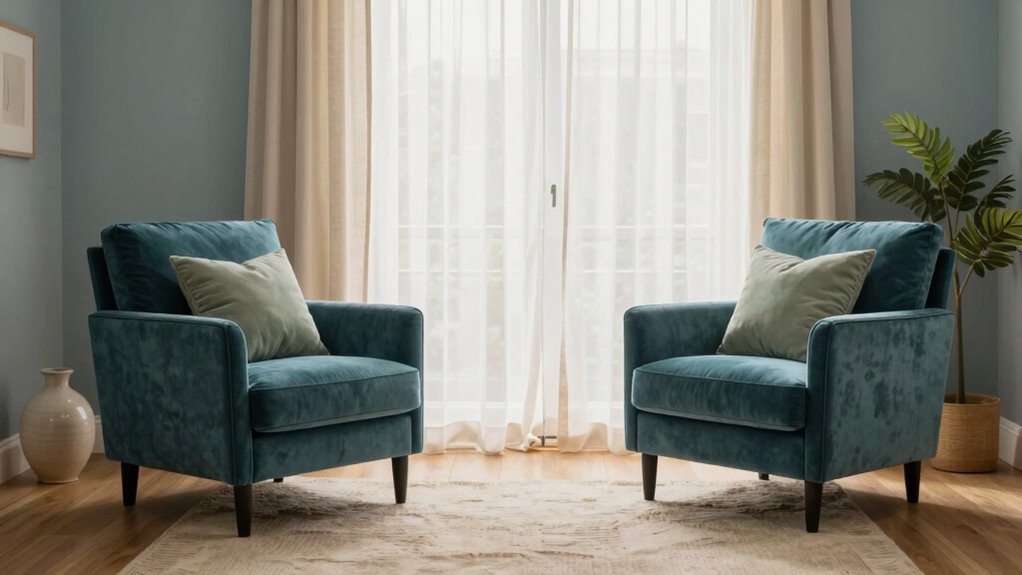
Wondering how to pick shades that make your space feel warm and inviting? The key lies in understanding color psychology and smart shade selection. Softer, muted blues and greens with hints of gray or warmth can create a cozy atmosphere without feeling cold. Look for shades with subtle undertones that add depth and richness. Avoid overly bright or icy tones, which can make a room feel distant. Instead, opt for colors that evoke calmness while maintaining a sense of warmth. When choosing your shades, consider how they interact with natural light and your existing décor. The right combination will make your space welcoming and soothing, perfect for relaxing and unwinding. Paying attention to color undertones can help you select shades that enhance the room’s emotional ambiance, especially by understanding their impact on environmental factors like temperature perception. Incorporating knowledge about precious metals in design, such as accents in gold or silver, can also subtly elevate the warmth and sophistication of your space. Additionally, integrating elements like vetted living solutions can help create a balanced and inviting environment that feels both warm and modern.
Balancing Cool Colors With Warm Neutrals

To create a balanced and inviting space, incorporate warm neutrals alongside your cool blues and greens. Color psychology shows that warm neutrals like beige, taupe, or soft browns add coziness and grounding energy, preventing the room from feeling too cold. When selecting shades, opt for warm neutrals with subtle undertones that complement your cool tones without overpowering them. This contrast helps create harmony and visual interest. Consider using warm neutrals on large surfaces like walls or flooring, then add cool blues and greens through accent pieces like pillows, artwork, or accessories. The key is in shade selection—choose neutrals that warm up the space naturally, fostering a welcoming atmosphere without sacrificing tranquility. Incorporating Color psychology principles can further enhance the mood and harmony of your room. Understanding home design details such as door swings or stair proportions can also influence how colors are perceived and how the space flows visually, contributing to a cohesive overall aesthetic. Additionally, paying attention to lighting conditions can significantly affect how these colors appear and interact throughout the day.
Adding Textured Fabrics and Layers for Comfort
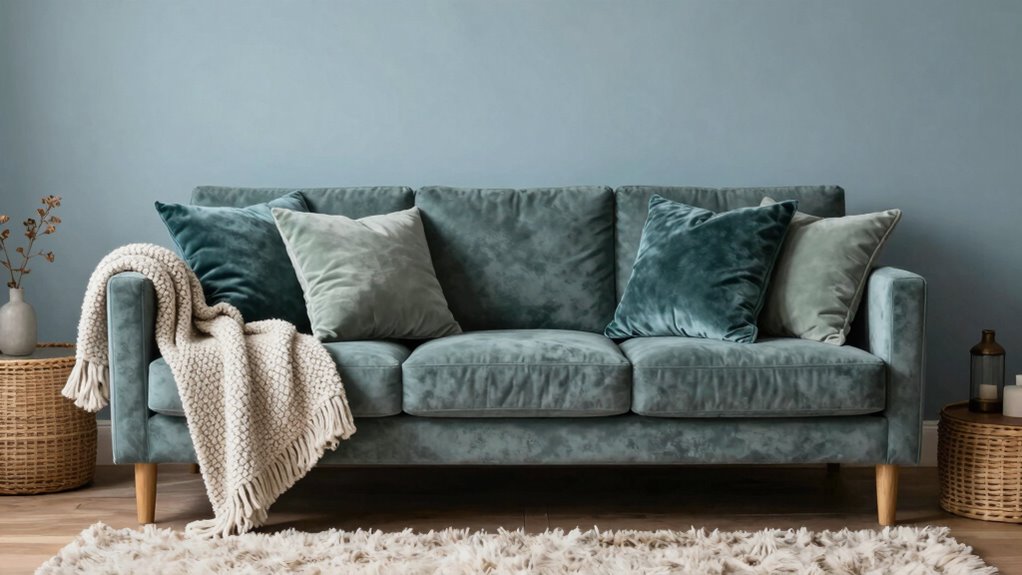
Adding textured fabrics and layers instantly enhances comfort and visual interest in your space. Incorporate soft textiles like plush cushions or cozy throws, and mix different fabrics to create depth. These simple touches make your room feel inviting and effortlessly stylish.
Incorporate Soft Textiles
Soft textiles instantly enhance the comfort and visual appeal of your space, especially when you layer textured fabrics. Incorporate silk throws to add a smooth, luxurious touch that catches the light and softens the overall look. Velvet cushions bring depth and richness, creating a cozy atmosphere without making the room feel heavy. Mix these textures to add visual interest and tactile variety, inviting you to relax more fully. Choose cushions and throws in gentle blues or greens to maintain the calming color scheme. These textiles not only make your space more inviting, but they also add subtle layers of color and texture that keep the room from feeling cold or sterile. Keep it simple, and let the soft fabrics do the work of creating warmth and comfort.
Layer With Varied Fabrics
Layering with varied fabrics creates a dynamic and inviting space that feels both cozy and thoughtfully curated. Mix different fabric patterns, like subtle stripes or delicate florals, to add visual interest and depth. Incorporate color blocking by pairing fabrics in shades of blues and greens, creating contrast without overwhelming the space. Use textured textiles, such as velvet, linen, or boucle, to enhance tactile appeal and warmth. Combining these layers helps balance cool tones with cozy comfort, making the room feel more inviting. Don’t be afraid to experiment with different textures and patterns, as they can elevate the overall aesthetic while maintaining a calm, soothing atmosphere. This approach guarantees your room feels layered, lively, and perfectly tailored to your style.
Using Warm Lighting to Create an Inviting Atmosphere
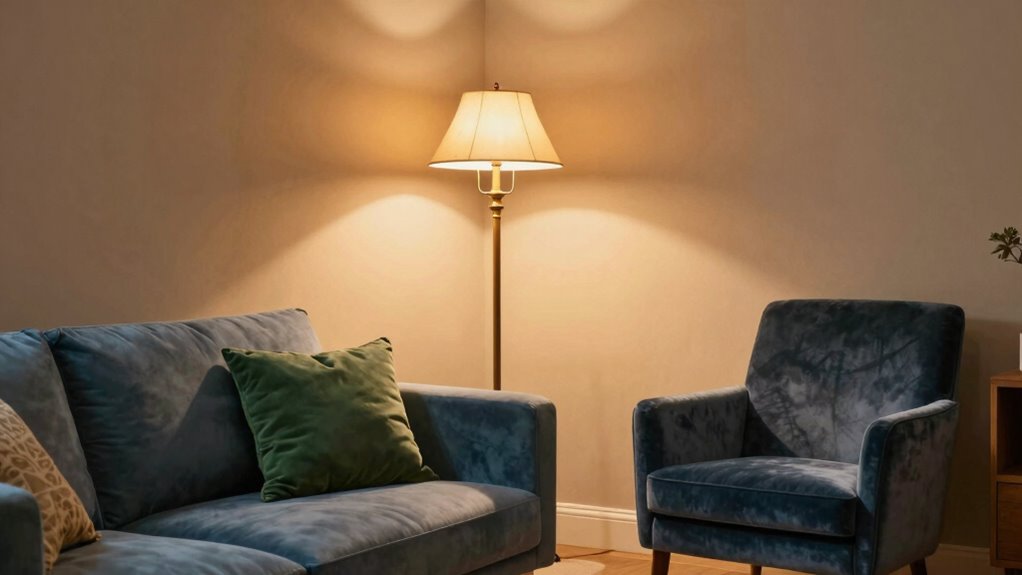
Warm lighting instantly makes a space feel more inviting and comfortable, encouraging relaxation and conversation. By using artificial illumination with warm tones, you tap into color psychology, which influences mood and perception. To create a cozy atmosphere, consider these tips:
- Choose bulbs with a warm color temperature (around 2700K to 3000K) to add softness.
- Use dimmable lighting to adjust brightness for different moods and times of day.
- Incorporate layered lighting—table lamps, wall sconces, and ceiling fixtures—to add depth and warmth.
These strategies help balance gentle blues and greens, preventing the room from feeling cold or sterile. Warm lighting enhances the room’s overall harmony, making it welcoming without overpowering the calming color palette.
Incorporating Metallic Accents and Earthy Tones
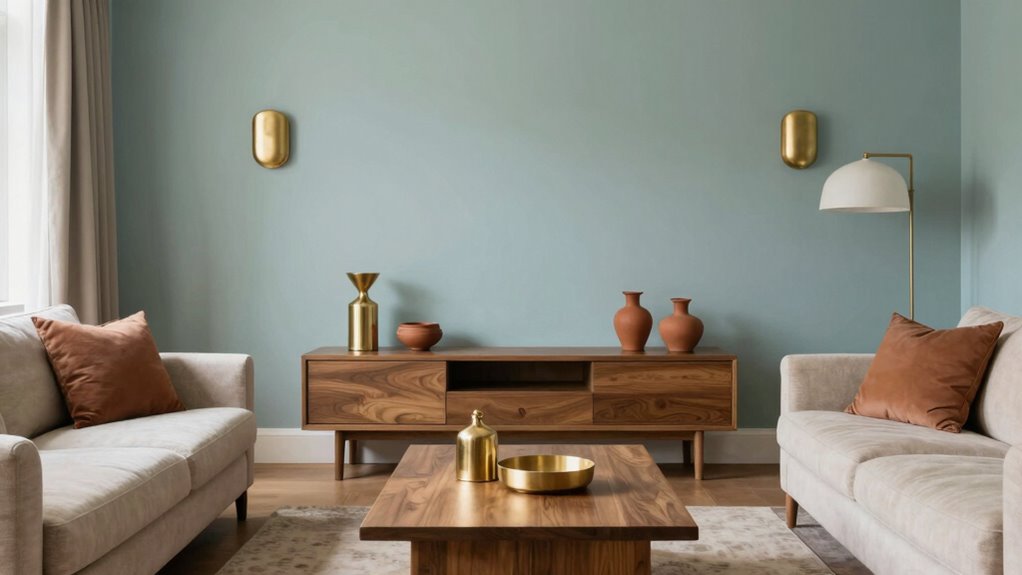
Adding metallic accents and earthy tones enhances the inviting atmosphere created by warm lighting, allowing you to introduce natural textures and subtle shine that complement gentle blues and greens. Metallic reflections, like bronze or brushed gold, add sophistication without overpowering. Earthy accents such as terracotta, rust, or warm wood bring grounded warmth and texture. These elements create visual interest and balance, preventing the room from feeling cold or sterile. Use metallic accessories like picture frames or lamps, and incorporate earthy tones through rugs, cushions, or pottery. Here’s a quick guide:
| Metallic Reflections | Earthy Accents | Effect |
|---|---|---|
| Gold, Bronze | Terracotta | Adds warmth and elegance |
| Copper, Silver | Warm woods | Creates natural depth |
| Brushed finish | Rust hues | Enhances cozy, inviting atmosphere |
Enhancing Warmth With Vibrant and Warm-Colored Accessories
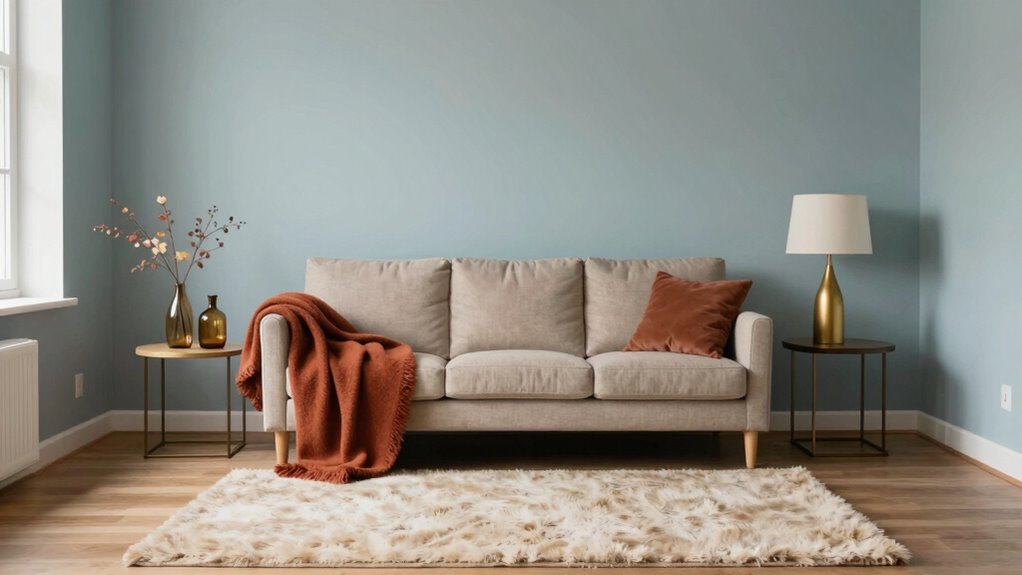
Adding bold accent pieces instantly boosts warmth and energy in your space. Incorporate warm textured fabrics, like plush throws or velvet pillows, to create a cozy feel. These vibrant accessories make your gentle blues and greens feel more inviting and lively.
Incorporate Bold Accent Pieces
To truly bring warmth into your space, incorporate bold accent pieces that feature vibrant and warm-colored accessories. These pieces create striking color contrast and draw the eye, making your room feel inviting rather than cold. Choose items like brightly colored throw pillows, art pieces, or decorative vases that stand out against your soft blues and greens. These accents add energy and personality, balancing the calming hues with lively touches. Think about adding:
- Bold, warm-toned artwork or sculptures
- Brightly colored cushions or throws
- Vibrant decorative objects or lamps
Use Warm Textured Fabrics
Building on your bold accent pieces, incorporating warm textured fabrics can further enhance the inviting feel of your space. Textile textures like plush throws, woven cushions, and soft rugs add physical warmth and visual interest. These fabrics tap into color psychology by creating a cozy atmosphere that balances gentle blues and greens. Choosing fabrics in warm hues—such as burnt orange, deep reds, or golden yellows—injects vibrancy without overwhelming the calming palette. The tactile quality of textured textiles invites touch, making your space feel more intimate and welcoming. Using a variety of textures also prevents the room from feeling cold or sterile. Overall, warm textured fabrics are an effective way to reinforce warmth, adding depth and comfort to your soothing color scheme.
Tips for Making Blue and Green Walls Feel Welcoming

Blue and green walls can create a calming atmosphere, but making them feel inviting requires thoughtful touches. To achieve this, consider how color psychology influences mood and perception. Incorporate warm accents to balance the cool tones, creating a more welcoming space. Think about adding soft lighting, plush textiles, or natural wood furniture to enhance interior balance. These elements help prevent the walls from feeling too cold or distant. You can also introduce artwork or decorative accessories in warm hues to add visual warmth and personality. Focus on creating a harmonious blend of colors and textures, which makes the space feel cozy yet peaceful. Small details like these make your blue and green walls feel inviting without losing their soothing effect.
Avoid These Mistakes That Make Your Space Feel Chilly
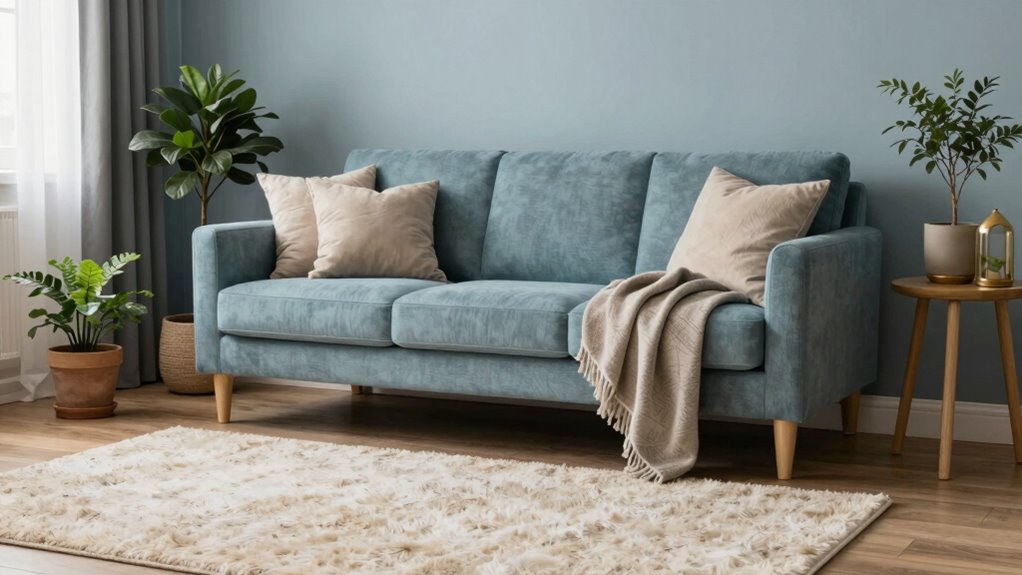
Have you ever noticed your space feeling colder or less inviting despite the calming colors? This often happens when you overlook the principles of color psychology and design balance. Using too much cool blue or green without complementing it with warm accents can make a room feel chilly. Avoid overusing these hues in large areas, which can create a sense of coldness. Instead, balance your palette with warm neutrals or metallic accents to add warmth and depth. Also, neglecting proper lighting can amplify the chilly vibe; guarantee your space has layered lighting to create a cozy atmosphere. Remember, achieving harmony in color and design balance prevents your room from feeling cold, making it more welcoming and comfortable.
Frequently Asked Questions
How Can I Incorporate Blue and Green Without Overwhelming the Space?
You can incorporate blue and green by balancing natural light and choosing complementary accents. Use soft shades to keep the space feeling warm and inviting, and let natural light highlight these colors without overwhelming the room. Add neutral or warm-toned accessories, like cushions or artwork, to create harmony. This approach guarantees your blue and green elements blend seamlessly, avoiding a cold feeling while maintaining a fresh, calming atmosphere.
What Are the Best Color Combinations to Warm up Blue and Green?
Think of your space as a cozy garden. To warm up blue and green, add a complementary accent like warm metallics—think gold or brass—and lush, earthy tones like terracotta. These elements act as the sun’s glow, balancing the cool colors. Use warm metallic decor or accessories to create a welcoming atmosphere, making your room feel inviting rather than chilly.
Can I Use These Colors in Small Rooms Without Making Them Feel Colder?
Yes, you can use gentle blues and greens in small rooms without making them feel colder. Focus on color psychology; lighter shades can make the space feel airy, while adding warm accents like wood or soft textiles boosts coziness. Keep room size considerations in mind—avoid overly dark hues that might shrink the space visually. Instead, choose soft, muted tones to create a calming, inviting atmosphere without sacrificing the room’s openness.
How Do I Balance Cool Colors With Existing Warm Decor?
You can balance cool colors with warm decor by incorporating color psychology principles, which suggest using gentle blues and greens as accents rather than dominant shades. Add seasonal accents like warm-toned cushions or throws to create harmony. Keep cool colors in smaller areas or accessories, and let warm hues take center stage. This contrast maintains visual interest without making the space feel cold or uninviting.
Are There Specific Textures That Help Make Blue and Green Feel Cozier?
You’ll find textured fabrics, like plush velvets or chunky knits, make blue and green feel cozier, as they add warmth and tactile interest. Statistically, rooms with varied textures are 30% more inviting. Incorporate warm accent pieces—think warm-toned throws or wooden accessories—to balance the cool hues. These textures and accents soften the colors, creating a snug, welcoming atmosphere without sacrificing the calming effect of blues and greens.
Conclusion
By thoughtfully balancing gentle blues and greens with warm neutrals, textured fabrics, and inviting accents, you can transform your space into a cozy haven. Remember, even in times of turmoil, a well-designed room can feel like a warm hearth in the hearth of your home. Embrace these tips, avoid common pitfalls, and let your decor invite comfort and serenity—just like the soothing lullabies of yesteryear, turning your room into a timeless retreat.
Fall Picks
fall essentials
As an affiliate, we earn on qualifying purchases.