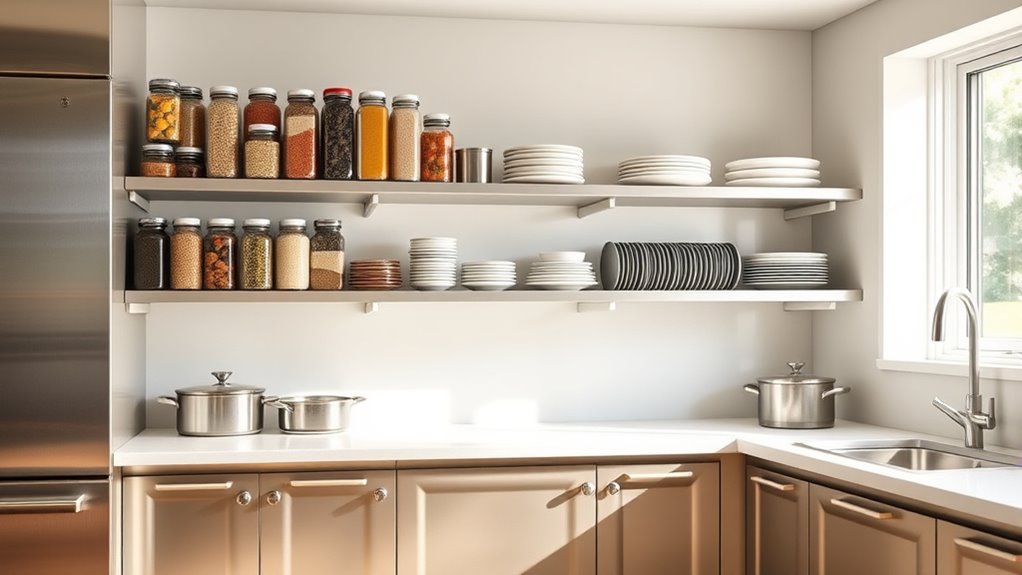

To guarantee safe kitchen storage heights, place frequently used items at eye level or just below for easy reach, while heavy cookware and appliances should go below eye level to prevent strain. For kids, store sharp objects high and secure heavy items low to avoid accidents. Use adjustable shelves and proper lighting to maintain organization and safety. Keep your space organized—there’s more tips to make your kitchen both safe and efficient if you keep exploring.
Key Takeaways
- Store heavy cookware and appliances below eye level to reduce lifting strain and prevent falls.
- Place frequently used items at eye level or just below for easy access and efficiency.
- Use adjustable shelving to tailor storage heights to user needs and prevent accidents.
- Keep sharp knives and hazardous materials in high, locked cabinets out of children’s reach.
- Regularly review and adjust shelf heights to accommodate changing needs and improve safety.
Optimal Heights for Frequently Used Items
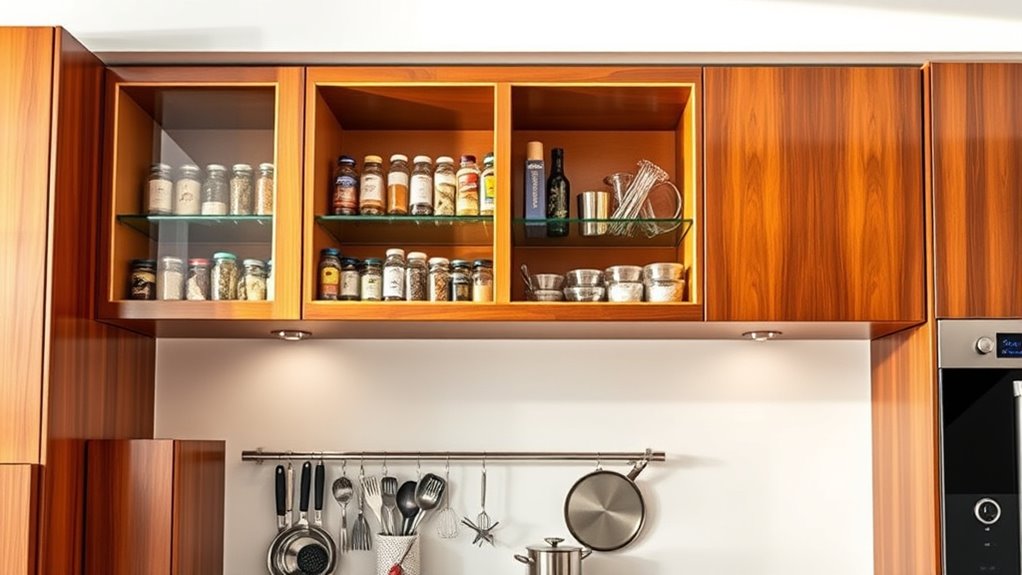
When it comes to kitchen safety and efficiency, placing frequently used items at eye level or just below makes them easy to reach without stretching or bending. Use adjustable shelving to customize storage heights, ensuring your most-used items are within easy reach. This flexibility helps prevent accidents caused by awkward reaching or climbing. Incorporate labeling systems to clearly identify contents, saving time and reducing the risk of selecting the wrong item. Keep everyday essentials like spices, oils, or utensils at a height that allows quick access. Organizing this way minimizes clutter and streamlines your workflow. With adjustable shelving and clear labels, you create a safer, more efficient kitchen environment that encourages proper storage habits and reduces the likelihood of accidents. Practicing mindfulness during organization can also help you stay attentive and aware of safety practices.
Safe Placement of Heavy Cookware and Appliances

Placing heavy cookware and appliances at safe, easily accessible heights is essential to prevent strain and accidents in the kitchen. Store these items below eye level to minimize the risk of dropping or injury. Be mindful of countertop hazards, ensuring heavy pots and appliances aren’t positioned where they can fall or cause clutter. When installing appliances like mixers or slow cookers, ensure they don’t block ventilation safety features, such as vents or cooling areas. Proper placement reduces the chance of spills or mishaps, especially when lifting or retrieving heavy items. Keep frequently used heavy cookware within reach but not in high, hard-to-access spots. This approach enhances safety, reduces strain, and maintains an organized, hazard-free kitchen environment. Additionally, using proper storage solutions can further improve safety and efficiency in your kitchen.
Ergonomic Considerations for Different Users
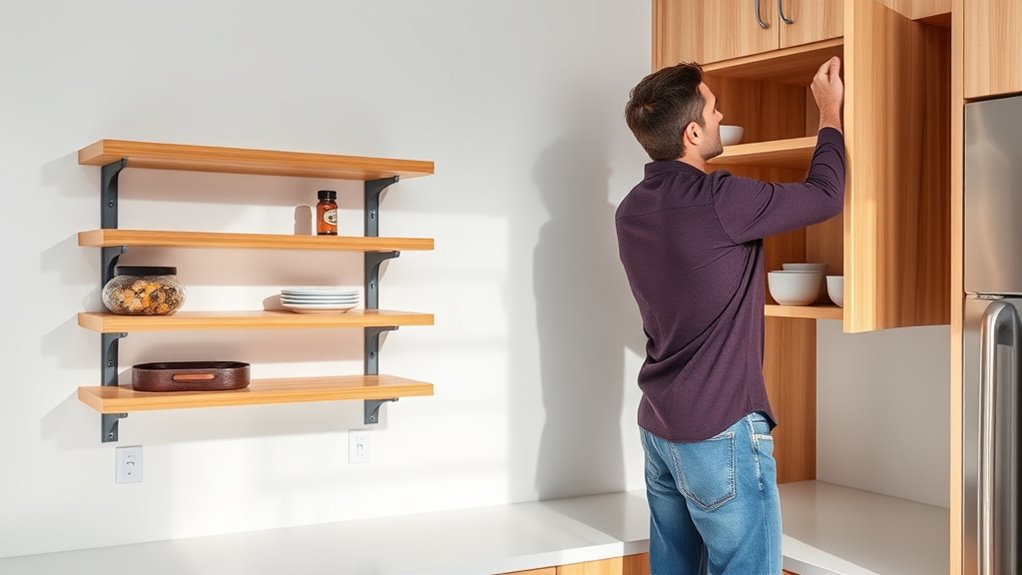
Adjusting kitchen storage and layout to suit the needs of different users helps prevent strain and injuries. Incorporate adjustable shelving to customize storage heights for each person, making items more accessible and reducing overreaching or bending. An ergonomic design considers user height, strength, and mobility, ensuring frequently used items are within a comfortable reach. For shorter users or those with limited mobility, lower shelves and pull-out drawers can improve safety and ease of use. Taller users benefit from higher storage options without straining. By tailoring your storage setup to individual needs, you minimize awkward movements and reduce the risk of musculoskeletal injuries. Prioritizing ergonomic considerations creates a safer, more comfortable kitchen environment for everyone. Additionally, selecting diverse designs and materials for storage solutions can enhance both functionality and aesthetics in your kitchen space.
Childproofing Storage Spaces
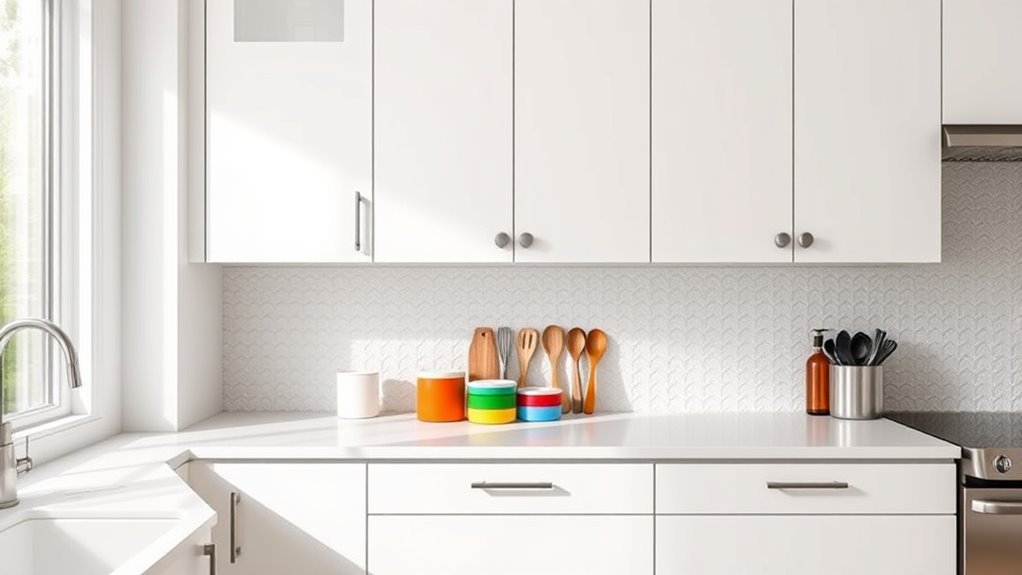
Childproofing your kitchen storage spaces is essential to keep young children safe from hazards. Proper storage organization prevents access to dangerous items and reduces accidents. To improve child safety, consider these steps:
- Store sharp knives, cleaning supplies, and small objects in high, locked cabinets out of reach.
- Use childproof locks on drawers and cabinet doors to prevent accidental opening.
- Keep heavy or unstable items on lower shelves to avoid tipping hazards.
- Label or color-code storage areas to help you quickly identify safe zones and maintain organization.
- Incorporate child safety measures, such as securing unstable furniture and keeping choking hazards out of reach, to further enhance kitchen safety.
Tips for Organizing and Maintaining Safe Heights

Keeping your kitchen organized and safe requires regular attention to the heights at which you store items. Use labeling systems to clearly identify stored contents, making it easier to find what you need without unnecessary rummaging or reaching. When positioning items, ensure heavier objects are stored at lower, stable heights to prevent accidents. Good lighting solutions are essential; bright, focused lighting helps you see shelves clearly, reducing the risk of slips or drops. Regularly review your storage setup, adjusting shelves or heights as needed to accommodate your changing needs. Keep frequently used items within easy reach, and store less-used items higher up. Additionally, considering fire safety when organizing your kitchen can help prevent accidents involving kitchen equipment or open flames. Consistent maintenance, combined with thoughtful organization, guarantees your kitchen remains a safe, accessible space for everyone.
Frequently Asked Questions
How Do I Measure the Ideal Kitchen Storage Height for My Space?
To measure the ideal kitchen storage height, start with measuring techniques like using a tape measure from the floor to your waist or elbow for comfortable reach. Consider ergonomic considerations by ensuring frequently used items are within easy arm’s reach, ideally between waist and eye level. Adjust shelves accordingly, and test the setup to confirm you won’t strain or stretch when accessing stored items, creating a more efficient and safe workspace.
Are There Specific Safety Standards for Kitchen Cabinet Installation?
Coincidentally, safety standards for kitchen cabinet installation typically focus on ensuring secure attachment and proper support. You should follow manufacturer guidelines based on cabinet material and use correct installation techniques, such as anchoring cabinets to wall studs and using appropriate hardware. Local building codes may also specify height and load requirements. By prioritizing these standards, you create a safer, more durable kitchen environment that prevents accidents and damage.
How Can I Adapt Storage Heights for Individuals With Mobility Challenges?
To adapt storage heights for mobility challenges, you should install accessible countertops at lower, comfortable heights and use ergonomic shelving that’s easy to reach. Keep frequently used items within easy reach, ideally between waist and eye level, reducing strain. You might also consider pull-out shelves or lazy Susans to make accessing stored items simpler. These adjustments help create a safer, more functional kitchen for everyone.
What Tools Are Recommended for Adjusting or Installing Kitchen Shelves Safely?
Did you know that proper shelf leveling can reduce accidents by 30%? To adjust or install kitchen shelves safely, use a level for precise alignment. You should also employ safety equipment like gloves and goggles to protect yourself. A drill with adjustable bits makes installation easier, and a stud finder guarantees secure anchoring. These tools help you create a safe, accessible kitchen environment tailored to your needs.
How Often Should Kitchen Storage Heights Be Reassessed for Safety?
You should reassess your kitchen storage heights every 6 to 12 months to maintain safety. During these checks, focus on pantry organization and appliance placement to prevent accidents. If you notice shelves are overloaded or appliances are hard to reach or unstable, adjust their heights accordingly. Regular evaluations help you keep your kitchen safe, organized, and efficient, reducing the risk of falls or injuries when accessing stored items.
Conclusion
Think of your kitchen as a finely tuned orchestra, where every note (or item) plays in harmony. By storing items at safe, accessible heights, you create a symphony of safety and efficiency. When you organize thoughtfully, you’re not just placing objects—you’re conducting a safe environment where everyone can cook confidently. Remember, a well-arranged kitchen is like a balanced melody—smooth, secure, and ready to serve your culinary masterpiece.