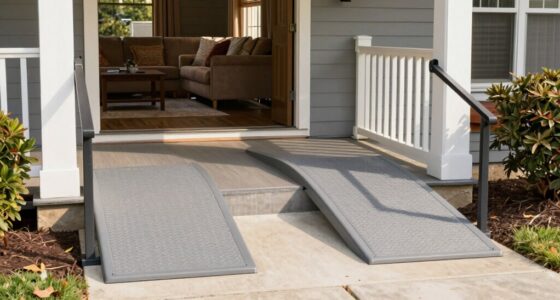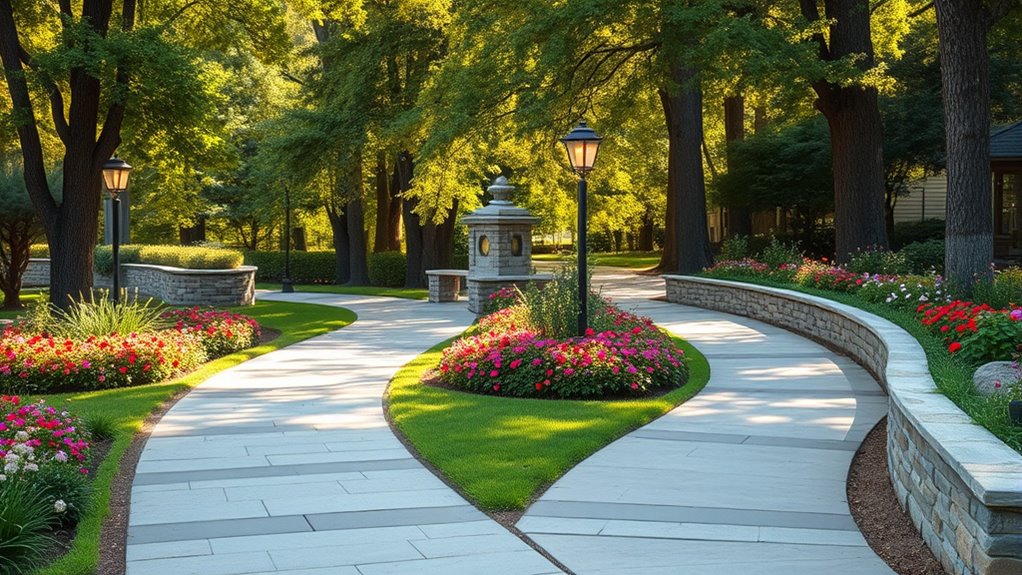

To create safe outdoor paths for seniors, choose durable, textured materials like concrete or permeable pavers that provide good traction and stability. Design clear, wide walkways with contrasting edges, and add gentle lighting such as solar fixtures along the route for better visibility. Install sturdy handrails where needed, and keep the area well-maintained by removing debris and repairing surfaces. Learn more about making your outdoor space safer and more accessible for seniors.
Key Takeaways
- Use textured, slip-resistant, and durable materials like textured concrete or permeable pavers for safe, stable pathways.
- Design walkways at least 36 inches wide with contrasting colors and smooth surfaces for easy, secure mobility.
- Install solar-powered, soft, diffused lighting along paths and steps to improve visibility and safety at night.
- Add sturdy handrails with contrasting accents on both sides of pathways to provide support and reduce fall risks.
- Regularly maintain pathways by repairing cracks, clearing debris, and ensuring lighting fixtures are clean and functional.
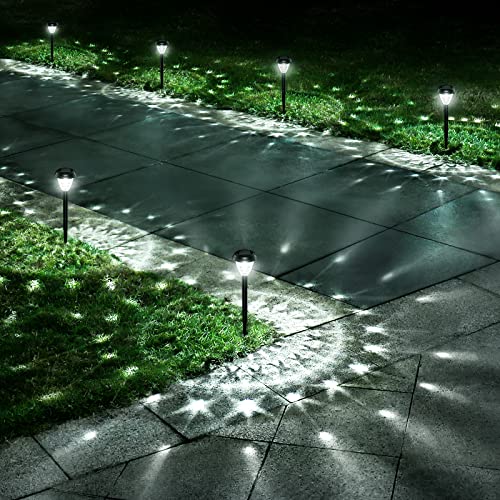
URAGO Super Bright Solar Lights Outdoor Waterproof-10 Pack, Dusk to Dawn Up to 12 Hrs Solar Powered Outdoor Pathway Garden Lights Auto On/Off, LED Landscape Lighting Decorative for Walkway Patio Yard
HIGH BRIGHTNESS & ATTRACTIVE PATTERN – Urago's solar outdoor walkway lights solar powered adopts high power LED lamp…
As an affiliate, we earn on qualifying purchases.
As an affiliate, we earn on qualifying purchases.
Choosing Safe and Durable Path Materials
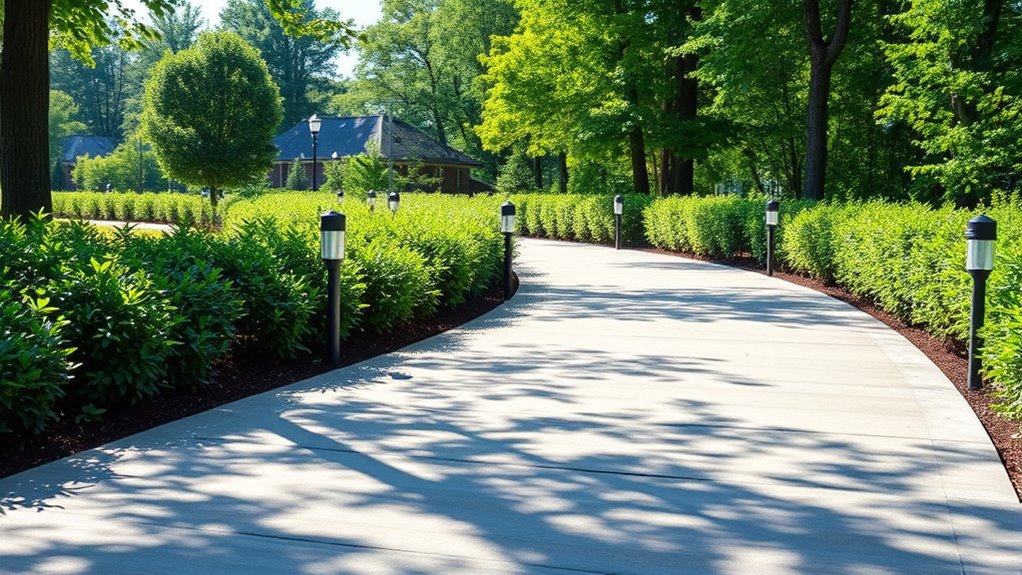
When selecting materials for outdoor paths, safety and durability should be your top priorities. You want surfaces that provide stable footing, minimizing the risk of slips and falls. Look for materials like textured concrete, flagstone, or permeable pavers, which offer reliable traction. While focusing on safety, don’t forget about garden aesthetics; choose materials that complement your landscape and outdoor furniture, creating a cohesive look. Durable options withstand weather and foot traffic, reducing maintenance over time. Additionally, consider the color and finish of the pathway to ensure it blends seamlessly with your garden design. Incorporating tuning techniques such as textured surfaces can improve traction and safety for seniors. Properly selected materials will not only improve safety but also enhance the overall beauty of your outdoor space, making it inviting and functional for everyday use.

Goovilla Plastic Interlocking Deck Tiles, 9 Pack Outdoor Patio Flooring, 12"x12" Interlocking Decking Tile Outdoor All Weather Use, Waterproof Patio Pavers for Pool Balcony Backyard Porch, Dark Grey
【Lightweight but Firm】Made of high hardness plastic. Not as heavy as wooden deck tiles, but has good load-bearing…
As an affiliate, we earn on qualifying purchases.
As an affiliate, we earn on qualifying purchases.
Designing Accessible and Clear Walkways

Designing accessible and clear walkways guarantees everyone can navigate your outdoor space comfortably. To achieve this, focus on three key elements.
Accessible walkways ensure everyone can navigate your outdoor space comfortably and confidently.
- Use contrasting colors for the walkway and surrounding landscape to enhance visibility and aid navigation.
- Keep walkways wide enough—at least 36 inches—to allow easy movement and passing.
- Make the surface smooth, stable, and slip-resistant to prevent falls. Incorporate attractive landscape aesthetics by selecting plants and features that complement the path without obstructing it. Pay attention to color contrast not only for safety but also to create a visually appealing environment. Clear, well-defined paths improve mobility and confidence for seniors, making your outdoor space both functional and inviting.
Ensuring proper surface stability and regular maintenance can further enhance safety and longevity of the walkways.

Handrail for Outdoor Grab Bar Frossvt Wall Mount Handrail, 25.8'' Garage, Porch, Garden 1 to 3 Steps Stairs Black
Safety and reliability: Frossvt's handrail is made of 1.2 inch diameter 16 gauge steel, we have 3 layers…
As an affiliate, we earn on qualifying purchases.
As an affiliate, we earn on qualifying purchases.
Installing Effective and Gentle Lighting Solutions

Installing effective and gentle lighting is essential to guarantee seniors can safely navigate outdoor paths after dark. Solar lighting offers a sustainable, easy-to-install option that requires no wiring, reducing installation complexity. These lights provide soft, diffused illumination, minimizing harsh shadows and glare, which can be disorienting or unsafe. When choosing lighting, consider fixtures that blend seamlessly with your landscape aesthetics, enhancing visual appeal without overwhelming the natural environment. Position lights along walkways, steps, and key *passage* points to improve visibility and confidence. *Ascertain* the lighting is evenly distributed and not overly bright to avoid discomfort or disorientation. Properly installed, gentle lighting creates a welcoming atmosphere that encourages outdoor activity while prioritizing safety and enhancing the overall beauty of your landscape. Incorporating wall organization systems can also help keep outdoor areas tidy, making pathways more accessible and appealing.

WdtPro 8 Pack Tall Solar Pathway Lights Outdoor, Bright Solar Powered Garden Lights Waterproof, Auto On/Off, Up to 15H Outdoor Lighting for Lawn Patio Walkway Driveway Path Yard Decor
【Upgraded Solar Pathway Lights】Our upgraded LED filament bulb emits a warm white glow, surpassing the brightness of other…
As an affiliate, we earn on qualifying purchases.
As an affiliate, we earn on qualifying purchases.
Incorporating Safety Features and Handrails
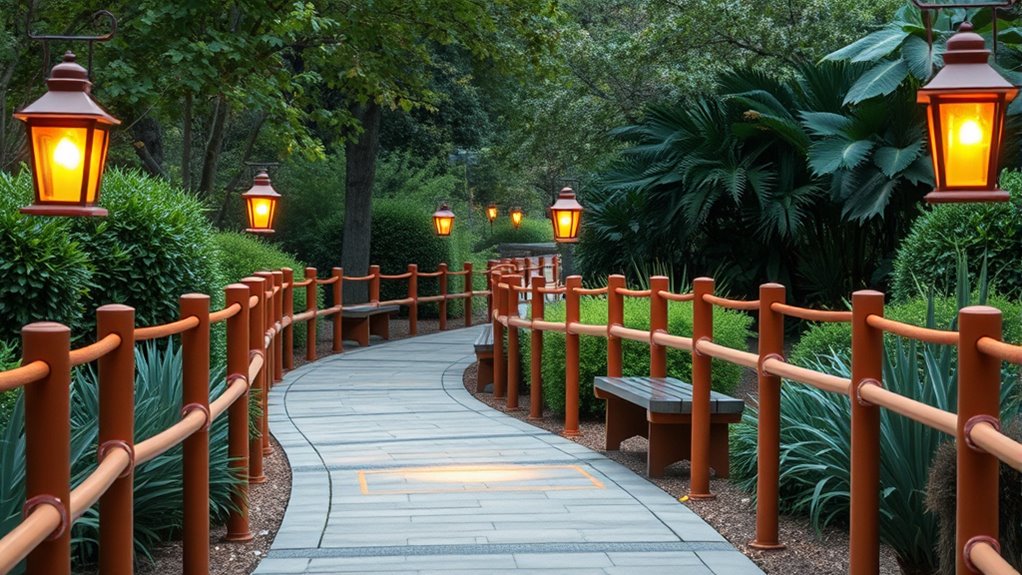
Adding safety features and handrails to your outdoor paths enhances stability and confidence for seniors maneuvering after dark. To achieve this, consider these essential steps:
- Install sturdy handrails along both sides of the path, ensuring they’re easy to grip and reach.
- Use visual cues, like contrasting colors or decorative accents, to highlight edges and potential hazards.
- Incorporate decorative accents that blend safety with aesthetics, making the path inviting yet functional.
These features help seniors feel secure and oriented, reducing fall risks. Handrails provide support, while visual cues and decorative accents improve visibility and appeal. Together, they create a safer, more welcoming environment for outdoor activities at any time.
Maintenance Tips for Longevity and Safety
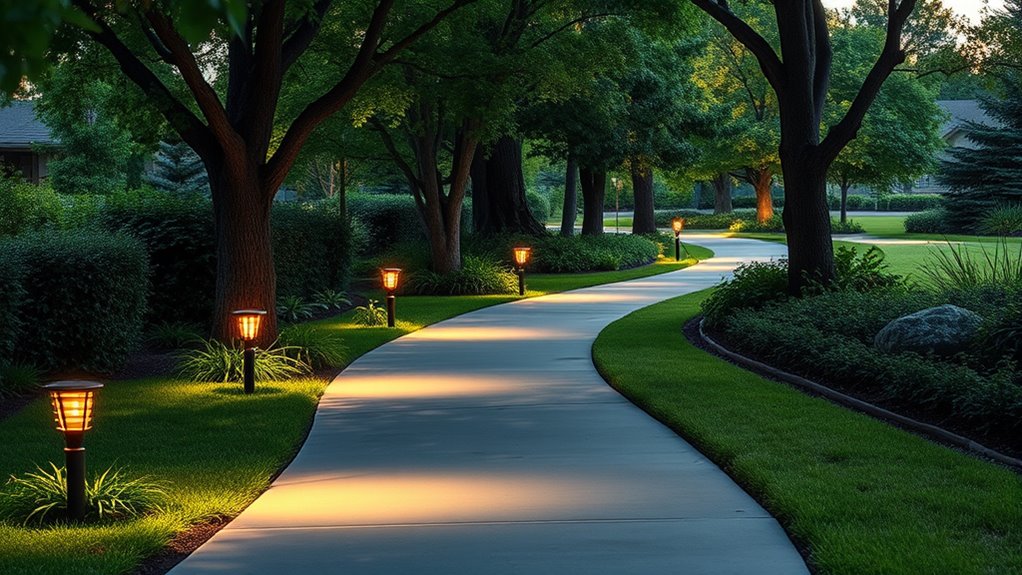
Regular maintenance is essential to keep outdoor paths safe and durable for seniors. You should regularly inspect the paths for cracks, loose stones, or uneven surfaces, and promptly repair any issues. Keep the area clear of debris, leaves, and overgrown plants to prevent tripping hazards. To enhance landscaping aesthetics, choose low-maintenance garden plants that require minimal pruning and care, reducing the risk of overgrowth that could obstruct walkways. Trim bushes and trees regularly to maintain clear sightlines and prevent falling branches. Additionally, ensure lighting fixtures are clean and functioning properly to maintain safety during evening hours. Proper upkeep not only extends the longevity of outdoor features but also creates an inviting, safe environment that encourages outdoor activity for seniors. Incorporating essential oils in outdoor spaces can also contribute to a calming environment and promote relaxation.
Frequently Asked Questions
How Can I Prevent Slips and Falls on Outdoor Paths?
To prevent slips and falls on outdoor paths, you should install non-slip surfaces to provide better traction, especially in wet conditions. Regularly clean the paths to remove debris, leaves, and algae that can cause slipping. Additionally, installing sturdy handrails offers extra support and stability. Keep pathways well-lit to improve visibility at night. Combining these measures creates a safer outdoor environment, reducing the risk of accidents for seniors.
What Are the Best Plants to Line a Senior-Friendly Walkway?
Imagine your walkway as a gentle garden embrace; you want plants that welcome without overwhelming. Choose pollinator-friendly plants like lavender, coneflowers, or bee balm, which attract beneficial insects and add color. Pair them with low-maintenance greenery like succulents or ornamental grasses, ensuring easy care and steady beauty. These plants create a safe, inviting path for seniors, blending practicality with natural charm, making every stroll a peaceful journey.
How Do Weather Conditions Affect Outdoor Lighting Efficiency?
Weather impact can substantially affect outdoor lighting efficiency, causing bulbs to fade or fail prematurely. Harsh conditions like rain, snow, or extreme heat can weaken lighting durability, leading to frequent replacements and reduced brightness. To guarantee your outdoor lighting stays effective, choose weather-resistant fixtures and protect them with proper sealing. Regular maintenance and inspections help maintain ideal lighting, even when weather conditions are tough.
Are There Eco-Friendly Options for Outdoor Path Materials?
You’ll be pleased to know there are plenty of eco-friendly options for outdoor path materials. Sustainable materials like reclaimed wood, permeable pavers, and recycled options such as crushed glass or rubber provide environmentally conscious choices. These options help reduce waste and conserve resources, making your outdoor space both beautiful and kind to the planet. Embracing these alternatives lets you enjoy safety and sustainability, creating a welcoming environment for everyone.
What Safety Features Are Recommended for Night-Time Outdoor Walks?
For night-time outdoor walks, you should prioritize pathway security and lighting automation. Install motion-activated lights along your path to guarantee visibility without wasting energy. Use well-placed, non-slip surfaces and handrails where needed to prevent falls. Regularly check that lighting works properly, and consider solar-powered options for eco-friendliness. These features help create a safer environment, giving you confidence to enjoy outdoor walks even after dark.
Conclusion
By prioritizing safe materials, clear walkways, gentle lighting, and sturdy safety features, you create an outdoor space that feels like a welcoming embrace for seniors. Regular maintenance keeps this haven shining bright, ensuring it remains a trusted path through life’s journey. Think of your outdoor space as a garden of safety—tending it well will let your loved ones walk confidently, like a guiding star illuminating their path to independence and joy.