The best hearing amplification devices for seniors balance clearer speech, manageable controls, comfortable wear, and safe volume adjustment. My best overall pick is the Williams Sound PockeTalker Ultra DUO because its handheld controls and two listening options suit conversations, television, and appointments without tiny in-ear buttons. The SuperEar SE5000 is my value pick, while the Audien Atom One makes more sense for buyers who want a discreet device explicitly marketed as an OTC hearing aid. The main tradeoffs are all-day wear versus situational listening, discreet sizing versus easy handling, and extra loudness versus better control in noisy places. Continue reading for my full breakdown of all 13 options and the buyer types each one serves best.
Complete the kit


Key Takeaways
- The Williams Sound PockeTalker Ultra DUO leads this roundup because its visible controls, separate microphone, and included headphone and earbud provide more flexibility than the small in-ear models.
- The two Pocketalker packages are not interchangeable picks: the DUO earns the higher position for its ready-to-use listening choices, while the accessory bundle suits buyers who prefer its particular extras.
- One-button operation separates the Flaygo model from more fiddly rechargeable devices, making it the strongest beginner option for seniors with limited dexterity.
- WallarGe and Aurimi solve different comfort problems: WallarGe adds Bluetooth through a neckband, while Aurimi keeps the ear canal open with bone-conduction placement.
- High advertised amplification did not guarantee a higher rank. I placed greater weight on speech-focused usability, controllable volume, and realistic listening scenarios than on broad severe-loss or 120 dB claims.
| Behind the Ear Sound Amplifier – Digital Hearing Aids for Seniors, Noise Reducing, Black |  | Best Simple Battery-Powered Pick | Form Factor: Behind-the-ear | Amplification: Digital | Noise Management: Noise reduction | VIEW LATEST PRICE | See Our Full Breakdown |
| WallarGe Rechargeable Neckband Hearing Amplifier with Bluetooth |  | Best Bluetooth Neckband | Device Style: Rechargeable neckband | Battery Life: Up to 35 hours | Charging Time: 3.5 hours | VIEW LATEST PRICE | See Our Full Breakdown |
| Flaygo Hearing Aids for Seniors, Sound Quality Restoration, Noise Reduction, 80h Battery Life, One-Button Operation, Beige |  | Best Battery Life | Digital Processing: 16-channel digital chip | Noise Management: Intelligent noise reduction | Battery Life: Up to 80 hours | VIEW LATEST PRICE | See Our Full Breakdown |
| Rechargeable Hearing Aids for Seniors with Noise Cancelling, Behind-The-Ear Severe Hearing Loss Amplifier |  | Best for Higher Amplification Needs | Intended Hearing Need: Marketed for severe hearing loss | Design: Behind-the-ear | Weight: 5.5 grams | VIEW LATEST PRICE | See Our Full Breakdown |
| Audien Atom One OTC Hearing Aids | 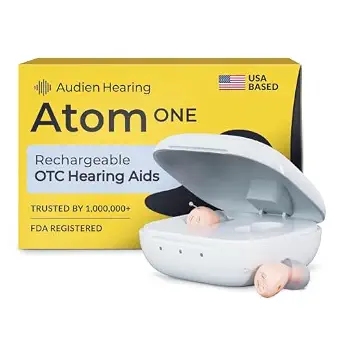 | Best Guided-Setup OTC Pick | Product Category: OTC hearing aids | Battery Life: Up to 24 hours | Design: Small, discreet in-ear | VIEW LATEST PRICE | See Our Full Breakdown |
| Rechargeable Hearing Amplifier with Microphone for Seniors and Adults |  | Best for Long Battery Life | Maximum sound gain: 65dB | Battery life: Up to 120 hours | Charging time: 1 hour | VIEW LATEST PRICE | See Our Full Breakdown |
| Williams Sound PockeTalker Ultra DUO Sound Amplifier with Headphone & Earbud |  | Best for TV Listening | Acoustic gain: 20–40dB | Listening cord: 12 ft | Battery life: Up to 100 hours | VIEW LATEST PRICE | See Our Full Breakdown |
| SuperEar SE5000 Personal Hearing Amplifier with Headphones and Accessories |  | Best Portable Ambient Amplifier | Amplification: Up to 50dB | Stated total decibel gain: 107dB | Battery life: Up to 30 hours | VIEW LATEST PRICE | See Our Full Breakdown |
| Williams Sound Pocketalker Ultra Hearing Amplifier with Accessories |  | Best Accessory Bundle | Amplification: Up to 40dB | Adjustable controls: Volume and tone | Battery type: AAA | VIEW LATEST PRICE | See Our Full Breakdown |
| Rechargeable Hearing Amplifier for Seniors and Adults with Noise Reduction and Comfortable In-Ear Design |  | Best Discreet In-Ear Design | Device type: Personal sound amplifier (PSAP) | Form factor: Lightweight in-ear design | Power: Rechargeable | VIEW LATEST PRICE | See Our Full Breakdown |
| Hearing Amplifier for Seniors with Rechargeable Battery and Microphone |  | Best Battery Life | Auto-Gain Control: Yes | Microphone: Directional noise-canceling | Battery: Rechargeable | VIEW LATEST PRICE | See Our Full Breakdown |
| Aurimi Bone Conduction Hearing Amplifier |  | Best Open-Ear Option | Weight: 25g | Battery Life: 10 hours | Water Resistance: IPX5 | VIEW LATEST PRICE | See Our Full Breakdown |
| Reizen Loud Ear 120dB Gain Personal Amplifier |  | Best for Maximum Stated Output | Gain: 120dB | Microphone: Built-in | Sound Pickup Distance: Up to 100 feet | VIEW LATEST PRICE | See Our Full Breakdown |
| hearing amplification devices for senior | Battery Life |
|---|---|
| Behind the Ear Sound Amplifier | — |
| WallarGe Rechargeable Neckband | Up to 35 hours |
| Flaygo Hearing Aids for Senior | Up to 80 hours |
| Rechargeable Hearing Aids for | Up to 25 hours |
| Audien Atom One OTC Hearing Ai | Up to 24 hours |
| Rechargeable Hearing Amplifier | Up to 120 hours |
| Williams Sound PockeTalker Ult | Up to 100 hours |
| SuperEar SE5000 Personal Heari | Up to 30 hours |
| Williams Sound Pocketalker Ult | — |
| Rechargeable Hearing Amplifier | — |
| Hearing Amplifier for Seniors | Up to 120 hours |
| Aurimi Bone Conduction Hearing | 10 hours |
| Reizen Loud Ear 120dB Gain Per | — |
More Details on Our Top Picks
Behind the Ear Sound Amplifier – Digital Hearing Aids for Seniors, Noise Reducing, Black
I place the Behind the Ear Sound Amplifier as the best simple battery-powered pick because its physical volume control and no-programming setup reduce the learning curve. Compared with the WallarGe Rechargeable Neckband Hearing Amplifier, it is less conspicuous and avoids charging pauses, but it gives up Bluetooth audio and a built-in rechargeable battery. Digital amplification and noise reduction are geared toward clearer everyday conversation, while the two-unit package supports amplification in both ears. The weak point is upkeep: LR754 batteries create recurring expense, and the specified silicone domes may require trial and replacement to achieve a secure fit. Its listed 3.53-ounce weight also contrasts sharply with the 3.5-gram Flaygo model. I would not select it for severe hearing loss or anyone seeking rechargeable convenience.
Pros:- No programming is required before everyday use
- User-controlled volume and power simplify operation
- Digital amplification includes noise reduction
- Two-unit package can support both ears
Cons:- LR754 batteries add recurring cost and handling
- Comfort and performance depend on finding compatible silicone domes
- Not designed for severe hearing loss
Best for: I recommend it for seniors who want straightforward behind-the-ear amplification with physical controls and no app or programming process.
Not ideal for: I would skip it for people with severe hearing loss or anyone unwilling to replace small LR754 batteries.
- Form Factor:Behind-the-ear
- Amplification:Digital
- Noise Management:Noise reduction
- Dimensions:0.39 x 0.39 x 0.39 inches
- Weight:3.53 ounces
- Battery Type:LR754
- Controls:User-controlled volume and power
- Color:Black
- Quantity:2 units
Our verdict“I recommend this model for buyers prioritizing simple controls and replaceable-battery operation over advanced customization.”
WallarGe Rechargeable Neckband Hearing Amplifier with Bluetooth
I rank the WallarGe Rechargeable Neckband Hearing Amplifier as the best Bluetooth neckband for seniors who want one device for conversation, television, and streamed audio. Bluetooth 5.3 and low-latency playback give it a broader role than the Behind the Ear Sound Amplifier, which handles amplification but not wireless entertainment. The built-in microphone, adjustable volume, and one-button operation keep daily use approachable. Its 35-hour battery is generous for a connected model, though it falls well short of the Flaygo Hearing Aids’ 80-hour claim. The tradeoff is visibility and specialization: a neckband is harder to conceal than an in-ear device, and no dedicated listening programs or detailed noise-reduction modes are listed. I favor this for multi-purpose listening, not buyers seeking a tiny hearing-aid-style fit.
Pros:- Bluetooth 5.3 supports wireless audio playback
- Low-latency audio is useful for television viewing
- Up to 35 hours of battery life
- One-button operation and adjustable volume reduce control complexity
Cons:- Neckband design is more visible than in-ear or behind-the-ear alternatives
- Battery life is shorter than the Flaygo model’s stated 80 hours
- No dedicated listening programs or detailed noise-reduction modes are listed
Best for: I recommend it for seniors who want amplified conversation and Bluetooth television or phone audio from one easy-to-control neckband.
Not ideal for: I would skip it for buyers who want a discreet in-ear device or multiple noise-management programs.
- Device Style:Rechargeable neckband
- Battery Life:Up to 35 hours
- Charging Time:3.5 hours
- Bluetooth Version:5.3
- Audio Feature:Low-latency Bluetooth playback
- Microphone:Built in
- Volume Control:Adjustable
- Operation:One-button control
Our verdict“I recommend the WallarGe for seniors who value Bluetooth versatility more than discreet styling or extensive hearing controls.”
Flaygo Hearing Aids for Seniors, Sound Quality Restoration, Noise Reduction, 80h Battery Life, One-Button Operation, Beige
I give the Flaygo Hearing Aids for Seniors the best battery life role because their stated 80-hour runtime easily exceeds the WallarGe neckband’s 35 hours and the Audien Atom One’s 24 hours. That difference means fewer charging interruptions for seniors who may forget to dock a device nightly. A 16-channel digital chip and intelligent noise reduction also make this a more hearing-focused choice than WallarGe’s multi-purpose Bluetooth design. At 3.5 grams, the discreet beige units are better suited to prolonged wear than bulkier amplifiers. Simplicity brings limits, however: one-button operation offers only four volume levels, so adjustment is less personalized than on the Audien Atom One. The product is not positioned for severe loss, and support that depends on a website or QR code may frustrate buyers without easy internet access.
Pros:- Stated 80-hour runtime leads this five-product group
- Two-hour USB-C charging limits downtime
- 16-channel processing includes intelligent noise reduction
- Lightweight 3.5-gram design supports extended wear
Cons:- Four volume levels provide less personalization than more adjustable alternatives
- Not positioned for severe hearing loss
- Support requires access to a website or QR code
Best for: I recommend it for seniors with mild-to-moderate amplification needs who prioritize low weight, long runtime, and uncomplicated controls.
Not ideal for: I would skip it for severe hearing loss, highly specific sound-adjustment needs, or households without convenient online support access.
- Digital Processing:16-channel digital chip
- Noise Management:Intelligent noise reduction
- Battery Life:Up to 80 hours
- Charging Time:2 hours
- Charging Connection:USB-C
- Weight:3.5 grams
- Operation:One-button control
- Volume Levels:4
- Color:Beige
Our verdict“I recommend the Flaygo for seniors who want the fewest charging interruptions without taking on complicated controls.”
Rechargeable Hearing Aids for Seniors with Noise Cancelling, Behind-The-Ear Severe Hearing Loss Amplifier
I assign the Rechargeable Behind-the-Ear Severe Hearing Loss Amplifier the best for higher amplification needs role because it is the only model in this group explicitly marketed toward severe hearing loss. Double noise cancellation aims to keep amplified speech from being overwhelmed by background sound, while physical adjustment buttons are easier to locate than app-based controls. Compared with the basic Behind the Ear Sound Amplifier, this model removes disposable-battery handling through cable and charging-case support. Its 5.5-gram body is also close to the lightweight Flaygo design. The tradeoff is endurance: up to 25 hours is adequate for a day but far behind Flaygo’s 80-hour claim. Slight operating noise may be distracting in quiet rooms, and new users may need time to adjust to the behind-the-ear fit and stronger amplification.
Pros:- Explicitly marketed for severe hearing loss
- Double noise cancellation targets clearer amplified sound
- Physical adjustment buttons are senior-friendly
- Cable and charging-case options add charging flexibility
Cons:- 25-hour runtime is much shorter than the Flaygo model’s stated 80 hours
- Slight operating noise may be audible in quiet settings
- Behind-the-ear fit and stronger output may require an adjustment period
Best for: I recommend it for seniors seeking stronger amplification, tactile buttons, and rechargeable behind-the-ear hardware.
Not ideal for: I would skip it for noise-sensitive users or anyone wanting several days of operation between charges.
- Intended Hearing Need:Marketed for severe hearing loss
- Design:Behind-the-ear
- Weight:5.5 grams
- Battery Life:Up to 25 hours
- Charging Methods:Cable and charging case
- Noise Cancellation:Double noise cancellation
- Controls:Physical adjustment buttons
- Fit:Ergonomic, lightweight design
Our verdict“I recommend this model for seniors who need stronger output and tactile controls and can accept daily charging.”
Audien Atom One OTC Hearing Aids
I place the Audien Atom One OTC Hearing Aids in the best guided-setup OTC pick role because personalized sound adjustment is paired with expert-guided setup. That assistance can help seniors who want more tailoring than the Flaygo model’s four fixed volume levels but do not want to configure everything alone. The small in-ear design is less visible than the WallarGe neckband, and the supplied charging dock, cleaning tools, earbuds, and wax guards form a practical starter package. Its stated FDA registration and OTC positioning also distinguish it from generic sound amplifiers. There are real compromises: the 24-hour battery trails every other rechargeable model here, initial fitting requires more effort than a no-programming amplifier, and waterproof information is not supplied. I would choose it for discreet daily listening, not severe hearing loss or frequent moisture exposure.
Pros:- Expert-guided setup supports buyers who need fitting assistance
- Personalized sound settings offer more tailoring than fixed-level models
- Small in-ear design is discreet
- Charging and maintenance accessories are included
Cons:- Up to 24 hours of runtime is the shortest rechargeable claim in this group
- Initial fitting and sound setup require added effort
- No waterproof or water-resistance information is supplied
Best for: I recommend it for seniors with everyday listening needs who want a discreet in-ear fit and human guidance during setup.
Not ideal for: I would skip it for severe hearing loss, multi-day battery demands, or buyers who need a stated water-resistance rating.
- Product Category:OTC hearing aids
- Battery Life:Up to 24 hours
- Design:Small, discreet in-ear
- Charging Connection:USB-C
- Charging Hardware:Dock/case, cable, and power adapter
- Sound Adjustment:Personalized settings
- Setup Support:Expert guided
- Maintenance Accessories:Cleaning brush, earbuds, and wax guard kit
- FDA Status:Registered
Our verdict“I recommend the Audien Atom One for seniors who value discreet wear and guided personalization more than maximum battery life.”
Rechargeable Hearing Amplifier with Microphone for Seniors and Adults
I rank the Rechargeable Hearing Amplifier with Microphone as the battery-life leader because its claimed 120-hour runtime and one-hour charging reduce daily maintenance. Its 65dB maximum gain also exceeds the 20–40dB range of the Williams Sound PockeTalker Ultra DUO, making it better suited to buyers who need stronger amplification. A directional noise-canceling microphone and automatic gain control should make speech easier to follow than a basic ambient amplifier such as the SuperEar SE5000. The tradeoff is limited personalization: the single knob is senior-friendly, but there is no separate tone control for adapting higher or lower frequencies. Battery duration can also change with volume and use. I favor this model for simple, powerful amplification, though 65dB gain is not a replacement for a professional hearing evaluation.
Pros:- 65dB maximum gain is stronger than the output claimed by several pocket amplifiers
- Up to 120 hours of battery life reduces charging frequency
- One-hour charging supports quick reuse
- Directional noise-canceling microphone focuses amplification on speech
Cons:- No separate tone control or advanced sound customization
- Maximum gain may still be inadequate for severe hearing loss
- Actual battery duration may decline at higher volume levels
Best for: Seniors who want strong amplification, very infrequent charging, and one-knob operation without menus or small buttons
Not ideal for: People with severe or medically complex hearing loss, or buyers who need adjustable tone and frequency-specific settings
- Maximum sound gain:65dB
- Battery life:Up to 120 hours
- Charging time:1 hour
- Microphone:Directional noise-canceling microphone
- Gain management:Automatic gain control
- Main control:Combined volume and power knob
- Warranty:2 years
Our verdict“This is my pick for seniors who prioritize long rechargeable runtime and stronger gain over detailed sound adjustment.”
Williams Sound PockeTalker Ultra DUO Sound Amplifier with Headphone & Earbud
The Williams Sound PockeTalker Ultra DUO earns my TV-listening role through its 12-foot listening cord, which lets a senior position the microphone near a television without raising the room volume. Separate tone and volume controls provide more sound adjustment than the one-knob Rechargeable Hearing Amplifier with Microphone, while the included headphone and earbud let buyers choose between an over-ear or less conspicuous setup. Its replaceable AAA batteries run for up to 100 hours, useful for someone who does not want to manage another charging case. Still, the 20–40dB acoustic gain is lower than the SuperEar SE5000’s stated 50dB amplification and may fall short for greater hearing difficulty. The wired arrangement can also feel cumbersome, and AAA batteries create an ongoing expense.
Pros:- 12-foot cord supports practical television microphone placement
- Separate tone and volume controls allow useful sound adjustment
- Up to 100 hours of battery life limits interruptions
- Headphone and earbud are both included
Cons:- 20–40dB gain may be insufficient for greater hearing loss
- Wired listening setup is less discreet and mobile than an in-ear amplifier
- Requires ongoing purchases of two AAA batteries
Best for: Seniors who mainly need clearer television dialogue and prefer tactile tone and volume controls
Not ideal for: Buyers needing more than 40dB of gain or a cable-free device for walking and all-day wear
- Acoustic gain:20–40dB
- Listening cord:12 ft
- Battery life:Up to 100 hours
- Battery type:2 AAA batteries
- Volume control:Adjustable
- Tone control:Adjustable
- Listening accessories:Headphone and earbud
- Microphone:Included
- Warranty:5 years
Our verdict“I recommend this model for TV-focused buyers who value adjustable tone and long runtime more than wireless convenience.”
SuperEar SE5000 Personal Hearing Amplifier with Headphones and Accessories
I place the SuperEar SE5000 in the portable ambient-listening slot because its pocket-size body, belt clip, and tactile volume control suit errands, meetings, and activities around the home. Its stated amplification reaches 50dB, higher than the Williams Sound PockeTalker Ultra DUO’s 20–40dB range, while the included headphone and earbud provide two listening styles. It is less attractive for frequent TV use, however: the PockeTalker Ultra DUO supplies a 12-foot cord, whereas the SE5000 does not connect wirelessly to a television. Runtime is another compromise. Up to 30 hours is respectable for a single AAA battery but far below the 100- and 120-hour claims elsewhere in this group. I see its strength in simple mobile sound pickup, not discreet all-day wear or personalized hearing correction.
Pros:- Up to 50dB of stated amplification offers more output than the Pocketalker models
- Tactile volume control is easier to operate by touch
- Belt clip and pocket-size body support mobile use
- Headphones, earbuds, and a AAA battery are included
Cons:- 30-hour battery life trails the longer-running alternatives in this group
- No wireless television connection
- Performance can vary with the user’s hearing profile and listening environment
Best for: Seniors who want a lightweight pocket amplifier for conversations, meetings, errands, and general environmental awareness
Not ideal for: Frequent television viewers seeking wireless audio or buyers who want an unobtrusive in-ear device
- Amplification:Up to 50dB
- Stated total decibel gain:107dB
- Battery life:Up to 30 hours
- Power source:AAA battery
- Listening accessories:Headphones and earbuds
- Carry accessory:Belt clip
- Accessory compatibility:Disposable earpad covers and extension cable
Our verdict“This is my choice for seniors who want straightforward ambient amplification in a portable belt-clip or pocket format.”
Williams Sound Pocketalker Ultra Hearing Amplifier with Accessories
The Williams Sound Pocketalker Ultra Hearing Amplifier ranks as my accessory-bundle pick because it arrives with 20 AAA batteries, headphones, a mini earbud, an extension cord, a lanyard, and cleaning supplies. That package is more ready for extended use than the PockeTalker Ultra DUO, which includes two listening options but no stated battery stockpile. Both models provide adjustable volume and tone with up to 40dB amplification, so the buying decision rests more on accessories than sound output. The extension cord helps place the microphone closer to a television or speaker, while the lanyard reduces the chance of dropping the unit. Against the rechargeable B0GZQBNGHG amplifier, this model has weaker maximum gain and creates recurring battery costs. I rank it for convenience and support—the five-year warranty is reassuring—not for discreet wear or severe hearing loss.
Pros:- Large accessory package supports TV, conversation, and travel use
- Twenty included AAA batteries delay replacement costs
- Separate tone and volume controls provide more flexibility than one-button models
- Five-year warranty is longer than the two-year coverage of the rechargeable 65dB model
Cons:- 40dB maximum amplification may not meet greater hearing needs
- Disposable batteries create waste and future expense
- Body, cord, and listening accessory are more visible than an in-ear design
Best for: Seniors or caregivers who want a ready-to-use conversation and TV kit with spare batteries and multiple carrying accessories
Not ideal for: People seeking rechargeable in-ear amplification, greater than 40dB gain, or a device resembling conventional earbuds
- Amplification:Up to 40dB
- Adjustable controls:Volume and tone
- Battery type:AAA
- Included batteries:20 AAA batteries
- Listening accessories:Headphones and mini earbud
- Microphone accessory:Extension cord
- Carry accessory:Neck lanyard
- Cleaning accessory:Microfiber cloth
- Warranty:5 years
Our verdict“I favor this bundle for caregivers who want a complete, adjustable kit without buying basic accessories separately.”
Rechargeable Hearing Amplifier for Seniors and Adults with Noise Reduction and Comfortable In-Ear Design
I assign the Rechargeable In-Ear Hearing Amplifier the discreet-design role because it resembles wireless earbuds and avoids the visible cords and pocket unit used by the SuperEar SE5000. Eight pairs of soft silicone tips give buyers more chances to find a secure, comfortable seal, which matters during extended conversations or television sessions. Its charging case and one-button control also suit seniors who want fewer loose components than the Pocketalker Ultra accessory bundle. Yet convenience comes with less published performance detail: no exact gain or battery-hour figure is supplied, making it harder to judge against the 65dB, 120-hour rechargeable model. Environmental conditions may change sound quality, and daily charging can become part of the routine. My ranking reflects wearability rather than raw power; noise reduction favors clearer speech, but severe hearing loss calls for a professionally selected device.
Pros:- Earbud-like shape is less conspicuous than a pocket amplifier and cord
- Eight pairs of silicone tips support a more individualized fit
- Noise reduction is designed to improve speech clarity in busy settings
- Charging case keeps the devices together between uses
Cons:- No exact amplification gain or battery runtime is provided
- Requires regular charging for daily use
- Sound quality can vary across rooms and noise conditions
Best for: Style-conscious seniors with mild listening difficulties who want rechargeable, earbud-like amplification and multiple fit options
Not ideal for: Buyers with severe hearing loss or anyone who needs published gain and battery-hour figures before choosing
- Device type:Personal sound amplifier (PSAP)
- Form factor:Lightweight in-ear design
- Power:Rechargeable
- Noise reduction:Yes
- Main control:One-button volume control
- Ear tips:8 pairs of soft silicone tips
- Charging storage:Charging case included
- Included accessories:USB charging cable, user manual, and cleaning brush
- Color:White
Our verdict“This is my pick for seniors who place discreet wear and fit flexibility above documented gain and extended runtime.”
Hearing Amplifier for Seniors with Rechargeable Battery and Microphone
I rank the Hearing Amplifier for Seniors as the Best Battery Life pick because its stated 120-hour runtime sharply reduces charging chores. Compared with the Aurimi Bone Conduction Hearing Amplifier, which offers 10 hours, this model is better suited to seniors who may forget to recharge devices nightly. Smart auto-gain control and a directional noise-canceling microphone are designed to keep speech clearer without constant adjustment, while the single power-and-volume dial avoids fiddly controls. Headphones and earbuds provide two wearing options, though neither is as unobtrusive as an in-ear amplifier. The tradeoff is limited personalization: no listening programs or detailed sound controls are listed. It also lacks a water-resistance rating, making Aurimi the safer choice around sweat or light rain.
Pros:- Up to 120 hours of use reduces frequent charging
- Auto-gain control adjusts amplification without extra button presses
- Directional noise-canceling microphone supports clearer speech pickup
- Includes both headphones and earbuds
Cons:- Sound adjustment appears limited mainly to volume
- No stated water or sweat resistance
- External listening accessories are less discreet than in-ear designs
Best for: Seniors who want simple controls and several days of amplification between charges
Not ideal for: Active outdoor users or buyers who need multiple sound profiles, detailed frequency controls, or stated water resistance
- Auto-Gain Control:Yes
- Microphone:Directional noise-canceling
- Battery:Rechargeable
- Battery Life:Up to 120 hours
- Charging Time:1 hour
- Included Listening Options:Headphones and earbuds
- Controls:Single power and volume dial
Our verdict“This is my pick for seniors who value long runtime and one-dial operation more than advanced sound customization.”
Aurimi Bone Conduction Hearing Amplifier
I place the Aurimi Bone Conduction Hearing Amplifier in the lineup for seniors who dislike blocked ears or want to remain aware of nearby activity. Its 25g open-ear design leaves the ear canal uncovered, a clear contrast to the earbuds supplied with the Hearing Amplifier for Seniors. IPX5 water resistance also makes Aurimi better suited to walks, gardening, and light rain. One-button control keeps operation approachable, and the 10-hour battery can cover a typical day. That openness comes with compromises: users may need time to adapt to bone-conduction sound, and the product data does not state amplification range or sound-adjustment options. Its runtime is also far shorter than the 120-hour rechargeable model. I see this as the comfort-and-awareness choice, not the strongest pick for detailed tuning or infrequent charging.
Pros:- Open-ear design preserves awareness of surrounding sounds
- Lightweight 25g construction supports extended wear
- IPX5 rating protects against sweat and light rain
- One-button operation reduces control complexity
Cons:- 10-hour runtime requires much more frequent charging than the 120-hour model
- Bone-conduction sound may require an adjustment period
- Amplification level and customization range are not specified
Best for: Active seniors who want an open ear canal, environmental awareness, and protection from sweat or light rain
Not ideal for: Buyers who need documented high amplification, adjustable sound profiles, or several days of battery life
- Weight:25g
- Battery Life:10 hours
- Water Resistance:IPX5
- Design:Open-ear bone conduction
- Controls:One-button operation
- Sound Enhancement Uses:Conversations, TV, and daily sounds
Our verdict“I recommend Aurimi to active seniors who prioritize open-ear comfort and outdoor practicality over long runtime or documented high output.”
Reizen Loud Ear 120dB Gain Personal Amplifier
I assign the Reizen Loud Ear Personal Amplifier the high-output role because its stated 120dB gain and sound pickup up to 100 feet focus on raw amplification and distance listening. That makes it more suitable for hearing a television, speaker, or conversation across a room than the Aurimi Bone Conduction Hearing Amplifier, whose amplification level is not listed. Reizen also supplies a mini earphone, single earphone, and headphones, giving buyers several listening setups. The drawbacks are substantial: two AAA batteries create recurring replacement costs, and the body-and-cable arrangement may feel bulky beside Aurimi’s 25g open-ear form. No noise-canceling system or detailed sound customization is specified, either. I would choose this distance-listening specialist for power and accessory flexibility, while using conservative volume settings with such strong stated output.
Pros:- Stated 120dB gain provides powerful amplification
- Sound pickup is rated for distances up to 100 feet
- Multiple included earphones and headphones expand wearing choices
- Replaceable AAA batteries avoid charging downtime
Cons:- Disposable AAA batteries add recurring cost and maintenance
- Body unit and wired accessories may feel bulky
- No stated noise cancellation or detailed sound customization
Best for: Seniors who need strong stated amplification for television, lectures, or conversations across a room
Not ideal for: Buyers seeking a discreet rechargeable device, outdoor water resistance, or documented noise filtering
- Gain:120dB
- Microphone:Built-in
- Sound Pickup Distance:Up to 100 feet
- Power Source:2 AAA batteries
- Included Earphones:Mini earphone and single earphone
- Additional Accessory:Headphones
Our verdict“This is my choice for seniors who prioritize strong distance amplification and accessory choice over discretion and rechargeable convenience.”
How We Picked
I ranked these devices by speech accessibility, ease of control, wearing comfort, and listening flexibility. I gave extra credit to products that reduce common barriers for seniors, including tiny buttons, confusing modes, difficult battery changes, and accessories that require separate purchases. Because this roundup includes both wearable devices and handheld amplifiers, I judged each product by its intended setting rather than treating every form factor as interchangeable. I also compared the stated battery design, microphone arrangement, noise-reduction claims, and included listening pieces.
My ordering favors products with a clear use case and manageable tradeoffs. The PockeTalker Ultra DUO ranks ahead of less expensive amplifiers because its external microphone, simple controls, and two listening options create a more adaptable package. SuperEar rises on value, Flaygo earns the beginner role through one-button operation, and WallarGe leads for Bluetooth convenience. I treated severe-loss labels and very high volume claims cautiously, since neither replaces a hearing evaluation or proves that speech will remain clear in background noise.
Factors to Consider When Choosing Hearing Amplification Devices For Seniors
I would start by deciding whether the device is needed for occasional conversations, television, or continuous daily wear. That choice narrows the field faster than comparing battery-hour claims alone. Handheld amplifiers usually offer larger controls and easier sharing, while in-ear models favor mobility and discretion. The sections below explain the tradeoffs that product listings often leave unclear.
Personal Amplifier or OTC Hearing Aid
A personal sound amplification product raises nearby sound for situational listening, while an OTC hearing aid is intended to address perceived mild-to-moderate hearing loss in adults. That difference matters because a general amplifier may raise clattering dishes and room noise along with speech. An OTC model can be the better starting point for regular wear, but its small controls may be harder to manage than a Pocketalker-style unit. I would choose a handheld amplifier for television, appointments, or one-to-one conversation when simplicity matters more than discretion. I would choose an OTC hearing aid only when the buyer understands its controls, fit, return terms, and intended hearing-loss range. Sudden hearing changes, one-sided loss, ear pain, drainage, dizziness, or persistent ringing call for professional care rather than a louder consumer device.
Match the Controls to the User’s Dexterity
The smallest device is rarely the easiest device for an older adult to operate. Large volume wheels, one-button controls, and visible charging docks can matter more than a discreet shell when arthritis, tremor, or reduced vision is present. Behind-the-ear and in-ear designs may require precise placement, wax-filter care, and frequent handling of tiny pieces. A neckband avoids some of that fine finger work, although it is more visible and can interfere with collars or mobility aids. I favor simple physical controls over mode-heavy interfaces for buyers who do not use smartphones comfortably. Before buying, I would also check whether a family member can identify the buttons by touch and help with cleaning.
Treat Noise Reduction Claims Realistically
Noise reduction is not the same as speech isolation. Basic amplifiers may soften steady background hum yet still amplify nearby conversations, cutlery, traffic, and television sound. Directional placement can be more useful than another digital mode, which is why an external microphone pointed toward the speaker often works well across a table. In restaurants, seating with the buyer’s back toward a wall and the speaker facing them can improve results without raising volume. I rank devices with controllable microphone positioning above models that rely only on a broad noise-cancelling label. Buyers who need reliable speech understanding across busy environments may need professionally fitted hearing technology rather than a general amplifier.
Choose a Wearing Style for the Main Listening Setting
In-ear models favor discreet all-day mobility, but they can create pressure, feedback, or an occluded feeling for some users. Behind-the-ear designs leave more room for controls and battery hardware, although glasses, masks, and oxygen tubing may compete for the same space. Open-ear bone-conduction models keep the ear canal uncovered, which can feel less isolating, but sound quality and suitability depend heavily on the type of hearing difficulty. Handheld units paired with headphones are bulkier yet easier to set down, share, and adjust during television or conversation. A Bluetooth neckband is the better fit when phone audio and amplified listening must share one device. I would choose around the buyer’s most frequent setting instead of expecting one form factor to excel everywhere.
Compare Charging Routines, Not Just Battery Hours
A long advertised runtime has little value if the device is difficult to charge correctly. Charging cases and docks simplify daily routines, while exposed cables and tiny ports can frustrate users with limited vision or hand control. The Flaygo model’s stated 80-hour battery life reduces charging frequency, but a larger battery claim does not reveal performance at higher volume. Replaceable batteries can support immediate swaps, though they create recurring cost and handling work. I would check for clear charge indicators, replacement cable availability, and usable operation after storage. A predictable habit—charging beside a familiar chair or overnight—often matters more than choosing the largest number on the product page.
Balance Price Against Support and Return Flexibility
Low-cost amplifiers can be sensible for occasional television or conversation, but price gaps may reflect accessories, control quality, warranty support, and return options rather than louder output. A bundle with both headphones and an earbud may prevent another purchase and help the buyer discover which style feels better. Discreet rechargeable models deserve closer scrutiny because comfort problems may appear only after several extended wearing sessions. I would pay more for clear documentation and a practical trial period before paying extra for Bluetooth or a severe-loss label. Replacement tips, cables, microphones, and earphones also affect long-term ownership cost. The best value is the device the buyer can operate consistently, not simply the lowest checkout price.
Frequently Asked Questions
Can a Personal Hearing Amplifier Replace a Hearing Aid?
A personal amplifier can help with television, lectures, appointments, and one-to-one conversations, but it does not automatically replace a hearing aid. Amplifiers commonly raise environmental sound along with speech, while hearing aids are intended to address hearing loss and may offer more tailored processing. I would use an amplifier when the need is situational and the buyer wants simple, immediate volume control. For regular communication trouble, an OTC hearing aid or professional hearing evaluation offers a more appropriate path. Any sudden, one-sided, painful, or rapidly worsening change should be discussed with a healthcare professional.
Which Style Is Easiest for a Senior With Arthritis or Poor Vision?
A handheld model with large tactile controls, such as the PockeTalker or SuperEar format, is usually easier to manage than a tiny in-ear device. The tradeoff is a visible receiver, cord, and headphone or earbud. If wearable operation is preferred, the Flaygo model’s one-button design reduces control complexity, though insertion and charging still require some dexterity. I would avoid choosing solely by compact size because smaller housings often mean smaller buttons and cleaning parts. A family member should inspect the charging connection, volume control, and ear-tip replacement process before the return window closes.
Is the PockeTalker Better for Television or All-Day Wear?
The PockeTalker format is better suited to focused listening sessions than discreet all-day wear. Its external microphone can sit near a television speaker or point toward a conversation partner, and the large control is easier to adjust than many miniature devices. The corded receiver and handheld body make it less convenient for walking around, errands, or social events where hands-free use matters. For continuous mobility, I would favor an in-ear, behind-the-ear, or neckband design. The PockeTalker remains my overall pick because it serves several home and appointment settings well, not because it disappears during wear.
Will Noise Reduction Make Conversation Clear in a Restaurant?
Noise reduction may make steady background sound less distracting, but it cannot guarantee clear conversation in a crowded restaurant. Basic amplifiers can raise voices from nearby tables along with the person the buyer wants to hear. A device with a microphone placed close to the speaker can outperform a wearable model that collects sound from the whole room. Seating position, distance, lighting, and visible lip movements also influence understanding. If restaurants remain difficult at comfortable volume, I would prioritize directional hearing technology and professional guidance over simply buying a louder amplifier.
Should I Buy the Device With the Highest Gain for Severe Hearing Loss?
No—more gain does not automatically produce clearer speech. Very high volume can increase distortion, feedback, and unwanted environmental sound, and excessive output may pose a hearing-safety risk. Models marketed for severe loss, including the high-output Reizen and generic behind-the-ear options here, need cautious adjustment from the lowest setting. I would not use an advertised dB figure as the main buying criterion because brands may describe output and gain differently. For suspected severe loss, a hearing evaluation is the safer buying step and can identify whether amplification, medical care, or another hearing solution fits the person’s needs.
Conclusion
For the widest mix of home conversations, television, and appointments, I recommend the Williams Sound PockeTalker Ultra DUO as the best overall choice. The SuperEar SE5000 is my best-value pick for buyers who accept a simpler handheld system, while the Flaygo is best for beginners who need one-button operation and infrequent charging. These options rank above many generic wearable amplifiers because their intended users and listening settings are easier to identify.
For a feature-rich wearable, I would choose the WallarGe neckband as the premium connectivity pick because Bluetooth adds value for phone and media listening. The Audien Atom One suits discreet OTC wear, while the Aurimi model serves buyers who specifically want an open-ear bone-conduction format. Reizen targets high-volume situational listening, but I would not treat its 120 dB claim as a substitute for care when severe loss is suspected. Buyers who prioritize straightforward controls over concealment should stay with Pocketalker or SuperEar; buyers who prioritize mobility should focus on Audien, Flaygo, WallarGe, or Aurimi.