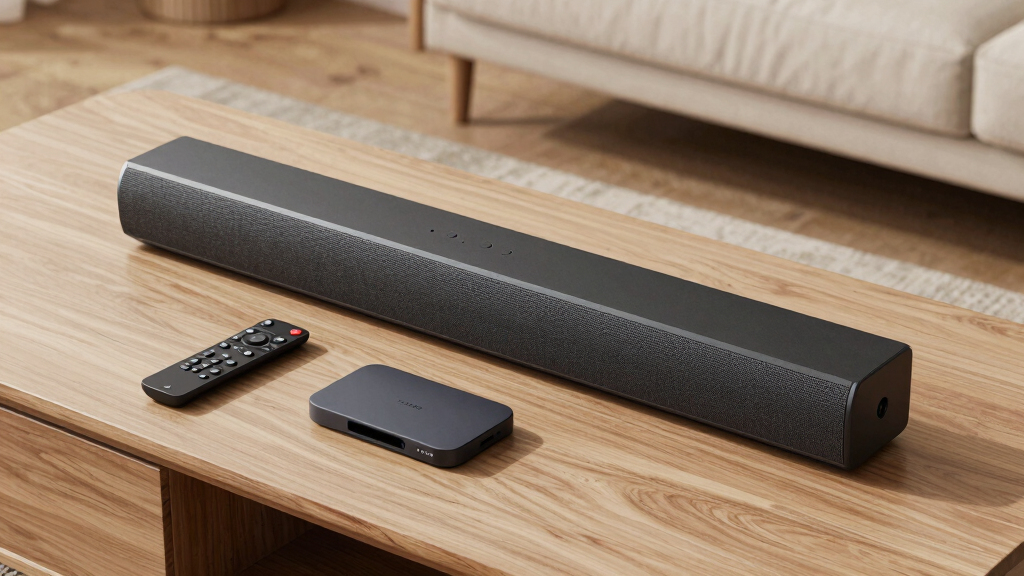

Amplified TV soundbars contain their own power stage, making them a direct way to improve weak television speakers without adding a separate receiver. My best overall pick is the Polk Audio Signa S2 because its wireless subwoofer, straightforward connections, and balanced feature set suit the widest range of living rooms. The Samsung HW-S60D is the stronger premium choice for spacious sound and Samsung TV integration, while the compact ULTIMEA 2.1-channel 132W soundbar offers appealing value for smaller rooms. The main tradeoffs are dialogue clarity versus bass output, single-bar simplicity versus multiple speakers, and compact dimensions versus a wider soundstage. Continue reading for the full breakdown of which model best matches each buyer, room, and television setup.
Complete the kit


Key Takeaways
- Polk Audio Signa S2 ranks first because its separate wireless subwoofer provides a more complete TV upgrade than most basic 2.0 bars without requiring a full surround system.
- Channel count alone did not decide the order: the Samsung HW-S60D earns its premium role through room adaptation and TV integration, while several higher-channel amazon.com/dp/B0C4BZ28PG?tag=comfortalife-20&ascsubtag=dc-245626″ target=”_blank” rel=”nofollow sponsored noopener”>amazon.com/dp/B0GHRSHDT1?tag=comfortalife-20&ascsubtag=dc-245626″ target=”_blank” rel=”nofollow sponsored noopener”>ULTIMEA systems make more sense for buyers focused on cinematic effects.
- Dialogue-focused buyers have distinct choices: the Bose TV Speaker favors clear speech and simple operation, whereas the Amazon Fire TV Soundbar Plus adds a dedicated center channel and stronger movie features.
- Compact models make real compromises: the 16-inch ULTIMEA and 11.7-inch Saiyin fit tight spaces, but their narrow cabinets cannot create the same width or low-frequency scale as the Polk and larger surround packages.
- The lineup splits into three setup levels: simple 2.0 bars for everyday television, 2.1 or 3.1 systems for fuller bass and speech, and 5.0-to-5.1.2 systems for buyers willing to manage more placement and setup.


More Details on Our Top Picks
Polk Audio Signa S2 Sound Bar with Wireless Subwoofer for Smart TV
I rank the Polk Audio Signa S2 first because it balances stronger TV dialogue, satisfying bass, and straightforward setup better than the other options here. Its VoiceAdjust technology gives speech a clearer place in the mix, while the wireless subwoofer produces more convincing low-end impact than the built-in bass system of the ULTIMEA 16-inch soundbar. At just over two inches tall, it is also less likely to block the bottom of a television. The Signa S2 lacks the app-based EQ control and higher claimed output of the ULTIMEA 240W system, so listeners who want extensive tuning may find it restrictive. Its 2.1-channel presentation also cannot match a true multichannel system, but I see its balanced performance and slim design as the strongest fit for most everyday TV rooms.
Pros:- VoiceAdjust technology helps keep dialogue intelligible
- Wireless subwoofer delivers deeper bass than compact all-in-one bars
- Low-profile cabinet fits beneath many televisions
- HDMI and optical cables are included for easier setup
Cons:- No app-based EQ or extensive sound customization
- Mid-range performance lacks the detail and scale of premium systems
- No Dolby Atmos or dedicated surround channels
Best for: Viewers who want clearer dialogue and room-filling bass without managing an app or installing multiple surround speakers
Not ideal for: Audio enthusiasts seeking detailed manual EQ controls, Dolby Atmos, or a true multichannel surround system
- Drivers:5 full-range drivers
- Audio configuration:Soundbar with wireless subwoofer
- Dialogue technology:VoiceAdjust
- Audio decoding:Dolby Digital
- Height:Just over 2 inches
- Wired connectivity:HDMI ARC, optical, AUX
- Wireless connectivity:Bluetooth
- Included accessories:Wireless subwoofer, HDMI cable, optical cable
Our verdict“This is my pick for buyers who want the most balanced combination of amplified dialogue, external-subwoofer bass, and setup simplicity.”
ULTIMEA Sound Bar with Wireless Subwoofer, 240W Peak Power, VoiceMX & BassMX, App Control, 2.1ch for Smart TV
The ULTIMEA 240W 2.1-channel system is the lineup’s tuning-focused choice. I would place it ahead of the Polk Signa S2 for buyers who want app-controlled EQ, VoiceMX, and BassMX, since those controls make it easier to emphasize speech or adjust bass for movies and games. Its claimed 95 dB output and wireless subwoofer also suit larger living rooms better than the 80W detachable soundbar. That flexibility comes with more setup: the app adds another interface, and buyers with older televisions may need to verify connection compatibility before purchase. Peak wattage also says little about refinement, so the 240W figure should not be read as proof that it sounds more natural than Polk’s system. I rank it below the Polk because it asks more from the owner, but its strong output and adjustable sound give enthusiasts more control.
Pros:- 240W peak output provides ample headroom for louder viewing
- VoiceMX and BassMX offer targeted dialogue and bass adjustment
- Wireless subwoofer allows flexible placement
- App-controlled EQ supports more personalized sound
Cons:- App configuration makes setup less approachable
- Compatibility details for older televisions are limited
- Peak-power figures do not establish sound quality at normal volume
Best for: Movie and gaming fans with medium-to-large rooms who want powerful output and app-based control over dialogue and bass
Not ideal for: Buyers who prefer a plug-in-and-forget soundbar or use an older TV with uncertain connection support
- Peak power:240W
- Channels:2.1
- Frequency response:45 Hz–18 kHz
- Maximum SPL:95 dB
- Bluetooth:Version 6.0
- Subwoofer:Wireless with 18 mm high-excursion driver
- Cabinet tuning:6.5 L tuned cabinet
- Sound controls:VoiceMX, BassMX, and app-controlled EQ
- Model year:2026
Our verdict“Choose this model when amplified output and adjustable dialogue and bass matter more than setup simplicity.”
ULTIMEA 2.1ch Surround Sound Bar for TV with Built-in Subwoofer, 132W Peak Power, Bluetooth 5.4, App Control, 16 Inches, Wall Mountable
I see the ULTIMEA 16-inch 2.1-channel soundbar as the best fit when floor space matters more than room-shaking bass. Its 3-inch built-in subwoofer and side-firing ports keep the system to one compact cabinet, unlike the Polk Signa S2 and ULTIMEA 240W models, which need separate subwoofer space. The 132W peak rating and app EQ presets give it more adjustment and claimed power than the smaller Saiyin 48W bar in the wider lineup. Still, built-in bass cannot reach as deeply or spread as evenly as a well-placed external subwoofer, and preset-based tuning is less precise than a full manual equalizer. The app may also feel excessive for someone seeking basic volume control. My ranking reflects that compromise: this is a space-saving amplified upgrade, but not the strongest choice for cinematic low frequencies or effortless operation.
Pros:- Compact 16-inch cabinet suits crowded stands and smaller rooms
- Built-in subwoofer avoids a separate floor unit
- 132W peak output offers useful volume for near-field and bedroom viewing
- Optical, AUX, USB, and Bluetooth connections support varied sources
Cons:- Built-in 3-inch subwoofer has less low-frequency reach than external models
- Sound adjustment relies heavily on presets
- App setup may be cumbersome for basic TV listening
Best for: Apartment dwellers, bedroom viewers, and desk users who need stronger TV sound from a single short cabinet
Not ideal for: Home-theater buyers who want deep external-subwoofer bass or detailed manual control over individual frequencies
- Peak power:132W
- Channels:2.1
- Subwoofer:Built-in 3-inch subwoofer
- Dimensions:15.75 x 2.76 x 4.25 inches
- Weight:4.4 pounds
- Connectivity:Optical, AUX, USB, Bluetooth 5.4
- Control methods:App and remote
- Mounting:Tabletop or wall mount
Our verdict“This is my compact pick for buyers who want amplified 2.1-channel TV sound without finding space for a separate subwoofer.”
Amazon Fire TV Soundbar, 2.0 Speaker with DTS Virtual:X and Dolby Audio, Bluetooth Connectivity
The Amazon Fire TV Soundbar earns a focused role rather than a higher overall rank: it is the simplest match for a Fire TV-centered setup. HDMI eARC/ARC allows compatible televisions to send audio and handle common control duties through one connection, while DTS Virtual:X and Dolby Audio create a broader presentation than the basic stereo hardware suggests. Compared with the Polk Signa S2, however, this 2.0-channel bar lacks a dedicated subwoofer, so action scenes and music have less physical bass. It is also longer than the 16-inch ULTIMEA, though its 2.5-inch height remains easy to accommodate beneath many screens. The missing power adapter and cable reduce its ready-to-use appeal and may add cost. I recommend it for ecosystem convenience and clearer, wider everyday TV audio, not for buyers chasing powerful low frequencies or discrete surround effects.
Pros:- Integrates cleanly with Fire TV and compatible smart televisions
- DTS Virtual:X broadens the soundstage without rear speakers
- Dolby Audio supports clearer, fuller television playback
- Compact height fits beneath many TV screens
Cons:- 2.0-channel hardware lacks a dedicated subwoofer
- Virtual processing cannot reproduce true rear-channel surround
- Power adapter and cable are not included
Best for: Fire TV owners who want a compact HDMI-connected speaker with virtual surround processing and simple daily control
Not ideal for: Action-movie fans who expect deep subwoofer bass or buyers who want all required power accessories in the box
- Speaker configuration:2.0 channels
- Virtual surround:DTS Virtual:X
- Audio technology:Dolby Audio
- TV connectivity:HDMI eARC/ARC
- Wireless connectivity:Bluetooth
- Length:24 inches
- Height:2.5 inches
- Recycled material content:18%
Our verdict“Pick this soundbar for easy Fire TV integration and wider TV sound, but skip it if bass impact is the main goal.”
Sound Bar for Smart TV with Bluetooth, ARC, Optical, AUX, Detachable Design, 80W
This 80W detachable soundbar stands apart through physical flexibility rather than raw output. I would choose it over the fixed 24-inch Amazon Fire TV Soundbar when a room calls for vertical speaker sections, wall mounting, or a conventional horizontal bar. ARC, optical, AUX, and Bluetooth 5.0 also make it adaptable across TVs, PCs, and game systems, while Movie, Music, and News modes offer quick tonal changes without an app. The tradeoff is weaker bass authority than the Polk Signa S2 or ULTIMEA 240W system because no external subwoofer is listed. Its 80W output is also better suited to bedrooms and modest living spaces than large open rooms. Product data provides little detail about driver layout or remote functions, which makes performance harder to judge. I rank it as a layout-friendly value for unconventional setups, not as the most capable audio system.
Pros:- Detachable construction supports several room layouts
- ARC, optical, AUX, and Bluetooth cover common source devices
- Three EQ modes make dialogue or music adjustments quick
- 18-month warranty and round-the-clock online support add purchase protection
Cons:- No external subwoofer is listed for deep bass reproduction
- 80W output may lack headroom in large open rooms
- Driver configuration and remote-control functions are poorly documented
Best for: Renters, PC users, and TV owners who need one affordable speaker system that can sit horizontally, stand vertically, or mount on a wall
Not ideal for: Large-room viewers and bass-focused movie fans who need a dedicated subwoofer and clearly documented speaker hardware
- Power output:80W
- Bluetooth:Version 5.0
- Wired connectivity:ARC, optical, AUX
- Placement options:Horizontal, vertical, tabletop, wall mount
- Detachable design:Yes
- Equalizer modes:Movie, Music, News
- Warranty:18 months
- Customer support:24/7 online technical support
Our verdict“This is my choice for buyers who value adaptable placement and broad connectivity more than deep bass or detailed hardware documentation.”
Amazon Fire TV Soundbar Plus
I rank the Amazon Fire TV Soundbar Plus highest for buyers who want a meaningful TV-audio upgrade without placing a separate subwoofer. Its 3.1-channel layout gives dialogue a dedicated center channel, while Dolby Atmos and DTS:X add more spatial reach than the dialogue-focused Bose TV Speaker. The built-in subwoofer also keeps the setup tidier than the ULTIMEA Poseidon M60, making this a better fit for shared living rooms. Movie, music, sports, and night modes let buyers adjust the presentation without learning a complicated control system. The compromise is less physical bass impact than a system with a dedicated subwoofer, and its Atmos performance depends on a compatible HDMI eARC or ARC television. I also find it less compelling for cramped stands where the compact Bose fits more easily.
Pros:- Dedicated center channel improves speech separation
- Built-in subwoofer avoids an extra floor-standing box
- Dolby Atmos and DTS:X support broaden spatial effects
- Content-specific modes include a quieter night setting
Cons:- Deep bass cannot match a larger dedicated subwoofer
- Best spatial-audio features depend on a compatible television
- Larger cabinet may crowd narrow TV furniture
Best for: Living-room viewers who want stronger dialogue, built-in bass, and spatial audio from one uncomplicated enclosure
Not ideal for: Bass-heavy home-theater buyers who want the room-shaking low end of a dedicated subwoofer system
- Channels:3.1
- Built-in Subwoofer:Yes
- Dolby Atmos:Yes
- DTS:X:Yes
- TV Connection:HDMI eARC/ARC
- Wireless Streaming:Bluetooth
- Sound Modes:Movie, Music, Sports, Night
Our verdict“This is my pick for buyers seeking the strongest balance of amplified dialogue, bass, spatial audio, and simple placement.”
Bose TV Speaker
The Bose TV Speaker earns its place by focusing on the problem many viewers actually have: speech that gets buried beneath music and effects. Its compact cabinet produces wide, natural sound, and the included remote provides dedicated dialogue and bass adjustments. Compared with the Amazon Fire TV Soundbar Plus, this is simpler and easier to place, with optical and AUX inputs that also suit older televisions. It does not deliver Dolby Atmos, multichannel surround, or the same low-frequency weight, however. Adding a compatible Bose Bass Module raises both cost and clutter, weakening its value beside the all-in-one Amazon model. I would choose it for news, dramas, and everyday viewing rather than cinematic spectacle. The 23.38-inch width is particularly useful below smaller screens, though wall mounting requires separately purchased brackets.
Pros:- Dialogue-focused processing makes speech easier to follow
- Compact 23.38-inch cabinet fits smaller TV stands
- HDMI-ARC, optical, and AUX inputs support varied televisions
- Bluetooth adds convenient music and podcast playback
Cons:- No Dolby Atmos or true multichannel surround support
- Fuller bass requires a separately sold Bose Bass Module
- Wall brackets are not included
Best for: Dialogue-focused viewers, older adults, and small-TV owners who want clearer speech with minimal setup
Not ideal for: Movie fans seeking Dolby Atmos, surround effects, or strong bass without buying another speaker
- Width:23.38 inches
- Height:2.21 inches
- Depth:4.02 inches
- TV Connections:HDMI-ARC, optical, AUX
- Wireless Streaming:Bluetooth
- Power Cord Length:5 feet
- Remote Control:Included
Our verdict“I recommend this to speech-first viewers who value clarity and compact placement more than surround sound or deep bass.”
Samsung HW-S60D
I place the Samsung HW-S60D above simpler bars for buyers who want amplified TV sound tied closely to a smart-home and Samsung TV setup. Its 5.0-channel configuration, wireless Dolby Atmos, and built-in subwoofers create a broader sound field than the Bose TV Speaker without requiring rear speakers or a separate bass box. SpaceFit Sound Pro adapts output to the room, while Adaptive Sound and Game Mode Pro target dialogue and console effects automatically. Samsung owners gain the most because Q-Symphony combines the bar with compatible TV speakers. That advantage becomes a drawback for everyone else: several headline features depend on specific Samsung televisions, and wireless Atmos can introduce latency in some setups. Compared with the ULTIMEA Skywave F40, it is neater and smarter but offers less convincing height and bass impact than a 5.1.2 system.
Pros:- Wide 5.0-channel presentation from a compact all-in-one cabinet
- SpaceFit Sound Pro adjusts output for the room
- Q-Symphony expands playback with compatible Samsung televisions
- Game Mode Pro and Adaptive Sound tailor audio automatically
Cons:- Q-Symphony requires a compatible Samsung TV
- Wireless Atmos may add latency in some configurations
- Built-in bass lacks the force of a dedicated subwoofer
Best for: Samsung TV owners who want room calibration, voice control, gaming features, and Atmos without separate speakers
Not ideal for: Buyers using other TV brands who would pay for Samsung-specific features they cannot fully use
- Channels:5.0
- Dolby Atmos:Wireless
- Built-in Subwoofers:Yes
- Q-Symphony:Yes
- Room Calibration:SpaceFit Sound Pro
- Audio Processing:Adaptive Sound
- Gaming Mode:Game Mode Pro
- Smart Platforms:Alexa, Chromecast, AirPlay 2
- TV Compatibility:Q-Symphony supports select Samsung TVs from 2020–2024
Our verdict“This is my smart-feature pick for Samsung households willing to trade dedicated-subwoofer impact for a cleaner setup.”
ULTIMEA Poseidon M60
The ULTIMEA Poseidon M60 makes the strongest value case for buyers who equate amplified TV sound with volume, bass, and a larger front soundstage. Its five full-range drivers, wired wooden subwoofer, and 300-watt output offer more physical punch than the Amazon Fire TV Soundbar Plus or Bose TV Speaker. VoiceMX and BassMX also let viewers raise speech or low frequencies through the app, which is useful when one preset cannot suit every program. Yet the 5.1 label should not be mistaken for the enveloping placement of a system with discrete rear speakers. The Skywave F40 goes further with up-firing channels and a 5.1.2 arrangement, while this model prioritizes affordability and straightforward setup. I would also avoid its full output in a small apartment, where the 99-decibel maximum and dedicated subwoofer may overwhelm the room.
Pros:- 300-watt output provides ample headroom for larger rooms
- Dedicated wooden subwoofer delivers stronger bass than all-in-one bars
- VoiceMX and BassMX offer targeted app-based adjustment
- Bluetooth 5.4 supports stable wireless streaming
Cons:- Limited rear-channel separation reduces the effect of the 5.1 presentation
- Full Dolby Atmos playback requires HDMI eARC compatibility
- High output and a separate subwoofer can overpower small rooms
Best for: Budget home-theater buyers with medium or large rooms who want strong output, adjustable dialogue, and dedicated bass
Not ideal for: Apartment dwellers and surround purists who need restrained bass or clearly separated rear-channel effects
- Channels:5.1
- Power Output:300W
- Drivers:Five full-range drivers
- Subwoofer:Dedicated wired wooden subwoofer
- Frequency Response:45 Hz–18 kHz
- Maximum SPL:99 dB
- Bluetooth:5.4
- Inputs and Control:HDMI eARC, Bluetooth, app
- Model Year:2026
Our verdict“I favor the Poseidon M60 for value-minded buyers who want muscular TV amplification and bass more than precise rear-channel immersion.”
ULTIMEA Skywave F40
I reserve the ULTIMEA Skywave F40 for buyers who want the most theater-like channel arrangement in this group. Its 5.1.2-channel system adds up-firing speakers, giving Dolby Atmos height effects a more direct route than the virtual or all-in-one presentation of the Amazon Fire TV Soundbar Plus. A 5.25-inch subwoofer supplies dedicated low-end weight, while HDMI eARC carries lossless audio from a compatible television. App controls allow deeper adjustment than the Bose TV Speaker’s straightforward remote. This added immersion comes with more hardware, more cabling, and greater dependence on room placement. It also lacks DTS support, which makes the Poseidon M60 or Amazon model safer for mixed-format libraries. I rank it below the all-in-one leaders for convenience, but above them for vertical sound placement when the ceiling and seating layout suit up-firing audio.
Pros:- Up-firing speakers create more direct Dolby Atmos height cues
- 5.1.2 channel layout offers greater immersion than basic all-in-one bars
- Dedicated 5.25-inch subwoofer adds low-frequency weight
- HDMI eARC supports lossless audio transmission
Cons:- DTS audio is not supported
- Requires an HDMI eARC television for full-format playback
- Multiple components and room placement add setup complexity
Best for: Movie fans with HDMI eARC televisions and suitable rooms who want audible Dolby Atmos height effects from a 5.1.2 system
Not ideal for: DTS-heavy disc collectors or buyers who want a single compact bar with minimal cables and placement work
- Speaker Configuration:5.1.2-channel surround
- Spatial Audio:Dolby Atmos
- Height Channels:Up-firing speakers
- Subwoofer Diameter:5.25 inches
- Primary TV Connection:HDMI eARC
- Control Method:App
- Mounting Options:Tabletop, wall mount
- Bluetooth Range:15 meters
- DTS Support:No
Our verdict“I recommend the Skywave F40 to Atmos-focused movie viewers who accept extra hardware and format limits for stronger height effects.”
MZEIBO 90W Sound Bar for TV and PC with Detachable Design and Bluetooth 5.3
I rank the MZEIBO 90W Sound Bar as the most adaptable option here because its detachable 2-in-1 design can sit as one bar or separate for a broader soundstage. Its 90W output also gives movies and games more impact than the 50W MZEIBO, making it better suited to medium-size rooms. ARC simplifies everyday TV control, while optical, AUX, and Bluetooth 5.3 accommodate older screens, PCs, projectors, and wireless music. That flexibility comes with extra hardware and cable management, however. The divided arrangement needs more surface space, and the assembled bar may overwhelm a narrow stand. It also lacks the dedicated wireless subwoofer supplied with the Polk Audio Signa S2, so buyers seeking stronger low-frequency effects should favor that system. I see this as the best layout-first amplified soundbar, not the cleanest one-box setup.
Pros:- I like the 90W output for giving games and films more scale than lower-powered compact bars
- The detachable design supports either a tidy single bar or a wider speaker arrangement
- ARC, optical, AUX, and Bluetooth 5.3 cover modern and legacy sources
- Included cables and remote reduce the number of extras needed for setup
Cons:- The separated configuration creates more cable clutter than a conventional one-piece soundbar
- Its assembled footprint may be awkward on small TV furniture
- Bass cannot match a system with a dedicated wireless subwoofer
Best for: TV and PC owners who want stronger amplified sound and the freedom to use one-piece or separated speaker placement
Not ideal for: Buyers with narrow media stands or anyone wanting dedicated subwoofer bass without adding another component
- Power:90W
- Wireless connectivity:Bluetooth 5.3
- TV connection:ARC
- Additional inputs:Optical and AUX
- Design:Detachable 2-in-1
- Included cables:ARC, optical, and AUX
- Remote control:Included
- Compatibility:Smart TV, PC, gaming console, and projector
Our verdict“I recommend this to buyers who value flexible placement and 90W output more than a minimal footprint or dedicated subwoofer.”
MZEIBO 50W Sound Bar with Bluetooth 5.3, ARC, Optical, AUX – Home Theater Audio System
The MZEIBO 50W Sound Bar earns my value role by combining four useful connection methods with a manageable 17-inch body. It is easier to fit beneath a bedroom TV than the detachable MZEIBO 90W, while ARC allows one wired link to carry TV audio and Bluetooth 5.3 handles music without another cable. Its 50W amplified output should produce a clearer, fuller presentation than typical television speakers, but it is aimed at close-range listening rather than room-filling home theater. Compared with the Sony S100F, this model supplies a stated power figure and a smaller enclosure; Sony counters with dedicated voice enhancement and a bass-reflex design. The MZEIBO also has no stated surround processing or subwoofer expansion. I rank it as a budget-friendly small-room upgrade for buyers who prioritize input flexibility over cinematic scale.
Pros:- I find the 17-inch width practical for small television stands and desks
- The 50W rating provides a clear step up from thin built-in TV speakers
- ARC, optical, AUX, and Bluetooth 5.3 support a broad mix of sources
- The included remote, adapter, and cables make it a self-contained starter package
Cons:- The compact enclosure and 50W output are less suitable for large rooms than the MZEIBO 90W
- No dedicated dialogue mode or surround format is listed
- There is no stated connection for adding a subwoofer
Best for: Budget-conscious bedroom, dorm, or office viewers who need a short powered bar with ARC and several backup inputs
Not ideal for: Owners of large living rooms who need wide coverage, surround effects, or dedicated subwoofer-level bass
- Power:50W
- Width:17 inches
- Bluetooth version:Bluetooth 5.3
- TV connection:ARC
- Digital audio input:Optical
- Analog audio input:AUX
- Remote control:Included
- Package contents:Power adapter and connection cables
Our verdict“I would choose this for an affordable small-room audio boost, while larger spaces call for a wider and more powerful system.”
Sony S100F 2.0ch Soundbar with Bass Reflex Speaker, Bluetooth, and HDMI ARC
I place the Sony S100F ahead of the other compact choices for speech-focused viewing because its voice enhancement mode directly addresses quiet dialogue, rather than relying only on louder output. The bass-reflex speaker and built-in tweeter divide attention between body and high-frequency detail, which suits news, dramas, and everyday programs in a small room. HDMI ARC and Bluetooth keep setup simple, though its connection selection is narrower than the optical, AUX, ARC, and Bluetooth package on the MZEIBO 50W. This is also a 2.0-channel bar with no dedicated subwoofer, so the Samsung HW-B400F offers a stronger bass-oriented alternative and the Amazon Fire TV Soundbar Plus promises greater surround scope. Its wall-mountable cabinet helps with limited furniture space. I view it as the clearest speech-first choice, but not the pick for forceful home-theater effects.
Pros:- I favor the voice enhancement mode for making speech easier to follow
- The bass-reflex speaker adds body without requiring a separate bass cabinet
- HDMI ARC and Bluetooth support straightforward TV playback and wireless streaming
- The compact, wall-mountable design works well in smaller rooms
Cons:- The 2.0-channel layout cannot provide discrete surround sound
- No dedicated subwoofer limits low-frequency weight during films and games
- Fewer listed wired inputs make it less adaptable than either MZEIBO model
Best for: Apartment dwellers and older viewers who watch dialogue-heavy television and want clearer voices through a simple HDMI ARC connection
Not ideal for: Action-film fans seeking dedicated sub-bass, multichannel surround, or enough output for a large open room
- Speaker channels:2.0ch
- TV connection:HDMI ARC
- Wireless connectivity:Bluetooth
- Bass design:Bass Reflex speaker
- High-frequency driver:Built-in tweeter
- Dialogue feature:Voice Enhancement
- Mounting:Wall-mountable
- Design:Compact soundbar
Our verdict“I recommend the Sony S100F for buyers who put intelligible dialogue and simple operation ahead of surround immersion and heavy bass.”
Samsung B-Series Soundbar HW B400F 2.0 ch with Built-in Subwoofer (2025 Model)
The Samsung HW-B400F takes my ecosystem pick because compatible Samsung televisions can share remote functions with the bar, reducing daily control friction. Its built-in subwoofer also gives it a bass advantage over the Sony S100F without adding a separate cabinet or power lead. Surround Sound Expansion widens the presentation beyond the physical bar, while dialogue enhancement helps voices stay distinct during busy scenes. Those features make it a balanced one-box choice, but the underlying 2.0-channel design does not match the discrete immersion of the Samsung HW-S60D 5.0ch or ULTIMEA Poseidon M60 5.1ch. Some convenience features also depend on compatible Samsung TVs, lowering its appeal for owners of other brands. At 25.23 inches, it needs more room than the 11.7-inch Saiyin. I rank it as the strongest brand-matched one-box option, provided ecosystem integration matters more than true surround.
Pros:- I value the built-in subwoofer for adding bass without another cabinet
- Compatible Samsung TV remote control reduces handset clutter
- Surround Sound Expansion creates a broader presentation from one bar
- Dialogue enhancement supports clearer speech during films and television
Cons:- Several convenience features provide their best experience only with compatible Samsung TVs
- The 2.0-channel architecture cannot reproduce discrete multichannel surround
- Its 25.23-inch width is less suitable for cramped desks and narrow stands
Best for: Samsung TV owners who want fuller bass, clearer dialogue, and shared remote convenience without placing a separate subwoofer
Not ideal for: Non-Samsung TV owners or surround enthusiasts who would gain little from the ecosystem features and need discrete rear channels
- Model year:2025
- Speaker channels:2.0ch
- Bass system:Built-in subwoofer
- Audio output mode:Surround
- Speaker size:25.23 inches
- Mounting type:Wall mount
- Enclosure material:Metal
- Control method:Remote control
- Color:Black
Our verdict“I would pair this with a compatible Samsung TV when one-box bass and easy control matter more than genuine multichannel surround.”
Saiyin 11.7-inch Bluetooth Sound Bar for Smart TV, 48W Peak Power, Compact Design
At only 11.7 inches wide, the Saiyin Bluetooth Sound Bar is my space-saving choice for a desk, kitchen television, or compact bedroom setup. Its 48W peak output aims to improve volume and clarity without putting a long cabinet beneath the screen, while Bluetooth 5.3, optical, and AUX accommodate both wireless and wired sources. Unlike the Sony S100F, it can connect to an external subwoofer, giving buyers an upgrade path when the small enclosure’s bass becomes limiting. It is even shorter than the 17-inch MZEIBO 50W, but that reduced size trades away soundstage width and low-end authority. Setup can also be fussier: digital sources may need PCM or stereo output, and a Roku Stick remote is not supported. I rank it as the best fit-first amplified option, not the strongest choice for cinematic scale or universal remote compatibility.
Pros:- I find the 11.7-inch cabinet exceptionally easy to place beneath small screens
- The 48W peak rating offers more output than its dimensions might suggest
- Bluetooth 5.3, optical, and AUX support several common source types
- External subwoofer connectivity leaves room for a later bass upgrade
Cons:- The narrow cabinet limits stereo spread compared with longer soundbars
- Bass remains modest unless an external subwoofer is added
- Roku Stick remote incompatibility and possible PCM setup add friction for some users
Best for: Desk users, kitchen-TV viewers, and renters who have less than a foot of available speaker width but still want wired and wireless inputs
Not ideal for: Roku Stick users and home-theater buyers who expect broad stereo separation or strong bass without adding a subwoofer
- Dimensions:3.5 x 11.7 x 2.5 inches
- Peak power:48W
- Wireless connectivity:Bluetooth 5.3
- Wired inputs:Optical and auxiliary
- Power source:AC adapter
- Remote compatibility:Fire TV, Fire TV Cube, Google Chromecast, and Apple TV
- Unsupported remote:Roku Stick remote
- Included accessories:Remote, power adapter, 3.5mm cable, optical cable, and wall-mounting kit
- Digital audio setting:PCM or stereo recommended
Our verdict“I recommend the Saiyin when physical space is the deciding factor and modest bass is acceptable, especially if a future subwoofer upgrade remains possible.”

How We Picked
I ranked these amplified TV soundbars by how well their internal amplification supports clear dialogue, usable volume, controlled bass, and room-filling presentation. I gave greater weight to channel layout and speaker configuration than to peak-watt figures, since wattage claims are not standardized across brands. Connection options such as HDMI ARC, optical input, and Bluetooth affected usability, while app controls, dialogue processing, and room calibration helped separate similarly configured models. Products also gained ground when their design solved a clear buyer problem rather than merely adding another feature.
The order reflects performance potential, setup burden, versatility, and value as a package. A soundbar with a wireless subwoofer ranks above a basic stereo bar when the extra bass materially improves films and music, but compact and speech-centered models retain distinct roles for buyers who do not want that hardware. I also weighed whether features depend on a matching television ecosystem, whether rear speakers require extra space, and whether a short cabinet limits stereo separation. This approach places the most broadly useful option first, followed by models that become better choices for narrower budgets, rooms, and listening priorities.
Factors to Consider When Choosing Amplified TV Soundbars
I would choose an amplified TV soundbar by matching its speaker layout and physical scale to the room before comparing headline wattage. The right model should fix the television’s weakest area—usually speech, bass, or soundstage—without adding hardware the buyer will resent setting up. These factors explain when a modest stereo bar is enough and when paying for a center channel, subwoofer, or height effects produces a meaningful gain.
Match the Channel Layout to the Problem
A 2.0-channel soundbar is often enough when the main complaint is thin sound or poor volume from a bedroom television. Moving to 2.1 adds stronger low frequencies, but a subwoofer does not automatically make voices clearer. For speech-heavy viewing, I would favor a 3.1 layout with a dedicated center channel, since dialogue can remain anchored while music and effects occupy the left and right channels. Five-channel systems can spread effects more widely, yet virtual surround from one cabinet is different from sound produced by separate rear speakers. A 5.1.2 package adds height channels for Atmos material, though room shape and speaker placement affect how convincing those effects become. Buyers often overpay for channel numbers when their real need is simply a cleaner center image.
Treat Wattage Claims as a Rough Signal
Peak-power figures can suggest how brands position their products, but they do not support clean comparisons when measurement methods differ. A 240W claim is not proof that one soundbar will sound twice as loud or controlled as a 120W model. Cabinet volume, driver size, amplifier tuning, and distortion at higher levels all shape the useful output. I would use wattage only after checking the channel configuration and subwoofer arrangement. Small-room buyers gain little from chasing the largest number if they listen at moderate levels, while open living areas benefit more from broader speaker spacing and a separate bass unit. The common mistake is buying for maximum output rather than intelligibility at the volume used every day.
Choose Between Built-In and Separate Bass
A built-in subwoofer keeps the floor clear and reduces cable clutter, making it attractive for apartments, bedrooms, and wall-mounted televisions. Its bass usually adds body to voices and music, but the narrow cabinet limits how deeply it can reach. A separate wireless subwoofer delivers more impact during films and can fill a larger room with less strain. It also demands floor space, a power outlet, and thoughtful placement to avoid boomy corners or sound carrying through shared walls. I would pay for the separate unit when movie effects and music weight matter more than a minimal setup. Buyers who mostly watch news, dramas, or late-night television may get better value from a well-tuned single bar.
Check Connections Before Sound Modes
HDMI ARC is the most convenient connection for many televisions because it can carry audio and let one remote control basic volume and power functions. Optical audio remains useful for older sets, but it may provide fewer control and format options. AUX input can rescue legacy equipment, while Bluetooth is better treated as a music convenience than the main TV link. Before buying, I would check the television’s available ports, audio-output settings, and support for formats such as Dolby Atmos. An Atmos label has limited value if the source device, streaming plan, television, or connection cannot pass the format. A soundbar with reliable everyday control is usually a better purchase than one with extra modes that complicate every viewing session.
Account for Room Size and Placement
Cabinet width affects soundstage because greater separation between left and right drivers can make television audio feel less confined to the screen’s center. Very short bars work well beneath small displays or monitors, but they rarely create the scale expected from a large living-room television. Wall mounting can free furniture space, though the bar must not block the screen, remote sensor, or upward-firing drivers. Rear speakers need suitable positions and may still require power cables even when their audio connection is wireless. Room-calibration features can help manage uneven spaces, but they cannot fully repair poor placement. I would match compact bars to desks, bedrooms, and secondary TVs, reserving wider bars and surround packages for seating areas with enough distance between the listener and screen.
Know When Premium Features Pay Off
Premium pricing makes the most sense when the buyer can use room calibration, ecosystem integration, or advanced surround processing. Features such as Samsung Q-Symphony become more valuable with a compatible Samsung television and less persuasive for someone planning to change brands. App-based equalization can help households that switch between quiet dialogue viewing, gaming, and bass-heavy films. Voice assistants and game modes add convenience, but neither compensates for an unsuitable speaker layout. I would spend more on a dedicated center channel or better room adaptation before paying for a long list of presets. Buyers seeking simple volume improvement can save money with a focused 2.0 or 2.1 model and avoid unused software features.
Frequently Asked Questions
Is a 2.1 soundbar better than a 2.0 model for every television?
No, because the main advantage of 2.1 sound is added bass rather than automatically clearer speech. A 2.0 bar can be the better fit for news, talk shows, bedrooms, and shared-wall apartments where deep bass is unwanted. I would choose 2.1 for action films, games, and music when a fuller low end matters. Buyers focused on voices should compare dialogue processing or move to a 3.1 model with a center channel. Room size and listening habits matter more than the extra decimal place alone.
Do I need Dolby Atmos in an amplified TV soundbar?
Dolby Atmos is worthwhile for buyers who regularly watch compatible films and have a room where height effects can develop. A 5.1.2 system with dedicated height drivers has more Atmos potential than a basic bar relying only on virtualization. I would not make Atmos the priority for daytime television, sports commentary, or a small secondary screen. Source compatibility also matters, since the television, streaming device, service tier, and connection must support the desired format. A strong 3.1 soundbar may deliver clearer everyday dialogue than a cheaper product carrying an Atmos badge.
Will a soundbar with a built-in subwoofer replace a separate subwoofer?
A built-in subwoofer can add welcome warmth and punch, but its small drivers and shared cabinet usually cannot match the depth of a separate unit. It works best for buyers who value tidy placement, moderate volume, and stronger sound than television speakers. A wireless external subwoofer is the better choice for large rooms, film effects, and music with substantial low bass. I would also account for neighbors, since deeper frequencies travel through floors and walls more readily. The single-bar format wins on convenience, while the separate-subwoofer package wins on scale.
Is HDMI ARC necessary if my television has an optical output?
Optical audio can provide a dependable connection for basic stereo and many compressed surround formats, so HDMI ARC is not mandatory. HDMI ARC usually offers easier volume control, power coordination, and broader format support through one cable. I would favor it for a main television, especially when using streaming apps built into the set. Optical remains a practical fallback for older televisions or HDMI compatibility problems. Buyers interested in higher-bandwidth audio should check for HDMI eARC and format support on both devices rather than assuming every HDMI port behaves alike.
Which type of amplified soundbar is easiest for an older adult to use?
I would favor a simple 2.0 or 3.1 soundbar with HDMI ARC, clear dialogue enhancement, and controls that do not depend on an app. The Bose TV Speaker suits speech-centered listening, while the Amazon Fire TV Soundbar Plus adds a center channel for a fuller main-room setup. A separate subwoofer or rear-speaker package may add setup work without helping someone who mainly watches conversations and news. The television remote should handle volume reliably, and the soundbar should remember its settings after power cycles. Clear speech and predictable operation matter more here than maximum wattage or many sound modes.
Conclusion
For the broadest mix of stronger bass, easy setup, and everyday versatility, my best overall choice is the Polk Audio Signa S2. Value-focused buyers should start with the ULTIMEA 2.1-channel 132W model, especially when compact dimensions and app control matter more than room-filling scale. The Samsung HW-S60D is my premium recommendation for buyers with compatible Samsung equipment who can benefit from its 5.0-channel design, room adaptation, and ecosystem features. Beginners who want a direct, low-fuss upgrade should choose the Amazon Fire TV Soundbar, while speech-first buyers are better served by the Bose TV Speaker. For cinematic surround, I would move to the ULTIMEA Skywave F40 5.1.2 system; for compact spaces, the Saiyin 11.7-inch bar is the easier fit. Buyers wanting a center channel and Atmos without separate rear speakers should choose the Amazon Fire TV Soundbar Plus, closing the gap between basic bars and larger home-theater packages.