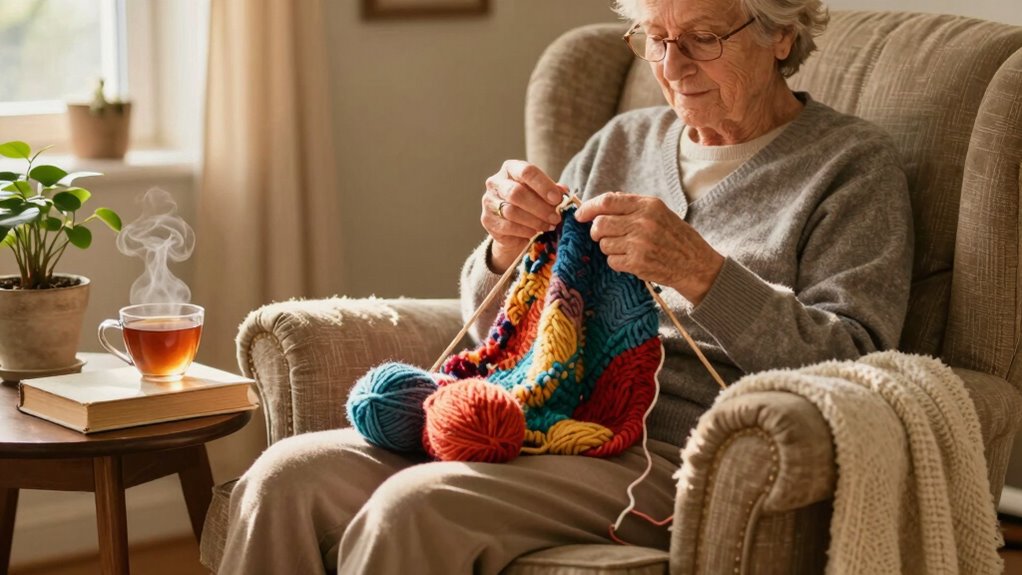
Discover low-stress hobbies you can enjoy at home that boost your confidence and help you relax. Try simple crafts like knitting or watercolor painting, which are gentle yet satisfying. Incorporate relaxing music or nature sounds to soothe your mind. Engage your brain with puzzles or word games for a fun challenge. Grow easy-care houseplants, and connect with others online through hobby groups. Keep exploring for more ideas to enrich your daily routine and find joy in simple activities.
Key Takeaways
- Choose gentle, low-impact activities like watercolor painting, knitting, or indoor gardening to promote relaxation and confidence.
- Engage in calming music, audiobooks, and aromatherapy to create a peaceful environment that reduces stress.
- Incorporate brain puzzles and creative projects to stimulate mental activity without overwhelming effort.
- Create cozy, organized spaces at home with plants and soft lighting to enhance comfort and tranquility.
- Participate in virtual hobby groups and online tutorials to foster social connection while enjoying low-pressure activities.
beginner watercolor painting set for adults
As an affiliate, we earn on qualifying purchases.
As an affiliate, we earn on qualifying purchases.
How to Find the Perfect Low-Stress Hobby for You
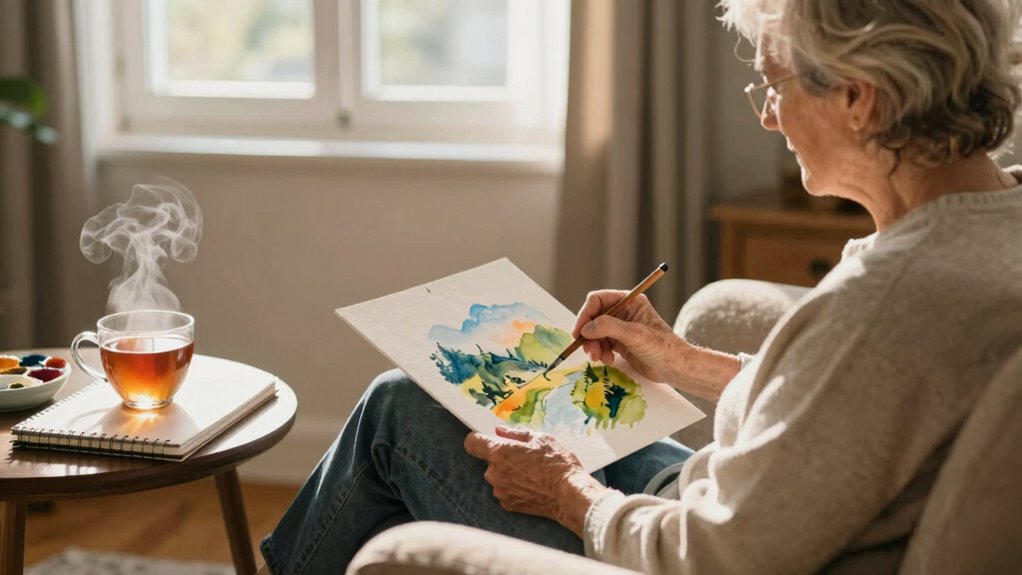
Finding a low-stress hobby that suits you begins with understanding what relaxes and excites you. To do this, focus on exploring interests that genuinely spark your curiosity and bring you joy. Think about past activities you enjoyed or new skills you’ve always wanted to try. Finding passion often involves trying different things to see what resonates most. Pay attention to how each activity makes you feel—calm, energized, or fulfilled. Keep an open mind and don’t hesitate to switch things up if something doesn’t feel right. Remember, the goal is to find a hobby that enhances your well-being without adding stress. Incorporating elements like outdoor spaces can also create a peaceful environment for your hobbies. By exploring interests thoughtfully, you’ll discover activities that fit seamlessly into your routine and enrich your life.
Start Easy With Simple Crafts and Art Projects
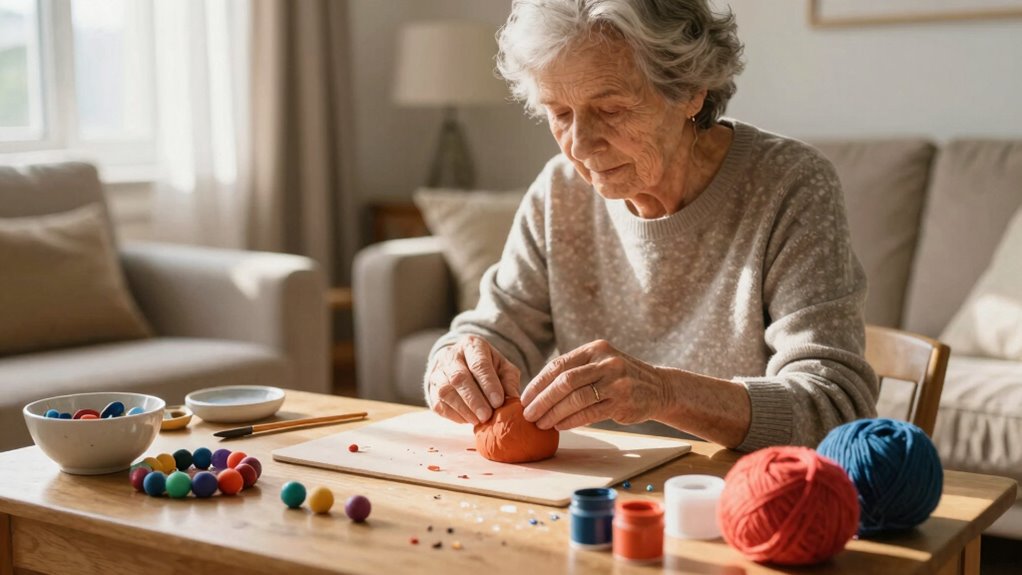
Starting with simple crafts and art projects is an excellent way to ease into creative hobbies without feeling overwhelmed. Simple knitting allows you to create cozy scarves or dishcloths with minimal frustration, making it perfect for beginners. Watercolor painting is another relaxing activity; its gentle colors and forgiving medium help you express yourself without technical pressure. Both activities require only basic supplies and can be done at your own pace. These projects are low-stress and highly rewarding, giving you a sense of accomplishment without demanding too much effort. As you gain confidence, you can explore more complex techniques, but starting simple keeps the process enjoyable and accessible. Embracing the fundamentals of art can help you build confidence and enjoy your creative journey even more. Let your calm and creativity flow naturally. Incorporating emerging trends like digital tutorials and online classes can further enhance your learning experience and keep you inspired. Additionally, understanding color accuracy in art projects can help you achieve more vibrant and true-to-life results as you progress. Developing a good grasp of art care and maintenance can also ensure your supplies stay in great condition, making your creative process smoother. Exploring regional cultural activities can also provide additional inspiration and context for your projects, enriching your artistic experience.
Gentle Exercises That Keep You Moving and Relaxed
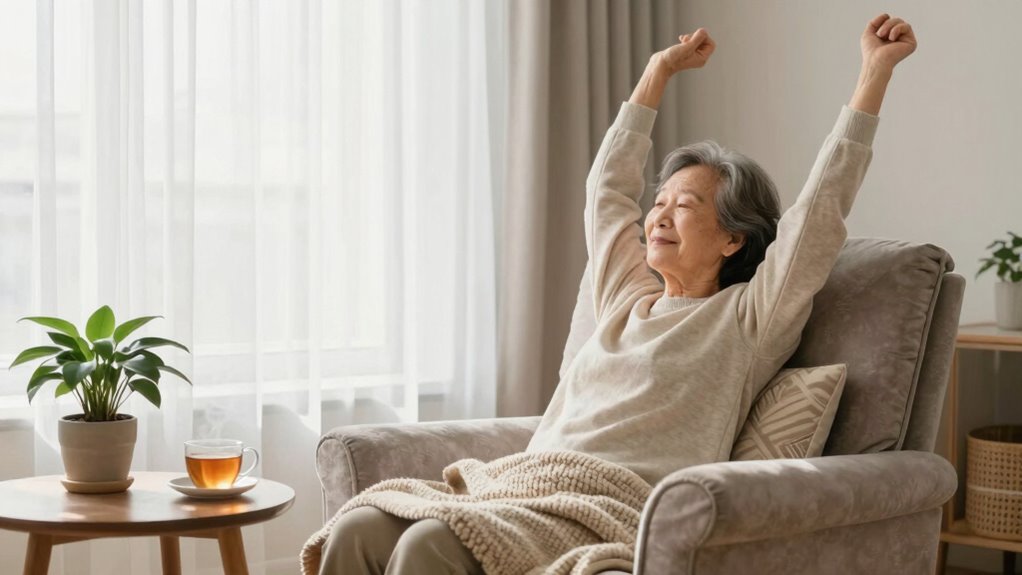
Engaging in gentle exercises can help you stay active and promote relaxation without putting too much strain on your body. Gentle stretches are a great way to loosen stiff muscles and improve flexibility, all while calming your mind. Incorporate simple, slow movements like neck rolls, shoulder shrugs, or seated leg lifts to ease tension. These exercises also serve as effective stress relief techniques, helping you feel more centered and relaxed. Incorporating safe movement practices can further enhance your confidence and reduce the risk of injury. In addition, understanding proper technique is essential for maximizing benefits and preventing strain. You don’t need special equipment or a lot of space—just a comfortable spot at home. Regularly practicing these gentle exercises can boost your mood, improve circulation, and enhance overall well-being, making it easier to stay active and relaxed in your daily routine. Incorporating ergonomic principles into your routine can help you maintain proper posture and reduce discomfort during activities.
Brain-Boosting Puzzles and Games to Stay Sharp

Keeping your mind sharp is easier than you might think, especially when you fill your days with brain-boosting puzzles and games. Brain teasers challenge your problem-solving skills, while memory games boost your recall. Here are some enjoyable options:
- Solve daily brain teasers to stimulate critical thinking.
- Play memory card games to enhance your recall abilities.
- Try crossword puzzles for vocabulary and cognitive growth.
- Engage in Sudoku to improve logical reasoning.
- Incorporate creative exercises to further stimulate your imagination and mental flexibility. Regular mental activity can also help support overall brain health and resilience, especially when combined with proper ventilation and safe sauna practices to maintain well-being. For example, setting an alarm clock in your browser, similar to a web-based alarm clock, can help you establish a routine for mental exercises and other daily activities.
These activities are low-stress, fun, and perfect for keeping your mind active without feeling overwhelmed. Regularly incorporating brain teasers and memory games helps maintain mental agility and offers a satisfying sense of accomplishment. So, set aside a little time each day to challenge yourself with these simple, effective exercises.
Relaxing Reading and Listening Activities for Calm Days
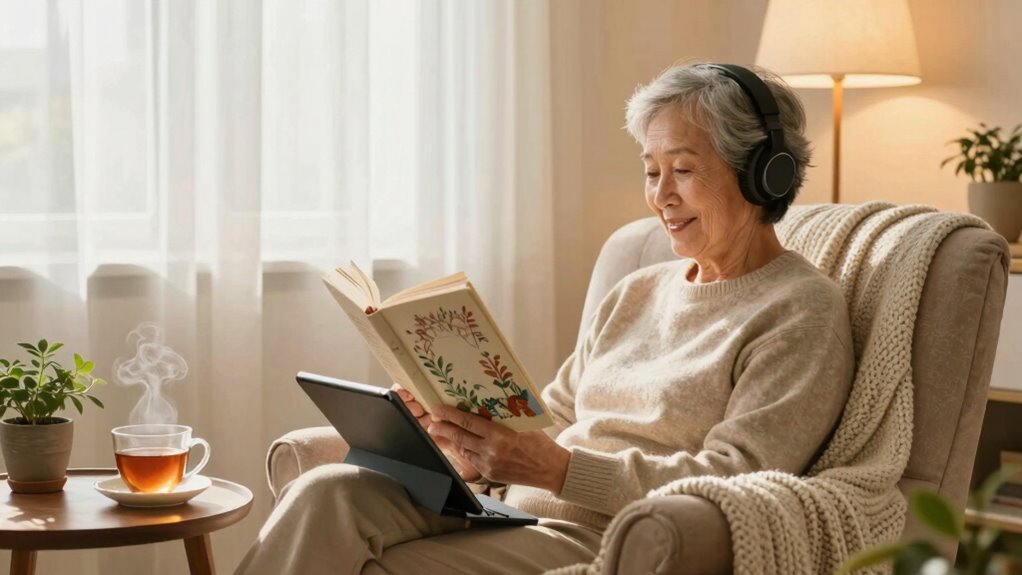
On calm days, relaxing reading and listening activities offer a perfect way to unwind and enjoy your free time. You can indulge in soothing audiobooks or gentle music, enhancing your mood with aromatherapy techniques like lavender or chamomile scents. Pair these with mindful meditation to deepen your relaxation, focusing on your breath and surroundings. To keep things engaging, choose genres like poetry, nature stories, or calming podcasts. Here’s a quick guide:
| Activity | Recommended Material | Atmosphere Tips |
|---|---|---|
| Reading | Cozy novels, poetry | Soft lighting, comfy chair |
| Listening | Nature sounds, guided meditations | Aromatherapy diffuser nearby |
| Mindful Meditation | Breathing exercises | Quiet space, calming scents |
| Aromatherapy Techniques | Essential oils, scented candles | Gentle background music |
In addition, creating a safe and comfortable environment is essential, especially considering the importance of solar system safety when using electrical devices or lighting for your relaxing activities. Regularly checking and maintaining your devices can help ensure safe operation and prevent potential hazards, especially for older adults who may be more vulnerable to electrical issues. Remember to regularly check and maintain your devices to ensure safe operation, as proper device maintenance can prevent potential hazards.
Indoor Gardening and Caring for Houseplants
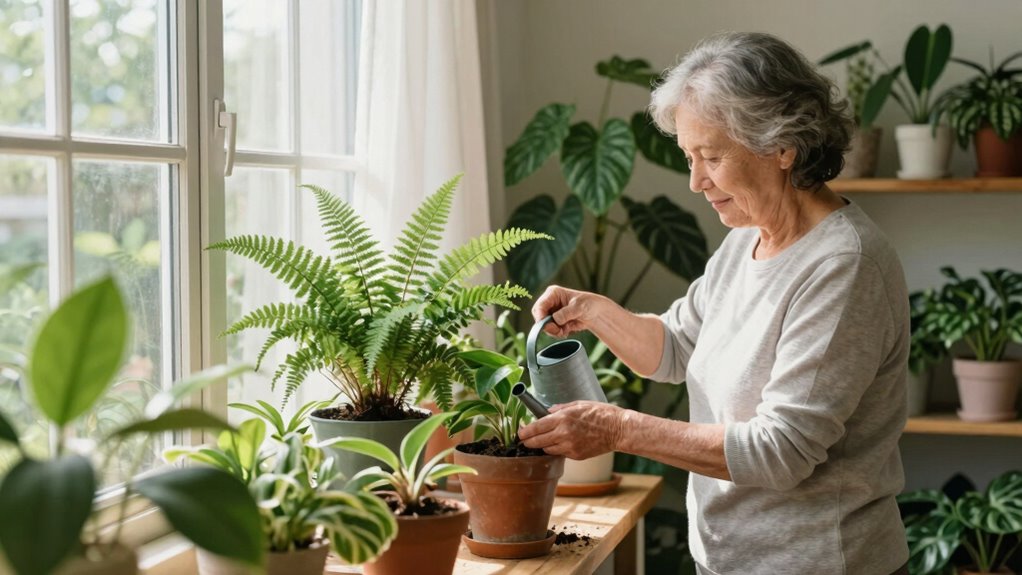
Indoor gardening is a great way to create a calming space in your home, especially when you choose easy-care plants that thrive with minimal effort. Caring for houseplants can boost your well-being by reducing stress and adding a touch of nature to your daily routine. Plus, it’s simple to get started and customize your indoor garden to suit your space and preferences. Regularly monitoring and adjusting light and humidity levels helps ensure your plants stay healthy and vibrant. Incorporating safe, easy-to-maintain plants can make your indoor gardening experience even more enjoyable and stress-free. Using vetted indoor planters, such as self-watering or waterless options, can further simplify your care routine and promote healthier growth. Additionally, understanding and managing battery maintenance for your gardening tools or devices can help ensure they operate safely and efficiently. Keeping an eye on soil quality can also contribute to the overall health of your plants.
Choosing Easy-Care Plants
- Succulent arrangements are perfect—they require infrequent watering and add visual appeal. Incorporating chemical safety practices can help you handle soil and plant care materials more confidently.
- A simple indoor water feature can create a calming atmosphere without extra fuss.
- Consider snake plants or pothos, which tolerate low light and irregular watering.
- Use decorative pots to enhance your space and make plant care more enjoyable.
- Exploring architectural solutions can inspire innovative ways to design your indoor garden space and improve your home environment.
Creating a Relaxing Space
Creating a relaxing space with houseplants can transform your home into a peaceful retreat. As you care for your plants, focus on mindful meditation, appreciating each leaf and stem. Let the gentle act of watering and tending to your plants become a calming routine. Incorporate aromatherapy scents like lavender or eucalyptus nearby to enhance the soothing atmosphere. Your houseplants not only add beauty but also create a natural ambiance that encourages tranquility. Arrange them in spots where you can easily sit and enjoy their presence, perhaps near a cozy chair or window. This simple act of nurturing plants helps reduce stress and fosters mindfulness, making your home a sanctuary for relaxation and peace. Creating a safe, toxin-free space can further enhance your environment’s calming qualities. Additionally, choosing indoor gardening as a hobby can deepen your connection with nature while maintaining a stress-free routine. Understanding environmental impact of tissue paper can inspire eco-friendly choices in your plant care and craft activities, promoting sustainability in your relaxing space.
Benefits for Well-Being
Taking care of houseplants offers numerous benefits for your overall well-being, especially as you enjoy the calming routine of indoor gardening. It promotes stress reduction by providing a peaceful, hands-on activity that centers your mind. Caring for plants also boosts emotional stability through a sense of accomplishment and connection to nature.
Here are some key benefits:
- Reduces stress levels and promotes relaxation.
- Enhances mood and emotional resilience.
- Encourages mindfulness and focus during routine care.
- Creates a soothing environment that fosters positivity.
Enjoy Music and Audio for Relaxation and Memory Support
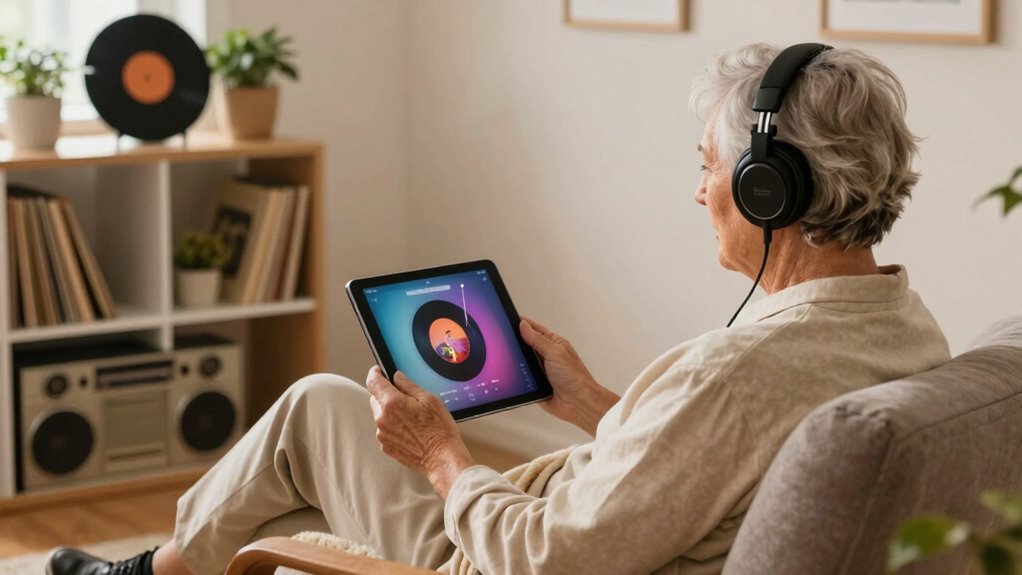
Listening to music or audio can help you relax and reduce stress after a busy day. It also triggers memories and sharpens your recall by reconnecting you with familiar tunes or stories. Trying out new genres keeps your mind engaged and makes your listening experience even more enjoyable.
Listening for Relaxation
Music and audio can be powerful tools for relaxation and mental stimulation. Listening to calming sounds helps reduce stress and enhances focus. You might try:
- Playing nature sounds, like flowing water or bird songs, to create a peaceful atmosphere.
- Engaging in guided meditations that focus on breathing and mindfulness, promoting calmness.
- Exploring soothing music genres, such as classical or ambient, to unwind after a busy day.
- Using audio apps that offer a variety of relaxing tracks tailored for stress relief.
These activities are easy to do at home and can improve your overall well-being. Whether you prefer the gentle sounds of nature or guided meditations, incorporating audio into your routine provides a simple way to relax and support your mental health.
Enhancing Memory Recall
Since engaging with familiar melodies can stimulate memory, incorporating music and audio into your routine may help boost recall and mental agility. Listening to songs from your past or audio recordings that hold personal significance acts as effective memory exercises, triggering emotional and cognitive responses. You can also use music as part of cognitive training, combining it with simple tasks like recalling lyrics or associated memories. This form of mental stimulation encourages neural activity linked to memory pathways, supporting overall cognitive health. Regularly enjoying music or audio content not only offers relaxation but also strengthens your ability to retrieve information. Incorporate these activities into your daily routine for a low-stress way to enhance memory recall and maintain mental sharpness.
Exploring New Genres
Trying out new music genres can be an invigorating way to relax and stimulate your mind. Genre exploration adds to your hobby diversity and keeps your listening experience fresh. To begin, you might:
- Discover different styles like jazz, classical, or blues to broaden your musical horizon.
- Create playlists that mix genres for a unique listening journey.
- Attend virtual concerts or listen to live-streamed performances from around the world.
- Use audio books and podcasts to explore topics or stories that pique your interest.
This approach not only relaxes you but also supports memory by engaging different parts of your brain. Embracing new genres makes your at-home hobbies more dynamic and enjoyable, enriching your daily routine with fresh sounds and ideas.
Connect With Others Virtually Through Hobby Groups
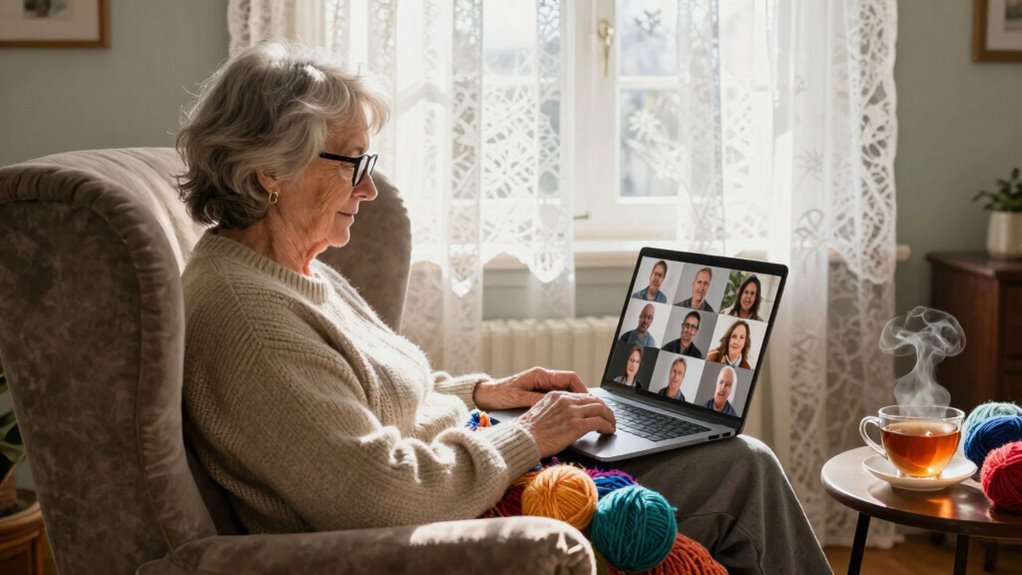
Connecting with others virtually through hobby groups offers a convenient way for older adults to stay socially engaged without leaving home. Virtual hobby clubs allow you to join like-minded individuals from the comfort of your living room, creating a sense of community. Many groups host regular online meetups, discussions, or shared activities that help you stay connected and motivated. You can also explore online craft tutorials together, learning new skills while exchanging tips and encouragement. Participating in these virtual communities keeps your mind active and provides social interaction, reducing feelings of isolation. Whether it’s knitting, gardening, or painting, engaging with hobby groups online makes it easy to enjoy hobbies at your own pace while building meaningful connections.
Create a Comfortable Space for Your Hobbies at Home
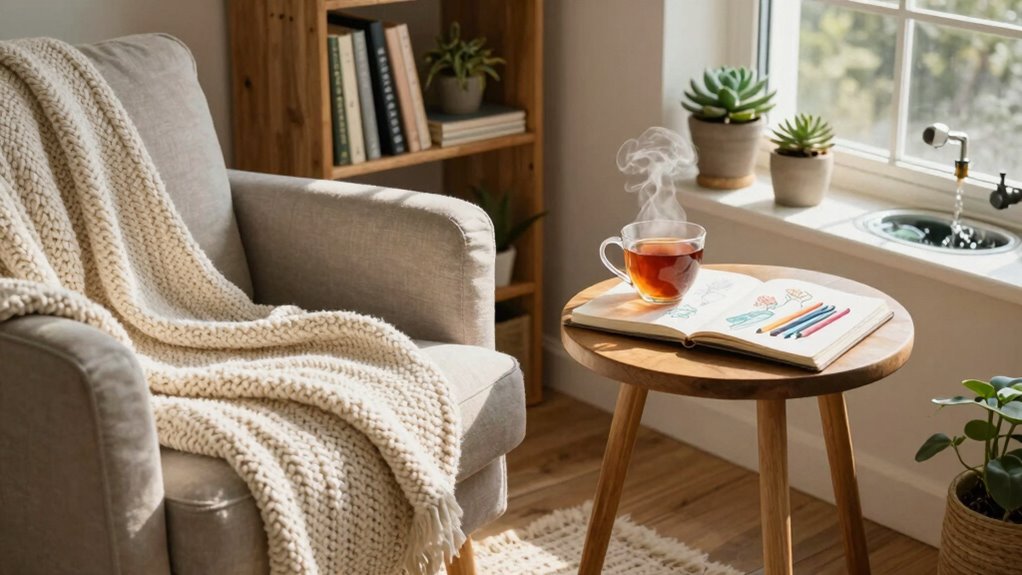
Have you considered how a dedicated, comfortable space can make your hobbies more enjoyable? Creating cozy corners at home can turn any area into a relaxing retreat. To maximize your enjoyment, focus on these steps:
A cozy, dedicated space enhances your hobbies, making relaxation and enjoyment effortless at home.
- Choose a quiet spot with good lighting for your hobby space.
- Organize hobby supplies in accessible containers to keep everything tidy.
- Add comfortable seating to encourage longer, relaxed sessions.
- Decorate with personal touches to make the space inviting and inspiring.
Frequently Asked Questions
How Can I Adapt Hobbies for Limited Mobility or Health Issues?
You can adapt hobbies for limited mobility or health issues by using adaptive techniques and hobby modifications. For example, if you enjoy reading, try audiobooks or large-print books. If gardening is difficult, consider container gardening or virtual plant care. Modify activities to suit your comfort level, use ergonomic tools, or sit while working. These adjustments make hobbies more accessible and enjoyable, helping you stay engaged without strain or frustration.
What Safety Precautions Should I Consider for At-Home Hobbies?
You should always prioritize safety by wearing appropriate safety gear, like gloves or goggles, depending on your hobby. Keep emergency plans in place, such as accessible emergency contacts and a phone nearby. Make sure your workspace is clutter-free to prevent falls or accidents. Regularly check equipment and supplies for wear and tear. Staying prepared and cautious helps you enjoy your hobbies without unnecessary risks or stress.
Are There Hobbies Suitable for Individuals With Visual or Hearing Impairments?
Yes, there are hobbies suited for individuals with visual or hearing impairments. You can explore sensory-friendly activities like listening to audiobooks or music with assistive technology, which enhances sound clarity. Tactile hobbies such as knitting or clay modeling can also be enjoyable. These activities are adaptable, low-stress, and promote relaxation, allowing you to engage comfortably and confidently despite sensory challenges.
How Do I Stay Motivated to Pursue Hobbies Regularly?
To stay motivated, establish self-discipline routines by dedicating specific times for your hobbies daily or weekly. Setting achievable goals helps you stay focused and prevents frustration, making hobbies more enjoyable. Celebrate small victories, like completing a project or mastering a new skill, to boost your confidence. Remember, consistency is key—keep reminding yourself of the joy and relaxation your hobbies bring, and you’ll find it easier to stay committed.
Can Hobbies Help With Mental Health and Emotional Well-Being?
Hobbies can considerably boost your mental health and emotional well-being. Engaging in activities like mindfulness exercises helps you stay present, reducing stress and anxiety. They also build emotional resilience, making it easier to handle life’s challenges. Regular hobbies give you a sense of purpose and joy, which lifts your mood and promotes a positive outlook. By dedicating time to hobbies, you actively nurture your mental health and emotional strength.
Conclusion
So, there you have it—your foolproof guide to turning your home into a stress-free sanctuary. Who knew that knitting, puzzles, or just listening to a good audiobook could be the secret to eternal youth? Just remember, the key to happiness isn’t a fancy hobby, but finding something that keeps you smiling without making your blood pressure spike. Now go ahead, relax, and pretend you’re the zen master of your own cozy kingdom.