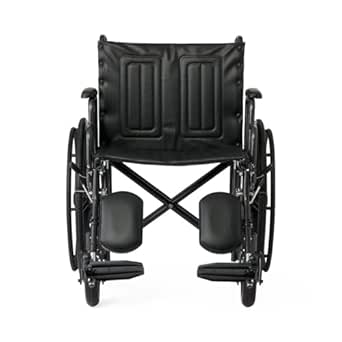
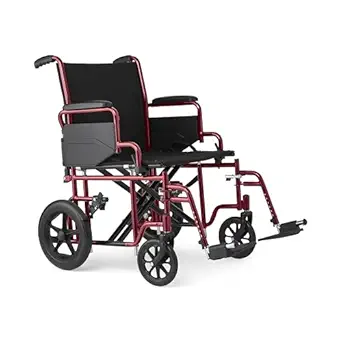
For a wheelchair for a heavier adult, I would start with the Medline Excel Extra-Wide Bariatric Wheelchair with a 24-inch seat and 500-pound capacity as the best overall pick for its wide fit and higher stated capacity. The Medline Extra-Wide 22-inch wheelchair is a more compact alternative, while the Vive Bariatric Transport Wheelchair suits trips where a caregiver will push. The main tradeoff is between a self-propelled wheelchair for independent movement and a transport chair that is easier to manage with a helper. Seat width, the user’s weight, doorway clearance, and transfer needs matter as much as the capacity label. Read on for how the options compare and which type fits different needs.

Turn quiet afternoons into listening time
- Thousands of audiobooks, podcasts and originals
- Listen on your phone, tablet or Echo — also offline
- Cancel anytime
Complete the kit

Key Takeaways
- The 24-inch Medline Excel has the highest stated capacity in this group at 500 pounds, while most of the bariatric transport chairs list 450 pounds.
- Seat width changes the fit choice: the 24-inch Medline Excel offers the widest listed seat; the 20-inch Vive bariatric wheelchair is narrower and may suit users who need less seat width.
- Transport chairs are caregiver-driven options: the Vive, DynaRide, and several Medline and Drive Medical models prioritize assisted mobility rather than independent self-propulsion.
- Not every Medline model in this roundup is labeled bariatric: the folding chairs with swing-back arms and footrests have different listed seat dimensions, so buyers should check fit and capacity before choosing them.
- Useful details vary by task: the Drive Medical transport chair has 12-inch flat-free rear wheels, while select Medline folding models offer swing-back arms or elevating footrests for transfer and positioning needs.




| wheelchairs for heavy people | Weight capacity | Seat width | Frame | Footrests |
|---|---|---|---|---|
| Medline Extra-Wide Bariatric W | 500 pounds | 22 inches | Alloy steel | — |
| Vive Mobility Bariatric Transp | 450 pounds | — | Steel | — |
| DynaRide Bariatric Transport P | 450 pounds | — | Carbon reinforced steel | — |
| Drive Medical Bariatric Foldin | 450 pounds | 22 inches | Aluminum | Swing-away |
| Medline Excel Extra-Wide Baria | 500 pounds | 24 inches | Chrome | Adjustable, swing-away |
| Medline Folding Wheelchair wit | 300 lbs | 20 inches | — | — |
| Medline Heavy Duty Bariatric T | 450 lbs | — | — | Detachable, swing-away |
| Medline Bariatric Transport Ch | 450 lbs | 22 inches | — | Swing-away |
| Medline Folding Wheelchair wit | 300 lbs | 20 inches | — | Swing-away |
| Vive Bariatric Wheelchair for | 400 lbs | 20 inches | Steel | Adjustable, swing-away |
More Details on Our Top Picks
Medline Extra-Wide Bariatric Wheelchair with 22-Inch Seat
The 22-inch seat and 500-pound capacity make this a strong fit for buyers who need extra room with a higher stated load limit than the Vive Mobility and DynaRide transport chairs, each rated for 450 pounds. Its elevating leg rests also set it apart from the Medline Excel 24-inch model, which has adjustable swing-away footrests but no listed elevating feature. Removable desk-length arms can help with side transfers, while the folding steel frame gives it a storage option. The tradeoff is weight: the listing gives both 58 and 65 pounds, so lifting it into a vehicle may be difficult, especially if the higher figure is accurate. Solid wheels and a 32.5-inch assembled width also make it a less flexible choice for rough outdoor routes or tight doorways.
Pros:- 500-pound stated weight capacity
- Elevating leg rests support leg positioning
- Removable desk-length arms can make side transfers easier
- Folds to 13 inches deep for storage
Cons:- Listed weight conflicts between 58 and 65 pounds
- Solid wheels and transport-chair-style setup are not suited to independent self-propulsion
- 32.5-inch assembled width may be too wide for some doorways
Best for: People who need a 22-inch seat, higher stated capacity, and elevating leg rests for positioning at home or during assisted outings
Not ideal for: Anyone who needs to self-propel, regularly lift a chair into a car, or pass through narrow doorways
- Seat width:22 inches
- Seat depth:18 inches
- Seat height:22 inches
- Weight capacity:500 pounds
- Listed item weight:58 or 65 pounds (conflicting listing details)
- Frame:Alloy steel
- Armrests:Removable desk-length
- Leg rests:Elevating
- Assembled dimensions:32.5 × 32.5 × 36.5 inches
Our verdict“Choose this Medline if elevating leg rests and a 500-pound stated capacity matter more than a lighter lift or self-propelled mobility.”
Vive Mobility Bariatric Transport Wheelchair for Adults, 450 lb Capacity
The mostly assembled setup gives this Vive an edge for caregivers who want to attach the footrests and get moving, while its 22-by-18-inch seat matches the seat dimensions of the DynaRide Bariatric Transport Plus. Dual handbrakes add caregiver control, and the height-adjustable, swing-away leg rests allow some fit adjustment and easier entry. Its 450-pound capacity is below the 500-pound ratings of both wide-seat Medline wheelchairs, so buyers prioritizing the highest listed capacity should look there instead. The Vive weighs 48 pounds, lighter than those Medline options but heavier than the 33-pound Drive Medical transport chair. At 27 inches wide, it may still be too broad for narrow doorways, and its transport design requires someone else to push.
Pros:- Supports up to 450 pounds
- 22-by-18-inch seat with breathable upholstery
- Dual handbrakes give the attendant added control
- Mostly assembled, with footrests to attach
Cons:- 27-inch overall width may not fit narrow doorways
- 48-pound chair can be cumbersome to lift into a vehicle
- Transport design requires a companion to push
Best for: Caregivers who want a folding bariatric transport chair with a wide seat, dual handbrakes, and minimal assembly
Not ideal for: People who need a capacity above 450 pounds, independent self-propulsion, or reliable passage through narrow doorways
- Weight capacity:450 pounds
- Item weight:48 pounds
- Seat dimensions:22 × 18 inches
- Overall dimensions:27 × 42 × 36 inches
- Frame:Steel
- Wheels:12 inches
- Brakes:Dual handbrakes
- Leg rests:Height-adjustable, swing-away
- Setup:Pre-assembled; attach footrests
Our verdict“Pick the Vive for caregiver-led outings when quick setup and attendant braking matter more than a 500-pound capacity or a narrower frame.”
DynaRide Bariatric Transport Plus Wheelchair, 22″ x 18″ Seat, Reinforced Steel Frame, 450 lb Capacity, Silver
The DynaRide pairs a 22-by-18-inch seat with a 450-pound capacity, matching the Vive Mobility’s seat and rated load while adding cushioned upholstery and a reinforced steel frame. Its companion-activated brakes and locking rear wheels suit supervised trips and events where an attendant manages movement. Compared with the Drive Medical transport chair, the DynaRide’s listed wheel sizes are 8 inches at the front and 12 inches at the rear; the Drive instead lists flat-free 12-inch rear wheels and weighs 33 pounds. The DynaRide’s portability comes from its folding design, but no item weight is supplied here, so it is hard to judge how manageable it will be to lift. It also lacks self-propulsion wheels, making it a poor match for users who want to move themselves.
Pros:- 450-pound stated weight capacity
- 22-by-18-inch seat with cushioned upholstery
- Reinforced steel frame
- Folding design supports storage and transport
Cons:- No self-propulsion wheels, so an attendant must push
- Item weight is not provided in the supplied specifications
- Transport-focused design may not suit all-day independent use
Best for: People who need a padded, wide-seat transport chair for attendant-led outings and occasional events
Not ideal for: Users who want independent mobility or buyers who need a confirmed chair weight before planning vehicle transport
- Seat dimensions:22 × 18 inches
- Weight capacity:450 pounds
- Frame:Carbon reinforced steel
- Front wheel size:8 inches
- Rear wheel size:12 inches
- Upholstery:Cushioned
- Brakes:Companion-activated brakes and locking rear wheels
- Folding design:Yes
- Color:Silver
Our verdict“Choose the DynaRide for padded, attendant-led outings if you do not need to propel the chair yourself.”
Drive Medical Bariatric Folding Transport Chair with 12-Inch Flat-Free Rear Wheels, Red, 22-Inch Seat
At a listed 33 pounds, this Drive Medical is substantially lighter than the 48-pound Vive Mobility and the 60-pound Medline Excel, which can make loading and storage more manageable for a caregiver. It still supports 450 pounds and offers a 22-inch seat, padded full-length arms, and swing-away footrests for easier entry. Flat-free rear wheels avoid routine inflation, while the seat belt, anti-tippers, and companion-operated wheel locks add practical support for assisted trips. The lower weight does not make it a self-propelled chair: a companion must push, and 33 pounds may still be too much for some people to lift repeatedly. Buyers who need a 500-pound rating should choose either wide-seat Medline wheelchair instead, though both are listed at substantially higher weights.
Pros:- 33-pound listed weight is lower than the other transport chairs here
- Supports up to 450 pounds with a 22-inch seat
- Flat-free rear wheels reduce tire maintenance
- Includes a seat belt, anti-tippers, and companion-operated wheel locks
Cons:- Requires a companion to push
- 33 pounds may still be difficult to lift for some caregivers
- Capacity is lower than the 500-pound Medline wheelchair options
Best for: Caregivers who need a 22-inch-seat transport chair that is easier to lift and store than heavier bariatric models
Not ideal for: Users who need to self-propel, need a capacity above 450 pounds, or cannot manage a 33-pound lift
- Weight:33 pounds
- Weight capacity:450 pounds
- Seat width:22 inches
- Frame:Aluminum
- Rear wheel size:12 inches
- Rear wheel type:Flat-free
- Footrests:Swing-away
- Upholstery:Heavy-duty, nylon-reinforced
- Safety features:Seat belt, anti-tippers, companion-activated wheel locks
Our verdict“Choose this Drive Medical when a lighter assisted transport chair matters more than self-propulsion or a 500-pound rating.”
Medline Excel Extra-Wide Bariatric Wheelchair, 24-Inch Seat, 500 lb Capacity
For buyers who need the most seat width in this batch, the Medline Excel’s 24-inch seat offers two more inches than the other listed chairs, while retaining a 500-pound capacity like the 22-inch Medline model. Removable desk-length arms can make side transfers easier, and its adjustable, swing-away footrests help with entry and positioning. That footrest setup is less suited to leg elevation than the other Medline wheelchair’s elevating rests, so choose the 22-inch model if that feature matters more than seat width. At 60 pounds, the Excel is also heavier than the Drive Medical transport chair and Vive Mobility, which can complicate car loading. Its folding frame supports storage, but the 32.5-inch assembled width still calls for checking doorways and room to maneuver.
Pros:- 24-inch seat is the widest in this batch
- 500-pound stated weight capacity
- Removable desk-length arms support side transfers
- Adjustable swing-away footrests ease entry and positioning
Cons:- 60-pound weight may make vehicle loading difficult
- No elevating leg rests are listed
- 32.5-inch assembled width may limit access through narrow doorways
Best for: People who need a 24-inch seat for extra hip room and can accommodate a heavy, wide chair
Not ideal for: Users who need elevating leg rests, a chair that is easy to lift into a car, or access through narrow doorways
- Seat width:24 inches
- Seat depth:18 inches
- Weight capacity:500 pounds
- Product weight:60 pounds
- Frame:Chrome
- Arms:Removable, desk-length
- Footrests:Adjustable, swing-away
- Assembled dimensions:32.5 × 32.5 × 36.5 inches
- Folded dimensions:32.5 × 13 × 36.5 inches
Our verdict“Pick the Medline Excel if seat width is your main fit priority and you can manage its weight and overall width.”
Medline Folding Wheelchair with Swing-Back Arms and Elevating Footrests
Among these picks, this Medline is the one to choose when leg positioning matters more than a higher capacity. Its elevating leg rests offer a comfort adjustment absent from the listed details for the Medline Folding Wheelchair with Swing-Back Arms and Footrests, while the swing-back desk-length arms can make side transfers easier. The 20-inch seat and 300-pound capacity are a narrower fit for this heavy-user roundup than the 22-inch, 450-pound Medline Heavy Duty Bariatric Transport Chair. That tradeoff makes this a better match for someone who fits its seat and needs a conventional folding wheelchair with leg support, rather than a bariatric transport chair built for a higher stated limit. At 38 pounds, it is also lighter than the 45-pound Vive Bariatric Wheelchair, though lifting any folded chair may still be difficult.
Pros:- Elevating leg rests allow a more raised leg position
- Swing-back desk-length arms can help with side transfers
- Folds to 11.5 inches wide for storage
- 38-pound listed weight is lower than the 45-pound Vive Bariatric Wheelchair
Cons:- 300-pound capacity is below the bariatric transport chairs in this lineup
- 20-inch seat may not provide enough room for larger users
- At 38 pounds, it can still be challenging to lift into a vehicle
Best for: Users within the 300-pound capacity who need elevating leg rests and swing-back arms for transfers.
Not ideal for: Users who need a seat wider than 20 inches or a capacity above 300 pounds; the Medline Heavy Duty Bariatric Transport Chair offers a wider seat and higher stated capacity.
- Seat width:20 inches
- Seat depth:16 inches
- Weight capacity:300 lbs
- Chair weight:38 lbs
- Frame material:Hammertone metal
- Overall dimensions:32.5 x 26.5 x 36.5 inches
- Folded dimensions:32.5 x 11.5 x 36.5 inches
Our verdict“Choose this Medline if you fit its 20-inch seat and need elevating leg rests more than a higher weight capacity.”
Medline Heavy Duty Bariatric Transport Chair, 22 x 18 in Seat, Blue Frame
The blue-frame Medline stands out for combining a 450-pound capacity with handbrakes, wheel locks, and a seat belt. Those controls give a caregiver more ways to manage stops and transfers than the provided details for the Medline Bariatric Transport Chair for Adults and Seniors, which list a similar capacity and 22-inch seat but no braking or belt details. Its 22 x 18-inch seat also offers more room than the 20-inch Medline folding wheelchair picks, while removable arms and swing-away footrests can help with access. This is a transport chair, so it is best for trips where someone else pushes; the listed 12-inch rear wheels do not make it a self-propelled alternative to a conventional wheelchair. Buyers who need leg elevation should look to the Medline with Elevating Footrests instead, though that chair has a lower stated capacity.
Pros:- 450-pound stated capacity
- 22 x 18-inch seat provides more room than the 20-inch folding chairs
- Handbrakes, wheel locks, and a seat belt are specified
- Removable desk-length arms and swing-away footrests aid access
Cons:- Transport-chair format depends on another person to push
- Steel construction may be harder to lift than a lighter folding wheelchair
- No chair weight or folded dimensions are provided in the product data
Best for: Caregivers transporting adults who need a 22-inch seat, a 450-pound capacity, and added stopping controls.
Not ideal for: Independent users who need to self-propel or users who require elevating leg rests.
- Weight capacity:450 lbs
- Seat dimensions:22 x 18 inches
- Frame material:Steel
- Upholstery:Breathable nylon
- Rear wheel size:12 inches
- Armrests:Removable, desk-length
- Footrests:Detachable, swing-away
- Safety and control:Seat belt, handbrakes, wheel locks
- Frame color:Blue
Our verdict“Pick this Medline for caregiver-led transport when its belt and braking features matter more than self-propulsion or leg elevation.”
Medline Bariatric Transport Chair for Adults and Seniors, Supports up to 450 lbs, Extra-Wide 22″ Seat, Swing-Away Desk Length Arms and Footrests, Red
This red Medline is a straightforward choice for buyers whose main fit priorities are a 22-inch seat and 450-pound capacity. It shares those headline figures with the blue Medline Heavy Duty Bariatric Transport Chair, but the provided details for that model also specify handbrakes, wheel locks, a seat belt, and 12-inch rear wheels. Those additions give the blue version a clearer case for buyers prioritizing control features; this red model’s appeal is its simpler profile with swing-away arms and footrests and a foldable steel frame. At 45 pounds, it weighs as much as the Vive Bariatric Wheelchair, while offering a wider seat than Vive’s 20-inch option. It suits caregiver-assisted transport and storage, but the listed data do not establish self-propulsion, braking details, or a seat belt.
Pros:- 22-inch seat width gives more room than the 20-inch Vive Bariatric Wheelchair
- 450-pound stated capacity
- Swing-away arms and footrests can ease transfers
- Folds for transport and storage
Cons:- 45-pound weight may be difficult for some caregivers to lift
- Only red is identified in the product details
- The supplied specifications do not list braking controls or a seat belt
Best for: Adults and seniors who need a 22-inch transport-chair seat and foldability, with a caregiver available to push.
Not ideal for: Buyers who need specified handbrakes, wheel locks, or a seat belt should compare the blue Medline Heavy Duty Bariatric Transport Chair.
- Seat width:22 inches
- Seat depth:18 inches
- Weight capacity:450 lbs
- Chair weight:45 lbs
- Frame material:Steel
- Armrests:Swing-away, desk-length
- Footrests:Swing-away
- Foldable:Yes
- Color:Red
Our verdict“Choose this red Medline if a wide seat and folding transport-chair design are your priorities and you do not need the extra controls specified on the blue Medline.”
Medline Folding Wheelchair with Swing-Back Arms and Footrests, 20″W x 16″D Seat
This Medline suits buyers who want a basic folding wheelchair without the leg-positioning adjustment of its companion Medline Folding Wheelchair with Elevating Footrests. Its 20 x 16-inch seat and 300-pound capacity match that model’s listed fit and limit, but the described swing-away footrests and padded armrests keep the setup focused on everyday access and comfort. Compared with the 22-inch, 450-pound Medline Heavy Duty Bariatric Transport Chair, this is a narrower, lower-capacity choice; its advantage is a conventional wheelchair format rather than a caregiver-oriented transport design. The product data do not give a chair weight, frame material, or folded dimensions, so buyers planning frequent vehicle loading have less information for judging portability. Consider it only if the seat and capacity suit the user.
Pros:- Folding design supports storage and transport
- Swing-away footrests can clear space for transfers
- Padded armrests and nylon seat are specified
- Listed for use on varied terrain
Cons:- 300-pound capacity is below the 450-pound bariatric transport options
- 20 x 16-inch seat may be restrictive for larger users
- Chair weight and folded dimensions are not provided
Best for: Users under the stated 300-pound limit who need a foldable everyday wheelchair with swing-away footrests.
Not ideal for: Users needing a seat wider than 20 inches, a capacity above 300 pounds, or detailed weight and folded-size data before arranging transport.
- Seat width:20 inches
- Seat depth:16 inches
- Weight capacity:300 lbs
- Seat material:Nylon
- Armrests:Padded
- Footrests:Swing-away
- Storage:Foldable
Our verdict“Choose this Medline for straightforward daily wheelchair use if its 20-inch seat and 300-pound limit fit, and skip it when you need a wider bariatric setup.”
Vive Bariatric Wheelchair for Adults, 400 lb Capacity, 20-Inch Seat
The Vive fills the gap between the 300-pound Medline folding chairs and the 450-pound Medline bariatric transport options. Its 400-pound capacity pairs with a 20-inch seat, adjustable swing-away footrests, padded armrests, and hand brakes, giving buyers more specified adjustments and controls than the basic Medline Folding Wheelchair with Swing-Back Arms and Footrests. It is a conventional foldable wheelchair rather than a transport chair, but its 27-inch overall width can rule it out for narrow doorways. The 45-pound weight also matches the red Medline transport chair, which has a wider 22-inch seat and higher stated capacity but is designed for caregiver pushing. This Vive makes more sense when the user needs the intermediate capacity and wheelchair format, not maximum seat width.
Pros:- 400-pound capacity exceeds the 300-pound Medline folding models
- Adjustable swing-away footrests support access and leg positioning
- Hand brakes and padded armrests are specified
- Foldable for storage and transport
Cons:- 27-inch overall width may not fit through some doorways
- 45-pound weight can be difficult to lift
- 20-inch seat is narrower than the 22-inch Medline bariatric transport chairs
Best for: Users who need a conventional foldable wheelchair rated to 400 pounds, with adjustable footrests and hand brakes.
Not ideal for: Buyers who need a seat wider than 20 inches, doorways narrower than the chair’s 27-inch overall width, or a lighter chair for frequent lifting.
- Weight capacity:400 lbs
- Chair weight:45 lbs
- Seat width:20 inches
- Overall width:27 inches
- Frame:Steel
- Footrests:Adjustable, swing-away
- Armrests:Padded
- Storage:Foldable
- Guarantee:1 year
Our verdict“Choose the Vive if you need a foldable wheelchair with a 400-pound limit and adjustable footrests, provided its 27-inch width fits your routes.”

How We Picked
I compared the listed weight capacity, seat dimensions, and chair type first, since these determine basic fit and whether a chair is designed for independent use or caregiver assistance. I then weighed practical details such as folding design, wheel setup, arm configuration, and footrest options, which can affect transport, transfers, and daily routines.
The ranking favors models with a clear combination of capacity and usable seat space, then distinguishes them by their intended role. The 500-pound, 24-inch Medline Excel leads for buyers who need the greatest listed capacity and width; the 22-inch Medline and Vive transport chair offer narrower or assisted-mobility alternatives. Models with a lower or unspecified capacity in the product name rank lower for this particular search, even when features such as swing-back arms or elevating footrests may suit specific needs. I treat stated specifications as a starting point: buyers should confirm the exact capacity, usable seat width, and overall dimensions with the seller or manufacturer before purchase.
| wheelchairs for heavy people | Frame | Armrests | Footrests |
|---|---|---|---|
| Medline Extra-Wide Bariatric W | Alloy steel | Removable desk-length | — |
| Vive Mobility Bariatric Transp | Steel | — | — |
| DynaRide Bariatric Transport P | Carbon reinforced steel | — | — |
| Drive Medical Bariatric Foldin | Aluminum | — | Swing-away |
| Medline Excel Extra-Wide Baria | Chrome | — | Adjustable, swing-away |
| Medline Folding Wheelchair wit | — | — | — |
| Medline Heavy Duty Bariatric T | — | Removable, desk-length | Detachable, swing-away |
| Medline Bariatric Transport Ch | — | Swing-away, desk-length | Swing-away |
| Medline Folding Wheelchair wit | — | Padded | Swing-away |
| Vive Bariatric Wheelchair for | Steel | Padded | Adjustable, swing-away |
Factors to Consider When Choosing Wheelchairs For Heavy People
These chairs differ in ways that can change day-to-day fit and handling. I would settle the user’s mobility and transfer needs first, then check measurements against the home and the person who will push or maintain the chair.
Match capacity to the user and their routine
Use the manufacturer’s stated capacity as a firm limit, not a target to approach casually. A chair rated for 500 pounds, such as the Medline Excel in this roundup, offers more stated headroom than models listed at 400 or 450 pounds. Also account for clothing, bags, and anything else routinely carried on the chair if the manufacturer includes those loads in its guidance. A capacity label alone does not tell you how well the seat or frame will fit a particular body shape. Check the manual or ask the manufacturer whether the listed limit covers accessories and occupant weight only. If the user’s weight is close to the limit, ask a clinician or supplier about a suitable safety margin and alternative models.
Measure the person and the route
Seat width should let the user sit comfortably without pressure at the hips, while still supporting a stable posture. Measure the seated body across its widest point and compare that figure with the chair’s usable seat width, allowing room for clothing and movement. Then check seat depth, arm height, and footrest position; a wide seat can still be a poor fit if the user cannot rest their feet or sit back comfortably. Measure doorways, hallways, and storage spaces too, because a wider frame can limit access even when the seat is right. Do not rely on the seat measurement to predict the chair’s full width: armrests and wheels add to it. Ask for the open and folded dimensions before ordering.
Choose self-propulsion or caregiver pushing
A standard wheelchair with large rear wheels may let a user propel themselves, while a transport chair’s smaller rear wheels typically make it a caregiver-pushed option. These are different mobility arrangements, not simply lighter and heavier versions of the same chair. If independent movement is a priority, confirm that the model has hand rims and that the user can reach and operate them safely. For outings where a companion will push, a transport chair may be easier to handle and store. Consider the caregiver’s strength, the terrain, and how often the chair will be loaded into a vehicle. A chair that suits occasional appointments may not suit daily self-directed use.
Plan transfers and positioning before choosing extras
Armrests and footrests affect how a person gets into and out of a chair, as well as how comfortably they sit once seated. Swing-back or desk-length arms can make side transfers or access to a table easier, but their usefulness depends on the user’s transfer method and support needs. Elevating footrests can help some people who need their legs raised, though they add adjustment steps and may take more space. Ask a clinician or therapist to assess positioning needs if the user has pain, swelling, limited range of motion, or difficulty keeping their feet supported. Do not assume that an adjustable feature will solve a fit problem by itself. Confirm that the option is included with the exact chair being sold.
Think through transport, storage, and maintenance
Folding frames can help with vehicle storage, but a bariatric chair may still be heavy and bulky to lift. Check folded size and chair weight against the vehicle, storage area, and the person responsible for loading it. Flat-free tires, such as those listed on the Drive Medical transport chair, avoid routine inflation but can feel different over bumps than pneumatic tires. Ask how the frame, upholstery, brakes, and moving parts should be cleaned and inspected. Replacement parts and service access matter more when the chair will be used every day. A convenient fold is useful only if the caregiver can lift and secure the chair safely.
Know when a higher-capacity model is worth it
Paying for more capacity can make sense when the user needs the added headroom or a wider seat, as with the 24-inch Medline Excel’s stated 500-pound limit. It may be unnecessary when a narrower chair already fits well and meets the user’s capacity needs. Do not equate a higher capacity with better comfort, easier handling, or suitability for every home. Compare the seat and frame measurements, overall chair width, and weight alongside the capacity figure. For ongoing daily use, a seating specialist can help weigh a standard bariatric chair against a custom or clinical seating option. The best choice is the one that fits the person and the spaces they use, with enough capacity for their needs.
Frequently Asked Questions
How much seat width should I choose for a bariatric wheelchair?
Measure the user while seated across the widest part of their hips or thighs, then compare that measurement with the chair’s usable seat width. A seat should allow comfortable sitting without squeezing, but an excessively wide seat can make posture less stable and the chair harder to fit through doorways. In this roundup, the listed seats range from 20 inches on the Vive bariatric wheelchair to 24 inches on the Medline Excel. Confirm the exact measurement and whether it is the usable seat surface, since product listings may describe dimensions differently. If fit is uncertain, ask a clinician or seating supplier to assess the user in person.
Should I choose a transport chair or a self-propelled wheelchair?
Choose based on who will move the chair and how much independence the user needs. A transport chair is generally intended to be pushed by a caregiver, while a self-propelled wheelchair has large rear wheels with hand rims the user can operate. Several 450-pound models in this roundup are transport chairs, so their capacity does not make them suitable for independent propulsion. Think about typical routes, slopes, and how often a helper is available. If the user hopes to propel themselves, verify the wheel design and seek professional advice about safe use.
Is a 450-pound capacity enough if the user weighs close to that?
A chair should not be selected on the assumption that its stated limit can be exceeded or routinely approached without checking the manufacturer’s guidance. Confirm how the capacity is defined and whether carried items count toward it. If the user’s weight is near the listed limit, compare a higher-capacity model such as the 500-pound Medline Excel and ask a clinician or supplier about appropriate options. Capacity also does not guarantee a good seat fit or easy transfers. Verify both the user’s measurements and the chair’s specifications before buying.
Will a wider bariatric wheelchair fit through my home’s doorways?
Measure the narrowest doorway and hallway on the route the chair will travel, including turns and the space needed to maneuver. The seat width is smaller than the chair’s full outside width because the frame, arms, and wheels extend beyond it. A 24-inch seat may provide needed room for the user but can make access to tight spaces more difficult than a narrower model. Ask the manufacturer for the chair’s overall width and turning dimensions, then compare them with your measurements. If access is tight, a mobility supplier can help assess the route before you order.
When should I choose elevating footrests or swing-back arms?
These options are useful when they address a specific transfer or positioning need. Swing-back arms can create more room for certain side transfers or table access, while elevating footrests may help users who need their legs raised. Both features can add bulk or require more adjustment, so they may be unnecessary for a simple transport chair used on occasional trips. Ask a therapist or clinician whether the user’s mobility, posture, or leg support needs call for either feature. Check the exact model configuration because similar product names may refer to chairs with different included accessories.
Conclusion
I would choose the Medline Excel 24-inch wheelchair as the best overall option when the user needs the widest listed seat and highest stated capacity in this group. For a narrower self-propelled bariatric option, the Medline Extra-Wide 22-inch wheelchair is a practical alternative; for caregiver-led outings, compare the Vive and DynaRide transport chairs. The Excel is also my best premium fit for buyers who need its added capacity and width, while the 22-inch Medline offers the best value for those who do not need a 24-inch seat. For a beginner or a family choosing a chair for occasional assisted trips, start by measuring the user and route, then consider a transport chair if a caregiver will always push. Choose the Drive Medical model for its listed flat-free rear wheels, and consider chairs with swing-back arms or elevating footrests when transfers or leg positioning make those features useful. Before ordering any model, confirm fit, full chair width, capacity, and included accessories.
Cold & flu season Picks
humidifiers
As an affiliate, we earn on qualifying purchases.