TL;DR

Turn quiet afternoons into listening time
- Thousands of audiobooks, podcasts and originals
- Listen on your phone, tablet or Echo — also offline
- Cancel anytime
A study published in the Journal of the American Geriatrics Society examined older North Carolina Medicare beneficiaries who used electricity-dependent medical devices during Hurricanes Matthew and Florence. County-level disaster declarations showed no significant immediate changes after either storm, while a more detailed flood-exposure analysis found stronger associations with hospitalizations and deaths, including worse outcomes for Black individuals as flood severity rose.
A study published in the Journal of the American Geriatrics Society finds that older adults in North Carolina who used electricity-dependent medical devices had worse health outcomes associated with hurricane exposure, particularly in analyses measuring flooding in greater detail. The research tracked hospitalizations and deaths among Medicare beneficiaries aged 65 and older after Hurricanes Matthew and Florence, and reported that Black individuals experienced worse short- and long-term outcomes as flood severity increased.
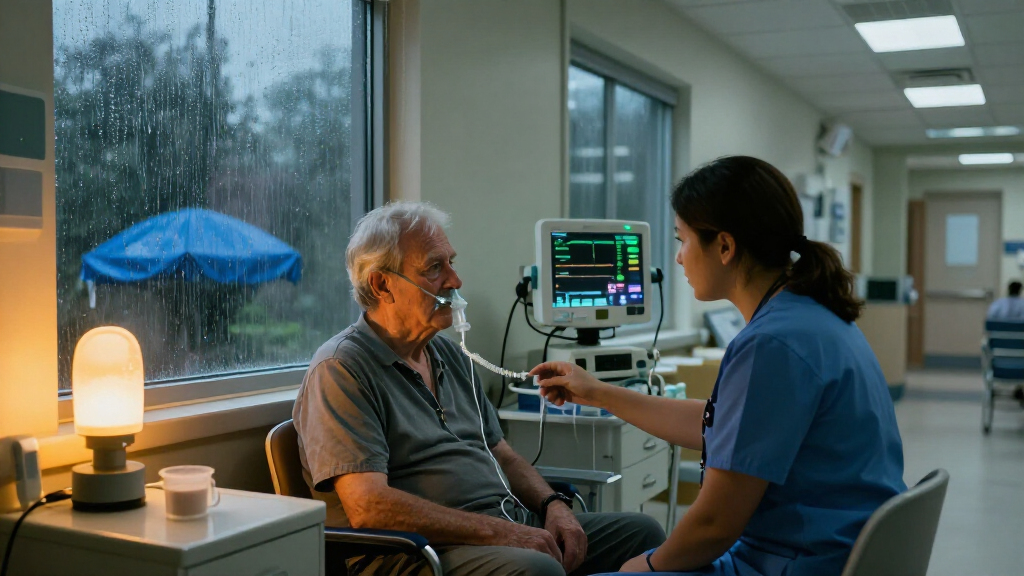
Researchers assessed the storms’ immediate effects and outcomes over the year after each hurricane. The study population consisted of Medicare beneficiaries in North Carolina aged 65 or older who used devices that require electricity, including ventilators, respirators and dialysis machines. The report describes these patients as medically vulnerable during and after storms that can disrupt power and access to care.
When the team measured exposure using county-level federal disaster declarations, it found no significant immediate changes in hospitalizations or deaths following either hurricane. It did, however, report sustained increases in those outcomes over the year after Hurricane Matthew. A separate analysis using the more detailed North Carolina Flood Extent Archive showed stronger and more consistent associations between hurricane exposure and hospitalizations and deaths.
The paper, titled “Assessing the effects of hurricane hazards on hospitalization or death among older adults using electricity-dependent medical devices,” was published in 2026. Its findings describe associations, not proof that flooding caused each outcome. The provided report does not give the size of the changes or detailed estimates for individual patient groups.
Flood Exposure and Patient Risk
The results point to a practical challenge for disaster planning and health care continuity: people who depend on powered equipment may face risks that continue after a storm, not only during its immediate impact. Flooding can affect where people can travel and receive care; the report also highlights the vulnerability of medical devices that require electricity. The study did not separately establish which pathways drove the observed outcomes.
The different results from county disaster declarations and a detailed flood archive also matter for how researchers and officials assess risk. Broad county-level indicators may not capture local variation in flooding, while finer-grained exposure data showed stronger associations in this study. That finding may help guide future research and preparedness efforts, but the reported analysis alone does not establish which interventions would reduce hospitalizations or deaths.
The reported differences by race add an equity concern. Black individuals had worse short- and long-term outcomes as flooding severity increased, according to the study summary. The source does not specify the causes of this disparity, so it cannot determine whether factors such as access to transportation, power backup, medical services or other conditions explain it.
electricity-dependent medical devices for seniors
As an affiliate, we earn on qualifying purchases.
As an affiliate, we earn on qualifying purchases.
Two North Carolina Hurricanes
The research examined Hurricane Matthew in 2016 and Hurricane Florence in 2018, focusing on older adults using electricity-dependent equipment. Rather than relying on one definition of hurricane exposure, the investigators compared county-level Federal Emergency Management Agency presidential disaster declarations with flood mapping from the North Carolina Flood Extent Archive.
That comparison is central to interpreting the findings. The disaster-declaration analysis found no significant immediate change after either storm and a sustained increase in hospitalizations and deaths after Matthew. The flood-archive analysis found stronger and more consistent associations. The source material does not provide results for other storms or states, so the findings should not be taken as estimates for every hurricane-affected community.
“This work lays the foundation for studying how hurricanes and floods affect medically vulnerable populations more broadly—and for partnering with community organizations and local and state agencies to strengthen disaster preparedness and planning.”
— Jennifer L. Lund, Ph.D., senior author and researcher at the UNC Gillings School of Global Public Health
Limits of the Reported Findings
The report does not state the number of participants, effect sizes, confidence intervals or specific increases in hospitalizations and deaths. It also does not provide enough detail to determine why outcomes differed by flood severity or race, or to distinguish the role of power loss from other storm-related disruptions. The findings are observational associations and do not establish that hurricane exposure directly caused each hospitalization or death.
It remains unclear from the supplied summary whether the study accounted for all potential differences between people and communities, and whether results would be similar outside North Carolina or for storms with different flooding patterns. The reported analyses also do not identify a particular preparedness measure as effective.
Research and Preparedness Work Ahead
Lund said the team aims to study hurricane and flood effects on medically vulnerable populations more broadly and to work with community organizations and local and state agencies on preparedness and planning. The report does not identify a scheduled follow-up study, policy change or new emergency program.
For now, the study adds evidence that researchers can use to examine how hazard measurement relates to health outcomes among older adults who depend on powered equipment. Further work would need to clarify the size and causes of the observed associations, test whether they apply in other areas, and assess which practical supports might reduce risk.
Key Questions
Which storms did the study examine?
Researchers examined Hurricanes Matthew (2016) and Florence (2018) and outcomes among older Medicare beneficiaries in North Carolina who used electricity-dependent medical devices.
What health outcomes were measured?
The study assessed hospitalizations and deaths, including immediate effects and outcomes over the year following each hurricane.
Did the study find an immediate increase after both hurricanes?
No significant immediate changes were found using county-level federal disaster declarations. That analysis did report sustained increases in hospitalizations and deaths over the year after Matthew. A more detailed flood-exposure analysis found stronger and more consistent associations overall.
What does the study say about racial differences?
The report says Black individuals experienced worse short- and long-term outcomes as flooding severity increased. The supplied summary does not explain the causes of that pattern.
Does the research prove flooding caused the outcomes?
No. The reported findings show associations between hurricane or flood exposure and health outcomes. They do not, by themselves, prove that exposure caused an individual hospitalization or death.
Source: rss
Cold & flu season Picks
humidifiers
As an affiliate, we earn on qualifying purchases.