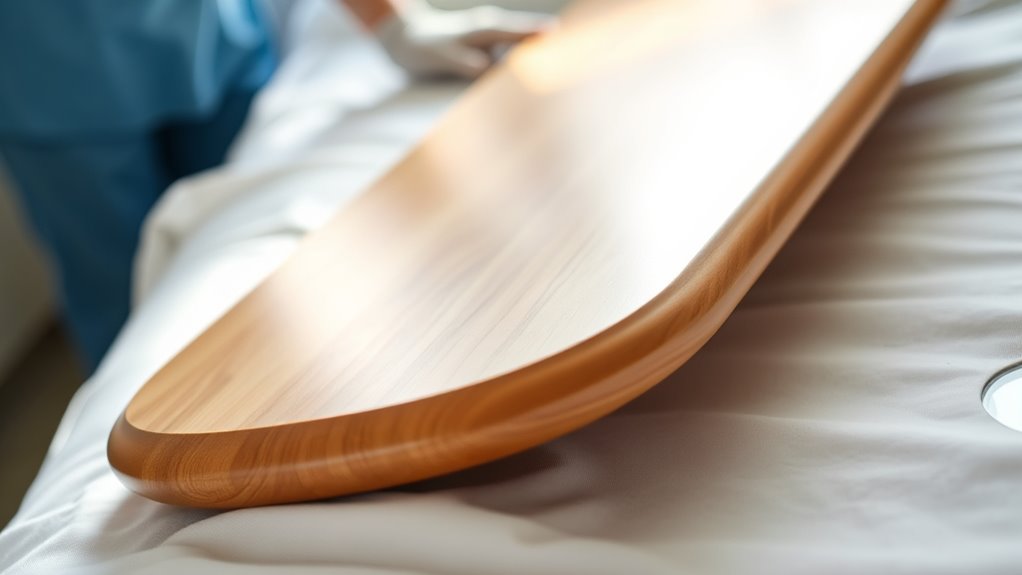

A transfer board creates a bridge between surfaces for someone who can make a seated transfer with appropriate support. My best overall pick is the Vive 36-inch Wooden Patient Transfer Board, whose extra length can help bridge wider gaps; the DMI Heavy-Duty 32 x 10-inch Board stands out for its broader platform, while the YHK Sliding Board offers a plastic alternative with a stated 440-pound capacity. The main tradeoffs are wood versus plastic, board length and width, handle placement, and whether a sliding or swivel design suits the transfer. A stated capacity alone does not tell you whether a board fits a person, caregiver, wheelchair, and destination surface. Read on for the full comparison, selection criteria, and fit considerations.

Turn quiet afternoons into listening time
- Thousands of audiobooks, podcasts and originals
- Listen on your phone, tablet or Echo — also offline
- Cancel anytime
Complete the kit


Key Takeaways
- The 36-inch Vive board and 32-inch DMI board serve different geometry needs: longer reach can bridge a wider gap, while extra width can provide more usable surface.
- Wood dominates this lineup, but plastic models add a different handling and cleaning option: the YHK boards have stated capacities of 440 pounds, though capacity does not establish suitability for a particular transfer.
- Board length varies from 24 to 36 inches: the compact two-handle board is easier to store, while longer boards may suit larger gaps if the surfaces and user position allow.
- Special mechanisms change the transfer method: the Vie Triomphe swivels, and the sliding-surface options reduce dragging across the board, but both add fit and setup details to check.
- Product names and stated capacities do not replace a fit assessment: compare board dimensions, surface stability, user ability, caregiver support, and the transfer plan before choosing.




| transfer board | Material | Weight capacity | Length | Width |
|---|---|---|---|---|
| Wooden Transfer Board with Han | Hardwood | — | 30 inches | 8 inches |
| DMI Wooden Transfer Board with | Scotch pine | 440 pounds | — | — |
| YHK Sliding Transfer Board for | Plasticized steel | 440 pounds | — | — |
| Vive Wooden Patient Transfer B | Sealed wood | 440 pounds | — | — |
| YHK Transfer Board and Slide B | ABS plastic | 440 pounds | — | — |
| Wooden Slide Transfer Board wi | Hardwood | — | 24 in | 8 in |
| Patient Transfer Board with Sl | — | — | — | — |
| DMI Heavy-Duty Wood Transfer B | Scotch pine | 735 lb | 32 in | 10 in |
| DMI Heavy-Duty Wood Transfer a | Scotch pine | 440 lb | 30 in | 8 in |
| DMI Heavy-Duty Wood Transfer B | Scotch pine | 440 lb | 30 in | 8 in |
| Wooden Transfer Board | Hardwood | — | 28.7 inches | 7.5 inches |
| Vie Triomphe 360° Swivel Trans | High-strength plastic | — | — | — |
| Wood Slide Transfer Board with | Wood | Up to 500 lbs | 24 inches | 8 inches |
| Wheelchair Transfer Board with | High-density ABS polymer | Up to 440 lbs | — | — |
More Details on Our Top Picks
Wooden Transfer Board with Handles for Patients, 30 x 8 x 0.7 inches
This board suits caregivers looking for a simple wooden aid for routine transfers between nearby surfaces. Its 30-inch hardwood body is lighter than the 36-inch Vive Wooden Patient Transfer Board, so it may be easier to position and carry when a longer span is unnecessary. Handles at both ends give the caregiver or user places to grip while setting it up. The smooth finish is intended to help with sliding, though the product data does not state a weight capacity, so I would not choose it when a confirmed load limit is essential. At 0.7 inches thick, it also calls for careful handling to protect the surface. This is a straightforward option for modest transfer needs, rather than a heavy-duty choice or a substitute for safe transfer training.
Pros:- Hardwood construction offers a firm transfer surface
- Handles at both ends aid gripping and positioning
- At 3.7 pounds, it is relatively easy to maneuver
- 30-inch length fits routine transfers where a longer board is unnecessary
Cons:- No weight capacity is provided in the product data
- Surface requires careful handling to prevent damage
- May not suit very large or heavy patients
Best for: Caregivers seeking a lightweight hardwood board for routine, short-span transfers and who can confirm it suits the user’s needs
Not ideal for: Buyers who need a stated weight capacity, heavy-duty support, or a longer board for wider transfer gaps
- Material:Hardwood
- Length:30 inches
- Width:8 inches
- Thickness:0.7 inches
- Weight:3.7 pounds
- Color:Natural wood finish
- Handles:Handles at both ends
Our verdict“Choose this lightweight hardwood board for routine transfers when its unstated capacity is acceptable and a 30-inch span is sufficient.”
DMI Wooden Transfer Board with Handles, 30 x 8 x 1 Inches
The DMI stands out for buyers who want one board for transfers involving a bed, chair, car, or commode. Its 30-inch tapered ends are meant to ease positioning, while the sanded and sealed scotch pine surface supports sliding transfers. Compared with the basic Wooden Transfer Board with Handles for Patients, DMI supplies a stated 440-pound capacity, which gives buyers a clearer limit to check against the user’s needs. That stated capacity does not replace careful setup or training: the product guidance calls for proper transfer technique, and moisture can increase friction on the surface. The cutout handles offer grip during placement, but users and caregivers still need to manage alignment and stability. This is the more versatile wood option in this group, with a surface that needs attention to moisture.
Pros:- Stated 440-pound weight capacity
- Sanded, sealed, coated surface supports sliding transfers
- Tapered ends can make positioning easier
- Two rounded cutout handles provide gripping points
Cons:- Requires proper training and attention to transfer safety
- Moisture can increase surface friction
- Wood surface needs care to maintain its sliding quality
Best for: Caregivers who need a wood board for transfers among a wheelchair, bed, chair, car, and commode and want a stated capacity
Not ideal for: Users or caregivers who cannot follow transfer safety guidance or need a surface that tolerates moisture without added friction
- Material:Scotch pine
- Dimensions:30 x 8 x 1 inches
- Weight capacity:440 pounds
- Handles:2 cutout handles
- Surface:Sanded, sealed, and coated wood
- End design:Tapered ends
- FSA eligible:Yes
Our verdict“Pick the DMI for varied wheelchair-to-surface transfers when its sealed wood finish and 440-pound capacity fit the user’s needs.”
YHK Sliding Transfer Board for Seniors, Supports Up to 440 lbs, Blue
YHK takes a different approach from the wood boards in this roundup: its plasticized steel construction pairs an arc handle with a toothed, granule-patterned back. That textured underside is intended to resist slipping during setup, while the smooth arc handle gives the user a defined grip. Compared with the DMI Wooden Transfer Board, this option trades a sealed wood sliding surface for a steel-based design with a stated 440-pound capacity. The product data does not give dimensions, so buyers should check whether its length and shape suit the gap between transfer surfaces. It also calls for users to have adequate balance and strength; the board alone cannot make a transfer safe for someone who needs more support. Check the edges before use, and consider surface protection where scratching is a concern.
Pros:- Stated 440-pound weight capacity
- Toothed granule design on the back is intended to limit slipping
- Arc handle provides a defined gripping point
- Plasticized steel construction offers a sturdy alternative to wood
Cons:- Requires adequate user balance and strength
- Edges may be sharp and need checking before use
- May scratch surfaces without a protective mat
- Dimensions are not provided in the product data
Best for: Users with adequate balance and strength who want a transfer aid with a textured back and an arc-shaped handle
Not ideal for: People with limited balance or strength, or buyers who need confirmed board dimensions before matching it to a transfer gap
- Material:Plasticized steel
- Weight capacity:440 pounds
- Color:Blue
- Handle design:Arc handle with smooth surface
- Back design:Toothed granule pattern
- Use limitation:Requires good balance and strength
Our verdict“Choose this YHK model if its textured back and arc handle suit the transfer setup and the user can balance and grip reliably.”
Vive Wooden Patient Transfer Board with Handholds, 36-Inch
With a stated 36-inch length, the Vive is aimed at transfers where the shorter 30-inch DMI board may not span the gap comfortably. Its rounded, tapered ends are designed to help with positioning, and the sealed wood finish is intended to reduce friction and clothing snags. Two cutout handholds give users a place to grip while moving across the board. Vive lists a 440-pound capacity, but its product data has a size discrepancy: the title says 36 inches, while the listed size is 24 × 8 × 0.75 inches. I would verify the actual length before choosing it for a specific transfer. The stated two-pound weight may appeal to caregivers who need to move the board often; the hand-wash-only care instruction limits cleanup convenience.
Pros:- Listed 440-pound capacity
- Sealed finish is designed to reduce friction and clothing snags
- Two cutout handholds support grip and positioning
- Listed weight of 2 pounds may make frequent repositioning easier
Cons:- Title length conflicts with listed size
- Hand-wash-only care limits cleaning options
- Actual length should be confirmed before selecting it for a transfer gap
Best for: Caregivers seeking a longer sealed wood board for transfers across wider gaps, after confirming the board’s actual dimensions
Not ideal for: Buyers who need unambiguous dimensions or a transfer aid that can be cleaned with routine machine washing
- Material:Sealed wood
- Title length:36 inches
- Listed size:24 × 8 × 0.75 inches
- Weight:2 pounds
- Weight capacity:440 pounds
- Handholds:2 cutout handles
- Care:Hand wash only
- Warranty:60-day guarantee
Our verdict“Consider the Vive for a longer wood transfer surface only after confirming its conflicting size details match the intended setup.”
YHK Transfer Board and Slide Board, Plastic Transfer Aid for Seniors, 30″ x 7.9″ x 0.55″, Supports up to 440 lbs, Blue
This YHK is the clearest fit for buyers who prefer a compact plastic board over wood: it measures 30 × 7.9 × 0.55 inches and weighs in on dimensions close to the DMI board, though its ABS construction and non-slip back set it apart. Smooth edges and a handle are intended to make handling easier, while the stated 440-pound capacity gives buyers a specific limit to compare with the user’s needs. Its slim profile may suit caregivers who want a board that is easier to carry and position than the 36-inch Vive, but it also means transfer compatibility depends on the distance and surfaces involved. The product data flags a need for strong upper-body strength or assistance, so it is a poor match for users with very limited arm strength or balance.
Pros:- ABS plastic construction
- Stated 440-pound weight capacity
- Non-slip back design
- Handle and smooth edges support gripping and handling
Cons:- Some users need strong upper-body strength or assistance
- Not suited to users with very limited arm strength or balance
- 30-inch length may not fit every transfer gap
Best for: Caregivers who want a compact ABS board for compatible transfers and can provide assistance when upper-body strength is limited
Not ideal for: Users with very limited upper-limb strength or balance, and buyers whose transfer setup needs a longer board
- Material:ABS plastic
- Dimensions:30 × 7.9 × 0.55 inches
- Weight capacity:440 pounds
- Color:Blue
- Back:Non-slip design
- Handle:Included
- Edges:Smooth
Our verdict“Choose this YHK when a compact 30-inch plastic board fits the transfer setup and the user has sufficient strength or assistance.”
Wooden Slide Transfer Board with Handles for Seniors, 500 lb Capacity
The 3.7-pound hardwood board pairs a 500-pound capacity with a compact 24-by-8-inch profile, making it easier to carry and store than the longer DMI Heavy-Duty Wood Transfer Board, 32 x 10 x 1 in. Its sealed surface is designed to reduce sliding friction, while handles at both ends give a caregiver grip points for positioning and retrieval. That portability suits households moving the board between rooms or keeping it within reach. The tradeoff is its shorter span and rigid wood construction: it may offer less bridging distance between surfaces than the longer DMI, and users who need a more forgiving feel may prefer another transfer aid. Choose it when low weight and stated capacity matter more than extra length.
Pros:- 500-pound stated load capacity
- Lightweight at 3.7 pounds for carrying and storage
- Handles at both ends support grip and repositioning
- Smooth sealed hardwood surface is designed to reduce friction
Cons:- At 24 inches long, it is shorter than the 32-inch DMI board and may not bridge as much distance
- Rigid hardwood may feel less forgiving for some users
Best for: Caregivers who need a lightweight board to carry between rooms and a stated capacity of up to 500 pounds
Not ideal for: Users who need a longer bridge between surfaces or prefer a less rigid transfer aid
- Material:Hardwood
- Length:24 in
- Width:8 in
- Thickness:0.75 in
- Weight:3.7 lb
- Load capacity:500 lb
- Surface:Smooth, sealed
- Handles:Large handles at both ends
Our verdict“Choose this compact hardwood board if easy carrying and a 500-pound stated capacity matter more than the longer reach of the 32-inch DMI.”
Patient Transfer Board with Slide Sheet
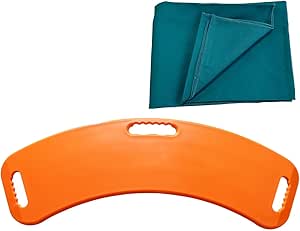
This set combines a 31.5-inch board with a 28-by-28-inch slide sheet, giving caregivers two components for transfers between surfaces such as a wheelchair, car, toilet, or tub. The three handles and non-slip backing distinguish it from the DMI Heavy-Duty Wood Transfer Board, 30 x 8 Inches, which is a single wooden board with one cutout handle. Curved edges are intended to reduce scratching, and the sheet adds a separate aid for positioning. The tradeoff is that the board must be placed horizontally, and no weight capacity is specified, leaving less guidance for matching it to a user than the capacity-rated DMI boards. It best suits caregivers who value multiple grip points and the included sheet and can follow the product’s positioning requirements.
Pros:- Includes a 28-by-28-inch slide sheet
- Three handles offer multiple grip points
- Non-slip backing is designed to help keep the board in place
- Curved edges are designed to reduce scratching
Cons:- No weight capacity is provided in the product data
- Requires horizontal placement for use
- The separate sheet adds another item to position and store
Best for: Caregivers seeking a board-and-sheet set with several grip points for transfers across different seated surfaces
Not ideal for: Buyers who need a stated weight capacity or want a single-piece board without a separate sheet to position
- Package contents:1 transfer board and 1 slide sheet
- Board length:31.5 in
- Board width:8 in
- Slide sheet dimensions:28 x 28 in (73 x 73 cm)
- Slide sheet color:Green
- Design:Non-slip back, three handles, curved edges
- Patent:US Patent No. D1,004,898
- FSA/HSA eligibility:Yes
Our verdict“Pick this set if the extra sheet and three handles suit your caregiver routine, but choose a capacity-rated DMI board if load guidance is a priority.”
DMI Heavy-Duty Wood Transfer Board, 32 x 10 x 1 in
Among the listed wood boards, this DMI has the longest and widest stated dimensions: 32 by 10 inches. That extra surface area may help caregivers bridge a larger gap or provide more room for positioning than the 30-by-8-inch DMI Heavy-Duty Wood Transfer and Slide Board for Patient and Senior Transfers. It also lists a 735-pound capacity, higher than the other capacity-rated wood options in this batch. Its sealed Scotch pine surface and two cutout handles support sliding and gripping, but the one-inch thickness and larger footprint may make it less convenient to carry and store than the 24-inch hardwood board. The product data calls for proper training, keeping the board level, and keeping the person dry during transfers. This is a capacity-and-span-led choice for trained caregivers.
Pros:- 735-pound stated weight capacity
- 32-inch length and 10-inch width provide a larger surface than the 30-by-8-inch DMI
- Two cutout handles provide grip points
- Sanded, sealed, coated surface is designed to support sliding
Cons:- Larger dimensions may be less convenient to carry and store than the 24-inch hardwood board
- Safe use requires proper training and keeping the board level
- Product guidance says the person must be kept dry during transfers
Best for: Trained caregivers who need a longer, wider wood board and want the highest stated capacity in this batch
Not ideal for: People seeking a compact, easy-to-store board or caregivers without proper transfer training
- Material:Scotch pine
- Length:32 in
- Width:10 in
- Thickness:1 in
- Weight capacity:735 lb
- Handles:2 cutout handles
- Surface:Sanded, sealed, and coated
- Eligibility:FSA eligible
Our verdict“Choose this DMI for its wider 32-inch span and 735-pound stated capacity if a trained caregiver can manage its size and use requirements.”
DMI Heavy-Duty Wood Transfer and Slide Board for Patient and Senior Transfers
This 30-by-8-inch Scotch pine board sits between the compact 24-inch hardwood board and the wider 32-by-10-inch DMI in the lineup. Its stated 440-pound capacity and sealed surface make it a straightforward option for transfers between a wheelchair, bed, or chair when that mid-length format fits the setup. Rounded, tapered edges are intended to make placement smoother, while the sealed finish helps avoid rough spots that can catch clothing. Compared with the DMI Heavy-Duty Wood Transfer Board, 30 x 8 Inches, the dimensions and capacity match the listed values, but this product description does not specify a cutout handle or FSA eligibility. Wood is also less convenient to handle than some lighter materials. It suits buyers who want a familiar sealed wood board and do not need those extra details.
Pros:- 440-pound stated weight capacity
- Sealed surface is designed to reduce cracks and snags
- Rounded, sanded edges are designed for smoother contact
- 30-by-8-inch size fits between the compact 24-inch and larger 32-inch options
Cons:- Product data does not specify a handle
- Wood may be less lightweight to carry than plastic alternatives
- Capacity is lower than the 500-pound hardwood and 735-pound DMI options
Best for: Caregivers looking for a 30-by-8-inch sealed wood board for wheelchair, bed, and chair transfers
Not ideal for: Buyers who want a documented handle, eligibility details, or a higher stated capacity than 440 pounds
- Material:Scotch pine
- Length:30 in
- Width:8 in
- Thickness:1 in
- Weight capacity:440 lb
- Edge design:Tapered, rounded
- Surface:Sealed
Our verdict“Choose this DMI if a sealed 30-by-8-inch wood board meets your transfer setup and its 440-pound stated capacity is sufficient.”
DMI Heavy-Duty Wood Transfer Board, 30 x 8 Inches
This DMI pairs a 30-by-8-inch profile with one cutout handle, a useful detail for caregivers who want a designated grip while positioning the board. Its stated 440-pound capacity matches the DMI Heavy-Duty Wood Transfer and Slide Board for Patient and Senior Transfers, but this version lists a 0.75-inch thickness and FSA eligibility. The sanded, sealed, coated Scotch pine surface is intended to support sliding between a wheelchair, bed, chair, car, or commode. Compared with the longer, wider 32-by-10-inch DMI, it takes up less storage space, though it offers less surface area and a lower stated capacity. The product guidance calls for proper training, a level board, and locked wheelchair brakes, so it is best for caregivers prepared to follow those steps.
Pros:- One cutout handle provides a designated grip
- 440-pound stated weight capacity
- Sanded, sealed, coated surface is designed to aid sliding
- FSA eligible
Cons:- Smaller surface area than the 32-by-10-inch DMI
- Use requires proper training and keeping the board level
- Wheelchair brakes must be locked during use
Best for: Caregivers who want a 30-by-8-inch wood board with one cutout handle and a stated capacity of 440 pounds
Not ideal for: Users who need the wider surface or higher stated capacity of the 32-by-10-inch DMI board
- Material:Scotch pine
- Length:30 in
- Width:8 in
- Thickness:0.75 in
- Weight capacity:440 lb
- Handle:1 cutout handle
- Surface:Sanded, sealed, and coated wood
- FSA eligibility:Yes
Our verdict“Pick this DMI if you want a more compact 30-by-8-inch board with a cutout handle and can follow its stated transfer precautions.”
Wooden Transfer Board, 28.7 inches, Sliding Board for Wheelchair and Bed Transfers, Load Capacity 440 lbs
At 2.4 pounds, this 28.7-inch hardwood board is the easiest of these four to carry and position, which can help caregivers who move a board between rooms or transfer locations. Its 440-pound capacity and smooth, splinter-free surface suit routine wheelchair-to-bed or wheelchair-to-car transfers when the setup fits. Compared with the Wood Slide Transfer Board with Two Cutout Handles, it is longer but narrower, so it offers more reach without as much width for positioning. The tradeoff is a plain sliding surface with no listed handles or stabilizing pad; users who need extra grip or help keeping the board in place may prefer the Wheelchair Transfer Board with Sliding Surface and Non-Slip Pad. It may also require caregiver assistance, and hardwood can be less forgiving if dropped.
Pros:- Light 2.4-pound construction is easier to carry and position.
- 440-pound stated capacity supports a broad range of users.
- Smooth, splinter-free hardwood surface is suited to sliding transfers.
- 28.7-inch length provides more reach than the 24-inch Wood Slide Transfer Board with Two Cutout Handles.
Cons:- No built-in handles or stabilizing pad are listed.
- The 7.5-inch width may not suit every transfer setup.
- Caregiver help may be needed, and hardwood can be less forgiving if dropped.
Best for: Caregivers who need a light hardwood board for frequent wheelchair-to-bed transfers and value easy carrying.
Not ideal for: Users who need built-in handles or a non-slip placement aid, or whose transfer setup needs a wider board.
- Material:Hardwood
- Length:28.7 inches
- Width:7.5 inches
- Height:1.04 inches
- Load capacity:440 lbs
- Weight:2.4 lbs
Our verdict“Choose this board if portability and a smooth hardwood surface matter more than built-in grip or placement aids.”
Vie Triomphe 360° Swivel Transfer Board, 35.4 in, 460 lb Capacity
The 360° rotating disc gives this board a different job from the fixed sliding surfaces in this group: it can help guide a seated turn between nearby surfaces of similar height. Its adjustable disc tension lets a caregiver set the sliding speed, while the textured plastic surface and cutout handles support positioning and cleanup. Compared with the Wheelchair Transfer Board with Sliding Surface and Non-Slip Pad, this 35.4-inch model adds rotational movement but weighs more and has a strict height-gap limit. The manufacturer recommends caregiver assistance and a gap under 2.8 inches, so it is a poor fit for uneven transfers or car setups with a larger height difference. Buyers wanting a simple board for broader lateral transfers may find the fixed wooden Wood Slide Transfer Board with Two Cutout Handles easier to match to their routine.
Pros:- 360-degree rotating disc can guide seated turning between surfaces.
- Adjustable disc tension allows caregivers to control sliding speed.
- Two integrated handles support carrying and positioning.
- Textured, wipe-clean plastic surface suits routine care.
Cons:- Requires caregiver assistance according to the manufacturer.
- Height gap must remain under 2.8 inches.
- At 7.2 pounds, it is heavier than the 2.4-pound Wooden Transfer Board, 28.7 inches.
Best for: Caregivers helping a seated user rotate between nearby, similarly elevated surfaces at home.
Not ideal for: People transferring across height gaps over 2.8 inches or seeking an independent aid for car transfers.
- Material:High-strength plastic
- Dimensions:35.4 × 12.6 inches
- Transfer path width:12.6 inches
- Weight:7.2 lbs
- Maximum weight capacity:460 lbs
- Maximum height gap:2.8 inches (7 cm)
- Transfer disc:360° rotating; adjustable sliding speed
- Handles:Two integrated cutout handles
- Color:Blue
Our verdict“Pick this model for assisted seated turns between nearly level surfaces, provided the limited height gap matches your setup.”
Wood Slide Transfer Board with Two Cutout Handles, 24 x 8 x 0.75 Inches
This is the shortest board in this four-product batch, making its 24-inch length a practical fit when a longer bridge is awkward to place or store. Two sanded cutout handles give caregivers grip points for carrying and positioning, while the smooth, sealed wood surface is designed to reduce friction and help protect furniture. Its listed capacity of up to 500 pounds is the highest among these four, exceeding the 440-pound limits of the Wooden Transfer Board, 28.7 inches and the ABS model. The compact length is also the main compromise: a shorter board may not span every wheelchair-to-bed or wheelchair-to-sofa gap. Unlike the Vie Triomphe 360° Swivel Transfer Board, it has no rotating disc, so it serves straightforward lateral sliding transfers rather than guided seated turns.
Pros:- Compact 24-inch length can be easier to place and store.
- Two cutout handles provide grip for positioning and carrying.
- Smooth, sealed surface is designed to reduce friction and protect furniture.
- Listed capacity of up to 500 lbs is the highest among these four products.
Cons:- Short length may not span larger transfer gaps.
- Fixed dimensions may not fit every user’s chair, bed, or stool setup.
- Caregiver assistance may be required for safe transfers.
Best for: Home caregivers who need a compact wood board with handles for transfers across a short, well-matched gap.
Not ideal for: Users whose transfer requires a longer bridge or a rotating aid to guide seated turns.
- Material:Wood
- Length:24 inches
- Width:8 inches
- Thickness:0.75 inches
- Weight capacity:Up to 500 lbs
- Handles:Two cutout handles
- Surface:Smooth and sealed
Our verdict“Choose this compact handled board when its 24-inch span fits your transfer setup and you want a high stated capacity.”
Wheelchair Transfer Board with Sliding Surface and Non-Slip Pad
The standout here is the included 10-inch non-slip pad, which can help stabilize board placement during lateral transfers between a wheelchair and a bed, sofa, toilet, or car. Three built-in handles offer more grip options than the two-handle Wood Slide Transfer Board with Two Cutout Handles, and tapered ends with side notches may make positioning easier. Its smooth ABS surface is intended to support gliding, with a stated capacity of up to 440 pounds. Compared with the Wooden Transfer Board, 28.7 inches, this board adds grip points and a placement aid, but its 29.5-inch length and 8-inch width still need to fit the specific chair and destination. The product advises testing fit before regular use and moving slowly, so it is less appealing to buyers seeking a turntable or a hands-off transfer aid.
Pros:- Included 10-inch non-slip pad helps stabilize board placement.
- Three built-in handles offer multiple grip points.
- Tapered ends and side notches support positioning.
- Smooth ABS surface and 440-pound capacity suit common lateral transfer needs.
Cons:- Fit should be checked against the user’s chair and destination before regular use.
- Slow, careful movement is required.
- No rotating disc is listed for guided seated turns.
Best for: Caregivers who want several grip points and a placement pad for routine lateral transfers between common household surfaces.
Not ideal for: People who need a rotating transfer aid or cannot confirm that the board and pad fit their chair and destination.
- Material:High-density ABS polymer
- Dimensions:29.5 × 8 × 0.5 inches
- Weight capacity:Up to 440 lbs
- Handles:Three built-in handles
- Included accessory:10-inch non-slip round pad
- Surface:Smooth sliding surface
- Ends:Tapered
- Positioning features:Side notches
Our verdict“Choose this ABS board if the included placement pad and three handles match your transfer setup.”

How We Picked
I compared the 14 listed boards on the details that affect a seated transfer: material, length, width, thickness, handles or handholds, surface features, transfer mechanism, and stated weight capacity where supplied. The ranking gives priority to options whose listed dimensions and design offer a clear use case, while accounting for how much information a buyer still needs to verify. I treat capacity as a manufacturer-stated specification, not as proof that a board is safe for every user or transfer.
The Vive 36-inch board leads for its extra reach and handholds; the DMI 32 x 10-inch board follows for its broader platform and heavy-duty positioning. Plastic YHK boards, the swivel model, and sliding-surface designs earn distinct places because they address different handling preferences, while shorter boards suit tighter storage or smaller gaps. Where listings give limited information, I rank the option more cautiously and recommend checking dimensions, surface grip, instructions, and transfer compatibility before purchase.
| transfer board | Surface |
|---|---|
| Wooden Transfer Board with Han | — |
| DMI Wooden Transfer Board with | Sanded, sealed, and coated wood |
| YHK Sliding Transfer Board for | — |
| Vive Wooden Patient Transfer B | — |
| YHK Transfer Board and Slide B | — |
| Wooden Slide Transfer Board wi | Smooth, sealed |
| Patient Transfer Board with Sl | — |
| DMI Heavy-Duty Wood Transfer B | Sanded, sealed, and coated |
| DMI Heavy-Duty Wood Transfer a | Sealed |
| DMI Heavy-Duty Wood Transfer B | Sanded, sealed, and coated wood |
| Wooden Transfer Board | — |
| Vie Triomphe 360° Swivel Trans | — |
| Wood Slide Transfer Board with | Smooth and sealed |
| Wheelchair Transfer Board with | Smooth sliding surface |
Factors to Consider When Choosing Transfer Board
Choosing a transfer board starts with the person and the two surfaces involved, rather than the product title. These checks can help you decide which specifications matter for your setup and when to ask a clinician or mobility professional to assess the transfer.
Measure the gap and landing surfaces
Measure the distance between the two surfaces at the height and angle the transfer will use. Then check how much board can rest securely on each side; a longer board only helps when both ends have stable support. Account for wheelchair armrests, bed frames, cushions, and other obstacles that may reduce usable contact area. A common mistake is choosing by total length alone and overlooking where the board will sit. Shorter models can be easier to store but may leave too little overlap across a larger gap. If surface heights differ, get guidance on whether the planned transfer and board placement are appropriate.
Match the board to the person’s transfer ability
A transfer board supports a seated movement between surfaces, but it does not perform the transfer for the user. Consider whether the person can sit upright, follow instructions, shift weight, and use their arms as required by the transfer plan. A caregiver should also assess how much assistance they can safely provide. Do not assume that a board makes a transfer suitable for someone who cannot maintain the needed position or control. A clinician, occupational therapist, or physical therapist can help evaluate the person’s abilities and teach a suitable method. That assessment matters more than choosing a model with a higher capacity figure.
Choose material and surface features for the setting
Wood and plastic can differ in weight, feel, cleaning routine, and how a user moves across the surface; check the specific model’s instructions rather than relying on material alone. A smooth surface may make sliding easier, but it can also call for more careful positioning and control. A slide sheet or sliding surface changes how movement occurs, so confirm that the person and caregiver can use it as directed. Consider where the board will be stored and how it will be cleaned between uses. Never apply lotion or other products to make a board slippery unless the manufacturer or care professional specifically directs it. The goal is controlled movement with stable support, not the least resistance possible.
Check width, thickness, and handles together
Width affects how much surface is available, while thickness and edge shape can affect placement and clearance around the wheelchair or bed. Handles can make a board easier to position or retrieve, but their location should not interfere with the user’s body or the transfer path. Compare the listed dimensions with the armrests, seat, and other features of the actual setup. A broad board may provide more surface but can be harder to position in a tight space. A thin board may fit a gap that a thicker one cannot, though fit alone does not confirm that it will remain stable. Check the instructions for approved positioning and handling.
Read capacity and compatibility details carefully
Use the manufacturer’s stated weight capacity as a required limit, while recognizing that it does not certify every setup or transfer technique. Confirm that the chosen board is compatible with the wheelchair, bed, chair, or other surfaces involved. Look for clear instructions on weight limits, inspection, cleaning, and signs of wear. Product listings may omit important details, so consult the manufacturer when dimensions, surface treatment, or compatibility are unclear. Do not use a board with cracks, damage, or unstable placement. If the transfer is new or the person’s needs have changed, get professional guidance before relying on a product choice.
Frequently Asked Questions
How do I know whether a transfer board is the right aid for this transfer?
A board may suit a seated transfer when the person can maintain the required position and take part in the movement, with assistance as directed by their care plan. The answer depends on mobility, balance, strength, the height and spacing of the surfaces, and caregiver support. Ask a physical therapist or occupational therapist to assess the transfer and show the user and caregiver how to position the board. If the person cannot safely follow or participate in the method, a different transfer aid may be needed. Do not make the decision from the product description alone.
Should I choose wood or plastic?
Neither material is automatically the right choice for every user. Compare the specific board’s weight, surface, cleaning instructions, dimensions, and stated capacity with your care setting and transfer plan. Plastic models in this lineup offer an alternative to the many wooden boards, but a smooth surface can change how the user moves across it. Wood options also vary in length, width, and handle design, so the material label does not tell the whole story. Ask the manufacturer or care professional about any feature that could affect control or cleaning.
Is a longer transfer board always safer?
No. Extra length can help bridge a wider gap, but the board still needs stable support on both surfaces and must fit around the equipment. Too much length can make positioning or storage awkward, and it may interfere with nearby armrests or frames. Measure the usable landing area at both ends before choosing. Compare that measurement with the board’s full dimensions and the placement instructions. A care professional can confirm whether the board will sit securely in the intended transfer.
Can I choose a board just by its stated weight capacity?
No. Capacity is one specification to check, but it does not show whether the board is long or wide enough, compatible with your equipment, or suitable for the person’s transfer abilities. Confirm the manufacturer’s limit and instructions, then assess the board’s placement and support on both surfaces. The lineup includes several products with stated capacities, but those figures should not be read as a comparison of overall safety. Ask the supplier for clarification if the listing does not explain how capacity applies to the intended use. Get a professional assessment when the transfer plan is uncertain.
When should I choose a swivel or sliding-surface board?
These designs may suit a transfer plan that calls for a turning or reduced-drag movement, but the mechanism changes how the transfer is performed. A swivel model needs the correct positioning and clear space to rotate, while sliding surfaces or sheets require controlled movement and use according to instructions. Neither feature makes a board suitable for every person or surface arrangement. Check the manufacturer’s guidance and have a clinician or mobility professional demonstrate the method if needed. Choose the mechanism only after confirming that the user, caregiver, and setup can support it.
Conclusion
For the broadest reach in this lineup, I recommend the Vive 36-inch Wooden Patient Transfer Board as best overall, provided its dimensions and placement suit your setup. The YHK Sliding Transfer Board is my best value-style pick for shoppers who prefer a plastic option and want a listed 440-pound capacity, subject to checking its fit and instructions. For a broader platform, the DMI Heavy-Duty 32 x 10-inch Board is my premium-style choice; buyers seeking a simpler starting point can compare the handled wooden boards by length and fit with a care professional. For specific needs, consider the Vie Triomphe swivel board for a clinician-approved turning method, or the 24-inch two-handle board when compact storage and a smaller gap are priorities. Confirm the transfer plan, surface support, and manufacturer guidance before choosing any model.