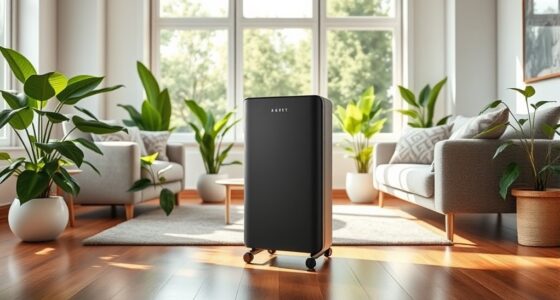
Senior-friendly home safety alarms can alert a caregiver when someone gets out of bed, steps on a monitoring mat, opens a door, or presses a call button. My best overall pick is the Smart Caregiver Early Alert Bed Exit Alarm for its early-warning approach, while the Smart Caregiver Floor Mat Alarm is a standout for monitoring a specific step or bedside area, and the CallToU Pager with three help buttons suits homes that need several ways to request help. The main tradeoff is choosing between automatic monitoring and a button the senior must press, along with deciding how many rooms and caregivers need coverage. Sensor placement, alert range, and ease of resetting an alarm can matter as much as the alarm type. Continue reading for the full breakdown and guidance on matching an alarm to your home.

Turn quiet afternoons into listening time
- Thousands of audiobooks, podcasts and originals
- Listen on your phone, tablet or Echo — also offline
- Cancel anytime
Complete the kit


Key Takeaways
- Bed-exit timing separates the bed alarms: The Smart Caregiver Early Alert model is the strongest fit when caregivers need a warning before someone is fully out of bed; simpler single-sensor alarms suit households that only need an alert after movement is detected.
- A floor mat changes what gets monitored: The Smart Caregiver 24-by-48-inch mat detects someone stepping onto a specific area, unlike bed sensors that focus on movement at the bedside.
- Call buttons depend on the senior being able to use them: CallToU‘s three-button, two-receiver setup offers more ways to summon help than one-button systems, but it is not a substitute for automatic bed or door monitoring.
- More receivers help only when caregivers are spread out: Multi-receiver pager kits can make alerts easier to hear in separate rooms, while a single receiver may be simpler for a small home with one caregiver nearby.
- The lineup covers distinct risks, not one universal alarm: Bed-exit sensors, floor mats, door sensors, and call buttons address different situations; choosing by the concern being monitored is more useful than choosing by the number of included parts.
| PILSAMAS Bed Alarm Motion Sensor and Caregiver Pager Set |  | Best for Multi-Area Monitoring | Model: PG03M | Included components: 1 caregiver pager, 2 motion sensors, 1 USB-C cable | Alert type: Motion only | VIEW LATEST PRICE | See Our Full Breakdown |
| Smart Caregiver Floor Mat Alarm and Pager System – Wireless Pager Alerts When Someone Steps on 24″ x 48″ Mat | 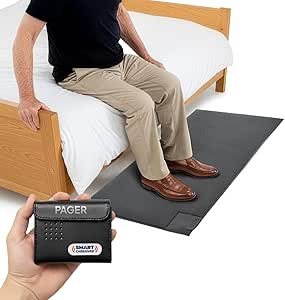 | Best for Doorway or Bedside Step Alerts | Model: WPFM7-SYS | Sensor technology: Contact sensor | Mat dimensions: 48 × 24 × 0.5 inches | VIEW LATEST PRICE | See Our Full Breakdown |
| Smart Caregiver Early Alert Bed Exit Alarm for Elderly with Wireless Pager |  | Best for Early Bed-Exit Warning | Model: WPBEA-SYS | Sensor technology: Weight-sensing | Pad dimensions: 36 × 10 × 0.5 inches | VIEW LATEST PRICE | See Our Full Breakdown |
| Wireless Bed Sensor Alarm and Caregiver Pager with Motion Sensors |  | Best for Adjustable Motion Alerts | Model: 1+2 | Sensor technology: Passive infrared | Included components: 1 caregiver pager, 2 sensors | VIEW LATEST PRICE | See Our Full Breakdown |
| Smart Caregiver Bed Alarm for Elderly Adults |  | Best for Simple In-Room Bed Alerts | Sensor technology: Contact, weight-sensing pad | Pad size: 10 × 30 inches | Pad dimensions: 30 × 10 × 0.5 inches | VIEW LATEST PRICE | See Our Full Breakdown |
| CallToU Caregiver Pager – 3 Emergency Help Buttons for Seniors with 2 Receivers |  | Best for Multi-Room and Bathroom Coverage | Maximum range: 500 feet | Call buttons: 3 | Receivers: 2 | VIEW LATEST PRICE | See Our Full Breakdown |
| Smart Caregiver Bed Exit Alarm with Wireless Pager |  | Best for Bed-Exit Monitoring | Pad dimensions: 30 × 10 × 0.5 inches | Sensor type: Pressure sensor | Pager range: Up to 300 feet | VIEW LATEST PRICE | See Our Full Breakdown |
| YisTech Wireless Door Alarm System with 3 Sensors and 2 Receivers |  | Best for Door and Window Alerts | Included sensors: 3 contact sensors | Included receivers: 2 | Maximum range: 260 feet | VIEW LATEST PRICE | See Our Full Breakdown |
| Wireless Caregiver Pager, 1 Call Button + 1 Receiver for Elderly at Home |  | Best for Long-Range Expandability | Included setup: 1 call button and 1 receiver | Maximum range: Up to 1,500 feet | Maximum audible volume: 120 dB | VIEW LATEST PRICE | See Our Full Breakdown |
| CallToU Caregiver Pager with 2 Wireless Call Buttons and 2 Receivers |  | Best for Two-Person or Two-Room Coverage | Included components: 2 call buttons and 2 receivers | Maximum range: Over 500 feet | Ringtones: 55 | VIEW LATEST PRICE | See Our Full Breakdown |
| Wireless Bed Exit Alarm for Seniors, 1 Sensor and 1 Receiver |  | Best for Flexible Alert Modes | Brand: yiwei | Model: KS-SF20R pro | Included components: 1 receiver, 1 motion sensor, Micro USB cable, installation accessories, user manual | VIEW LATEST PRICE | See Our Full Breakdown |
| senior-friendly home safety alarm | Maximum range |
|---|---|
| PILSAMAS Bed Alarm Motion Sens | Up to 1,000 feet |
| Smart Caregiver Floor Mat Alar | Up to 300 feet |
| Smart Caregiver Early Alert Be | — |
| Wireless Bed Sensor Alarm and | Up to 918 feet in open areas |
| Smart Caregiver Bed Alarm for | — |
| CallToU Caregiver Pager | 500 feet |
| Smart Caregiver Bed Exit Alarm | — |
| YisTech Wireless Door Alarm Sy | 260 feet |
| Wireless Caregiver Pager | Up to 1,500 feet |
| CallToU Caregiver Pager with 2 | Over 500 feet |
| Wireless Bed Exit Alarm for Se | Up to 918 feet |
More Details on Our Top Picks
PILSAMAS Bed Alarm Motion Sensor and Caregiver Pager Set
Two motion sensors and a pager that identifies which sensor triggered make this a flexible choice for caregivers monitoring a bed exit and another area, such as a doorway. Compared with the Smart Caregiver Floor Mat Alarm and Pager System, it does not require someone to step on a mat; motion sensing can cover a passage or monitored zone instead. The pager offers chimes, vibration, and LED flashes, giving caregivers options for different routines or sound sensitivities. Its listed range reaches 1,000 feet, though actual coverage will depend on walls and layout. The tradeoff is that motion detection can be triggered by pets, and the sensors need either AAA batteries or a USB-C connection. Choose this over a bed pad when you want to monitor multiple locations rather than pressure changes on a mattress.
Pros:- Pager displays which sensor triggered, helping caregivers identify the monitored area.
- Three alert styles—chime, vibration, or LED flashes—plus four volume levels.
- Includes two sensors and supports expansion to up to 20 sensors.
- Local alerts work without audio, video, or subscription fees.
Cons:- Pets may trigger motion alerts; recommended placement may reduce but not eliminate false alarms.
- Sensors require AAA batteries or a USB-C power connection.
- The stated maximum range may not reflect performance through walls or across a divided home.
Best for: Caregivers who want to monitor a bed exit and another area with identifiable sensor alerts and several notification styles.
Not ideal for: Homes with pets moving through sensor zones, or caregivers who need direct weight-sensing detection on the bed.
- Model:PG03M
- Included components:1 caregiver pager, 2 motion sensors, 1 USB-C cable
- Alert type:Motion only
- Maximum range:Up to 1,000 feet
- Alert modes:38 chimes, vibration, or LED flashes
- Volume levels:4
- Sensor power:3 AAA batteries or USB-C
- Pager battery life:1–3 months
Our verdict“Choose the PILSAMAS when you need flexible motion coverage across several areas, not a sensor pad that detects pressure changes in bed.”
Smart Caregiver Floor Mat Alarm and Pager System – Wireless Pager Alerts When Someone Steps on 24″ x 48″ Mat
A large, weight-sensing floor mat gives this system a different job from bed-pad alarms: it alerts when someone steps onto the mat, making placement beside a bed or near an exit a direct way to monitor movement. Compared with the Smart Caregiver Early Alert Bed Exit Alarm, which can signal when pressure leaves a bed pad, this one waits for a step onto its surface. That may suit a caregiver focused on a specific departure point, but it does not provide the same early cue as a bed-exit sensor. The pager can use an audible alert or vibration, so caregivers can choose whether an alarm is heard across the room. Its cordless placement and 300-foot stated range offer flexibility, while the mat’s size takes up floor space. Two AA batteries are required and not included, and the package includes only one pager.
Pros:- Large 24-by-48-inch contact mat covers a defined bedside or exit area.
- Pager supports audible and vibration alerts.
- Wireless setup allows the mat to be placed without a cable running to the pager.
- Can integrate with other Smart Caregiver devices.
Cons:- Detects weight on the mat rather than movement toward the edge of a bed.
- Requires two AA batteries, which are not included.
- Only one pager is included, limiting simultaneous caregiver coverage.
Best for: Caregivers who want a floor-level alert beside a bed or exit and can keep a large mat in a clear, stable location.
Not ideal for: People who need an alert before a senior reaches the floor, or households that need alerts sent to multiple caregivers.
- Model:WPFM7-SYS
- Sensor technology:Contact sensor
- Mat dimensions:48 × 24 × 0.5 inches
- Maximum range:Up to 300 feet
- Audible alert level:70 dB
- Power source:2 AA batteries, not included
- Item weight:2.81 kg
- Warranty:1 year
Our verdict“Pick this system when a large floor mat at a specific exit point is more useful than an early bed-exit warning.”
Smart Caregiver Early Alert Bed Exit Alarm for Elderly with Wireless Pager
Pressure-removal sensing on a bed pad is the key difference here: the pager can alert when pressure comes off the pad as a person shifts toward the edge, rather than waiting for a step onto a floor mat. Compared with the Smart Caregiver Floor Mat Alarm and Pager System, this offers a chance to respond earlier in the movement from bed, while the floor mat is better suited to monitoring a particular spot on the floor. The handheld pager provides vibration and adjustable sound, which can help caregivers choose a quieter notification at night or an audible one when needed. The system can accept up to ten additional sensor types, but those sensors are sold separately. Its 10-by-36-inch pad may also be cumbersome on a smaller bed, so measure the usable mattress area before choosing it.
Pros:- Weight-sensing pad can alert when pressure is removed as the person shifts toward the bed edge.
- Pager offers vibration and adjustable sound alerts.
- System can expand with up to ten additional sensors.
- Wireless notification avoids a cable connecting the bed pad to the caregiver pager.
Cons:- Additional sensor types must be purchased separately.
- The 10-by-36-inch pad may be bulky on smaller beds.
- Pressure changes may not identify the cause of the movement.
Best for: Caregivers who want a wireless alert when someone begins leaving bed and may later add other monitoring sensors.
Not ideal for: People using smaller beds with limited pad space, or buyers who need a multi-area system without purchasing extra sensors.
- Model:WPBEA-SYS
- Sensor technology:Weight-sensing
- Pad dimensions:36 × 10 × 0.5 inches
- Pager alerts:Vibration and adjustable sound
- Expansion capacity:Up to 10 additional sensors
- Control method:Push button
- Package count:1
Our verdict“Choose this over a floor mat when an alert during the movement out of bed matters more than monitoring a specific patch of floor.”
Wireless Bed Sensor Alarm and Caregiver Pager with Motion Sensors
Two passive infrared sensors and a receiver with four alert modes make this a practical motion-based alternative to pressure pads. It can monitor a bed exit or doorway, while the Smart Caregiver Early Alert Bed Exit Alarm is better suited to detecting pressure leaving a pad before a person fully gets up. The Nesthao receiver offers adjustable volume and light brightness, which gives caregivers more control over how intrusive an alert is. Its stated 918-foot range applies to open areas, so walls and a home’s layout may limit placement. Battery or Micro USB power adds flexibility, and three AAA batteries are included, but the system still depends on an ongoing power source. This is best for households that want doorway or room movement detection; it is less suitable when pets could cross the sensor path or when precise bed-pressure sensing is needed.
Pros:- Includes one receiver and two passive infrared motion sensors.
- Can monitor bed exits or doorways.
- Offers four alert modes with adjustable volume and light brightness.
- Runs on batteries or Micro USB power; three AAA batteries are included.
Cons:- The stated 918-foot range is for open areas and may be reduced indoors.
- Motion sensing can be less suitable when pets move through monitored zones.
- Requires batteries or a Micro USB power source.
Best for: Caregivers who want two motion sensors for a bed exit and doorway, with sound and light settings they can adjust.
Not ideal for: Households where pets cross monitored zones, or buyers who need a pad to detect pressure leaving the bed.
- Model:1+2
- Sensor technology:Passive infrared
- Included components:1 caregiver pager, 2 sensors
- Maximum range:Up to 918 feet in open areas
- Alert modes:4
- Maximum audible noise:113 dB
- Power source:Battery or Micro USB
- Batteries:3 AAA batteries included
Our verdict“Choose the Nesthao for adjustable motion monitoring across a bed exit and doorway, but choose a bed-pad system for pressure-based detection.”
Smart Caregiver Bed Alarm for Elderly Adults
A washable 10-by-30-inch pad and an in-room monitor keep this system straightforward: pressure leaving the pad triggers an audible alarm, without requiring a wireless pager in the standard setup. Compared with the Smart Caregiver Early Alert Bed Exit Alarm, this model’s main appeal is a simpler local alert and included 9V battery, while the Early Alert version includes a wireless pager and is designed to warn as pressure comes off its pad. An optional wireless add-on is available here, but it is sold separately, so buyers seeking discreet remote alerts should account for that extra component. The monitor can sit bedside or mount on a wall, and the pad is designed to go under a fitted sheet. Its 80 dB alarm may be useful when a caregiver is nearby, but can be disruptive for a shared sleeping space; shifting on the pad may also cause false alerts.
Pros:- Washable 10-by-30-inch pad fits under a fitted sheet.
- Audible alarm triggers when pressure is removed from the pad.
- Monitor can be wall-mounted or placed bedside.
- Includes a 9V battery and has volume control and a low-battery indicator.
Cons:- Wireless notifications require a separately sold add-on kit.
- Requires a 9V battery and has no included AC adapter.
- Movement on the pad can cause false alarms.
Best for: Caregivers who stay within earshot and want a simple bed-pad alarm with a washable sensor pad and local audible alert.
Not ideal for: Caregivers who need remote or silent pager alerts out of the box, or households where an audible alarm would disturb others.
- Sensor technology:Contact, weight-sensing pad
- Pad size:10 × 30 inches
- Pad dimensions:30 × 10 × 0.5 inches
- Power source:9V alkaline battery
- Battery included:Yes
- Audible noise level:80 dB
- Mounting:Wall mount or bedside
- Pad feature:Washable and incontinence resistant
Our verdict“Choose this for a nearby caregiver who wants a basic audible bed-pad alert; pick the Early Alert model for a wireless pager included in the system.”
CallToU Caregiver Pager – 3 Emergency Help Buttons for Seniors with 2 Receivers
My pick for households that want several ways to call for help is the CallToU Caregiver Pager with three buttons and two receivers. The buttons can be placed in different rooms, including a bathroom, while the receivers combine sound, flashing lights, and vibration—useful when a caregiver may not hear a chime or the user has hearing loss. Its stated 500-foot range and plug-and-play setup make it less dependent on home internet than app-based systems. Compared with the single-button Wireless Caregiver Pager, this kit provides more call points out of the box, but it does not match that product’s stated 1,500-foot range. The tradeoff is battery upkeep: the buttons use AAA batteries, and this system lacks smartphone alerts. It suits homes where nearby caregivers need simple, local alerts rather than remote monitoring.
Pros:- Three call buttons provide multiple places to request help.
- Receivers combine audible, flashing-light, and vibrating alerts.
- IP55 buttons are described as suitable for bathroom use.
- Plug-and-play operation does not require WiFi or a monthly service.
Cons:- The buttons require periodic replacement of two AAA batteries.
- The stated 500-foot range may not cover large properties or every outdoor area.
- No smartphone app or remote notification feature is listed.
Best for: Households that want call buttons in several rooms, including a bathroom, and need visual or vibrating alerts for a caregiver.
Not ideal for: Caregivers monitoring a large property or needing smartphone notifications, since the stated range is 500 feet and there is no app integration.
- Maximum range:500 feet
- Call buttons:3
- Receivers:2
- Alert modes:Loud chime, flashing light, and vibration
- Audible noise:110 dB
- Button water resistance:IP55
- Button batteries:2 AAA batteries included
- Mounting:Wall mount
Our verdict“Choose this kit for multi-room, local caregiver alerts with several alert modes, but pick the single-button Wireless Caregiver Pager if you need a longer stated range.”
Smart Caregiver Bed Exit Alarm with Wireless Pager
For a household focused on nighttime wandering or unassisted bed exits, this pressure-sensing bed pad and wireless pager is more targeted than a general call-button system. The alarm is triggered when pressure leaves the 10 × 30-inch pad, so a caregiver can be alerted as someone gets up rather than waiting for them to press a button. The pager supports sound or vibration, and can pair with up to six compatible sensors for beds, chairs, or doorways. That expandability gives it a broader monitoring role than the single-purpose setup suggests, although extra sensors are not specified as included. Compared with the CallToU three-button pager, this model detects bed exits automatically but has a shorter 300-foot range and a quieter maximum listed volume of 70 dB. It is a focused aid, not a general emergency call system.
Pros:- Pressure pad alerts when the user gets out of bed.
- Pager offers both sound and vibration modes.
- Can support up to six compatible Smart Caregiver sensors.
- The 10 × 30-inch pad covers a substantial area of the bed.
Cons:- Its stated pager range is 300 feet, shorter than the CallToU pager options in this lineup.
- The listed maximum audible volume is 70 dB, which may be insufficient in a noisy home or for some hearing needs.
- Battery-powered operation means the AA batteries need monitoring and replacement.
Best for: Caregivers who need an alert when a senior leaves bed and may later want to add compatible sensors for other areas.
Not ideal for: People seeking a wearable or bedside call button for emergencies, or caregivers who need coverage beyond the stated 300-foot pager range.
- Pad dimensions:30 × 10 × 0.5 inches
- Sensor type:Pressure sensor
- Pager range:Up to 300 feet
- Alert options:Sound and vibration
- Maximum supported sensors:6 compatible sensors
- Maximum audible volume:70 dB
- Power:Battery powered
- Batteries included:2 AA
- Warranty:1 year
Our verdict“Choose this model when automatic bed-exit alerts matter more than a call button or longer-range coverage.”
YisTech Wireless Door Alarm System with 3 Sensors and 2 Receivers
The YisTech system takes a different approach from the caregiver pagers: it alerts when a monitored door or window opens, rather than letting a senior request help or detecting a bed exit. Three contact sensors and two receivers make it a practical choice for tracking several exits, while the receivers offer five volume levels, 58 melodies, and an LED indicator. That mix can help a household choose a sound that is noticeable without relying on sound alone. Compared with the Smart Caregiver Bed Exit Alarm, YisTech is better suited to doorway monitoring but cannot identify someone leaving a bed. Its stated 260-foot range is also shorter than the CallToU systems’ stated ranges. Adhesive mounting keeps installation simple, though contact sensors only react to the magnetic connection separating; they are not a general motion or forced-entry detector.
Pros:- Three contact sensors and two receivers support monitoring multiple openings.
- Five volume levels and 58 melodies allow alert customization.
- An LED indicator adds a visual alert for users who may not hear the alarm.
- Adhesive mounting supports plug-and-play installation.
Cons:- The stated 260-foot range is shorter than the CallToU caregiver pager options.
- Contact sensors only detect separation at the monitored door or window, not movement elsewhere.
- The included 12V batteries may need replacement depending on use.
Best for: Families who want to know when a senior, child, or visitor opens selected doors or windows inside the home.
Not ideal for: Caregivers who need an emergency call button, bed-exit detection, or alerts when someone moves without opening a monitored door or window.
- Included sensors:3 contact sensors
- Included receivers:2
- Maximum range:260 feet
- Volume levels:5, adjustable from 0 to 110 dB
- Melodies:58 selectable options
- Expandability:Each receiver supports up to 20 sensors
- Battery requirements:3 12V batteries included
- Mounting:Door or window mount
Our verdict“Choose YisTech for simple alerts on selected doors and windows, not as a substitute for a personal help button or bed alarm.”
Wireless Caregiver Pager, 1 Call Button + 1 Receiver for Elderly at Home
If the caregiver may be far from the person needing help, this single-button system has the strongest stated range in this group: up to 1,500 feet. A senior presses the button to summon assistance, while the system can expand to support up to 30 call buttons and multiple receivers. That makes it a flexible starting point for a household that may add call points over time. Unlike the Smart Caregiver Bed Exit Alarm, it depends on the user pressing a button; it will not automatically alert a caregiver when someone gets out of bed. Its 58 ringtones and adjustable volume up to 120 dB offer alert customization, and the IP55 rating is suited to damp or dusty settings. The tradeoff is a basic one-button, one-receiver starting setup and battery dependence; the description also gives differing warranty terms.
Pros:- Stated wireless range of up to 1,500 feet exceeds the other caregiver pagers in this batch.
- System can expand to support up to 30 call buttons and multiple receivers.
- IP55-rated unit is described as water- and dust-proof.
- Offers 58 ringtones and adjustable volume up to 120 dB.
Cons:- The starting package includes only one call button and one receiver.
- It does not automatically detect bed exits like the Smart Caregiver Bed Exit Alarm.
- Battery-powered operation requires attention to battery replacement or recharging; the warranty details are inconsistent in the supplied description.
Best for: Caregivers who need a long stated wireless range and may expand a home call system with additional buttons and receivers.
Not ideal for: People who may be unable to press a button during an emergency, or households that need automatic bed-exit detection instead of a manually triggered alert.
- Included setup:1 call button and 1 receiver
- Maximum range:Up to 1,500 feet
- Maximum audible volume:120 dB
- Ringtones:58 selectable options
- Expandability:Up to 30 call buttons and multiple receivers
- Water and dust resistance:IP55
- Operating temperature:-4°F to 140°F
- Mounting:Tabletop
Our verdict“Choose this pager for long-range, expandable manual call coverage, but choose a bed alarm if the user may not be able to press a button.”
CallToU Caregiver Pager with 2 Wireless Call Buttons and 2 Receivers
This CallToU kit is a straightforward choice when a household needs two call buttons and two plug-in receivers without building a larger system. Buttons can be worn as pendants or mounted, giving a senior a way to request help from more than one spot; two receivers let caregivers place alerts in separate rooms. Its 55 ringtones and five volume levels allow some tailoring, with volume listed up to 110 dB. Compared with the CallToU three-button kit, this package has one fewer call point but keeps the same general 500-foot range class and adds wearable-or-mountable button flexibility. It is less suited to large properties than the Wireless Caregiver Pager’s stated 1,500-foot range. The buttons are battery-powered, and the receivers need electrical outlets, so placement depends on both battery upkeep and available sockets.
Pros:- Includes two call buttons and two receivers for shared or two-room coverage.
- Buttons can be worn as pendants or mounted.
- Five volume levels and 55 ringtones offer alert customization.
- Buttons and receivers are described as waterproof and dustproof.
Cons:- Receivers must be plugged into electrical outlets.
- The stated range of over 500 feet may vary with walls and surroundings and is below the 1,500-foot claim for the Wireless Caregiver Pager.
- Call buttons rely on batteries that require periodic replacement.
Best for: Households that want two wearable or mountable call buttons and receivers placed in two rooms for nearby caregiver coverage.
Not ideal for: People who need the longest stated wireless range, smartphone alerts, or receivers that can operate without wall outlets.
- Included components:2 call buttons and 2 receivers
- Maximum range:Over 500 feet
- Ringtones:55
- Volume levels:5, adjustable from 0 to 110 dB
- Power:Battery-powered call buttons; receivers plug into an outlet
- Batteries:2 included 12V batteries
- Water and dust resistance:Described as waterproof and dustproof
- Warranty:1 year
Our verdict“Choose this kit for two convenient call points and two plug-in receivers, but opt for the Wireless Caregiver Pager if long-range coverage matters more.”
Wireless Bed Exit Alarm for Seniors, 1 Sensor and 1 Receiver
This set suits caregivers who want one bed-area motion sensor and a choice of how to be notified. Its sound, LED, and vibration alerts can fit different household routines: vibration may be less disruptive nearby, while sound is easier to notice from another room. Compared with the Smart Caregiver Floor Mat Alarm and Pager System, this model monitors movement through a sensor rather than requiring someone to step onto a mat, but it also depends on careful sensor placement near the bed or doorway. The portable receiver with adjustable volume and 17 tones gives caregivers more notification choices than a basic single-alert setup. The stated range of up to 918 feet offers placement flexibility, though actual coverage can vary with walls and home layout. Power is another tradeoff: the receiver needs three AA batteries or a Micro USB connection.
Pros:- Offers audible, visual, and vibration alerts to suit different caregiver routines
- Adjustable volume and 17 tones allow some control over how notifications sound
- Portable clip design makes it easier to keep the receiver nearby
- Pre-paired components support setup without pairing steps
Cons:- The receiver requires three AA batteries or a Micro USB power connection
- The motion sensor must be positioned near the bed or doorway to monitor the intended area
- Only one sensor and one receiver are included, limiting coverage without additional compatible units
Best for: Caregivers who want a bed-area motion alert with sound, light, and vibration choices and a receiver they can carry around the home
Not ideal for: Households that need a sensor-free setup, a step-on floor mat, or a system with multiple included sensors
- Brand:yiwei
- Model:KS-SF20R pro
- Included components:1 receiver, 1 motion sensor, Micro USB cable, installation accessories, user manual
- Power source:3 AA batteries or Micro USB
- Alert types:Sound, LED light, vibration
- Maximum sound level:110 dB
- Alarm tones:17
- Maximum range:Up to 918 feet
- Sensor and mounting:Motion sensor; floor mount
Our verdict“Choose this set if you want flexible notification modes and a portable receiver for monitoring one bed area, but skip it if you need broad coverage from multiple sensors.”
How We Picked
I compared these 11 alarms by the job they perform: detecting a bed exit, sensing a step onto a mat, alerting when a door opens, or letting someone call for help. I gave more weight to a clear match between the alert method and the senior’s likely needs, as well as practical setup factors such as sensor placement, receiver count, and how easily the system can fit into a daily routine. Those details matter because an alarm that is hard to position or respond to may not help much, even if it offers several components.
The ranking favors options with a more specific safety advantage for their intended use, then considers flexibility and simplicity. That puts the early-alert bed system ahead for households focused on bed exits, while the floor mat, multi-button pagers, and door sensors earn their places for different monitoring needs. I rank basic single-sensor and single-button options lower where they offer less coverage or depend on a narrower use case. These products are alerting aids, not substitutes for supervision, fall-prevention measures, or emergency services.
Factors to Consider When Choosing Senior-friendly Home Safety Alarms
Before choosing an alarm, I would start with the event you need to detect and the person who must respond. A useful setup is one that fits the home’s layout and the senior’s abilities, rather than one with the most sensors or buttons.
Match the alert to the safety concern
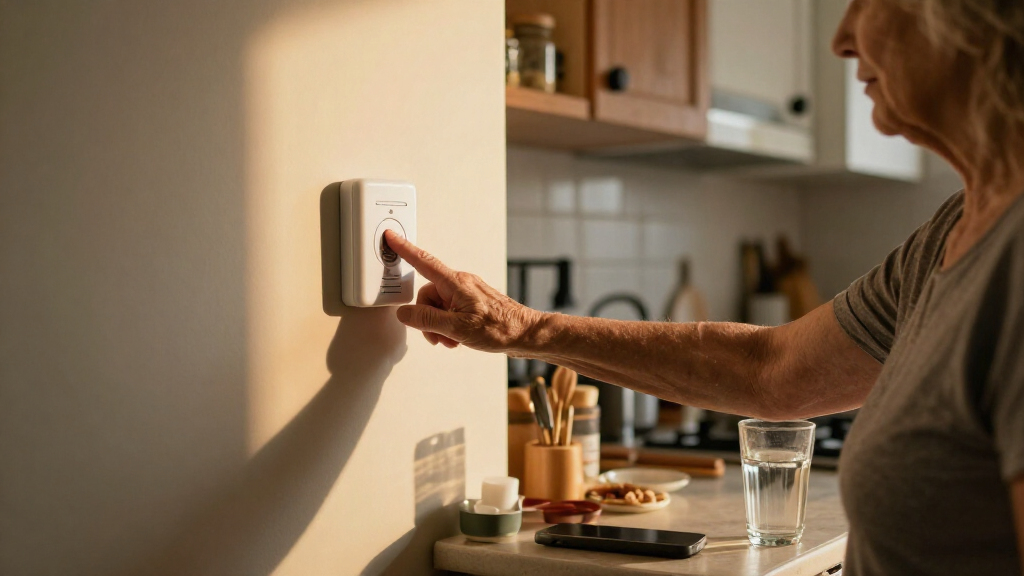
Choose a bed sensor when the main concern is someone getting up without assistance, a mat when you want to monitor a particular step or bedside area, and a door sensor when opening a specific exit is the event that needs attention. A call button serves a different purpose: it lets a person request help when they can recognize a need and reach the button. A common mistake is buying a call button for someone who may not remember or be able to press it. Some homes need more than one type because a bed alarm cannot report a door opening. Start with the event that presents the most immediate risk, then add coverage only where it closes a real gap.
Check whether the senior can reliably use a button
Manual call systems work best when the person can understand the button, reach it, and press it when help is needed. Think about whether it will stay within reach in bed, in a chair, and during the parts of the day when a caregiver is elsewhere. A wearable or portable button can be convenient, but only if the person will keep it with them and can activate it. Automatic sensors reduce reliance on a deliberate action, though they can alert during ordinary movement that does not require help. Families often benefit from pairing a call button with automatic monitoring when the senior’s ability to request help varies. No alarm can compensate for a setup the person cannot use consistently.
Plan receiver placement before buying
Count where caregivers spend time, including bedrooms, kitchens, and areas separated by doors or floors. Multiple receivers can help distribute alerts, but only if they can be placed where someone will hear or notice them. A single receiver may be easier to manage in a compact home, while a larger household may need alerts in more than one location. Check the manufacturer’s stated wireless range and remember that walls and other obstacles can affect real-world coverage. A practical mistake is placing a receiver near a noisy appliance or in a room no caregiver regularly enters. Decide who is responsible for responding before relying on a sound that may be heard by several people.
Think through sensor placement and daily routines
Bed sensors and floor mats depend on where a person moves, so placement should reflect their usual way of getting up rather than an idealized layout. A mat may be missed if the person steps around it, while a sensor can be less useful if bedding or furniture interferes with its position. Consider whether the senior changes sides of the bed, uses a mobility aid, or gets up at different times. Ask whether a caregiver can reset, move, or check the system without making the routine harder. Test the setup in ordinary conditions and adjust it if routine movement creates alerts that are difficult to interpret. The most useful location is one that detects the intended event without obstructing safe movement.
Balance coverage with alert fatigue
More sensors can cover more situations, but every alert asks a caregiver to pause and respond. If ordinary movements trigger frequent notifications, caregivers may become less attentive to the alerts that matter. Before adding devices, identify which events need immediate action and which can be handled through routine checks. A focused bed or door alarm may be easier to manage than monitoring several areas without a clear response plan. Think about how the alert sounds, who will hear it, and what they should do next. A good setup supports a specific care routine rather than creating noise without a clear purpose.
Set expectations for power, upkeep, and backup
Wireless systems still need routine checks: sensors and receivers may rely on batteries, and a quiet or disconnected component can leave a coverage gap. Find out how the system signals low power or a lost connection, and decide who will check it and how often. Keep replacement batteries or charging steps part of an existing household routine rather than waiting for an alarm to stop working. These devices generally alert nearby caregivers; they should not be assumed to contact emergency services unless the product explicitly provides that function. If a caregiver is frequently away from the home, consider what backup plan covers that time. A simple check schedule can be more useful than extra features no one maintains.
Frequently Asked Questions
Should I choose a bed alarm or a call button for someone who may not remember to ask for help?
A bed alarm is usually the better starting point when the concern is movement out of bed and the person may not reliably press a button. A call button is useful when the senior can recognize a need, reach the control, and activate it. The two options solve different problems, so some households use both: automatic detection for bed exits and a button for other requests. Consider whether the alarm’s alert gives caregivers enough time to respond before choosing a sensor style. If the person’s needs or abilities vary, discuss the setup with their care team.
Can a wireless caregiver alarm alert someone who is outside the home?
Do not assume that a wireless pager sends alerts over the internet or to a phone away from the home. Many caregiver alarm systems use a local connection between a sensor or button and a receiver, so coverage depends on the receiver being nearby and within range. Check the product’s stated communication method and whether it requires an app, subscription, or separate gateway. If caregivers need alerts while away, choose a system explicitly designed for remote notifications rather than relying on a local pager. Keep a separate plan for times when no responder is in the home.
Will a floor mat alarm work if the person uses a walker or moves around the sensor?
A mat alarm detects pressure when someone steps onto its surface, so it may miss movement if the person walks around it or uses a route that avoids it. A walker may also change where the person places their feet, making the intended detection area less predictable. Measure the available floor space and observe the person’s usual path before setting the mat in place. Keep the mat positioned so it does not obstruct a mobility aid or create a tripping hazard. If movement patterns vary, a different sensor style may fit better.
How many receivers do I need for a caregiver pager?
Choose receiver count based on where a caregiver needs to hear or notice an alert, not simply on household size. One receiver may be enough in a small home where a caregiver stays nearby, while receivers in separate rooms can help when people are spread out. Multiple receivers do not help if they are out of range, muted, or placed where nobody will notice them. Check the system’s range guidance and test each planned location with doors and walls in their usual positions. Also agree on who responds so an alert does not go unanswered because everyone assumes someone else heard it.
Can I use a home safety alarm instead of regular supervision or emergency services?
No. These alarms can notify a nearby caregiver of a specific event, but they do not prevent every fall, assess an injury, or guarantee that someone will respond. Most local pager systems are not a direct connection to emergency services, so verify what the product actually does before relying on it. Use the alarm alongside a care plan, safer pathways, and appropriate supervision. Decide in advance what the caregiver should do after each alert, including when to seek urgent medical help. For advice suited to a person’s health and mobility, ask their clinician or care team.
Conclusion
For most households focused on bed exits, I would start with the Smart Caregiver Early Alert Bed Exit Alarm as the best overall fit because its early-warning approach addresses that specific risk. The Smart Caregiver Floor Mat Alarm is my best choice for monitoring a defined bedside or step area, while the CallToU three-button pager with two receivers suits households that want several ways to request help and more than one listening point. For beginners, a simple one-button pager or single-sensor bed alarm can be easier to introduce than a setup with several monitoring zones. The best value depends on the coverage you actually need: a basic device may be enough in a small home, while multiple receivers or sensor types make more sense when caregivers are spread out or risks differ by room. Choose by the event you need to detect, then confirm that the senior and caregiver can use the system as part of their daily routine.