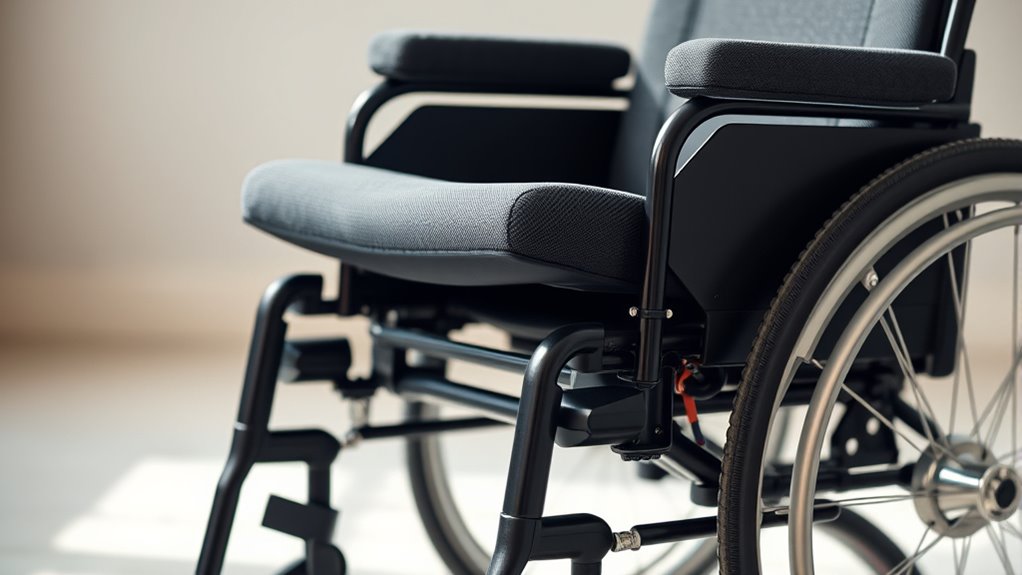

For caregivers choosing a tilt-in-space wheelchair, the best option depends on how much positioning support the user needs and how the chair will be moved, transferred, and maintained. My best overall pick is the Karman Healthcare VIP515-18-E, a foldable tilt-in-space model that balances positioning with a more manageable transport footprint. The Etac Swift Mobil Tilt-2 stands out for shower and toileting routines, while the Everest & Jennings PureTilt is worth comparing for a more traditional reclining wheelchair setup. The main tradeoffs are specialized positioning versus easier transport, plus the need to match seat dimensions and caregiver handling demands. Read on for the full comparison and guidance by care setting.

Turn quiet afternoons into listening time
- Thousands of audiobooks, podcasts and originals
- Listen on your phone, tablet or Echo — also offline
- Cancel anytime
Complete the kit


Key Takeaways
- The Karman VIP515-18-E is my best overall pick because its foldable tilt-in-space format addresses positioning needs while keeping transport in view.
- The Etac Swift Mobil Tilt-2 serves a different job: its shower commode design suits bathing and toileting routines, but it is not a general substitute for a daily mobility chair.
- Several Karman listings are closely related, so caregivers should compare the exact model, seat width, transport configuration, and included supports before choosing among them.
- The McKesson and PureTilt reclining chairs are not interchangeable with every tilt-in-space model; confirm the actual positioning mechanism and clinical fit rather than relying on the word “reclining” in a listing.
- Caregiver workload depends on the whole routine: transfers, leg positioning, doorway clearance, storage, and cleaning can matter as much as the chair’s tilt feature.
| McKesson Reclining Wheelchair with Detachable Desk Arms – 18″ Seat Width, 300 lbs Capacity |  | Best for Higher Weight Capacity | Seat width: 18 inches | Weight capacity: 300 lbs | Seating feature: Reclining design | VIEW ON AMAZON | See Our Full Breakdown |
| Karman Healthcare VIP515-18-E Foldable Tilt-in-Space Wheelchair, Diamond Black |  | Best Overall for Caregiver-Operated Tilt | Tilt range: 0–35 degrees | Seat width: 18 inches | Seat dimensions: 20 x 16 inches | VIEW ON AMAZON | See Our Full Breakdown |
| Karman Healthcare VIP515TP-18-E Foldable Tilt-in-Space Wheelchair, 18-Inch Seat |  | Best for Leg Positioning | Seat size: 18 inches wide x 17 inches deep | Weight: 33 lbs without footrests | Tilt range: 0–35 degrees | VIEW ON AMAZON | See Our Full Breakdown |
| Karman Healthcare K-VIP2 Tilt-in-Space Reclining Transport Wheelchair, 18 x 18 in Seat, Diamond Black |  | Best for Recline and Transport | Weight: 43 lbs | Weight capacity: 255 lbs | Seat size: 18 x 18 inches | VIEW ON AMAZON | See Our Full Breakdown |
| Everest & Jennings PureTilt Tilt-in-Space Reclining Wheelchair |  | Best for Self-Adjustable Tilt | Tilt range: 5°–40° | Item weight: 99.8 pounds | Package dimensions: 38.5 x 33 x 33 inches | VIEW ON AMAZON | See Our Full Breakdown |
| Karman VIP2 16-Inch Tilt-in-Space Reclining Transport Wheelchair with Elevating Leg Rests | | Best for Narrower Seating | Seat width: 16 inches | Seat depth: 18 inches | Weight capacity: 255 lbs | VIEW ON AMAZON | See Our Full Breakdown |
| Karman Healthcare VIP-515-TP-18 Foldable Tilt-in-Space Reclining Transport Wheelchair, Diamond Black, 18-Inch Seat |  | Best for 18-Inch Seat Fit | Seat width: 18 inches | Seat height: 20 inches | Weight capacity: 250 lbs | VIEW ON AMAZON | See Our Full Breakdown |
| Etac Swift Mobil Tilt-2 Reclining Tilt Shower Commode Chair |  | Best for Bathing and Toileting | Weight capacity: 353 lbs | Armrest adjustment: Height and width, ±6 cm | Headrest: Multi-position | VIEW ON AMAZON | See Our Full Breakdown |
| EV Rider Spring Manual Wheelchair with Tilt-in-Space High Back and 18-Inch Ergonomic Seat |  | Best for Self-Propelling Users | Frame: Aluminum | Seat type: Manual tilt-in-space | Maximum recline: 30 degrees | VIEW ON AMAZON | See Our Full Breakdown |
| Vive Tilt-in-Space Electric Wheelchair for Adults and Seniors |  | Best for Powered Positioning | Tilt and recline: Motorized tilt; four positions: 115°, 129°, 141°, and 153° | Battery: Two 12V sealed batteries | Range: Up to 16 miles per charge | VIEW ON AMAZON | See Our Full Breakdown |
| tilt in space wheelchairs for caregiver | Weight capacity | Tilt range |
|---|---|---|
| McKesson Reclining Wheelchair | 300 lbs | Not specified |
| Karman Healthcare VIP515-18-E | — | 0–35 degrees |
| Karman Healthcare VIP515TP-18- | — | 0–35 degrees |
| Karman Healthcare K-VIP2 Tilt- | 255 lbs | — |
| Everest & Jennings PureTilt Ti | — | 5°–40° |
| Karman VIP2 16-Inch Tilt-in-Sp | 255 lbs | 0–35° |
| Karman Healthcare VIP-515-TP-1 | 250 lbs | 0–35 degrees |
| Etac Swift Mobil Tilt-2 Reclin | 353 lbs | — |
| EV Rider Spring Manual Wheelch | 300 lbs | — |
| Vive Tilt-in-Space Electric Wh | 300 lbs | — |
More Details on Our Top Picks
McKesson Reclining Wheelchair with Detachable Desk Arms – 18″ Seat Width, 300 lbs Capacity
The McKesson stands apart from the Karman VIP515-18-E because its listed 300 lb capacity exceeds the VIP515’s clearly described tilt-focused setup, while McKesson’s listing does not specify a tilt range. Its reclining design may suit caregivers who need to change a seated position, and detachable desk arms can make side transfers or access to a table easier. Those features make it a possible fit when capacity and arm access lead the decision. I would not treat reclining as a substitute for tilt-in-space: the product details do not explain whether the seat and back move together or how caregivers operate the adjustment. Limited specifications also make fit and handling harder to judge than on the Karman models. Choose it only when its stated capacity and removable arms match the care plan.
Pros:- Stated weight capacity of 300 lbs
- Reclining design offers an adjustable seating position
- Detachable desk arms may ease side access and transfers
Cons:- No tilt-in-space range is provided in the product details
- Operating method and other fit specifications are unclear
Best for: Caregivers seeking an 18-inch reclining chair with a stated 300 lb capacity and detachable arms for transfer access.
Not ideal for: Care teams that require a verified tilt-in-space range, detailed adjustment controls, or clear handling specifications.
- Seat width:18 inches
- Weight capacity:300 lbs
- Seating feature:Reclining design
- Arm type:Detachable desk arms
- Tilt range:Not specified
- Product details:Limited description; product may vary from images
Our verdict“Choose the McKesson when its 300 lb capacity and detachable arms matter more than verified tilt-in-space details.”
Karman Healthcare VIP515-18-E Foldable Tilt-in-Space Wheelchair, Diamond Black
The VIP515-18-E is the clearest match here for caregivers who want a defined tilt-in-space range in a foldable chair. Its 0–35-degree tilt shifts the user’s position while keeping the seat angle relative to the back, which can help caregivers manage pressure and posture without relying on recline alone. Compared with the Karman VIP515TP-18-E, this listing specifies 20-inch rear wheels and swing-in-and-away footrests, while the TP model highlights lighter listed weight and elevating legrests. Flip-back, height-adjustable armrests can improve access during transfers. The tradeoff is that the listing gives less detail about overall weight and leg support than the TP version, so transport and lower-limb positioning need closer checking. It makes the most sense when caregiver-controlled tilt and a foldable frame are the priority.
Pros:- 0–35-degree tilt range is specified
- Foldable design can simplify storage
- Height-adjustable flip-back armrests support transfer access
- Swing-in-and-away footrests offer positioning flexibility
Cons:- Overall chair weight is not specified
- Elevating legrests are not listed
Best for: Caregivers who need a foldable manual chair with a specified tilt range and adjustable arms for daily positioning.
Not ideal for: Buyers who need a documented lightweight carry weight or elevating legrests with calf support.
- Tilt range:0–35 degrees
- Seat width:18 inches
- Seat dimensions:20 x 16 inches
- Seat height:20 inches
- Rear wheel size:20 inches
- Footrests:Swing-in and away
- Armrests:Height-adjustable, flip-back
- Foldable:Yes
- Color:Diamond Black
Our verdict“Pick the VIP515-18-E for a straightforward foldable tilt chair when its specified positioning features outweigh missing weight details.”
Karman Healthcare VIP515TP-18-E Foldable Tilt-in-Space Wheelchair, 18-Inch Seat
The VIP515TP-18-E gives caregivers more lower-leg adjustment than the VIP515-18-E: its elevating legrests and calf pads add support when leg position is part of the care routine. Both chairs fold and offer a 0–35-degree tilt, but this version also lists breathable mesh upholstery and a 33 lb weight without footrests. That weight can help with lifting and storage, though caregivers should remember it excludes footrests and the complete carry weight is not stated. Tilt and brakes are companion-operated, so this is not the choice for a user who needs independent control of those functions. Compared with the heavier-featured Karman K-VIP2, it has a lighter listed frame weight and a more explicit tilt range, but lacks the K-VIP2’s reclining backrest details. It suits caregiver-led positioning where leg support matters.
Pros:- Elevating legrests include calf pad support
- Breathable mesh seat and back are specified
- 0–35-degree tilt range
- 33 lb listed weight without footrests
Cons:- Tilt and brake functions are companion-operated
- Listed weight excludes footrests and total weight is unspecified
Best for: Caregivers who need a foldable tilt chair with elevating legrests and calf support for users requiring adjustable lower-leg positioning.
Not ideal for: Users who need to operate tilt and brakes independently, or caregivers who need a confirmed total carry weight including footrests.
- Seat size:18 inches wide x 17 inches deep
- Weight:33 lbs without footrests
- Tilt range:0–35 degrees
- Rear wheel size:14 inches
- Upholstery:Breathable mesh
- Armrests:Desk-length, height-adjustable, flip-back
- Legrests:Elevating with calf pad support
- Footplates:Height-adjustable
Our verdict“Choose the VIP515TP-18-E when caregiver-operated tilt and supported leg elevation are more useful than independent controls.”
Karman Healthcare K-VIP2 Tilt-in-Space Reclining Transport Wheelchair, 18 x 18 in Seat, Diamond Black
The K-VIP2 combines tilt-in-space and a reclining backrest, giving caregivers two ways to adjust posture. That combination distinguishes it from the Karman VIP515-18-E, whose listed features focus on tilt and folding rather than a reclining back. Its 43 lb weight, folding frame and backrest support storage and vehicle loading, while flat-free wheels avoid routine tire inflation for indoor and outdoor use. The tradeoff is a 255 lb capacity, below the McKesson’s stated 300 lbs, and the product details do not provide a tilt range. At 43 lbs, it is also heavier than the VIP515TP-18-E’s listed 33 lbs without footrests, although the weights may not be directly comparable because that figure excludes footrests. This is a practical fit when recline and transport features matter more than higher capacity or a clearly stated tilt angle.
Pros:- Combines tilt-in-space with a reclining backrest
- Folding frame and backrest ease storage
- Flat-free wheels are listed for indoor and outdoor use
- Flip-back armrests and removable adjustable footrests
Cons:- 255 lb capacity is lower than the McKesson’s stated 300 lbs
- Tilt range is not specified
- 43 lb weight may be difficult for some caregivers to lift
Best for: Caregivers transporting a user who benefits from both tilt and backrest recline and who fits within the stated capacity.
Not ideal for: Users above 255 lbs or buyers who need a specified tilt angle or the lightest possible listed chair weight.
- Weight:43 lbs
- Weight capacity:255 lbs
- Seat size:18 x 18 inches
- Rear wheels:14 inches
- Front casters:7 inches
- Frame material:Aircraft-grade aluminum
- Wheels:Flat-free
- Warranty:Limited lifetime on frame; 1 year on parts
Our verdict“Choose the K-VIP2 when recline, tilt and foldable transport features suit the user within its 255 lb capacity.”
Everest & Jennings PureTilt Tilt-in-Space Reclining Wheelchair
The PureTilt is the standout for users who may benefit from controlling tilt themselves: its listed self-adjustable 5°–40° range extends beyond the 0–35-degree ranges specified for both Karman VIP515 chairs. That can offer more choice in positioning, while its adjustable headrest, backrest and legrests address support beyond the seat angle. Rear anti-tippers add a stated safety feature. Compared with the folding Karman K-VIP2, however, the PureTilt is far heavier at 99.8 lbs, and the product data do not specify its seat width even though the model number includes 18. The package dimensions are also substantial, which may complicate storage and vehicle loading. I would favor it when self-adjustment and broad positioning support matter more than portability, after confirming fit and access to the controls.
Pros:- Self-adjustable tilt spans 5°–40°
- Adjustable headrest, backrest and legrests
- Padded flip-back armrests
- Rear anti-tippers are included
Cons:- 99.8 lb item weight makes lifting and transport difficult
- Seat dimensions are not provided in the supplied product data
- Package dimensions may challenge storage
Best for: Users who need a wider self-adjustable tilt range and caregivers who can accommodate a heavy, large-format chair.
Not ideal for: Caregivers who regularly lift a wheelchair into a vehicle or need confirmed seat dimensions before purchase.
- Tilt range:5°–40°
- Item weight:99.8 pounds
- Package dimensions:38.5 x 33 x 33 inches
- Manufacturer:Graham-Field
- Model:PT3000-18
- Armrests:Padded, flip-back
- Positioning supports:Adjustable headrest, backrest and legrests
- Safety feature:Rear anti-tippers
Our verdict“Choose the PureTilt when self-adjustable positioning outweighs the substantial weight and unlisted seat dimensions.”
Karman VIP2 16-Inch Tilt-in-Space Reclining Transport Wheelchair with Elevating Leg Rests
The 16-inch seat gives this VIP2 a narrower fit than the 18-inch Karman VIP-515-TP-18, which may help caregivers working through tighter doorways or positioning a smaller user. Its 0–35° tilt and 0–30° recline offer separate ways to adjust posture, while the elevating leg rests and adjustable headrest add support for longer seated periods. For caregivers, the folding frame, caregiver-operated brakes, and flat-free rear wheels suit home routines and occasional transport. The tradeoff is its 43-pound listed weight without footrests; removing components lowers the transport-mode weight to 36 pounds, but handling still takes effort. The narrower seat will also be a poor fit for users who need more room, and this chair lacks the powered adjustments of the Vive.
Pros:- Tilt and recline provide two ways to adjust seated posture.
- Elevating leg rests and adjustable headrest support varied positioning needs.
- Folding frame and removable components make transport and storage more manageable.
- Caregiver-operated brakes and flat-free rear wheels support routine handling.
Cons:- At 43 pounds without footrests, it may be difficult for one caregiver to lift.
- The 16-inch seat may be too narrow for some users.
- Adjustments are manual, unlike the joystick-controlled tilt and recline on the Vive.
Best for: Caregivers seeking a folding transport chair for a smaller user who needs tilt, recline, and elevating leg rests.
Not ideal for: Users who need an 18-inch or wider seat, or caregivers who need a very light chair to lift frequently.
- Seat width:16 inches
- Seat depth:18 inches
- Weight capacity:255 lbs
- Product weight:43 lbs without footrests
- Transport mode weight:36 lbs with footrests and armrests removed
- Tilt range:0–35°
- Recline range:0–30°
- Overall open width:25 inches
Our verdict“Choose the VIP2 when a narrower seat and manual positioning suit the user, and skip it if seat width or frequent lifting is a concern.”
Karman Healthcare VIP-515-TP-18 Foldable Tilt-in-Space Reclining Transport Wheelchair, Diamond Black, 18-Inch Seat
With an 18-inch seat and 0–35° tilt, the VIP-515-TP-18 fits caregivers who want a foldable tilt chair with more seating room than the 16-inch Karman VIP2. Its swing-away footrests can clear the way during transfers, while flip-back, height-adjustable armrests give caregivers more flexibility when positioning the user. That makes it a practical manual transport option for routine care, but the supplied details do not list a recline range or the fuller leg-support package included with the VIP2. Its 250-pound capacity is also lower than the EV Rider Spring and Vive, both rated for 300 pounds. The available specifications give little guidance on total weight or folded dimensions, so caregivers should confirm lifting and storage fit before choosing it.
Pros:- 18-inch seat offers more room than the 16-inch Karman VIP2.
- Tilt range reaches 35 degrees for repositioning.
- Swing-away footrests can make transfers easier.
- Flip-back armrests adjust in height for varied positioning.
Cons:- The 250-pound capacity is lower than the EV Rider Spring and Vive.
- The provided product data does not specify total weight or folded dimensions.
- No recline range or elevating leg rests are listed in the supplied details.
Best for: Caregivers who need an 18-inch seat, foldable transport, and armrests that adjust to the user’s positioning.
Not ideal for: Users above 250 pounds or caregivers who need confirmed chair weight, folded dimensions, or a specified recline range before buying.
- Seat width:18 inches
- Seat height:20 inches
- Weight capacity:250 lbs
- Tilt range:0–35 degrees
- Rear wheel size:14 inches
- Frame:Foldable
- Armrests:Flip-back and height-adjustable
Our verdict“Pick this Karman for its 18-inch seat and adjustable transfer-friendly parts, provided its capacity and transport details meet your needs.”
Etac Swift Mobil Tilt-2 Reclining Tilt Shower Commode Chair
The Etac Swift Mobil Tilt-2 serves a different caregiving task from the Karman transport chairs: it is built around bathing and toileting access. Caregivers can operate its tilt from either side, and the open rear seat creates access for personal care. A multi-position headrest and armrests adjustable in height and width help accommodate different support needs; the quick-drying backrest suits repeated bathroom use. Compared with the Karman VIP2, this chair has a much higher listed capacity at 353 pounds, but its specs do not describe it as a travel-focused folding transport chair or provide a seat width. The built-in pan holder is useful, though the pan and lid are sold separately. Choose it for bathroom routines, not as a substitute for a general-purpose transport wheelchair.
Pros:- Caregivers can operate tilt from either side.
- Open rear seat provides access for bathing and toileting care.
- Armrests adjust in height and width, and the headrest has multiple positions.
- 353-pound capacity exceeds the listed capacities of the Karman transport chairs.
Cons:- Pan and lid are sold separately.
- The supplied specifications do not state seat dimensions or chair weight.
- Its shower commode design is less suited to general transport than the Karman VIP2.
Best for: Caregivers who need a tilt shower commode chair with side-accessible controls and an open rear seat for daily personal care.
Not ideal for: Families seeking a general-purpose folding transport wheelchair or a complete commode setup that includes the pan and lid.
- Weight capacity:353 lbs
- Armrest adjustment:Height and width, ±6 cm
- Headrest:Multi-position
- Seat:Open rear
- Backrest:Soft, quick-drying
- Tilt control:Operable from either side
- Included accessory:Built-in pan holder
Our verdict“Choose the Etac for hands-on bathing and toileting care, but look to a transport wheelchair for everyday travel needs.”
EV Rider Spring Manual Wheelchair with Tilt-in-Space High Back and 18-Inch Ergonomic Seat
The EV Rider Spring is the clearest fit here for a user who wants manual self-propulsion: its 24-inch quick-release drive wheels make it distinct from the caregiver-oriented Karman transport chairs. The aluminum frame and 300-pound capacity add appeal for users who need a higher capacity than the VIP-515-TP-18, and seat widths are available in 16, 18, and 22 inches. Tilt is manually operated, with recline up to 30 degrees, so caregivers should expect hands-on adjustment rather than the joystick control offered by the Vive. At 84 pounds, this chair is substantially heavier than the Karman VIP2’s listed 43 pounds, making lifting and vehicle loading a serious practical tradeoff. Its 39-inch turning radius also calls for adequate maneuvering space.
Pros:- 24-inch quick-release drive wheels support manual self-propulsion.
- Three seat widths are available: 16, 18, and 22 inches.
- 300-pound capacity exceeds the listed capacity of either Karman transport chair.
- Tilt-in-space reclines up to 30 degrees.
Cons:- At 84 pounds, it is substantially heavier than the Karman VIP2.
- Tilt adjustment is manual rather than joystick-controlled like the Vive.
- The 39-inch turning radius may be restrictive in tight rooms.
Best for: Users who can self-propel and need a choice of seat widths, a high back, and a 300-pound capacity.
Not ideal for: Caregivers who need a lightweight transport chair or powered tilt control, or users navigating tight indoor spaces.
- Frame:Aluminum
- Seat type:Manual tilt-in-space
- Maximum recline:30 degrees
- Weight capacity:300 lbs
- Product weight:84 lbs
- Drive wheels:24-inch quick-release
- Available seat widths:16, 18, and 22 inches
- Turning radius:39 inches
Our verdict“Choose the Spring when self-propulsion and seat-width choice matter more than easy lifting or powered positioning.”
Vive Tilt-in-Space Electric Wheelchair for Adults and Seniors
The Vive stands apart from the manual Karman VIP2 and EV Rider Spring by letting the user adjust motorized tilt and four recline positions from the joystick. That can reduce the need for a caregiver to reposition the chair by hand, while adjustable headrest, armrests, and footplates allow a more tailored setup. Its up to 16-mile range and outdoor lights also suit users who need powered mobility beyond the home. The tradeoff is that the product data does not give total chair weight or folded dimensions; a removable 16.5-pound backrest alone does not establish how easy it is to load into a vehicle. Capacity is 300 pounds, below the Etac shower commode chair’s 353 pounds, and this powered model serves a different role from that bathroom-focused option.
Pros:- Joystick controls motorized tilt and four recline positions.
- Adjustable headrest, armrests, and footplates support personalized positioning.
- Range is listed at up to 16 miles per charge, with outdoor lights included.
- Arrives fully assembled with the joystick attached.
Cons:- The supplied data does not state total chair weight or folded dimensions.
- The 300-pound capacity is lower than the Etac Swift Mobil Tilt-2.
- Powered operation depends on two sealed 12V batteries.
Best for: Users who need powered tilt and recline adjustments and want an electric chair for indoor and outdoor mobility.
Not ideal for: Caregivers who need confirmed lifting weight or folded dimensions for vehicle transport, or users above 300 pounds.
- Tilt and recline:Motorized tilt; four positions: 115°, 129°, 141°, and 153°
- Battery:Two 12V sealed batteries
- Range:Up to 16 miles per charge
- Maximum speed:6.2 mph
- Weight capacity:300 lbs
- Drive:Rear-wheel drive
- Transport component:Removable backrest weighs 16.5 lbs
- Assembly:Arrives fully assembled with joystick attached
Our verdict“Choose the Vive for joystick-controlled positioning and powered travel if its transport size and 300-pound capacity fit your situation.”

How We Picked
I compared the ten listed products around the needs that shape caregiver use: positioning function, seat fit, transfer and transport demands, support for leg positioning, and suitability for the intended care setting. I also considered whether a chair’s design appears focused on everyday mobility, transport, reclining support, or bathing and toileting. Product names and listed features do not establish clinical suitability, so buyers should confirm specifications and fit with the prescribing clinician or supplier.
The ranking gives the strongest placement to options with a clear tilt-in-space purpose and practical caregiver use, while specialized equipment is ranked for its specific task rather than treated as a universal chair. Foldable Karman models lead the general-use comparison; the Etac earns a distinct place for hygiene routines. Similar Karman listings are separated by their stated configuration, while products described primarily as reclining chairs receive more cautious placement until the tilt mechanism and support needs are verified.
Factors to Consider When Choosing Tilt In Space Wheelchairs For Caregivers
I would start with the care routine, then check whether the chair’s dimensions and handling demands fit the user, caregiver, and environment. These decisions can prevent a chair that looks suitable on paper from complicating daily transfers or positioning.
Match tilt to the positioning goal
Tilt-in-space changes the seat and back angle together, while reclining changes the backrest angle relative to the seat. Those movements can feel similar in a product title, but they serve different positioning needs and may affect posture differently. Ask the clinician which movement is prescribed and what angles or supports are required. A caregiver should not assume a reclining label means the chair provides the same function as a tilt-in-space model. Confirm how the mechanism is operated and whether the user can remain safely positioned through the full range. This check matters especially when comparing the McKesson or PureTilt listings with chairs explicitly described as tilt-in-space.
Measure the user and the route
Seat width is only one part of fit: seat depth, back height, leg support, and the user’s posture can affect comfort and stability. Measure the user according to supplier guidance and check the chair’s full external width against doorways, lifts, and bathroom access. A chair may fit the user yet be too wide for the spaces where care happens. Also account for turning room, footrests, and caregiver access during transfers. Do not choose a narrower seat simply to gain clearance if it compromises fit. Ask the supplier to confirm both occupied fit and folded or transport dimensions.
Plan transfers around the chair
Think through the entire transfer sequence: approach, brakes, footrest removal or movement, arm support, and the caregiver’s working position. Detachable or desk arms may help with some side transfers, but they do not guarantee that a transfer will be safe or easy. Elevating leg rests can support a prescribed position while adding parts that must be moved and managed. Before ordering, ask whether the selected configuration allows the transfer technique used at home or in the care facility. Check the chair’s handling instructions with the person who will provide routine care. A small difference in arm or leg support can change how much lifting or repositioning the caregiver must do.
Account for portability and caregiver effort
Folding can make storage and vehicle transport simpler, though it does not by itself tell you how easy a chair is to lift or maneuver. Check the complete chair weight, folded dimensions, lifting points, and whether detachable parts must be removed before loading. Consider who will move it and how often, including stairs, ramps, and vehicle transfers. A transport chair may suit caregiver-propelled outings, while another setup may better match ongoing indoor positioning. Test the intended route with the supplier when possible. Do not trade away needed postural support for portability without discussing that choice with the care team.
Choose equipment for the care setting
A chair used for bathing or toileting faces water, cleaning, transfer, and access demands that a standard mobility chair may not address. The Etac Swift Mobil Tilt-2 is specifically presented as a shower commode chair, so its role differs from the Karman folding wheelchairs. Check materials, cleaning instructions, bathroom clearance, and compatibility with the user’s transfer method. For a chair used across multiple settings, confirm whether it can safely handle each task rather than assuming one product covers everything. Care facilities may also have storage and sanitation requirements. The right choice depends on where and how care occurs, not just the chair’s positioning feature.
Verify the exact model and included supports
Near-duplicate product names can conceal meaningful differences in seat size, frame, transport configuration, or included leg rests. This roundup includes several Karman VIP515 and VIP2 variants, so compare the precise model identifier and specification sheet before purchase. Confirm what comes standard and what is optional, including cushions, head support, and leg supports. Ask about maintenance, replacement parts, and service access in your area. A complete written specification helps prevent confusion between listings that appear nearly identical. Keep the clinician’s positioning requirements alongside that specification when making the final selection.
Frequently Asked Questions
How can I tell whether I need tilt-in-space or a reclining wheelchair?
Start with the positioning goal set by the user’s clinician, because tilt and recline change the body’s angle in different ways. Tilt-in-space moves the seat and back together, while recline changes the backrest angle relative to the seat. Ask the supplier to demonstrate the movement and identify the exact mechanism on the model being considered. Product titles can use “reclining” and “tilt” inconsistently, so verify the specification rather than relying on search terminology. If positioning needs are complex, have the seating team assess the user in the intended configuration.
Are the Karman VIP515 listings different enough to compare separately?
The listings name several VIP515 variants, including foldable models and transport wheelchair configurations. Their names alone do not establish whether the frames, supports, or included accessories differ. Compare exact model numbers, seat dimensions, overall width, folding details, and included parts using supplier documentation. Confirm that any difference matters for the user’s fit or the caregiver’s transfer and transport routine. If the specifications are identical, choose based on verified availability and support from the seller rather than assuming the product title signals a functional distinction.
Can one wheelchair handle daily mobility and shower or toileting care?
Some users need separate equipment because bathing and toileting bring cleaning, water exposure, access, and transfer requirements that a daily mobility chair may not meet. The Etac Swift Mobil Tilt-2 is listed as a shower commode chair, while the Karman models are framed around wheelchair mobility and positioning. Ask the clinician and supplier whether a single chair is approved for both settings and how it should be cleaned. Check bathroom dimensions and the transfer approach before trying to combine roles. A chair that works in one room may be difficult or unsuitable in another.
What should a caregiver check before loading a foldable chair into a vehicle?
Check the chair’s actual weight, folded dimensions, lifting points, and whether parts such as footrests need to come off first. Compare those details with the vehicle opening, storage space, and the caregiver’s ability to lift safely. Folding can reduce the storage footprint, but it does not guarantee that loading will be manageable. Ask the supplier to show the loading process for the exact configuration, including any cushions or supports used by the rider. If the chair will be moved often, trial the routine before committing.
How do I choose a seat width without making transfers harder?
Use the supplier’s measurement guidance and the seating team’s assessment to select a width that supports the user without excess side-to-side movement. Then check whether the arms, leg supports, and seat depth allow the caregiver’s usual transfer method. A width that seems convenient for doorways may compromise fit, while a wider chair can reduce access in tight rooms. Measure both the user and the route, including bathroom turns and lift doors. Ask for a full dimensional drawing if the chair will be used in constrained spaces.
Conclusion
For most caregivers comparing general-purpose tilt-in-space options, I would start with the Karman Healthcare VIP515-18-E as the best overall pick, subject to a fit and configuration check. The best value direction is a suitable Karman VIP2 or VIP515 variant when its verified specifications meet the user’s needs without unneeded features; the listings here do not support a price-based value claim. For a premium or specialized care setting, the Etac Swift Mobil Tilt-2 is the clearest choice for shower and commode routines. Beginners should compare the simpler-to-understand use case of the McKesson reclining chair only after confirming it provides the prescribed positioning function. Choose the PureTilt or a transport-focused Karman when their exact support and mobility configuration fits the routine, and reserve the Vive electric wheelchair for buyers whose needs call for powered mobility after checking that its tilt and caregiver controls match the care plan.