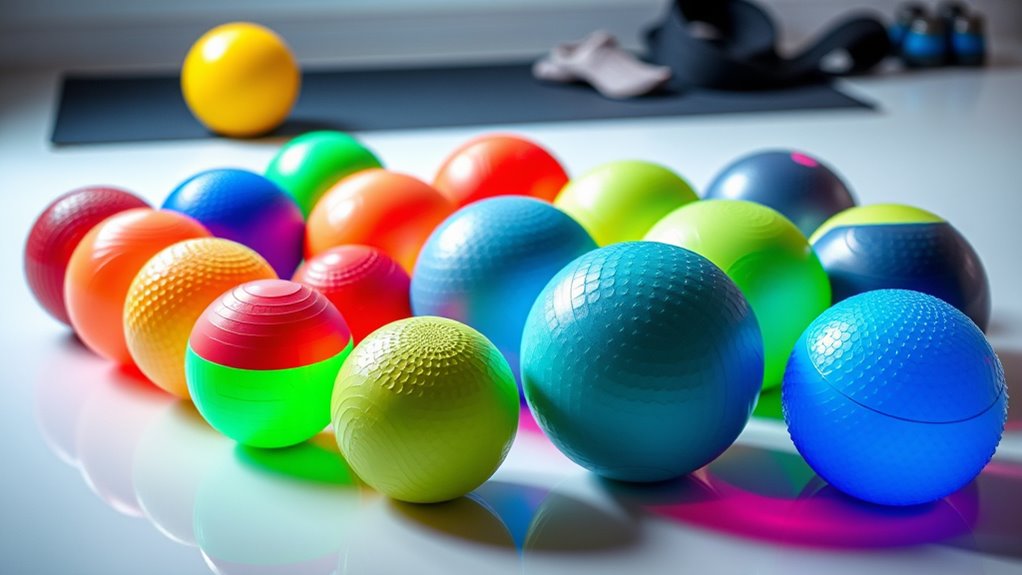

A therapy ball can support exercise, mobility work, or targeted muscle relief, but the right choice depends on its size, firmness, and intended use. My best overall pick is the Trideer Yoga Ball, which suits broader exercise routines and includes a pump. For focused pressure on tight spots, the Kieba Massage Lacrosse Balls offer a firm, simple two-ball set, while the YOGA TUNE UP® Therapy Balls in Tote stand out for portable, paired massage work. The main tradeoff is between a large, versatile exercise ball and a smaller ball that provides more localized pressure. Read on for how the 11 options compare and which style fits your routine.

Turn quiet afternoons into listening time
- Thousands of audiobooks, podcasts and originals
- Listen on your phone, tablet or Echo — also offline
- Cancel anytime
Complete the kit


Key Takeaways
- Ball size separates exercise from targeted relief: The Trideer and ProBody full-size options suit movement and stability exercises, while the smaller massage balls focus pressure on specific areas.
- The Trideer Yoga Ball is the broadest exercise pick: Its exercise and pregnancy positioning and included pump make it a more complete starting point for whole-body use than the massage-focused models.
- Firm two-ball sets prioritize direct pressure: Kieba and several other lacrosse-style options offer a straightforward format for trigger-point and myofascial work, but provide less size flexibility than a mixed set.
- Tote-based sets favor portability and paired use: The YOGA TUNE UP® options and Therapy Ball Plus Pair include a tote, which can help keep a routine organized, though the two Tune Up listings appear to be the same product.
- The small ProBody ball fills a different exercise niche: Its 9-inch format is more compact than a full-size exercise ball, making it a better match for smaller movements than for replacing a large stability ball.


| therapy ball | Material |
|---|---|
| Kieba Massage Lacrosse Balls | 100% solid rubber |
| Trideer Yoga Ball | PVC |
| ProBody Pilates Yoga Ball | Anti-burst PVC |
| TriggerPoint Foam Massage Ball | Ethylene vinyl acetate (EVA) |
| Massage Lacrosse Balls for Myo | 100% solid rubber |
| YOGA TUNE UP® Therapy Balls in | Natural-latex shell with pliable interior |
| Massage Lacrosse Balls | 100% solid rubber |
| YOGA TUNE UP® Therapy Balls in | Natural latex |
| Physical Massage Therapy Ball | High-grade non-toxic rubber |
| ProBody Pilates Ball Small | Anti-burst PVC, latex-free |
| Therapy Ball Plus Pair with To | — |
More Details on Our Top Picks
Kieba Massage Lacrosse Balls – Set of 2 Firm Pink and Purple Balls for Myofascial Release, Trigger Point Therapy & Yoga
The Kieba pair is a compact choice for people who want direct pressure on specific knots rather than a ball for sitting or full-body exercise. Its solid-rubber construction and small size make it easy to bring to work or the gym and use against a wall, chair, or floor. Compared with the Trideer Yoga Ball, it targets small areas instead of supporting balance and core workouts; compared with the similar blue-and-red lacrosse pair, its main distinction is the pink-and-purple color set, not a different therapy approach. That firm feel can be useful when a softer foam ball does not provide enough pressure, but it may be uncomfortable for sensitive users or anyone new to self-massage. Choose it for focused, portable release, not broad coverage.
Pros:- Solid rubber construction is suited to repeated use
- Compact pair is easy to carry and use against a wall or chair
- Firm shape focuses pressure on specific muscle knots
- Two colors make the balls easy to distinguish
Cons:- Firmness may feel too intense for sensitive users
- Small size covers less area than a foam massage ball or exercise ball
Best for: People who want a durable two-ball set for focused pressure on muscle knots at home, at work, or while traveling
Not ideal for: Massage beginners or people with sensitive muscles who need a softer surface or a larger ball for broader coverage
- Material:100% solid rubber
- Quantity:2 balls
- Colors:Pink and purple
- Intended uses:Myofascial release, trigger-point therapy, and yoga support
- Target areas:Back, shoulders, neck, hips, legs, and feet
- Use settings:Home, office, and gym
Our verdict“Choose the Kieba pair if you want portable, firm pressure for small muscle knots and do not need a softer massage surface.”
Trideer Yoga Ball – Exercise & Pregnancy, Pump Included
For buyers using “therapy ball” to mean an exercise ball, the Trideer is the clearest fit in this group: it supports core workouts, Pilates, balance training, and active sitting, with pregnancy use also listed. Its frosted PVC surface and anti-slip stripes are intended to add grip during movement, while the included pump and multiple size options help with setup and fit. Compared with the ProBody Pilates Yoga Ball, it offers a similar exercise-oriented role and 330-pound load limit, but ProBody specifies five diameters and includes a printed exercise guide. Trideer’s burst-resistant design and pump make it a practical general-purpose pick, though the PVC may feel stiff before it is fully inflated. Buyers seeking pinpoint muscle release should choose a compact massage ball instead.
Pros:- Anti-slip stripes and frosted surface provide grip during exercise
- Supports a listed maximum load of 330 pounds
- Pump, stoppers, and instructions are included
- Multiple diameter options accommodate different users
Cons:- PVC can feel stiff until the ball is fully inflated
- Large exercise-ball format is less useful for targeting small muscle knots
- Only black is listed as a color option
Best for: People looking for a full-size ball for physical exercise, balance and core training, active sitting, or pregnancy workouts
Not ideal for: Buyers who need a compact tool for trigger-point massage or who want a soft-feeling ball straight out of the box
- Ball type:Yoga ball
- Material:PVC
- Listed diameter:65 cm
- Size options:45–85 cm
- Maximum load:330 lb (150 kg)
- Weight:2.2 lb
- Included components:Pump, two air stoppers, and instructions
- Color:Black
- Warranty:1 year
Our verdict“Pick the Trideer if you want a full-size therapy ball primarily for physical exercise, active sitting, or pregnancy workouts.”
ProBody Pilates Yoga Ball – Gym Grade Exercise Ball
The ProBody stands out for buyers who need an exercise ball with clearly stated size choices and therapy-oriented uses. Five diameters, from 45 to 85 cm, make it easier to match the ball to a user’s height and activity than relying on a single listed size. Its 330-pound capacity and anti-burst PVC support use for core training, prenatal routines, active sitting, and physical therapy. Compared with the Trideer Yoga Ball, ProBody adds a printed exercise guide, a stopper remover, and a stated 12-month replacement guarantee; Trideer, by contrast, specifies anti-slip stripes and a frosted surface. The setup takes patience: inflation can take time, and the ball needs 24 hours to settle before full use. It is a stronger match for planned exercise than quick, targeted massage.
Pros:- Five diameters provide a wide range of fit options
- Anti-burst PVC is specified as tested to 880 pounds
- Includes a dual-action pump, plugs, stopper remover, and exercise guide
- Listed for physical therapy, prenatal use, and core workouts
Cons:- Inflation takes time, and the ball must settle for 24 hours before full use
- Large exercise-ball format does not provide the focused pressure of a massage ball
Best for: People choosing a size-matched ball for physical therapy, prenatal exercise, core training, or active sitting
Not ideal for: Anyone who needs a ball ready for immediate use or wants a compact tool for isolated trigger-point relief
- Material:Anti-burst PVC
- Sizes:45, 55, 65, 75, and 85 cm
- Load capacity:330 lb
- Material test:Tested to 880 lb
- Certification:CA 10P Certified
- Included components:Exercise ball, dual-action hand pump, two plugs, stopper remover, and printed exercise guide
- Warranty:12-month replacement guarantee
- Recommended uses:Core training, active sitting, prenatal use, and physical therapy
Our verdict“Choose ProBody when accurate sizing and exercise or therapy guidance matter more than fast setup or localized massage.”
TriggerPoint Foam Massage Ball – Deep Tissue Relief for Muscle and Joint Pain
This TriggerPoint ball occupies useful middle ground between the tiny solid-rubber lacrosse pairs and the large Trideer Yoga Ball: its five-inch foam body gives more coverage for hips and shoulders while remaining a targeted self-massage tool. The multi-density EVA foam and slip-resistant surface are designed for controlled pressure, and the washable construction is a practical plus for a tool used on the floor or against the body. Unlike the Kieba and blue-and-red lacrosse balls, it is not described as solid rubber, so it may suit buyers who want a foam surface and broader contact. It is still a firm, localized massage option, not an exercise ball or a full-body solution. Sensitive users may find the pressure too intense, and the product is not water resistant.
Pros:- Five-inch form covers more area than a lacrosse-sized ball
- Multi-density EVA foam supports targeted pressure
- Slip-resistant surface helps keep the ball steady during use
- Washable design supports routine cleaning
Cons:- May feel too firm for beginners or sensitive users
- Targets selected areas rather than providing full-body massage
- Not water resistant
Best for: People who want a washable foam tool for focused self-massage over larger areas such as the hips and shoulders
Not ideal for: People seeking a full-size ball for physical exercise, or beginners and sensitive users who need very gentle pressure
- Material:Ethylene vinyl acetate (EVA)
- Dimensions:5 × 5 × 5 inches
- Weight:6.3 oz (0.18 kg)
- Massage type:Massage ball
- Features:Multi-density foam and slip-resistant surface
- Care:Washable
- Water resistance:Not water resistant
- Target use:Body and hands
Our verdict“Choose the TriggerPoint if you want a washable foam massage ball with more coverage than a lacrosse ball, but not an exercise ball.”
Massage Lacrosse Balls for Myofascial Release, Trigger Point Therapy, Muscle Knots, and Yoga Therapy – Set of 2 Firm Balls (Blue and Red)
This blue-and-red pair has the same basic appeal as the Kieba Massage Lacrosse Balls: two compact, firm rubber tools for using body weight to target muscle knots. Its stated settings span home, office, gym, sports practice, and travel, which makes the pair easy to keep available rather than reserving it for a single workout. The Kieba set also offers two solid-rubber balls, so the meaningful difference here is the color combination, not a clear change in size or firmness. Compared with the TriggerPoint Foam Massage Ball, these balls provide a smaller, harder contact point and pack more easily, but they cover less area and may feel intense on sensitive muscles. Pick them for portable, focused release; skip them if you prefer cushioning or broader pressure.
Pros:- Two solid-rubber balls are portable for use in several settings
- Firm shape allows focused self-myofascial pressure
- Can be used on a chair, floor, bed, or yoga mat
- Blue and red colors distinguish the pair
Cons:- Firmness may be uncomfortable for users who prefer softer massage tools
- Small size covers less area than the TriggerPoint foam ball
- Not suitable as a substitute for a full-size exercise ball
Best for: Travelers, gym users, and sports participants who want a simple pair of firm balls for focused muscle-knot work
Not ideal for: People who prefer a softer massage surface, need broad muscle coverage, or want a ball for full-size exercise routines
- Material:100% solid rubber
- Quantity:2 balls
- Colors:Blue and red
- Design:Firm, lacrosse-sized balls
- Intended uses:Myofascial release, trigger-point therapy, muscle knots, and yoga therapy
- Use settings:Home, office, gym, sports practice, and travel
- Use surfaces:Chair, floor, bed, or yoga mat
Our verdict“Choose this pair for portable, firm trigger-point work across home, travel, and sports settings; choose foam if you want gentler, broader contact.”
YOGA TUNE UP® Therapy Balls in Tote by Tune Up Fitness
For focused self-massage rather than general exercise, this pair offers a useful balance of grip, portability, and firm pressure. The 2.5-inch latex-core balls can be placed against a wall or floor to work specific tight spots around the neck, shoulders, back, and feet; their grippy surface helps them stay controlled as you shift your weight. Compared with the Physical Massage Therapy Ball Set, this option gives you a smaller contact area for pinpoint pressure, while that set’s tennis-ball size may feel gentler across broader areas. The included mesh tote makes the pair easy to carry between home, studio, and travel. The tradeoff is the small size: applying enough pressure may take hand strength, and natural latex rules it out for people with latex allergies.
Pros:- Grippy surface helps keep the balls controlled during targeted pressure work
- Small diameter reaches specific tight areas around the neck, shoulders, back, and feet
- Mesh tote makes storage and travel straightforward
- Designed for self-massage and myofascial recovery
Cons:- Natural latex is unsuitable for people with latex allergies
- Small balls can require substantial hand strength or careful body-weight positioning
- Pinpoint pressure may feel too intense for tender muscles or broad-area massage
Best for: Adults who want portable, pinpoint pressure for muscle tightness and recovery after exercise.
Not ideal for: People with latex allergies, limited hand strength, or a preference for broad, gentle massage contact.
- Diameter:2.5 inches
- Material:Natural-latex shell with pliable interior
- Included items:2 balls and drawstring mesh tote
- Brand:Tune Up Fitness
- Color:Deep Purple
- Intended use:Targeted muscle release and myofascial recovery
Our verdict“Choose this pair for portable, focused muscle release if latex is suitable for you and you can manage firm, pinpoint pressure.”
Massage Lacrosse Balls – Myofascial Release, Deep Tissue & Trigger Point Therapy (2‑Pack, Deep Blue & Purple)
If you want a firm ball that holds its shape under body weight, this solid-rubber pair is the most direct option in this group. Its 2.5-inch size concentrates pressure on knots in areas such as the back, legs, and feet, and the listed weight gives each ball a substantial feel for its compact size. Compared with the YOGA TUNE UP® Therapy Balls, these lacrosse-style balls are made from solid rubber rather than a latex-core design, so they suit buyers seeking a straightforward, firm tool rather than a grippy, pliable-feeling one. They’re easy to carry to work or the gym, but that firmness narrows their audience: beginners and people with tender muscles may find the pressure uncomfortable. They’re also not intended for children.
Pros:- Solid-rubber construction provides firm, consistent pressure
- Compact 2.5-inch size targets specific muscle knots
- Two-ball set is easy to carry and use in different settings
- Body weight and gravity can provide pressure without a separate massage device
Cons:- Firmness may be uncomfortable for beginners or people with tender muscles
- Pinpoint pressure is less suited to broad muscle areas
- Not suitable for children
Best for: Adults familiar with self-massage who want a compact, firm tool for focused pressure at home, work, or the gym.
Not ideal for: Beginners, people with very tender muscles, or anyone seeking a softer ball for gentle mobility work.
- Diameter:2.5 inches
- Weight per ball:5.3 oz
- Material:100% solid rubber
- Pack size:2 balls
- Colors:Deep Blue and Purple
- Intended use:Myofascial release, deep-tissue massage, and trigger-point therapy
Our verdict“Pick these solid-rubber balls if you already tolerate firm trigger-point pressure and want a simple, portable pair.”
YOGA TUNE UP® Therapy Balls in Tote by Tune Up Fitness
This Tune Up Fitness pair makes sense for buyers who want a compact tool for learning targeted self-massage and need an easy way to carry it. The 2.5-inch latex balls are intended for tight areas such as the neck, shoulders, back, and feet, while the mesh tote keeps the set together in a gym bag or travel kit. Compared with the Massage Lacrosse Balls, this listing emphasizes the portable tote and targeted recovery rather than giving a per-ball weight or specifying a solid-rubber build. That makes it a reasonable choice for general recovery routines, but the available product details don’t establish a softer feel; the small contact area can still create intense pressure. Buyers should also note that the balls are made with natural latex, and their size may not cover larger muscle groups as comfortably as a tennis-ball-size option.
Pros:- Compact size supports targeted work on specific tight areas
- Included mesh tote makes the pair easy to carry
- Natural latex is described as durable and grippy
- Intended for self-massage and muscle recovery
Cons:- Natural latex may trigger reactions in people with latex allergies
- Small balls may not suit broad areas such as larger muscle groups
- Pinpoint contact may feel intense for sensitive users
Best for: People building a portable self-massage routine who want a small pair for specific tight spots.
Not ideal for: People with latex sensitivity, larger muscle groups needing broad contact, or anyone seeking a softer, larger-format ball.
- Size:2.5 inches
- Material:Natural latex
- Includes:Therapy balls and mesh tote
- Brand:Tune Up Fitness
- Intended use:Muscle release and self-massage
- Target areas:Neck, shoulders, back, and feet
Our verdict“Choose this tote-equipped pair for portable, localized muscle work if you tolerate latex and don’t need a broad-contact ball.”
Physical Massage Therapy Ball Set – Ideal for Yoga, Deep Tissue Massage, Trigger Point Therapy and Myofascial Release
Among the small massage-ball options here, this set has the clearest middle ground between yielding comfort and focused pressure. Its tennis-ball-size rubber balls are described as firmer than foam rollers but softer than lacrosse balls, which may make them more approachable for yoga, recovery, and areas that don’t tolerate a very hard point of contact. Compared with the Massage Lacrosse Balls, the larger size and softer stated feel favor broader contact over maximum pinpoint firmness; compared with the ProBody Pilates Ball Small, these are massage tools rather than exercise props. A mesh carry bag supports studio use. The tradeoff is that the balls may still feel too firm to beginners or very tender users, and the product advises professional guidance for children and people with certain medical conditions.
Pros:- Tennis-ball size spreads contact over more area than 2.5-inch lacrosse-style balls
- Stated firmness sits between foam rollers and lacrosse balls
- Non-toxic rubber is described as resistant to odor and deterioration
- Mesh carry bag supports home and studio use
Cons:- May still feel too firm for beginners or very tender muscles
- Larger size is less suited to highly pinpoint pressure than smaller therapy balls
- Professional guidance may be needed for some medical conditions
Best for: Yoga and recovery users who want a portable massage pair with broader contact and a feel between a foam roller and a lacrosse ball.
Not ideal for: People who need very soft pressure, want a ball for exercise drills, or have a medical concern requiring professional guidance.
- Quantity:2 balls
- Size:Tennis-ball size
- Material:High-grade non-toxic rubber
- Included:Mesh carry bag
- Intended use:Yoga, deep-tissue massage, trigger-point therapy, and myofascial release
- Relative firmness:Firmer than foam rollers and softer than lacrosse balls
Our verdict“Choose this set for yoga and recovery when you want broader contact and less firmness than a lacrosse ball, not an exercise ball.”
ProBody Pilates Ball Small – 9 Inch Exercise Ball
This is the outlier in the lineup, and that difference matters: the 9-inch ProBody Pilates Ball is an exercise and therapy prop, not a trigger-point massage ball. Its larger, yielding surface suits physical-therapy movements such as placing a ball between the knees during bridge progressions, along with Pilates, pelvic-floor work, and short mobility breaks. For buyers focused on exercise physical, it offers more useful support for controlled movement than the YOGA TUNE UP® Therapy Balls or Massage Lacrosse Balls, which target small areas with concentrated pressure. The latex-free PVC construction may also suit people avoiding latex. The tradeoffs are its narrower role as a workout aid rather than a muscle-knot tool, and the need to follow setup and safety guidance, including the supplied instructions and physician consultation before starting an exercise program.
Pros:- 9-inch size suits between-knee stabilization and other controlled exercise movements
- Anti-burst PVC construction is designed for exercise use
- Latex-free material may suit people avoiding latex
- Compact format and included inflation accessories support home or travel routines
Cons:- Not designed for pinpoint muscle release or deep-tissue massage
- Its small size does not replace a full-size exercise ball
- Exercise use calls for following medical guidance and the supplied instructions
Best for: Adults following physical-therapy, Pilates, or pelvic-floor exercise routines who need a compact ball for controlled movement.
Not ideal for: Shoppers seeking deep-tissue or trigger-point massage, or anyone who needs a larger exercise ball for full-body support.
- Diameter:9 inches
- Material:Anti-burst PVC, latex-free
- Age range:Adult
- Sport type:Exercise and fitness
- Included components:Instructions, exercises, extra plug, and two inflation straws
- Warranty:1-year manufacturer warranty
- Model number:4808474
Our verdict“Choose the ProBody if your therapy ball needs involve physical-therapy exercise and stabilization, not trigger-point massage.”
Therapy Ball Plus Pair with Tote – Massage Therapy Balls for Myofascial Release
For focused self-massage, this pair is better suited to pinpointing tight spots than a larger exercise ball such as the Trideer Yoga Ball, which supports broader movement and balance work. Each 2¾-inch ball concentrates pressure around areas such as the shoulders, hips, and feet, while the high-grip rubber shell helps keep it in place during floor-based routines. The compressible core offers a different feel from the firmer lacrosse-ball options in this roundup, with pressure intended to feel more controlled. A mesh tote makes the set easy to carry between home, work, and travel. The tradeoff is intensity: small massage balls can press hard into sensitive areas, so this pair may feel uncomfortable for beginners or anyone who prefers broad, gentle support.
Pros:- Compact 2¾-inch diameter targets specific muscle and fascia areas
- High-grip rubber shell helps the balls stay positioned during self-massage
- Compressible core offers a more yielding feel than firm lacrosse-ball styles
- Mesh tote makes the pair convenient to carry
Cons:- Concentrated pressure may be uncomfortable for beginners or sensitive users
- Small size is not suited to broad-area support or full-body exercise
- The set does not include instructions or a pump for guided routines
Best for: People who already use targeted self-massage and want portable balls for post-exercise recovery, yoga, or desk-break mobility routines
Not ideal for: Beginners who are sensitive to concentrated pressure, or buyers seeking a full-size ball for seated exercise and balance training
- Ball diameter:2¾ inches
- Quantity:2 balls
- Shell material:High-grip rubber
- Core:Compressible
- Included accessory:Mesh carry tote
- Intended use:Myofascial release and mobility recovery
- Portability:Travel-ready
Our verdict“Choose this pair for portable, targeted recovery work if you are comfortable with concentrated pressure, but pick a full-size exercise ball for balance and general fitness routines.”

How We Picked
I compared these 11 listings by how well their form and included items match common therapy-ball uses: exercise and stability work, focused trigger-point pressure, and portable myofascial routines. Size and firmness mattered because a large inflatable ball and a firm massage ball solve different problems; I ranked options higher when the stated design and included accessories made their intended use easier to understand. I also weighed practical details such as a pump or tote, the flexibility of a single ball versus a pair, and whether a product description supports more than one kind of routine.
The ranking favors clear, useful distinctions rather than treating all therapy balls as interchangeable. The Trideer leads for general physical exercise because it is presented as an exercise ball and includes a pump; firm massage-ball sets rank higher for focused muscle work, not for whole-body exercise. Smaller and paired options serve narrower needs, while duplicate listings do not gain an advantage simply by appearing twice. Product descriptions do not provide enough comparable information to claim specific material performance or precise firmness levels, so I avoid treating unstated specifications as proven benefits.
Factors to Consider When Choosing Therapy Ball
Before choosing a therapy ball, decide what you expect it to do. A ball for exercise needs different dimensions and handling from one meant to apply localized pressure, and a convenient accessory cannot compensate for a mismatch in purpose. These factors can help narrow the category before you compare individual models.
Match the Ball Size to the Movement
Large exercise balls create an unstable surface for seated movements, balance drills, and other physical exercises, while smaller balls fit under or beside a specific body area. A common mistake is buying a compact massage ball expecting it to serve as a substitute for a full-size exercise ball. Think about the room where you will use it, too: an inflatable exercise ball takes more setup and storage space than a small solid ball. If your routine includes both stability work and focused pressure, one ball may not cover both needs well. Choosing for the activity you do most often usually makes more sense than chasing an all-purpose label.
Choose Firmness for the Type of Pressure You Want
Firm, compact balls are designed to concentrate pressure over a small area, which can feel intense when placed against a wall or floor. That concentrated sensation is not automatically better; it may be uncomfortable for new users or for areas that respond better to gentler contact. A larger ball spreads contact over a wider area and is generally used for movement rather than pin-point pressure. Start with a ball suited to your tolerance and routine, not simply the firmest option available. If the product details do not state how firm it is, avoid assuming that similar-looking balls will feel identical.
Decide Whether a Pair or a Single Ball Fits Your Routine
A single ball is straightforward to store and use when you want to focus on one area at a time. A pair can support simultaneous pressure on either side of the spine or provide a spare, but paired use is not appropriate for every exercise or body area. Some sets come with a tote, which helps keep small pieces together but does not change how the balls feel or perform. Buyers sometimes pay attention to the number of pieces without asking whether their routine actually uses more than one. Choose a pair for a clear reason, such as bilateral work or portability, rather than assuming more pieces mean more versatility.
Treat Pumps and Storage as Convenience Features
An included pump reduces the number of separate items needed to prepare an inflatable exercise ball, which can make setup easier. It does not tell you how long inflation takes or how the ball will fit your space, so check the stated size and storage needs before ordering. A tote is more useful for massage balls that travel between home, work, or a class than for a ball that stays in one exercise area. A frequent buying error is letting an accessory decide the purchase when the ball itself does not match the intended use. Prioritize the core design, then use accessories as a tie-breaker.
Check What the Listing Actually Specifies
Descriptions may identify a ball as suitable for yoga, trigger-point therapy, pregnancy, or general exercise, but those labels do not replace concrete details about dimensions, materials, or use instructions. Compare the information provided rather than inferring durability or feel from a product name. When a set is described as firm but offers no further detail, expect less certainty about how it will compare with another firm set. Also check whether two listings are distinct products or duplicate entries before treating them as separate choices. Clear specifications matter most when you need a particular size or plan to use the ball for a specific movement.
Pay More Only for a Feature You Will Use
A more elaborate kit can make sense if its paired balls, tote, or included pump match a routine you already plan to follow. If you only need one firm ball for occasional focused pressure, extra components may add clutter rather than useful range. For exercise, the right size and a practical inflation setup matter more than carrying accessories. Beginners may benefit from a simpler choice that makes the intended use obvious, while experienced users may value a pair or portable kit for a more established routine. Let the feature set solve a real need instead of treating add-ons as a measure of quality.
Frequently Asked Questions
Can a therapy ball for exercise also work for muscle relief?
Sometimes, but a large exercise ball and a compact massage ball are built for different kinds of contact. A full-size ball supports stability and movement drills, while a smaller firm ball concentrates pressure on a limited area. The Trideer and ProBody exercise options are the more relevant choices for physical exercise, whereas the lacrosse-style and Tune Up balls are aimed at targeted work. If you want both activities regularly, choosing separate tools may be more practical than expecting one ball to perform equally well at each. Base the decision on your primary routine.
Should I choose one massage ball or a two-ball set?
Choose a single ball if you expect to work on one area at a time and want a simple item to store. A pair may be useful for symmetrical routines or for keeping a spare, but using two balls together is not required for every technique. Several listings here offer firm pairs, while the Tune Up and Therapy Ball Plus options add a tote for organization or travel. Do not assume a pair is gentler or more versatile simply because it includes an extra ball. The best format is the one that fits the movements you intend to do.
Is a firm lacrosse-style therapy ball a good first choice?
It can suit a beginner who wants a simple, compact tool for focused pressure and is comfortable with a firm feel. Its small contact area can make pressure intense, so a new user may prefer to start against a wall rather than putting full body weight onto it. A large exercise ball is a better first purchase if the main goal is movement, balance, or general physical exercise. The Kieba set and other firm two-ball options are not interchangeable with those larger models. Choose based on whether your first priority is localized relief or exercise.
What makes a 9-inch exercise ball different from a full-size yoga ball?
A 9-inch ball is suited to smaller movements and applications where a full-size stability ball would be cumbersome. A full-size ball provides a much larger surface for seated exercise and broader balance work. In this roundup, the ProBody Pilates Ball Small is the compact exercise option, while the Trideer and full-size ProBody models better match routines that call for a larger ball. Check the intended exercise and available space before choosing by name alone. A small ball should not be assumed to replace a full-size model.
Are the two YOGA TUNE UP® listings different products?
The supplied product names are identical: both list YOGA TUNE UP® Therapy Balls in Tote by Tune Up Fitness. No distinguishing details are provided here to show that the listings represent different versions. I would compare the exact listing details, included contents, and seller information before treating them as separate choices. For this roundup, the duplicate name does not indicate a separate design advantage. If you want paired balls with a tote, compare that option with the Therapy Ball Plus Pair and the other listed sets.
Conclusion
For the broadest match to physical exercise, I recommend the Trideer Yoga Ball as best overall: its stated exercise focus and included pump make it the most ready-to-use large-ball pick. For best value in a straightforward focused-pressure format, consider the Kieba Massage Lacrosse Balls, while recognizing that a firm pair is not a substitute for an exercise ball. Beginners seeking movement and stability work should start with a full-size exercise option; those new to targeted massage should use a compact ball gently and build familiarity gradually. For a more portable, organized massage routine, the YOGA TUNE UP® Therapy Balls in Tote or Therapy Ball Plus Pair with Tote suit buyers who will use the pair and carry it between locations. Choose the ProBody Pilates Ball Small when a compact exercise ball is the specific need, and skip it if you want full-size stability work.
Fall Picks
fall essentials
As an affiliate, we earn on qualifying purchases.