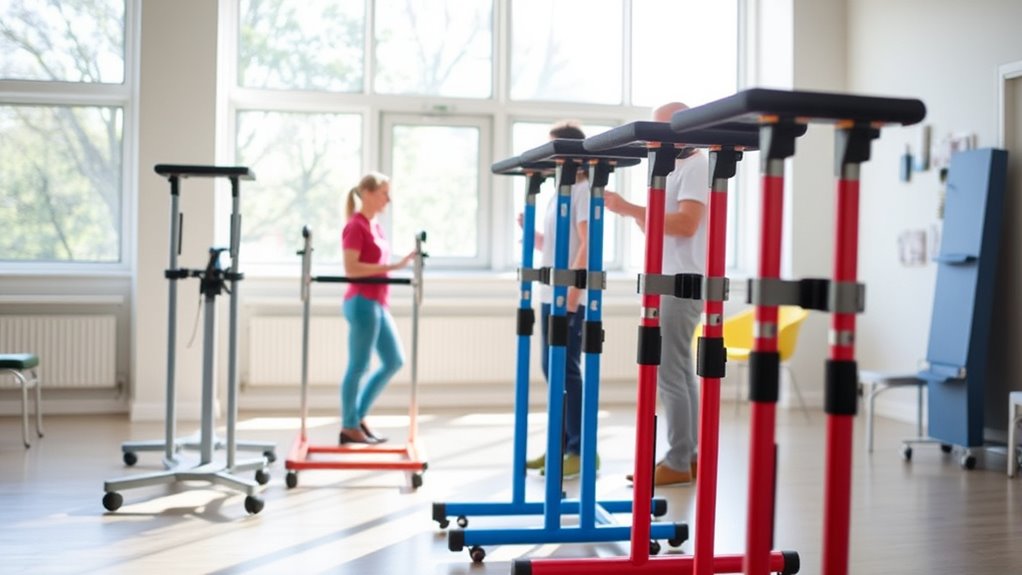

Choosing the right standing frame for rehabilitation depends on individual needs, mobility levels, and specific health conditions. The best overall pick, CANEVE Rehabilitation Standing Frame, offers versatile support for stroke patients, but it may be bulky for home use. The Vive Sit to Stand Patient Lift stands out for ease of transfer, while the Children’s Cerebral Palsy Tilt Standing Frame excels for pediatric needs. Each option involves tradeoffs between cost, adjustability, and complexity. Continue reading for a detailed comparison that helps you find the best fit for your rehabilitation goals.
Play games included with Prime
Start a Prime free trial and play with Amazon Luna on your devices.
Start playingAs an affiliate, we earn on qualifying purchases.
Complete the kit


Key Takeaways
- The top-ranked standing frames balance adjustability with ease of use, making them suitable for a wide range of users.
- Pricing varies significantly, with more advanced models offering better support but at a higher cost.
- Specialized options for children or elderly users tend to have more tailored features but may lack some adult-focused functionalities.
- Many models share common tradeoffs, such as bulkiness versus portability or simplicity versus customization.
- Durability and safety features are critical, especially for long-term use in clinical or home settings.
| CANEVE Rehabilitation Standing Frame with Dining Board for Stroke Patients |  | Best for Home-Based Stroke Rehabilitation | Intended Use: Rehabilitation for stroke hemiplegia and paralysis | Includes: Dining board, correction board | Suitable For: Home use | VIEW ON AMAZON | See Our Full Breakdown |
| Vive Mobility Sit to Stand Patient Lift for Handicapped |  | Best for Heavy Patients and Caregiver Support | Supports Weight: up to 400 lbs | Base Width: 26 inches | Frame Material: steel | VIEW ON AMAZON | See Our Full Breakdown |
| Children’s Cerebral Palsy Tilt Standing Frame – Rehabilitation and Muscle Strength Training |  | Best for Pediatric Cerebral Palsy Support | Tilt Range: 90–130° | Height Range: 80–150cm | Support Pads: Waist, leg, chest | VIEW ON AMAZON | See Our Full Breakdown |
| CANEVE 4 Wheels Rehabilitation Standing Frame with Ankle Orthosis for Seniors and Adults |  | Best for Mobility-Assist Seniors and Adults | Wheels: 4 | Intended Users: Seniors, Adults, Disabled | Rehabilitation Focus: Hemiplegia, Stroke | VIEW ON AMAZON | See Our Full Breakdown |
| Lower Limb Rehabilitation Training Stand Frame for Disabled with Cerebral Palsy and Support Walker |  | Best for Pediatric and Post-Surgery Support | Bracket Material: Thick steel pipe | Table Top Adjustment Range: 102–125cm | Chest Support Adjustment Range: 65cm | VIEW ON AMAZON | See Our Full Breakdown |
| Perlecare Sit-to-Stand Lift for Elderly, Adjustable Height, Safety Belt, Lockable Casters |  | Best for Portable, Customized Transfers | Adjustable seat height: 3 options | Adjustable knee pad height: 2 options | Width: 26.5 inches | VIEW ON AMAZON | See Our Full Breakdown |
More Details on Our Top Picks
CANEVE Rehabilitation Standing Frame with Dining Board for Stroke Patients
This standing frame stands out for its tailored design to support stroke patients in a home environment, especially those with hemiplegia or paralysis. Its inclusion of a dining board and correction board makes it a versatile tool for rehabilitation exercises that integrate daily activities. Compared with larger, more complex frames like the CANEVE 4 Wheels model, this option is more compact and easier to use in smaller spaces, but it may lack extensive adjustability and detailed sizing options. Its focused purpose means it’s ideal for patients needing specific stroke rehab support at home, rather than broader mobility training. Tradeoffs include limited adjustability and a setup that might require caregiver assistance.
Pros:- Supports rehabilitation training at home effectively
- Includes dining and correction boards for functional therapy
- Designed specifically for stroke hemiplegia and paralysis
Cons:- May require assistance for setup and daily use
- Limited information on sizing and adjustability
Best for: Individuals recovering from stroke who need a dedicated, home-based standing aid with functional integration.
Not ideal for: Users looking for a versatile, adjustable frame for multiple rehabilitation scenarios or broader mobility training.
- Intended Use:Rehabilitation for stroke hemiplegia and paralysis
- Includes:Dining board, correction board
- Suitable For:Home use
Our verdict“This frame is best suited for stroke patients needing targeted, home-based rehabilitation with functional support features.”
Vive Mobility Sit to Stand Patient Lift for Handicapped
This stand-assist lift excels in supporting patients who can bear 60-70% of their weight, with a capacity of up to 400 lbs, making it suitable for heavier users often incompatible with lighter frames. Its sturdy steel construction, cushioned handrails, and safety features like dual locking brakes provide a secure transfer experience. Compared with the children’s tilt frames, this model prioritizes weight support and safety for adults and seniors, but it’s less portable and less suitable for tight spaces due to its 26-inch base width. Its design emphasizes stability and ease of use in both home and clinical settings, though careful space measurement is necessary before purchase. Tradeoffs include limited maneuverability in small rooms.
Pros:- Supports up to 400 lbs for larger patients
- Features cushioned handrails and a comfortable seat
- Includes safety features like locking brakes and support hooks
Cons:- Base width limits accessibility in tight spaces
- Requires adequate room for safe maneuvering
Best for: Caregivers assisting heavy adults or seniors in home or healthcare facilities who need reliable, safe transfer equipment.
Not ideal for: Users with very narrow doorways or tight spaces, as the base width may hinder movement through small openings.
- Supports Weight:up to 400 lbs
- Base Width:26 inches
- Frame Material:steel
- Safety Features:dual locking brakes, hooks for support straps
Our verdict“This lift is a strong choice for heavy patients and caregivers prioritizing safety and stability over compactness.”
Children’s Cerebral Palsy Tilt Standing Frame – Rehabilitation and Muscle Strength Training
This stander offers a highly adjustable setup tailored for children with cerebral palsy or paraplegia, with a tilt range of 90–130° and height adjustability from 80 to 150cm. Its inclusion of full-body support pads and an activity tabletop encourages independence and muscle development, making it a thoughtful choice for pediatric rehab. Compared with adult-focused frames like the CANEVE 4 Wheels model, this unit prioritizes gentle, customizable support for growing children. However, it may require professional assembly and is mainly suited for specific therapeutic goals rather than general mobility training. Its focused design ensures effective muscle support but limits use outside targeted pediatric rehab. Tradeoffs include the need for professional setup and limited applicability for non-pediatric users.
Pros:- Adjustable tilt and height for personalized therapy
- Supports muscle strength and prevents atrophy
- Includes activity tabletop to promote independence
Cons:- May require professional assembly
- Designed mainly for specific pediatric needs
Best for: Parents or therapists seeking a versatile, adjustable standing frame for children with cerebral palsy or similar conditions.
Not ideal for: Caregivers needing a frame for adult rehabilitation or general mobility support in non-pediatric settings.
- Tilt Range:90–130°
- Height Range:80–150cm
- Support Pads:Waist, leg, chest
- Adjustability:Height-adjustable frame
- Additional Features:Activity tabletop, tilt function
Our verdict“This pediatric stander is ideal for supporting muscle development and independence in children with cerebral palsy or similar conditions.”
CANEVE 4 Wheels Rehabilitation Standing Frame with Ankle Orthosis for Seniors and Adults
This four-wheeled frame offers stability and adjustability for seniors and adults facing mobility challenges, particularly post-stroke or hemiplegia. Its height adjustment feature and included ankle orthosis support safe standing and walking, making it suitable for assisted mobility in both home and clinical settings. Compared with the more specialized children’s frames, this unit emphasizes adult user support with a focus on stability and ease of use. Its bulkier design can be a drawback in small spaces, and proper training is necessary for safe operation. Still, it provides a dependable solution for those needing standing support combined with walking aid. Tradeoffs include size and the need for user training.
Pros:- Provides stable support for rehabilitation and walking
- Adjustable height for a personalized fit
- Includes ankle orthosis for added stability
Cons:- Bulky for small or cluttered spaces
- Requires proper assembly and user training
Best for: Seniors or adults recovering from stroke or with mobility impairments who require stable standing and walking assistance.
Not ideal for: Small apartments or users needing lightweight, highly portable options for frequent transport or stairs.
- Wheels:4
- Intended Users:Seniors, Adults, Disabled
- Rehabilitation Focus:Hemiplegia, Stroke
- Features:Height Adjustment, Ankle Orthosis
Our verdict“This frame suits adults and seniors needing a stable, adjustable device for standing and walking therapy but isn’t ideal for tight spaces or portability.”
Lower Limb Rehabilitation Training Stand Frame for Disabled with Cerebral Palsy and Support Walker
This stand frame provides a sturdy solution for children with mobility difficulties, supporting independence through adjustable components and a weight capacity of 135 kg. Its broad adjustability—from chest supports to knee pads—allows for a personalized fit, critical for safe and effective therapy. Compared with adult frames like the CANEVE 4 Wheels, this model emphasizes safety and customization for smaller users, but it’s not suitable for stairs or vertical climbing. Assembly requires proper screw tightening, and its bulk might limit portability. This makes it a reliable choice for pediatric rehab but less so for users needing frequent transport or non-ambulatory vertical support. Tradeoffs include limited mobility outside fixed locations and assembly needs.
Pros:- Sturdy steel construction supports up to 135kg
- Adjustable components for a custom fit
- Supports children with mobility challenges effectively
Cons:- Requires careful assembly and screw tightening
- Limited suitability for stairs or vertical surfaces
Best for: Parents or therapists supporting children with mobility challenges or post-surgical rehab needing a stable standing aid.
Not ideal for: Users seeking a lightweight, portable solution for active mobility or adult rehabilitation needs.
- Bracket Material:Thick steel pipe
- Table Top Adjustment Range:102–125cm
- Chest Support Adjustment Range:65cm
- Backrest Adjustment Range:16cm
- Knee Pad Adjustment Range:35cm
- Rated Load:135kg
- Product Weight:28kg
Our verdict“This pediatric rehab stand frame offers strong, customizable support ideal for children with mobility needs, with some assembly and portability tradeoffs.”
Perlecare Sit-to-Stand Lift for Elderly, Adjustable Height, Safety Belt, Lockable Casters
The Perlecare Sit-to-Stand Lift stands out for its adjustable height options, allowing caregivers to customize the transfer experience for different users. Compared to the Vive Mobility Sit to Stand Patient Lift, which offers limited height adjustments, the Perlecare provides a more ergonomic fit, reducing strain and improving safety. Its portable design and lockable casters make it ideal for moving between rooms, especially in tight spaces where stability is critical. However, this model requires some upper and lower body strength to operate effectively, which might be a challenge for caregivers with limited strength. The absence of a powered option means it relies entirely on manual effort, potentially limiting its ease of use for heavier patients. Its capacity isn’t specified, raising questions about long-term durability for larger users.
Pros:- Adjustable seat and knee pad heights for personalized comfort
- Enhanced safety features including support strap and lockable casters
- Lightweight, portable design facilitates easy room-to-room movement
Cons:- Requires some caregiver strength to operate effectively
- No powered or battery-assisted options, limiting ease for heavier users
- Unspecified weight capacity may restrict use with larger patients
Best for: Caregivers and facilities needing a customizable, portable lift for elderly or disabled patients with moderate strength for manual operation
Not ideal for: Settings with users requiring heavy lifting support or where caregivers have limited upper body strength, due to manual effort needed
- Adjustable seat height:3 options
- Adjustable knee pad height:2 options
- Width:26.5 inches
- Casters:4 lockable casters
Our verdict“This lift is best suited for caregivers who prioritize portability and customization, but it may not meet the needs of heavier or less physically capable users.”

How We Picked
The standing frames were evaluated based on key factors like stability, adjustability, ease of use, build quality, and safety features. We prioritized products that offer reliable support and versatility, making them suitable for different rehabilitation needs. Cost-effectiveness also played a role, with a balance struck between affordability and advanced features. Our ranking emphasizes products that provide long-term value, ease of maintenance, and suitability for diverse user profiles, including children, seniors, and adults undergoing physical therapy.Factors to Consider When Choosing Standing Frames For Rehabilitation
When selecting a standing frame for rehabilitation, it’s essential to consider several factors that impact usability, safety, and long-term support. The right frame should fit the user’s body, be easy to operate, and ensure stability during use. Beyond features, understanding broader considerations like safety standards and maintenance needs can prevent costly mistakes and ensure sustained effectiveness.Adjustability and Custom Fit
Flexibility in height, width, and support features ensures the standing frame accommodates different body sizes and rehabilitation stages. A highly adjustable model reduces the need for multiple devices and adapts as the user’s strength and mobility improve. However, overly complex adjustments can hinder quick setup and may require professional guidance, so prioritize models with intuitive controls for ease of use.
Safety and Stability
Safety features like secure straps, anti-slip bases, and sturdy construction are non-negotiable. A stable frame prevents falls or injuries during use, especially for users with limited strength or balance. Cheaper models often compromise on stability, so investing in reinforced materials and safety locks is worth the extra cost, particularly in clinical settings or for home use with vulnerable users.
Ease of Use and Portability
Consider how easy it is to set up, adjust, and move the standing frame. Lightweight, wheeled options offer better portability, which is helpful for caregivers or users who need to switch environments frequently. Conversely, heavier, more robust models may be better suited for permanent installations but can be cumbersome to transport or reposition.
Durability and Maintenance
Standing frames should withstand daily use without deterioration. Look for high-quality materials like stainless steel or reinforced plastics. Easy-to-clean surfaces and removable parts simplify maintenance, extending the device’s lifespan. Neglecting durability can lead to frequent repairs or replacement, increasing long-term costs.
Cost and Value
Pricing varies widely, often reflecting build quality, adjustability, and safety features. While budget options may seem appealing, they might lack essential support or safety features, potentially risking user safety. Investing in a slightly more expensive model can yield better support and durability, especially for long-term rehabilitation programs.
Specific Needs and User Profiles
Consider whether the frame is designed for children, elderly users, or adults with specific conditions like stroke or cerebral palsy. Pediatric models often have lower heights and specialized support, whereas adult frames prioritize weight capacity and adjustability. Clarifying the primary user’s needs ensures the selected frame offers appropriate support and comfort.
Frequently Asked Questions
Can I use a standing frame at home for daily rehabilitation?
Yes, many standing frames are designed for home use, but it’s important to choose a model that fits your space and mobility level. Look for lightweight, portable options if you need to move it frequently, and ensure it has safety features suitable for unsupervised use if necessary. Consulting with a healthcare professional can help determine the best fit and setup for your specific needs.
What safety features should I prioritize in a standing frame?
Safety features like secure straps, anti-tip bases, and lockable wheels are essential. These elements prevent falls and provide stability during use. Additionally, look for frames with non-slip surfaces and sturdy support structures, especially if the user has limited strength or balance issues. Safety should never be compromised in any rehabilitation device.
Are adjustable standing frames suitable for all ages?
Adjustable standing frames can be suitable across a broad age range, from children to seniors, provided they are properly sized and configured. Pediatric models typically have lower height ranges and support features tailored for children, while adult models focus on higher weight capacities and larger sizes. Always select a frame that matches the user’s current size and supports their ongoing rehabilitation needs.
How important is portability in choosing a standing frame?
Portability is a significant factor if the user needs to switch environments regularly, such as between home and therapy centers. Lightweight, wheeled options make it easier to move the device without assistance, though they might sacrifice some stability. For permanent setups, heavier, fixed frames may provide better support but are less flexible.
What maintenance should I expect with a standing frame?
Most standing frames require regular cleaning of surfaces and inspection of moving parts like wheels and adjustment mechanisms. Choosing models with removable, washable pads and durable materials simplifies upkeep. Proper maintenance prolongs the device’s lifespan and ensures consistent safety and performance over time.
Conclusion
For those seeking the best overall option, the CANEVE Rehabilitation Standing Frame offers comprehensive support suitable for various users. Budget-conscious buyers will appreciate the Vive Sit to Stand Patient Lift for its affordability and ease of use. Families with children or users with specific pediatric needs should consider the Children’s Cerebral Palsy Tilt Standing Frame for tailored features. Those looking for premium durability and advanced safety features might prefer higher-end models, while beginners should prioritize models with simple adjustments and intuitive controls. Ultimately, matching the frame to the user’s size, mobility level, and environment ensures the best rehabilitation outcomes.
Fall yard work Picks
leaf blowers
As an affiliate, we earn on qualifying purchases.