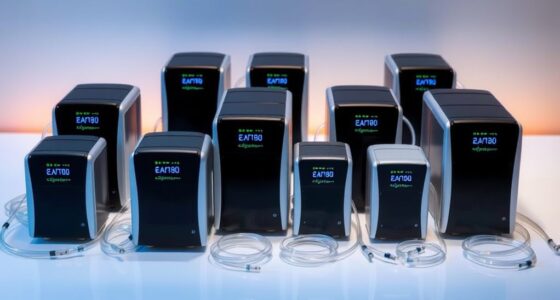
For anyone seeking reliable portable power with 240V splitphase capability, the options can be overwhelming. The best picks like the Portable Power Station P5000 Pro stand out for their immense capacity and high output, ideal for large-scale backup or heavy-duty RV use. Meanwhile, models such as the GROWATT Helios 3600 offer expandable options for longer-term power needs, but often come with higher costs or complexity. Buyers face tradeoffs around capacity, portability, price, and expandability, making the decision less straightforward. Continue reading for a detailed comparison and guidance to help find the perfect fit for your power needs.
Open a free Amazon Business account
Business pricing, bulk buying and tax-exempt orders.
Create a free accountAs an affiliate, we earn on qualifying purchases.
Complete the kit


Key Takeaways
- The most powerful options generally provide higher capacity and output but tend to be larger and heavier, impacting portability.
- Expandable systems like the GROWATT Helios series offer flexibility but often come with added complexity and cost.
- LiFePO4 batteries are preferred for longevity and safety, especially in larger systems, but can increase initial expense.
- Price varies widely; budget models often sacrifice capacity or features, making them suitable mainly for light or emergency use.
- Compatibility with solar panels and ease of integration are important for off-grid setups, but not all models support solar charging equally.
| Portable Power Station P5000 Pro 5120Wh 3600W AC Output Solar Generator |  | Best Overall for Heavy-Duty, Long-Duration Power | Capacity: 5120Wh | AC Output: 3600W | Surge Power: 7200W | VIEW ON AMAZON | See Our Full Breakdown |
| Growatt Helios 3600 Portable Power Station, 3600Wh LFP Battery, Expandable to 7200W AC Output, Solar Generator for Home Backup and RVs |  | Best for Expandable, Long-Range Backup Power | Battery Capacity: 3600Wh | Expandable Capacity: Up to 36kWh | AC Output: 7200W | VIEW ON AMAZON | See Our Full Breakdown |
| GROWATT Helios 3600 Portable Power Station Double Voltage Hub with 240V Split-Phase Connector |  | Best for Heavy-Duty, On-the-Go 240V Power Expansion | Voltage: 240V split-phase | Power Output: 7200W | Outlets: 1 NEMA 6-20, 2 NEMA L14-30 | VIEW ON AMAZON | See Our Full Breakdown |
| IEE 3200W Portable Power Station P3200 2048Wh Solar Generator |  | Best Compact, High-Output for Versatile Use | Power Output: 3200W (6400W peak) | Battery Capacity: 2048Wh | Battery Type: LiFePO4 | VIEW ON AMAZON | See Our Full Breakdown |
| OSCAL PowerMax 6000 Portable Power Station with Solar Panel – 3600Wh, 6000W Output, LiFePO4 Battery, Emergency & Camping Power |  | Best for High Power and Fast Charging in Emergency or Camping | Capacity: 3600Wh | Max Power Output: 6000W | Peak Power: 9000W | VIEW ON AMAZON | See Our Full Breakdown |
| Anker SOLIX F3800 Portable Power Station and Double Power Hub, 7,680Wh |  | Best Overall for High-Capacity, Expandable Power Needs | Battery Capacity: 7,680Wh | Battery Type: LiFePO4 | Output Voltage: 120V / 240V dual-voltage | VIEW ON AMAZON | See Our Full Breakdown |
| OSCAL PowerMax 6000 Solar Generator with 3×400W Solar Panels |  | Best for Reliable, Portable Solar Power with High Capacity | Capacity: 3600Wh | AC Output: 4 outlets, 6000W (9000W peak) | Input Charging Power: 2200W AC, 2400W solar | VIEW ON AMAZON | See Our Full Breakdown |
| Jackery HomePower 3000 Portable Power Station with Solar Panels |  | Best for Home Backup and Outdoor Use with Fast Recharge | Capacity: 3072Wh | Max Output: 3600W (7200W surge) | Charge Time (AC/DC): 1.7 hours | VIEW ON AMAZON | See Our Full Breakdown |
| AFERIY 2048Wh Portable Power Station 2400W (Peak 4800W) with LiFePO4 Battery and Multiple Ports |  | Best for Sensitive Electronics and Backup Power in Compact Form | Battery Type: LiFePO4 | Capacity: 2048Wh | Peak Power: 4800W | VIEW ON AMAZON | See Our Full Breakdown |
| GROWATT HELIOS 3600 Portable Power Station and BP3600 Expansion Battery, 7372Wh LiFePO4 Solar Generator |  | Best for Whole-Home Backup and Off-Grid Power with Expandability | Wattage: 3600 watts | Battery Capacity: 7372Wh | Expansion: Supports up to 36kWh | VIEW ON AMAZON | See Our Full Breakdown |
| portable power stations with 240v splitphase | Battery Type | Capacity | Cycle Life | Weight |
|---|---|---|---|---|
| Portable Power Station P5000 P | LiFePO4 | 5120Wh | 6000+ cycles | 120 pounds |
| Growatt Helios 3600 Portable P | — | — | 4000 cycles | — |
| GROWATT Helios 3600 Portable P | — | — | — | — |
| IEE 3200W Portable Power Stati | LiFePO4 | — | — | 52 pounds |
| OSCAL PowerMax 6000 Portable P | LiFePO4 | 3600Wh | — | — |
| Anker SOLIX F3800 Portable Pow | LiFePO4 | — | — | — |
| OSCAL PowerMax 6000 Solar Gene | LiFePO4 | 3600Wh | — | Not specified |
| Jackery HomePower 3000 Portabl | — | 3072Wh | 4,000 cycles | Not specified |
| AFERIY 2048Wh Portable Power S | LiFePO4 | 2048Wh | 3500+ cycles | 48.5 lbs / 22 kg |
| GROWATT HELIOS 3600 Portable P | — | — | 80% capacity after 4000 cycles | — |
More Details on Our Top Picks
Portable Power Station P5000 Pro 5120Wh 3600W AC Output Solar Generator
The Portable Power Station P5000 Pro stands out for its massive 5120Wh capacity and 3600W continuous AC output, making it ideal for serious backup needs and extended outdoor use. Compared to the Growatt Helios 3600, it offers greater capacity and faster charging, but at a weight of 120 pounds, it’s less portable. Its app control and versatile outlets enhance convenience, yet its bulk limits mobility. This model is better suited for users who prioritize long-lasting, high-capacity power and are prepared to handle its size and weight. The LiFePO4 battery ensures over a decade of reliable cycles, making it a solid investment for demanding scenarios. However, the high price and weight mean it’s not suitable for frequent, on-the-move use.
Pros:- Exceptional capacity of 5120Wh for prolonged power supply
- Fast charging in just 2.5 hours
- Versatile outlets including AC, USB, DC, and airline port
- App control for remote management
Cons:- Heavy weight (120 pounds) complicates transportation
- Bulkier size limits mobility despite portability features
Best for: Homeowners or emergency prepper requiring extended, reliable power backup without frequent portability concerns
Not ideal for: Campers or outdoor enthusiasts needing lightweight, easily transportable units, due to its weight and size
- Capacity:5120Wh
- AC Output:3600W
- Surge Power:7200W
- Number of Outlets:15
- Battery Type:LiFePO4
- Cycle Life:6000+ cycles
- Fast Charging Power:1800W
- Weight:120 pounds
- Dimensions:21.6″L x 11.8″W x 19.2″H
Our verdict“This pick is best for users who need a high-capacity, reliable power source for home or emergency use, and can handle its size and weight.”
Growatt Helios 3600 Portable Power Station, 3600Wh LFP Battery, Expandable to 7200W AC Output, Solar Generator for Home Backup and RVs
The Growatt Helios 3600 is designed for users seeking reliable, expandable power, with a 3600Wh LFP battery and the ability to grow up to 7200W AC output. It surpasses the OSCAL PowerMax 6000 in flexibility, offering seamless transfer switch technology for whole-house backup. Its fast solar charging (2.8 hours) and long cycle life make it suitable for extended outages, but its weight and size are significant drawbacks for portability. This system is ideal for homeowners or RV owners who want to expand capacity over time and prioritize long-term durability. The complex setup required for whole-house backup might be overwhelming for beginners, and the higher initial cost can be a barrier.
Pros:- Expandable capacity up to 36kWh for long-term backup
- Fast solar and AC charging for quick replenishment
- Reliable, long-cycle LFP battery
- Seamless transfer switch technology
Cons:- Heavy and bulky, less portable
- Higher initial investment and setup complexity
Best for: Homeowners or RV owners needing a scalable, reliable backup system for long-term use
Not ideal for: Those seeking a lightweight, portable unit for frequent outdoor activities due to its bulk and weight
- Battery Capacity:3600Wh
- Expandable Capacity:Up to 36kWh
- AC Output:7200W
- Charging Time (solar):2.8 hours
- Charging Time (AC):3 hours at 120V, 1.5 hours at 240V
- Cycle Life:4000 cycles
- Operating Temperature:Down to -22°F
Our verdict“This system is best suited for users wanting a scalable, durable backup power solution integrated into their home or RV, accepting its size and cost.”
GROWATT Helios 3600 Portable Power Station Double Voltage Hub with 240V Split-Phase Connector
The GROWATT Helios 3600 Double Voltage Hub offers a unique approach by connecting two Helios 3600 units to deliver 240V and 7200W power, ideal for heavy-duty appliances. Unlike single units like the OSCAL PowerMax 6000, this setup enables high-power operation but requires careful connection and compatibility management. Its portability and multiple outlet options, including NEMA 6-20 and L14-30, make it flexible for on-the-go use or expanding capacity for home backup. However, it cannot operate independently and depends heavily on the correct pairing with compatible power stations. It’s best suited for experienced users or professionals needing scalable, high-power solutions.
Pros:- Enables operation of heavy-duty appliances with 7200W output
- Multiple outlets for versatile connections
- Portable design for expansion and mobility
Cons:- Requires two compatible GROWATT power stations
- Not functional as a standalone unit
- Setup and handling require expertise
Best for: Professionals or experienced users needing to power large equipment or expand capacity on the go
Not ideal for: Casual users or those unfamiliar with connecting multiple units, due to setup complexity
- Voltage:240V split-phase
- Power Output:7200W
- Outlets:1 NEMA 6-20, 2 NEMA L14-30
- Compatibility:Requires connection to two Helios 3600 units
Our verdict“This hub is best for experienced users needing scalable, high-wattage 240V power in portable or installable configurations, accepting its complexity.”
IEE 3200W Portable Power Station P3200 2048Wh Solar Generator
The IEE P3200 offers a solid 2048Wh capacity and 3200W continuous power, making it a versatile choice for camping, off-grid living, and emergency backup. Compared to the larger Growatt Helios 3600, it’s more portable and lighter at 52 pounds, but sacrifices some capacity and total output. Its fast charging (1.2 hours to full) and extensive outlets—including Type-C PD and DC options—make it highly adaptable. This unit is ideal for users who need a balance of portability and power, though its weight might still challenge those seeking ultralight solutions. Solar compatibility enhances off-grid use but may require additional investment in panels.
Pros:- Compact and lightweight at 52 pounds
- Fast recharging via AC and solar
- Multiple outlets including Type-C and DC
- Smart app control for remote operation
Cons:- Limited capacity compared to larger units
- High initial cost relative to capacity
- Requires solar panels for best off-grid performance
Best for: Outdoor enthusiasts or small households needing portable power with quick recharge and multiple device options
Not ideal for: Heavy-duty backup scenarios or long-term power needs where maximum capacity is essential due to its smaller size
- Power Output:3200W (6400W peak)
- Battery Capacity:2048Wh
- Battery Type:LiFePO4
- Weight:52 pounds
- Charging Time (AC):1.2 hours
- Solar Charging:up to 1000W, 0-80% in 1.6 hours
- Outlets:16 including AC, USB, Type-C, DC
Our verdict“This unit suits users needing portable, quick-charging power with multiple device options, accepting its smaller capacity for enhanced mobility.”
OSCAL PowerMax 6000 Portable Power Station with Solar Panel – 3600Wh, 6000W Output, LiFePO4 Battery, Emergency & Camping Power
The OSCAL PowerMax 6000 provides a substantial 3600Wh capacity with a 6000W continuous output, making it well-suited for running multiple appliances during outages or outdoor adventures. Its LiFePO4 battery offers up to 3500 cycles, promising long-term reliability. Compared to the Growatt Helios 3600, it features faster AC charging (2200W) and solar charging (2400W), ensuring quick recharging. Its automatic switchover during power failures adds convenience for home backup. However, its size and weight are still considerable, and the higher price can be prohibitive for casual users. It’s best for those who need high power and quick recharge times for extended use.
Pros:- High continuous power of 6000W for multiple appliances
- Fast AC and solar charging
- Long-lasting LiFePO4 battery with 3500 cycles
- Automatic power switching for seamless backup
Cons:- Heavy and bulky for frequent portability
- Higher price point limits affordability
Best for: Emergency preparedness or camping families who need reliable, high-power portable backup with rapid recharging
Not ideal for: Users seeking ultra-lightweight solutions or low-budget options, due to its weight and cost
- Capacity:3600Wh
- Max Power Output:6000W
- Peak Power:9000W
- AC Outlets:4
- Input Charging Power:2200W AC, 2400W solar
- Battery Type:LiFePO4
- Charge Cycles:up to 3500
- Voltage:120/240V split phase
Our verdict“This option is ideal for users needing robust, fast-recharging power in emergency or outdoor settings, with acceptance of its size and cost.”
Anker SOLIX F3800 Portable Power Station and Double Power Hub, 7,680Wh
This model stands out for its immense 7,680Wh LiFePO4 battery, making it ideal for those who need long-lasting power and the ability to expand. Compared to the GROWATT HELIOS 3600, it offers greater capacity and scalability through additional batteries and the Double Power Hub, though this comes with increased weight and cost. Its dual-voltage output makes it versatile for both home appliances and outdoor use, and fast solar recharging in 1.5 hours ensures it’s ready when needed. The main tradeoff is its bulkiness and high price, which may not suit those seeking lightweight portability. Compared to smaller options, this is better suited for emergency backup and RV setups where capacity and expansion are priorities.
Pros:- Massive 7,680Wh capacity with LiFePO4 technology for long-lasting power
- Expandable system with additional batteries and Double Power Hub for up to 12,000W output
- Dual-voltage 120V / 240V output suitable for appliances and outdoor tools
- Fast solar charging capability in 1.5 hours
Cons:- Heavy and bulky design limits portability
- High upfront cost and multiple accessories needed for full expansion
Best for: Homeowners or RV owners needing a scalable, high-capacity power station for long-term backup and outdoor adventures
Not ideal for: Individuals seeking a lightweight, portable unit for occasional camping or minimal use due to its weight and size
- Battery Capacity:7,680Wh
- Battery Type:LiFePO4
- Output Voltage:120V / 240V dual-voltage
- Maximum Power Output:12,000W
- Recharge Rate:2,400W solar input
- Warranty:5 years
- Product Life:10 years
Our verdict“This is a top choice for those who need a scalable, high-capacity power solution for home, RV, or emergency backup scenarios.”
OSCAL PowerMax 6000 Solar Generator with 3×400W Solar Panels
The OSCAL PowerMax 6000 provides a solid 3,600Wh LiFePO4 battery with a peak output of 9,000W, making it suitable for outdoor and emergency applications where portability is key. Unlike the larger Anker SOLIX F3800, it emphasizes fast charging and a compact form, though it lacks detailed specs on size and weight, which could affect portability. Its multiple outlets and UPS function support seamless device switching, making it ideal for critical electronics. The tradeoff is that it requires additional solar panels and accessories to reach full potential, and its relatively limited capacity compared to larger models may restrict extended use. This pick is better suited for outdoor enthusiasts or small-scale backup rather than whole-home power.
Pros:- High-capacity 3600Wh LiFePO4 battery with long lifespan
- Fast charging in under 2 hours
- Multiple AC and DC outlets with UPS functionality
- Seamless power switching for sensitive electronics
Cons:- Weight and dimensions not specified, affecting portability evaluation
- Requires additional solar panels and accessories for full solar charging
Best for: Outdoor enthusiasts or emergency prepper needing reliable solar power with quick recharge times
Not ideal for: Users seeking a high-capacity, expandable system for long-term home backup, as capacity may be limiting
- Capacity:3600Wh
- AC Output:4 outlets, 6000W (9000W peak)
- Input Charging Power:2200W AC, 2400W solar
- Battery Type:LiFePO4
- Charge Cycles:up to 3500
- Weight:Not specified
Our verdict“This is ideal for outdoor use and quick, reliable power on the go, but less suited for extensive home backup needs.”
Jackery HomePower 3000 Portable Power Station with Solar Panels
The Jackery HomePower 3000 offers 3,072Wh of capacity and a 3600W output, making it comparable to the OSCAL PowerMax but with a focus on fast recharging and portability. Its size and weight are smaller than similar models, which makes it more manageable for frequent outdoor or backup use. It features multiple ports, including USB-C and RV outlets, and long-cycle LiFePO4 batteries, ensuring durability. However, solar panels are sold separately, requiring an additional purchase, and the unit’s weight, though lighter than larger models, could still be a concern for portability. Compared with the GROWATT HELIOS 3600, it excels in ease of use and faster charging, but offers slightly less capacity. This is a good choice for home backup or outdoor activities where quick recharge and portability matter most.
Pros:- High capacity of 3072Wh with 3600W output for versatile use
- Fast recharging via AC, DC, or solar panels
- Long-lasting LiFePO4 with 4,000 cycle life
- Multiple ports including USB-C and RV plug
Cons:- Solar panels are separate, adding to overall cost and setup complexity
- Relatively heavy despite compact size
Best for: Families or campers seeking a reliable, portable power station with fast recharging and long battery life
Not ideal for: Those needing maximum capacity or expandable systems for comprehensive off-grid projects, due to its fixed size and capacity
- Capacity:3072Wh
- Max Output:3600W (7200W surge)
- Charge Time (AC/DC):1.7 hours
- Charge Time (solar):up to 80% in 9 hours
- Cycle Life:4,000 cycles
- Weight:Not specified
Our verdict“A well-rounded, portable solution for quick backup and outdoor power with fast recharge times.”
AFERIY 2048Wh Portable Power Station 2400W (Peak 4800W) with LiFePO4 Battery and Multiple Ports
The AFERIY P210 packs 2048Wh of capacity and a 2400W continuous inverter with peaks up to 4800W, making it suitable for sensitive electronics and backup power. Its long-lasting LiFePO4 battery with over 3500 cycles ensures durability and reliability. Unlike larger units like the GROWATT HELIOS, its weight of 48.5 lbs makes it more portable for outdoor use, though it’s still on the heavier side for quick carry-over. Its multiple ports—including USB-C, Type-C, and standard outlets—support various devices simultaneously. The main drawback is limited information on solar compatibility, and its capacity is less than other larger models, which could restrict extended use. This unit is ideal for camping, sensitive electronics, and short-term backup rather than entire-home solutions.
Pros:- Long cycle life of over 3500 cycles for durability
- Pure sine wave inverter protects sensitive electronics
- Multiple ports support diverse device charging
- High peak power of 4800W for heavy loads
Cons:- Heavy for its size, at 48.5 lbs
- Limited details on solar compatibility and integration
Best for: Campers and emergency preppers needing reliable, portable power for sensitive electronics and short-term backup
Not ideal for: Users seeking a large-scale, expandable power system for whole-home backup, due to its limited capacity
- Battery Type:LiFePO4
- Capacity:2048Wh
- Peak Power:4800W
- Continuous Power:2400W
- Cycle Life:3500+ cycles
- Weight:48.5 lbs / 22 kg
Our verdict“This is a portable, reliable choice for sensitive electronics and short-term backup, especially in outdoor or emergency contexts.”
GROWATT HELIOS 3600 Portable Power Station and BP3600 Expansion Battery, 7372Wh LiFePO4 Solar Generator
The GROWATT HELIOS 3600 offers a massive 7372Wh expandable LiFePO4 battery system, making it a standout for those aiming for whole-home backup or off-grid independence. Its split-phase 240V output supports whole-house appliances, which smaller units like the Jackery or OSCAL cannot match. The system’s long cycle life and smart app control add to its appeal, but this capacity and complexity come with increased bulk and price. Setup can be complex with multiple components, and its weight limits portability for casual outdoor use. Compared to the Anker SOLIX F3800, it emphasizes home and off-grid use over portability, making it ideal for long-term backup scenarios. This unit is best suited for users needing a scalable, high-capacity solution for reliable, off-grid or emergency power.
Pros:- Large expandable capacity up to 7372Wh with additional batteries
- Supports split-phase 240V for whole-home backup
- Long-lasting LiFePO4 with 4000+ cycles
- Smart app control and UL certification
Cons:- Bulky and heavy, limiting portability
- Complex setup process and higher price point
Best for: Homeowners or off-grid enthusiasts seeking a scalable, whole-house backup system with split-phase 240V support
Not ideal for: Campers or occasional users who prioritize portability over capacity and expandability, due to size and cost
- Wattage:3600 watts
- Battery Capacity:7372Wh
- Expansion:Supports up to 36kWh
- Output:Split-phase 240V
- Cycle Life:80% capacity after 4000 cycles
- Dimensions:20.4″L x 12.3″W x 16.5″H
Our verdict“This is best for users who require a scalable, high-capacity power solution for comprehensive home or off-grid backup, despite its size and cost.”

How We Picked
These products were selected based on their ability to deliver 240V splitphase power reliably, with a focus on capacity, output power, build quality, and usability. Priority was given to systems with robust inverter technology capable of handling high surges and continuous loads. Expandability, battery chemistry, and charging options—particularly solar compatibility—were also key factors. We favored models with proven safety features, user-friendly interfaces, and good value for their performance. The ranking reflects a balance between power, versatility, and practicality for different user needs, from emergency backup to RV adventures.
Factors to Consider When Choosing Portable Power Stations With 240v Splitphase
Choosing the right portable power station with 240V splitphase requires considering several important factors. Beyond raw capacity, usability, and price, there are broader considerations like expandability, battery chemistry, and the types of outlets supported. Understanding these can help avoid common pitfalls such as overpaying for unnecessary features or ending up with a system that can’t handle your specific power demands. Here are the key factors to keep in mind.Capacity and Power Output
Capacity, measured in watt-hours (Wh), determines how long your devices can run, while power output (W) indicates the maximum load it can handle at once. For splitphase systems, ensure the inverter can supply sufficient continuous and surge power for your critical appliances. Overestimating your needs can lead to unnecessary expense and weight, but underestimating risks overloads and system failure. Balance your expected load with capacity to find a practical, portable solution.
Expandability and Modularity
Many users benefit from systems that can grow over time, especially for long-term off-grid use or backup. Expandable models like the GROWATT Helios allow adding extra batteries or modules, but this often increases complexity and cost. A modular approach can be advantageous if your needs might change, but it’s essential to evaluate how easily these systems can be integrated without sacrificing portability or reliability.
Battery Chemistry and Longevity
LiFePO4 (Lithium Iron Phosphate) batteries are increasingly popular for their longer cycle life and enhanced safety. Though initially more expensive, they tend to last longer and maintain capacity over many charge cycles, making them ideal for frequent use or emergency preparedness. Cheaper lithium-ion batteries may degrade faster, requiring replacements sooner, which affects long-term value.
Portability and Size
Power capacity often correlates with size and weight, but portability is still a key consideration. If you plan to move the system frequently, look for models with ergonomic handles, lighter weight, and compact form factors. Larger systems might be suitable for stationary backup but are less practical for mobile use. Always balance your power needs with how easily you can transport the unit.
Solar Compatibility and Charging Options
Solar input expands the usability of portable power stations, especially in off-grid or emergency scenarios. Not all models support high wattage solar charging or are compatible with common solar panel configurations. Consider your typical sunlight conditions and ensure the station can handle your solar array’s wattage. Also, evaluate AC and DC charging options for versatility.
Frequently Asked Questions
Can a portable power station with splitphase power run large appliances like a refrigerator or power tools?
Yes, many high-capacity models with splitphase output are designed to handle large appliances and power tools, but it’s vital to check their continuous wattage ratings and surge capacity. Appliances with motors or compressors often require higher startup power, which some units can handle if their surge ratings are sufficient. Always verify the specific power requirements and compare them to the inverter’s capabilities to avoid overloads.
Is it safe to run sensitive electronics on a splitphase portable power station?
Most quality units incorporate pure sine wave inverters, which provide clean and stable power suitable for sensitive electronics like computers and medical devices. However, always verify that the inverter’s waveform and voltage stability meet your device specifications. Using surge protectors and ensuring proper grounding can further enhance safety and performance.
How long can I expect a fully charged portable power station with splitphase to run my appliances?
The runtime depends on your load and the station’s capacity. For example, a 5000Wh system running a 500W device can operate roughly 10 hours under ideal conditions. Keep in mind that actual runtime may vary due to efficiency losses, battery health, and input power quality. Planning for some buffer time ensures your critical devices stay powered longer.
What should I consider if I want to expand my portable power station later?
Check whether the system supports additional batteries or modules, and whether these are compatible with your current unit. Expansion often requires specific connectors, management systems, and space considerations. Also, consider the added weight and bulk that comes with larger, expandable systems. Prioritize models that clearly specify their expandability options and compatibility.
Is solar charging necessary for a portable power station, or can I rely solely on AC charging?
While AC charging can fully recharge most systems in a few hours, solar charging offers increased independence and flexibility, especially in remote locations. Solar panels can top up the battery during the day, reducing reliance on grid power. If you plan to use the station off-grid or during power outages, investing in solar compatibility can be a significant advantage, but ensure your solar setup matches the station’s input specifications.
Conclusion
For users seeking the best overall balance of power, capacity, and usability, the GROWATT Helios 3600 makes an excellent choice, especially if expansion is desired. Budget-conscious buyers or those needing a reliable emergency backup might prefer the IEE P3200, which offers solid performance at a lower price point. For the most demanding applications, such as large RV setups or off-grid power systems, the Portable Power Station P5000 Pro or the GROWATT HELIOS 3600 with expansion provide ample capacity and high output. Beginners or casual users should consider models with simpler interfaces and lighter weight, while professionals may prioritize modularity and maximum output for complex setups.
Fall yard work Picks
leaf blowers
As an affiliate, we earn on qualifying purchases.