For a panel-mount SPD rated at 80 kA, my leading choice is the HSPD Square Whole Home Type 1 model because its 120/240 VAC rating and Type 1 designation suit service-level protection when the installation matches. The 2–4 Pole Type 2 SPD is a flexible alternative for panel configurations, while the AC SPD80/100 offers a more focused four-pole option. The main tradeoffs are AC versus DC compatibility, Type 1 versus Type 2 placement, pole count, and whether the advertised kA figure describes the rating you actually need. Product details vary, and some listings have ambiguous or inconsistent specifications, so verify the nameplate and installation documentation before choosing. Read on for the full comparison and a guide to matching an SPD to your panel.

Turn quiet afternoons into listening time
- Thousands of audiobooks, podcasts and originals
- Listen on your phone, tablet or Echo — also offline
- Cancel anytime
Complete the kit


Key Takeaways
- The HSPD Square is the only listed product explicitly identified as a Type 1 device for 120/240 VAC, making it the clearest candidate for a compatible service-level installation.
- The Type 2 2–4 Pole SPD and AC SPD80/100 have broader or more specific AC panel positioning; pole count and exact voltage compatibility still need confirmation.
- Two listings describe the same SPD DC 140V 2P 80kA device, so the roundup offers seven distinct listed configurations rather than eight clearly different designs.
- The ElectronicNova listing combines an 80A figure with a four-pole, 420V description; buyers should confirm whether 80A is a current rating and how the device is intended to connect.
- The red 2P/100kA, 4P/80A arrestor listing mixes several ratings and protection claims, making documentation review especially important before purchase.
| Type 2 Surge Protective Device, 2–4 Pole, 20–100 kA |  | Best for Flexible Panel Configurations | SPD type: Type 2 | Pole options: 2, 3, or 4 | Voltage: 220–380 V | VIEW ON AMAZON | See Our Full Breakdown |
| Surge Protective Device (SPD) 2P/4P 20KA‑120KA Circuit Breaker, 1 Piece (80KA) | 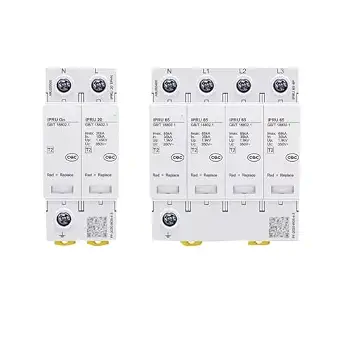 | Best for an 80 kA Single-Unit Pick | Device type: Surge Protective Device (SPD) | Pole options: 2P or 4P | Listed surge current range: 20–120 kA | VIEW ON AMAZON | See Our Full Breakdown |
| AC Surge Protector SPD80/100, 4-Pole, 40–80 kA |  | Best for Buyers Seeking a Four-Pole 80 kA Range | Model identifiers: SPD80 / SPD100 | Poles: 4 | Surge current: 40–80 kA | VIEW ON AMAZON | See Our Full Breakdown |
| ElectronicNova 80A 4-Pole Surge Protector, 420V |  | Best for a Specified 420 V Four-Pole Setup | Voltage: 420 V | Poles: 4 | Configuration: 3P+N-PE | VIEW ON AMAZON | See Our Full Breakdown |
| HSPD Square Whole Home Surge Protective Device, Type 1 SPD, 120/240VAC, 80kA | 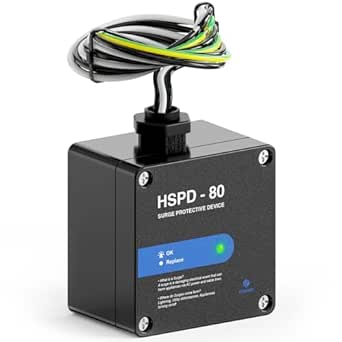 | Best for Whole-Home 80 kA Protection | SPD type: Type 1 | Voltage: 120/240VAC | Surge capacity: 80 kA | VIEW ON AMAZON | See Our Full Breakdown |
| SPD DC 140V 2P 80kA House Surge Protector |  | Best for Status Monitoring | Device type: Surge Protective Device (SPD) | Voltage: DC 140V | Poles: 2P | VIEW ON AMAZON | See Our Full Breakdown |
| SPD DC 140V 2P 80kA House Surge Protector |  | Best for Quick Rail Installation | Voltage: DC 140V | Poles: 2P | Discharge current: 80kA | VIEW ON AMAZON | See Our Full Breakdown |
| SPD Surge Protector 2P/100kA, 4P/80A Arrestor, 3P Protection, 220V Switch (Red) |  | Best for 220V Panel Flexibility | Voltage: 220V | Surge capacity: Up to 100kA | Pole configuration: 2P/4P listed | VIEW ON AMAZON | See Our Full Breakdown |
| panel mount spd 80 ka | Voltage | Poles |
|---|---|---|
| Type 2 Surge Protective Device | 220–380 V | — |
| Surge Protective Device | — | — |
| AC Surge Protector SPD80/100 | — | 4 |
| ElectronicNova 80A 4-Pole Surg | 420 V | 4 |
| HSPD Square Whole Home Surge P | 120/240VAC | — |
| SPD DC 140V 2P 80kA House Surg | DC 140V | 2P |
| SPD DC 140V 2P 80kA House Surg | DC 140V | 2P |
| SPD Surge Protector 2P/100kA | 220V | — |
More Details on Our Top Picks
Type 2 Surge Protective Device, 2–4 Pole, 20–100 kA
The Type 2 classification and choice of two, three, or four poles make this the most adaptable panel-mounted option in this group. Its stated 20–100 kA capacity range covers the 80 kA target, though the listing does not say which configuration delivers which rating, so I would verify the selected model before specifying it. Compared with the HSPD Square Whole Home Surge Protective Device, this unit is aimed at installation inside an AC distribution cabinet, while the HSPD is described for whole-home indoor or outdoor use. The modular DIN-rail mounting suits compatible distribution boxes, but it does not establish suitability for every panel. Wiring must follow local low-voltage standards, and the broad capacity range calls for careful model confirmation.
Pros:- Type 2 device intended for AC distribution boxes and panel circuits
- Available in 2-, 3-, or 4-pole configurations
- Stated surge capacity range includes 80 kA
- Modular DIN-rail mounting suits compatible cabinets
Cons:- The listing does not map surge capacity to a particular configuration
- Installation wiring must meet local low-voltage electrical standards
Best for: Electricians or panel planners who need a Type 2 DIN-rail SPD with a pole count matched to an AC distribution cabinet
Not ideal for: Buyers who need a clearly specified fixed 80 kA rating or a whole-home outdoor installation option
- SPD type:Type 2
- Pole options:2, 3, or 4
- Voltage:220–380 V
- Surge capacity:20–100 kA
- Mounting:DIN rail
- Application:AC distribution boxes and panel circuits
Our verdict“Choose this when pole-count flexibility and DIN-rail installation matter, provided you confirm the exact capacity of the selected model.”
Surge Protective Device (SPD) 2P/4P 20KA‑120KA Circuit Breaker, 1 Piece (80KA)
This listing calls out an 80 kA standard model and a broader range reaching 120 kA, making it a direct fit for shoppers focused on an 80 kA panel SPD. Its 2P/4P compatibility also offers a choice between two- and four-pole panels. Compared with the AC Surge Protector SPD80/100, which specifies four poles and a 40–80 kA range, this product explicitly identifies an 80 kA version and supports two pole counts. The single-unit circuit-breaker format may simplify selecting one device, but the listing gives no voltage rating or mounting details. Its claims of ground-fault interruption also need confirmation against the exact unit documentation. Professional wiring may be needed, and buyers must check that their voltage system is supported.
Pros:- Standard model is identified as 80 kA
- Supports both 2-pole and 4-pole configurations
- Single-unit circuit-breaker format
- Listing describes capacity up to 120 kA
Cons:- Voltage and mounting specifications are not provided
- Wiring may require a professional electrician
- Compatibility is limited to supported voltage systems, which are unspecified
Best for: Panel buyers who want a single SPD explicitly labeled as an 80 kA model and need a 2-pole or 4-pole option
Not ideal for: Buyers who require a documented voltage rating, mounting dimensions, or verified ground-fault performance before purchase
- Device type:Surge Protective Device (SPD)
- Pole options:2P or 4P
- Listed surge current range:20–120 kA
- Pack quantity:1 piece
- Installation format:Single circuit-breaker unit
Our verdict“Consider this for a panel needing a clearly labeled 80 kA unit, after confirming its voltage and installation details with the seller or documentation.”
AC Surge Protector SPD80/100, 4-Pole, 40–80 kA
The 40–80 kA range places this four-pole AC device directly within an 80 kA roundup, and its SPD80 model identifier gives buyers a specific rating cue. Compared with the Type 2 Surge Protective Device, 2–4 Pole, 20–100 kA, this listing fixes the configuration at four poles and gives a narrower capacity range, which may make it easier to compare against a four-pole requirement. The tradeoff is thin documentation: there is no stated voltage or mounting method, and the description also calls the product a residual current device, creating uncertainty about its actual function. Its listed one-inch dimensions and low weight are useful data points, but they do not resolve that mismatch. I would seek confirmation before relying on it for surge protection.
Pros:- Four-pole configuration
- Stated surge current range reaches 80 kA
- SPD80 and SPD100 model identifiers are provided
- Compact listed dimensions of 1 × 1 × 1 inch
Cons:- Description conflicts by labeling it a residual current device
- Voltage and mounting method are not specified
- Limited product details make compatibility harder to confirm
Best for: A buyer with a four-pole AC panel who can verify the device type, voltage, and installation details before ordering
Not ideal for: Anyone who needs fully documented electrical compatibility or a clearly confirmed SPD function without contacting the seller
- Model identifiers:SPD80 / SPD100
- Poles:4
- Surge current:40–80 kA
- Dimensions:1 × 1 × 1 in
- Weight:1.76 oz
- Manufacturer:AAHSHPNV
Our verdict“Only shortlist this four-pole option if the seller confirms it is an SPD rated for your panel voltage and installation.”
ElectronicNova 80A 4-Pole Surge Protector, 420V
The clearest point of distinction here is the stated 420 V rating with a four-pole, 3P+N-PE configuration, making this a panel-specific option for buyers whose system matches those details. Its 27 mm width may help with space planning, though the listing does not state its mounting method or confirm the surge capacity. That omission matters in an 80 kA roundup: unlike the HSPD Square Whole Home Surge Protective Device, which explicitly states 80 kA and 120/240VAC, this product does not establish that it meets the roundup’s target capacity. Its household surge-protection positioning is also less specific than the Type 2 DIN-rail unit’s stated distribution-box application. I would treat voltage and pole data as useful fit clues, not enough by themselves to select it as an 80 kA SPD.
Pros:- Specified 420 V rating
- Four-pole 3P+N-PE configuration is stated
- 27 mm width supports cabinet space planning
Cons:- No surge capacity is provided, so the 80 kA target is unverified
- Mounting method and further installation details are not stated
Best for: A buyer with a 420 V household electrical system seeking a narrow four-pole device and able to verify surge capacity
Not ideal for: Shoppers who require a documented 80 kA rating, installation method, or confirmed compatibility with a different voltage system
- Voltage:420 V
- Poles:4
- Configuration:3P+N-PE
- Width:27 mm
- Product category:Low-voltage surge protection device
- Application:Household electrical systems
Our verdict“Choose this only when the 420 V and four-pole configuration fit your system and the seller confirms the required surge rating.”
HSPD Square Whole Home Surge Protective Device, Type 1 SPD, 120/240VAC, 80kA
The Type 1 design and specified 80 kA capacity make this the strongest match for buyers seeking documented 80 kA coverage at the whole-home level. The listing says it works with any brand of circuit breaker and can be installed indoors or outdoors, giving it a broader placement claim than the Type 2 DIN-rail device, which is aimed at distribution boxes and panel circuits. Its compact design may save room, but the listing does not give dimensions, and the absence of status lights means there is no built-in visual indicator to check device condition. Professional installation is required. Compared with the 420 V ElectronicNova, the HSPD offers a stated capacity and voltage, while the ElectronicNova gives a four-pole configuration and width but no surge rating.
Pros:- Specified 80 kA surge capacity
- Type 1 SPD designation
- Listed for 120/240VAC systems
- Described for indoor or outdoor installation and any brand of circuit breaker
Cons:- Professional electrical installation is required
- No built-in status indicator lights
- Compact size is claimed without dimensions
Best for: Homeowners or electricians specifying a whole-home Type 1 SPD for a 120/240VAC system with an 80 kA target
Not ideal for: Buyers who need a built-in status indicator or a panel-specific DIN-rail installation format
- SPD type:Type 1
- Voltage:120/240VAC
- Surge capacity:80 kA
- Breaker compatibility:Any brand circuit breakers
- Installation location:Indoor or outdoor
- Design:Compact high-capacity
- Status indicator:No built-in indicator lights
Our verdict“Pick this for whole-home 80 kA protection on a compatible 120/240VAC system if professional installation and no status lights suit your setup.”
SPD DC 140V 2P 80kA House Surge Protector
The visible working indicator gives this 140V DC model a practical maintenance advantage: a technician can check its status at the panel without relying on the sensitive-tripping description offered for the other SPD DC 140V 2P 80kA House Surge Protector in this lineup. Its 80kA discharge rating and thermal cutoff address surge handling and device safety, while DIN rail mounting suits standard enclosures. The tradeoff is a narrow fit: this is for 140V DC systems, not the 220V device or the AC-focused options elsewhere in the roundup. It is also sold as a single unit, so buyers outfitting multiple circuits will need to plan for additional devices. I’d choose it when a visible status check matters more than a stated rapid-tripping feature.
Pros:- 80kA discharge current rating
- Visible working indicator supports quick status checks
- Built-in thermal cutoff
- DIN rail mounting fits standard enclosures
Cons:- Limited to 140V DC applications
- Sold as one unit, which may require separate purchases for multiple circuits
Best for: Technicians maintaining 140V DC enclosures who want a visible device status check and standard DIN rail mounting.
Not ideal for: Buyers protecting AC or 220V circuits, or anyone seeking a multi-unit kit for several circuits.
- Device type:Surge Protective Device (SPD)
- Voltage:DC 140V
- Poles:2P
- Discharge current:80kA
- Mounting:DIN rail
- Safety feature:Thermal cutoff
- Status feature:Visible working indicator
- Pack quantity:1 piece
Our verdict“Choose this single-device 140V DC SPD when clear status monitoring and a thermal cutoff matter to your panel maintenance routine.”
SPD DC 140V 2P 80kA House Surge Protector
This version suits installers who prioritize guide rail compatibility and a stated sensitive tripping response. Like the other 140V DC 2-pole model in the roundup, it carries an 80kA rating; its product details emphasize timely power-off during line abnormalities rather than a visible status indicator or thermal cutoff. That makes the distinction useful: choose this one for its specified response behavior, while the comparable model better fits buyers who want at-a-glance status checks. The listing also identifies household and industrial distribution as applications, but gives no broader AC compatibility. Its DC 140V limit keeps it out of 220V panels, and safe integration calls for professional electrical knowledge. I’d shortlist it for a compatible DC distribution box when rail installation is the priority.
Pros:- 80kA discharge rating
- Guide rail installation for conventional distribution boxes
- Sensitive tripping response is specified for line abnormalities
- Stable mechanical structure is stated in the product description
Cons:- Restricted to DC 140V systems
- Safe panel integration requires professional knowledge
- No visible status indicator or thermal cutoff is specified in the provided details
Best for: Qualified installers fitting a compatible 140V DC household or industrial distribution box who value guide rail mounting.
Not ideal for: DIY buyers without distribution-panel experience, or anyone needing AC or 220V surge protection.
- Voltage:DC 140V
- Poles:2P
- Discharge current:80kA
- Mounting type:Guide rail
- Application:Household and industrial distribution
- Tripping response:Sensitive response stated for line abnormalities
- Structure:Stable mechanical structure stated
Our verdict“Pick this model for a professionally installed 140V DC panel when guide rail fit and a stated sensitive tripping response are the deciding factors.”
SPD Surge Protector 2P/100kA, 4P/80A Arrestor, 3P Protection, 220V Switch (Red)
Among these three picks, this is the one described for 220V systems, with a claimed surge capacity up to 100kA and a compact 2-pole/4-pole design. That gives it a different role from the two 140V DC devices, which cannot serve as substitutes for a 220V panel. The red housing can also make the unit easier to identify during installation. The listing’s terminology is less clear, though: it mentions a 4-pole/2-pole configuration, an 80A rating, and 3-pole protection without explaining how those details relate to one another. I’d verify the exact configuration and electrical ratings before choosing it. Compared with the DC models, it offers broader stated panel flexibility, but less specific installation and safety information.
Pros:- Surge capacity stated up to 100kA
- Listed for 220V systems
- Compact 2-pole/4-pole design is described
- Red housing helps identify the unit during installation
Cons:- Limited to 220V systems according to the listing
- Pole and current details are presented ambiguously
- No mounting type or status-monitoring feature is specified
Best for: Panel planners working with a 220V residential or light commercial system who can verify the required pole configuration before purchase.
Not ideal for: Buyers with DC 140V systems, higher-voltage applications, or panels requiring clearly documented pole and current specifications.
- Voltage:220V
- Surge capacity:Up to 100kA
- Pole configuration:2P/4P listed
- Additional protection description:3P protection listed
- Color:Red
- Intended application:Residential or light commercial panels
Our verdict“Consider this for a 220V panel if the seller confirms the precise pole configuration and ratings your installation requires.”

How We Picked
I ranked these listings by how clearly their stated voltage, AC or DC use, pole count, SPD type, and surge-current rating map to a real panel application. Clearer, more internally consistent specifications earn a stronger position because they make it easier to check fit against the electrical system and installation requirements. I also weighed stated use cases and configuration flexibility, while treating vague or mixed claims as a reason for caution.
The ranking reflects the information provided in the product names, not independent certification checks or hands-on testing. An 80 kA figure alone does not establish suitability: the SPD must match the system voltage, grounding arrangement, panel layout, and intended point of installation. I give the HSPD Square the lead for its explicit Type 1 and 120/240 VAC description, then favor listings with clearer AC panel configurations; products with duplicate or conflicting descriptions rank lower.
Factors to Consider When Choosing Panel Mount Spd 80 Ka
Choosing a panel-mount SPD starts with the electrical system it must protect, not the largest kA number in a listing. I would use these checks to rule out mismatches before comparing configurations or narrowing the shortlist.
Match the SPD to AC or DC service
AC and DC devices are built for different electrical conditions, so a similar surge rating does not make them interchangeable. Start with the panel’s nominal voltage and whether the circuit is AC or DC, then check the SPD’s marked operating voltage and permitted range. A 140V DC unit belongs only on a compatible DC system; it is not a substitute for a 120/240 VAC whole-home device. The same caution applies to listings that state 220V or 420V without explaining the supported system configuration. Ask an electrician to resolve unclear voltage labeling before installation. Choosing on the basis of “80 kA” alone can leave you with a device that cannot be properly connected to the panel.
Choose Type 1 or Type 2 for the installation point
Type 1 and Type 2 describe different installation categories, and the right choice depends on where the SPD will connect in the electrical system and the local rules. A Type 1 listing may suit a service entrance application, while a Type 2 device is commonly selected for a compatible distribution panel. Neither label by itself proves a product fits a particular panel or installation. Check the manufacturer’s wiring diagram, required overcurrent protection, and permitted connection location. Do not infer a device’s category from the words “whole home” or “panel mount” in a title. If you are replacing an existing SPD, compare its installation instructions and ratings rather than matching only its appearance.
Confirm pole count and panel wiring
Pole count affects how the device connects to the conductors and phases in a specific system. A four-pole model is not automatically a better choice than a two-pole model; it must correspond to the panel’s wiring scheme and the manufacturer’s connection diagram. Before buying, identify the panel configuration and check which conductors the SPD protects, including any neutral connection requirements. Broad “2–4 pole” listings can describe multiple variants rather than a single adjustable product, so verify the exact version being sold. This check can prevent a mismatch that an apparently suitable surge rating would not reveal. When the listing omits a wiring diagram, seek the manufacturer’s documentation before proceeding.
Read the kA rating in context
A kA figure describes a surge-current rating under specified conditions, but listings may use different rating terms or test bases. Look for the complete datasheet and identify whether the number is a per-mode, per-pole, or device-level value, along with the test waveform and applicable standards. A higher number in a title does not by itself guarantee longer life or better protection for your equipment. Compare the rating definitions on equal terms, and check the SPD’s voltage protection level and short-circuit rating too. If a product title combines figures such as 100 kA and 80A, do not assume they describe the same performance measure. Treat unexplained ratings as a reason to pause and request clarification.
Check certifications, replacement status, and enclosure fit
Before installation, verify that the exact model carries the approvals required where you live and that its instructions match the intended panel application. Product titles alone may not identify the certification, enclosure rating, or approved use. Check dimensions, mounting method, terminal capacity, wire range, and any required breaker or fuse; these details affect both physical fit and safe connection. Also find out whether the unit has status indicators, replaceable modules, or a stated end-of-life signal. Those features influence maintenance because an SPD can wear out after absorbing surges. If the listing does not provide a datasheet or clear service instructions, favor a documented model over an uncertain label.
Decide when a more specific model is worth it
A broad, multi-pole listing can be useful when its variants are clearly documented, but flexibility in a title does not replace a confirmed match. Paying more for a device makes sense when it provides verifiable certifications, clear coordination guidance, a suitable protection level, or practical status and replacement features for your installation. A simpler model may be a better fit when it has complete documentation and matches a straightforward panel configuration. Compare the full system requirements, including any upstream or downstream SPDs, before adding a second device. Avoid paying extra for a larger headline kA number without comparable test definitions. For a beginner, installer guidance and clear documentation can be more useful than extra configuration claims.
Frequently Asked Questions
Can I use any 80 kA SPD on a 120/240 VAC home panel?
No. The 80 kA figure does not confirm AC compatibility, supported voltage, pole count, or installation category. Check the device label and manufacturer’s datasheet for the exact 120/240 VAC system arrangement and wiring diagram. The HSPD Square listing explicitly states 120/240 VAC and Type 1, but the actual model documentation still needs to match your installation. Ask a qualified electrician to confirm fit before connecting it.
Is a Type 1 SPD a better choice than a Type 2 SPD?
Neither category is automatically better; they are intended for different connection points and must suit the electrical system. A Type 1 device may be appropriate at a service entrance, while a Type 2 device may fit a compatible distribution panel. Local electrical rules and the manufacturer’s instructions determine what can be installed and where. Some systems use coordinated protection at more than one point, but the devices must be selected as a system. Confirm the location and category with an electrician rather than choosing by label alone.
Can the listed 140V DC SPD protect a 120/240 VAC panel?
No, a DC-rated unit is not a substitute for an AC-rated panel SPD. The listings for the 140V DC 2-pole model describe a DC application, which differs from the voltage behavior and connection requirements of household AC service. A matching kA number does not make the device suitable for a different circuit type. Use an SPD specifically documented for your system’s AC voltage and configuration. If your installation is a DC system, confirm its operating voltage and grounding arrangement against the datasheet.
Why do some listings show both kA and A ratings?
Those figures can refer to different electrical characteristics, so they should not be compared as if they were one measure. A kA value commonly refers to surge-current capacity, while an A value may describe a separate current rating or a product variant. The ElectronicNova and red arrestor titles combine figures without fully explaining their meaning. Check the datasheet for the definition and test conditions for each rating, plus the device’s voltage and protection level. If the seller cannot clarify the specifications, choose a better-documented model.
What should I check before replacing an SPD already installed in my panel?
Record the old unit’s model, voltage, AC or DC rating, SPD type, pole count, connection method, and any required breaker or fuse. Then compare those details with the replacement’s installation instructions; matching the kA number or physical size is not enough. Check whether the existing SPD has a failed status indicator and whether the manufacturer recommends replacing its modules or the whole unit. Confirm that the replacement has the required approvals and fits the panel’s wiring scheme. Have a qualified electrician perform the work if you are not trained to work inside electrical equipment.
Conclusion
For the best overall choice, I would start with the HSPD Square Type 1 model when the panel and installation point match its stated 120/240 VAC specification. The best value in flexibility is the Type 2 2–4 Pole SPD, provided the exact variant and ratings are documented. For a clearer four-pole AC configuration, the AC SPD80/100 is the more focused pick. Beginners should favor whichever compatible model comes with the clearest wiring instructions and verified approvals, and have an electrician confirm the match. For DC systems, look at the 140V DC 2-pole listing only when its voltage and circuit details fit; its duplicate entry adds no distinct alternative. I would reserve the ElectronicNova and red arrestor options for buyers who can verify their mixed ratings from a datasheet.
Cold & flu season Picks
humidifiers
As an affiliate, we earn on qualifying purchases.