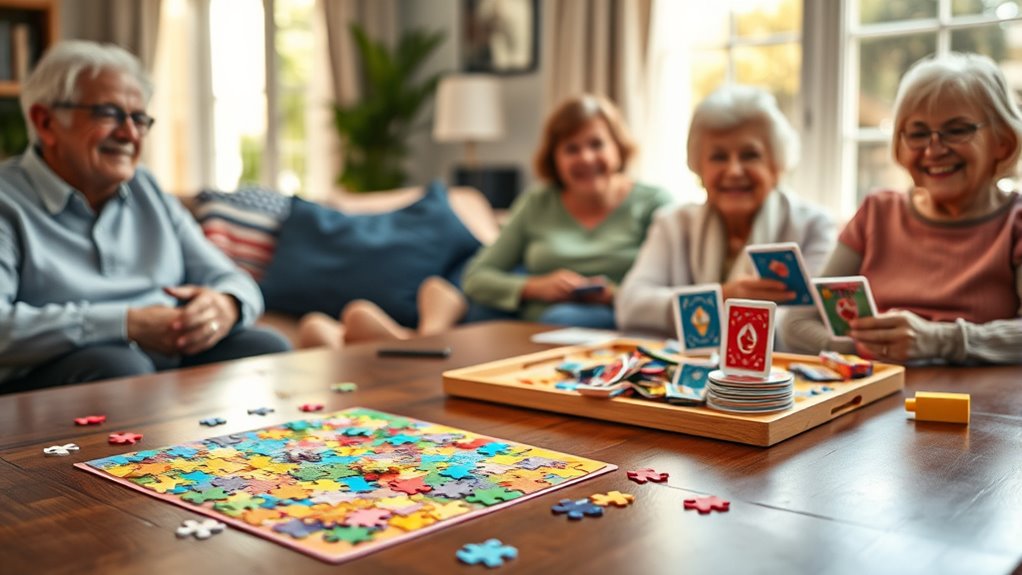

As we look for ways to keep our minds sharp and pass the time enjoyably, a few standout options emerge. The Dementia and Cognitive Skills Rebuilding Puzzle Series by MightyMind offers a tangible way for adults and seniors to regain cognitive abilities through tactile puzzles. Meanwhile, Large Print Memory Puzzles provide a straightforward, low-tech activity that stimulates memory and focus. For seniors with dementia, the Wooden Puzzle Games for Elderly combine colorful design with varied difficulty levels to maintain engagement. On the other hand, books like 201 Brain-Teasing Exercises for Anyone with Mild Cognitive Impairment and The Easy and Relaxing Memory Activity Book for Adults focus on mental agility through exercises and relaxation. Each of these options balances accessibility, mental stimulation, and ease of use, but tradeoffs in complexity, digital features, and activity type influence which is best for your needs.
Complete the kit


Key Takeaways
- Tactile puzzles like MightyMind are ideal for measurable cognitive improvement but may require supervision.
- Large print activity books are perfect for those who prefer simple, reading-based mental exercises.
- Wooden puzzles excel for seniors with dementia due to their colorful, easy-to-handle design.
- Books with brain-teasing exercises offer a wide range of mental challenges suitable for various skill levels.
- Choosing the right aid depends on the user’s cognitive level, physical ability, and preference for active versus relaxing activities.
| Dementia and Cognitive Skills Rebuilding Puzzle Series by MightyMind |  | Best for measurable cognitive improvement through tactile puzzles | Number of Puzzle Sets: 2 | Material: Geometric design tiles, magnets | Includes: Durable metal tin, puzzle patterns | VIEW ON AMAZON | See Our Full Breakdown |
| Large Print Memory Puzzles: 175+ Puzzles and Activities for Adults to Exercise Memory and Improve Focus |  | Best for reading-based cognitive activity with visual accessibility | Number of Puzzles: 175+ | Format: Spiral bound, lay-flat | Font: Large print | VIEW ON AMAZON | See Our Full Breakdown |
| 2nd Generation Dementia Activities for Seniors – Wooden Puzzle Games for Elderly |  | Best for seniors with dementia needing colorful, engaging activities | Number of Shapes: 4 | Colors: 4 | Difficulty Levels: 30 | VIEW ON AMAZON | See Our Full Breakdown |
| 201 Brain-Teasing Exercises for Anyone with Mild Cognitive Impairment |  | Best for broad mental agility with varied exercises | VIEW ON AMAZON | See Our Full Breakdown | |||
| The Easy and Relaxing Memory Activity Book for Adults |  | Best for relaxing, easy cognitive engagement | VIEW ON AMAZON | See Our Full Breakdown |
More Details on Our Top Picks
Dementia and Cognitive Skills Rebuilding Puzzle Series by MightyMind
This puzzle series stands out for its structured approach to rebuilding cognitive skills in adults and seniors. Compared with simple activity books, these puzzles offer tangible progress tracking and physical engagement. The magnetic and non-magnetic geometric shapes are designed to develop both dexterity and mental function, making it particularly useful for those recovering from stroke or affected by dementia. However, the complexity can be intimidating for some users, and supervision may be necessary initially. It’s best suited for individuals with some level of cognitive impairment who benefit from tactile, non-verbal activities.
Pros:- Progressively challenging puzzles that measure improvement
- No language required, suitable for diverse users
- Includes magnetic and non-magnetic pieces for dexterity development
- Durable storage tin for organization
Cons:- May require supervision for initial use
- Limited to cognitive and dexterity training
- Some users may find the complexity levels challenging
Best for: Adults and seniors with cognitive impairments seeking measurable progress
Not ideal for: Users looking for purely entertainment or digital activities
- Number of Puzzle Sets:2
- Material:Geometric design tiles, magnets
- Includes:Durable metal tin, puzzle patterns
- Expandable:Yes
- Designed for:Adults and seniors with cognitive impairments
Our verdict“A highly effective tool for adults and seniors aiming to rebuild cognitive skills through tactile, measurable activities.”
Large Print Memory Puzzles: 175+ Puzzles and Activities for Adults to Exercise Memory and Improve Focus
This activity book makes large print puzzles accessible for adults with visual or cognitive deficits. It offers a broad variety of puzzles to stimulate memory and focus, with a spiral binding that lies flat for ease of use. While it excels for those who prefer reading and solitary activities, it falls short for users seeking digital or interactive features. The lack of digital options may limit engagement for tech-savvy users, but for those who enjoy traditional paper-based puzzles, it offers a satisfying mental workout.
Pros:- Large print for easy reading
- Includes a variety of puzzles to stimulate the mind
- Spiral binding allows lay-flat use
- Suitable for all skill levels
Cons:- Limited to puzzle activities
- No digital or interactive features
- Specific to adult cognitive exercise
Best for: Adults who prefer straightforward, reading-based mental exercises
Not ideal for: Users seeking digital interactivity or highly complex puzzles
- Number of Puzzles:175+
- Format:Spiral bound, lay-flat
- Font:Large print
Our verdict“A practical choice for adults who want accessible, diverse puzzles without digital distractions.”
2nd Generation Dementia Activities for Seniors – Wooden Puzzle Games for Elderly
This wooden puzzle set is designed specifically for seniors with dementia, featuring colorful shapes and multiple difficulty levels. Its large, easy-to-grip blocks make it accessible for most adults, providing a satisfying activity that helps maintain mental engagement. Compared to paper puzzles, this set offers tactile and visual stimulation, which can be more engaging for seniors. However, some blocks aren’t shown on the cards, which could cause confusion, and the lack of dementia-specific markings on the packaging means it might not signal its suitability clearly. It’s best for caregivers or family members seeking a physical activity that’s simple yet mentally stimulating.
Pros:- Engages seniors with colorful shapes and varying difficulty
- Large, easy-to-grip blocks suitable for all adults
- Provides a satisfying activity to pass the time
- Multiple difficulty levels keep engagement fresh
Cons:- Some blocks are not shown on the cards, which may cause confusion
- No dementia-specific markings on the packaging
- Limited to physical puzzles without additional cognitive features
Best for: Seniors with dementia needing engaging, colorful puzzles
Not ideal for: Users seeking detailed instructions or digital activities
- Number of Shapes:4
- Colors:4
- Difficulty Levels:30
- Size:7.7 x 7.7 inches
- Material:Wood
Our verdict“A colorful, tactile activity set well-suited for seniors with dementia seeking engaging, easy-to-handle puzzles.”
201 Brain-Teasing Exercises for Anyone with Mild Cognitive Impairment
This book offers a wide array of brain-teasing exercises tailored for those with mild cognitive impairment. Although detailed content isn’t provided, its variety suggests it can accommodate different skill levels and mental needs. This makes it ideal for users seeking a versatile, low-tech way to support cognitive health. Without user reviews or ratings, it’s harder to gauge engagement, but its focus on mental agility makes it a promising option for ongoing cognitive maintenance. It’s less suited for those preferring tactile or digital activities.
Pros:- Offers a variety of exercises tailored for cognitive health
- Suitable for all skill levels
- Supports mental agility and brain health
Cons:- No detailed content description provided
- No user reviews or ratings available
- Limited appeal for users preferring physical activities
Best for: Individuals with mild cognitive impairment wanting varied mental exercises
Not ideal for: Users seeking tactile puzzles or digital interactivity
Our verdict“A versatile, low-tech activity book ideal for maintaining mental agility in mild cognitive impairment.”
The Easy and Relaxing Memory Activity Book for Adults
This activity book emphasizes relaxation with simple memory exercises and easy puzzles. It’s designed for adults who want gentle mental stimulation without stress. While it lacks detailed content descriptions and user ratings, its relaxing approach makes it suitable for those who prefer low-pressure activities. It’s less ideal for users seeking complex puzzles or interactive digital features, but it can serve as a calming way to support cognitive health over time.
Pros:- Provides relaxing and easy-to-follow activities
- Helps improve memory and cognitive skills
- Suitable for adults of all ages
Cons:- Lacks detailed content description
- No information on number of pages or activities
- No customer ratings available
Best for: Adults seeking relaxing, easy-to-follow memory exercises
Not ideal for: Those wanting challenging puzzles or digital activities
Our verdict“A calming, accessible activity book perfect for adults who prefer gentle cognitive engagement.”

How We Picked
Our selection process focused on products designed specifically for leisure and cognitive support in adults and seniors. We prioritized versatility, ease of use, and proven engagement features. Key criteria included the activity type—whether tactile puzzles, reading exercises, or games—along with durability, accessibility (like large print or easy-grip components), and whether the activity can be scaled to different difficulty levels. We also considered user safety, the presence of cognitive-specific features, and reviews from a broad spectrum of users, ensuring these aids are effective, practical, and suitable for a variety of cognitive needs.
Factors to Consider When Choosing Leisure And Cognitive Aids
Choosing the right leisure and cognitive aid depends on individual needs, cognitive level, and activity preference. Whether you want tactile puzzles, reading exercises, or relaxing activities, understanding the purpose and limitations of each option helps in making an informed decision that promotes mental health and enjoyment.Types of Cognitive Aids
Leisure and cognitive aids range from tactile puzzles to reading-based activities and relaxation-focused exercises. Tactile puzzles like MightyMind are excellent for physical engagement and measurable progress, while large print books provide accessible mental stimulation. Wooden puzzles work well for seniors with dementia, offering visual and tactile input. Exercise books and activity guides are versatile for broad mental agility, especially with diverse, varied challenges. Consider what activity type best suits the user’s physical ability, cognitive needs, and personal interests.
Key Factors to Consider
Focus on activity complexity, accessibility, and engagement features. For seniors or those with impairments, large print and easy-to-handle components are vital. If progress tracking or measurable improvement is a priority, tactile puzzles with difficulty levels are advantageous. Digital interactivity can boost engagement but may require devices or tech comfort. Always match the activity’s intensity and style with the user’s preferences and cognitive capacity to ensure sustained interest and benefit.
Frequently Asked Questions
What are the main benefits of tactile puzzles for cognitive health?
Tactile puzzles promote fine motor skills, spatial awareness, and problem-solving. They also provide a measurable way to track cognitive progress, especially for users recovering from strokes or managing dementia. The physical engagement helps stimulate multiple senses, which can enhance neural connections and improve dexterity alongside mental function.
Are large print activity books suitable for all adults?
Large print activity books are particularly beneficial for individuals with visual impairments or cognitive difficulties that make reading small fonts challenging. They are accessible and easy to use, making them suitable for older adults, those with vision issues, or anyone seeking a low-strain way to exercise their brain. However, they might not appeal to users who prefer digital or highly interactive activities.
Can these aids replace professional therapy?
While these leisure and cognitive aids can support mental health, they are not substitutes for professional therapy or medical treatment. They serve as enjoyable, supplementary activities that promote mental engagement and dexterity. For serious cognitive impairments or specific medical conditions, consulting a healthcare professional is recommended for tailored interventions.
How important is activity difficulty level?
The right difficulty level ensures the activity remains challenging yet achievable, preventing frustration or boredom. Products with adjustable or multiple difficulty levels, like the wooden puzzles, are particularly useful for progressing with cognitive improvement. Selecting an activity that matches the user’s current skill helps maintain motivation and encourages gradual advancement.
Are digital activities necessary for cognitive aids?
Digital activities can enhance engagement through interactive features and immediate feedback, but they are not essential. Many effective cognitive aids come in traditional formats like puzzles, books, or card games, which are more accessible for individuals without technology access or familiarity. The choice depends on user preference, physical ability, and the desired level of interactivity.
Conclusion
Choosing the best leisure and cognitive aid hinges on the user’s specific needs and preferences. For those seeking measurable progress and tactile engagement, the MightyMind Puzzle Series offers a structured approach. Adults who prefer straightforward, accessible activities might find the Large Print Memory Puzzles ideal. For seniors with dementia, the Wooden Puzzle Games provide colorful, engaging physical activity. Meanwhile, individuals looking for versatile mental exercises will appreciate the varied challenges in the Brain-Teasing Exercises and Relaxing Memory Activity Book. In the end, matching the activity type and difficulty to the user’s cognitive level ensures best results and sustained enjoyment.