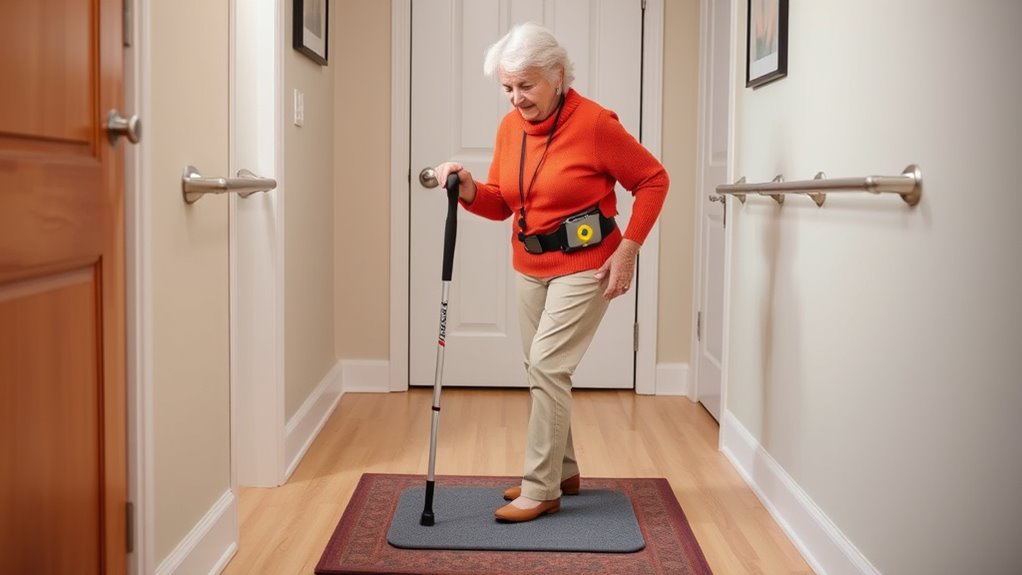

Fall prevention devices for seniors range from alarms that warn caregivers before someone stands to rails, transfer belts, and lift aids that provide physical support. I rank the Lunderg Wireless Early Alert Bed Alarm System as the best overall pick because its early-warning approach targets the risky period before an unattended bed exit. The KingPavonini Bed Rail is a stronger match for seniors who need steady support beside the mattress, while the Vive Gait Belt is better for hands-on transfers. The main choice is between caregiver notification and direct physical assistance, with added tradeoffs involving false alarms, installation, mobility, and caregiver availability. No single device addresses every source of falls, so the right choice depends on when and where the senior is most vulnerable. Continue reading for the full comparison and buyer guidance.
Complete the kit


Key Takeaways
- Early-alert bed alarms ranked above basic exit alarms because warning a caregiver before a senior fully leaves the mattress creates more time to respond.
- Bed rails and alarms solve different problems: rails support balance and repositioning, while alarms call for help when supervision is elsewhere.
- Floor-mat systems make the most sense for wandering or doorway monitoring, but they react later than pressure-based bed sensors and can become a floor obstacle.
- Transfer belts with padded handles offer better caregiver control than simple standing straps, yet every hands-on aid depends on safe technique and sufficient caregiver strength.
- The restraint-style Vive Bed Restraints ranked as a narrow-use product because restrictive equipment can create entrapment, agitation, and misuse risks without professional direction.
| Floor Mat Exit Alarm for Seniors Fall Prevention & Anti-Wandering |  | Best Overall | Mat dimensions: 24 x 48 inches | Mat material: Heavy-duty, non-slip | Edge design: Beveled | VIEW ON AMAZON | See Our Full Breakdown |
| Smart Caregiver Bed Exit Alarm with Wireless Pager |  | Best Bed Pad System | Pad size: 10 x 30 inches | Sensor type: Weight-sensing bed pad | Trigger: Pressure removal | VIEW ON AMAZON | See Our Full Breakdown |
| Wireless Motion Sensor Bed Alarm for Elderly with Caregiver Pager |  | Best Customizable Alert System | Sensor technology: PIR infrared | Motion detection range: Up to 16.4 feet | Wireless range: Up to 500 feet | VIEW ON AMAZON | See Our Full Breakdown |
| Upgraded Bed Sensor Alarm and Fall Prevention System |  | Best Long-Range Pick | Wireless range: Up to 918 feet in an open area | Sensor type: Wireless motion sensor | Suggested locations: Under a bed or at a doorway | VIEW ON AMAZON | See Our Full Breakdown |
| Vive Bed Restraints for Elderly Dementia Patients |  | Best Clinician-Guided Restraint | Total length: 200 inches | Material: Water-resistant | Adjustability: Adjustable straps | VIEW ON AMAZON | See Our Full Breakdown |
| Vive Gait Belt |  | Best High-Capacity Transfer Belt | Device Type: Gait and transfer belt | Maximum Weight Support: 350 lbs | Waist Size Range: Up to 51 inches | VIEW ON AMAZON | See Our Full Breakdown |
| Lift Assist for Elderly and Disabled with No-Slip Handles |  | Best Portable Standing Aid | Device Type: Handheld standing-transfer aid | Length: 9.6 inches | Width: 10.8 inches | VIEW ON AMAZON | See Our Full Breakdown |
| Wireless Bed Alarm with 2 Motion Sensors and Caregiver Pager |  | Best Multi-Area Motion Monitoring | Sensor Count: 2 motion sensors | Sensor Technology: Infrared | Maximum Range: 150 meters | VIEW ON AMAZON | See Our Full Breakdown |
| Transfer Belt for Seniors with Adjustable Quick Release Buckle and Padded Handles |  | Best Washable Transfer Belt | Device Type: Transfer belt | Adjustable Fit: 29–48 inches | Materials: Nylon and polyester | VIEW ON AMAZON | See Our Full Breakdown |
| Lunderg Wireless Early Alert Bed Alarm System |  | Best Pre-Exit Bed Warning | System Type: Wireless early-alert bed alarm | Sensor Type: Hip-level pressure sensor pad | Sensor Pad Size: 10 × 33 inches | VIEW ON AMAZON | See Our Full Breakdown |
| Smart Caregiver Floor Mat Alarm and Pager System | 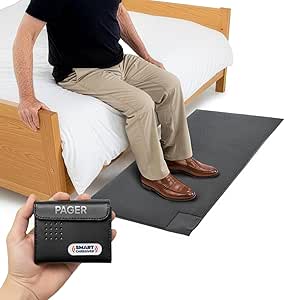 | Best for Doorway and Bedside Exit Alerts | Mat Dimensions: 24 x 48 inches | Alarm Type: Wireless pressure-sensitive floor mat alarm | Pager Range: Up to 300 feet | VIEW ON AMAZON | See Our Full Breakdown |
| KingPavonini Bed Rails for Elderly Adults |  | Best Heavy-Duty Bed Rail | Weight Capacity: Up to 380 lbs | Safety Standard: ASTM approved | Height Adjustment: 17.6 to 20.9 inches | VIEW ON AMAZON | See Our Full Breakdown |
| Lunderg Bed Assist Rail with Motion Light and Non-Slip Handle |  | Best for Nighttime Bed Transfers | Material: Steel | Weight Capacity: Up to 300 lbs | Installation: Tool-free | VIEW ON AMAZON | See Our Full Breakdown |
More Details on Our Top Picks
Floor Mat Exit Alarm for Seniors Fall Prevention & Anti-Wandering
I rank the Floor Mat Exit Alarm first because its 24-by-48-inch pressure mat covers a broad stepping area beside a bed, chair, or doorway. Unlike the Smart Caregiver Bed Exit Alarm, it reacts when a person reaches the floor rather than when bed pressure disappears, making placement more flexible and reducing alerts caused by ordinary repositioning. The beveled, non-slip surface also avoids adding a sharp floor edge where an unsteady senior walks. Caregivers can adjust the alarm volume and tone, while the visual alert helps in noisy rooms. The tradeoff is that this is a local audible alarm, not a private wireless pager. It may startle the senior, and poor positioning can cause nuisance alerts. Battery-only alarm operation also makes regular power checks necessary.
Pros:- Large pressure-sensitive area works beside beds, chairs, and doorways
- Heavy-duty non-slip surface has beveled edges that reduce trip exposure
- Adjustable sound and blinking visual alert suit different caregiving settings
- Complete mat-and-alarm package requires no separate sensor purchase
Cons:- Local alarm can startle a senior and does not provide a wireless pager alert
- Requires three AA batteries that are not included
- Incorrect placement may lead to nuisance triggers or missed steps
Best for: Home caregivers who need a large, visible step-on alert beside a bed, recliner, or frequently used doorway
Not ideal for: Caregivers who need discreet remote notifications, since the alarm sounds locally and does not work from an AC adapter
- Mat dimensions:24 x 48 inches
- Mat material:Heavy-duty, non-slip
- Edge design:Beveled
- Cord length:8 feet
- Battery requirement:3 AA batteries, not included
- AC adapter compatibility:Alarm does not operate with AC adapters
- Alert controls:Adjustable volume and tone
- Indicators:Status light, low-battery warning, and blinking visual alert
Our verdict“This is my leading choice for caregivers who value broad floor coverage and simple operation more than discreet remote alerts.”
Smart Caregiver Bed Exit Alarm with Wireless Pager
The Smart Caregiver Bed Exit Alarm is my pick for detecting an attempted bed exit before a senior starts walking. Its 10-by-30-inch weight-sensing pad sends sound or vibration to a caregiver pager when pressure is removed. That private alert is less likely to frighten a sleeping or confused person than the audible Floor Mat Exit Alarm. It can also support up to six sensors, giving families room to add monitoring points without carrying several receivers. Compared with the Wireless Motion Sensor Bed Alarm, the pad is focused on bed occupancy and is less likely to react to someone merely passing through the room. Placement is less forgiving, though: the pad must sit under the shoulders for dependable detection. The unspecified wireless range also makes it harder to judge performance across larger homes.
Pros:- Pressure removal can alert a caregiver before the senior is fully out of bed
- Pager offers both vibration and sound for discreet monitoring
- Supports up to six sensors for an expandable care setup
- Large contact sensor is designed to reduce false alarms
Cons:- Wireless range is not specified, limiting planning for larger homes
- Correct positioning under the shoulders is required for reliable alerts
- Bed pad cannot watch a doorway or open room without an added sensor
Best for: Overnight caregivers who want a discreet pager alert as soon as a high-risk senior begins leaving bed
Not ideal for: Families needing documented whole-home wireless coverage or a sensor that can monitor both beds and doorways
- Pad size:10 x 30 inches
- Sensor type:Weight-sensing bed pad
- Trigger:Pressure removal
- Caregiver alerts:Pager vibration and sound
- Sensor capacity:Supports up to 6 sensors
- Recommended placement:Under the shoulders
- Wireless range:Not specified
- Company location:USA-based
Our verdict“I recommend this system for bedside monitoring when early, private caregiver notification matters more than multi-room motion detection.”
Wireless Motion Sensor Bed Alarm for Elderly with Caregiver Pager
I favor the Wireless Motion Sensor Bed Alarm for households that want more control over how caregivers are notified. Its infrared sensor detects movement within 16.4 feet, while the pager offers multiple melodies and volume levels and communicates from up to 500 feet. Compared with the Smart Caregiver Bed Exit Alarm, there is no pad to position beneath a mattress or replace after wear; the sensor can also cover movement near a bed or across an indoor path. That flexibility comes with a greater chance of detecting unrelated motion, so careful aiming matters. Its range is shorter than the Upgraded Bed Sensor Alarm’s stated 918-foot open-area reach, and some buyers may find motion zones harder to configure than a pressure pad. The 96-decibel maximum output is useful across rooms but excessive for close-range nighttime use.
Pros:- Customizable melodies and volume levels make alerts easier to distinguish
- Up to 500 feet of wireless reach supports flexible pager placement
- Infrared detection avoids placing a pressure pad beneath the senior
- Expandable design can support added monitoring points
Cons:- Unrelated indoor movement may trigger alerts if the sensor is poorly aimed
- Setup is more involved than positioning a simple floor mat
- Battery replacement is required over time
Best for: Caregivers who want selectable sounds, adjustable volume, and flexible indoor motion monitoring across several rooms
Not ideal for: Shared rooms with frequent unrelated movement, where an infrared sensor may generate unwanted alerts
- Sensor technology:PIR infrared
- Motion detection range:Up to 16.4 feet
- Wireless range:Up to 500 feet
- Maximum alert level:96 dB
- Power source:Battery powered
- Battery requirement:3 AA alkaline batteries
- Batteries included:Yes
- Control method:Push button
- Sensor dimensions:0.8 x 2.5 x 4.3 inches
Our verdict“This is my choice for caregivers who want customizable pager alerts and flexible motion coverage without a bed pad.”
Upgraded Bed Sensor Alarm and Fall Prevention System
The Upgraded Bed Sensor Alarm earns my long-range role because its stated transmission distance reaches 918 feet in an open area, almost twice the 500-foot rating of the Wireless Motion Sensor Bed Alarm. That extra reach suits larger homes where the caregiver may be downstairs, outside a bedroom, or separated by a long hallway. The sensor can sit beneath a bed or watch a doorway, and notifications combine sound with an LED rather than sounding beside the patient. Included tape, screws, and Micro USB hardware support several installation styles. Open-area ratings rarely reflect walls and household interference, however, so buyers still need to test the system in each intended location. Motion sensing also depends on angle and distance; a misplaced unit can miss movement or react too often. The dual battery and Micro USB options add flexibility but also make setup less immediate.
Pros:- Stated 918-foot open-area range exceeds the other wireless alarms in this batch
- Sensor can monitor movement near a bed or at a doorway
- Sound and LED alerts provide two notification cues
- Mounting and power accessories are included
Cons:- Walls and interference may reduce the advertised open-area range
- Sensor placement must be tested to avoid missed or unwanted alerts
- Batteries still require periodic replacement when used away from USB power
Best for: Caregivers in larger or multi-level homes who need a remote motion alert with strong stated open-area reach
Not ideal for: Buyers wanting a zero-adjustment system, since sensor angle, detection distance, and real-world signal strength require testing
- Wireless range:Up to 918 feet in an open area
- Sensor type:Wireless motion sensor
- Suggested locations:Under a bed or at a doorway
- Power options:Alkaline batteries and Micro USB
- Pager indicators:LED light and sound
- Receiver included:Caregiver pager
- Mounting accessories:Double-sided tape and screw kit
- Other included items:Micro USB cable and manual
Our verdict“I would choose this model for a larger home where wireless reach outweighs the appeal of a simpler pressure-pad setup.”
Vive Bed Restraints for Elderly Dementia Patients
I place the Vive Bed Restraint below the alert systems because it physically limits movement rather than notifying a caregiver. Its 200-inch adjustable strap, water-resistant construction, and quick-release buckle can provide positioning support on most hospital beds and full-size mattresses. Unlike the Smart Caregiver Bed Exit Alarm, though, it may prevent a person from initiating an unaided exit instead of giving a caregiver time to assist. That distinction makes professional guidance especially valuable: restraints can create entrapment, distress, or injury risks when selected or fitted incorrectly, particularly for a person with dementia who tries to climb around them. It also does not encircle the full mattress and may need repeated adjustment on thick bedding. The FSA/HSA-approved status and 60-day guarantee improve purchase practicality, but they do not replace a care-plan review or close supervision.
Pros:- Long adjustable strap fits most hospital beds and full-size mattresses
- Quick-release buckle allows caregivers to remove the restraint promptly
- Water-resistant material supports routine cleaning and longer-term use
- FSA/HSA-approved purchase and 60-day guarantee add buying flexibility
Cons:- Physical restraint carries entrapment and injury risks if improperly selected or fitted
- Does not wrap around the entire mattress
- Very thick mattresses may require frequent strap adjustment
Best for: Families or care facilities using a clinician-approved restraint plan for a patient who needs added positioning support in bed
Not ideal for: Mobile or agitated seniors without professional supervision, since a restraint may increase entrapment, distress, or climbing-related injury risk
- Total length:200 inches
- Material:Water-resistant
- Adjustability:Adjustable straps
- Release mechanism:Quick-release buckle
- Bed compatibility:Fits most hospital beds
- Mattress compatibility:Fits full-size mattresses
- Coverage:Does not encircle the entire mattress
- Purchase status:FSA/HSA approved
- Guarantee:60 days
Our verdict“I would reserve this option for a professionally directed care plan, not use it as a substitute for alerts, supervision, or mobility support.”
Vive Gait Belt
I rank the Vive Gait Belt highest among the transfer belts because its seven padded handles give a caregiver several stable gripping positions during assisted walking, pivots, and chair transfers. Compared with the Transfer Belt for Seniors, it has a stated 350-pound capacity and a wider 4-inch body, making it the more reassuring choice for heavier adults. That width spreads pressure across the torso, but it can feel bulky on short or slender users. The 51-inch waist limit also means it will not fit every person who falls within the weight rating. A quick-release metal buckle speeds removal after a transfer, though careful fitting and caregiver training remain necessary. This is a hands-on mobility aid, not a device that can prevent an unassisted fall.
Pros:- Rated to support up to 350 pounds
- Seven padded handles accommodate several caregiver positions
- Four-inch width distributes support across a broader area
- Metal quick-release buckle allows fast removal
Cons:- Four-inch belt may be cumbersome on smaller users
- Maximum 51-inch waist excludes some bariatric users
- Safe use depends on correct adjustment and trained assistance
Best for: Caregivers assisting heavier seniors who need multiple gripping positions during walking and transfers
Not ideal for: Small-framed seniors or people with waists over 51 inches, since the belt may feel too wide or may not fit
- Device Type:Gait and transfer belt
- Maximum Weight Support:350 lbs
- Waist Size Range:Up to 51 inches
- Belt Width:4 inches
- Handle Count:7 padded handles
- Buckle:Quick-release metal buckle
- Materials:Nylon, plastic, and metal
Our verdict“I recommend this belt for caregivers who prioritize rated capacity and flexible hand placement over a slim, unobtrusive fit.”
Lift Assist for Elderly and Disabled with No-Slip Handles
I assign this Lift Assist a distinct role for cooperative seniors who need help rising but do not want a belt wrapped around the waist. At only 0.6 pounds, it can move easily between a bed, wheelchair, vehicle, and dining chair. Its listed 420-pound support rating exceeds the Vive Gait Belt’s 350-pound rating, while the textured handles give both people a defined place to grip. The tradeoff is that this design relies more heavily on the senior’s hand strength, arm control, and partial weight-bearing ability. A gait belt lets a caregiver control the torso from several angles; this tool creates a direct pulling connection that may be unsuitable for painful shoulders or weak hands. I see it as a compact stand-assist tool, not full-body transfer support.
Pros:- Weighs only 0.6 pounds for easy transport
- Listed support capacity of 420 pounds
- Textured no-slip handles provide clear gripping points
- Can assist standing from several common seating surfaces
Cons:- Requires active participation and partial weight-bearing from the senior
- Pulling motion may aggravate hand, wrist, or shoulder limitations
- Provides less torso control than a multi-handle gait belt
Best for: Cooperative seniors with usable hand and arm strength who need a portable boost from chairs, beds, or wheelchairs
Not ideal for: People who cannot bear partial weight or who have weak grips, shoulder pain, or poor upper-body control
- Device Type:Handheld standing-transfer aid
- Length:9.6 inches
- Width:10.8 inches
- Product Weight:0.6 lbs
- Support Weight:420 lbs
- Handle Surface:Non-slip textured grip
- Intended Transfer Points:Beds, chairs, and wheelchairs
Our verdict“I favor this device for mobile seniors who need a light standing boost and can participate safely in the movement.”
Wireless Bed Alarm with 2 Motion Sensors and Caregiver Pager
I place this Wireless Bed Alarm above single-sensor motion systems when one caregiver needs to monitor more than one doorway, bedside path, or room. Its two infrared sensors send alerts to a portable pager from up to 150 meters away, giving it broader placement flexibility than a pressure pad tied to one bed. Compared with the Lunderg Wireless Early Alert Bed Alarm, however, it detects motion rather than pressure at the hip. That makes it more adaptable, but it may alert after movement has already begun and sensor positioning can affect reliability. The choice of a chime or alarm helps match daytime and nighttime care, while wall or adhesive mounting simplifies placement. I rank it lower for low-maintenance households because eight AA batteries create an ongoing replacement burden.
Pros:- Two sensors can monitor separate indoor movement zones
- Maximum stated range of 150 meters
- Portable caregiver pager supports remote monitoring
- Chime and alarm modes suit different care routines
Cons:- Requires eight AA batteries and periodic replacements
- Motion detection may occur later than a hip-level pressure alert
- Sensor placement and passing traffic may affect alert usefulness
Best for: Caregivers monitoring multiple indoor movement zones for a senior with dementia or nighttime wandering
Not ideal for: Households wanting a bed-specific pre-rise alert or a system with minimal battery maintenance
- Sensor Count:2 motion sensors
- Sensor Technology:Infrared
- Maximum Range:150 meters
- Receiver:Portable caregiver pager
- Alert Modes:Ding-dong chime or alarm
- Battery Requirement:8 AA alkaline batteries, included
- Power Source:Corded electric with battery-powered components
- Mounting Type:Wall mount or adhesive installation
- Control Method:App and touch
Our verdict“I recommend this system when flexible two-zone coverage matters more than detecting the earliest stage of a bed exit.”
Transfer Belt for Seniors with Adjustable Quick Release Buckle and Padded Handles
I give this Transfer Belt for Seniors the easy-care role because its machine-washable nylon and polyester construction suits households managing frequent transfers, spills, or incontinence. Multiple padded handles let a caregiver approach from different angles, while reinforced stitching addresses the high-stress points created during repeated use. Compared with the Vive Gait Belt, this model offers a narrower stated fit range of 29 to 48 inches and does not provide a listed weight capacity. That missing rating makes it harder for me to recommend for heavier adults, even though the materials sound durable. The quick-release buckle supports efficient daily routines, but the wearer will usually need help fitting it correctly. I rank it as the maintenance-friendly alternative, while the Vive remains the clearer capacity-based choice.
Pros:- Machine-washable construction supports easier hygiene
- Multiple padded handles allow gripping from several angles
- Reinforced stitching strengthens common stress points
- Quick-release buckle simplifies removal
Cons:- No maximum weight capacity is provided
- Fit range stops at a 48-inch waist
- Most seniors will need assistance positioning and tightening the belt
Best for: Home caregivers who perform frequent assisted transfers and want a belt that can be machine washed
Not ideal for: Heavier seniors or clinical buyers who require a clearly documented load rating
- Device Type:Transfer belt
- Adjustable Fit:29–48 inches
- Materials:Nylon and polyester
- Handles:Multiple padded handles
- Buckle:Adjustable quick-release buckle
- Stitching:Reinforced
- Cleaning Method:Machine washable
Our verdict“I would choose this belt for routine home care when washability matters more than having a published support rating.”
Lunderg Wireless Early Alert Bed Alarm System
I rank the Lunderg Wireless Early Alert Bed Alarm first for bed-specific warning because its PreRise pad detects pressure changes at hip level, alerting a caregiver before a senior fully leaves the mattress. That earlier timing gives a caregiver a better chance to intervene than the Wireless Bed Alarm with 2 Motion Sensors, which reacts to movement within a detection zone. The 10-by-33-inch incontinence-resistant pad also keeps monitoring focused on the bed rather than hallway traffic. A portable pager with volume and vibration settings supports discreet nighttime care, and no Wi-Fi or app is required. Its narrower purpose is the main compromise: it does not monitor doors or multiple rooms, the 400-foot range may fall short on a large property, and the pad has a 15-month replacement interval.
Pros:- Hip-level PreRise sensing warns before a full bed exit
- Portable pager offers adjustable volume and vibration
- Incontinence-resistant pad suits overnight care
- Works without Wi-Fi, an app, or a restraint
Cons:- Sensor pad may need replacement after about 15 months
- Single-bed focus does not cover doors or other rooms
- No smart-home integration and a maximum 400-foot range
Best for: Family caregivers who need an early bedside warning when a fall-prone senior begins getting up at night
Not ideal for: Caregivers needing multi-room wandering detection, smart-home integration, or a sensor without periodic pad replacement
- System Type:Wireless early-alert bed alarm
- Sensor Type:Hip-level pressure sensor pad
- Sensor Pad Size:10 × 33 inches
- Wireless Range:400 ft
- Pager Alerts:Adjustable volume and vibration
- Pad Protection:Incontinence-resistant
- Listed Service Interval:15 months
- Connectivity:Wireless; no Wi-Fi or app required
Our verdict“I favor the Lunderg for caregivers who value the earliest practical bed-exit warning over broader motion coverage.”
Smart Caregiver Floor Mat Alarm and Pager System
I rank the Smart Caregiver Floor Mat Alarm and Pager System as the strongest doorway and bedside floor-alert option because its 24-by-48-inch sensing area covers a practical walking path. When someone steps on it, the pager sends audible or vibrating alerts from up to 300 feet away, letting a caregiver respond without placing a loud alarm beside the senior. Unlike the Smart Caregiver Bed Exit Alarm, this mat can watch a doorway or the floor next to a bed, making it more flexible for wandering risks.
The tradeoff is that this is an alert-only system: it cannot locate a person, record activity, or stop a fall physically. The senior must also step on the mat for it to work. Expansion is possible, but extra sensors cost more, and the required AA batteries are absent from the package.
Pros:- Up to 300 feet of wireless pager range gives caregivers room to move around the home
- Audible and vibration modes support both prominent and discreet alerts
- Large 24-by-48-inch mat works beside a bed or across a doorway
- Multiple compatible devices can expand coverage beyond one location
Cons:- It only sends an alert and provides no physical stabilization, tracking, or recorded monitoring
- A user must step directly on the mat to trigger the pager
- AA batteries and any additional sensors require separate purchases
Best for: I recommend this for home caregivers monitoring a senior who leaves bed or walks through a doorway without assistance.
Not ideal for: I would skip it for families needing location tracking, activity history, or physical support during standing and walking.
- Mat Dimensions:24 x 48 inches
- Alarm Type:Wireless pressure-sensitive floor mat alarm
- Pager Range:Up to 300 feet
- Pager Alerts:Audible and vibration
- Power:2 AA batteries
- Batteries Included:No
- Expansion:Supports additional compatible devices; sensors sold separately
- Warranty:1 year
Our verdict“I would choose this for flexible exit detection around a bed or doorway, provided a caregiver can respond quickly to each alert.”
KingPavonini Bed Rails for Elderly Adults
For seniors who need substantial leverage while sitting or standing, I place the KingPavonini Bed Rail ahead of the other rails. Its 380-pound capacity exceeds the Lunderg Bed Assist Rail’s 300-pound rating, while adjustable height and horizontal extension offer more control over handle position. That combination makes this the better match for larger users or anyone who needs a broad, stable gripping area. The non-slip handle also turns the rail into useful transfer support rather than merely a roll-off barrier.
That extra adjustability brings more fit checking. Buyers must measure a 3-to-12-inch mattress and confirm that the bed is non-adjustable; powered adjustable frames are excluded. Compared with the Lunderg model, it also lacks a motion light for locating the handle after dark. Still, the tool-free installation and ASTM approval strengthen its case for conventional beds.
Pros:- High 380-pound capacity suits users who need stronger transfer support
- Adjustable height and length allow a more tailored handle position
- ASTM-approved design adds a recognized safety benchmark
- Tool-free setup and a storage pouch make installation and organization easier
Cons:- It cannot be used with adjustable beds
- Correct installation depends on measuring the mattress and setting the extensions properly
- It offers no built-in light for nighttime visibility
Best for: I recommend this for heavier seniors or adults with limited leg strength who need high-capacity support when entering and leaving a conventional bed.
Not ideal for: I would skip it for adjustable-bed owners or anyone who wants an illuminated handle for nighttime transfers.
- Weight Capacity:Up to 380 lbs
- Safety Standard:ASTM approved
- Height Adjustment:17.6 to 20.9 inches
- Horizontal Extension:28.6 to 34.7 inches
- Mattress Compatibility:3 to 12 inches thick
- Bed Size Compatibility:Twin through King
- Adjustable Bed Compatibility:Not compatible
- Installation:Tool-free
Our verdict“I would pick this over the Lunderg rail when weight capacity and adjustable support matter more than nighttime lighting.”
Lunderg Bed Assist Rail with Motion Light and Non-Slip Handle
The Lunderg Bed Assist Rail earns its place through a feature the KingPavonini rail lacks: a motion-activated safety light. That light makes the handle easier to locate when a senior wakes at night, addressing the low-visibility moments when a rushed transfer can become hazardous. Its non-slip grip supplies leverage for sitting and standing, while the steel frame supports up to 300 pounds. I see it as the more focused nighttime pick, not the strongest rail in absolute capacity.
Compared with the KingPavonini Bed Rail, Lunderg gives up 80 pounds of rated support and accommodates a narrower 7-to-13-inch mattress range. It also excludes adjustable beds, and some bed configurations may need securing straps for firmer placement. On a compatible conventional frame, though, the five-minute tool-free setup makes it appealing for families seeking quick installation and better handle visibility.
Pros:- Motion-activated light makes the rail easier to find in a dark bedroom
- Non-slip handle supports safer sitting and standing movements
- Steel construction carries up to 300 pounds
- Five-minute tool-free setup suits households needing a quick installation
Cons:- Its 300-pound capacity is lower than the KingPavonini rail’s 380-pound rating
- It is incompatible with adjustable beds
- Some bed frames may need securing straps for dependable stability
Best for: I recommend this for seniors who make frequent nighttime bathroom trips and need a visible, supportive handle on a standard bed.
Not ideal for: I would skip it for users above 300 pounds, adjustable-bed owners, or households that need the higher-capacity support of the KingPavonini rail.
- Material:Steel
- Weight Capacity:Up to 300 lbs
- Installation:Tool-free
- Installation Time:Approximately 5 minutes
- Safety Light:Motion activated
- Bed Size Compatibility:Twin through King
- Mattress Compatibility:7 to 13 inches thick
- Adjustable Bed Compatibility:Not compatible
Our verdict“I would choose this for nighttime visibility and quick setup, but not when maximum weight capacity or adjustable-bed compatibility is required.”

How We Picked
I evaluated these products by asking where each one fits in the fall sequence: before standing, during transfer, beside the bed, or after movement begins. My ranking gives more weight to devices that create an earlier response window, provide a clear form of support, and match a common senior-care setting. I also compared caregiver workload, setup demands, comfort, adjustability, and the chance of false alerts. Because alarms, rails, and transfer aids perform different jobs, I did not treat their feature counts as directly interchangeable.
I placed the Lunderg Wireless Early Alert Bed Alarm System first because its stated early-alert function addresses unattended bed exits before the senior is fully upright. Rails scored well when they paired a stable handhold with practical installation, while transfer aids moved higher when padded or multiple handles gave caregivers more positioning choices. I marked down products that depend heavily on perfect placement, introduce a possible trip or entrapment hazard, or have a very narrow safe-use case. These rankings reflect intended function and listed design details, not personal testing or a substitute for a clinician-led fall-risk review.
Factors to Consider When Choosing Fall Prevention Devices For Seniors
I would start by identifying the exact event that usually precedes a near-fall rather than buying the device with the longest feature list. Unassisted bed exits, unstable transfers, nighttime disorientation, and wandering call for different tools. A useful device must also fit the caregiver response plan, the room, and the senior’s physical and cognitive abilities. My guidance below focuses on those practical differences.
Match the Device to the Highest-Risk Moment
I would map when falls or near-falls occur: rising from bed, walking after dark, moving between surfaces, or wandering through a doorway. Bed alarms are strongest before or during an exit, while a floor mat detects weight only after a foot reaches the floor. A rail can aid repositioning and standing, but it cannot summon a caregiver unless paired with an alert system. Transfer belts and lift-assist handles belong in planned, supervised movement, not independent walking. Buying one device for every scenario often leaves the highest-risk moment uncovered. If several patterns occur, I would build a layered setup rather than expect one product to handle the entire routine.
Decide Whether Support or Notification Comes First
An alarm does not physically stop a fall; it buys a caregiver time to respond. A rail or transfer belt provides direct mechanical support, yet it may offer little help when the senior is alone. I would favor notification when the person forgets to call for assistance or attempts unsupervised exits. Physical support takes priority when the senior follows directions but lacks strength or balance during a known movement. In many homes, an alarm-and-support pairing is more practical than choosing one approach exclusively. The pairing only works when the caregiver can hear the alert and reach the senior quickly.
Check Bed, Room, and Path Compatibility
I would measure mattress thickness, frame clearance, rail placement, and the walking path before ordering. Adjustable rails may still conflict with platform beds, movable bases, soft mattress edges, or nearby furniture. Floor mats need a flat, unobstructed position where they will not curl, slide, or create another place to catch a foot. Wireless systems reduce bedside cable clutter, but sensor and pager locations still affect reliable communication. A motion light can improve nighttime visibility without flooding the room, though it should illuminate the actual route to the bathroom. Fit and placement matter more than advertised versatility when a device becomes part of a small bedroom.
Plan for the Senior’s Cognitive and Physical Abilities
I would choose controls and equipment that match the senior’s ability to remember instructions, recognize boundaries, and tolerate touch. Someone with dementia may step around a mat, remove a sensor pad, or become distressed by a restrictive device. A person with arthritis may benefit from a broad, non-slip handle more than a narrow rail with a higher weight rating. Transfer belts require the person to tolerate close caregiver contact and participate at least partly in the movement. Restrictive products deserve professional direction and frequent monitoring because entrapment, skin injury, and agitation can outweigh the intended benefit. The safest-looking product on a listing can be a poor match when cognition, grip strength, or movement patterns are ignored.
Account for Caregiver Response and Maintenance
I would treat every alert device as part of a response system rather than a stand-alone safeguard. Pager range matters less if the caregiver sleeps through the signal, leaves it charging elsewhere, or cannot reach the room promptly. Battery checks, sensor placement, and routine test alerts need a place in the care schedule. Pressure pads and motion sensors may also produce nuisance alerts when bedding shifts or normal repositioning is mistaken for an exit. Too many false alarms can lead caregivers to lower the volume or stop using the system. A slightly simpler device with consistent daily use may offer more protection than a feature-heavy setup that becomes burdensome.
Know When Paying More Makes Sense
I would pay more for an earlier warning window, stronger adjustment hardware, a better-fitting support surface, or a setup that reduces daily caregiver friction. Extra cost is harder to justify when it only adds sensors for rooms that are rarely used. Premium monitoring earns its price when nighttime exits are frequent and response time is the main weakness. A basic transfer belt can be the better value for occasional supervised moves, provided its fit and handles match the caregiver’s technique. Medical-grade appearance alone does not prove that a device suits the user or home. I would direct the largest share of the budget toward the location with the most frequent near-falls.
Frequently Asked Questions
Is a bed alarm or a bed rail better for preventing nighttime falls?
I would choose based on whether the senior needs caregiver notification or physical support. A bed alarm is better when the person gets up without calling for help, particularly if a caregiver is nearby and can respond quickly. A rail is better when the senior can follow directions but needs a stable handhold for repositioning or standing. Rails can introduce gaps and climbing behavior, while alarms can produce false alerts and do not stop movement. For frequent nighttime exits, using a compatible rail and alarm together may cover more of the risk sequence.
Can a floor-mat alarm become a trip hazard?
Yes, a poorly placed mat can add a raised edge or sliding surface to a walking route. I would place it on a flat, dry floor, keep surrounding cords and rugs away, and check regularly for curling or movement. Floor mats are most useful when stepping onto a monitored area is itself the event a caregiver needs to know about. They are less appealing for seniors who shuffle, use a walker with limited clearance, or frequently bypass the chosen path. In those cases, a bed sensor or room motion sensor may provide an alert without adding material underfoot.
Are transfer belts safe for one caregiver to use alone?
A transfer belt can improve grip, but it does not automatically make a one-person transfer safe. I would base the decision on the senior’s weight-bearing ability, balance, cooperation, and the caregiver’s training. A person who suddenly collapses, cannot follow instructions, or requires substantial lifting may need two caregivers or mechanical equipment. The belt should support guidance and stabilization rather than serve as a lifting sling. A physical or occupational therapist can show the correct placement and movement pattern for the specific senior.
Will a wireless alarm work if the caregiver is in another room?
Wireless alarms are designed for remote notification, but walls, floor levels, interference, and battery condition can affect real-world performance. I would test the pager from every location where the caregiver spends time, including behind closed doors and outdoors if relevant. The alert should be loud or tactile enough for the caregiver’s hearing and sleep habits. Regular test alerts reveal weak batteries or pairing problems before an actual bed exit. If the caregiver cannot respond within the senior’s standing time, wireless range alone does not solve the safety gap.
When should a restraint-style device be avoided?
I would not use a restraint-style device as a routine substitute for supervision, an alarm, or a properly selected transfer aid. Restriction can increase entrapment, agitation, skin injury, and climbing attempts, especially for a person with dementia. It may also conflict with care-facility rules or local requirements. Any proposed use should come from an individualized plan involving the senior’s clinician and trained caregivers. For most home situations, I would start with less restrictive options that address the reason the person is trying to move.
What are the best best fall monitor for seniors?
The best fall monitor for seniors depends on the person’s mobility, living situation, comfort with technology, and need for caregiver support. The picks above offer a useful starting point for comparing wearable and home-based options. Look for simple controls, dependable alerts, comfortable everyday use, clear caregiver notifications, and coverage that matches where the senior spends time. Automatic fall detection can add reassurance, but no system identifies every fall, so it should complement regular check-ins and a broader safety plan. Consider involving the senior in the decision to ensure the chosen monitor fits their routine and is something they will use consistently.
Conclusion
For most households, my best overall recommendation is the Lunderg Wireless Early Alert Bed Alarm System because it focuses on creating response time before an unattended bed exit. My best value choice is the Wireless Motion Sensor Bed Alarm with Caregiver Pager for buyers who want remote alerts without paying for a more elaborate early-warning setup. For beginners who mainly need a stable bedside handhold, I would choose the KingPavonini Bed Rail for its stated tool-free installation, broad mattress compatibility, and adjustable design.
The Lunderg Bed Assist Rail with Motion Light is my premium pick for buyers who want bedside support paired with nighttime illumination. For dementia-related wandering, the Smart Caregiver Floor Mat Alarm and Pager System better matches doorway or floor-level monitoring, while the Vive Gait Belt makes more sense for trained caregivers managing supervised transfers. Seniors who need help initiating a standing movement may be better served by the Lift Assist with No-Slip Handles, provided a clinician confirms that this movement is appropriate. I would reserve restraint-style equipment for professionally directed cases and choose the device that addresses the senior’s actual high-risk moment rather than the broadest advertised feature set.