Choosing among the many blenders on the market comes down to one core tradeoff: raw power and capacity versus price and counter space. The Ninja Professional Plus Blender (1400W) earns the best overall spot for its combination of serious crushing power, a large 72oz pitcher, and Auto-iQ preset programs that remove guesswork. If budget leads your decision, the BLACK+DECKER Countertop Blender with Glass Jar delivers dependable everyday smoothie performance at a fraction of the cost, while the Ninja Fit Compact suits anyone who blends single servings and wants minimal cleanup. The main tension in this category is that cheaper machines can struggle with ice and frozen fruit, while powerful ones take up more room and cost more. Read on for the full breakdown of all ten models and which one fits your kitchen.
Complete the kit


Turn quiet afternoons into listening time
- Thousands of audiobooks, podcasts and originals
- Listen on your phone, tablet or Echo — also offline
- Cancel anytime
Key Takeaways
- Wattage was the clearest predictor of ice-crushing performance: the 1200W and 1400W Ninja Auto-iQ models handled frozen fruit without stalling, while sub-700W budget options needed liquid added first and still produced chunkier results.
- Auto-iQ preset programs were the biggest usability differentiator in the lineup — they pulsed and paused automatically, so users didn’t have to babysit the blend, a feature none of the BLACK+DECKER or Hamilton Beach models offered.
- Glass jars (BLACK+DECKER and Oster) resisted scratching and odors better than plastic, but plastic pitchers like the 72oz Ninja ones were lighter, cheaper to replace, and less likely to shatter if dropped.
- Personal blenders with cup attachments (Ninja Fit, Consciot) won on cleanup speed for single-serve smoothies but couldn’t handle large-batch tasks like soup or party drinks, making them a supplement rather than a replacement for a full-size blender.
- The mid-range Hamilton Beach Power Elite and Oster Classic Series proved that paying more doesn’t always mean blending better — their Wave Action and all-metal drive designs outperformed similarly priced rivals on consistency, not just power numbers.



More Details on Our Top Picks
Ninja Professional Blender, 1000W, Total Crushing Tech, 72oz Pitcher, BL610
The Ninja Professional BL610 earns this spot for buyers who regularly blend for several people, especially when ice is part of the job. Its 72-ounce pitcher gives it more room than the 40-ounce Hamilton Beach Power Elite, while Total Crushing Technology is aimed at quickly breaking down ice and frozen ingredients. That capacity can save time when making multiple servings, but it also means a larger appliance to store and a heavier pitcher to handle. The powerful motor may be loud during operation, so it is less suited to quiet early-morning routines. Compared with the more compact Ninja Fit, this model is built for batches rather than single drinks on the go. Dishwasher-safe, BPA-free parts help offset the cleanup burden, though its bulk makes it a poor fit for tight counters.
Pros:- 72-ounce pitcher accommodates family-sized batches
- Total Crushing Technology is suited to ice and frozen ingredients
- 1000-watt motor supports fast blending
- BPA-free, dishwasher-safe parts simplify cleanup
Cons:- Large pitcher and base take up substantial storage space
- Operation may be loud
- Heavy pitcher can be cumbersome to lift and clean
Best for: Households that make several smoothies or frozen drinks at once and have counter or cabinet space for a full-size blender
Not ideal for: People with small kitchens or buyers who mainly make one portable smoothie at a time; its pitcher and base are bulky
- Power:1000 watts
- Pitcher capacity:72 oz
- Maximum liquid capacity:64 oz
- Amperage:12.5 amps
- Blending technology:Total Crushing Technology
- Material:BPA-free
- Dishwasher-safe parts:Yes
Our verdict“Choose the BL610 if you want generous batch capacity and frequent ice crushing; choose the Ninja Fit if portability and a smaller footprint matter more.”
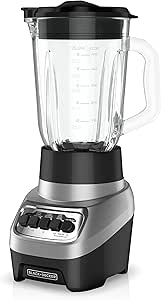
BLACK+DECKER Countertop Blender with 6-Cup Glass Jar, 10-Speed Settings, Black, BL2010BG
The BLACK+DECKER BL2010BG suits everyday kitchen tasks for buyers who prefer a glass jar and straightforward countertop format. Its six-cup capacity is roomier than the Ninja Fit’s personal cups, making it more practical for sharing a smoothie or blending a modest soup batch. The 552-watt spec is below the 700-watt figure mentioned in the product description, so I would not choose it on the assumption that it matches the stronger motors in the Ninja Professional BL610 or Hamilton Beach Power Elite. Ten listed speed settings offer options for different textures, though that may be more control than a buyer seeking one-button simplicity wants. The removable stainless steel blade and dishwasher-safe parts make cleanup easier, but the jar’s capacity still limits larger family batches.
Pros:- Durable glass jar avoids a plastic pitcher
- Six-cup capacity works for modest shared batches
- Removable stainless steel blade aids cleaning
- Dishwasher-safe parts reduce cleanup effort
Cons:- 552-watt listed power is lower than the stronger motors in this roundup
- Six-cup jar may be small for large families
- Ten speed settings may feel busier than a simple-control blender
Best for: Small households that want a glass jar for regular smoothies, soups, and other modest batches
Not ideal for: Large families or frequent frozen-drink makers who need more capacity or a stronger stated motor than this model’s 552 watts
- Brand:BLACK+DECKER
- Model:BL2010BG
- Power:552 watts
- Speed settings:10
- Jar capacity:6 cups
- Blade:Removable stainless steel
- Dishwasher-safe parts:Yes
Our verdict“Pick this BLACK+DECKER for everyday modest batches in a glass jar, but look to the Ninja Professional BL610 for larger, ice-heavy blending jobs.”
Ninja Fit Compact Personal Blender, 700W, 2 16oz Cups
The Ninja Fit is the clear choice here for single-serve drinks and limited counter space. Its two 16-ounce cups with spout lids let two people prepare separate smoothies without reaching for a full pitcher, and the compact design is easier to leave out or tuck away than the 72-ounce Ninja Professional BL610. At 700 watts, it offers substantial power for its size, with Pro Extractor Blades for blending drinks and frozen ingredients. The tradeoff is capacity: these cups do not replace a countertop jar when you want soup, a family batch, or several servings at once. The product data also notes it may struggle with very tough ingredients, so buyers who routinely crush large quantities of ice should consider the BL610 instead. For quick personal drinks, the included cups keep the workflow simple.
Pros:- Compact design suits crowded counters and small kitchens
- Two 16-ounce cups allow separate personal servings
- Spout lids make drinks easier to take along
- 700-watt motor and Pro Extractor Blades support everyday smoothie making
Cons:- Small cups limit it to personal portions
- May struggle with very tough ingredients
- Less suited to soups or batch blending than a full-size pitcher model
Best for: Commuters, students, and couples who make individual smoothies and want portable cups with lids
Not ideal for: Families or cooks who blend soups and large batches, since the included vessels hold only 16 ounces each
- Power:700 watts
- Cup capacity:16 oz each
- Number of cups:2
- Blades:Pro Extractor Blades
- Included lids:2 spout lids
- Design:Compact personal blender
- Dishwasher-safe parts:Yes
Our verdict“Choose the Ninja Fit for quick, portable personal smoothies; choose the Ninja Professional BL610 when you need family-sized batches.”
Hamilton Beach Power Elite Blender for Smoothies with Wave Action System
The Hamilton Beach Power Elite is aimed at buyers who want a full-size glass jar and smoothie-focused blending without a crowded control panel. Its Wave Action system is designed to draw ingredients toward the blades, which may help keep a smoothie moving through the blend. The 40-ounce jar is notably smaller than the Ninja Professional BL610’s 72-ounce pitcher, so this pick makes more sense for one or two servings than a family’s drinks all at once. It offers 12 functions, but the listed controls comprise only five buttons and there is no stated variable-speed setting; buyers seeking fine manual control may prefer the BLACK+DECKER BL2010BG with its listed ten speeds. The glass jar is dishwasher-safe, though it adds weight and can break if dropped.
Pros:- Wave Action system is designed to circulate ingredients during blending
- 40-ounce glass jar suits modest batches
- 12 functions cover several basic food-prep tasks
- Dishwasher-safe jar and blades simplify cleanup
Cons:- Glass jar is heavy and can break if dropped
- 40-ounce capacity is smaller than the Ninja Professional BL610 pitcher
- No variable-speed settings are listed
Best for: Smoothie drinkers who want a dishwasher-safe glass jar and preset functions for small household batches
Not ideal for: People who need a large pitcher, fine variable-speed control, or a lightweight jar that is easy to handle
- Power:700 watts
- Jar capacity:40 oz
- Blade material:Stainless steel
- Dishwasher-safe:Yes
- Number of functions:12
- Control buttons:5
- Jar material:Glass
Our verdict“Choose the Power Elite for modest smoothie batches and preset functions in glass, while the BL610 better serves households blending larger quantities.”
Oster Classic Series 8-Speed Blender with 6-Cup Glass Jar, Gray
The Oster Classic Series fits buyers who want one glass-jar blender for smoothies alongside sauces, purees, and ice crushing. Its 700-watt motor, stainless steel blade, and eight speeds give it a wider everyday remit than the personal-serving Ninja Fit, while the six-cup jar keeps batches more moderate than the Ninja Professional BL610’s 72-ounce pitcher. That middle-ground capacity is useful for a couple or small household, but it will mean blending in rounds when serving a crowd. Eight speeds offer more choices than the Hamilton Beach Power Elite’s listed five buttons, though buyers looking for a particularly simple preset interface may prefer the Hamilton Beach. The gray plastic base feels less premium than its glass jar, and no extra accessories are included, so this is a basic all-purpose setup rather than a bundle.
Pros:- 700-watt motor supports a range of everyday blending tasks
- Six-cup glass jar handles modest shared batches
- Stainless steel blade is suited to blending and ice crushing
- Eight speeds provide multiple blending choices
Cons:- Plastic base may feel less premium
- No additional accessories are included
- Six-cup jar may require multiple rounds for larger groups
Best for: Small households that want a glass-jar blender for smoothies, sauces, purees, and occasional ice crushing
Not ideal for: Buyers who need portable single-serve cups, premium base materials, or a pitcher large enough for frequent crowd-sized batches
- Brand:Oster
- Model:BLSTMEGG00000
- Color:Gray
- Base material:Plastic
- Jar material:Glass
- Blade material:Stainless steel
- Power:700 watts
- Number of speeds:8
- Recommended uses:Crushing, blending, pureeing, ice crushing
Our verdict“Pick the Oster for varied everyday prep in a glass jar; choose the Ninja Fit for personal portability or the BL610 for larger batches.”
BLACK+DECKER Crush Master Blender, 10-Speed with Stainless Steel Blades, Black, BL2010BP
The Crush Master suits buyers who want a straightforward countertop blender with room to adjust texture. Its 10 speeds and pulse setting give more fine-grained control than the four settings on the BLACK+DECKER PowerCrush, while the 6-cup jar handles ordinary family-size recipes. The plastic jar keeps it lightweight and easy to handle, though it gives up the heft and material feel of PowerCrush’s glass jar. Dishwasher-safe parts and a drip-free spout make routine cleanup and pouring easier; the measuring lid also doubles as a small 1-ounce cup. This is a practical pick for everyday smoothies and basic blending, rather than the tougher frozen-drink work suited to the 1200W Ninja Professional Blender 2.0. Its listed 120V power also limits where it can be used.
Pros:- Ten speeds plus pulse allow more texture adjustment than the four-speed BLACK+DECKER PowerCrush
- Light plastic jar is easier to lift and handle than a glass alternative
- Dishwasher-safe parts simplify cleanup
- Measuring lid doubles as a 1-ounce cup
Cons:- Plastic jar may be less durable than the glass jar on the BLACK+DECKER PowerCrush
- 120V specification limits use outside compatible regions
- Less suited to demanding frozen blends than the higher-powered Ninja models
Best for: Buyers who want a light, easy-to-clean blender for everyday smoothies and standard kitchen recipes
Not ideal for: People who prefer a glass jar, need international voltage compatibility, or regularly blend tough frozen ingredients
- Jar capacity:6 cups (48 oz.)
- Blade:Multi-level stainless steel
- Voltage:120V
- Speeds:10 speeds with pulse
- Jar material:Plastic
- Lid:Measuring lid with 1-ounce cup
Our verdict“Choose the Crush Master for lightweight everyday blending and flexible speed control, provided a plastic jar meets your needs.”
Ninja Professional Blender 2.0, 1200W, Auto-iQ, 72oz Pitcher
For large batches of smoothies or frozen drinks, the 72-ounce pitcher and 1200W motor make the Ninja Professional Blender 2.0 a stronger fit than compact personal blenders or the lower-powered BLACK+DECKER PowerCrush. Its stacked Total Crushing blades and ice-focused design are aimed at processing ingredients for several servings at once. Auto-iQ presets reduce guesswork for routine drinks, while manual speed settings preserve some control when a recipe needs a different texture. That convenience comes with a tradeoff: preset cycles may feel limiting to cooks who want to manage every blending step. The large footprint and reported operating noise also matter in a small or shared kitchen. Compared with the 1400W Ninja Professional Plus, this model offers less listed motor power, but retains the same family-size capacity.
Pros:- 1200W motor and stacked crushing blades are suited to frozen ingredients
- 72-ounce pitcher accommodates family-size batches
- Auto-iQ presets simplify common blending tasks
- BPA-free dishwasher-safe parts ease cleanup
Cons:- Large pitcher and base can take substantial counter or storage space
- Operation may be noisy
- Preset cycles may offer less control than fully manual blending
Best for: Households making multiple smoothie or frozen-drink servings at once who value preset blending programs
Not ideal for: Small-kitchen owners, noise-sensitive households, or cooks who want precise manual control over every blend
- Power:1200W
- Pitcher capacity:72 oz.
- Blade type:Stacked Total Crushing blades
- Controls:Auto-iQ programs and manual speed settings
- Material:BPA-free parts
- Included:Motor base, pitcher, blades, quick start guide
- Cleanup:Dishwasher-safe parts
Our verdict“Pick the Professional Blender 2.0 for large frozen-drink batches and guided programs, if its size and noise suit your kitchen.”
Ninja Professional Plus Blender, 1400W, Auto-iQ, 72oz Pitcher
The Professional Plus is the full-size choice for buyers who want 1400W of motor power alongside a 72-ounce family pitcher. Compared with the Ninja Professional Blender 2.0, it lists 200W more power while keeping Auto-iQ presets and a stacked blade assembly for smoothies and frozen drinks. That makes it the more compelling Ninja option on paper for people who expect to blend demanding ingredients regularly, though the supplied details do not establish how much faster or smoother it performs in practice. Presets make common drink routines easier, and dishwasher-safe BPA-free parts help with cleanup. Its large format is a poor match for kitchens short on storage, and the higher power rating does not remove the compromises of a pitcher blender: it still takes space and may be more machine than occasional small-batch users need.
Pros:- 1400W motor rating is higher than the 1200W Ninja Professional Blender 2.0
- 72-ounce pitcher supports family-size batches
- Auto-iQ presets simplify repeat drink recipes
- BPA-free dishwasher-safe parts help with cleanup
Cons:- Bulky pitcher format can be awkward in small kitchens
- Large capacity may be unnecessary for single-serving routines
- Higher listed wattage alone does not establish a smoother result than the 1200W Ninja
Best for: Frequent smoothie makers and households preparing large batches who want the higher listed power of the two 72-ounce Ninja models
Not ideal for: People with limited counter or cabinet space, or those who usually blend single servings
- Motor power:1400W
- Pitcher capacity:72 oz.
- Blade type:Stacked blade assembly
- Controls:Auto-iQ presets
- Material:BPA-free
- Dishwasher safe:Yes
Our verdict“Choose the Professional Plus if you want a high-powered, large-batch Ninja with preset programs and have room for it.”
BLACK+DECKER PowerCrush Multi-Function Blender with 6-Cup Glass Jar, 4 Speed Settings, Silver
The PowerCrush makes a clear case for buyers who favor a 6-cup glass jar over the lighter plastic jar on the BLACK+DECKER Crush Master. Its 700W peak motor and QuadPro four-tip blades are designed for smoothies, soups, and ice, while the pour spout supports serving directly from the jar. Four speed settings keep the controls simpler than the Crush Master’s 10-speed panel, so it suits people who prefer a short set of choices over fine adjustments. The stated 350W continuous rating adds useful context to the 700W peak figure; it should not be read as 700W continuous output. The glass jar is sturdy in feel but heavier to lift, and the limited speed selection gives less room to tune texture than the Crush Master or Ninja models.
Pros:- Glass jar offers an alternative to the Crush Master’s plastic pitcher
- QuadPro stainless steel blades are designed for varied blending tasks
- Pour spout helps with serving
- Dishwasher-safe removable parts simplify cleaning
Cons:- Glass jar is heavier to lift than plastic alternatives
- Four speed settings provide less adjustment than the Crush Master
- 350W continuous power is lower than the peak figure
Best for: Home cooks who want a glass jar and straightforward controls for smoothies, soups, and occasional ice blending
Not ideal for: Anyone who prioritizes a lightweight pitcher or wants many speed choices for precise texture control
- Motor power:700W peak, 350W continuous
- Jar capacity:6 cups
- Jar material:Glass
- Blade technology:QuadPro 4-tip stainless steel blades
- Speed settings:4
- Pouring:Jar with pour spout
- Cleanup:Dishwasher-safe removable parts
- Color:Silver
Our verdict“Pick the PowerCrush for a glass-jar blender with simple controls, while accepting extra weight and fewer speed options.”
Consciot 11-Piece Blender for Kitchen and Personal Use, 900 Peak Watts
The Consciot takes a different approach from the pitcher-first Ninja models: its three cup sizes and included to-go lids support personal portions that can be carried along after blending. The 900W motor and asymmetric stainless steel blades are described for ice, fruit, and tougher ingredients, giving it more ambitious blending claims than a basic personal blender. The package also includes replacement seals and a cleaning brush, which add practical support for a multi-cup setup. Compared with the Ninja Professional Blender 2.0, it gives up the single 72-ounce pitcher and its large-batch convenience in favor of individual cups and accessories. That flexibility can mean more pieces to store and clean, and the product information gives less detail about controls and operating noise. Choose it for varied personal servings, not large gatherings.
Pros:- Three cup sizes support different personal portions
- To-go and resealable lids add serving flexibility
- 900W motor and asymmetric stainless steel blades are specified for tough ingredients
- Replacement seals and cleaning brush are included
Cons:- Individual cups do not match the Ninja Professional Blender 2.0’s 72-ounce batch capacity
- Multiple cups and accessories require storage and handling
- Available product details give limited information about controls and noise
Best for: People who make different individual smoothie portions and want cups and lids for taking drinks on the go
Not ideal for: Families who regularly need large pitcher batches or buyers who want detailed information on blending controls and noise
- Motor power:900W peak
- Maximum speed:25,000 RPM
- Blade type:Asymmetric stainless steel
- Cup sizes:24 oz. (700 ml), 17 oz. (500 ml), 10 oz. (300 ml)
- Included accessories:To-go lids, resealable lid, replacement seals, cleaning brush, recipe book
- Operation:Hands-free operation
- Cleanup:Dishwasher-safe parts
Our verdict“Choose the Consciot for flexible personal portions and takeaway lids, rather than a family-size pitcher blender.”

How We Picked
I evaluated each blender against the criteria that actually determine day-to-day satisfaction: blending performance on tough ingredients (ice, frozen fruit, leafy greens), capacity and versatility, ease of use and cleanup, jar material and build quality, and overall value relative to power and features. Wattage alone doesn’t tell the whole story — blade design, jar shape, and preset programs all affect whether a machine produces a smooth result or a chunky one, so I weighed how these elements worked together rather than comparing spec sheets line by line.
The ranking reflects a simple logic: machines that combine high power with intelligent controls and large capacity sit at the top, dependable mid-range machines with smart engineering (like wave-action blending and glass jars) fill the middle, and compact or ultra-budget models round out the list for buyers with narrower needs. Every pick earns its place by being the best answer to a specific buyer question, not by being good at everything.
Factors to Consider When Choosing Blenders
Before settling on a specific model, it helps to understand what actually separates a blender you’ll use daily from one that gathers dust. These are the factors that shaped this ranking and should shape your decision.Wattage and Blade Design
Wattage gets the most attention, but it’s only part of the equation. A 1400W motor with poorly designed blades can underperform a well-engineered 700W machine on soft ingredients, though for ice and frozen fruit, raw power genuinely matters — anything under 700 peak watts usually needs liquid added first and still leaves texture. Blade configuration matters too: stacked blade assemblies like Ninja’s Total Crushing design process whole fruits more evenly than flat blade sets, which tend to push ingredients to the jar’s edges. A common mistake is buying the highest wattage available and paying for power you’ll never use if you mostly make protein shakes. Match the motor to your actual ingredient list, not the biggest number on the box.
Jar Material: Glass vs. Plastic
This choice affects durability, weight, and long-term satisfaction more than most buyers expect. Glass jars resist scratches, won’t absorb smoothie odors or tomato-soup stains, and feel more premium, but they’re heavy, can crack under thermal shock, and shatter if dropped — a real risk with wet hands. Plastic pitchers are lighter, safer around kids, and cheaper to replace, but they cloud and scratch over years of daily use, especially when crushing ice. If you blend hot ingredients occasionally or hate lingering smells, glass is worth the weight penalty. If your blender lives on a high shelf or gets hauled out daily, plastic’s lighter weight wins.
Capacity: Single-Serve vs. Family Size
Be honest about batch size before buying — it’s the most common mismatch between blender and owner. A 72oz pitcher is great for families, batch cooking, or party drinks, but blending a single smoothie in a huge jar leaves ingredients splattering below the blades, producing uneven results and more washing up. Personal blenders with 16oz cup attachments solve this by turning the serving vessel into the jar, cutting cleanup to one item. Multi-piece kits like the Consciot attempt to cover both use cases, which works reasonably well but means storing extra attachments. If you genuinely do both, that dual approach makes sense; if you know you’re a single-serve household, don’t pay for capacity you’ll never fill.
Controls and Preset Programs
Manual speed dials give you full control but require attention — you’ll need to pulse, scrape, and adjust as you go. Preset programs like Auto-iQ run timed pulse-and-blend patterns automatically, which matters most for beginners and anyone who multitasks in the kitchen. The tradeoff is that presets add cost and another failure point, and experienced blenders often ignore them entirely. Simple speed-based machines (the 10-speed BLACK+DECKER models, for instance) are easier to repair and harder to confuse. If you’ve never owned a decent blender, presets flatten the learning curve; if you already know your smoothie routine by feel, they’re a nice-to-have, not a need-to-have.
Cleaning and Maintenance
Cleanup effort decides whether a blender gets used or abandoned, and it’s the most underestimated factor in the buying process. Narrow jars with blades integrated into the base are harder to scrub than wide ones with removable assemblies, and smoothie residue dries fast. Look for dishwasher-safe jars and blades — most modern models qualify, but check, because hand-washing sharp blade stacks is genuinely unpleasant. Personal blender cups are the easiest to clean since you drink from the jar you blended in. Also consider whether replacement parts (lids, gaskets, cups) are easy to find; sealed units with no replaceable parts become trash the moment a gasket fails.
When to Pay More (and When Not To)
The price ladder in this category maps almost directly to motor power and program features, so the question is where your needs plateau. If you make daily smoothies with frozen fruit and ice, spending more for a 1200W-plus machine pays off in texture and motor longevity — underpowered motors work harder, run hotter, and burn out sooner under that load. If you blend mostly soft fruits, milkshakes, or the occasional salsa, a basic multi-speed machine will do the same job for far less money. The middle of the market is where overspending happens: buyers routinely pay for wattage headroom they never draw on. Identify your hardest regular ingredient and buy just enough power to handle it comfortably.
Frequently Asked Questions
Is a 1000W blender powerful enough for ice and frozen fruit?
For most households, yes. Around 1000 watts — like the Ninja BL610 in this lineup — is the practical threshold where ice crushing becomes reliable without pre-thawing ingredients or adding extra liquid. Machines below that range, including the 700W Ninja Fit, can handle frozen fruit in small amounts with liquid, but they’ll leave texture and may stall on pure ice. The step up to 1200W or 1400W brings faster, smoother results and less strain on the motor rather than unlocking new capabilities. If you blend frozen ingredients daily, the higher wattage is worth it; for occasional use, 1000W is a sensible ceiling.
Are Auto-iQ presets worth paying extra for?
It depends on how you blend. Auto-iQ programs run timed pulse-and-pause cycles that push ingredients back toward the blades, which genuinely improves results in tall 72oz pitchers where food can circulate poorly. For beginners and set-and-forget users, they remove the guesswork of when to pulse and when to run continuously. However, if you already know your machine and adjust speeds by feel, presets mostly duplicate what your finger on the button does. They also add cost and electronic complexity — a manual dial machine will still work in ten years even if a preset board fails. Treat Auto-iQ as a convenience upgrade, not a performance one.
Should I get a full-size blender or a personal blender with cups?
Think about how many servings you make at once and what else you blend. Personal blenders like the Ninja Fit excel at single-serve smoothies with minimal cleanup — you blend in the cup you drink from, which is a real quality-of-life win for daily users. But they can’t make soup for a family, pancake batter, or frozen cocktails for guests, and their small motors limit ingredient toughness. A full-size machine handles all of that but makes small batches awkwardly. If your kitchen can only host one blender and you occasionally cook with it, go full-size; if it’s strictly a morning-smoothie device, the personal format will serve you better.
Do glass jars really last longer than plastic ones?
They age differently rather than one simply outlasting the other. Glass resists the scratching, clouding, and odor absorption that plague plastic after months of frozen blending, and it won’t stain from tomato-based sauces. The catch is that glass is vulnerable to impact and thermal shock — running hot water into a cold jar can crack it, and a drop on tile usually ends it. Plastic jars survive drops and daily handling but slowly degrade cosmetically and can hold smells. If you’re careful with your appliances and blend a variety of ingredients, glass rewards you long-term. If your blender gets heavy daily traffic or lives in a busy household, plastic’s resilience is the safer bet.
Why do budget blenders have so many speed settings if wattage is low?
Speed settings are cheap to add; motor power is not. A 10-speed dial on a budget machine costs the manufacturer very little, but it gives buyers a sense of control and flexibility that partially compensates for a weaker motor — lower speeds help you chop without liquifying, while pulsing at high speed mimics what a stronger machine does in one pass. The limitation is that speed variety can’t replace torque: a weak motor on its highest setting still won’t pulverize ice like a powerful one on low. Treat speed count as a convenience feature, not a performance indicator. When comparing budget models, look at blade design and jar shape instead, since those affect results far more than whether a dial offers 4 or 10 settings.
Conclusion
The right pick from this lineup depends entirely on what lands in your blender most mornings. For most buyers, the Ninja Professional Plus (1400W) is the best overall choice — it has the power, capacity, and presets to handle anything from frozen fruit to nut butter without complaint. If value drives your decision, the BLACK+DECKER Countertop Blender with Glass Jar covers everyday smoothie duty at a fraction of the price, with a durable glass jar that outlasts the plastic competition.
Beginners should lean toward the Ninja Professional 2.0 or the Hamilton Beach Power Elite, whose preset programs and wave-action design forgive inexperience. For single-serve users, the Ninja Fit Compact or the Consciot 11-piece kit keeps cleanup to one cup. And if you want a full-size machine on a strict budget, the Oster Classic Series’ all-metal drive and glass jar punch above its price class. Whatever you choose, match the motor to your toughest ingredient and the jar to your batch size — those two decisions matter more than anything else on the spec sheet.
Fall Picks

Therabody Mini 3rd Generation Massage Gun – Travel Essential (Black)
As an affiliate, we earn on qualifying purchases.