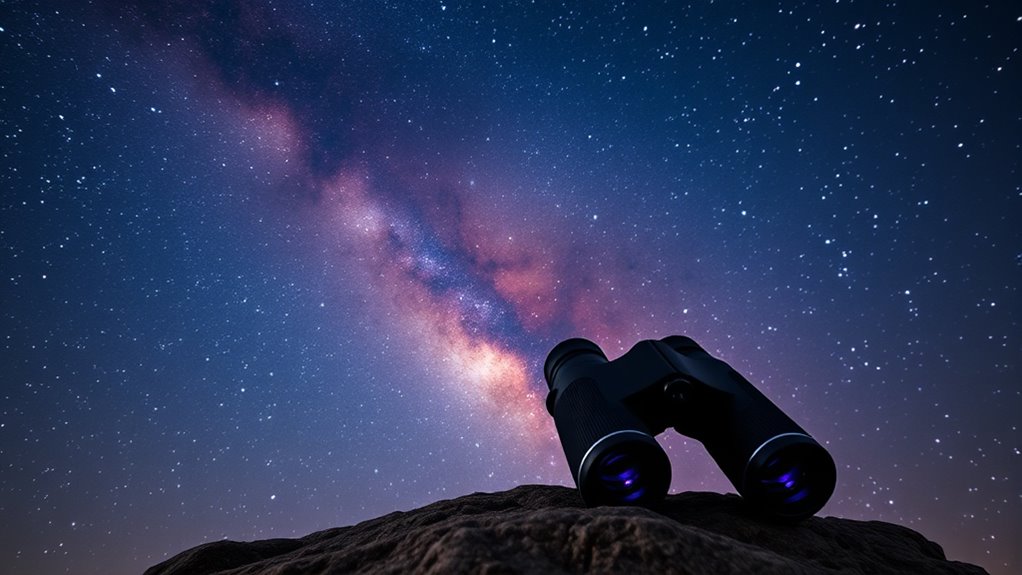

Finding the right binoculars for astronomy can significantly improve your stargazing sessions, but the choice isn’t straightforward. High-powered binoculars with large apertures provide brighter, clearer views of faint objects, yet they can be heavy and tricky to stabilize. Compact models are easier to handle but may lack the light-gathering capability needed for deep-sky observations. The best overall pick balances performance and usability, but other options excel for specific needs like portability or advanced viewing. Keep reading to see how these ten models stack up and find the perfect fit for your astronomical adventures.

Turn quiet afternoons into listening time
- Thousands of audiobooks, podcasts and originals
- Listen on your phone, tablet or Echo — also offline
- Cancel anytime
Complete the kit


Key Takeaways
- Large aperture binoculars (70mm and above) deliver brighter images, ideal for deep-sky objects, but tend to be heavier and pricier.
- Magnification above 20x offers detailed views but requires a tripod for stability, making some models less portable.
- Specialized features like ED glass or multi-coated lenses improve image clarity, especially in lower light conditions.
- Compact binoculars are suitable for casual stargazing or travel but sacrifice some light-gathering power.
- Choosing the right tripod or mount is essential for high-magnification models to prevent shaky images and enjoy clear views.
| Celestron SkyMaster 25×70 Binoculars |  | Best Overall for Detailed Long-Distance Astronomy | Magnification: 25x | Objective Diameter: 70mm | Prism Type: BaK-4 | VIEW ON AMAZON | See Our Full Breakdown |
| Celestron Echelon 20×70 Porro Binoculars |  | Best for Long-Range, All-Weather Astronomical Viewing | Magnification: 20x | Objective Diameter: 70mm | Optical Coatings: Fully Multi-Coated XLT | VIEW ON AMAZON | See Our Full Breakdown |
| Celestron Cometron 7×50 Astronomy Binoculars |  | Best for Beginners in Astronomy and Wide Sky Scanning | Magnification: 7x | Objective Diameter: 50mm | Field of View: 6.6° | VIEW ON AMAZON | See Our Full Breakdown |
| Celestron SkyMaster Pro ED 20×80 Binoculars |  | Best for High-Detail Long-Distance Land and Astronomy | Magnification: 20x | Objective Diameter: 80mm | Glass Type: Extra-Low Dispersion (ED) | VIEW ON AMAZON | See Our Full Breakdown |
| 18×70 Professional Astronomy Binoculars for Adults with Tripod & Phone Adapter |  | Best for Serious Long-Distance and Astrophotography Enthusiasts | Magnification: 18x | Objective Diameter: 70mm | Prism Type: BAK-4 | VIEW ON AMAZON | See Our Full Breakdown |
| Celestron SkyMaster Pro ED 7×50 Binoculars |  | Best Overall for Versatile Astronomy and Outdoor Use | Magnification: 7x | Objective Lens Diameter: 50mm | Coatings: XLT multi-coating | VIEW ON AMAZON | See Our Full Breakdown |
| Celestron SkyMaster 25×100 Binoculars – Giant Aperture Binoculars for Astronomy & Long-Distance Viewing |  | Best for Deep-Sky Astronomy and Long-Distance Land Viewing | Magnification: 25x | Objective Lens Diameter: 100mm | Prism Type: BaK-4 | VIEW ON AMAZON | See Our Full Breakdown |
| Celestron SkyMaster 15×70 Astronomy Binoculars with Tripod Adapter and Carry Case |  | Best for High-Magnification Astronomical Viewing | Magnification: 15x | Objective Lens Diameter: 70mm | Prism Type: BaK-4 | VIEW ON AMAZON | See Our Full Breakdown |
| Celestron SkyMaster 20×80 Binoculars with Tripod Adapter and Carrying Case |  | Best for High-Power Astronomy and Low-Light Conditions | Magnification: 20x | Objective Lens Diameter: 80mm | Prism Type: BaK-4 | VIEW ON AMAZON | See Our Full Breakdown |
| Celestron SkyMaster 15-35×70 Zoom Binoculars |  | Best for Flexible Magnification and Versatile Outdoor Viewing | Magnification: 15-35x | Objective Lens Diameter: 70mm | Prism Type: BaK-4 | VIEW ON AMAZON | See Our Full Breakdown |
| binoculars for astronomy | Magnification | Prism Type | Objective Diameter | Objective Lens Diameter |
|---|---|---|---|---|
| Celestron SkyMaster 25×70 Bino | 25x | BaK-4 | 70mm | — |
| Celestron Echelon 20×70 Porro | 20x | — | 70mm | — |
| Celestron Cometron 7×50 Astron | 7x | — | 50mm | — |
| Celestron SkyMaster Pro ED 20x | 20x | — | 80mm | — |
| 18×70 Professional Astronomy B | 18x | BAK-4 | 70mm | — |
| Celestron SkyMaster Pro ED 7×5 | 7x | — | — | 50mm |
| Celestron SkyMaster 25×100 Bin | 25x | BaK-4 | — | 100mm |
| Celestron SkyMaster 15×70 Astr | 15x | BaK-4 | — | 70mm |
| Celestron SkyMaster 20×80 Bino | 20x | BaK-4 | — | 80mm |
| Celestron SkyMaster 15-35×70 Z | 15-35x | BaK-4 | — | 70mm |
More Details on Our Top Picks
Celestron SkyMaster 25×70 Binoculars
The SkyMaster 25×70 stands out for its impressive magnification and bright optics, making it ideal for detailed celestial observations. Compared to the Celestron Cometron 7×50, which offers a wider field for casual scanning, the 25×70 provides sharper, more detailed views at the expense of stability and portability. Its water-resistant design and tripod adapter support extended viewing sessions, but its size and weight mean it’s less convenient to carry around. This model is perfect for dedicated astronomers who prioritize image detail over ease of transport.
Pros:- High 25x magnification for detailed celestial views
- Bright, sharp images with multi-coated optics
- Water-resistant and durable for outdoor use
Cons:- Requires a tripod for stable viewing due to high magnification and size
- Large and less portable, making quick setup less convenient
Best for: Serious amateur astronomers seeking high magnification and sharpness in fixed observing setups
Not ideal for: Casual sky watchers or those needing lightweight, portable binoculars for quick sky scans
- Magnification:25x
- Objective Diameter:70mm
- Prism Type:BaK-4
- Water-Resistant:Yes
- Tripod Adapter:Yes
- Warranty:Limited Lifetime US Warranty
Our verdict“This binocular is best suited for experienced astronomers who prioritize image detail and are prepared for a stable mounting setup.”
Celestron Echelon 20×70 Porro Binoculars
The Celestron Echelon 20×70 offers excellent low-light performance with fully multi-coated optics and waterproof features, making it a solid choice for outdoor astronomy in varied conditions. While it shares the 70mm objective size with the SkyMaster 25×70, its 20x magnification strikes a balance between detail and stability, though it still benefits from a tripod for extended viewing. Its waterproof and fogproof construction means it can handle challenging weather, but its weight and bulk make it less suitable for quick trips. This model is ideal for enthusiasts who want durability and high-quality images in all weather conditions.
Pros:- Excellent low-light and long-distance viewing capabilities
- Waterproof and fogproof, suitable for all weather conditions
- Tripod adaptable for stable extended observations
Cons:- Heavy and bulky, less portable for frequent transport
- High magnification still demands a sturdy tripod for steady images
Best for: Outdoor astronomers and nature observers requiring rugged, weatherproof binoculars with high light-gathering ability
Not ideal for: Travelers or casual users needing lightweight, compact options for quick sky glimpses
- Magnification:20x
- Objective Diameter:70mm
- Optical Coatings:Fully Multi-Coated XLT
- Waterproof:Yes
- Fogproof:Yes
- Tripod Mountable:Yes
Our verdict“This binocular excels for outdoor astronomy where weather resistance and image brightness are priorities, and a stable mount is available.”
Celestron Cometron 7×50 Astronomy Binoculars
The Cometron 7×50 provides an easy entry point for newcomers to astronomy, with a wide 6.6° field of view that makes locating and scanning large sky areas straightforward. While its lower magnification limits detailed views, this tradeoff favors beginners who want to quickly find constellations and bright objects. The multi-coated optics deliver bright images, and the tripod mount enhances stability during longer sessions, though it doesn’t include a tripod itself. Compared to higher-power models like the SkyMaster 25×70, it sacrifices detail for ease of use and portability, making it perfect for those just starting out.
Pros:- Wide field of view ideal for scanning large sky areas
- Easy to use and understand for beginners
- Multi-coated optics for bright, clear images
- Tripod mount included for stability
Cons:- Tripod not included, adding extra cost and setup steps
- Bulkier and heavier, less portable for quick trips
- Limited magnification for detailed celestial observation
Best for: Beginner astronomers and casual skywatchers starting to explore the night sky
Not ideal for: Experienced stargazers looking for high magnification and detailed views
- Magnification:7x
- Objective Diameter:50mm
- Field of View:6.6°
- Close Focus:26.2 feet
- Tripod Mount:Yes
Our verdict“This binocular offers a user-friendly, wide-angle experience for beginners eager to explore the night sky comfortably.”
Celestron SkyMaster Pro ED 20×80 Binoculars
The SkyMaster Pro ED 20×80 combines high magnification with ED glass for superb image clarity and minimal chromatic aberration, making it a top choice for serious long-distance viewing. Its 80mm objectives gather ample light for detailed planetary and lunar views, comparable to the SkyMaster 25×70, but with even better color fidelity thanks to ED glass. While the weight and size are significant, requiring a sturdy tripod, it offers comprehensive accessories and durability that justify its premium price. This binocular is geared toward dedicated enthusiasts who value image quality and are prepared for the bulk and cost involved.
Pros:- High 20x magnification with large 80mm objectives for detailed viewing
- ED glass minimizes chromatic aberration for sharper images
- Waterproof, nitrogen-purged for outdoor durability
- Includes comprehensive accessories and sturdy carrying case
Cons:- Heavy and bulky, less portable for casual use
- Requires a tripod for stable viewing at high magnification
- Higher price point may be prohibitive for casual users
Best for: Experienced amateur astronomers and outdoor enthusiasts demanding high image fidelity and robust build quality
Not ideal for: Casual users or those seeking lightweight, portable options for quick sky observation
- Magnification:20x
- Objective Diameter:80mm
- Glass Type:Extra-Low Dispersion (ED)
- Prisms:BAK-4
- Coatings:XLT multi-coating
- Waterproof:Yes
Our verdict“This binocular is ideal for dedicated skywatchers who prioritize image clarity and durability, accepting the tradeoff of weight and cost.”
18×70 Professional Astronomy Binoculars for Adults with Tripod & Phone Adapter
The 18×70 Professional Binoculars offer a potent combination of high magnification and large aperture, making them suitable for detailed astronomical and terrestrial observation. Their BAK-4 prisms and fully multi-coated lenses deliver bright, high-contrast images, rivaling larger, more expensive setups like the Celestron SkyMaster 25×70. The inclusion of a tripod adapter, smartphone mount, and rugged waterproof construction makes them perfect for outdoor use and astrophotography. These binoculars are heavy and best paired with a tripod, which might be a drawback for casual use. They’re tailored for advanced users needing serious optical performance and durability.
Pros:- High 18x magnification with large 70mm aperture for detailed views
- Outstanding low-light performance with FMC coatings and BAK-4 prisms
- Waterproof, fogproof, and durable for outdoor adventures
- Includes tripod and smartphone adapters for stability and astrophotography
Cons:- Heavy and bulky, less suitable for travel or casual use
- High sensitivity to hand shake without tripod stabilization
- Premium price may be prohibitive for casual users
Best for: Experienced astronomers and astrophotographers requiring high magnification, low-light performance, and sturdy support
Not ideal for: Casual sky gazers or those seeking lightweight, portable binoculars for quick observations
- Magnification:18x
- Objective Diameter:70mm
- Prism Type:BAK-4
- Lens Coating:Fully Multi-Coated (FMC)
- Waterproof:IPX7
- Tripod Mount:1/4″-20 thread
Our verdict“This binocular excels for advanced users who need high power, excellent low-light performance, and compatibility with astrophotography gear, accepting its weight and cost.”
Celestron SkyMaster Pro ED 7×50 Binoculars
This model stands out for its combination of high-quality ED glass and large 50mm objectives, delivering sharp, true-to-life images that make it suitable for both stargazing and outdoor adventures. Compared with the 15×70 models, the 7×50 offers easier handling and steadier views without a tripod, though it sacrifices some brightness and detail at very long distances. Its waterproof and fog-proof design ensures durability in various weather conditions, making it a reliable choice for outdoor enthusiasts. The included accessories, like the carrying case and lens covers, add value, but the weight and need for a tripod for extended viewing could be drawbacks for casual users. Overall, this pick makes the most sense for dedicated astronomers who want quality and durability in a portable package.
Pros:- High-quality ED glass provides sharp, accurate images
- Waterproof and fog-proof for outdoor resilience
- Large 50mm objectives maximize light gathering
Cons:- Relatively heavy, which can cause fatigue
- Requires a tripod for extended viewing sessions
- Higher price point may deter casual buyers
Best for: Intermediate to advanced amateur astronomers who need a versatile, rugged binocular for outdoor use.
Not ideal for: Casual stargazers seeking lightweight, budget-friendly options or those who prefer handheld viewing without tripods.
- Magnification:7x
- Objective Lens Diameter:50mm
- Coatings:XLT multi-coating
- Waterproof:Yes
- Fog-proof:Yes
- Included Accessories:Neck strap, eyepiece and lens covers, rainguard, lens cloth, carrying case
- Warranty:Limited Lifetime US Warranty
Our verdict“This binocular is best suited for dedicated outdoor and astronomy enthusiasts willing to invest in quality and durability.”
Celestron SkyMaster 25×100 Binoculars – Giant Aperture Binoculars for Astronomy & Long-Distance Viewing
This pair excels with its impressive 25x magnification and 100mm lenses, making it ideal for serious astronomers seeking detailed views of deep-sky objects. Unlike the 7×50 SkyMaster Pro ED, these binoculars demand a sturdy tripod due to their size and weight, which can be a barrier for casual use. The waterproof, durable construction ensures weather resistance, and the included tripod adapter facilitates stable, long-term observations. While they provide unparalleled detail at high magnification, their size makes them unsuitable for handheld viewing, limiting flexibility for casual outings. Overall, this model is best for dedicated astronomers who prioritize maximum detail over portability.
Pros:- Powerful 25x magnification reveals fine details
- Large 100mm lenses for bright, high-contrast images
- Tripod adapter included for stable viewing
Cons:- Very large and heavy, demanding tripod support
- Not suitable for handheld use
- Requires additional investment in tripod setup
Best for: Advanced amateur astronomers focused on deep-sky objects and long-distance terrestrial viewing.
Not ideal for: Casual users or travelers needing lightweight, portable binoculars for quick stargazing sessions.
- Magnification:25x
- Objective Lens Diameter:100mm
- Prism Type:BaK-4
- Water-Resistant:Yes
- Includes:Tripod Adapter, Carrying Case
Our verdict“This binocular is perfect for serious astronomers who have the space and equipment to support high magnification and large optics.”
Celestron SkyMaster 15×70 Astronomy Binoculars with Tripod Adapter and Carry Case
This model offers a solid middle ground with 15x magnification and 70mm objectives, making it a versatile option for both astronomy and land-based viewing. Compared to the 20×80 model, the 15×70 strikes a balance between portability and performance, providing bright images in low-light conditions while remaining somewhat easier to handle. Its durable, water-resistant design and included tripod adapter allow for extended viewing sessions, but the size and weight still necessitate tripod support for comfort during long observations. It’s an excellent choice for enthusiasts who want high power without the bulk of larger optics.
Pros:- High 15x magnification suitable for astronomy
- Bright, detailed images in low-light conditions
- Water-resistant and durable construction
Cons:- Heavy and large, requiring tripod for extended use
- Tripod not included, adding to overall cost
Best for: Serious amateur astronomers seeking a portable yet powerful binocular for extended stargazing sessions.
Not ideal for: Casual users or those who prefer handheld viewing or compact gear for quick trips.
- Magnification:15x
- Objective Lens Diameter:70mm
- Prism Type:BaK-4
- Water Resistance:Yes
- Includes:Tripod Adapter, Carry Case
Our verdict“This binocular balances power and portability, ideal for dedicated stargazers who can support its size with a tripod.”
Celestron SkyMaster 20×80 Binoculars with Tripod Adapter and Carrying Case
This pair offers a higher magnification of 20x and large 80mm lenses, making it one of the most capable options for detailed astronomical viewing, especially in low-light conditions. Compared with the 15×70, the 20×80 provides sharper, brighter images but at the cost of increased weight and the necessity of tripod support, similar to the 25×100. The water-resistant build and BaK-4 prisms ensure durability and clarity, but the extra bulk limits portability for quick trips. This makes it an excellent choice for serious astronomers willing to support the weight with stable mounts.
Pros:- High 20x magnification for detailed views
- Bright, sharp images in low-light conditions
- Water-resistant with BaK-4 prisms
Cons:- Heavy and large, requiring tripod support
- Tripod not included, adding setup complexity
Best for: Experienced astronomers who prioritize image brightness and detail over portability.
Not ideal for: Casual stargazers or those preferring handheld, lightweight binoculars for quick observations.
- Magnification:20x
- Objective Lens Diameter:80mm
- Prism Type:BaK-4
- Water-Resistant:Yes
- Includes:Tripod Adapter, Carrying Case
Our verdict“This binocular is best for astronomy enthusiasts who want maximum detail and brightness, accepting the tradeoff of portability.”
Celestron SkyMaster 15-35×70 Zoom Binoculars
This zoom model offers a 15-35x range, providing adaptable magnification for different viewing needs, from wide-field land exploration to detailed astronomy. Compared with fixed-power binoculars like the 15×70, the zoom feature adds versatility but can compromise image stability at higher zoom levels unless mounted on a tripod. The 70mm objectives produce bright images, and the BaK-4 prisms maintain clarity across the zoom range. The water-resistant housing makes it suitable for outdoor use, though the increased weight and size mean it’s less portable for quick trips. This choice suits users who want adjustable power for varied outdoor activities.
Pros:- Variable 15-35x zoom for adaptable viewing
- Bright images with 70mm objectives
- Water-resistant and durable for outdoor use
Cons:- Heavy and large, requiring tripod for stability
- Zoom mechanism can reduce image stability at high magnification
- Higher cost compared to fixed-power models
Best for: Outdoor enthusiasts and amateur astronomers who value flexible zoom capabilities for different observation scenarios.
Not ideal for: Purists seeking dedicated, high-magnification astronomy tools or those who prefer lightweight, fixed-power binoculars.
- Magnification:15-35x
- Objective Lens Diameter:70mm
- Prism Type:BaK-4
- Water-Resistant:Yes
- Tripod Mount:¼”-20 adapter included
Our verdict“This zoom binocular offers flexibility for outdoor viewing and astronomy but demands support for extended use at higher zoom levels.”

How We Picked
These binoculars were evaluated based on core factors that matter most for astronomy: aperture size, magnification, optical quality, build durability, and ease of use. We prioritized models that offer a good balance between performance and portability, recognizing that heavier, high-power binoculars often require tripods. Value was also a key consideration, with a focus on models that deliver high-quality visuals without excessive cost. We compared features, user reviews, and brand reputation to create a list that caters to beginners, intermediate, and advanced stargazers, ranking products by their overall utility and specialized strengths.Factors to Consider When Choosing Binoculars For Astronomy
Choosing binoculars for astronomy involves more than just looking at magnification and size. Consider how you’ll use your binoculars—whether for casual stargazing or serious deep-sky observation—as this impacts the ideal features. Stability is critical at higher magnifications, so think about tripod compatibility or weight if portability matters. Optical quality, including lens coatings and glass type, directly affects image brightness and clarity, especially in low light. Budget also influences your options; investing in better optics can make a substantial difference in your viewing experience. Lastly, consider ergonomics and handling to ensure comfort during extended sessions.Aperture and Magnification
The aperture size determines how much light your binoculars can gather, directly impacting your ability to see faint objects. For astronomy, models with at least 70mm aperture are recommended, with 80mm and above providing even brighter images. Magnification typically ranges from 7x to 25x; higher magnification reveals more detail but can introduce shakiness, especially without a tripod. Balancing these two factors is key—look for a combination that offers sufficient brightness without sacrificing stability for comfortable viewing.
Optical Quality and Coatings
Optical quality is the backbone of clear, bright views. Features like extra-low dispersion (ED) glass reduce chromatic aberration, sharpening images across the spectrum. Multi-coated lenses increase light transmission, improving brightness and contrast. Cheaper models often lack these enhancements, resulting in duller images and color fringing. Investing in well-coated optics ensures your observations are not only brighter but also more detailed, especially when observing faint nebulae or distant galaxies.
Portability and Weight
While larger aperture binoculars deliver better views, they tend to be heavier and bulkier, making extended use tiring without proper support. If you plan to carry your binoculars to dark-sky sites or prefer quick setup, consider lighter, more compact options with tripod adapters. Tripods or mounts are nearly essential for high-magnification models, as holding them steady by hand becomes impractical. Weighing the tradeoff between size and performance helps ensure you get a model that suits your typical viewing environment.
Durability and Weather Resistance
Stargazing often involves exposure to dew, moisture, or dust. Look for binoculars with waterproof or fog-proof seals, especially if you plan to use them in humid or variable weather conditions. Rubber armor provides extra grip and shock resistance, extending the lifespan of your investment. Although these features typically add to the cost, they safeguard your optics and make your astronomy sessions more reliable, regardless of the environment.
Additional Features and Accessories
Some binoculars come with extras like tripod adapters, carrying cases, or lens caps, which enhance usability and protection. A sturdy tripod or mount is vital for high-power models to stabilize the view and prevent eye strain. Consider models that include or allow easy attachment to mounts, especially if you’re serious about detailed observations. Also, a comfortable neck strap or harness can make long sessions more enjoyable, reducing fatigue and improving overall experience.
Frequently Asked Questions
Do I need a tripod for high-magnification binoculars?
Yes, a tripod or mount becomes almost essential at magnifications above 20x. Handholding such powerful binoculars tends to produce shaky images, making it difficult to observe fine details. A stable platform not only improves image clarity but also reduces fatigue during long viewing sessions. Many models include tripod adapters, so checking compatibility before purchase can save you additional costs and setup time.
Are waterproof binoculars necessary for astronomy?
Waterproof or fog-proof binoculars offer resilience against moisture, dew, and accidental splashes, which is particularly important for outdoor astronomy sessions. While not strictly necessary for clear, dry nights, these features can prevent internal fogging and protect your investment in less predictable weather. If you plan to use your binoculars in humid or damp environments frequently, opting for waterproof models is a wise choice.
How much should I spend on binoculars for astronomy?
Prices can vary widely, from affordable models under $100 to premium options over $500. Investing in higher-quality optics with larger apertures and better coatings can dramatically improve your viewing experience, especially for faint deep-sky objects. However, you don’t always need the most expensive model to enjoy good results—many mid-range binoculars offer excellent brightness and clarity for most amateur astronomers. Consider your budget alongside your specific needs for size, weight, and features.
What is the best magnification for beginner astronomers?
For beginners, a magnification between 7x and 10x strikes a good balance between ease of use and image quality. These lower magnifications are easier to stabilize and do not require tripods for most users, making them more accessible. They also provide wide fields of view, which helps in locating objects in the night sky. As skills develop, stepping up to higher magnifications with proper support can expand your observational capabilities.
Can I use regular binoculars for astronomy?
Yes, many standard binoculars with large apertures and moderate magnification work well for casual astronomy, especially models designed specifically for stargazing. However, general-purpose binoculars often lack the optical quality and features optimized for low-light conditions, leading to dimmer images and less detail. Investing in binoculars with coatings, sturdy build, and appropriate magnification tailored for astronomy will significantly enhance your viewing experience compared to everyday models.
Conclusion
For most amateur astronomers, the best overall choice is a balanced model like the Celestron SkyMaster 20×80, offering strong light-gathering and manageable weight. Beginners and casual stargazers will benefit from models like the Celestron Cometron 7×50, which provides ease of use and affordability. Enthusiasts seeking maximum detail might consider the Celestron SkyMaster 25×100 for its massive aperture, though it requires a sturdy tripod and more setup. For those prioritizing portability, compact options with tripod compatibility make excellent travel companions. Ultimately, your ideal binoculars depend on your experience level, budget, and the type of objects you want to observe most often.
Halloween Picks
halloween
As an affiliate, we earn on qualifying purchases.