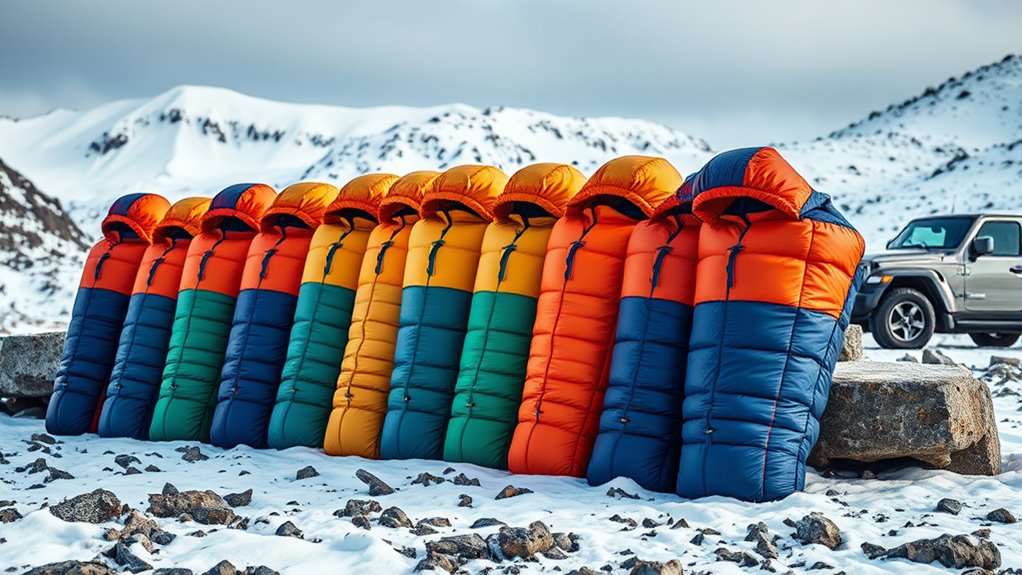

Keeping an all weather emergency sleeping bag in your car is one of the cheapest forms of insurance you can buy against a winter breakdown or unexpected night stranded on the roadside. After comparing 15 options, the Sierra Madre Emergency Sleeping Bag stands out as my best overall pick because its tougher build and waterproof shell make it the most likely to survive bouncing around a trunk for years and still work when you need it. The TerraShell 2-Pack earns the best value spot thanks to thicker mylar that resists tearing, while the Don’t Die In The Woods bag with hood is the strongest choice for real warmth retention. The core tradeoff in this category is simple: ultra-cheap mylar bags cost little but often rip after one use, while slightly pricier bivy sacks stay reusable and hold heat better. Read on for the full breakdown, including which multipacks make sense for families.

Turn quiet afternoons into listening time
- Thousands of audiobooks, podcasts and originals
- Listen on your phone, tablet or Echo — also offline
- Cancel anytime
Complete the kit

Key Takeaways
- Mylar thickness was the biggest differentiator in this lineup: the 65-micron TerraShell 2-Pack and Sierra Madre bags resisted tearing during packing and unpacking, while thinner 12-micron multipacks showed punctures straight out of the packaging.
- Multipacks (3, 4, and 2-pack options from Leberna, Oudain, and others) dominate this category because most buyers want one bag per family vehicle or per passenger, not a single premium unit.
- Added survival features like paracord, whistles, and compasses (Survive, Esky) added almost no weight or cost, but their quality varied widely enough that they should be treated as bonuses rather than deciding factors.
- Extra-large sizes (Ironstripe XL, Oudain XL at 94.5 inches) matter most for car use specifically, since you may need to wear a heavy coat or keep moving inside the bag while waiting for help.
- Reusability separated the top tier from the rest: bags with taped seams and sturdier carry sacks could be repacked and returned to the trunk, while single-use bags essentially become trash after one deployment.
| 3-Pack Emergency Mylar Thermal Sleeping Bag / Bivy Sack Survival Gear |  | Best for Family Car Kits | Quantity: 3 bags | Material: Mylar foil | Dimensions: 84 × 36 inches | VIEW ON AMAZON | See Our Full Breakdown |
| Sierra Madre Emergency Sleeping Bag, Waterproof Thermal Bivy Sack |  | Best Reusable Car Bivy | Material: PET (Mylar) | Heat reflection: Up to 90% of body heat | Weight: 6 ounces | VIEW ON AMAZON | See Our Full Breakdown |
| Don’t Die In The Woods Emergency Sleeping Bag with Hood – Ultralight Thermal Mylar Survival Shelter |  | Best for Layering Over a Sleeping Bag | Material: Mylar | Weight: 7 ounces | Occupancy: 1 person | VIEW ON AMAZON | See Our Full Breakdown |
| Survive Sleeping Bag 2 Pack, Mylar Emergency Camping/Hiking Bivy with Paracord and Whistle |  | Best Compact Kit with Signaling Gear | Material: Mylar | Quantity: 2 bags | Packed size: Approximately Ø2.5 × 4 inches | VIEW ON AMAZON | See Our Full Breakdown |
| Ironstripe XL Waterproof Emergency Bivy Sack, 2-Pack |  | Best for Repeated Use and Larger Coverage | Material: PE with thermal Mylar lining | Dimensions: 240 × 125 cm | Weather protection: Waterproof | VIEW ON AMAZON | See Our Full Breakdown |
| Oudain XL Emergency Sleeping Bags, 2-Pack, 94.5 x 49.2 Inches |  | Best for Two-Person Coverage | Quantity: 2 sleeping bags | Dimensions: 94.49 x 49.21 inches (240 x 125 cm) each | Material: Waterproof, durable material (unspecified) | VIEW ON AMAZON | See Our Full Breakdown |
| Emergency Mylar Bivy Sack with Whistle and Carry Bag, 82 x 36 in, Orange |  | Best Ultralight Single Kit | Dimensions: 82 x 36 in | Weight: 3.8 oz | Material: Mylar film | VIEW ON AMAZON | See Our Full Breakdown |
| Rocalt Emergency Sleeping Bag, Waterproof Mylar Thermal Bivy Sack |  | Best Reusable All-Weather Pick | Occupancy: 2 person | Seasons: Winter | Weight: 11 ounces | VIEW ON AMAZON | See Our Full Breakdown |
| Terrashell Emergency Sleeping Bag – Compact Lightweight Waterproof Thermal Blanket (25 μm) |  | Best Budget Starter Layer | Material thickness: 25 μm | Waterproof: Yes | Windproof: Yes | VIEW ON AMAZON | See Our Full Breakdown |
| TerraShell Emergency Sleeping Bag/Blanket, 2-Pack (65μm) |  | Best Durable Family Two-Pack | Quantity: 2 pieces | Material thickness: 65 μm | Maximum height recommendation: 82.67 inches | VIEW ON AMAZON | See Our Full Breakdown |
| MODERN NEEDS Emergency Sleeping Bag Survival Bivy Sack |  | Best for Multi-Use Versatility | Material: Tear-resistant polyethylene | Insulation: Reflective, retains up to 90% of body heat | Waterproof: Yes | VIEW ON AMAZON | See Our Full Breakdown |
| NovaMedic Emergency Sleeping Bag – 84″x36″ Thermal Mylar Survival Bivy Sack |  | Best Full-Body Coverage | Material: Thermal Mylar (Polyethylene) | Dimensions: 84″ x 36″ | Waterproof: Yes | VIEW ON AMAZON | See Our Full Breakdown |
| Esky Emergency Sleeping Bag, Waterproof Thermal Bivy Sack with Compass |  | BestKit-Complete Pick | Material: Mylar | Color: Orange | Heat Reflection: Up to 90% | VIEW ON AMAZON | See Our Full Breakdown |
| Leberna Emergency Mylar Sleeping Bags, 2-Pack |  | Best Value for Families | Material: Mylar | Quantity: 2 sleeping bags | Dimensions: 84 x 36 inches | VIEW ON AMAZON | See Our Full Breakdown |
| Emergency Thermal Mylar Sleeping Bags, 4-Pack |  | Best Bulk Coverage for Multiple Vehicles | Material: Aluminized Mylar | Quantity: 4 bags | Dimensions: 7 ft x 3 ft | VIEW ON AMAZON | See Our Full Breakdown |
| all weather emergency sleeping bag car use | Material |
|---|---|
| 3-Pack Emergency Mylar Thermal | Mylar foil |
| Sierra Madre Emergency Sleepin | PET (Mylar) |
| Don’t Die In The Woods Emergen | Mylar |
| Survive Sleeping Bag 2 Pack | Mylar |
| Ironstripe XL Waterproof Emerg | PE with thermal Mylar lining |
| Oudain XL Emergency Sleeping B | Waterproof, durable material (unspecified) |
| Emergency Mylar Bivy Sack with | Mylar film |
| Rocalt Emergency Sleeping Bag | Mylar (tear-resistant, waterproof, windproof) |
| Terrashell Emergency Sleeping | — |
| TerraShell Emergency Sleeping | — |
| MODERN NEEDS Emergency Sleepin | Tear-resistant polyethylene |
| NovaMedic Emergency Sleeping B | Thermal Mylar (Polyethylene) |
| Esky Emergency Sleeping Bag | Mylar |
| Leberna Emergency Mylar Sleepi | Mylar |
| Emergency Thermal Mylar Sleepi | Aluminized Mylar |
More Details on Our Top Picks
3-Pack Emergency Mylar Thermal Sleeping Bag / Bivy Sack Survival Gear
For a car carrying several people, this three-bag set covers more occupants than the two-packs from Ironstripe or Survive. Each 84-by-36-inch bag offers adult-sized coverage and can also serve as a blanket, giving a stranded family a simple layer against rain and wind. Its ultralight, waterproof Mylar construction suits a glove box or emergency kit where space matters more than comfort. The tradeoff is the thin, noisy foil: it can tear with rough handling and is described as single-use quality. Unlike Ironstripe’s reusable PE construction, this set is better treated as backup warmth for an unexpected stop than equipment for repeated nights in a car.
Pros:- Three bags cover more people than the two-bag sets from Ironstripe and Survive.
- 84-by-36-inch dimensions provide full-body coverage for adults and children.
- Waterproof Mylar reflects body heat and helps shield against wet conditions.
- Ultralight format is easy to store in a vehicle emergency kit.
Cons:- Thin foil can tear with rough handling.
- Noisy material may make overnight use less comfortable.
- Single-use quality is a poor fit for repeated car camping.
Best for: Drivers who want one compact emergency shelter for each person in a small family or passenger group.
Not ideal for: People seeking a reusable bivy for regular overnight trips; the thin Mylar is noisy and may tear with repeated handling.
- Quantity:3 bags
- Material:Mylar foil
- Dimensions:84 × 36 inches
- Weather protection:Waterproof
- Thermal feature:Reflects body heat
- Weight profile:Ultralight
- Listed uses:Camping, hiking, emergency survival, bug-out bags
Our verdict“Choose this set when you need compact emergency coverage for several passengers and can accept disposable, noisy Mylar.”
Sierra Madre Emergency Sleeping Bag, Waterproof Thermal Bivy Sack
The six-ounce weight and included drawstring stuff sack make this a practical choice for a car kit that may be opened, repacked, and kept ready for another trip. Sierra Madre states that its PET (Mylar) shell reflects up to 90% of body heat and provides waterproof, windproof protection, giving it a more reusable brief than the single-use-quality 3-Pack Emergency Mylar. That distinction matters if one emergency bag needs to serve as recurring backup gear. Its weak point for vehicle use is fit information: the supplied product details give no dimensions, so I can’t tell whether it will comfortably cover a taller adult or layer over clothing. The claimed heat reflection also isn’t a temperature rating, so it shouldn’t be treated as a standalone guarantee of warmth.
Pros:- Designed for repeated use, unlike the single-use-quality 3-Pack Emergency Mylar.
- Six-ounce weight and drawstring sack suit compact vehicle storage.
- Waterproof and windproof protection addresses common roadside exposure.
- Specified heat reflection gives a clear thermal feature.
Cons:- No dimensions or fit guidance are provided.
- No temperature rating is stated.
- PET (Mylar) construction may still be less comfortable for extended overnight use than a conventional sleeping bag.
Best for: Drivers who want a lightweight bivy they can repack after practice trips or occasional use.
Not ideal for: Taller adults or buyers who need confirmed fit and a stated cold-weather temperature rating before choosing a car shelter.
- Material:PET (Mylar)
- Heat reflection:Up to 90% of body heat
- Weight:6 ounces
- Weather protection:Waterproof and windproof
- Reusable:Yes
- Storage:Drawstring stuff sack
Our verdict“Pick Sierra Madre for a compact, reusable emergency layer if the unspecified sizing works for the intended user.”
Don’t Die In The Woods Emergency Sleeping Bag with Hood – Ultralight Thermal Mylar Survival Shelter
This is the most clearly described sleeping-bag liner in the group: its hood and waterproof Mylar are meant to retain heat and protect an existing bag from condensation. In a car, that makes it a sensible supplement to blankets or regular sleep gear, rather than the only warmth a stranded driver carries. Compared with the standalone Sierra Madre bivy, this model gives a specific layering use and lists reinforced tape seams; Sierra Madre, however, is described as reusable and lighter at six ounces versus this one’s seven. Don’t Die In The Woods supplies no temperature rating, and its own description says it can boost an existing bag. I would not rely on it alone for severe cold or a long roadside wait.
Pros:- Hood helps cover the head while retaining body heat.
- Waterproof Mylar can protect an existing bag from condensation and wet conditions.
- Reinforced tape seams are specified for added durability.
- Seven-ounce weight and compact packing suit a car or hiking kit.
Cons:- No temperature rating clarifies its cold-weather limits.
- Best suited as a layer, so it may not provide enough warmth on its own in very cold conditions.
- One-person design offers no multi-occupant coverage.
Best for: Drivers who already keep a sleeping bag or insulated blankets in the vehicle and want a waterproof heat-reflecting outer layer.
Not ideal for: People wanting a single standalone shelter for severe cold; no temperature rating is listed, and the product is positioned as a sleeping-bag enhancer.
- Material:Mylar
- Weight:7 ounces
- Occupancy:1 person
- Season listing:All seasons
- Closure:Pull on
- Seams:Reinforced tape seams
- Waterproof:Yes
- Heat reflection:Up to 90% of body heat
Our verdict“Choose this hooded bivy as a protective layer over existing car sleep gear, not as your only cold-weather shelter.”
Survive Sleeping Bag 2 Pack, Mylar Emergency Camping/Hiking Bivy with Paracord and Whistle
The clearest advantage here is the very small packed size: about 2.5 by 4 inches for a two-bag set, with a stated weight of 5 ounces. That makes it easy to keep a pair in a glove box or door pocket, while the whistle and paracord add simple signaling and utility items absent from the three-bag set from 3-Pack Emergency Mylar. Each bivy can also become a tarp or blanket, which gives the set more uses during a roadside delay. The description doesn’t provide a temperature rating or dimensions, though, and the Mylar construction is framed as emergency gear rather than a comfortable shelter for extended use. Compared with the reusable Ironstripe bivies, this is the more compact, accessory-focused pick, with less evidence for repeated use.
Pros:- Two bags pack to approximately 2.5 × 4 inches.
- Whistle adds a signaling tool for roadside emergencies.
- Fourteen inches of paracord provide added utility.
- Each bag can also function as a tarp or blanket.
Cons:- No temperature rating is provided.
- No bag dimensions are listed to confirm fit.
- Mylar construction is better suited to emergency use than extended camping comfort.
Best for: Drivers assembling a minimal glove-box kit who value compact storage, basic signaling, and two emergency shelters.
Not ideal for: People planning repeated overnight use or needing verified sizing and cold-weather performance.
- Material:Mylar
- Quantity:2 bags
- Packed size:Approximately Ø2.5 × 4 inches
- Weight:5.0 ounces
- Included accessories:Whistle and 14 inches of paracord
- Functions:Sleeping bag, tarp, blanket
- Listed weather protection:Wind, rain, and snow
Our verdict“Choose Survive for a tiny two-person emergency kit with signaling extras, provided you don’t need confirmed fit or repeated-use durability.”
Ironstripe XL Waterproof Emergency Bivy Sack, 2-Pack
Among these five, Ironstripe has the strongest stated case for repeated car-kit use: its PE shell is described as tear- and puncture-resistant, with reinforced seams, and the two bivies are listed as reusable. The 240 × 125 cm size and built-in hood also make it the more accommodating option compared with Sierra Madre, whose sizing isn’t specified. A Mylar lining, storage bags, and an emergency whistle round out a practical vehicle set. The tradeoff is missing logistical detail: no weight or packed dimensions are supplied, so buyers can’t compare trunk-space demands with the compact Survive set. Nor is there a temperature rating or independent performance information in the product data. I favor it for durability claims and coverage, while treating its warmth as an emergency layer rather than a rated sleep system.
Pros:- Two reusable bivies provide coverage for more than one occupant.
- PE material is described as tear- and puncture-resistant.
- Reinforced seams and waterproof construction target wet, windy conditions.
- Large 240 × 125 cm dimensions and built-in hood support fuller coverage.
Cons:- Weight and packed dimensions are not listed.
- No temperature rating or independent performance details are provided.
- Larger format may be less convenient to store than the Survive compact set.
Best for: Drivers who want two reusable, larger-format emergency bivies and value a tougher listed shell over minimum packed size.
Not ideal for: Buyers with a tight glove-box storage limit or anyone who needs a known weight, packed volume, or temperature rating.
- Material:PE with thermal Mylar lining
- Dimensions:240 × 125 cm
- Weather protection:Waterproof
- Durability features:Tear- and puncture-resistant material; reinforced seams
- Other features:Built-in hood
- Set contents:2 bivy sacks, emergency whistle, storage bags
- Reusable:Yes
Our verdict“Choose Ironstripe when reusable construction and generous stated dimensions matter more than knowing the packed size or weight.”
Oudain XL Emergency Sleeping Bags, 2-Pack, 94.5 x 49.2 Inches
Most emergency bivies in this category, like the Rocalt or the single-person Mylar Bivy Sack, are sized for one adult, which forces couples to buy two units. This two-pack takes the opposite approach: each bag stretches to roughly 94.5 x 49.2 inches, long enough to comfortably cover taller adults and wide enough that sharing becomes plausible rather than theoretical. For a glove box or trunk kit where two people might be stranded together, that extra width matters more than most buyers expect.
The tradeoff is transparency. Oudain provides no material specification or temperature rating, so buyers are trusting the waterproof claim without hard data — something the Terrashell line, which publishes its film thickness, makes easier to verify. Accessories are a genuine plus, with a whistle and carabiner included per bag, but these are survival add-ons, not comfort features.
Pros:- Oversized dimensions comfortably fit taller adults and can be shared
- Two complete bags in one purchase for multi-person car kits
- Whistle and carabiner included with each bag
- Folds into compact drawstring storage pouches for trunk or glove box storage
Cons:- No material specification or temperature rating provided by the manufacturer
- Two-person claim may be optimistic depending on body size and tolerance for close quarters
Best for: Couples and families who want two generously sized emergency bags in one purchase for a shared car kit
Not ideal for: Buyers who want verified material specs or a temperature rating before trusting a bag in severe cold
- Quantity:2 sleeping bags
- Dimensions:94.49 x 49.21 inches (240 x 125 cm) each
- Material:Waterproof, durable material (unspecified)
- Included accessories:2 emergency whistles and 2 carabiners
- Storage:Compact drawstring storage bags
- Intended use:Camping, hiking, and emergency preparedness
Our verdict“Buy this if you’re equipping a car for two people and want oversized bags in a single purchase; skip it if you need documented thermal specs.”
Emergency Mylar Bivy Sack with Whistle and Carry Bag, 82 x 36 in, Orange
At 3.8 ounces total including the whistle and carry bag, this is the lightest complete kit in this batch, and that number is the whole story. Compared with the Oudain XL two-pack, which prioritizes coverage, this bivy strips everything down to a one-person, one-ounce-per-foot Mylar shell with a reflective interior that slows radiant heat loss. For a motorcycle trunk, a winter day pack, or a car door pocket where grams and cubic inches both count, nothing else here packs as small.
What you give up is any pretense of insulation. There is no fill, no hood, and no temperature rating — unlike the Rocalt, which at least quantifies its heat-retention claim. This is a survive-the-night tool, not a comfortable one, and it needs ventilation with the face uncovered to avoid condensation buildup inside the film. One adult per bag, period.
Pros:- Featherweight 3.8 oz kit that fits in a jacket pocket or door compartment
- Reflective Mylar interior reduces radiant heat loss
- Includes survival whistle and drawstring carry bag
- High-visibility orange aids rescue signaling
Cons:- No insulating fill and not a substitute for a temperature-rated sleeping bag
- Requires ventilation and the face must remain uncovered
- Single-person capacity only
Best for: Solo drivers, motorcyclists, and day hikers who need the smallest possible emergency shelter in a door pocket or tank bag
Not ideal for: Anyone expecting a comfortable or reusable overnight bag — there’s no insulation and no room for a second person
- Dimensions:82 x 36 in
- Weight:3.8 oz
- Material:Mylar film
- Color:Orange
- Capacity:1 person
- Included components:Emergency bivy sack, survival whistle, drawstring carry bag
- Intended use:Emergency shelter for hiking and car emergency kits
Our verdict“The right pick when pack size and weight are the deciding factors and one-person coverage is all you need.”
Rocalt Emergency Sleeping Bag, Waterproof Mylar Thermal Bivy Sack
Where most Mylar bivies are single-use in practice — the 3.8 oz Mylar Bivy Sack is explicitly framed as temporary — the Rocalt is built from tear-resistant Mylar that survives being unfolded, refolded, and redeployed, which changes the economics of keeping one in the car long-term. Its standout claim is retaining up to 90% of body heat, the only quantified thermal figure in this batch, and it earns versatility points by doubling as a blanket, tarp, rain cover, or ground signal.
At 11 ounces it’s nearly three times the weight of the ultralight pick, and the material is exactly what you’d expect: crinkly and prone to condensation compared with fabric bags. The two-person occupancy rating is also generous — two adults fit, but nobody sleeps well. Think of it as the do-everything emergency layer rather than a shelter you’ll enjoy.
Pros:- Retains up to 90% of body heat with a quantified thermal claim
- Tear-resistant construction survives multiple uses and repacking
- Converts to blanket, tarp, rain cover, or rescue signal
- Safety-orange color plus rescue whistle for visibility
Cons:- Mylar shell is noisy and less breathable than fabric alternatives
- Two-person rating is cramped for two adults
- Emergency-focused design offers little camping comfort
Best for: Drivers who want one durable, multi-use emergency item that can be repacked after drills or actual use instead of replaced
Not ideal for: Anyone sensitive to noise or condensation — Mylar against skin gets clammy and loud in real overnight use
- Occupancy:2 person
- Seasons:Winter
- Weight:11 ounces
- Material:Mylar (tear-resistant, waterproof, windproof)
- Closure type:Drawstring
- Color:Safety Orange
- Shape:Rectangular
- Features:Foldable, lightweight, portable, tear proof, windproof
Our verdict“The best choice if you want a single reusable bag that earns its trunk space through versatility and a stated heat-retention figure.”
Terrashell Emergency Sleeping Bag – Compact Lightweight Waterproof Thermal Blanket (25 μm)
The Terrashell’s differentiator is honesty about specs: a stated 25 μm film thickness puts it on the thinner end of this lineup, and that’s actually useful information for buyers deciding between it and its sibling, the TerraShell 2-Pack at 65 μm. The thinner film means a smaller packed size and lower cost, making this the low-commitment entry point for someone building a first car emergency kit and wanting one bag per vehicle rather than a full family setup.
Its smartest trick is layering. Because it fits both adults and children and works inside an existing sleep system, it functions as a heat-reflecting booster for a regular sleeping bag as much as a standalone shelter. The catch is durability — 25 μm film is more puncture-prone than thicker options, so rough handling or repeated use will shorten its life. For occasional-emergency duty in a trunk, that’s a fair trade.
Pros:- Published 25 μm thickness lets buyers compare material directly
- Pocket-sized packed footprint fits a glove box or center console
- Waterproof, windproof, and tear-resistant for all-weather backup
- Doubles as an insulating layer inside a regular sleeping bag
Cons:- Thinner film is more vulnerable to punctures than 65 μm alternatives
- Emergency-only design with no comfort features for planned camping
Best for: First-time emergency-kit builders who want a single, inexpensive reflective bag for one vehicle and understand it’s a backup layer
Not ideal for: Rough or repeated use — the thinner 25 μm film won’t hold up to abrasion the way the TerraShell 65 μm version will
- Material thickness:25 μm
- Waterproof:Yes
- Windproof:Yes
- Tear-resistant:Yes
- Packability:Folds into pocket-sized pouch
- Fit:Adults and children
- Use cases:Camping, hiking, travel, emergency preparedness
Our verdict“A sensible starter pick for one-car households that value transparency and low cost over maximum durability.”
TerraShell Emergency Sleeping Bag/Blanket, 2-Pack (65μm)
This is the thick-wall counterpart to the Terrashell 25 μm single, and the difference is straightforward: at 65 μm film, these bags resist tearing and puncturing noticeably better, which matters if they’ll be unfolded for practice runs, used as ground tarps, or tossed around a car full of kids during a roadside delay. The two-pack format covers a parent and child or two adults with room to spare — the 82.67-inch length recommendation accommodates nearly every rider.
Compared with the Oudain XL two-pack, you trade away the oversized shared dimensions and the whistle-and-carabiner accessories but gain a material thickness you can actually verify, which I’d argue matters more for long-term reliability. These still won’t replace a real sleeping bag — the reflective shell traps heat but offers no loft or cushioning — so treat them as the durable layer of a car kit, not the whole kit.
Pros:- 65 μm film is among the thickest in this lineup for tear and puncture resistance
- Two bags cover a family vehicle in one purchase
- Fits adults and children up to 82.67 inches tall
- Works standalone or layered inside existing sleep systems
Cons:- Bulkier packed size than thinner single bags
- No survival accessories like whistles or carabiners included
- Not suitable as a primary sleeping bag for planned camping
Best for: Families who want two verifiably thick, puncture-resistant bags that survive repeated handling by kids and practice drills
Not ideal for: Minimalists wanting ultralight single coverage — two thicker bags add bulk the 3.8 oz bivy avoids entirely
- Quantity:2 pieces
- Material thickness:65 μm
- Maximum height recommendation:82.67 inches
- Shape:Rectangular, semi-rectangular
- Waterproof:Yes
- Windproof:Yes
- Features:Tear-resistant, reflective heat retention
Our verdict“The strongest two-pack choice when durability under real family use matters more than ultralight packing or included extras.”
MODERN NEEDS Emergency Sleeping Bag Survival Bivy Sack
What separates this pick from single-purpose bivies like the NovaMedic is its four-in-one design: bivy sack, emergency blanket, ground cover, and sleeping bag liner. For car emergency kits, that flexibility matters — a stranded driver might need a moisture barrier under a broken-down passenger as much as a heat-retaining cocoon. The sealed seams are a genuine upgrade over cheaper Mylar options, since seams are typically where water sneaks in during prolonged exposure. It also packs down smaller than a soda can, so it disappears into a console or door pocket without a second thought. The tradeoff is material: tear-resistant polyethylene is tough for a disposable-grade product, but it still falls short of the fabric-backed construction you’d find in pricier reusable options like the Sierra Madre. This is a one-or-two-emergency tool, not a camping staple.
Pros:- Four uses in one item: bivy, blanket, ground cover, and liner
- Sealed seams keep water out longer than unsealed Mylar competitors
- Packs down smaller than a soda can for glovebox storage
- Reflective insulation retains up to 90% of body heat
Cons:- Polyethylene is less durable than fabric-lined alternatives
- Limited-use design means you should buy spares for a family car kit
Best for: Drivers building a compact car kit who want one item that covers shelter, ground barrier, and blanket duty
Not ideal for: Anyone expecting repeated camping use — the polyethylene build won’t survive regular packing and unpacking
- Material:Tear-resistant polyethylene
- Insulation:Reflective, retains up to 90% of body heat
- Waterproof:Yes
- Packed Size:Smaller than a soda can
- Weight:Lighter than a deck of cards
- Use Cases:Emergency shelter, ground cover, sleeping bag liner, camping, hiking
- Country of Origin:Imported
Our verdict“Buy this if you want the most versatile single item for a car emergency kit, and accept it’s built for emergencies rather than recreation.”
NovaMedic Emergency Sleeping Bag – 84″x36″ Thermal Mylar Survival Bivy Sack
At 84 by 36 inches, the NovaMedic gives taller adults full-body enclosure where smaller or oddly sized bivies leave feet or shoulders exposed — a real problem when heat loss is the enemy. Compared with the MODERN NEEDS sack, this one doubles down on the core shelter function rather than versatility, and the high-visibility exterior is the standout: if you’re stranded roadside at night, being spotted can matter as much as staying warm. It’s explicitly sized to tuck into a glove compartment, which fits the car-use brief well. The honest downside is durability — thin Mylar tears if you drag it across pavement or debris, and it’s built for a single incident. Treat it as insurance, not gear.
Pros:- 84-inch length covers most adults head to toe
- High-visibility exterior aids rescue in roadside emergencies
- Fits glove compartments and backpacks when packed
- Waterproof and wind-resistant barrier for bad weather
Cons:- Mylar is thin and prone to tearing with rough handling
- Single or short-term use only, not repeated camping
Best for: Taller drivers and passengers who need guaranteed full-length coverage in a roadside emergency
Not ideal for: Rough conditions or repeated use — the thin Mylar shell won’t tolerate abrasive handling
- Material:Thermal Mylar (Polyethylene)
- Dimensions:84″ x 36″
- Waterproof:Yes
- Wind Resistance:Yes
- Weight:Lightweight
- Use Cases:Camping, hiking, backpacking, survival, emergency preparedness
Our verdict“This is the pick for drivers who want no gaps in coverage and a bright exterior for visibility, accepting it’s a one-emergency product.”
Esky Emergency Sleeping Bag, Waterproof Thermal Bivy Sack with Compass
The Esky earns its spot by arriving as a mini emergency system rather than a bare sack: you get a compass, a compact storage bag, and a bivy in one package. That makes it the easiest drop-in addition to an under-stocked car kit — no extra purchases needed for basic preparedness. Its Mylar is rated puncture- and tear-resistant, which puts it a step above the standard-issue NovaMedic in shell toughness, and the bright orange surface doubles as a signaling aid. Against the Leberna 2-Pack, it loses on value but wins on included accessories. Be realistic about the compass: a button compass in an emergency kit is a backup to a backup, not a navigation tool. And like every Mylar bivy here, it reflects heat but doesn’t add insulation the way a real sleeping bag does.
Pros:- Includes compass and storage bag for a complete kit entry
- Puncture- and tear-resistant Mylar exceeds standard bivy durability
- High-visibility orange reflective surface aids rescue
- Waterproof and windproof construction for harsh conditions
Cons:- Bundled compass is low quality and won’t replace dedicated navigation
- Less insulation than a traditional sleeping bag — expect emergency-level comfort only
Best for: First-time preppers assembling a car emergency kit who want accessories included out of the box
Not ideal for: Buyers who already carry navigation tools and just need bare-bones warmth — the bundled extras add cost without adding shelter performance
- Material:Mylar
- Color:Orange
- Heat Reflection:Up to 90%
- Features:Waterproof, windproof, tear-resistant, puncture-resistant, reflective
- Included Components:Compass, storage bag
- Intended Use:Emergency, camping, hiking, outdoor adventure
Our verdict“Choose this if you’re building a car kit from scratch and value included accessories over maximum quantity.”
Leberna Emergency Mylar Sleeping Bags, 2-Pack
A two-person roadside emergency with one sleeping bag is a bad plan, and the Leberna 2-Pack solves that directly. Each 84 x 36 inch bag is rated reusable, which most single-use competitors like the NovaMedic can’t claim, and the included 120-decibel whistle is louder than what most kits bundle. At 2.8 ounces per bag, a pair still weighs less than a typical water bottle, so there’s no excuse not to stash one behind each front seat. The drawstring carry bag is a nice organizational touch compared with the loose-folding approach of the 4-Pack generic option. The catch is the same thin Mylar everywhere at this tier — reuse is possible, but each deployment degrades the material, and rough handling will shorten its life further. There’s also a stated maximum user height of about 5’10”, which taller drivers should check before buying.
Pros:- Two bags cover two people in a single purchase
- Reusable design with drawstring carry bags
- 120-decibel emergency whistle included for signaling
- At 2.8 oz per bag, a pair adds almost no weight to a car kit
Cons:- Thin Mylar is vulnerable to tearing, especially with reuse
- Maximum recommended height of 5.83 feet excludes taller users
Best for: Two-car households or families who need one bag per seat without spending much per unit
Not ideal for: Users over roughly 5’10” — the stated height limit means tall drivers won’t get full coverage
- Material:Mylar
- Quantity:2 sleeping bags
- Dimensions:84 x 36 inches
- Weight per Bag:2.8 oz (3.0 oz with carry bag)
- Heat Reflection:Up to 90%
- Closure:Drawstring
- Included Accessory:120-decibel emergency whistle
- Maximum User Height:5.83 feet
Our verdict“The smartest buy for households that need redundancy — two people, two cars, or spares for the trunk and glovebox.”
Emergency Thermal Mylar Sleeping Bags, 4-Pack
When the goal is outfitting every vehicle in the household — or a family sedan with teenage drivers — the math favors this 4-Pack over the Leberna 2-Pack on sheer quantity. Each 7 x 3 foot bag uses aluminized Mylar rated to retain up to 90% of body heat, and the versatility claim is real: one unit can serve as a bivy, ground cloth, or improvised rain poncho, which covers scenarios a pure sleeping-bag shape doesn’t. That said, this is the least documented option in the lineup — no weight spec, no durability guidance, no reuse-life information — so you’re trusting the material claims on faith. Compared with the better-specified Esky or Leberna, it feels like a quantity-first purchase. If you need one bag per family member per car and treat them as disposable insurance, that tradeoff is reasonable.
Pros:- Four units cover a whole family or multiple vehicles in one purchase
- Each bag doubles as a ground cloth or rain poncho
- Aluminized Mylar retains up to 90% of body heat
- Reusable and compact for easy stashing
Cons:- No published durability or reuse-life details
- Sparse specifications make it hard to compare performance claims
Best for: Large families or multi-vehicle owners who want coverage for every trunk and glovebox at the lowest per-unit commitment
Not ideal for: Spec-conscious buyers who want documented weight, durability, and reuse data before staking safety on a product
- Material:Aluminized Mylar
- Quantity:4 bags
- Dimensions:7 ft x 3 ft
- Heat Retention:Up to 90%
- Features:Water-repellent, wind-resistant, reusable, compact
- Occupancy:1 adult per bag
Our verdict“Buy this for maximum distribution across people and vehicles; skip it if you want verified specs and predictable lifespan.”

How We Picked
Because a car emergency bag only matters on the worst day of your year, I judged every option against the conditions of an actual roadside stranding: freezing temperatures, possible moisture, and a bag that may have sat unused in a hot or freezing trunk for months. That meant prioritizing material thickness and puncture resistance over packability, seam construction and waterproofing over extra gadgets, and size enough to fit a clothed adult over ultralight minimalist cuts. I also weighed reusability, since a bag you can repack and return to the trunk is worth more per dollar than a single-use sheet of foil.
The ranking logic follows a simple hierarchy: durable, genuinely reusable bivy sacks that could serve as a primary car-kit item landed at the top; mid-tier multipacks that balance cost per bag against decent build quality filled the middle; and thin, disposable multipacks rounded out the bottom as better suited as supplemental layers or giveaway-sized backups. Accessories like whistles and compasses influenced rankings only when their quality justified it, never as a substitute for a better shell.
Factors to Consider When Choosing All Weather Emergency Sleeping Bag Car Use
Before choosing an emergency sleeping bag for your vehicle, it helps to understand what actually keeps you alive in a stranded-car scenario and where buyers commonly go wrong.Mylar Thickness and Tear Resistance
The single most common mistake buyers make is grabbing the cheapest multipack without checking material thickness, which is usually listed in microns. Thin 12-micron mylar survives casual handling but can tear when you climb inside wearing boots, zippers, or a belt, and a torn bag loses most of its heat-reflecting value at the worst possible moment. Thicker options in the 25-to-65-micron range cost more per bag but hold up to actual use and can be repacked for a second emergency. If you can only afford thin bags, buy more of them and store two per person so a tear doesn’t leave you exposed. For a car kit specifically, err on the thick side because you will likely be getting into the bag awkwardly, in the dark, possibly while wet or panicking.
Size and Fit for a Clothed Adult
Emergency bags are sized differently than camping sleeping bags, and car use changes the math. You may need to wear a winter coat inside the bag to add insulation, or you may want room to shift position and keep circulation moving during a long wait. Standard 82 x 36 inch bags fit most adults in light clothing, but XL options approaching 94 inches give you the flexibility to layer up or share space with a child. A bag that is too snug compresses your clothing and actually reduces warmth, which is counterintuitive for many buyers. Check the width too, since narrower bags make it hard to trap an air pocket between your body and the shell, and that trapped air is where much of the insulation comes from.
Reusability Versus Single-Use Design
Most emergency bags are marketed as reusable, but the reality depends on seam construction and how carefully you can repack a crinkled mylar tube into a small sack. Bags with taped or welded seams and a genuine stuff sack rather than a zip-lock bag tend to survive multiple deployments. Think about how you will actually use this: in a minor emergency you might spend a few hours in the bag and then want to put it back in the trunk, and a single-use design forces you to throw away your safety margin. Some buyers solve this by keeping one durable reusable bag plus a cheap multipack as backups. That layering strategy costs little and covers you across multiple scenarios.
Multipacks and Family Coverage
A car emergency kit only works if every passenger has a way to stay warm, which is why multipacks dominate this category. A family of four in one vehicle needs four bags, and a household with two cars needs coverage in each trunk. When comparing multipacks, calculate the realistic cost per usable bag rather than being swayed by the count, because a 4-pack that tears easily may deliver less real protection than a well-made 2-pack. Also think about who rides in your car: elderly parents, kids, or a partner with a long commute all change how many bags you should store and where. Bags for children can be standard size, since extra material can be folded under them to trap more warmth.
Extra Features and Where They Fall Short
Many bags in this category bundle a whistle, paracord, compass, or carry bag, and buyers often assume these signal higher overall quality. In practice, the accessories are usually the cheapest part of the package, and a flimsy compass is worthless compared to the phone you almost certainly already have. A whistle does have genuine value for signaling roadside rescuers, and paracord can help you rig the bag as a lean-to or ground barrier, so those two additions earn their place. Treat any other extras as noise in your decision. The better question is whether the bag itself is built well enough that the accessories never have to matter.
Storage Conditions in a Vehicle
A trunk cycles between extreme heat in summer and deep cold in winter, and not every emergency bag tolerates that. Repeated heat exposure can degrade adhesives on taped seams and make thin mylar brittle over years of storage. Look for bags that specify storage durability, and position your kit out of direct sunlight inside the vehicle. It also pays to inspect the bag once or twice a year: unfold it, check for cracks or delamination, and repack it. An emergency bag that has quietly failed in storage is worse than no bag at all, because it gives you false confidence when you pack it.
Frequently Asked Questions
Can I use an emergency sleeping bag as my only source of warmth if stranded overnight in winter?
An emergency mylar bag is designed to reflect up to 90 percent of your body heat back toward you, which can keep you alive in freezing conditions, but alive is different from comfortable. In sustained sub-freezing temperatures you will still want to layer it over insulating clothing, since the bag traps heat you produce rather than generating any of its own. The strongest performers in this roundup, like the Sierra Madre and the hooded Don’t Die In The Woods bag, retain heat better because they limit the openings where warm air escapes. For genuine overnight confidence in cold climates, pair a durable mylar bag with a wool blanket in your trunk rather than relying on mylar alone. Think of the emergency bag as your last line of defense, not your primary sleep system.
How many emergency sleeping bags should I keep in my car?
The baseline rule is one bag per seat in your vehicle, so a typical sedan needs four or five and a family hauler may need more. That is exactly why multipacks like the Leberna 2-Pack and the 3- and 4-pack options exist, and why they rank well for family use even when individual bags are thinner. Beyond passenger count, consider keeping one spare, because bags tear and a backup costs very little. Households with two vehicles should stock both trunks independently rather than moving one kit between cars. If budget forces a choice, prioritize the bags for the people who drive or ride most often, especially anyone with a long rural commute.
Are thicker mylar bags actually worth the extra cost over cheap multipacks?
In most cases, yes, and the difference shows up at the moment you can least afford a failure. Thin 12-micron mylar can puncture against a boot buckle, seat hardware, or even sharp packaging edges, and a hole the size of a coin dramatically reduces heat retention. Thicker 25-to-65-micron options such as the TerraShell 65-micron 2-pack also survive repacking, so they can go back in the trunk after a false alarm. Where cheap multipacks still make sense is as supplemental layers or coverage for occasional passengers, where cost per bag matters more than durability. A reasonable strategy is one or two thick primary bags plus a cheap multipack behind them.
Will an emergency sleeping bag protect me if my car is wet or I’m caught in rain?
Most options in this roundup are marketed as waterproof, and mylar itself does not absorb water, but the weak points are the seams and openings where the bag is folded or taped. Better-built bivy sacks like the Sierra Madre and Ironstripe XL handle moisture more reliably because their seam construction is sturdier, while bargain bags can wick water through folded edges during prolonged exposure. If you expect genuinely wet conditions, position the bag inside the vehicle rather than using it as outdoor shelter, and keep a small towel in your kit to dry off before getting in, since wet clothing accelerates heat loss even inside a good bag. The hooded Don’t Die In The Woods model adds some protection for your head, which is a major heat-loss area in rain and wind.
How long do emergency mylar bags last stored in a hot car?
Heat is the real enemy of a trunk-stored emergency kit, and mylar bags degrade faster in a vehicle than in a closet. Repeated summer heat cycles can break down seam adhesives and make thin mylar brittle within a few years, while thicker bags with welded rather than taped seams tend to hold up longer. My recommendation is to unpack and inspect your bag every six months: hold it up to light, look for pinholes or cracking sounds when you flex it, and repack it carefully. If the material crackles stiffly or shows clouding, replace it, because replacement costs far less than a failure during a real emergency. Storing the kit under a seat or in a shaded cargo area rather than on a rear shelf also extends its life considerably.
Conclusion
Choosing the right emergency sleeping bag for your car comes down to matching durability expectations to how you plan to use it. For best overall, the Sierra Madre Emergency Sleeping Bag balances rugged waterproof construction with genuine reusability, making it the most dependable single purchase for a primary trunk kit. The TerraShell 65-micron 2-Pack is my best value pick, delivering noticeably thicker material at a reasonable per-bag cost for households covering two people. For beginners assembling a first car kit, the Leberna 2-Pack offers a low-stakes way to get coverage in every vehicle while you learn what you actually need, and the Don’t Die In The Woods hooded bag earns the best premium spot for cold-climate drivers who want maximum heat retention. Families should look at the XL options like the Oudain 2-Pack for room to layer up with winter coats, and budget-conscious buyers covering multiple vehicles can lean on the 3- and 4-packs as supplemental layers. Whatever you choose, put the bag in the trunk today and inspect it twice a year, because an emergency kit only works if it is already there when the bad night comes.
Fall Picks
fall essentials
As an affiliate, we earn on qualifying purchases.