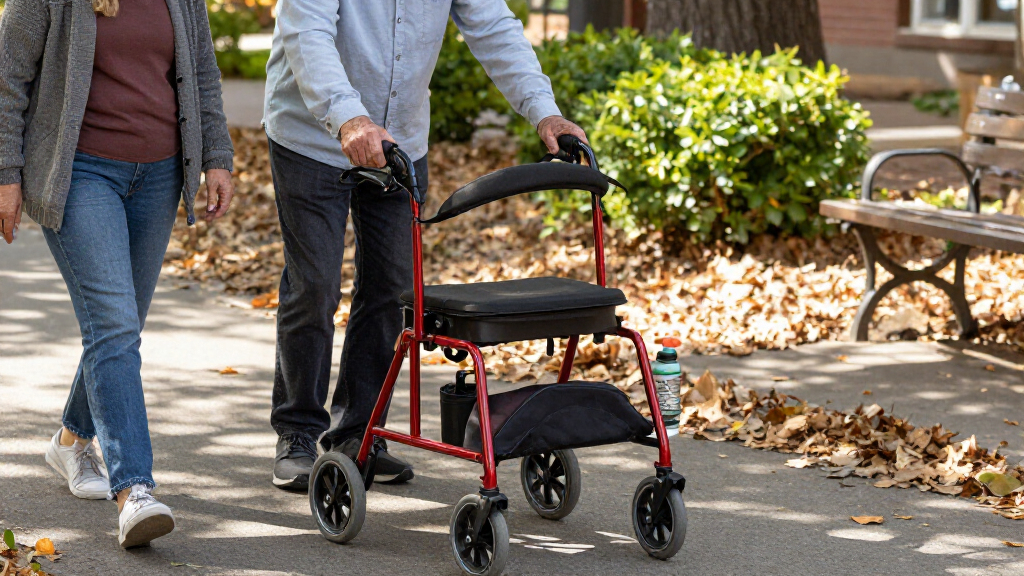

For most shoppers, the Drive Medical Nitro Sprint is the best overall rollator walker with a seat, balancing maneuverability with a more refined everyday design. The VOCIC Z21 stands out for larger wheels and outdoor paths, while the HOMLAND 16-pound rollator is a strong option when easier lifting matters. The main tradeoffs are seat comfort and width, stability and weight capacity, and how easily a walker folds or handles uneven ground. A lighter model can be easier to transport, but may not offer the same weight capacity or substantial feel as a steel-frame option. Read on for the full comparison and advice on matching a rollator to your routes, fit, and storage needs.

Turn quiet afternoons into listening time
- Thousands of audiobooks, podcasts and originals
- Listen on your phone, tablet or Echo — also offline
- Cancel anytime
Complete the kit

Key Takeaways
- The Drive Medical Nitro Sprint ranks first for shoppers wanting a versatile everyday walker, while the two color versions appear to share the same core design rather than offering different capabilities.
- The VOCIC Z21 and the 12-inch-wheel all-terrain model favor rougher routes; larger wheels can handle bumps better, but buyers should still check the walker’s folded size and weight before choosing it for car transport.
- HOMLAND’s 16-pound models prioritize portability, while its extra-wide-seat version addresses a different need: more room to sit. Seat width and ease of lifting should not be treated as the same benefit.
- Steel-frame Medline and Drive options emphasize a more substantial build, with some models rated for higher user capacities, but their added heft can make lifting and storage harder.
- The 500-pound-capacity bariatric model targets a specific fit and support need; capacity alone does not confirm comfortable seat width, safe turning clearance, or a suitable height range.


| rollator walkers with seat | Weight capacity | Wheel size | Weight |
|---|---|---|---|
| Walkers for Seniors with Seat | 350 lb | 8 in | 18.76 lb |
| Drive Medical Nitro Sprint Rol | 350 lb | — | — |
| HOMLAND Foldable Walkers for S | 300 lb | — | 16 lb |
| HOMLAND Foldable Rollator Walk | — | 8 in | 20.4 lb |
| VOCIC Z21 Rollator Walker for | Up to 350 lb | 8 in | About 22 lb |
| Walkers for Seniors | 300 lb | — | 19.2 lb |
| Drive Medical Rollator Walker | 350 lb | 7.5 inches | — |
| Medline Rollator Walker with S | 350 lb | 6 inches | — |
| Drive Medical Nitro Sprint Rol | 350 lb | — | — |
| Drive Medical Aluminum Rollato | 300 lb | 6 inches | 15.6 lb |
| VOCIC Z21 Rollator Walker for | 350 lb | 8 inches | About 22 lb |
| Bariatric Rollator Walkers for | 500 lb | 8 inches | 16.4 lb |
| Medline Superlight Folding Alu | 250 lb | 6 inches | 12.6 lb |
| Drive Medical Rollator Walker | 350 lb | 7.5 inches | — |
| Medline Steel Rollator Walker | 350 lb | 6 inches | 16.5 lb |
More Details on Our Top Picks
Walkers for Seniors with Seat W20S, Ultra-Stable Foldable Rollator
I’d put the Vitopa W20S near the top for shoppers who prioritize a reassuring frame and a comfortable place to rest. Its stated 350-pound capacity, reinforced under-seat bracing, and equal-thickness main tubes make stability its clearest distinction from the lighter HOMLAND 16lb rollator, which is easier to carry but supports less weight. The W20S also pairs 8-inch wheels with a widened tread, a useful combination for rolling over everyday outdoor surfaces and steering indoors.
The padded waterproof seat, supportive backrest, and independently adjustable seat and handle heights give it more fitting flexibility than a basic rollator. The tradeoff is its 18.76-pound weight: foldable, but not the easiest choice for someone who regularly lifts a walker into a car. Its listed wheel features support everyday use, not a claim of handling every rough path.
Pros:- Stated 350-pound capacity and reinforced under-seat frame support
- Adjustable seat and handle heights allow a more tailored seated and walking position
- 8-inch swivel front wheels and widened tread support controlled maneuvering
- Waterproof padded seat, backrest, cup holder, and under-seat bag add resting comfort and storage
Cons:- At 18.76 pounds, it is heavier to lift than the 16-pound HOMLAND rollator
- Seat dimensions are not provided, making fit harder to judge before purchase
- The description emphasizes flat outdoor surfaces rather than rough-terrain performance
Best for: Users who want a sturdy-feeling rollator with a supportive seat, adjustable fit, and capacity up to 350 pounds.
Not ideal for: People who frequently lift their walker into a vehicle or need a clearly specified seat width; its 18.76-pound weight and unlisted seat dimensions may not suit them.
- Weight:18.76 lb
- Weight capacity:350 lb
- Wheel size:8 in
- Wheel tread width:35 mm
- Handle height:32.5–38 in
- Seat height:20–22 in
- Braking modes:Brake, free, and lock
- Folding:One-step folding with under-seat pull rod
Our verdict“Choose the Vitopa W20S if frame support and adjustable seated comfort matter more than having the lightest rollator to lift.”
Drive Medical Nitro Sprint Rollator Walker with Seat, Standard Size, Red
The Drive Medical Nitro Sprint is the pick I’d favor for people who regularly roll beyond smooth indoor floors. Its 10-inch front wheels are larger than the 8-inch wheels on the Vitopa W20S and VOCIC Z21, which can help the front end handle common bumps with less abruptness. The stated 350-pound capacity and aluminum frame make it a substantial everyday option, while one-handed folding is useful when the rollator needs to be put away or transported.
For resting, the wide padded seat works with a contoured, height-adjustable backrest, giving users more scope to tune back support than the HOMLAND 16lb model’s removable backrest. Its three braking modes include a slowdown setting for controlled movement. The tradeoff is that the supplied description does not state its weight, seat dimensions, or exact adjustment ranges, so buyers have less fit information to work with.
Pros:- 10-inch front wheels are larger than the wheels on the Vitopa W20S and VOCIC Z21
- Padded seat and height-adjustable contoured backrest support seated breaks
- Free, park, and slowdown braking modes offer distinct control settings
- One-handed folding and three bag mounting positions add practical convenience
Cons:- Product information does not specify the rollator’s weight or folded dimensions
- Seat dimensions and adjustment ranges are not provided
- Larger front wheels do not by themselves establish suitability for every rough or uneven surface
Best for: Users who want larger front wheels, a padded seat, and adjustable back support for everyday outings.
Not ideal for: Buyers who need confirmed walker weight, seat measurements, or exact adjustment ranges before choosing a model.
- Frame material:Aluminum
- Weight capacity:350 lb
- Front wheel size:10 in
- Seat:Wide padded seat
- Backrest:Contoured and height-adjustable
- Braking modes:Free, park, and slowdown
- Folding:One-handed folding
- Storage and accessories:Three bag mounting positions and accessory port
Our verdict“Pick the Nitro Sprint if larger front wheels and adjustable back support matter more than having every fit specification listed up front.”
HOMLAND Foldable Walkers for Seniors with Seat, 16lb Light Rollator Walkers
I’d choose this HOMLAND 16lb rollator when easy lifting and movement through the home matter more than a high weight capacity. At 16 pounds, it is lighter than the Vitopa W20S and VOCIC Z21, which can make car loading and storage less demanding. Its listed widths—21.9 inches between the front wheels and 24.4 inches between the rear wheels—give buyers a concrete way to judge doorway fit rather than relying on vague claims about compactness.
The 12-by-12-inch padded seat, adjustable handles, and removable backrest suit practical indoor use, and removing the backrest can save space when folded. The compromise is a 300-pound capacity, below the 350-pound ratings of the Vitopa and VOCIC. Its product information also warns against slopes, stairs, and curbs, so I would not make it the choice for users seeking a rollator for challenging terrain.
Pros:- 16-pound weight is lower than the listed weights of the Vitopa W20S and VOCIC Z21
- Front and rear wheel spacing is stated for doorway-fit planning
- Removable backrest helps reduce folded storage bulk
- Padded 12-by-12-inch seat and adjustable handles support everyday use
Cons:- 300-pound capacity is lower than the 350-pound Vitopa W20S and VOCIC Z21
- The manufacturer warns against use on slopes, stairs, and curbs
- Handle adjustment range is narrower than the stated range on the wide-seat HOMLAND model
Best for: Users who need a lighter rollator for home-to-car trips and want stated wheel spacing to check against doorways.
Not ideal for: Users needing a capacity above 300 pounds or a walker intended for slopes, stairs, or curb use.
- Weight:16 lb
- Weight capacity:300 lb
- Seat dimensions:12 × 12 in
- Handle height:30–34.5 in, five positions
- Width between front wheels:21.9 in
- Width between rear wheels:24.4 in
- Backrest:Removable
- Storage:Under-seat bag with reflective strips
Our verdict“Choose this HOMLAND if lower lifting weight and measured doorway clearance matter more than higher capacity or terrain versatility.”
HOMLAND Foldable Rollator Walker for Seniors with Seat, 16″ Extra-Wide Seat
The standout reason to pick this HOMLAND wide-seat rollator is its 16-by-12-inch cushioned seat. That gives it a more spacious resting surface than the 12-by-12-inch seat on the lighter HOMLAND 16lb model, making this the more natural fit for buyers who find standard seats restrictive. Its 20–23-inch seat height and 33–40-inch handle range also cover a broad span of user heights, a practical advantage over models with narrower listed adjustment ranges.
There is a real exchange: it weighs 20.4 pounds, so the lighter HOMLAND is easier to lift, and its 22-inch frame may be less convenient in tight passages. Eight-inch puncture-proof wheels and three braking modes support daily maneuvering, while loop brakes are described as requiring less effort. I’d still check fit against the home before choosing it, since comfort from a wider seat comes with a wider overall design.
Pros:- 16-by-12-inch seat is wider than the seat on the HOMLAND 16lb model
- Seat and handle height ranges accommodate a broad stated user-height range
- 8-inch puncture-proof wheels and 360-degree front swivel support everyday maneuvering
- Three braking modes and low-effort loop brakes provide multiple control options
Cons:- At 20.4 pounds, it is heavier than both the HOMLAND 16lb model and Vitopa W20S
- The 22-inch frame may be less suited to very tight indoor spaces
- A wide seat does not remove the need to check overall fit and available passage width
Best for: Users who want a roomier, cushioned seat and wide handle and seat adjustment ranges for a customized fit.
Not ideal for: People who must lift the rollator often or regularly pass through narrow spaces; it weighs 20.4 pounds and has a 22-inch frame.
- Weight:20.4 lb
- Frame width:22 in
- Seat dimensions:16 × 12 in
- Seat thickness:1.6 in
- Seat height:20–23 in
- Handle height:33–40 in
- Wheel size:8 in
- Braking modes:Free, deceleration, and stop
- Folded dimensions:39 × 25 × 11.5 in
Our verdict“Choose this HOMLAND if a wider padded seat and extensive height adjustment outweigh a lighter carry weight or narrower frame.”
VOCIC Z21 Rollator Walker for Seniors with Seat, 8″ All Terrain, 350 LBS
I’d steer shoppers toward the VOCIC Z21 when their route includes more than smooth indoor flooring. Its 8-inch puncture-proof tires, textured tread, and all-terrain positioning make it a stronger match for varied surfaces than the HOMLAND 16lb rollator, whose product information specifically cautions against slopes and curbs. The Z21 also states a 350-pound capacity and gives a useful 22-pound weight figure, so its sturdier-outing focus comes with a clear carrying tradeoff against the lighter HOMLAND.
For seated breaks, the thickened waterproof bionic seat and widened breathable backrest are more comfort-focused than a barebones seat. Height adjustments cover a stated user range of 4 feet 11 inches to 6 feet 3 inches. Its three-second fold and compact folded measurements help with storage, though buyers should follow the pre-use checks for the frame, fasteners, wheels, brakes, and seat components.
Pros:- 8-inch puncture-proof tires and textured tread are specified for varied terrain
- 350-pound capacity exceeds the 300-pound rating of the HOMLAND 16lb model
- Thickened waterproof seat and widened breathable backrest support seated comfort
- Stated folded dimensions and quick-fold design help with storage planning
Cons:- About 22 pounds makes it the heaviest of these five listed models
- Height range does not include users below 4 feet 11 inches or above 6 feet 3 inches, based on the stated guidance
- The manufacturer calls for checking locks, fasteners, brakes, and installed components before use
Best for: Users who want a 350-pound-capacity rollator with larger puncture-proof wheels for mixed-surface outings and adjustable seating.
Not ideal for: People who frequently need to lift a rollator into a car or want the lightest model; at about 22 pounds, it is heavier than the HOMLAND 16lb.
- Weight:About 22 lb
- Weight capacity:Up to 350 lb
- Wheel size:8 in
- Seat height:20–22 in, three positions
- Handle height:31.5–36.6 in, five positions
- Stated user height range:4 ft 11 in–6 ft 3 in
- Folded dimensions:31.5 × 23.6 × 13.8 in
- Braking modes:Free, deceleration, and stop
- Tires:Puncture-proof with textured tread
Our verdict“Choose the VOCIC Z21 if mixed-surface capability and a supportive seat matter more than minimizing the weight you lift.”
Walkers for Seniors, Rollator Walker with Seat, 12″ Big Rubber Wheels All Terrain Rolling Walker with Backrest, Foldable Rollator Walker, Reinforced Aluminum Frame, Built-in Cable, Orange
The standout here is its 12-inch front and 10-inch rear rubber wheels, which are larger than the wheels on the Drive Medical Rollator Walker with Seat, 7.5 Inch Wheels. That extra wheel size is aimed at easing passage over gravel, grass, and uneven concrete rather than making this the simplest indoor choice. Its built-in brake cable also keeps loose cable runs out of the way, while the seat, backrest, storage bag, and walking stick holder support longer outings. At 19.2 pounds, it is heavier than the 15.6-pound Drive Medical Aluminum Rollator, though its larger wheels and 300-pound capacity may suit buyers who prioritize outdoor handling. The tradeoff is a wider, more specialized setup: check doorway clearance and confirm the 32.6-to-37-inch handle range fits before choosing it.
Pros:- Large rubber wheels are designed to handle uneven outdoor surfaces better than the smaller wheels on several alternatives.
- Integrated brake cables reduce exposed cable clutter.
- Adjustable handles have five settings from 32.6 to 37 inches.
- Includes a seat, backrest, storage bag, cup holder, and walking stick holder.
Cons:- At 19.2 pounds, it is heavier than the Drive Medical Aluminum Rollator.
- Its 23.8-inch width may be awkward in tight home layouts despite the stated narrow-doorway fit.
- The 300-pound capacity is lower than the 350-pound limits listed for the Drive Medical Nitro Sprint and Medline steel models.
Best for: People who regularly walk outdoors on grass, gravel, or uneven paths and want a seat and backrest for rest stops.
Not ideal for: People seeking the lightest rollator for frequent lifting, or those who mainly need a compact indoor walker with small wheels.
- Front wheel size:12 inches
- Rear wheel size:10 inches
- Frame:Reinforced aluminum alloy
- Weight:19.2 lb
- Weight capacity:300 lb
- Width:23.8 inches
- Handle height range:32.6–37 inches, five settings
- Folding:Three-second quick fold
- Included accessories:Storage bag, cup holder, walking stick holder
Our verdict“Choose this model if large wheels for mixed outdoor terrain matter more than minimizing weight or choosing a higher-capacity frame.”
Drive Medical Rollator Walker with Seat, 7.5 Inch Wheels, Red
This Drive Medical model is a practical pick for buyers who favor a steel frame and 350-pound capacity over a lighter aluminum build. Its 7.5-inch wheels sit between the Medline Steel Rollator’s 6-inch wheels and the larger wheels on the Nitro Sprint, making it a middle-ground option for home use and ordinary outings. The padded seat, fold-down backrest, locking hand brakes, and under-seat pouch cover the basics without adding the more specialized braking modes or accessory mounting positions found on the Nitro Sprint. The tradeoff is that the product information gives no weight figure, so shoppers who need to lift a rollator into a car cannot easily compare its portability with the 15.6-pound Drive Medical Aluminum Rollator. Choose it for straightforward support and capacity, not a feature-rich outdoor setup.
Pros:- Steel frame supports up to 350 pounds.
- Padded seat and fold-down backrest provide a place to rest and back support.
- Locking hand brakes support control and stationary seating.
- Folds for storage and has an under-seat pouch for essentials.
Cons:- The listed 7.5-inch wheels are smaller than the Nitro Sprint’s 10-inch front wheels for uneven ground.
- No product weight is provided, making lift-and-carry comparisons difficult.
- Offers fewer described braking and accessory options than the Nitro Sprint.
Best for: Users who want a steel-frame rollator with a padded resting seat and a stated 350-pound capacity for routine home and community use.
Not ideal for: People who frequently lift or transport their walker and need a confirmed low carry weight, or those seeking larger wheels for rough outdoor routes.
- Wheel size:7.5 inches
- Frame:Steel
- Weight capacity:350 lb
- Seat:Padded
- Backrest:Fold-down
- Brakes:Hand brakes with locking function
- Storage:Under-seat pouch
- Folding:Compact folding design
- Color:Red
Our verdict“Pick this Drive Medical model if steel construction and a 350-pound capacity take priority over low weight and larger outdoor wheels.”
Medline Rollator Walker with Seat, Steel Rolling Walker with 6-inch Wheels Supports up to 350 lbs, Medical Walker, Blue
The Medline keeps its offering simple: a steel frame rated to 350 pounds, height-adjustable arms, a padded seat, and an under-seat storage bag. That makes it a sensible everyday option for buyers who want basic seating and storage without the Nitro Sprint’s multi-mode braking system or larger 10-inch front wheels. Its 6-inch wheels are better suited to smoother routes around the home and paved areas than rough terrain, and the product description positions them for indoor and outdoor use. Tool-free assembly and folding add convenience, though the listing does not state the walker’s weight, which makes it harder to judge how manageable it will be to lift into a vehicle. Compared with the lighter Drive Medical Aluminum Rollator, this Medline offers a higher stated capacity but gives up a clear portability advantage.
Pros:- Steel frame supports up to 350 pounds.
- Padded seat and under-seat storage bag suit everyday errands and rest breaks.
- Arms adjust to help fit different users.
- Folds and assembles without tools.
Cons:- Six-inch wheels are less suited to uneven ground than the Nitro Sprint’s 10-inch front wheels.
- Product information does not provide the rollator’s weight.
- The description does not specify advanced braking modes or an adjustable backrest.
Best for: People who want a basic steel rollator with a seat, storage, adjustable arms, and a 350-pound capacity for mostly smooth routes.
Not ideal for: Frequent outdoor walkers on gravel or grass, or buyers who need a published weight to assess lifting and transport.
- Wheel size:6 inches
- Frame:Steel
- Weight capacity:350 lb
- Seat:Padded
- Storage:Bag beneath the seat
- Arm adjustment:Height adjustable
- Assembly:Tool-free
- Folding:Folds for transport and storage
- Color:Blue
Our verdict“Choose this Medline if you want a no-fuss, higher-capacity steel rollator for smoother daily routes rather than rough terrain or frequent lifting.”
Drive Medical Nitro Sprint Rollator Walker with Seat, Standard, Blue
The Nitro Sprint is the most feature-focused choice here for users who want more control across changing routes. Its free, slowdown, and park braking modes offer a more tailored approach than the straightforward locking brakes on the Drive Medical 7.5-inch-wheel rollator. The 10-inch front wheels are also larger than those on the Medline Steel Rollator, helping take the edge off bumps on outdoor paths. A padded seat, contoured adjustable backrest, one-handed folding, and three bag mounting positions add comfort and flexibility. Those upgrades come with a tradeoff: buyers who want a simple, basic rollator may not need the extra braking and accessory choices, and the listed standard size should be checked against the user’s fit needs. Its 350-pound capacity is shared by the steel Drive and Medline options, so capacity alone does not set it apart.
Pros:- Three braking modes provide free movement, slowdown assistance, and parking.
- Large 10-inch front wheels are better suited to bumps than the 6-inch Medline wheels.
- One-handed folding and three bag mounting positions support travel and flexible storage.
- Wide padded seat and adjustable contoured backrest support rest breaks.
Cons:- The added modes and accessory options may be unnecessary for users who want basic everyday support.
- The listing does not state the rollator’s overall weight.
- Standard sizing may not suit every user’s fit requirements.
Best for: Active users who move between indoor spaces and outdoor paths and want adjustable braking, larger front wheels, and customizable storage.
Not ideal for: Buyers seeking a simple, low-feature rollator or a model with a stated low overall weight for frequent lifting.
- Front wheel size:10 inches
- Frame:Aluminum
- Weight capacity:350 lb
- Braking modes:Free, slowdown, and park
- Seat:Wide, padded
- Backrest:Contoured and adjustable
- Folding:One-handed folding
- Storage options:Three bag mounting positions
- Accessory support:Accessory port
Our verdict“Choose the Nitro Sprint if braking flexibility and larger front wheels matter more than a simpler setup or a confirmed carry weight.”
Drive Medical Aluminum Rollator Walker, Padded Seat, 6-Inch Wheels, Blue
At 15.6 pounds, this Drive Medical is the clearest choice in this group for people who need to lift a rollator into a car or move it between storage spots. Its aluminum frame supports 300 pounds, while the Drive Medical 7.5-inch-wheel model and Medline steel rollator each list a higher 350-pound capacity. The side-to-side fold lets it stand upright, which can make parking and storage easier than a rollator that simply collapses flat. A padded seat, hinged backrest, adjustable handles, and storage pouch cover daily needs, but the 6-inch wheels are smaller than those on the Nitro Sprint and the 12-inch-front-wheel RollisRoll. That makes this a better fit for smoother indoor routes and ordinary paved outings than bumpy paths. It prioritizes easy handling over capacity and terrain performance.
Pros:- At 15.6 pounds, it is lighter than the other models in this group with a stated weight.
- Aluminum frame supports up to 300 pounds.
- Folds side-to-side and stands upright when folded.
- Includes a padded seat, hinged backrest, adjustable handles, and storage pouch.
Cons:- The 300-pound capacity is lower than the 350-pound limits on the Drive Medical Nitro Sprint and Medline steel rollator.
- Six-inch wheels are smaller than those on the Nitro Sprint and less suited to rougher paths.
- The description does not provide a wheel-specific terrain claim beyond use indoors and outdoors.
Best for: People who regularly transport or store their rollator and want a light aluminum frame with an integrated seat.
Not ideal for: Users who need a capacity above 300 pounds or frequently travel across grass, gravel, and other uneven surfaces.
- Wheel size:6 inches
- Frame:Aluminum
- Weight:15.6 lb
- Weight capacity:300 lb
- Seat:Padded
- Backrest:Hinged, folds up or down
- Handle adjustment:Height adjustable
- Folding:Side-to-side; stands upright when folded
- Storage:Storage pouch
Our verdict“Pick this model if easier lifting and upright folded storage matter more than a higher capacity or larger wheels for uneven ground.”
VOCIC Z21 Rollator Walker for Seniors with Seat, 8″ All Terrain, 350 LBS
The VOCIC Z21 is the strongest fit here for people who expect their rollator to handle more than smooth floors and sidewalks. Its 8-inch puncture-proof wheels and textured tires offer more obstacle clearance and grip than the Medline Superlight’s 6-inch wheels, while swiveling front wheels help with turns. Seating is also more adjustable than on simpler models: the seat moves across three heights, and the handles have five positions, accommodating a stated user-height range of 4’11” to 6’3″. The thick, waterproof seat and wide backrest add comfort for planned rests. The tradeoff is weight: at about 22 lb, it is substantially heavier than the Medline Superlight, despite its quick-fold design. Choose it for varied routes and a more tailored sitting fit; skip it if lifting a rollator into a car is a frequent challenge.
Pros:- 8-inch puncture-proof tires provide more clearance over bumps than 6-inch-wheel models.
- Three seat-height positions and five handle-height positions allow a more tailored fit.
- Thick waterproof seat and wide backrest support planned rest stops.
- Folds quickly to a listed size of 31.5 x 23.6 x 13.8 inches for storage.
Cons:- At about 22 lb, it is heavier to lift than the Medline Superlight.
- The 350 lb capacity is lower than the 500 lb capacity listed for the QX03 bariatric rollator.
- Its larger wheels and frame may feel less suited to tight indoor spaces than a compact, small-wheel rollator.
Best for: People who walk on sidewalks, packed paths, or uneven outdoor surfaces and want adjustable seat and handle heights.
Not ideal for: Users who need to lift their rollator into a vehicle often or prefer the lightest possible frame; the Z21 weighs about 22 lb.
- Weight:About 22 lb
- Weight capacity:350 lb
- Wheel size:8 inches
- Seat height:Adjustable from 20 to 22 inches
- Handle height:Adjustable from 31.5 to 36.6 inches
- User height range:4’11” to 6’3″
- Folded dimensions:31.5 x 23.6 x 13.8 inches
- Braking modes:Free, deceleration, and stop
Our verdict“Pick the VOCIC Z21 if outdoor traction and a highly adjustable seat matter more than minimizing lifting weight.”
Bariatric Rollator Walkers for Seniors with Seat, 500 lb Capacity, 16.4 lb
The QX03 is the clear capacity pick in this group: its 500 lb rating exceeds the 350 lb limits listed for the VOCIC Z21 and Drive Medical rollator. Its 18 x 14-inch memory-foam seat is also wider than the 12 x 12-inch seat on the Medline Superlight, giving larger users more room for a rest. The backrest moves with the handles, and both seat and armrest heights have five adjustment positions, which helps serve a broad stated height range of 4’10” to 6’11”. It weighs 16.4 lb, less than the Z21, but the listing warns that its frame is larger than a typical lightweight walker. The 8-inch all-terrain wheels are useful outdoors, though the fixed rear wheels may feel less agile than an all-swivel setup. Check doorways and trunk dimensions before choosing it.
Pros:- 500 lb stated capacity is the highest among these five options.
- 18 x 14-inch memory-foam seat gives more sitting area than the Medline Superlight’s 12 x 12-inch seat.
- Five adjustment positions for the seat and armrests serve a wide stated user-height range.
- 8-inch puncture-proof, anti-slip tires are specified for varied surfaces.
Cons:- The larger frame may be difficult to maneuver through narrow doorways or store in smaller trunks.
- Rear wheels are fixed, which may limit turning agility compared with rollators that use swivel wheels at the front and rear.
- Its size and seat width may be unnecessary for users who fit comfortably in a standard-width model such as the Drive Medical rollator.
Best for: Taller or bariatric users who need a high-capacity frame, a wider cushioned seat, and adjustable seating and handle positions.
Not ideal for: People with narrow doorways, limited storage, or a small vehicle trunk; the listing describes this as a larger rollator despite its relatively low weight.
- Weight:16.4 lb
- Weight capacity:500 lb
- Seat dimensions:18 x 14 inches
- User height range:4’10” to 6’11”
- Seat adjustment:Five positions
- Armrest adjustment:Five positions
- Wheel size:8 inches
- Folded dimensions:13.78 x 24.8 x 39.4 inches
Our verdict“Choose the QX03 when its 500 lb capacity and wide memory-foam seat suit your needs and you have room for its larger frame.”
Medline Superlight Folding Aluminum Mobility Rollator Walker, Smoky Blue, 250 lb. Weight Capacity, 6″ Wheels, Adjustable Arms and Seat
At 12.6 lb, the Medline Superlight is the easiest option in this set to lift and carry, making it a practical choice for users or caregivers who regularly move a rollator in and out of a car. The aluminum frame folds, and its seat and handles adjust independently, so the light build does not mean a one-size-only fit. Its 12 x 12-inch padded seat and under-seat storage cover basic rest-stop needs. Compared with the Drive Medical rollator’s 7.5-inch wheels or the VOCIC Z21’s 8-inch tires, its 6-inch wheels are less suited to bumps and rough paths. The 250 lb capacity is also below the limits of the other listed models. This is the most portable pick, but not the right match for heavier users or regular outdoor routes over uneven ground.
Pros:- At 12.6 lb, it is lighter than the other four rollators in this batch.
- Adjustable seat height from 18 to 23 inches and handle height from 29.5 to 36 inches allow fit adjustments.
- Folding aluminum frame is convenient for carrying and storage.
- Under-seat storage keeps small essentials close while walking.
Cons:- 250 lb weight capacity is lower than the limits listed for the other four models.
- 6-inch wheels offer less obstacle clearance than the Drive Medical’s 7.5-inch wheels and the 8-inch-wheel options.
- The 12 x 12-inch seat is smaller than the QX03’s 18 x 14-inch memory-foam seat.
Best for: Users and caregivers who frequently lift a rollator into a car and need a light frame for mostly smooth indoor and paved routes.
Not ideal for: Users who need more than 250 lb capacity, a larger seat, or extra wheel clearance for rough outdoor surfaces.
- Weight:12.6 lb
- Weight capacity:250 lb
- Wheel size:6 inches
- Seat dimensions:12 x 12 inches
- Seat height:Adjustable from 18 to 23 inches
- Handle height:Adjustable from 29.5 to 36 inches
- Frame material:Aluminum
- Storage:Under-seat storage
Our verdict“Choose the Medline Superlight if low carry weight matters most and its 250 lb capacity and smaller wheels fit your route and needs.”
Drive Medical Rollator Walker with Seat, 7.5 Inch Wheels, Blue
The Drive Medical rollator balances a sturdier stated capacity with wheels larger than the 6-inch set on either Medline model. Its 350 lb capacity matches the VOCIC Z21 and Medline Steel Rollator, while 7.5-inch casters offer a middle ground between those smaller wheels and the Z21’s 8-inch all-terrain tires. That makes it a reasonable everyday option for a mix of indoor use and smoother outdoor routes, without choosing a model specifically built around maximum seat width or rough-terrain traction. The padded seat, fold-down removable backrest, and under-seat pouch support practical rest stops and errands. The tradeoff is that the product data gives no weight, seat dimensions, or adjustment range, so it is harder to judge portability and fit against the Medline Superlight or adjustable VOCIC. Buyers should verify the frame’s fit for their space before ordering.
Pros:- 350 lb capacity matches the VOCIC Z21 and Medline Steel Rollator.
- 7.5-inch wheels are larger than the 6-inch wheels on both Medline models.
- Padded seat and removable, fold-down backrest provide a place to rest with back support.
- Under-seat pouch keeps everyday essentials accessible.
Cons:- No product weight is given, making it difficult to compare its lift-and-carry convenience with the 12.6 lb Medline Superlight.
- Seat dimensions and height-adjustment range are not specified, limiting fit comparisons.
- Its wheels are smaller than the 8-inch tires on the VOCIC Z21 and QX03 for rougher terrain.
Best for: Users seeking a general-purpose rollator with a 350 lb capacity, a padded seat, and wheels for mixed indoor and smoother outdoor use.
Not ideal for: People who need a verified light carry weight, a specified wide seat, or larger all-terrain tires; the listed product data does not provide those fit and portability details.
- Weight capacity:350 lb
- Wheel size:7.5 inches
- Frame material:Steel
- Seat:Padded
- Backrest:Removable and fold-down
- Handle adjustment:Height-adjustable
- Storage:Under-seat pouch
- Frame:Folding
Our verdict“Pick the Drive Medical for a practical 350 lb everyday rollator if you do not need the largest wheels or detailed fit specifications.”
Medline Steel Rollator Walker with Seat, Burgundy, 350 lb. Weight Capacity, 6” Wheels, Foldable, Adjustable Handles
The Medline Steel Rollator is a straightforward choice for shoppers who want a 350 lb capacity and a padded seat with backrest without moving up to a larger all-terrain model. Its 16.5 lb steel frame is heavier than the 12.6 lb Medline Superlight, but supports a higher listed capacity than that aluminum model. The familiar 12 x 12-inch seat, under-seat storage, and handles adjustable from 31 to 35 inches cover the basics for rest breaks and carrying small items. Its 6-inch wheels are better suited to smooth floors and paved paths than the 7.5-inch wheels on the Drive Medical or the 8-inch tires on the VOCIC Z21. The tradeoff is a more limited handle-height range and less wheel clearance. It makes sense for routine use where the steel frame and capacity matter more than low lifting weight or rough-ground performance.
Pros:- 350 lb capacity is higher than the Medline Superlight’s 250 lb rating.
- Padded 12 x 12-inch seat and backrest offer a supported place to rest.
- Under-seat storage provides room for everyday essentials.
- Folds for transport and storage.
Cons:- At 16.5 lb, it is heavier than the Medline Superlight for lifting and loading.
- 6-inch wheels provide less clearance than the Drive Medical’s 7.5-inch wheels and the VOCIC Z21’s 8-inch tires.
- Handle adjustment is limited to 31–35 inches, a narrower range than the Medline Superlight’s 29.5–36 inches.
Best for: Users who want a steel-frame rollator rated to 350 lb, with a padded seat, backrest, and under-seat storage for everyday routes.
Not ideal for: People who frequently lift a rollator into a car, need a wide seat, or regularly cross uneven outdoor ground.
- Weight:16.5 lb
- Weight capacity:350 lb
- Wheel size:6 inches
- Seat dimensions:12 x 12 inches
- Handle height:Adjustable from 31 to 35 inches
- Frame material:Steel
- Seat and backrest:Padded
- Storage:Under-seat storage
Our verdict“Choose the Medline Steel Rollator if you want a 350 lb-rated steel frame and padded backrest for routine use on smoother surfaces.”

How We Picked
I ranked these rollator walkers with seats around how well their stated design features address real buyer needs: dependable support while walking, a usable place to rest, manageable folding and transport, and fit for the intended user. I gave more weight to clear differentiators such as larger wheels, wider seating, lower listed product weight, and higher stated capacity than to color variants or repeated listings. I also considered whether a model’s features solve a common problem or simply add bulk.
The order reflects everyday versatility first, followed by more specialized strengths. The Nitro Sprint leads as a general-purpose choice; the VOCIC Z21 and 12-inch-wheel model move up for outdoor use; lightweight HOMLAND models suit shoppers prioritizing lifting; and higher-capacity steel or bariatric options fit users whose support and seating requirements take precedence over portability. Product names and specifications do not provide every fit detail, so I recommend checking the manufacturer’s measurements and confirming suitability with a clinician when mobility or balance needs are complex.
Factors to Consider When Choosing Rollator Walkers With Seats
Choosing a seated rollator is about matching the walker to the person and the places it will go—not simply selecting the largest wheels or highest capacity. I would compare the user’s fit, route, lifting ability, and transfer needs before weighing convenience features.
Match the Seat to the Person, Not Just the Capacity
A listed weight capacity describes a support limit; it does not tell you whether the seat will feel roomy or sit at a comfortable height. Check seat width and height alongside the user’s measurements, clothing, and ability to sit down and stand up. A wider seat can help with comfort, but it may also make the walker broader in doorways and storage spaces. Avoid assuming that a bariatric label guarantees a good fit for every larger user. If the walker will be used for frequent rests, the seat and back support deserve as much attention as the frame capacity.
Choose Wheels for the Routes You Actually Use
Wheel size affects how a rollator responds to cracks, thresholds, and uneven paving, but bigger wheels do not make every outdoor surface safe. Consider whether most trips are indoors, on smooth sidewalks, or across rougher paths, and check the manufacturer’s guidance for the intended surfaces. Large wheels can add bulk and make a walker less convenient in tight rooms or car trunks. Small wheels may suit indoor errands but can feel less forgiving on broken pavement. If routes vary, prioritize a design that fits the most common and most challenging route without becoming difficult to store.
Treat Product Weight and Folding as Separate Checks
A rollator that folds for storage may still be difficult to lift into a vehicle, so folding capability alone is not a portability measure. Compare the product’s listed weight with who will lift it and how often; caregivers may need to manage the frame as well as the user. Check how it folds, whether it stays compact when folded, and whether its shape fits the actual storage space. A lighter model can reduce lifting strain, while a heavier frame may feel more substantial but demand more effort to move. If lifting is a concern, try to arrange a safe hands-on check before relying on online dimensions.
Check Handle Fit and Brake Reach Before Buying
Handle adjustment should let the user stand upright with relaxed shoulders and a comfortable grip rather than leaning forward or reaching up. The brakes also need to be easy to squeeze and hold, especially for someone with limited hand strength or dexterity. A walker can have a seat and still be a poor match if the user cannot reliably control its speed or engage the parking brakes before sitting. Ask a clinician or mobility specialist to help check setup when balance, coordination, or grip is limited. Never assume that a broad adjustment range means every user can reach the brakes safely.
Plan for Safe Sitting and Transfers
A rollator seat is a resting place, not a substitute for a stable chair or a transfer aid. The user should be able to stop, set the parking brakes, turn carefully, and sit without the walker shifting. Consider whether the seat height makes standing back up manageable and whether the back support provides enough reassurance. Do not use the seat while the walker is moving, and follow the manufacturer’s instructions about brake use and positioning. If the user needs hands-on help to sit or rise, ask a mobility professional whether a rollator seat is appropriate for that routine.
Pay for the Feature That Solves Your Main Problem
It can be tempting to choose the model with the most visible extras, but the useful upgrade depends on the buyer. Wider seating may matter more than extra wheel size for someone who rests often, while easier lifting may matter more than a padded seat for someone who travels by car. Higher capacity, all-terrain wheels, and lightweight construction address different needs and should not be treated as interchangeable signs of quality. Compare the manufacturer’s measurements, included accessories, and maintenance instructions before paying for a feature that will rarely be used. A good match is the walker the user can control, fit, and store consistently.
Frequently Asked Questions
How do I tell whether a rollator seat will fit me comfortably?
Compare the manufacturer’s seat width and height with the user’s body measurements and preferred sitting posture, rather than relying on the model name. The user should be able to sit without feeling squeezed and should have a manageable distance from the seat to the floor. A seat that is too high can make feet dangle, while one that is too low can make standing difficult. Check the listed dimensions for the exact model, since similar product names may refer to different versions. If sitting or standing already requires assistance, ask a clinician or mobility specialist to assess the fit.
Is a rollator with larger wheels always better outdoors?
Larger wheels can make cracks and uneven surfaces easier to roll over, which is why all-terrain styles such as the VOCIC Z21 may suit outdoor routes better than models with smaller wheels. They do not remove the risks of slopes, loose gravel, or difficult thresholds, and they may add bulk for indoor use or transport. Check the maker’s surface guidance and the walker’s overall dimensions before choosing by wheel size alone. Also think about whether the user can steer and brake the larger model comfortably. For frequent changes between indoor and outdoor use, weigh handling and storage along with wheel diameter.
Should I choose a lightweight rollator or a higher-capacity steel model?
Start with the user’s required weight capacity and fit, then consider who will lift and store the walker. A lighter option, such as the HOMLAND models listed at 16 pounds, may be easier to manage for car trips or stairs, while steel models in this roundup offer higher stated capacities in some versions. Capacity does not by itself prove that a seat is wide enough or that the walker feels manageable. Check the exact model’s weight, seat measurements, and capacity rather than comparing product families by name. If both capacity and frequent lifting matter, ask a mobility professional to help weigh those competing needs.
Can I sit on a rollator seat whenever I need a rest?
Only sit when the walker is stopped on a stable surface and the parking brakes are engaged according to the manufacturer’s instructions. The user should approach and sit in a controlled way without pulling the walker out of position. A rollator seat is intended for rest, not for riding while another person pushes the walker. Check the model’s instructions for its seat and brake use, and do not exceed its stated capacity. If the user cannot reliably stop, lock the brakes, or sit safely, a rollator seat may not be appropriate without professional guidance.
What should I check before ordering a rollator online?
Verify the exact model’s overall width, folded dimensions, product weight, seat measurements, handle adjustment range, and weight capacity. Compare those figures with the narrowest doorway, storage space, and vehicle opening the walker must pass through. Confirm that the brakes are suitable for the user’s hand strength and that the seat height supports safe sitting and standing. Product titles can repeat across colors or versions, so match the specifications to the precise listing rather than assuming two similarly named walkers are identical. When fit or balance is uncertain, consult a clinician or mobility specialist before purchase.
Conclusion
For a broad range of everyday needs, I recommend the Drive Medical Nitro Sprint as the best overall, with the blue and red listings treated as color alternatives unless their specifications show otherwise. The HOMLAND 16-pound rollator is my best value-style pick for portability, while the VOCIC Z21 is my best premium-style choice for buyers who prioritize larger wheels and outdoor routes. For beginners, I would start with a standard-size Drive Medical or Medline model that fits the user and the home, then confirm brake reach and seat height before buying. For wider seating, compare the HOMLAND 16-inch extra-wide-seat model; for higher stated capacity, look at the steel Medline or 500-pound-capacity bariatric option, checking fit and dimensions carefully. If your main need is uneven-ground use, compare the VOCIC Z21 with the 12-inch-wheel model; choose the one whose weight and size the user can handle. The best choice is the one that fits the person, route, and storage routine—not the one with the longest feature list.
Fall Picks
fall essentials
As an affiliate, we earn on qualifying purchases.