TL;DR
Researchers from Virginia Commonwealth University and Emory University tested HomePal, a home sensor system, in the homes of 70 adults aged 65 and older for three months. The project aims to compare sensor data with loneliness assessments; the system is still being evaluated and is not a tool for diagnosing loneliness.
Researchers from Virginia Commonwealth University and Emory University have tested a home sensor system called HomePal in the homes of 70 adults aged 65 and older, aiming to identify behavioral patterns that may be associated with loneliness. The three-month study is part of ongoing work to compare home activity data with participants’ loneliness assessments; the researchers say the system is not designed to diagnose loneliness.

Turn quiet afternoons into listening time
- Thousands of audiobooks, podcasts and originals
- Listen on your phone, tablet or Echo — also offline
- Cancel anytime
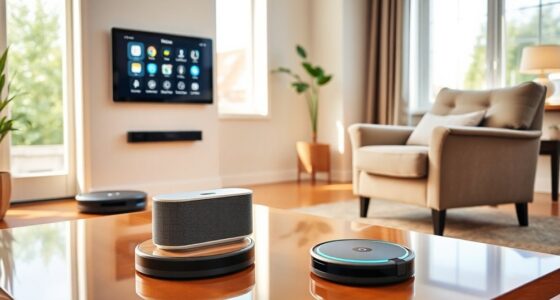
HomePal combines commercially available and custom sensors to passively record information about movement, daily routines, sleep and phone use, much like some smart home devices for older adults. The prototype was deployed for three months in the homes of independently living adults in the Atlanta metropolitan area. The research team plans to compare the collected data with biweekly loneliness assessments completed by participants.
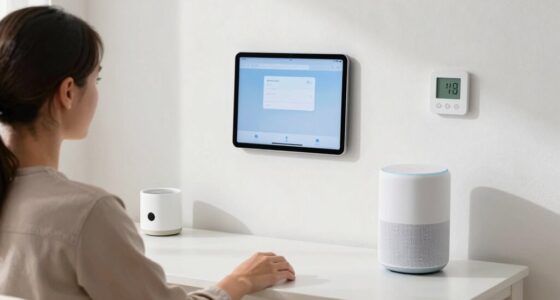
Its devices include motion and door sensors, smart plugs connected to televisions, sleep sensors and smart speakers. The system also examines phone-call patterns as a possible measure of social connectedness. Researchers are using an AI model to explore which sensed behaviors correspond most closely with reported loneliness and how well the patterns match the assessment results.
The study, published in the journal Assessment, describes development of the system and its data collection and classifier work. The team says the intended use would be to identify changes that might warrant follow-up from the older adult, family members or caregivers—not to make a clinical determination. The researchers are still analyzing data, refining the models and adjusting the sensors.
A Possible Earlier Signal for Caregivers
Loneliness can be difficult to identify during a clinic appointment, particularly if an older person does not raise it directly. HomePal’s researchers are investigating whether changes in ordinary routines could give care teams another source of information between visits. If later testing shows that the patterns are reliable and useful, they could help caregivers decide when to check in or ask further questions.
That potential remains unproven. A shift in sleep, movement, television use or calls can have many explanations and does not, by itself, establish that someone is lonely. The project’s value will depend on whether its models can distinguish meaningful changes from normal variation and whether alerts support care without creating unnecessary concern or surveillance.
Products Worth Considering

Fitbit Charge 5 Health and Fitness Tracker with Built-In GPS, Stress Management, Sleep Tracking, and 24/7 Heart Rate Monitoring

Oral-B iO Series 3 Rechargeable Electric Toothbrush for Adults, Black, with 2 Brush Heads and Travel Case

Levoit Eleva 300X Air Purifier for Home Bedroom
As an affiliate, we earn on qualifying purchases.
How HomePal Connects Sensors and Surveys
The researchers’ approach pairs passive sensing with participants’ own reports. Biweekly assessments provide a comparison point for the behavior recorded at home, allowing the team to examine whether certain patterns appear alongside reported loneliness. This is a research process, not a validated consumer service: the team says it is still determining how accurately its models correspond with the traditional survey approach.
The project brings together computer science and nursing researchers. Mohamed Kamel, a computer science doctoral student at VCU and the study’s lead author, described the aim as finding early signs in everyday behavior. Nursing researcher Chung led the assessments, while the team is exploring how results might eventually be presented to caregivers. The researchers’ longer-term vision is a system that could be installed in a home much like a security system and show a daily score or trend, but that product has not been established as available.
“The main idea is to see whether everyday behavior at home can give early signs that an older adult may be experiencing loneliness or social withdrawal.”
— Mohamed Kamel, VCU computer science doctoral student and study lead author
Accuracy, Privacy and Use Remain Open
The report does not provide a final accuracy result for HomePal’s loneliness classifier. Researchers say they are still comparing sensor patterns with assessment results, so it is not yet clear which behaviors will prove informative, how reliably the system can identify relevant changes, or whether it would work beyond the 70-person, three-month study.
Privacy and data handling also depend on how a future version is built. The researchers say HomePal could be modified to use sensors that operate and store information on local networks, and that patients could control what is shared. The published account does not specify a finalized commercial design, data-retention policy, or deployment plan. Nor does it establish that sensor alerts improve health or care outcomes.
Researchers Continue Model Testing
The team plans to continue analyzing the collected data, developing its AI models and adjusting HomePal’s sensors as it examines which patterns correspond with participants’ assessments. A key next step is to report how accurately the models match those assessments and whether the results justify follow-up by a caregiver.
Any move toward a home product would require further development, including decisions about data storage, sharing and how alerts are explained to users. The researchers have not announced a launch date. For now, HomePal remains a research prototype, and its findings should be treated as exploratory rather than as a substitute for direct conversation or professional assessment.
Key Questions
What is HomePal?
HomePal is a research prototype that uses home sensors to collect information about movement, sleep, routines, television use, smart-speaker activity and phone-call patterns. Researchers are studying whether those data are associated with reported loneliness.
Has HomePal been shown to diagnose loneliness?
No. The researchers say they are looking for behavioral patterns that may be related to loneliness and could merit follow-up. The system is not a diagnostic tool, and its accuracy is still being evaluated.
Who took part in the study?
The prototype was used for three months in the homes of 70 independently living adults aged 65 and older in the Atlanta metropolitan area. Researchers planned to compare sensor information with loneliness assessments conducted every two weeks.
How are researchers addressing privacy?
The team says a version of HomePal could use sensors that process and store data on local networks, with choices about what information is shared with caregivers. A final privacy design and data policy have not been announced.
Source: rss