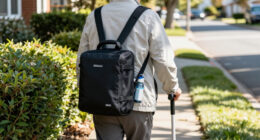

Choosing a medical alert system is largely a question of where a senior needs help: mainly at home or also while out. In-home systems connect a wearable help button to a base unit in the residence, sometimes using a landline and sometimes cellular service. Mobile systems use a portable device with cellular connectivity and often GPS, so the wearer can request assistance beyond the home.

Turn quiet afternoons into listening time
- Thousands of audiobooks, podcasts and originals
- Listen on your phone, tablet or Echo — also offline
- Cancel anytime

Wi-Fi Medical Alert System for Seniors with Call Buttons, Waterproof Wristband, Receiver, and LED Display
- ✔ Alert sound: 110 dB receiver alarm
- ✔ Maximum stated range: Up to 300 feet
- ✔ Wi-Fi: 2.4 GHz only

SecuLife Medical Alert Pendant for Seniors with Fall Detection, GPS Tracking, and Two-Way Calling
- ✔ Connectivity: 4G LTE cellular
- ✔ Emergency features: Fall alerts, SOS calling, two-way calling
- ✔ Location: GPS, geofencing, and location history

911 Help Now Medical Alert Pendant for Seniors with Direct 911 Calling
- ✔ Cellular connectivity: 4G LTE in the United States where compatible coverage is available
- ✔ Emergency calling: Direct call to 911
- ✔ Activation: Press and hold SOS button for three seconds
That added freedom can matter for someone who walks, drives, or visits family independently. It also brings practical tradeoffs: a mobile device needs charging, its cellular coverage varies by location, and plans may cost more. An in-home setup is usually simpler for someone who spends most of the day at home, but its protection may stop at the property line. The right choice depends less on age than on routine, mobility, and who can help when an alert is raised.
At a Glance
| Criteria | In-home medical alert systems | Mobile medical alert systems | Winner |
|---|---|---|---|
| Coverage | Designed for the home; range depends on base unit and wearable | Designed for home and outings where compatible cellular service is available | B |
| Connection and location | Uses landline or cellular base; typically tied to the residence | Portable device connects through cellular service; GPS may help locate the wearer | B |
| Wearable range | Works within the system’s stated range from the base | Can work away from a home base, within service and device limits | B |
| Battery and upkeep | Base stays plugged in; wearable usually needs periodic battery care | Portable unit needs regular charging and must be carried | A |
| Setup and daily use | Usually a simple base unit plus button | Requires charging, carrying, and learning portable device functions | A |
| Cost and value | Often the lower-cost choice, especially for home-centered users | Often costs more; added value depends on actual outings | Depends |
| Best fit | Someone who spends most time at home and wants simple coverage | Someone who regularly leaves home independently | Depends |
Wi-Fi Medical Alert System for Seniors with Call Buttons, Waterproof Wristband, Receiver, and LED Display
For a senior who spends most of the day at home, this system offers a straightforward way to summon attention: press a call button and the receiver sounds a 110 dB alarm. Its stated wireless range reaches up to 300 feet, which can help the user keep the wristband nearby while moving around the home. The receiver works without a monthly fee, giving this option a clear advantage over SecuLife, which requires a subscription for its cellular pendant service.The system is not a portable emergency response service. The loud receiver is the core alert, while smartphone app notifications can extend awareness to other people. SMS notifications require a subscription, and the setup depends on 2.4 GHz Wi-Fi for its Wi-Fi functionality. Unlike SecuLife’s cellular calling and GPS, this model does not describe two-way voice communication or location tracking. Its waterproof claim applies to the wristband remote only, so we would not assume the receiver or other buttons can be used in the shower.We rank it first for a home-focused buyer because the alarm works without a recurring fee and the system combines a wearable button with a receiver and shared app alerts. It makes less sense for someone who is often alone outside the home or needs automatic fall alerts. Compared with 911 Help Now, it sounds an in-home alert rather than directly calling emergency services, so the household needs a plan for who will respond.
Pros:
- Receiver alarm works without a monthly fee
- App notifications can be shared with others
- Stated wireless range of up to 300 feet
- Waterproof wristband remote can be worn in the shower
Cons:
- SMS alerts require a subscription
- Wi-Fi supports 2.4 GHz only
- Only the wristband remote is identified as waterproof
Best for: A senior who spends most of the day at home and wants a loud receiver alarm with app sharing and no required fee for the receiver.
Not ideal for: Someone who needs GPS, automatic fall detection, two-way cellular calling, or an alert that reaches emergency services while away from home.
Bottom line: We recommend it for home use when an audible receiver and shared app alerts matter more than mobile coverage or automatic fall detection.
“We recommend it for home use when an audible receiver and shared app alerts matter more than mobile coverage or automatic fall detection.”
SecuLife Medical Alert Pendant for Seniors with Fall Detection, GPS Tracking, and Two-Way Calling
SecuLife is the most capable option here for a senior whose routine includes errands, walks, or time away from the house. Its 4G LTE connection, GPS tracking, and two-way calling are designed to keep communication available beyond the reach of a home receiver. Geofence alerts and location history may also help selected contacts follow a wearer’s whereabouts. The large SOS button provides a manual way to request help, while fall detection adds another possible trigger.Those mobile features come with an ongoing commitment: a monthly subscription is required. That distinguishes SecuLife from both the Wi-Fi receiver, which can sound an alarm without a monthly fee, and 911 Help Now, which calls 911 directly without monthly monitoring fees. SecuLife is the better fit when contact and location features are useful enough to justify the subscription. Its IP67 water resistance is also more clearly specified than the Wi-Fi system’s remote-only waterproof claim, though buyers should follow the manufacturer’s care guidance.We place it second because it covers more situations away from home, but it asks the wearer and family to manage charging and service. Battery life is described as up to six days, while product information also lists an average of five days. That discrepancy deserves clarification before relying on it for uninterrupted protection. And although fall detection can be valuable, it should not be treated as a guarantee that every fall will be identified or that help will arrive without delay.
Pros:
- Fall alerts and SOS can notify selected emergency contacts
- GPS tracking includes geofence alerts and location history
- Two-way cellular calling supports hands-free communication
- Pendant has an IP67 water-resistance rating
Cons:
- A monthly subscription is required
- Battery life is listed as both up to six days and an average of five days
- Relies on compatible 4G LTE coverage
Best for: A senior who is regularly away from home and whose family values location updates, two-way calling, and fall alert capability.
Not ideal for: A buyer who wants to avoid recurring service fees, does not need GPS, or prefers a device that directly calls 911 without a subscription.
Bottom line: SecuLife is the strongest choice for mobile seniors who want location-aware contact and fall alert features and accept a subscription.
“SecuLife is the strongest choice for mobile seniors who want location-aware contact and fall alert features and accept a subscription.”
911 Help Now Medical Alert Pendant for Seniors with Direct 911 Calling
911 Help Now takes a deliberately narrow approach: press and hold the SOS button for three seconds, and the pendant calls 911 over compatible U.S. 4G cellular service. A built-in microphone and speaker let the wearer speak with the dispatcher. For someone who wants a simple way to reach emergency services without enrolling in a monthly monitoring plan, this is the clearest match in the lineup.The tradeoff is the response path. Unlike SecuLife, it does not describe a monitoring center that can contact selected people, share GPS location, or follow up on a missed check-in. It calls emergency services directly, which can be appropriate when that is the wearer’s preference, but it gives the wearer less intermediary support. The Wi-Fi system takes a different route again: it sounds an alarm at home and can share app alerts, but it does not directly call 911.The pendant runs on three included AAA batteries and comes with a lanyard, clothing clip, and protective cover. Its compact listed dimensions and 2.4-ounce weight may suit a wearer who wants a simple carry device, although it still needs to be worn or kept within reach and manually activated. We rank it third because its no-fee direct-call design is useful for a specific preference, while the other picks offer broader household alerting or location-aware support. Buyers should confirm local cellular compatibility and understand that a dispatcher, rather than a monitoring service, receives the call.
Pros:
- Calls 911 directly after the SOS button is held for three seconds
- No subscription or monthly monitoring fees
- Built-in microphone and speaker allow conversation with a dispatcher
- Includes batteries, protective cover, lanyard, and clothing clip
Cons:
- Requires compatible 4G cellular coverage in the United States
- Does not include a monitoring center or operator
- Requires the wearer to activate the SOS button
Best for: A senior who wants a wearable button that directly calls 911 and does not want a monthly monitoring fee.
Not ideal for: Someone who wants a monitoring center, automatic contact notification, GPS tracking, fall detection, or help coordinating with family.
Bottom line: Choose this pendant when direct dispatcher access and avoiding monthly fees are the priorities, and the wearer can activate it during an emergency.
“Choose this pendant when direct dispatcher access and avoiding monthly fees are the priorities, and the wearer can activate it during an emergency.”
As an Amazon Associate we earn from qualifying purchases.
Key Differences
The main dividing line is coverage. An in-home system is a good match when falls or medical events are most likely to need a response at home. A mobile system extends the ability to call for help on walks, errands, or visits, provided the device has service and is with the wearer. For a senior who rarely goes out alone, that extension may add expense and upkeep without changing everyday safety much.
Daily reliability also looks different. A home base can stay plugged in and ready, while mobile coverage depends on carrying a charged device. GPS can help responders or contacts locate a wearer, but location accuracy and cellular availability are not guaranteed in every setting. Both types depend on a functioning device, an answered monitoring service or contact, and a clear plan for what happens after an alert.
Value follows routine rather than the category name. Paying more for mobile coverage is sensible when independent outings are regular and meaningful. If home is the primary setting, an in-home system can deliver the more useful protection for less. Buyers should compare the full monthly fee, equipment charges, contract terms, response process, and any optional features before choosing.
Detailed Comparison
Coverage (Mobile medical alert systems wins — major)
Mobile wins, with a major practical gap for people who leave home. An in-home unit is designed around its base and wearable range; mobile equipment can accompany the wearer beyond that range where cellular service works. For a home-centered senior, the extra area may have little value. For someone walking alone or running errands, it closes a real coverage gap.
Connection and location (Mobile medical alert systems wins — moderate)
Mobile has the advantage, moderately. It can use cellular service and GPS features to support help requests away from the residence. An in-home system may rely on a landline or a cellular base but remains associated with the home. GPS can aid location, though it cannot promise precise positioning or service in every place.
Wearable range (Mobile medical alert systems wins — major)
Mobile wins for range, with a major difference outside the home. An in-home pendant or wrist button needs to stay within the base unit’s stated range. A mobile device is intended to travel with its user and does not depend on that base. Buyers should check coverage maps and device limits, since walls, distance, and network availability affect performance.
Battery and upkeep (In-home medical alert systems wins — moderate)
In-home wins, moderately. Its base remains powered in place and the wearable generally needs less frequent attention than a portable unit. A mobile system must be charged and carried consistently. A device left on a charger or forgotten at home cannot provide the intended protection during an outing.
Setup and daily use (In-home medical alert systems wins — minor)
In-home usually wins by a minor to moderate margin. A fixed base and simple button can be easier for users who prefer a familiar, consistent routine. Mobile devices add steps such as charging, taking the unit along, and learning its features. That difference matters most when memory, dexterity, or comfort with devices is a concern.
Cost and value (moderate difference)
Neither wins for everyone. In-home service is often less expensive, making it better value for someone whose daily life is mostly at home. Mobile service can justify its higher recurring cost when the user goes out independently and wants a way to call for help there. Compare total fees and equipment costs rather than relying on a starting price.
Best fit (major difference)
This depends on routine. Home-centered users often get the simpler, lower-cost match from an in-home system. Active users who go out alone gain more from mobile coverage. If the senior cannot reliably wear or charge a portable device, the theoretical coverage advantage may not translate into practical protection.
In-home medical alert systems: Pros and Cons
Pros:
- Often less expensive than mobile service
- Simple, stationary setup with a base unit
- Wearable button can be ready without carrying a separate portable unit
Cons:
- Protection is limited by the wearable’s range from the base
- May not help during walks, errands, or other time away
- Landline-based models require an active compatible phone connection
Mobile medical alert systems: Pros and Cons
Pros:
- Can provide a way to request help away from home
- Portable design may suit independent outings
- GPS features may help identify the wearer’s location
Cons:
- Usually costs more than a basic in-home plan
- Needs charging and consistent carrying
- Cellular and location performance vary by area and conditions
Who Should Choose What
Choose In-home medical alert systems if:
- The senior spends nearly all their time at home.
- Keeping equipment simple and costs lower matters more than coverage on outings.
- A caregiver can help check the base and wearable periodically.
Choose Mobile medical alert systems if:
- The senior regularly walks, shops, drives, or visits others without a companion.
- They can keep a portable device charged and take it along.
- Coverage away from home is worth the added monthly cost.
Skip both if: The person will not wear or carry a device, or cannot use its alert function reliably; discuss other supervision and support arrangements with family and care professionals.
Value for Money
Pay more for a mobile system when outings are part of the senior’s normal independent life. The additional cost buys the possibility of requesting help beyond the home, which an in-home unit cannot provide once the wearer is out of range. If outings are rare or always accompanied, that premium may purchase little practical benefit.
For a home-centered user, in-home service is usually the stronger value. Before signing, compare monthly fees, equipment charges, activation costs, contract length, cancellation rules, and whether fall detection or caregiver notifications cost extra. A low advertised rate is less useful if required features or equipment raise the actual total.
Final Verdict
Choose an in-home medical alert system for a senior who is mostly at home and wants a straightforward, lower-cost way to call for help there. Choose a mobile system for someone who regularly goes out alone and can reliably carry and charge the device. The biggest deciding factor is whether protection outside the residence will be used. For active independent users, mobile coverage is worth paying more for; for home-centered users, an in-home plan is the clearer value.
Frequently Asked Questions
Can an in-home medical alert system work outside the house?
Only within the wearable’s stated range from its base, which can vary by system and surroundings. It is not designed to provide general coverage on errands or walks away from home.
Does a mobile medical alert system work everywhere?
No. It depends on the device’s network and local cellular coverage. GPS may help report location, but signal conditions and positioning can vary, so check coverage where the wearer lives and travels.
Is fall detection included with every system?
No. Availability and fees vary. Fall detection can miss some falls or trigger an alert when no fall occurred, so it should supplement a help button rather than replace it.
Is the more expensive mobile option worth it?
It is worth the added cost when the senior often goes out independently and will carry a charged device. For someone who remains at home or is always accompanied, an in-home plan may provide better value.