
TL;DR

Turn quiet afternoons into listening time
- Thousands of audiobooks, podcasts and originals
- Listen on your phone, tablet or Echo — also offline
- Cancel anytime
A Sixty and Me article by sports scientist and personal trainer Patricia Siegel recommends that women over 60 combine endurance exercise with strength training rather than choosing one over the other. Its suggested weekly routine includes moderate-paced endurance sessions, intervals, strength work and optional impact exercises, but it is guidance from the article, not a clinical guideline or individualized prescription.
Sixty and Me has published an exercise guide by sports scientist and personal trainer Patricia Siegel that recommends women over 60 combine endurance exercise and strength training, rather than relying on cardio or weights alone. The article offers a sample weekly schedule and training targets, but it does not present new research or establish a universal medical prescription.
Siegel’s report frames the debate as a question of combining different forms of exercise. It says endurance training supports cardiovascular fitness, while strength work can help maintain muscle and provide loading that benefits bones. The article also recommends adding carefully chosen impact movements for bone stimulus. These are the author’s explanations and recommendations, not results from a study published alongside the piece.
For endurance, Siegel suggests Zone 2 exercise twice a week for about 35 to 45 minutes. She describes this as a conversational pace: a person should be able to speak a few sentences but not sing. Walking can be a starting point, the article says, with pace, terrain or activity adjusted as fitness develops. Siegel also proposes interval sessions, beginning with roughly 30 seconds of harder effort followed by about a minute of easier recovery, repeated four or five times.
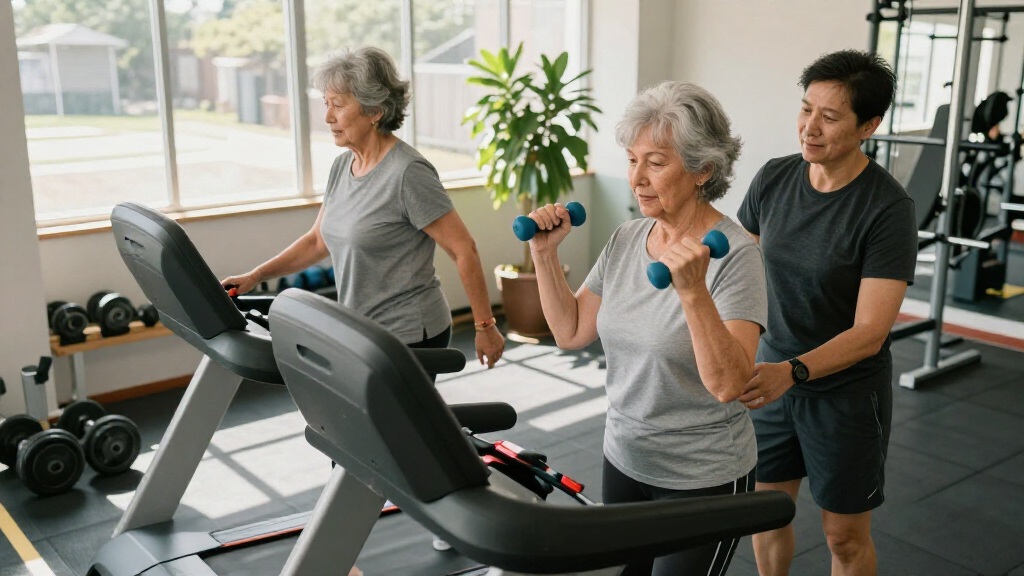
For strength, the article recommends three sessions per week, using either full-body workouts or a split between upper- and lower-body days. Siegel suggests three to four sets of 10 to 12 repetitions, with a weight that leaves about two possible repetitions in reserve. She describes progressive overload—gradually changing weight, repetitions, sets or movement tempo—as a way to keep challenging muscles. Her sample week includes two Zone 2 days, one interval day, three strength days and one rest day.
A Combined Plan for Later Life
The report addresses a practical concern for older women: exercise advice can sound contradictory, particularly around cardio, resistance work and bone health. Its central message is that these forms of activity serve different purposes and need not be treated as competing choices. For readers, that reframes planning around a mix of activities rather than a single favored workout.
The article cites U.S. figures to underline the issue. It reports that in 2022, 13.9% of adults aged 65 and older met both federal aerobic and muscle-strengthening guidelines in their leisure time. The reported share was 16.8% among people aged 65 to 74, 12.3% among those 75 to 84 and 6.2% among those 85 and older. These figures describe guideline participation; they do not show that the particular schedule proposed by Siegel prevents disease or fractures.
Its advice may be useful as a planning framework, but the volume and intensity described may not fit every reader. Age alone does not establish someone’s fitness, medical history, balance or injury risk. People considering a new or more demanding routine may need to adapt it with a qualified health or exercise professional.
As an affiliate, we earn on qualifying purchases.
The Guidance Behind the Debate
The source is a Sixty and Me article authored by Patricia Siegel, who identifies herself as a sports scientist, personal trainer and author of a forthcoming book on menopause strength and endurance training. The supplied article excerpt gives no publication date, study references for its workout targets or independent review details.
Siegel’s recommendations distinguish moderate, sustained endurance work from short intervals and resistance training. The report also says strength training can support bone density and proposes heel drops, skips, hops or jumps as additional impact stimulus when performed safely. It does not specify a screening process or give individualized modifications for people with osteoporosis, joint problems or other health conditions.
“there is no one or the other, no magic pill and no shortcut.”
— Patricia Siegel, in Sixty and Me
Limits of the Exercise Advice
The source material does not identify a new clinical trial or provide study citations for the specific weekly schedule, set and repetition ranges, or interval format. It is therefore unclear from this report how those exact targets were selected or how they compare with other professional guidance.
The article does not explain how its recommendations should change for women with osteoporosis, cardiovascular conditions, pain, mobility limitations or little recent exercise experience. Nor does it establish that the same routine is safe or appropriate for every person over 60. Its suggestions should be read as general guidance, not a diagnosis or substitute for individualized advice from a qualified professional.
Adapting a Routine Safely
Readers can use the article’s sample week to identify how endurance and strength might fit into a schedule, while adjusting the activities and workload to their circumstances. Siegel’s suggested progression is gradual: begin with manageable effort, use the talk test for moderate endurance and increase training demands over time rather than treating the sample as a requirement.
The source gives no announced follow-up study, policy change or publication milestone tied to the recommendations. For people with health conditions, bone concerns, balance issues or uncertainty about starting intervals or impact movements, the next step is to seek guidance from a qualified clinician or exercise professional familiar with their needs.
Key Questions
What is the main recommendation in the Sixty and Me article?
Patricia Siegel recommends combining endurance exercise and strength training for women over 60, rather than choosing only one type.
How much endurance exercise does the article suggest?
Siegel suggests two Zone 2 sessions of about 35 to 45 minutes each per week, plus interval training no more than one or two times weekly. These are the author’s recommendations, not an individualized prescription.
What strength routine does the report propose?
The article suggests three strength-training sessions per week, with three to four sets of 10 to 12 repetitions and a challenging weight that leaves about two repetitions in reserve.
Does the article say walking alone is enough?
It describes walking as a useful entry point, but says the body adapts and suggests changing pace, terrain or activity as fitness develops. The article does not establish a single rule that applies to every person.
Is the suggested plan suitable for everyone over 60?
The report does not provide individualized guidance for health conditions, osteoporosis, pain or mobility limitations. Anyone unsure whether to begin or increase exercise should consult a qualified health or exercise professional.
Source: rss
Fall Picks
fall essentials
As an affiliate, we earn on qualifying purchases.