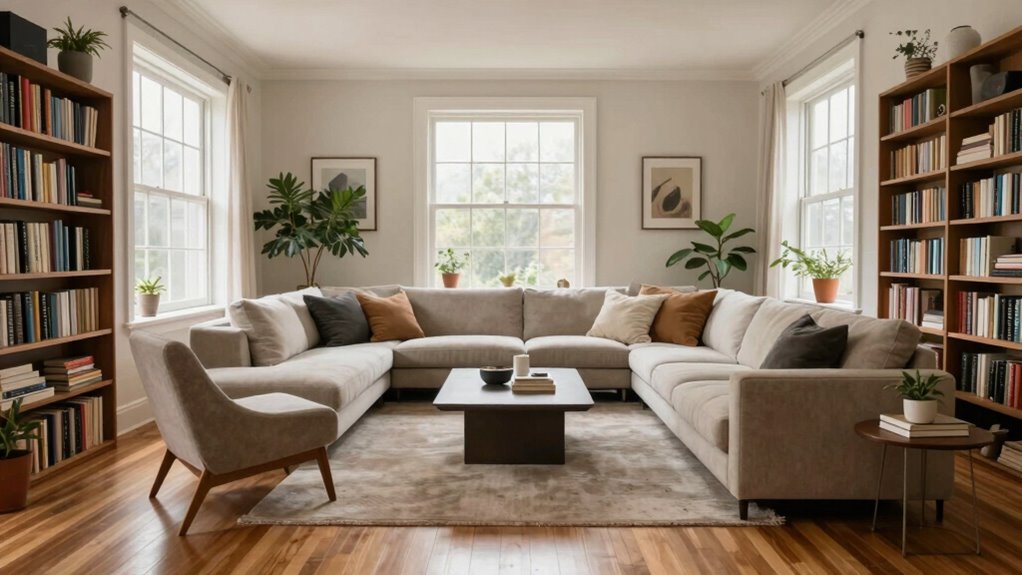

Strategic furniture placement can encourage more indoor walking by creating open pathways and distinct zones that invite movement. Keep furniture lightweight and positioned against walls to avoid obstacles and make navigation easier. Use visual cues like contrasting colors and lighting to guide your steps naturally across the space. Regularly adjust your layout to maintain flow and safety, transforming your environment into a dynamic, movement-friendly area. Continue exploring ways to optimize your space for greater activity.

Turn quiet afternoons into listening time
- Thousands of audiobooks, podcasts and originals
- Listen on your phone, tablet or Echo — also offline
- Cancel anytime
Key Takeaways
- Arrange furniture to create open, unobstructed pathways that encourage natural walking routes throughout the space.
- Use contrasting colors and lighting to visually define pathways and guide movement safely.
- Position larger furniture against walls to maximize central walking areas and reduce clutter.
- Incorporate flexible, movable furniture to reconfigure spaces for varied activities and promote frequent movement.
- Maintain clear, wide pathways (at least 36 inches) to ensure safe, easy navigation and prevent obstructions.
lightweight furniture for easy rearrangement
As an affiliate, we earn on qualifying purchases.
As an affiliate, we earn on qualifying purchases.
Why Indoor Movement Matters and How Furniture Placement Helps
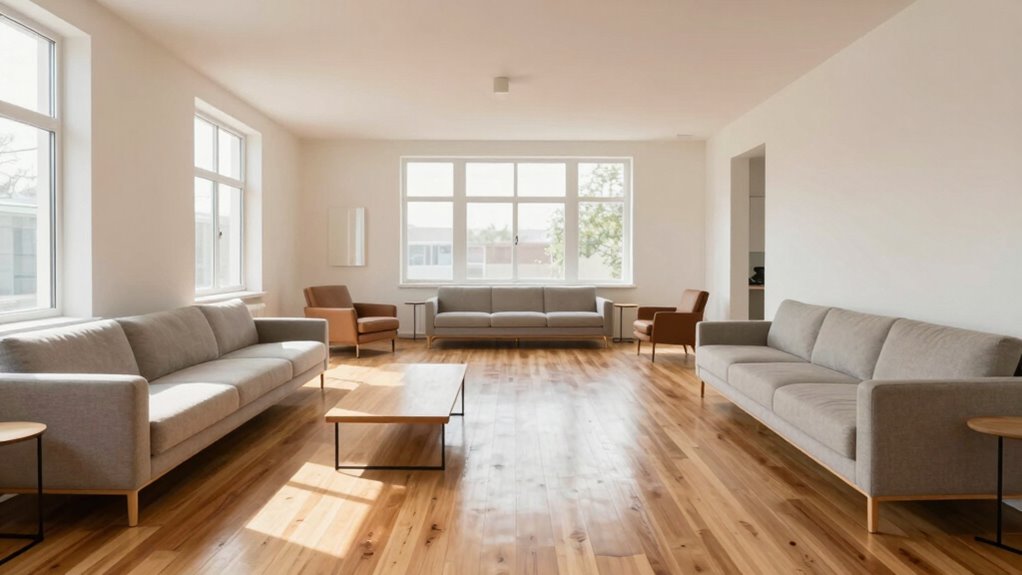
Indoor movement is essential for maintaining your health and preventing stiffness or discomfort. When you move regularly inside, you boost ergonomic benefits, reducing strain on your joints and muscles. Proper furniture placement encourages you to change positions, stretch, and walk around, which can improve circulation and posture. It also positively impacts your mental well-being by breaking the monotony of sitting still for long periods. When furniture is arranged thoughtfully, you’re more likely to get up and move naturally throughout the day. This simple shift not only supports your physical health but also helps clear your mind, reduce stress, and boost your overall mood. Creating an environment that promotes movement makes staying active indoors effortless and enjoyable. Additionally, projector placement plays a role in encouraging movement by prompting you to adjust your seating or screen position for optimal viewing. Incorporating ergonomic furniture can further motivate you to change positions and stay active during your indoor routines. Properly space planning also ensures there’s enough room to move freely, further encouraging regular activity. Implementing thoughtful furniture arrangement can make a significant difference in how often you naturally move around indoors.
Create Clear Pathways to Encourage Walking Around
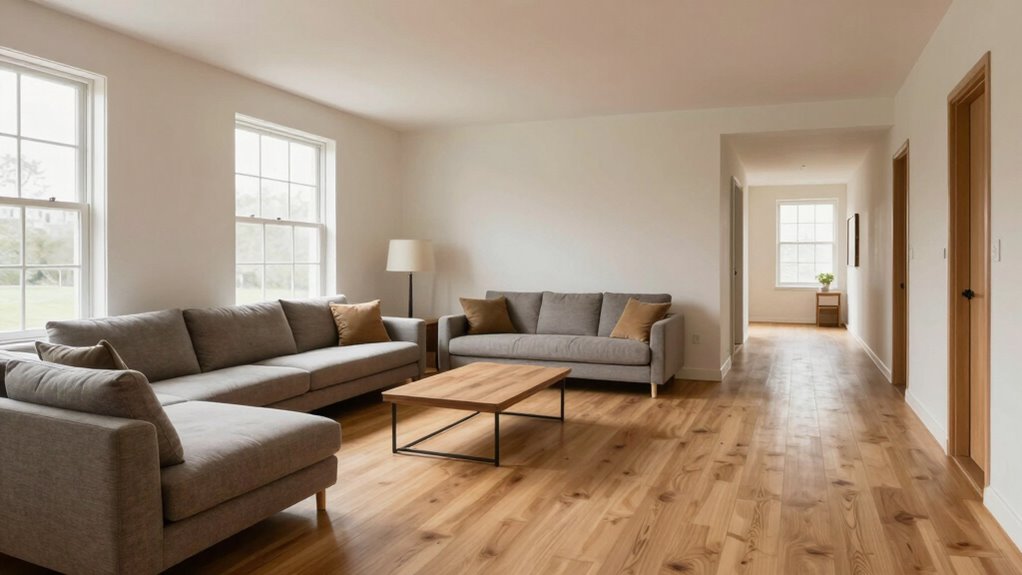
Creating clear pathways through your space is essential for encouraging natural movement and preventing obstacles that hinder walking. Use color schemes strategically; lighter shades can make pathways appear more open and inviting, while contrasting colors help define boundaries. Incorporate lighting effects to highlight these paths—bright, focused lighting draws attention to walkways, guiding movement smoothly. Avoid clutter and arrange furniture to create unobstructed routes between key areas. Keep pathways wide enough for comfortable passage, ideally at least 36 inches. Consistent color schemes along the route can visually extend the space, making it easier to navigate. Proper lighting and thoughtful color choices work together to make pathways obvious and inviting, encouraging you to walk more naturally and comfortably throughout your home. Additionally, positive thoughts and intentions can influence your environment, making the space feel more welcoming and conducive to movement. Maintaining a clutter-free environment and mindful spatial organization can further enhance the flow and usability of your indoor pathways, promoting visual clarity and ease of navigation. Incorporating interior design principles can help optimize your home’s layout for better movement and accessibility, creating a more functional and inspiring atmosphere that encourages movement and exploration within your space.
Design Zones That Boost Activity and Engagement
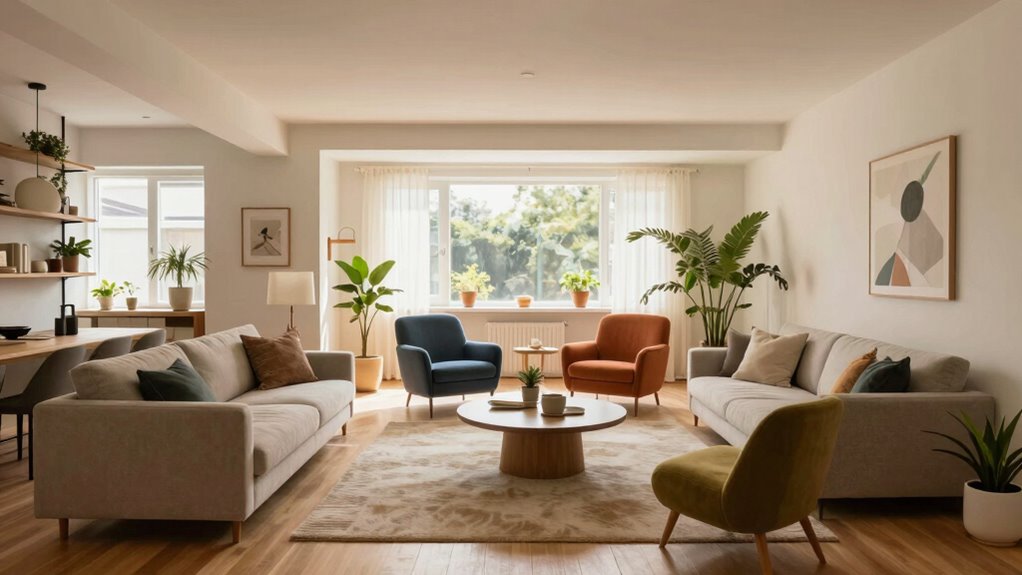
Creating distinct zones in your space encourages activity and interaction. By clearly defining areas for different functions, you invite movement and engagement. Make sure pathways stay open and interactive zones are inviting to keep your space lively and accessible. Incorporating outdoor elements like landscaping can further enhance the natural flow and encourage exploration within your backyard. Additionally, thoughtful furniture placement can utilize sound healing science principles to subtly promote relaxation and mindfulness during movement. Recognizing the importance of self-awareness in your environment can also help tailor your space to support personal growth and well-being. Incorporating security measures that align with home safety features ensures these zones remain secure as you move and engage throughout your home.
Create Clear Pathways
Clear pathways are essential for encouraging movement and making your space feel open and accessible. To achieve this, arrange furniture to create unobstructed routes that guide people naturally through different areas. Use contrasting color schemes for flooring and walls to visually define these pathways, making them easier to follow. Incorporate lighting options, such as well-placed lamps or overhead lights, to illuminate the routes and enhance visibility, especially in darker corners. Keep furniture low-profile and avoid placing large pieces directly in the walkway. This not only supports more walking indoors but also fosters a sense of openness. When pathways are clear, movement becomes seamless, and your space feels more inviting and functional for everyday activity. Understanding plant properties can also inspire natural ways to create calming, inviting environments that encourage relaxed movement around your home. Additionally, selecting ergonomic furniture can further promote comfortable and healthy movement patterns indoors. Paying attention to spatial flow can help optimize the layout for both efficiency and comfort, ensuring your home remains functional and welcoming. Incorporating smart home devices like motion sensors or automated lighting can further enhance pathway visibility and safety. Properly designed pathways can also reduce fatigue by encouraging regular walking and standing, which is supported by the use of anti-fatigue mats in key areas.
Define Interactive Areas
Designating specific areas within your space encourages activity and engagement by providing purposeful zones for different functions. These interactive zones, or activity hubs, motivate you to move around naturally and stay active. Clear boundaries help define spaces for reading, exercising, or socializing, making movement more intentional. When planning, consider placing a cozy seating area, a small workout corner, or a play zone for kids. Incorporating halal-friendly ingredients into your meal planning can also inspire you to prepare nutritious snacks for active breaks within these zones. Understanding device vulnerabilities can help ensure that your designated areas, especially those with smart devices, remain secure and protected from hacking attempts. Being mindful of ergonomic principles can further enhance comfort and promote healthier movement patterns within each zone. Additionally, designing these zones with zodiac traits in mind can help tailor the environment to better support your personal energy and habits. Recognizing cultural content can also enrich these spaces, making them more inspiring and personalized.
Choose Furniture Sizes and Arrangements for Better Flow
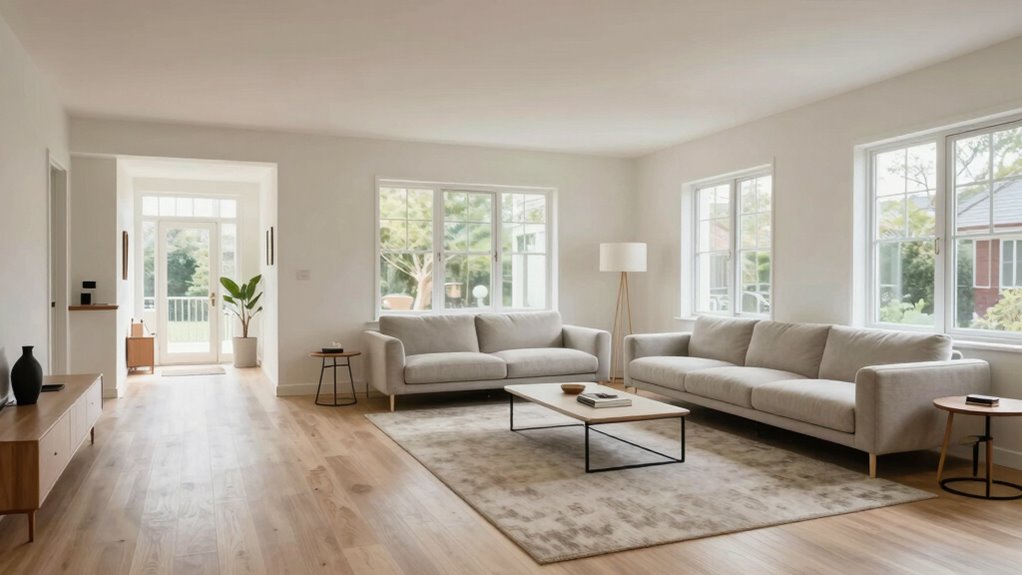
Choosing the right furniture sizes and arrangements is essential for maintaining a smooth flow in your indoor space. Opt for appropriately scaled furniture that doesn’t overwhelm the room or create tight spots. Smaller pieces can open up walkways, while larger items should be placed to avoid blocking pathways. Consider how color coordination can enhance visual harmony, making the space feel more open and inviting. Incorporate lighting effects to highlight open areas and draw attention away from cluttered zones. Arranging furniture with enough space between pieces encourages natural movement, reducing congestion. Keep pathways clear and unobstructed, ensuring you can walk comfortably from one area to another. Additionally, understanding spatial arrangement principles can help optimize your layout for better circulation. Thoughtful sizing and placement make your space more navigable, encouraging more walking and creating a more welcoming environment.
Use Visual Cues to Motivate Movement in Your Space
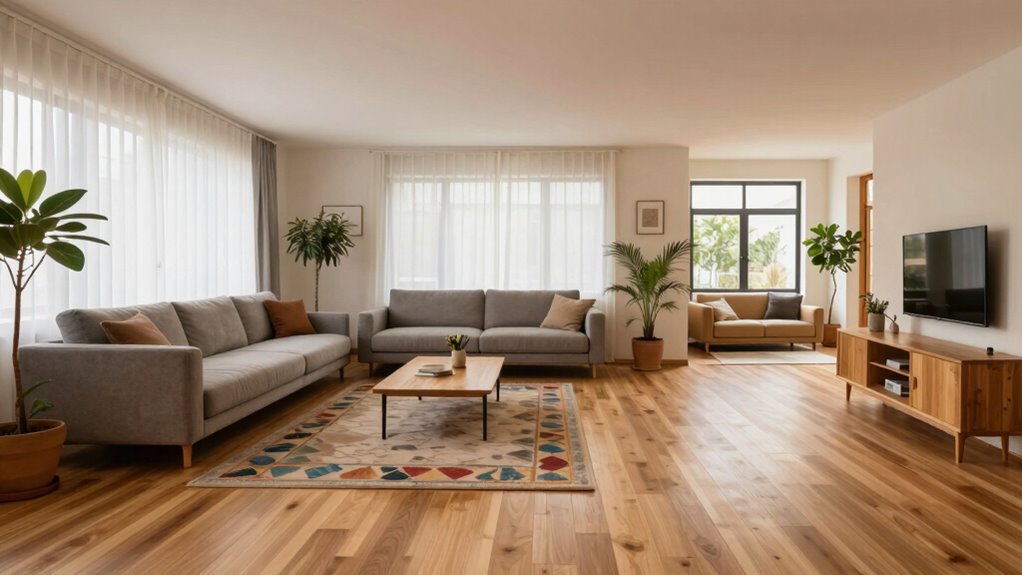
Using visual cues effectively can subtly guide people through your space and encourage movement. One way is through strategic color schemes—bright or contrasting colors on walls or furniture draw attention and direct foot traffic naturally. Incorporate lighting accents to highlight pathways or focal points, making movement feel intuitive and inviting. For example, a well-lit corridor or a vibrant accent wall can signal where to go, motivating people to follow a designated route. These cues create visual interest and serve as subconscious prompts, reducing hesitation and promoting activity. By carefully choosing colors and lighting accents, you make your space more engaging and dynamic, subtly inspiring movement without overwhelming the senses. This approach helps foster a more active and flowing indoor environment.
Keep Your Space Obstacle-Free to Promote Easy Movement
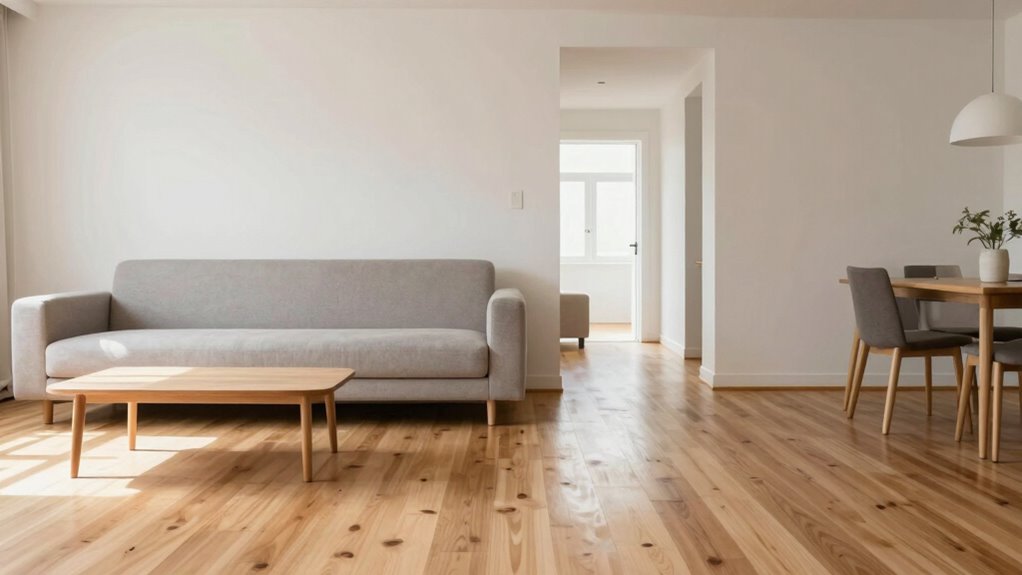
Keeping your walkways clear makes it easier to move around safely and comfortably. Removing clutter and arranging furniture to create open pathways reduces the risk of tripping or bumping into objects. When your space is obstacle-free, you’ll enjoy smoother, more effortless navigation.
Clear Pathways Encourage Mobility
To promote easy movement throughout your space, maintaining clear pathways without obstacles is essential. Proper furniture ergonomics ensures that pieces are arranged to maximize open space, reducing the risk of tripping or bumping into furniture. Create a logical flow by positioning larger furniture against walls and leaving enough room for walking paths. Achieving aesthetic balance helps you keep the space inviting without cluttering the walkway. Avoid placing furniture in high-traffic areas, which can impede mobility. Instead, focus on keeping pathways wide enough for comfortable movement, especially near entrances and hallways. When furniture is thoughtfully placed, your space feels more open and accessible, encouraging more walking and activity. Clear pathways become the backbone of a functional, safe, and aesthetically pleasing environment.
Minimize Clutter for Safety
Clutter can quickly turn a safe, open space into a hazard, making it difficult to move freely and increasing the risk of trips and falls. To keep your space obstacle-free, invest in smart storage solutions that hide or organize items out of the way. Use baskets, cabinets, or under-furniture storage to reduce visual clutter. Be mindful of decorative accents; while they add personality, too many can create obstacles. Limit their placement to designated areas, and avoid overcrowding surfaces and pathways. Regularly tidy up to prevent clutter buildup and maintain clear routes. A tidy space not only enhances safety but also encourages more walking indoors, making your home more accessible and comfortable for everyone.
Incorporate Flexible Furniture for Dynamic, Adaptable Spaces
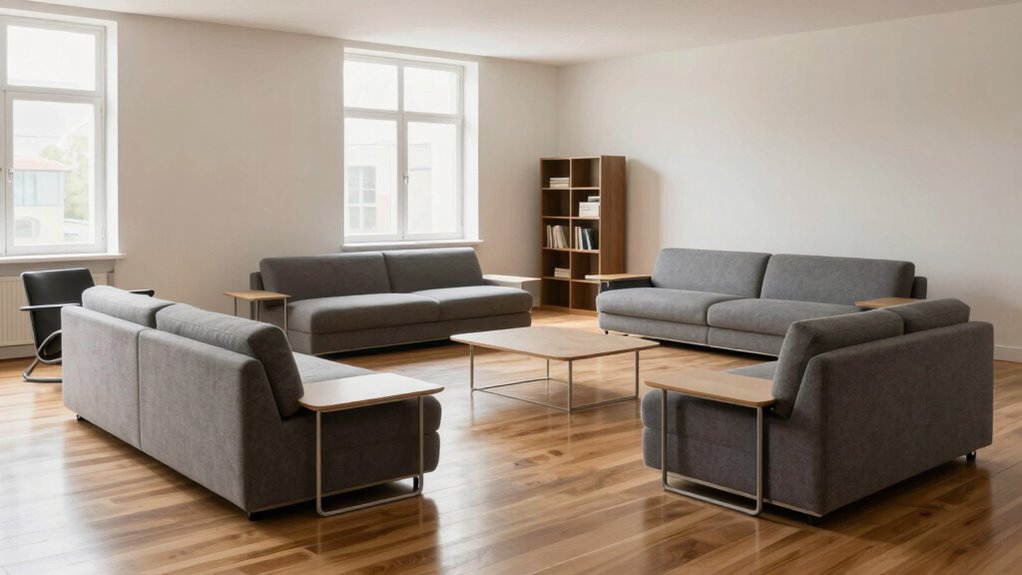
Incorporating flexible furniture allows you to quickly adapt your space to different needs and activities. Modular furniture is key to creating flexible layouts that easily shift from one purpose to another. For example, stackable chairs, fold-away tables, or movable shelving enable you to clear pathways or reconfigure rooms for exercise, play, or socializing. This adaptability encourages more walking by reducing obstacles and encouraging movement throughout the space. With flexible furniture, you can transform a living area into a workout zone or a play area without hassle. It also helps maximize small spaces, making them feel less cramped and more inviting for movement. By choosing versatile pieces, you promote an environment that supports spontaneous activity and continuous circulation.
Regularly Review and Adjust Your Furniture Layout
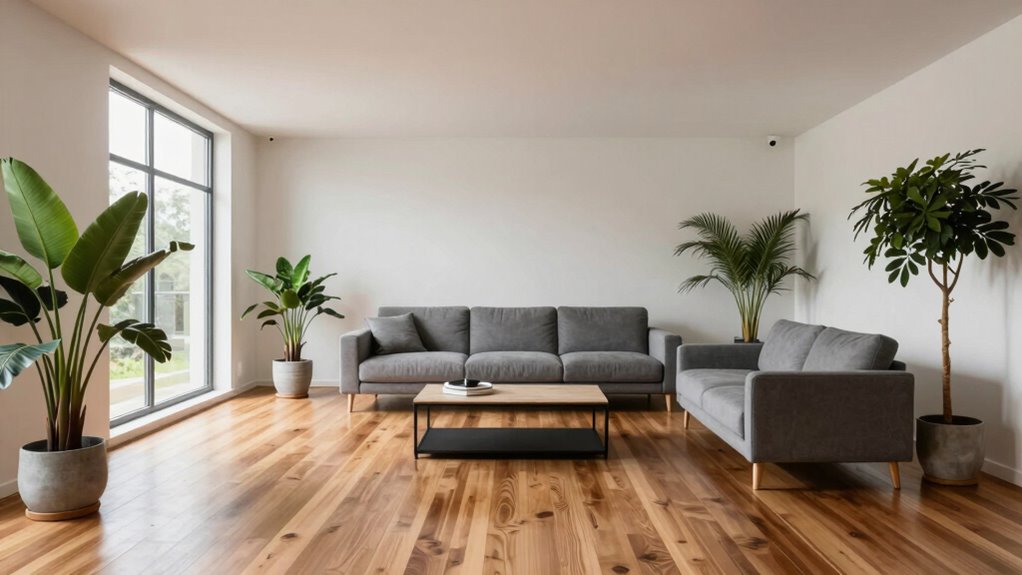
Regularly reviewing and adjusting your furniture layout guarantees your space remains functional and promotes better movement. Over time, furniture shifts or new pieces can disrupt furniture ergonomics and hinder easy navigation. By periodically reassessing, you guarantee pathways stay clear and traffic flows smoothly. Focus on maintaining aesthetic harmony, so your space feels cohesive and inviting. Consider whether your current arrangement supports natural walking angles and reduces obstacles. Small tweaks, like repositioning a sofa or narrowing a cluttered area, can considerably improve mobility. Staying proactive helps you identify potential congestion points before they become problematic. Consistent adjustments keep your environment adaptable, safe, and visually appealing, making it easier to move freely and comfortably within your home.
Frequently Asked Questions
How Can Furniture Placement Improve Overall Indoor Safety?
You can improve indoor safety by strategically arranging furniture to create clear pathways, making it easier to walk without obstacles. Remove or rearrange bulky pieces that block walkways to prevent tripping hazards. Keep pathways unobstructed, especially around high-traffic areas, so everyone can move safely. Proper furniture placement not only enhances circulation but also reduces the risk of accidents, creating a safer, more comfortable environment for all.
What Materials Are Best for Flexible, Movable Furniture?
You should choose modular furniture made from lightweight materials like plastic, aluminum, or certain composites. These materials make the furniture easy to move and reposition, giving you flexibility to adapt your space for better walking flow. Modular pieces also allow for multi-functional use and quick rearrangements, which are perfect for creating an adaptable environment. Opt for lightweight, durable materials to guarantee comfort, safety, and ease of movement throughout your indoor space.
How Does Lighting Influence Movement Within a Space?
Lighting ambiance plays a vital role in guiding your movement within a space. Bright, well-placed lighting highlights movement pathways, making it easier for you to navigate comfortably. Soft lighting creates inviting zones and reduces obstacles’ visual impact, encouraging you to move freely. Proper lighting design guarantees that pathways are clearly defined, boosting safety and flow. When thoughtfully integrated, lighting enhances your overall experience and promotes more natural indoor movement.
Can Color Schemes Encourage More Walking Activity?
Color schemes act like gentle invitations, guiding you naturally through a space. By using color psychology and strategic visual cues, you can encourage more walking activity indoors. Bright, warm tones draw attention and energize movement, while cooler hues create calm, making people linger. When thoughtfully applied, colors become subtle signals that motivate you to explore and move more, transforming your space into a lively, inviting environment.
What Are Cost-Effective Ways to Redesign Furniture Layout?
You can implement cost-effective furniture layout changes using space-saving solutions like multi-functional furniture and strategically placed pieces. Opt for budget-friendly rearrangements by creating clear pathways and avoiding clutter, which encourages more walking indoors. Rearrange existing furniture to maximize open space, and consider DIY options like repurposing or repositioning items. These simple, affordable steps can considerably improve flow and promote movement without a hefty investment.
Conclusion
By thoughtfully arranging your furniture, you turn your home into a lively, bustling hub—think of it as your own personal Renaissance Faire, where movement and interaction flow freely. Keep pathways clear, create inviting zones, and stay flexible with your layout. Regularly revisit your setup like a seasoned artist adjusting their masterpiece. With these simple tweaks, your space will invite more walking, making your home not just beautiful but also more vibrant and alive every day.
Fall Picks
fall essentials
As an affiliate, we earn on qualifying purchases.