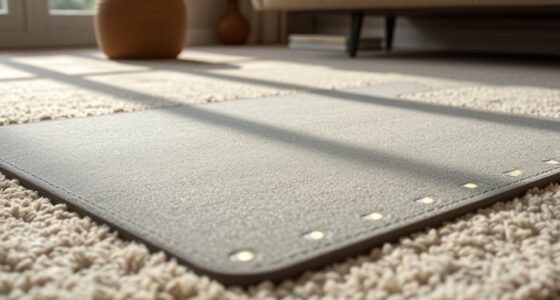
To stop slippery rugs cold, start by choosing the right anti-slip rug pad suited for your flooring type, like rubber or felt-backed pads. For quick fixes, double-sided tape or rug grippers work well—just guarantee surfaces are clean first. You can also use household items like yoga mats or shelf liners cut to size. For long-term safety, learn how to properly secure your rug and keep its grip over time—more solutions await if you look further.
Key Takeaways
- Use a high-quality non-slip rug pad designed for your floor type to prevent slipping.
- Apply double-sided carpet tape or rug grip sprays to secure the rug firmly in place.
- Consider adding weighted corners or heavy felt pads for extra stability without floor damage.
- Regularly clean and dry the rug and floor surfaces to maintain optimal grip.
- Avoid using cheap adhesives or improper solutions that can cause safety hazards or damage the rug or floor.
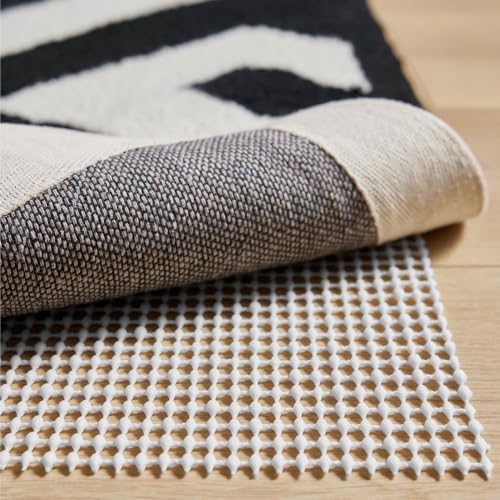
GORILLA GRIP® Strong Rug Pad Gripper, Grips Help Keep Area Rugs Safe in Place, Slip and Skid Resistant Pads for Tile and Hardwood Floors, Under Carpet Mat Cushion Floor Protection, 2×3 FT
- Original Extra Strong Grip: Dual-sided grip for secure hold
- Reduces Rug Bunching and Sliding: Prevents movement in high traffic areas
- Floor Protection: Open grid design safeguards floors
As an affiliate, we earn on qualifying purchases.
As an affiliate, we earn on qualifying purchases.
Identifying the Cause of Your Rug’s Slipperiness

If your rug feels slippery underfoot, the first step is to identify what’s causing the issue. Start by checking the rug pad thickness; a pad that’s too thin may not provide enough grip, while one that’s too thick can cause instability. Also, consider rug material compatibility—some materials, like silk or nylon, tend to slip more easily on certain surfaces. Examine the rug’s backing and texture, as smooth or shiny surfaces are more prone to slipping. Additionally, look at the floor type underneath; hardwood and tile floors often require different solutions than carpets. Being aware of recent technological advancements in anti-slip solutions can help you choose more effective products. By understanding these factors, you can better determine the root cause of the slipperiness and move forward with selecting the right anti-slip measures.
Choosing the Right Anti-Slip Rug Pads

Choosing the right anti-slip rug pad can make a significant difference in preventing slips and guaranteeing your rug stays securely in place. When selecting a pad, consider your rug’s design and the room’s aesthetic. A clear, thin pad works well for delicate or decorative rugs, preserving their appearance and intricate details. If your rug features bold colors or patterns, opt for a pad that won’t interfere with the design. For added decorative accents, look for pads with textured or patterned surfaces that complement your rug’s style. Ascertain the pad is compatible with your rug’s material and size. Properly chosen, the right anti-slip pad not only enhances safety but also elevates your rug’s overall look, keeping it securely positioned and visually appealing. Additionally, selecting a pad with non-slip backing can further improve stability and safety.
DIY Non-Slip Solutions Using Household Items
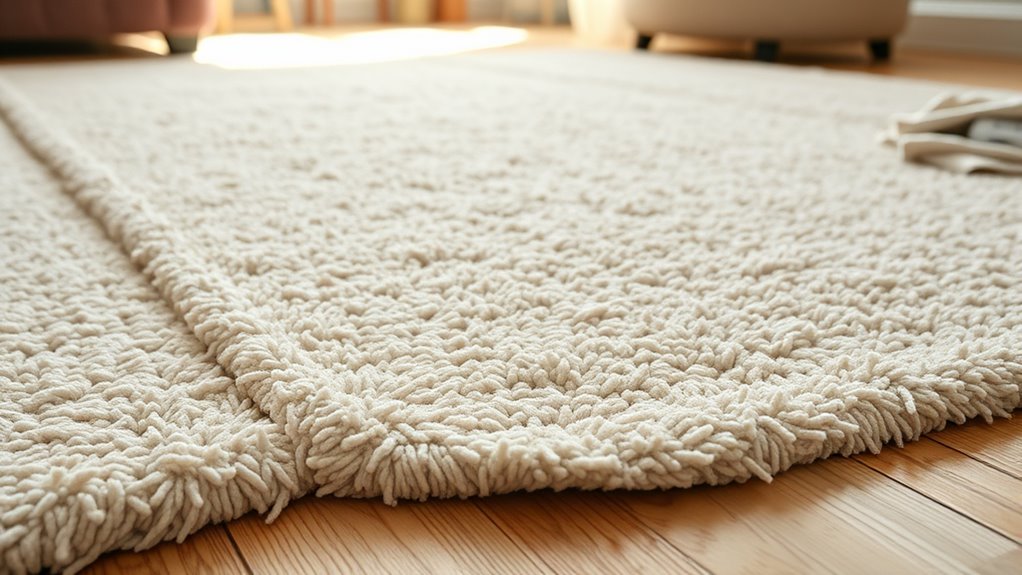
Many common household items can be repurposed to create effective non-slip solutions for your rugs. For example, rubber shelf liners or yoga mats can be cut to size and placed underneath, providing grip regardless of your rug’s material. Double-sided tape, if used carefully, can also help secure lightweight rugs and reduce safety hazards caused by slipping. Carpet tacks or upholstery nails offer a more permanent fix for rugs with a sturdy backing. Additionally, sprays like non-slip rug grip or even some DIY solutions such as diluted latex paint can improve traction. Be mindful of your rug’s material—fragile fabrics may not tolerate certain adhesives or tapes. The contrast ratio of your rug and flooring materials can also influence slip resistance, with higher contrast often indicating a better grip. These DIY solutions are affordable, easy to implement, and can considerably minimize the risk of accidents caused by slippery rugs.
Applying Double-Sided Carpet Tape Effectively
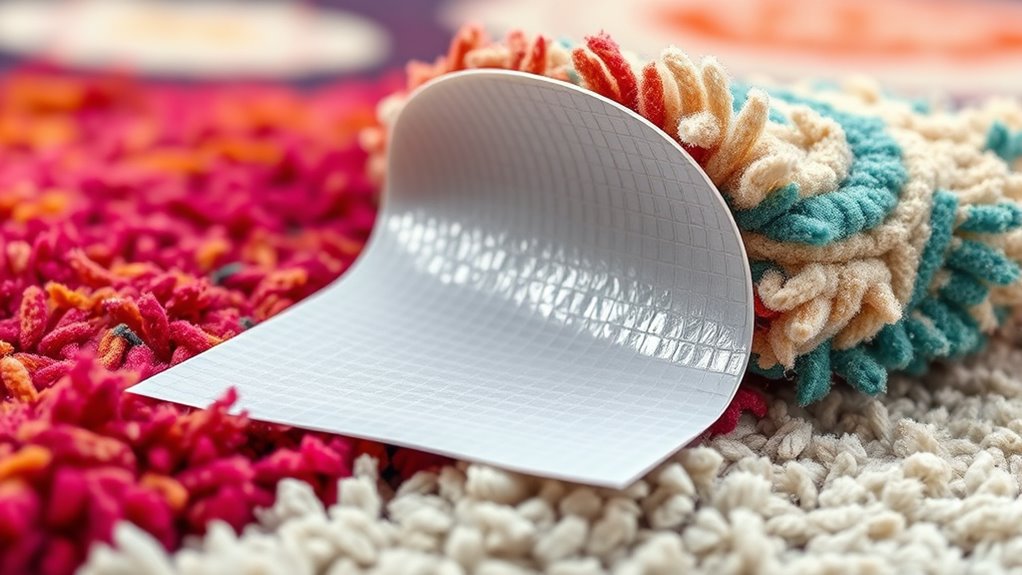
Before applying double-sided carpet tape, make sure to clean and dry the rug and floor surfaces thoroughly. When applying the tape, press it firmly and smooth out any wrinkles to guarantee it sticks well. Finally, check the rug’s edges and walk over it to confirm it’s secure before regular use. Incorporating professional equipment can ensure a more reliable and long-lasting hold.
Preparing the Carpet Surface
To make certain your rug stays firmly in place, start by preparing the carpet surface thoroughly. First, identify your carpet fiber types, as different fibers may require specific cleaning techniques to remove dust, oils, and debris that can interfere with tape adhesion. Use appropriate rug cleaning techniques to ensure the surface is clean and dry. Vacuum the area thoroughly, paying special attention to the edges where the tape will be applied. Remove any loose fibers, lint, or residue that could prevent the tape from sticking properly. A clean, smooth surface ensures better grip and reduces the risk of slipping. Taking these preparatory steps creates a solid foundation for the double-sided tape, making your fix more effective and long-lasting. Additionally, ensuring the area is free from residue and contaminants can significantly improve the tape’s effectiveness.
Proper Tape Application Techniques
Applying double-sided carpet tape correctly is essential for securing your rug effectively. Start by carefully positioning the rug where you want it, considering both rug placement and the room’s aesthetic considerations. Once in position, peel back a small section of the tape’s backing, revealing the adhesive. Press the exposed tape firmly onto the rug’s underside, smoothing out wrinkles or air bubbles. Then, peel away the rest of the backing while slowly lowering the rug onto the prepared surface, ensuring even contact. Use a rolling pin or your hand to press the entire rug down, maximizing adhesion. Proper tape application prevents slipping and maintains a clean look, helping your rug stay put without damaging the surface underneath. Focus on steady, even pressure for best results. Incorporating vintage decor elements can also help your rug blend seamlessly into a cozy farmhouse bedroom.
Securing and Final Checks
Once you’ve laid the rug and pressed down the tape, it’s crucial to perform final checks to guarantee everything is secure. Start by inspecting the edges of your area rugs to ensure the double-sided carpet tape adheres well and isn’t lifting. Check that the rug padding underneath is flat and properly positioned, as it helps prevent slipping and bunching. Gently tug at the rug’s corners and sides to confirm they don’t shift. If you notice any loose spots or movement, reapply or add more tape as needed. Make sure the tape covers the entire perimeter for maximum grip. Ensuring proper adhesion and support is essential for safety and longevity. These final checks help ensure your rug stays in place, providing a safe, slip-free surface in your space.
Using Non-Slip Rug Grippers for Immediate Fixes
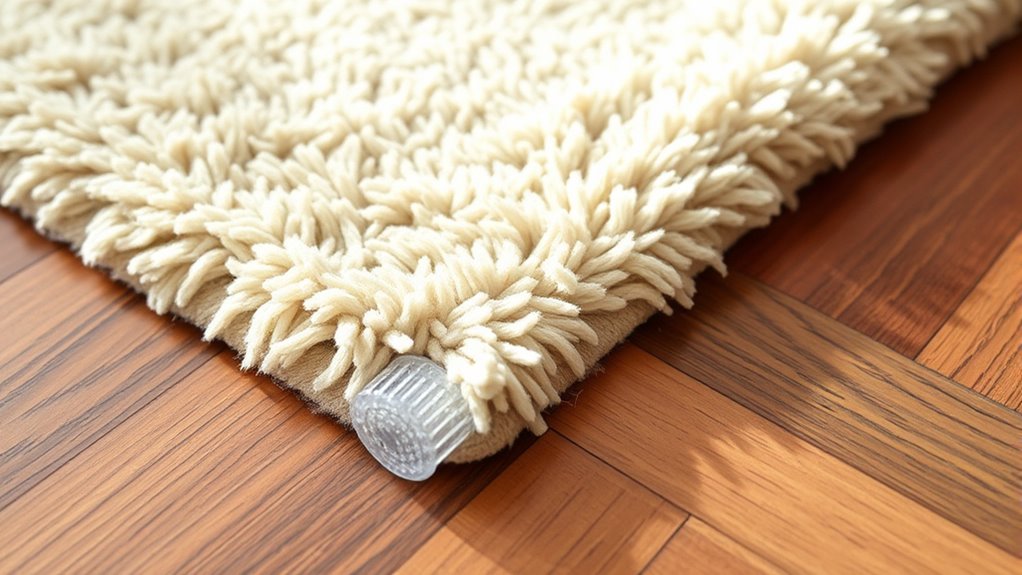
If your rug keeps slipping, non-slip rug grippers offer an immediate and effective solution. These grippers work well regardless of your rug material, whether it’s plush, flat-weave, or shag. To guarantee a secure fit, choose grippers that match your rug size—larger rugs may need multiple grippers placed at key points, while smaller rugs might only require a few. Simply peel off the backing and stick the grippers evenly around the edges or corners of your rug. This quick fix prevents slipping and reduces tripping hazards instantly. Keep in mind, the right type of gripper can make a noticeable difference in stability, giving you peace of mind while walking on your rug. Using non-slip rug grippers is an affordable, fast solution for immediate safety.
How to Properly Secure Rugs on Different Floor Types

To keep your rugs secure on various floors, you need the right solutions. Non-slip rug pads work well on hardwood and tile, while surface-specific adhesives suit laminate and vinyl. For added stability, weighted rug solutions can also prevent slipping without damaging your floors. Using the appropriate spray tips ensures the best application and adhesion of these solutions.
Non-Slip Rug Pads
Non-slip rug pads are essential for keeping your rugs securely in place, especially on different types of flooring. Choosing the right rug pad materials is key to effective slip prevention techniques. For hardwood and tile, opt for rubber or felt-backed pads that grip the surface without causing damage. For carpets, thinner pads prevent bunching and slipping. Always measure your rug and floor area accurately to select a pad that fits snugly. Using a high-quality rug pad not only prevents slips but also extends the life of your rug by reducing wear. Make certain the pad is compatible with your floor type to avoid any damage or shifting. Properly chosen rug pads create a stable foundation, keeping your rugs in place safely and securely. Additionally, selecting a pad made from compatible materials ensures it won’t degrade or damage your flooring over time.
Surface-Specific Adhesives
Choosing the right surface-specific adhesive is essential for securing your rug without damaging your floors. Different floor types require adhesives formulated for their unique surfaces. For hardwood or laminate floors, use a gentle, vinyl-safe adhesive that won’t strip finishes or cause discoloration. If your rug is large or heavy, ensure your adhesive matches the rug sizing to provide adequate grip without excess mess. Consider fiber types too; delicate fibers like wool or silk need a light adhesive, while sturdy synthetic fibers can handle stronger bonds. Apply the adhesive carefully, following manufacturer instructions, to avoid over-application or damage. Properly selecting and using the right adhesive keeps your rug securely in place while preserving the integrity of your floor and rug. Additionally, understanding adhesive compatibility with different surfaces helps prevent accidental damage and ensures a long-lasting hold.
Weighted Rug Solutions
Weighted rug solutions offer a practical way to keep your rugs firmly in place across various flooring types. By adding weight, you can enhance rug stability while maintaining your rug’s aesthetic. Different rug materials respond better to specific weighted options, so choose wisely to preserve their look. For example, thick felt pads or sandbags can work well on hardwood or tile floors, providing extra grip without damaging the surface. Use heavier objects that blend with your rug’s style, like decorative stones or custom weights. Here’s a quick guide:
| Floor Type | Recommended Weighted Solution | Rug Material Compatibility |
|---|---|---|
| Hardwood | Sandbags | Wool, Cotton |
| Tile | Heavy Felt Pads | Synthetic, Nylon |
| Carpeting | Weighted Corners | All Rug Materials |
| Laminate | Non-slip Mats | All Rug Materials |
| Vinyl | Adhesive Weights | Rubber-backed Rugs |
Tips for Maintaining Your Rug’s Grip Over Time
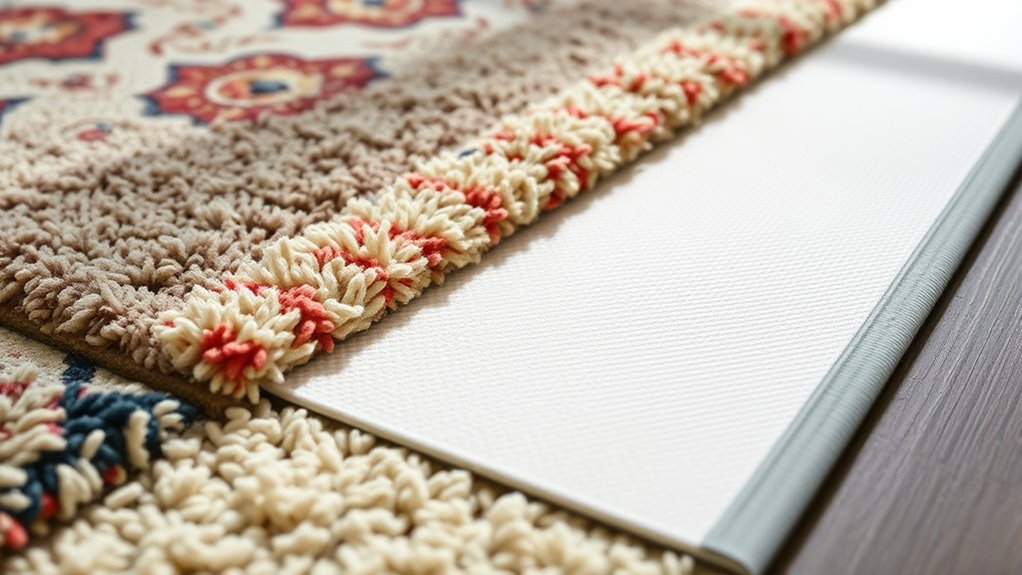
Have you ever noticed your rug slipping just when you’re about to step onto it? To keep your rug’s grip over time, regularly check the underside for wear or debris. Clean the rug’s backing and the floor surface beneath it to prevent slipping. Using non-slip pads or strips can maintain grip, especially on high-traffic areas. Be mindful of your rug’s aesthetics and decorative patterns; choose solutions that won’t damage the design or fabric. Rotate your rug periodically to distribute wear evenly, which helps preserve its grip and appearance. Avoid using harsh chemicals or rough brushes that could deteriorate the backing. Consistent maintenance ensures your rug stays securely in place, preserving both its decorative appeal and functional safety over the long term. Additionally, understanding dream symbolism can offer insights into underlying anxieties or desires that may influence your household environment.
Common Mistakes to Avoid When Securing Rugs

While regular maintenance helps keep your rug secure, it’s equally important to avoid common mistakes that can undermine your efforts. One major mistake is using the wrong adhesive or tapes, which can create safety hazards if they fail or cause damage to the rug or floor. Overusing DIY solutions like makeshift grips or inexpensive glues can increase DIY risks, leading to slips or trips. Another mistake is neglecting to properly clean and dry the area before securing the rug, which reduces adhesion and stability. Failing to test the rug’s grip after installation can also be dangerous. Additionally, choosing the wrong portable camping gear or accessories can compromise safety and comfort during outdoor excursions. Avoid rushing the process or skipping safety checks, as these errors can make your rug even more slippery and pose safety hazards for everyone in your home.
When to Consider Professional Help for Rug Safety
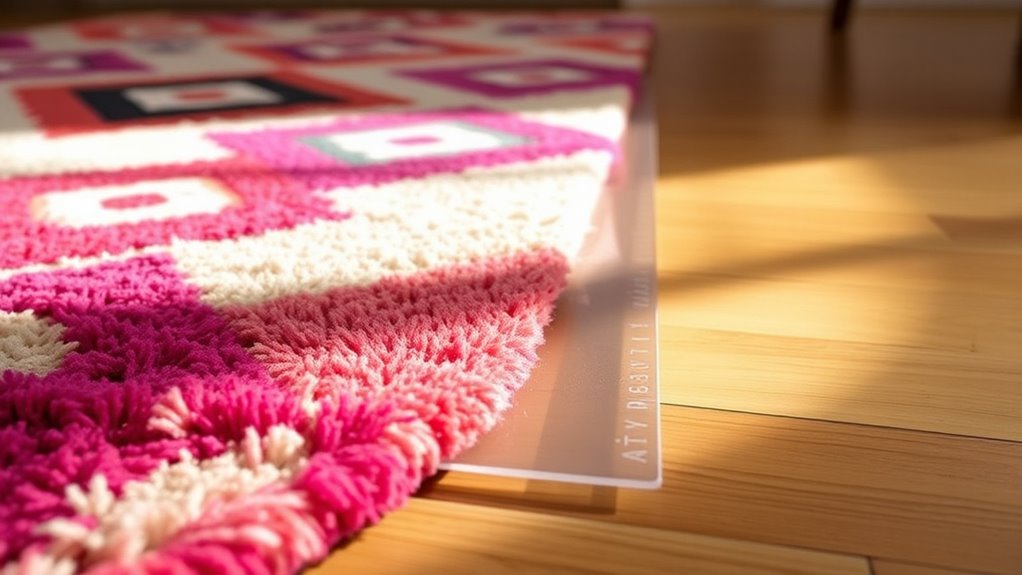
Knowing when to seek professional help is crucial for ensuring your rug remains safe and secure. If your rug’s material makes it difficult to keep in place, or if you’ve tried basic fixes without success, it’s time to call in experts. Certain rug materials, like delicate fibers or intricate weaves, may require specialized adhesives or techniques to prevent slipping. Additionally, if your rug’s placement affects your room decor or poses a safety risk, professional intervention can ensure it stays firmly anchored. Don’t ignore persistent slipperiness or uneven edges, as these can lead to accidents. Professionals can assess your rug’s specific needs, recommend the right solutions, and help you maintain a safe, stylish space without compromising your room’s decor. Considering lifestyle factors like your daily routine and space usage can also help determine the best approach for rug safety.
Frequently Asked Questions
Can Weather Changes Affect My Rug’s Slipperiness?
Yes, weather impact can cause rug slippage. When temperatures or humidity change, your rug’s backing might become less sticky or more slippery, increasing the risk of slipping. You’ll notice more rug slippage during damp or humid conditions, especially if your rug isn’t secured properly. To prevent accidents, consider using non-slip pads or tape, and check your rug regularly, especially during seasonal weather changes, to verify it stays in place.
Are There Eco-Friendly Anti-Slip Rug Solutions Available?
Yes, eco-friendly solutions for anti-slip rugs are available. You can use sustainable options like natural rubber pads, cork-backed grips, or non-toxic adhesive sprays that help keep your rugs in place without harming the environment. These eco-friendly solutions are safe for your home and the planet, providing effective grip while reducing your ecological footprint. Opting for sustainable options guarantees you maintain safety and promote eco-conscious living.
How Often Should I Replace My Rug Pads for Safety?
Rug pad lifespan varies, but you should replace your pad periodically for safety. Generally, follow replacement guidelines of every 1 to 3 years, depending on usage and wear. Regularly inspect your rug pad’s condition—if it’s thinning, slipping, or showing signs of damage, it’s time for a change. Staying proactive guarantees stability, safety, and the seamless security you seek, preventing slips and slips from becoming slips and trips.
Do Different Rug Materials Require Specific Anti-Slip Methods?
Different rug materials do require specific anti-slip treatments. For example, natural fiber rugs like jute or sisal may need rubberized or silicone-based anti-slip pads, while delicate woven or wool rugs benefit from adhesive-backed grip pads that won’t damage fibers. Always consider rug material considerations when choosing anti-slip treatments to guarantee safety without harming your rug’s texture or appearance. Properly matched anti-slip methods keep your rugs securely in place and prevent accidents.
Is It Safe to Use Household Items as Long-Term Rug Fixes?
Yes, it’s generally safe to use household items as long-term rug fixes if you choose wisely. DIY remedies like double-sided tape or non-slip pads can work well, but make certain they’re durable and compatible with your rug material. Store-bought solutions, such as commercial rug grippers, are often more reliable and designed for long-term use. Always follow manufacturer instructions to keep your rug secure and avoid damage.
Conclusion
By choosing the right fix and maintaining your rugs properly, you can prevent slips and falls from happening—your safety is worth more than a thousand accidents. Don’t let a slippery rug turn your home into a danger zone; with these simple solutions, you’ll keep your space safe and secure. Remember, a secure rug isn’t just a small fix—it’s the superhero that saves your day from chaos and accidents!