To prevent bathroom falls, assess your space for hazards like clutter or slippery surfaces, then install sturdy grab bars and non-slip mats in key areas. Make certain good lighting, use shower seats, and keep pathways clear of obstacles. Regularly check and maintain fixtures, and educate everyone on safety protocols. Incorporating assistive devices and smart sensors can add extra protection. Keep these tips in mind, and you’ll find simple ways to create a safer bathroom environment.

Turn quiet afternoons into listening time
- Thousands of audiobooks, podcasts and originals
- Listen on your phone, tablet or Echo — also offline
- Cancel anytime
Key Takeaways
- Install sturdy grab bars and non-slip mats to prevent slips and falls in the bathroom.
- Keep pathways clear and organize essentials to reduce clutter and trip hazards.
- Use motion-activated lighting and emergency alert systems for better visibility and quick assistance.
- Regularly inspect and maintain bathroom surfaces, fixtures, and flooring for safety.
- Educate users on bathroom safety, proper transfer techniques, and fall prevention practices.
As an affiliate, we earn on qualifying purchases.
Assessing Bathroom Safety Risks
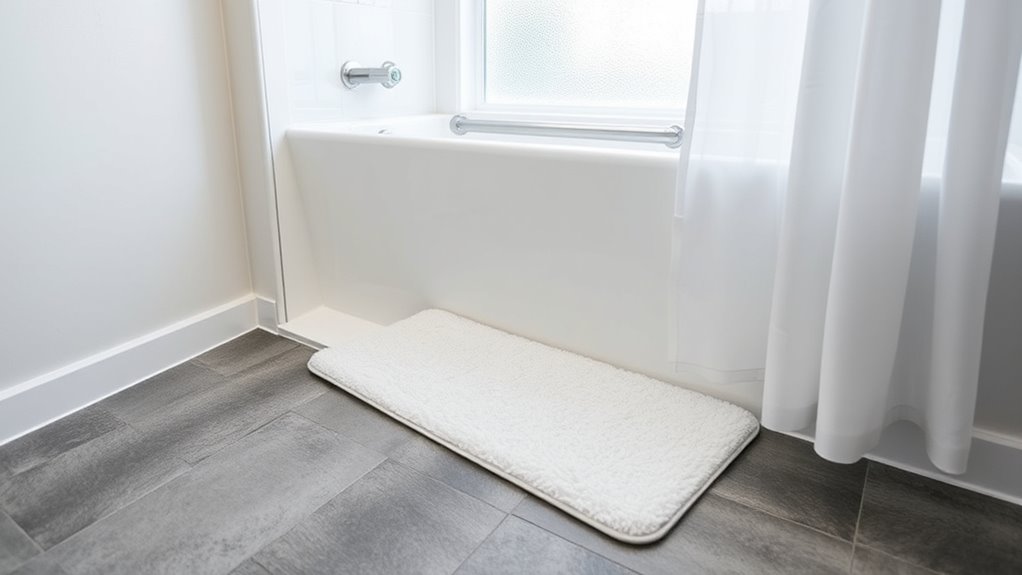
Before making any safety improvements, it’s essential to identify the specific risks in your bathroom. Start by examining your bathroom layout for hazards like clutter, loose rugs, or uneven flooring that could cause slips. Look at the placement of fixtures; if the shower or bathtub is too high or awkwardly positioned, it increases fall risk. Also, check the water temperature settings—scalding water can cause burns and sudden movements that lead to falls. Ensure that controls are easy to reach and adjust. By evaluating these areas, you can pinpoint potential dangers and prioritize safety modifications. Taking a thorough look at your bathroom’s layout and water temperature management helps create a safer environment, reducing the likelihood of falls and injuries. Incorporating automation technologies can also help monitor water temperature and alert users to unsafe conditions, further enhancing safety.
Installing and Using Grab Bars Effectively
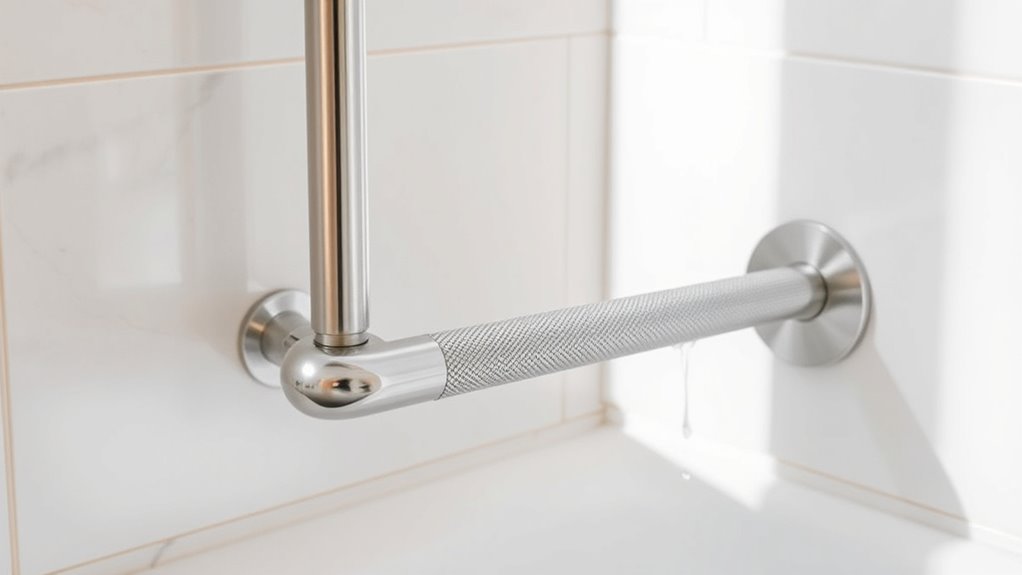
Installing grab bars properly is essential for maximizing bathroom safety. Choose the right grab bar types, such as fixed, swivel, or padded models, based on your needs. To guarantee safety, install grab bars at the correct height—typically around 33 to 36 inches above the floor—where you can comfortably reach them while seated or standing. Use a sturdy wall stud or appropriate anchors for secure attachment, and avoid drywall alone. When installing, make sure the grab bar is horizontal or slightly angled, providing maximum support. Test the installation by applying weight to confirm stability. Remember, well-placed grab bars can prevent slips and falls, giving you confidence and stability during bathroom activities. Proper installation is key to ensuring they function effectively when needed most. Additionally, choosing appropriate grab bar types can further enhance safety and support.
Choosing Non-Slip Flooring and Mats

Choosing the right non-slip flooring and mats is essential for preventing bathroom falls. Slip resistant tiles, such as textured ceramic or porcelain, provide better traction, especially when wet. These tiles reduce the risk of slipping on smooth surfaces. Additionally, rubber bath mats offer a secure footing and prevent accidents on wet floors. Place mats strategically outside the shower or bathtub and ensure they have a non-slip backing. Regularly clean and inspect your flooring and mats for wear and tear, replacing them as needed. By selecting slip resistant tiles and using rubber bath mats, you create a safer environment that minimizes the chances of slipping and falling, giving you peace of mind during bathroom activities.
Improving Bathroom Lighting for Better Visibility
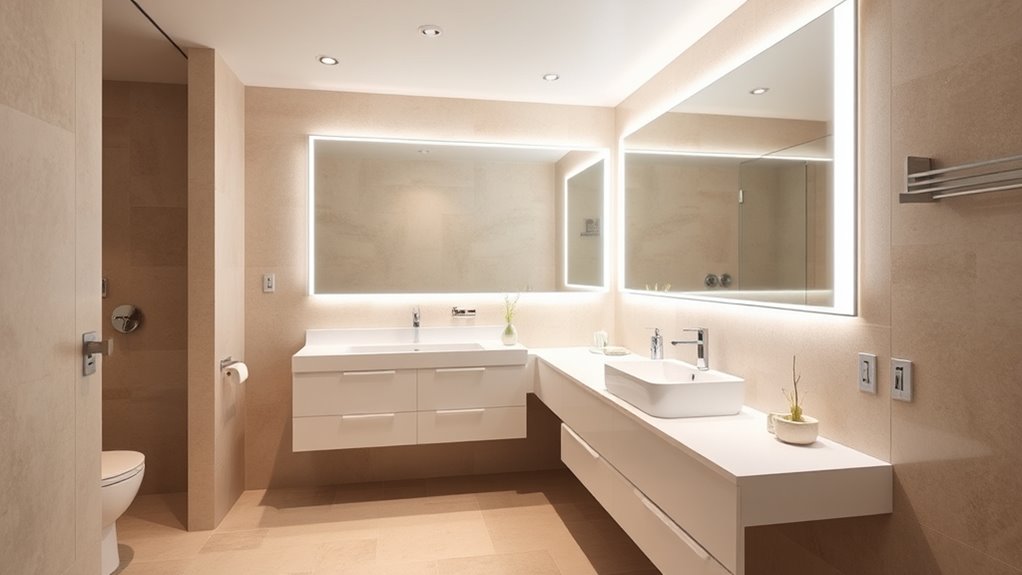
Effective lighting in your bathroom can make a significant difference in preventing falls. Installing motion-activated lighting guarantees the room is well-lit whenever you enter, eliminating dark spots that cause missteps. These lights turn on automatically, providing immediate visibility without fumbling for switches. Incorporate night vision illumination for late-night trips; these lights emit a soft glow that enhances visibility without startling you awake. Bright, even lighting reduces shadows and helps you see hazards clearly, especially in the sink and toilet areas. Consider layered lighting, such as overhead fixtures combined with task lighting around the mirror. Good lighting boosts confidence and safety, making your bathroom a secure space that minimizes the risk of falls, particularly during nighttime visits. Developing a consistent practice of maintaining proper lighting can further enhance safety and reduce accident risks.
Using Shower Seats and Assistive Devices
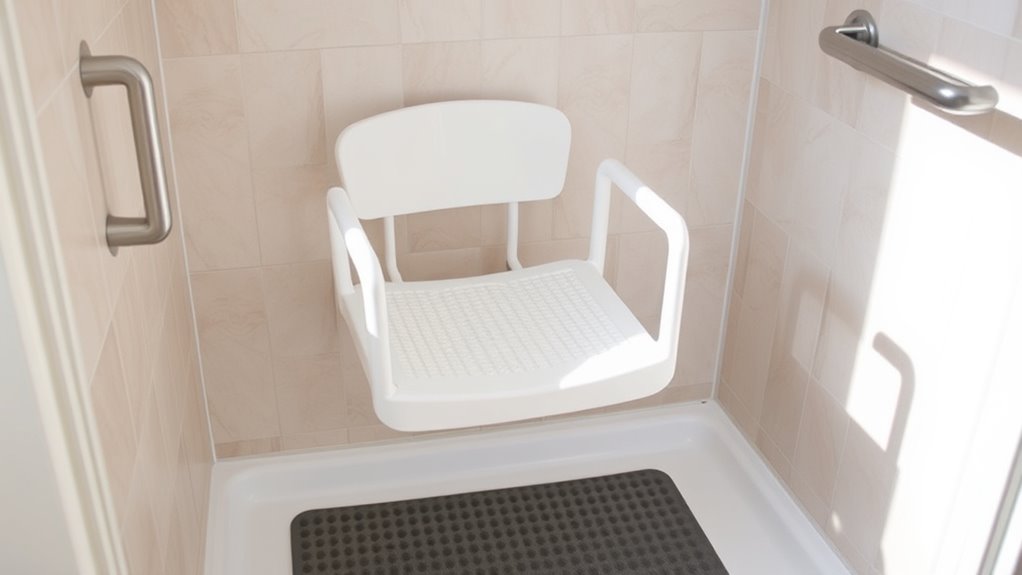
Choosing the right shower seat or assistive device is essential for safety and comfort. Make sure to install them correctly to prevent accidents, and check regularly to guarantee they remain secure and in good condition. Proper selection, installation, and maintenance can make a significant difference in preventing falls. Incorporating proper maintenance routines ensures ongoing safety and effectiveness of your assistive devices.
Choosing Appropriate Devices
Selecting the right shower seat or assistive device is vital for maintaining safety in the bathroom. Consider your specific needs, mobility level, and bathroom setup when choosing devices. For example, bathtub modifications can improve stability, while toilet safety accessories help prevent falls during transfers. Look for sturdy, non-slip materials and adjustable features to guarantee comfort and safety. Evaluating weight capacity and size is essential to fit your body and bathroom space. Don’t forget to check for compatibility with existing fixtures. Choosing appropriate devices reduces fall risk and boosts confidence in your daily routines. Proper selection makes a significant difference in bathroom safety, helping you stay independent and secure. Always prioritize quality and suitability over cost to ensure long-term safety. Additionally, understanding precious metals investment assets can inform decisions about securing assets during emergencies or economic instability.
Proper Installation Techniques
Proper installation of shower seats and assistive devices is essential to guarantee they function safely and reliably. You should ensure suction cups are securely attached to a clean, dry surface to prevent slipping. When installing, check the tile grout around fixtures for cracks or looseness, as compromised grout can reduce stability. Proper placement and secure fastening are key to avoiding accidents. Use a level to confirm the device is even, reducing wobble. Consider weight limits and manufacturer instructions carefully. Additionally, inspecting the suction cups regularly helps maintain their grip and safety.
Regular Maintenance Checks
Regular maintenance checks are essential to guarantee your shower seats and assistive devices continue to function safely. Regularly inspect for loose screws, cracks, or corrosion that could compromise stability. Check bathroom plumbing connections to prevent leaks that might cause slips, and ensure toilet maintenance is up to date to avoid unexpected issues. Keeping these devices in good shape minimizes fall risks and extends their lifespan. Also, verify that non-slip surfaces remain effective, and clean any buildup that could cause slipping. Don’t forget to test the stability of grab bars and shower seats periodically. Proper upkeep ensures your safety and prevents accidents in the bathroom. Staying proactive with maintenance helps you enjoy a safer, more secure bathing environment. Additionally, inspecting wall organization systems can prevent items from falling and causing hazards.
Organizing Bathroom Items to Minimize Clutter
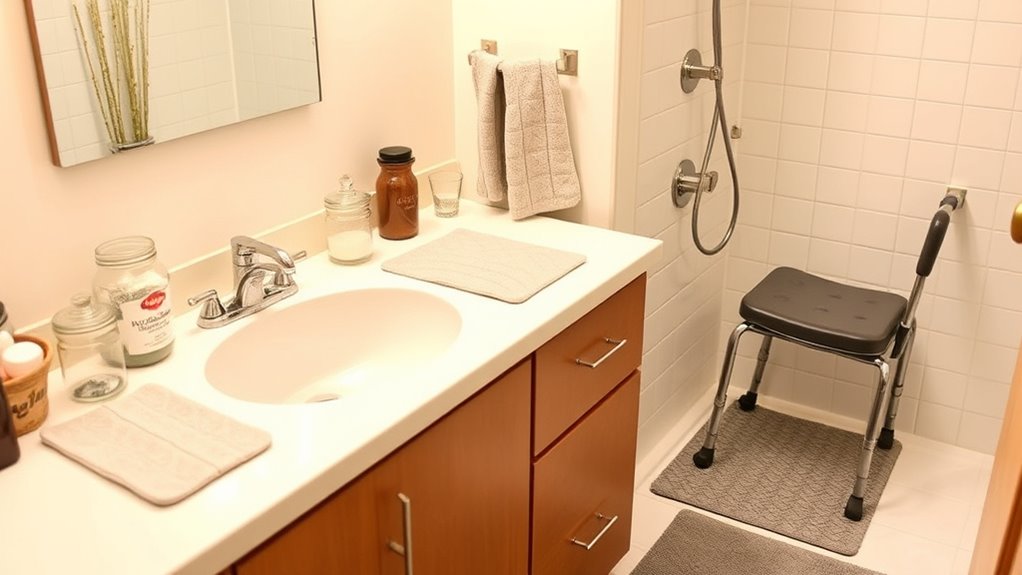
Keeping your bathroom organized is key to preventing falls. Use storage containers and install shelving in smart spots to reduce clutter and keep essentials within reach. Make sure pathways stay clear so you can move safely without tripping over items. Additionally, conflict resolution skills can help address any disagreements about bathroom organization, ensuring a safe environment for everyone.
Use Storage Containers
Using storage containers is an effective way to organize bathroom items and reduce clutter that can cause accidents. Proper bathroom organization helps prevent slips and falls by keeping essentials within easy reach and off the floor. When choosing storage containers, consider clear bins for visibility, stackable options to save space, and waterproof materials to protect items from moisture. Label each container to quickly identify contents and maintain order. Use small containers for loose items like jewelry or hair accessories, and larger bins for towels or cleaning supplies. Here are some storage container tips for ideal bathroom organization:
- Opt for transparent containers for easy identification
- Use non-slip mats underneath containers
- Store frequently used items at eye level
- Keep heavy containers on low, stable surfaces
- Regularly declutter and discard expired products
Install Shelving Strategically
Installing shelving in your bathroom creates designated spaces for storing essentials, making it easier to keep surfaces clear and reduce clutter. Corner shelving fits neatly into tight spaces, maximizing storage without taking up additional room. Use corner shelves for items like shampoo bottles or soap, keeping them within easy reach but off the floor and countertops. Floating shelves are versatile and can be installed at various heights to organize towels, toiletries, or decorative items. By strategically placing these shelves, you prevent items from piling up on sinks or floors, reducing tripping hazards. Properly installed shelves also keep heavy or sharp objects securely stored, minimizing the risk of accidents. Implementing vertical storage solutions enhances overall organization and safety, helping you prevent bathroom falls effectively.
Keep Pathways Clear
To prevent accidents, maintaining bathroom pathways free of clutter is vital. Cluttered walkways increase the risk of slipping on wet surfaces and falling. Keep walkways clear by organizing items and removing unnecessary objects. This helps reduce the chance of tripping over clutter or slipping on slippery surfaces. Regularly tidy up and ensure items are stored properly. Place frequently used items within easy reach to avoid reaching over clutter. Be mindful of cords or towels that can create obstacles. Consider using baskets or cabinets to keep surfaces tidy and safe. A clutter-free bathroom minimizes hazards and creates a safer environment. Additionally, understanding the weight of items can help in choosing appropriate storage solutions to prevent overloading shelves or cabinets, further reducing clutter and fall risks.
Regular Maintenance and Safety Checks
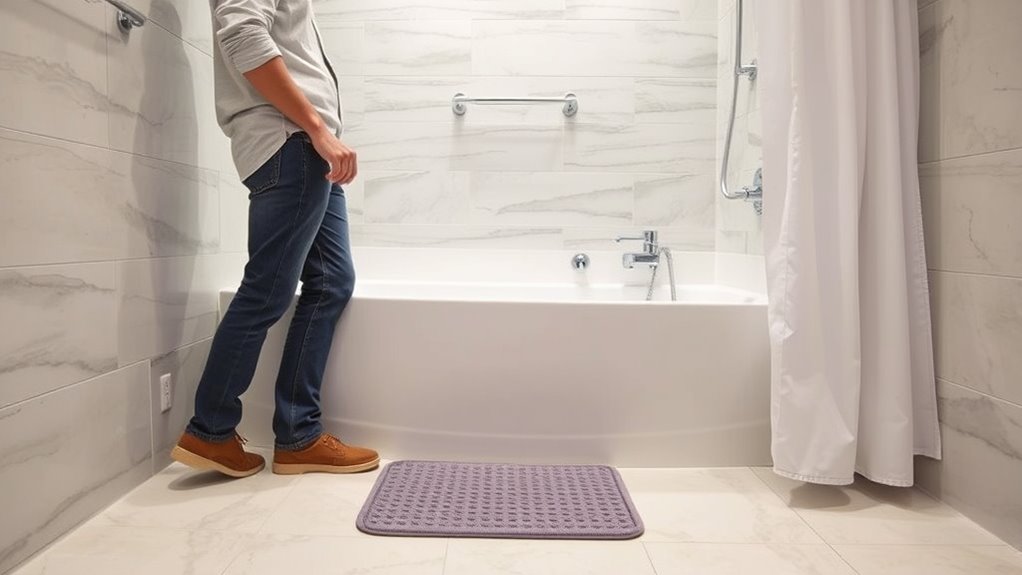
Regular maintenance and safety checks are essential to prevent bathroom falls, as they help identify potential hazards before an accident occurs. Regularly cleaning your bathtub ensures there’s no soap scum or slipperiness that could lead to falls. Keep the surfaces dry and free of mold or debris. Additionally, check your toilet for leaks or wobbly parts, as unstable fixtures can cause slips or loss of balance. Inspect grab bars and handrails to ensure they’re secure and in good condition. Look for loose tiles, damaged flooring, or uneven surfaces that could trip you. Scheduling routine safety checks allows you to address issues promptly, maintaining a safe bathroom environment. By staying proactive with bathtub cleaning and toilet maintenance, you reduce the risk of falls considerably.
Educating Family Members and Caregivers

You need to make certain your family members and caregivers understand bathroom safety. Show them the proper techniques for transfers and using assistive devices, and clearly explain the risks involved. Reinforcing these safety measures helps everyone stay aware and prevents falls.
Communicate Safety Measures
Effective communication is essential for ensuring that everyone in the household understands and follows bathroom fall prevention measures. Clear signage helps reinforce safety protocols and reduces confusion, especially for visitors or caregivers unfamiliar with the household layout. Make sure signage clarity is maintained by using large fonts, simple language, and contrasting colors. Additionally, establish emergency communication plans so family members know how to seek help quickly if a fall occurs. Regularly discuss safety procedures and update everyone on any changes. It’s also helpful to display emergency contact information prominently. By fostering open communication, you create a safer environment and reduce the risk of bathroom falls.
- Use clear, visible signage for safety instructions
- Practice emergency communication drills
- Keep emergency contacts accessible
- Reinforce safety messages regularly
- Encourage family members to voice concerns
Demonstrate Proper Techniques
Teaching family members and caregivers proper techniques is essential for preventing bathroom falls. Show them how to select proper footwear with non-slip soles that provide stability and reduce slipping hazards. Encourage them to perform simple balance exercises regularly, which can improve strength and coordination, making transfers safer. Demonstrate safe transfer techniques, such as using grab bars properly and moving slowly to maintain stability. Instruct them to check that the bathroom floor is clear of clutter and to use non-slip mats for added safety. Emphasize the importance of maintaining good posture and avoiding rushing during bathroom activities. By educating them on these proper techniques, you help create a safer environment and reduce the risk of bathroom falls.
Reinforce Risk Awareness
Educating family members and caregivers about the specific risks of bathroom falls is essential for preventing accidents. Understanding bathroom hazards and fall statistics helps you recognize potential dangers. By reinforcing risk awareness, you can take proactive steps to reduce the chance of falls. Talk openly about the common causes of bathroom falls, such as slippery surfaces, clutter, or improper footwear. Make sure everyone knows how to assist safely, especially for those with mobility issues. Keeping everyone informed encourages consistent safety practices. Here are key ideas to focus on:
- Identify common bathroom hazards and address them promptly
- Share fall statistics to emphasize the importance of prevention
- Teach proper use of grab bars and assistive devices
- Encourage clear pathways and clutter removal
- Promote awareness of slippery surfaces and water spills
Adapting Bathroom Features for Mobility Challenges

Making changes to your bathroom can considerably reduce fall risks for those with mobility challenges. You can improve safety with simple modifications like bathtub adaptations and toilet height adjustment. For example, installing grab bars or a walk-in tub minimizes slipping hazards. Adjusting the toilet height makes sitting and standing easier, reducing strain and falls. Here’s a quick picture:
| Feature | Modification Example |
|---|---|
| Bathtub | Walk-in tub or bathtub with non-slip mats |
| Toilet | Comfort height or raised toilet seat |
| Support Devices | Grab bars near shower and toilet |
These adjustments create a safer environment, promoting independence and confidence during bathroom visits. Properly adapting your bathroom guarantees you or your loved ones stay safe and mobile.
Incorporating Technology for Fall Prevention

Integrating technology into your bathroom can substantially enhance fall prevention efforts. Smart sensors can detect movement or lack of activity, alerting you or caregivers if a fall occurs or if you haven’t moved for a while. Emergency alerts provide immediate assistance, helping you summon help quickly. These devices create a safer environment and increase your confidence in using the bathroom independently. You can install motion-activated lighting that automatically turns on, reducing trip hazards. Waterproof emergency buttons near the toilet or shower allow easy access if you need help. Additionally, smart mirrors can monitor your balance and alert you to potential issues. By embracing these technologies, you add an extra layer of safety, ensuring prompt responses and reducing fall risks in your bathroom.
Incorporating smart sensors and emergency alerts enhances bathroom safety and fall prevention.
- Motion-activated lighting
- Smart sensors for fall detection
- Waterproof emergency alert buttons
- Automated medication reminders
- Balance-monitoring smart mirrors
Frequently Asked Questions
How Often Should Bathroom Safety Assessments Be Updated?
You should update your home safety risk assessment for the bathroom at least once a year, or whenever there’s a significant change in health or mobility. Regularly reviewing your safety measures helps identify new hazards and guarantees necessary modifications are made. Staying proactive with these assessments reduces fall risks, keeps your home safe, and maintains a secure environment for everyone, especially those with mobility or health concerns.
What Are the Best Types of Grab Bars for Elderly Users?
Imagine the moment you need support and reach for the perfect safety solution. The best grab bar types for elderly safety are sturdy, corrosion-resistant, and easy to grip, like angled or vertical bars. These options provide secure support during transfers and standing. Choosing the right grab bars can be life-changing, offering confidence and preventing falls. Don’t settle—invest in quality, designed specifically for elderly users’ safety needs.
Are There Eco-Friendly Non-Slip Flooring Options Available?
Yes, eco-friendly flooring options with non-slip materials are available for your bathroom. You can choose sustainable choices like cork, bamboo, or recycled rubber, which offer durability and environmental benefits. These materials are often treated with non-slip coatings or textures to guarantee safety. By selecting eco-friendly flooring with non-slip features, you create a safer, greener bathroom environment that helps prevent falls while supporting sustainability.
How Can Smart Technology Detect Falls in the Bathroom?
Imagine a bathroom where help arrives before you even realize you need it. Smart technology detects falls through sensor integration, monitoring your movements constantly. When a fall occurs, emergency alerts instantly notify caregivers or loved ones, ensuring swift assistance. This seamless system provides peace of mind, making your bathroom safer and more responsive. With smart tech, you stay protected, and help is always just a moment away.
What Training Is Recommended for Family Members on Bathroom Safety?
You should pursue caregiver training focused on fall prevention in bathrooms. This training teaches you how to identify hazards, assist with mobility, and use safety equipment properly. Being well-trained helps you respond quickly if a fall occurs and reduces risks. By staying informed about bathroom safety, you actively contribute to fall prevention, creating a safer environment for your loved ones and giving everyone peace of mind during daily routines.
Conclusion
By implementing these safety tips, you can ensure a substantial reduction in the risk of bathroom falls. For example, imagine an elderly family member who starts using grab bars and non-slip mats—suddenly, they feel more confident and secure during their routines. Regular checks and education ensure ongoing safety. Taking proactive steps not only protects your loved ones but also creates a safer, more accessible bathroom environment for everyone. Your efforts truly make a difference.
Fall Picks
fall essentials
As an affiliate, we earn on qualifying purchases.